Short answer: the Logitech G433, if you are buying new, though neither ranks well in its class. The Logitech G930 ranks higher than it (#252 vs #256 of 308 over-ear headphones, 2.7/5 vs 2.6/5) but is discontinued, so only consider it used; the Logitech G433 is still sold new at $84.97. Both are rated below 3.0/5 among the 308 over-ear headphones, so if sound quality matters, consider the Sennheiser HD 550 instead, ranked #7 at $199.95.
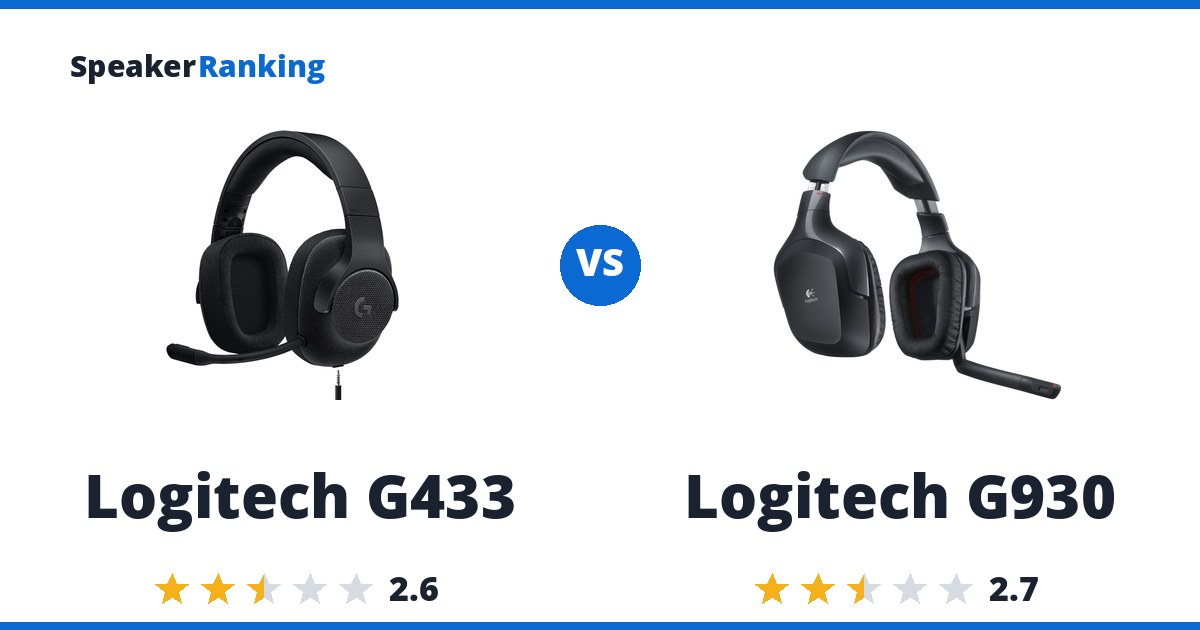
The case for the Logitech G433: Bass is lifted about 4.1 dB with extension to 20 Hz, giving kick drums and bass lines extra weight. The tradeoff: Presence sits about 4.6 dB low with a 7.3 dB dip near 5.5 kHz, so vocals and instruments lose some bite.
The case for the Logitech G930: A wireless connection and a built-in microphone suit gaming and voice chat, and the closed-back design keeps sound contained. The tradeoff: Treble runs about 4 to 5 dB below target above 6 kHz and presence is about 3 dB low, so the sound is dull and lacks sparkle.
Buy the Logitech G433 if you want one new; the Logitech G930 is discontinued, so only look for it used.
Looking for alternatives? See the complete Headphones rankings.
Specifications Side By Side
| Logitech G433 | Logitech G930 | |
|---|---|---|
| Price | $84.97 | $229.99 Discontinued |
| Ranked | #256 of 308 in Over-Ear Headphones | #252 of 308 in Over-Ear Headphones |
| Form Factor | Over-ear | Over-ear |
| Back | Closed | Closed |
| Connection | Wired | Wireless |
| Driver Type | Dynamic | Dynamic |
| Drivers | 1 x 40mm dynamic | 1 x 40mm dynamic |
| Impedance | 32 ohms | 32 ohms |
| Frequency Response | 20Hz - 20kHz | 20Hz - 20kHz (Manufacturer specified) |
| Weight | 0.6 lbs (259 g) | 0.7 lbs (326 g) |
| Harman Preference Score | 51 (measured by oratory1990, via AutoEQ) | 52 (measured by oratory1990, via AutoEQ) |
| Deviation From Target | 3.56 dB standard deviation | 3.61 dB standard deviation |
| Tonal Tilt | -1.18 (negative is warmer, positive brighter) | -1.06 (negative is warmer, positive brighter) |
| Sub-bass Extension | Within 6 dB of target down to 20 Hz (+1.4 dB at 30 Hz) | Within 6 dB of target down to 20 Hz (-0.6 dB at 30 Hz) |
| Sensitivity | - | 90 dB SPL/mW |
| Active Noise Cancelling | - | No |
| Built-in Microphone | - | Yes |
Related Headphone Comparisons
How Logitech G930 compares with other leading options:
- Logitech G733 vs Logitech G930
- Beats Studio3 Wireless vs Logitech G930
- Bowers & Wilkins Px7 S2 vs Logitech G930
- Logitech G433 vs Logitech G733
- Sennheiser HD 569 vs Sennheiser HD 820
Prices on this page were last checked October 12, 2026 at 4:13 PM UTC. Product prices and availability are accurate as of that date/time and are subject to change; the price and availability shown on Amazon at the time of purchase will apply to the purchase of this product.
As an eBay Partner, we may be compensated if you make a purchase.
The Two Headphones In Full
 Logitech G433: $84.97 Amazon $84.97 eBay
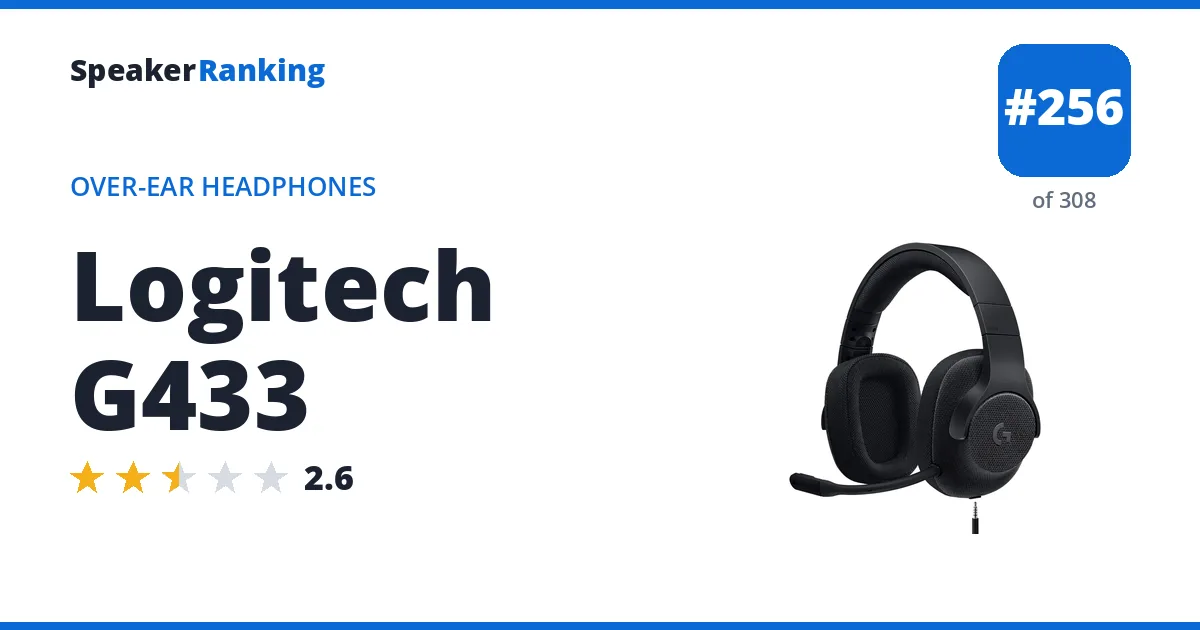
Pros: Bass is lifted about 4.1 dB with extension to 20 Hz, giving kick drums and bass lines extra weight. Lower mids sit within about 0.5 dB of target, keeping voices and guitars natural. It uses 1 x 40mm dynamic with an easy 32 ohm load.
Cons: Presence sits about 4.6 dB low with a 7.3 dB dip near 5.5 kHz, so vocals and instruments lose some bite. A 6 dB peak near 9.7 kHz can make cymbals and sibilance sound sharp. The 4.1 dB bass lift can sound boomy and mask midrange detail. A Harman score of 51 places it in the lower part of the over-ear rankings.
Full Logitech G433 review and specifications →
| Released | 2017 (9 years ago) |
|---|---|
| Back | Closed |
| Connection | Wired |
| Deviation From Target | 3.56 dB standard deviation |
| Driver Type | Dynamic |
| Drivers | 1 x 40mm dynamic |
| Form Factor | Over-ear |
| Frequency Response | 20Hz - 20kHz |
| Harman Preference Score | 51 (measured by oratory1990, via AutoEQ) |
| Impedance | 32 ohms |
| Sub-bass Extension | Within 6 dB of target down to 20 Hz (+1.4 dB at 30 Hz) |
| Tonal Tilt | -1.18 (negative is warmer, positive brighter) |
| Weight | 0.6 lbs (259 g) |
EQ preset to match the Harman target
Set a preamp of -6.3 dB, then add these filters in any parametric equalizer (Wavelet, Equalizer APO, Peace, or a player with parametric EQ). Calculated by AutoEQ from its measured frequency response.
| Filter | Frequency | Gain | Q |
|---|---|---|---|
| Low shelf | 105 Hz | +5.4 dB | 0.70 |
| Peak | 108 Hz | -10.0 dB | 0.25 |
| Peak | 4,896 Hz | +6.3 dB | 1.46 |
| Peak | 363 Hz | +10.1 dB | 1.29 |
| Peak | 87 Hz | +6.4 dB | 2.73 |
| High shelf | 10,000 Hz | -4.3 dB | 0.70 |
| Peak | 2,138 Hz | +2.3 dB | 3.66 |
| Peak | 1,514 Hz | -1.6 dB | 3.46 |
| Peak | 8,205 Hz | -1.3 dB | 3.08 |
| Peak | 6,203 Hz | +2.6 dB | 5.72 |
- Reviews, Comparisons and Sound Samples
- Head-to-Head Comparisons
 Logitech G930: $229.99 Wireless Discontinued Amazon $229.99 eBay
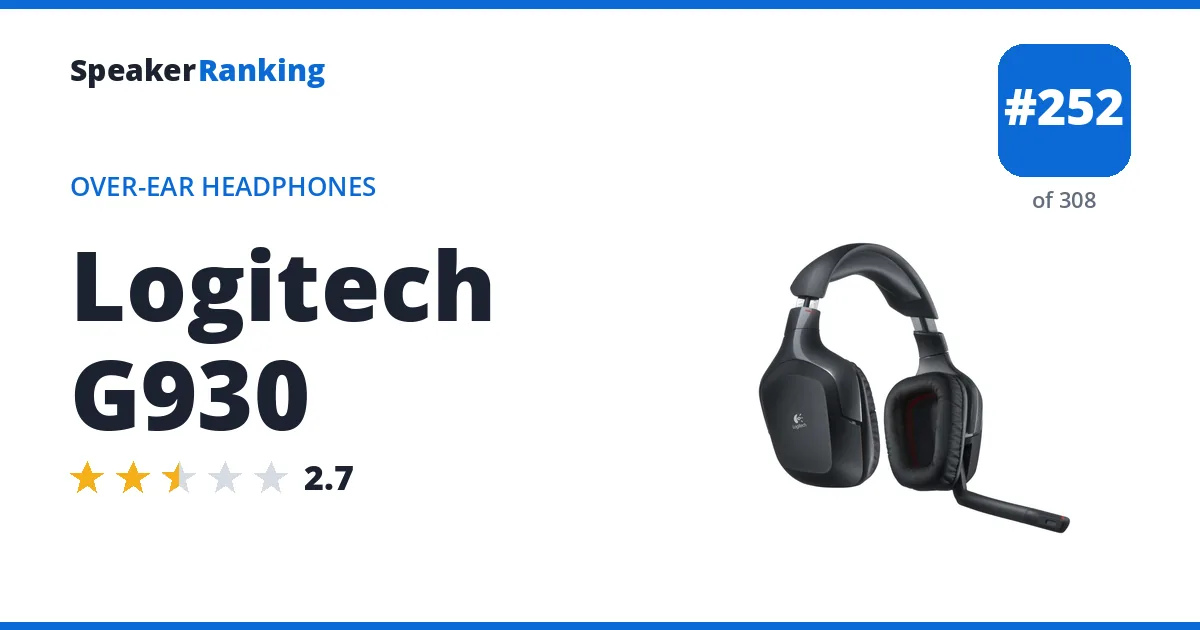
Pros: A wireless connection and a built-in microphone suit gaming and voice chat, and the closed-back design keeps sound contained. Bass is gently raised by about 2 dB, with sub-bass close to target, so the low end is warm without much bloat. The low mids and upper mids sit within about half a dB of target.
Cons: Treble runs about 4 to 5 dB below target above 6 kHz and presence is about 3 dB low, so the sound is dull and lacks sparkle. A huge dip of about 15 dB near 9.1 kHz removes cymbal detail, and a peak of about 6 dB near 6 kHz adds some harshness. At 326 g it is heavy, and it has no noise cancelling. It is a design from 2010 with dated sound. Discontinued.
Full Logitech G930 review and specifications →
| Released | Aug 2010 (16 years ago) |
|---|---|
| Active Noise Cancelling | No |
| Back | Closed |
| Built-in Microphone | Yes |
| Connection | Wireless |
| Deviation From Target | 3.61 dB standard deviation |
| Driver Type | Dynamic |
| Drivers | 1 x 40mm dynamic |
| Form Factor | Over-ear |
| Frequency Response | 20Hz - 20kHz (Manufacturer specified) |
| Harman Preference Score | 52 (measured by oratory1990, via AutoEQ) |
| Impedance | 32 ohms |
| Sensitivity | 90 dB SPL/mW |
| Sub-bass Extension | Within 6 dB of target down to 20 Hz (-0.6 dB at 30 Hz) |
| Tonal Tilt | -1.06 (negative is warmer, positive brighter) |
| Weight | 0.7 lbs (326 g) |
EQ preset to match the Harman target
Set a preamp of -6.6 dB, then add these filters in any parametric equalizer (Wavelet, Equalizer APO, Peace, or a player with parametric EQ). Calculated by AutoEQ from its measured frequency response.
| Filter | Frequency | Gain | Q |
|---|---|---|---|
| Low shelf | 105 Hz | +0.5 dB | 0.70 |
| Peak | 141 Hz | -5.7 dB | 1.78 |
| Peak | 3,198 Hz | +5.8 dB | 3.39 |
| Peak | 6,133 Hz | -8.4 dB | 1.55 |
| Peak | 7,571 Hz | +8.2 dB | 1.86 |
| High shelf | 10,000 Hz | +6.6 dB | 0.70 |
| Peak | 45 Hz | -1.7 dB | 2.96 |
| Peak | 288 Hz | +1.7 dB | 3.74 |
| Peak | 1,300 Hz | -1.9 dB | 3.72 |
| Peak | 8,842 Hz | -2.7 dB | 2.84 |
- Reviews, Comparisons and Sound Samples
- Head-to-Head Comparisons