Short answer: the Grimani Systems Tau. It ranks #10 of 14 powered floorstanding speakers by sound quality, rated 3.6/5, at $29,000; the PMC PMC10 ranks #12, rated 3.4/5, and costs $47,500, so there is not much of a tradeoff to weigh.

The case for the Grimani Systems Tau: A slim active tower with two 6.5” woofers and a 1” compression driver in Grimani’s Conic Section Array waveguide, driven by two 600W amplifiers with built-in DSP crossover and EQ. The tradeoff: Audioholics’ measurements stop at 200Hz, so it has no preference score; the rating is estimated from that data and the measured Grimani Rixos-L.
The case for the PMC PMC10: A three-way active studio main monitor with a 10” woofer in PMC’s ATL transmission-line enclosure, a 75mm soft dome midrange and a 34mm soft dome tweeter, driven by an outboard amplifier and DSP rack. Watch for: PMC’s own measurements show an uneven on-axis response for a speaker at this level, for a preference score of 4.31 that reaches 5.48 with an ideal subwoofer.
Buy the Grimani Systems Tau. It is rated higher for sound quality than the PMC PMC10 and costs less, so it is the default pick unless a specific strength of the other one matters more to you.
About the ratings: the Grimani Systems Tau’s rating is estimated from measured siblings and predecessors rather than its own measurements, with a likely range of 3.2 to 4.0, so this verdict could change once it is measured.
Looking for alternatives? See the complete Powered Home rankings.
Specifications Side By Side
| Grimani Systems Tau | PMC PMC10 | |
|---|---|---|
| Price | $29,000 per pair | $47,500 per pair |
| Ranked | #10 of 14 in Large Size Powered Floorstanding Speakers Estimated | #12 of 14 in Large Size Powered Floorstanding Speakers |
| XLR Input | Yes | Yes |
| RCA Input | No | No |
| TRS Input | No | No |
| Optical Input | No | No |
| Coaxial Input | No | No |
| USB Input | No | No |
| HDMI Input | No | No |
| AES Input | No | Yes |
| Aux Input | No | No |
| Bluetooth | No | No |
| Drivers | 2x 6.5” woofers, 1” compression driver in Conic Section Array waveguide | a 10” woofer, 75mm soft dome midrange, 34mm soft dome tweeter |
| Amplifier Power | 1,200W (2x 600W) | 2,600W per speaker (800W HF, 800W MF, 1,000W LF) |
| Frequency Response | 35Hz-20kHz (manufacturer specified) | - |
| Maximum SPL | 110dB (manufacturer specified) | 109dB continuous, 123dB peak (manufacturer specified) |
| EQ | Yes (built-in DSP) | Yes (SoundAlign2 room EQ) |
| Dimensions | 42.8”H x 7.4”W x 11.3”D (1086 x 189 x 286 mm) | 30.3”H x 10”W x 16.5”D (770 x 255 x 420 mm) |
| DIY Kit | No | No |
| Inputs | - | XLR analog, AES digital (via the master36 controller) |
| Woofer Cabinet | - | ATL transmission line |
| Weight | - | 114.6 lbs (52 kg) each |
| Spinorama Preference Score | - | 4.31 (manufacturer spinorama data) |
| Spinorama Preference Score with Perfect Sub | - | 5.48 (manufacturer spinorama data) |
| Bass Extension (-3dB) | - | 32.2Hz (measured, manufacturer spinorama data) |
| Bass Extension (-10dB) | - | about 23.9Hz (measured, manufacturer spinorama data) |
Frequency Response Compared
Both speakers’ spinorama measurements, overlaid. A flatter line is more neutral: peaks sound forward or harsh, dips sound recessed. Each curve is shifted so its average from 300 Hz to 3 kHz sits at 0 dB, so loudness differences between the two are removed and only the shape is compared. The two were measured by different sources, so small differences, especially in the bass, can come from the measurement setup rather than the speakers.
Measurement data: Grimani Systems Tau (measured by an independent reviewer) and PMC PMC10 (measured by the manufacturer), via spinorama.org.
Related Speaker Comparisons
How Grimani Systems Tau compares with other leading options:
- Pitt & Giblin Superwax Mini vs Grimani Systems Tau
- PMC PMC12 vs Grimani Systems Tau
- Grimm Audio LS1c + SB1 vs PMC PMC10
- PMC PMC12 vs PMC PMC10
- PMC PMC10 vs PMC PMC15
Prices on this page were last checked October 11, 2026 at 4:59 PM UTC. Product prices and availability are accurate as of that date/time and are subject to change; the price and availability shown on Amazon at the time of purchase will apply to the purchase of this product.
As an eBay Partner, we may be compensated if you make a purchase.
The Two Speakers In Full
 Grimani Systems Tau: $29,000 per pair Estimated Grimani Systems eBay
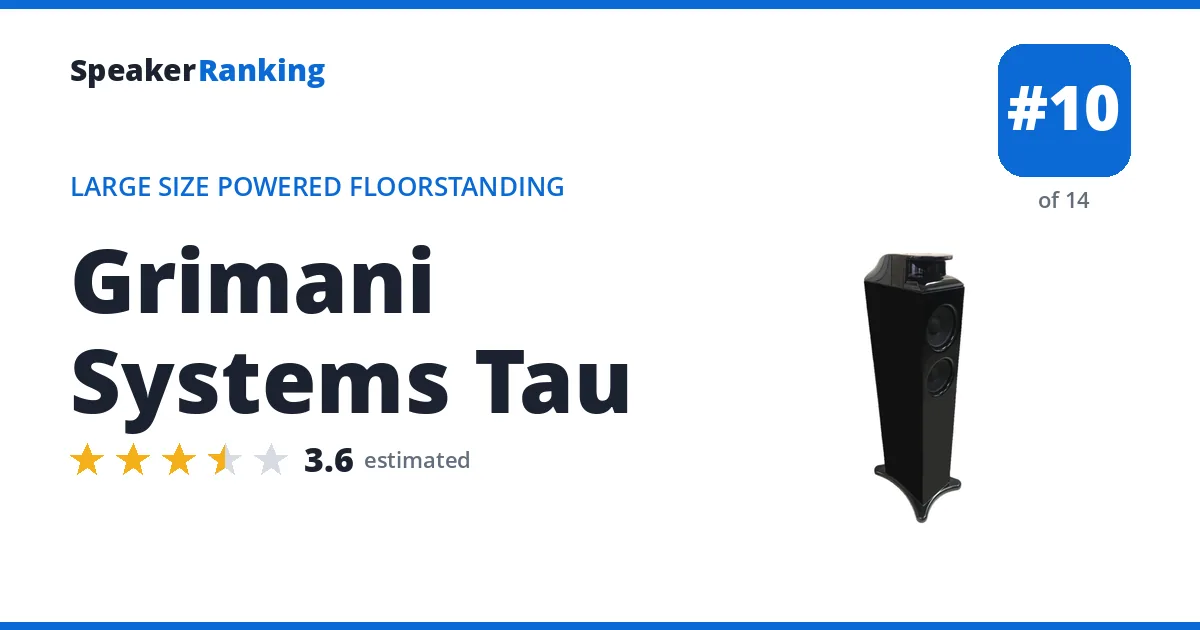
Pros: A slim active tower with two 6.5” woofers and a 1” compression driver in Grimani’s Conic Section Array waveguide, driven by two 600W amplifiers with built-in DSP crossover and EQ. Grimani rates it from 35Hz to 20kHz and 110dB maximum SPL.
Cons: Audioholics’ measurements stop at 200Hz, so it has no preference score; the rating is estimated from that data and the measured Grimani Rixos-L. It is sold through custom installers rather than retail.
Full Grimani Systems Tau review and specifications →
| AES Input | No |
|---|---|
| Amplifier Power | 1,200W (2x 600W) |
| Aux Input | No |
| Bluetooth | No |
| Coaxial Input | No |
| DIY Kit | No |
| Dimensions | 42.8”H x 7.4”W x 11.3”D (1086 x 189 x 286 mm) |
| Drivers | 2x 6.5” woofers, 1” compression driver in Conic Section Array waveguide |
| EQ | Yes (built-in DSP) |
| Frequency Response | 35Hz-20kHz (manufacturer specified) |
| HDMI Input | No |
| Maximum SPL | 110dB (manufacturer specified) |
| Optical Input | No |
| RCA Input | No |
| TRS Input | No |
| USB Input | No |
| XLR Input | Yes |
- Links
- Reviews, Comparisons and Sound Samples
- Head-to-Head Comparisons
 PMC PMC10: $47,500 per pair Sweetwater eBay
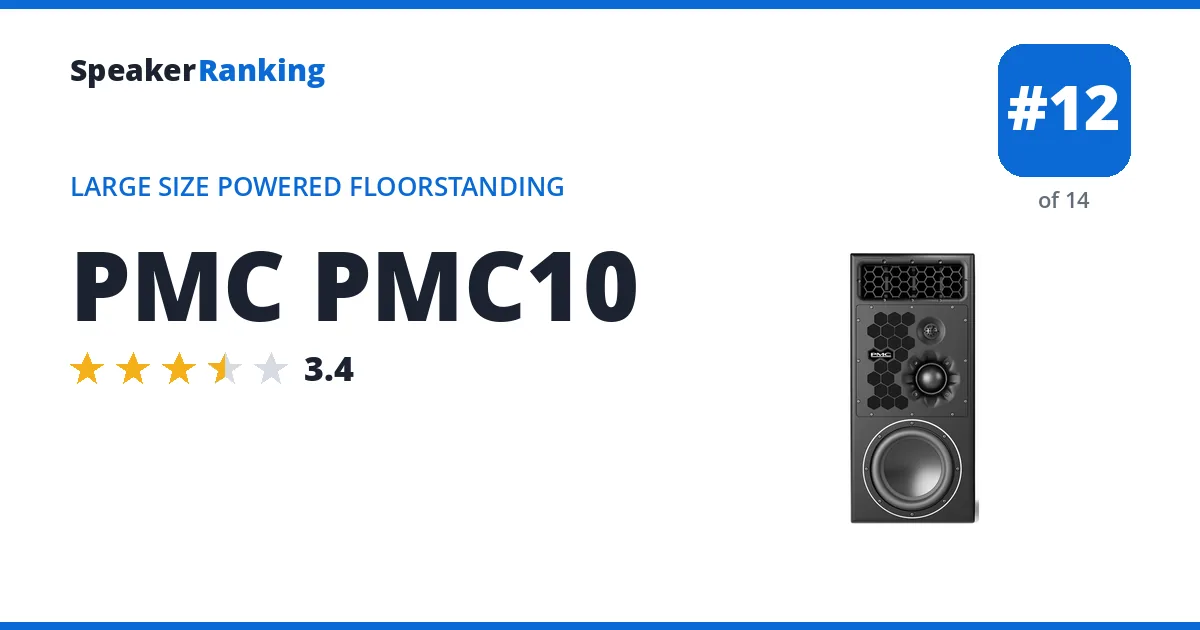
Same family: the PMC PMC12 (larger floorstanding, ranked higher, rated 3.7/5), the PMC PMC15 (larger floorstanding, ranked lower, rated 3.3/5) and the PMC PMC10-4 (larger floorstanding, ranked lower, estimated 3.3/5).
Pros: A three-way active studio main monitor with a 10” woofer in PMC’s ATL transmission-line enclosure, a 75mm soft dome midrange and a 34mm soft dome tweeter, driven by an outboard amplifier and DSP rack. PMC’s own measurements show deep bass, 32.2Hz (-3dB).
Cons: PMC’s own measurements show an uneven on-axis response for a speaker at this level, for a preference score of 4.31 that reaches 5.48 with an ideal subwoofer. The data has not been independently verified. It needs PMC’s master36 controller and amplifier rack, and it is a pro studio product sold through pro audio dealers.
Full PMC PMC10 review and specifications →
| Released | Jan 2026 (9 months ago) |
|---|---|
| AES Input | Yes |
| Amplifier Power | 2,600W per speaker (800W HF, 800W MF, 1,000W LF) |
| Aux Input | No |
| Bass Extension (-10dB) | about 23.9Hz (measured, manufacturer spinorama data) |
| Bass Extension (-3dB) | 32.2Hz (measured, manufacturer spinorama data) |
| Bluetooth | No |
| Coaxial Input | No |
| DIY Kit | No |
| Dimensions | 30.3”H x 10”W x 16.5”D (770 x 255 x 420 mm) |
| Drivers | a 10” woofer, 75mm soft dome midrange, 34mm soft dome tweeter |
| EQ | Yes (SoundAlign2 room EQ) |
| HDMI Input | No |
| Inputs | XLR analog, AES digital (via the master36 controller) |
| Maximum SPL | 109dB continuous, 123dB peak (manufacturer specified) |
| Optical Input | No |
| RCA Input | No |
| Spinorama Preference Score | 4.31 (manufacturer spinorama data) |
| Spinorama Preference Score with Perfect Sub | 5.48 (manufacturer spinorama data) |
| TRS Input | No |
| USB Input | No |
| Weight | 114.6 lbs (52 kg) each |
| Woofer Cabinet | ATL transmission line |
| XLR Input | Yes |
- Reviews, Comparisons and Sound Samples
- Head-to-Head Comparisons