Short answer: the FiiO JT7. It ranks #32 of 216 over-ear headphones by sound quality, rated 4.2/5, at $119.99; the Sony MDR-7506 ranks #56, rated 4.1/5, and costs $129.99, so there is not much of a tradeoff to weigh.

What the FiiO JT7 does well: The median of five hobbyist measurements on squig.link gives the JT7 a preference score of 87 with a nearly flat tilt, so it sounds balanced rather than warm or bright. The catch: Sensitivity of 92 dB/mW is low, so a phone or laptop jack may run out of volume and a small headphone amp is a sensible addition.
Why pick the Sony MDR-7506: A preference score of 83 with a deviation of only 1.7 dB from the Harman target in oratory1990’s measurement is excellent for a closed studio headphone. The tradeoff: Presence and treble run about 3.5 dB hot, with a peak of 6 dB near 4.5 kHz, which makes vocals forward and cymbals or sibilance sharp at higher volumes.
Buy the FiiO JT7. It is rated higher for sound quality than the Sony MDR-7506 and costs less, which makes it the one to get unless you need something the other one does better.
Still deciding? The full Headphones rankings cover every ranked option.
Specifications Side By Side
| FiiO JT7 | Sony MDR-7506 | |
|---|---|---|
| Price | $119.99 | $129.99 |
| Ranked | #32 of 216 in Over-Ear Headphones | #56 of 216 in Over-Ear Headphones |
| Form Factor | Over-ear | Over-ear |
| Harman Preference Score | 86 (median of 6 squig.link measurements, calibrated to AutoEQ) | 83 (measured by oratory1990, via AutoEQ) |
| Deviation From Target | 2.11 dB standard deviation | 1.70 dB standard deviation |
| Tonal Tilt | +0.03 (negative is warmer, positive brighter) | +0.64 (negative is warmer, positive brighter) |
| Sub-bass Extension | Falls 6 dB below target at 28 Hz (-5.6 dB at 30 Hz) | Within 6 dB of target down to 20 Hz (-1.5 dB at 30 Hz) |
| Connection | Wired | Wired |
| Back | Open | Closed |
| Driver Type | Planar magnetic | Dynamic |
| Drivers | 1 x 95x86mm planar magnetic | 1 x 40mm dynamic |
| Impedance | 18 ohms | - |
| Sensitivity | 92 dB/mW | 106 dB/mW |
| Weight | 0.7 lbs (318 g) | 0.6 lbs (260 g) |
| Frequency Response | 7Hz - 40kHz (Manufacturer specified) | 10Hz - 20kHz (Manufacturer specified) |
| Built-in Microphone | - | No |
Related Headphone Comparisons
How FiiO JT7 compares with other leading options:
- HIFIMAN HE400se vs FiiO JT7
- Beyerdynamic TYGR 300 R vs FiiO JT7
- HIFIMAN HE400se vs Sony MDR-7506
- Sony MDR-7506 vs Beyerdynamic DT 990 Pro
- Sony MDR-7506 vs Beyerdynamic DT 770 Pro
Prices on this page were last checked October 11, 2026 at 4:59 PM UTC. Product prices and availability are accurate as of that date/time and are subject to change; the price and availability shown on Amazon at the time of purchase will apply to the purchase of this product.
As an eBay Partner, we may be compensated if you make a purchase.
The Two Headphones In Full
 FiiO JT7: $119.99 Amazon eBay

Pros: The median of five hobbyist measurements on squig.link gives the JT7 a preference score of 87 with a nearly flat tilt, so it sounds balanced rather than warm or bright. Bass from 60 to 200 Hz sits right on target and the upper mids are level, which keeps voices and instruments natural. It uses a large 95 by 86 mm planar magnetic driver at a moderate 318 grams, and its 18 ohm load is easy for most sources to control.
Cons: Sensitivity of 92 dB/mW is low, so a phone or laptop jack may run out of volume and a small headphone amp is a sensible addition. Those measurements show a 4.9 dB peak near 5.8 kHz that can add edge to vocals, while sub-bass sits about 3.5 dB under target and the open back leaks sound and blocks no outside noise. The HIFIMAN HE400se rates slightly higher and costs less. See headphone amps and DACs with enough power to drive it.
Full FiiO JT7 review and specifications →
| Released | Nov 2025 (11 months ago) |
|---|---|
| Back | Open |
| Connection | Wired |
| Deviation From Target | 2.11 dB standard deviation |
| Driver Type | Planar magnetic |
| Drivers | 1 x 95x86mm planar magnetic |
| Form Factor | Over-ear |
| Frequency Response | 7Hz - 40kHz (Manufacturer specified) |
| Harman Preference Score | 86 (median of 6 squig.link measurements, calibrated to AutoEQ) |
| Impedance | 18 ohms |
| Sensitivity | 92 dB/mW |
| Sub-bass Extension | Falls 6 dB below target at 28 Hz (-5.6 dB at 30 Hz) |
| Tonal Tilt | +0.03 (negative is warmer, positive brighter) |
| Weight | 0.7 lbs (318 g) |
- Reviews, Comparisons and Sound Samples
- Head-to-Head Comparisons
 Sony MDR-7506: $129.99 Amazon eBay
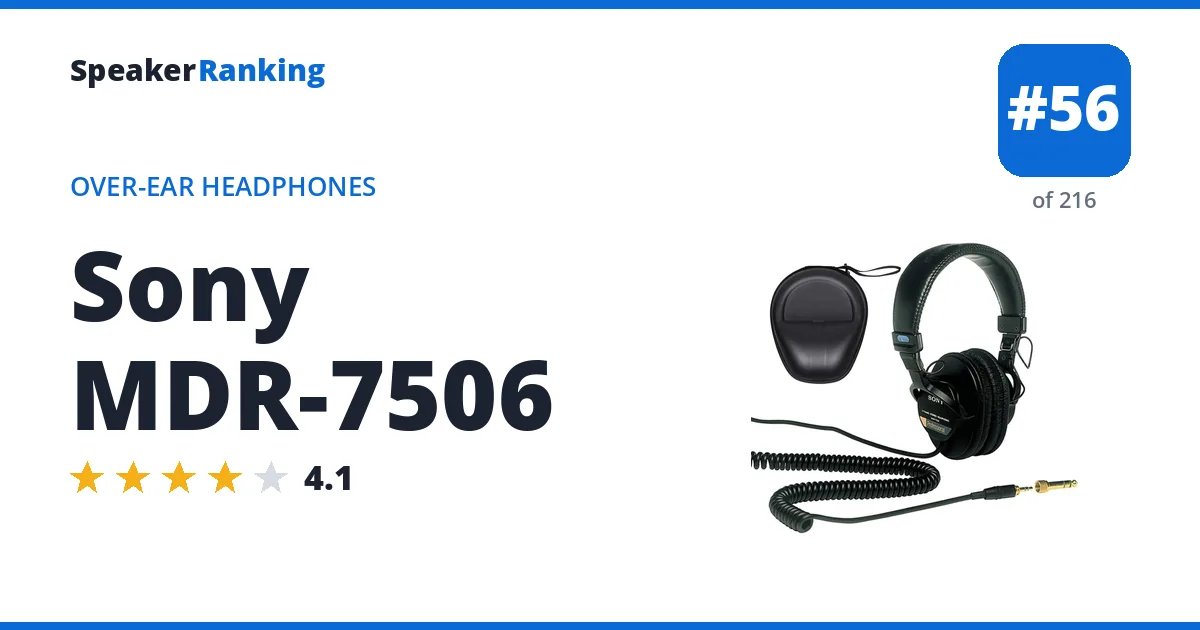
Pros: A preference score of 83 with a deviation of only 1.7 dB from the Harman target in oratory1990’s measurement is excellent for a closed studio headphone. Bass and low mids sit within about 1 dB of target, so vocals and instruments sound natural and uncolored. At 260 g with a 106 dB/mW sensitivity, it plays loud straight from a phone or laptop without an amp.
Cons: Presence and treble run about 3.5 dB hot, with a peak of 6 dB near 4.5 kHz, which makes vocals forward and cymbals or sibilance sharp at higher volumes. Air above 10 kHz is about 2.6 dB low, and the wired-only design has no microphone.
Full Sony MDR-7506 review and specifications →
| Back | Closed |
|---|---|
| Built-in Microphone | No |
| Connection | Wired |
| Deviation From Target | 1.70 dB standard deviation |
| Driver Type | Dynamic |
| Drivers | 1 x 40mm dynamic |
| Form Factor | Over-ear |
| Frequency Response | 10Hz - 20kHz (Manufacturer specified) |
| Harman Preference Score | 83 (measured by oratory1990, via AutoEQ) |
| Sensitivity | 106 dB/mW |
| Sub-bass Extension | Within 6 dB of target down to 20 Hz (-1.5 dB at 30 Hz) |
| Tonal Tilt | +0.64 (negative is warmer, positive brighter) |
| Weight | 0.6 lbs (260 g) |
EQ preset to match the Harman target
Set a preamp of -5.8 dB, then add these filters in any parametric equalizer (Wavelet, Equalizer APO, Peace, or a player with parametric EQ). Calculated by AutoEQ from its measured frequency response.
| Filter | Frequency | Gain | Q |
|---|---|---|---|
| Low shelf | 105 Hz | +10.3 dB | 0.70 |
| Peak | 5,435 Hz | -3.8 dB | 0.90 |
| Peak | 847 Hz | +1.9 dB | 0.70 |
| Peak | 230 Hz | +3.7 dB | 2.08 |
| Peak | 48 Hz | -9.5 dB | 0.52 |
| High shelf | 10,000 Hz | +3.8 dB | 0.70 |
| Peak | 7,530 Hz | -1.4 dB | 3.26 |
| Peak | 2,916 Hz | -1.9 dB | 5.57 |
| Peak | 3,748 Hz | +2.6 dB | 5.91 |
| Peak | 4,456 Hz | -1.6 dB | 6.00 |
- Reviews, Comparisons and Sound Samples
- Head-to-Head Comparisons