Short answer: a tie on sound quality. Both are rated 4.2/5 (#188 and #177 of 450 in-ear headphones), so choose on features and fit.
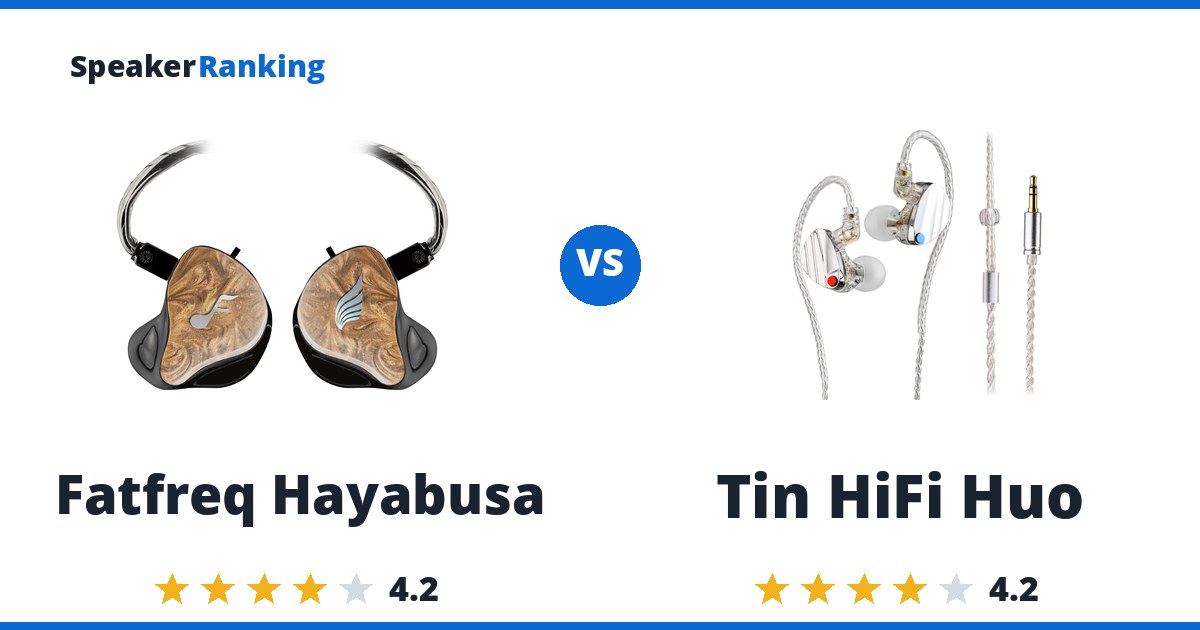
Why pick the Fatfreq Hayabusa: A preference score of 76 in crinacle’s measurement places its tuning reasonably close to the Harman target most listeners prefer. The catch: The response is uneven, at 1.94 dB standard deviation from target, so some frequency regions stand out or fall back.
Buy the Fatfreq Hayabusa or the Tin HiFi Huo on features: they are rated the same for sound quality at close to the same price.
Want more options? Browse the full Headphones rankings.
Specifications Side By Side
| Fatfreq Hayabusa | Tin HiFi Huo | |
|---|---|---|
| Price | - | $25.00 |
| Ranked | #188 of 450 in In-Ear Headphones | #177 of 450 in In-Ear Headphones |
| Form Factor | In-ear | In-ear |
| Back | Closed | Closed |
| Harman Preference Score | 76 (measured by crinacle, via AutoEQ) | 77 (median of 8 squig.link measurements, calibrated to AutoEQ) |
| Deviation From Target | 1.94 dB standard deviation | 1.66 dB standard deviation |
| Tonal Tilt | +0.29 (negative is warmer, positive brighter) | -0.31 (negative is warmer, positive brighter) |
| Connection | Wired | Wired |
| Sub-bass Extension | - | Within 6 dB of target down to 20 Hz (+0.3 dB at 30 Hz) |
| Driver Type | - | Hybrid (1 dynamic + 1 balanced armature) |
| Drivers | - | 1 x 10mm dynamic + 1 x balanced armature |
| Impedance | - | 20 ohms |
| Sensitivity | - | 108 dB |
Related Headphone Comparisons
How Tin HiFi Huo compares with other leading options:
- KZ CRN vs Tin HiFi Huo
- Moondrop Beautiful World vs Tin HiFi Huo
- TANGZU Zetian Wu vs Tin HiFi Huo
- TANGZU Wan’er S.G 2 vs Tin HiFi Huo
- EPZ P50 vs Fatfreq Hayabusa
Prices on this page were last checked October 11, 2026 at 4:59 PM UTC. Product prices and availability are accurate as of that date/time and are subject to change; the price and availability shown on Amazon at the time of purchase will apply to the purchase of this product.
As an eBay Partner, we may be compensated if you make a purchase.
The Two Headphones In Full
 Fatfreq Hayabusa FATfreq eBay
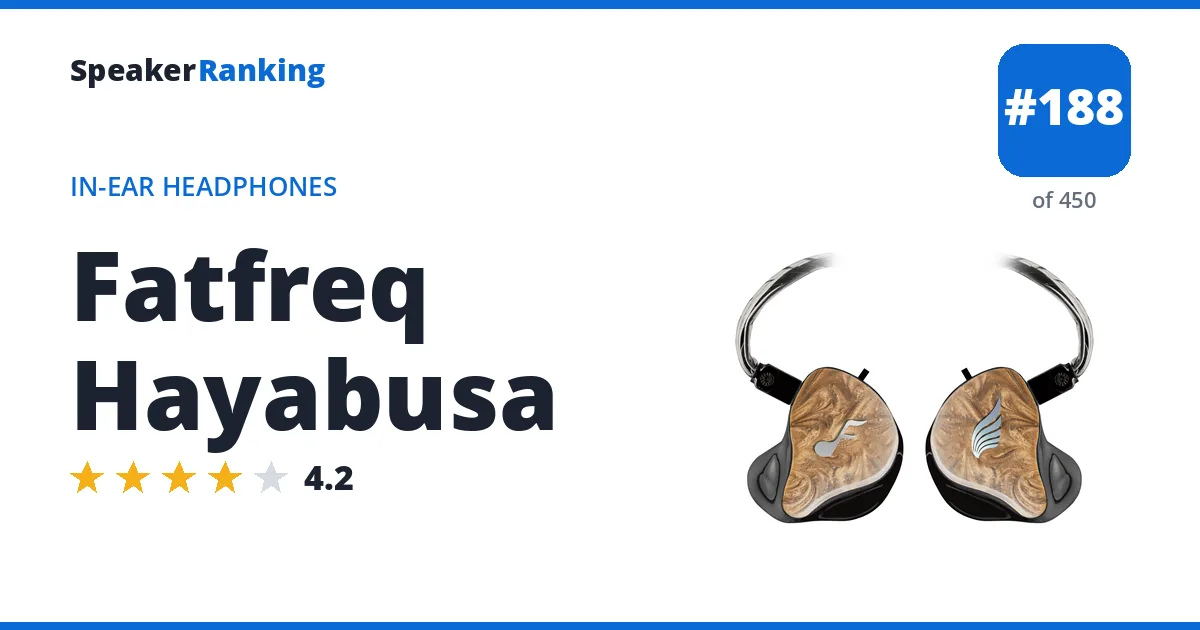
Pros: A preference score of 76 in crinacle’s measurement places its tuning reasonably close to the Harman target most listeners prefer. As a closed, wired in-ear it isolates from outside noise.
Cons: The response is uneven, at 1.94 dB standard deviation from target, so some frequency regions stand out or fall back. It is a wired design with no wireless option.
Full Fatfreq Hayabusa review and specifications →
| Back | Closed |
|---|---|
| Connection | Wired |
| Deviation From Target | 1.94 dB standard deviation |
| Form Factor | In-ear |
| Harman Preference Score | 76 (measured by crinacle, via AutoEQ) |
| Tonal Tilt | +0.29 (negative is warmer, positive brighter) |
EQ preset to match the Harman target
Set a preamp of -2.8 dB, then add these filters in any parametric equalizer (Wavelet, Equalizer APO, Peace, or a player with parametric EQ). Calculated by AutoEQ from its measured frequency response.
| Filter | Frequency | Gain | Q |
|---|---|---|---|
| Low shelf | 105 Hz | +2.6 dB | 0.70 |
| Peak | 188 Hz | -1.4 dB | 0.82 |
| Peak | 5,241 Hz | +3.0 dB | 3.70 |
| Peak | 9,076 Hz | +2.0 dB | 2.95 |
| Peak | 69 Hz | +0.6 dB | 1.28 |
| High shelf | 10,000 Hz | -4.2 dB | 0.70 |
| Peak | 1,470 Hz | -2.0 dB | 2.41 |
| Peak | 2,478 Hz | +2.4 dB | 2.85 |
| Peak | 3,671 Hz | -1.6 dB | 3.87 |
| Peak | 855 Hz | +1.0 dB | 1.93 |
- Reviews, Comparisons and Sound Samples
- Head-to-Head Comparisons
 Tin HiFi Huo: $25.00 Amazon eBay
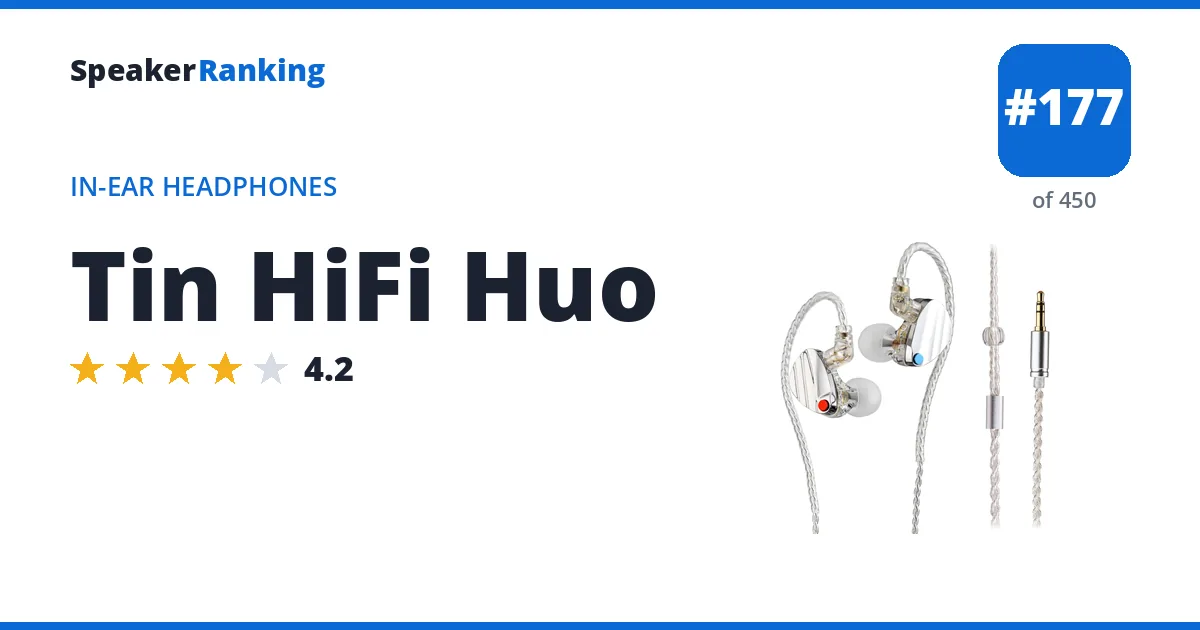
Full Tin HiFi Huo review and specifications →
| Back | Closed |
|---|---|
| Connection | Wired |
| Deviation From Target | 1.66 dB standard deviation |
| Driver Type | Hybrid (1 dynamic + 1 balanced armature) |
| Drivers | 1 x 10mm dynamic + 1 x balanced armature |
| Form Factor | In-ear |
| Harman Preference Score | 77 (median of 8 squig.link measurements, calibrated to AutoEQ) |
| Impedance | 20 ohms |
| Sensitivity | 108 dB |
| Sub-bass Extension | Within 6 dB of target down to 20 Hz (+0.3 dB at 30 Hz) |
| Tonal Tilt | -0.31 (negative is warmer, positive brighter) |
- Reviews, Comparisons and Sound Samples
- Head-to-Head Comparisons