Short answer: both are discontinued, so this only matters if you are buying used. Used, the Bose QuietComfort 25 is the better pick: it ranks #135 of 308 over-ear headphones by sound quality (rated 3.8/5), against #178 (rated 3.4/5) for the Bose QuietComfort 35 II. If you want one new, the Dan Clark Audio E3 ranks #1 at $2,299.
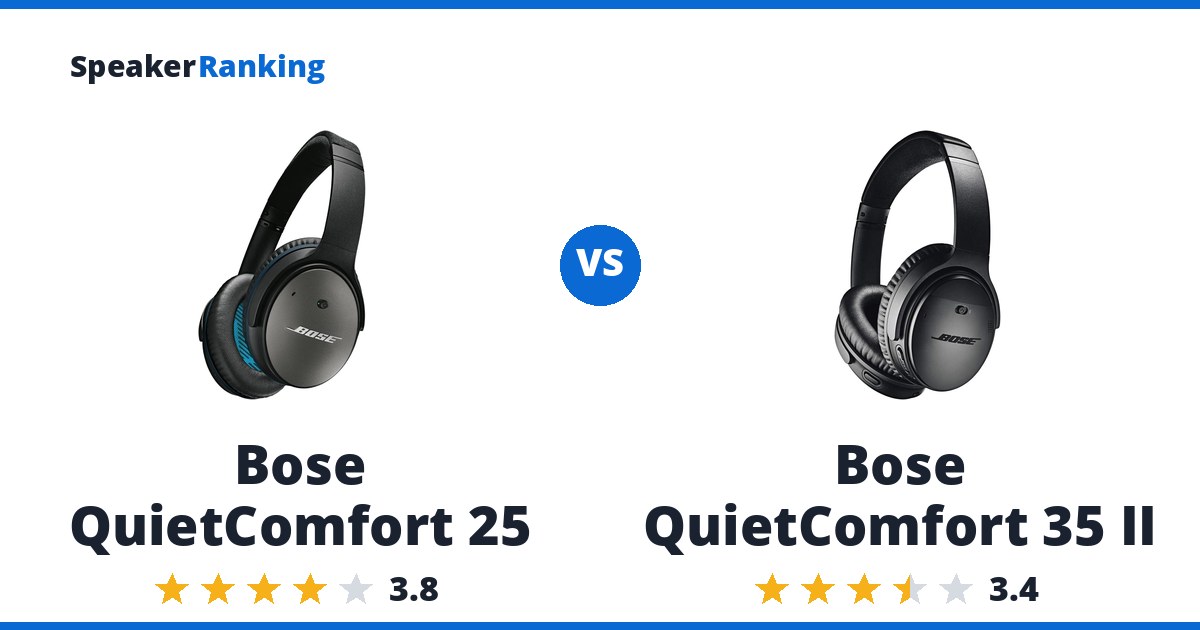
The Bose QuietComfort 25 is the better-sounding pick. Measured response gives it a very good Harman preference score of 77 with a 2.25 dB spread. Watch for: Discontinued, so it is mainly found used.
Why pick the Bose QuietComfort 35 II: Active noise cancelling and a 20 hour battery make it a practical choice for commuting and flights. Watch for: Bluetooth 4.0 and no aptX or LDAC support limit wireless audio quality and connection features compared with newer models.
Buy the Bose QuietComfort 25 only if you find one used in good condition; both are discontinued, and it is the better rated of the two. For a new speaker, start with the Dan Clark Audio E3 instead.
Still deciding? The full Headphones rankings cover every ranked option.
Specifications Side By Side
| Bose QuietComfort 25 | Bose QuietComfort 35 II | |
|---|---|---|
| Price | Discontinued | $378.99 Discontinued |
| Ranked | #135 of 308 in Over-Ear Headphones | #178 of 308 in Over-Ear Headphones |
| Form Factor | Over-ear | Over-ear |
| Back | Closed | Closed |
| Connection | Wired | Wireless and wired |
| Driver Type | Dynamic | - |
| Weight | 0.4 lbs (196 g) | 0.5 lbs (240 g) |
| Harman Preference Score | 77 (measured by oratory1990, via AutoEQ) | 69 (measured by crinacle, via AutoEQ) |
| Deviation From Target | 2.25 dB standard deviation | 2.61 dB standard deviation |
| Tonal Tilt | -0.55 (negative is warmer, positive brighter) | -0.81 (negative is warmer, positive brighter) |
| Sub-bass Extension | Within 6 dB of target down to 20 Hz (-0.8 dB at 30 Hz) | - |
| Active Noise Cancelling | - | Yes |
| Battery Life | - | 20 hours (Manufacturer specified) |
| Bluetooth Version | - | 4.0 |
| Bluetooth Codecs | - | SBC, AAC |
| Built-in Microphone | - | Yes |
Related Headphone Comparisons
More worthwhile head-to-heads for Bose QuietComfort 25:
- Bose QuietComfort 25 vs Bose QuietComfort 45
- Bose QuietComfort 35 II vs Bose QuietComfort 45
- Bose QuietComfort 20 vs Bose QuietComfort 35 II
- Focal Azurys vs Bose QuietComfort 35 II
- Bose QuietComfort 35 II vs Sony WH-1000XM6
Prices on this page were last checked October 12, 2026 at 4:13 PM UTC. Product prices and availability are accurate as of that date/time and are subject to change; the price and availability shown on Amazon at the time of purchase will apply to the purchase of this product.
As an eBay Partner, we may be compensated if you make a purchase.
The Two Headphones In Full
 Bose QuietComfort 25 Discontinued eBay
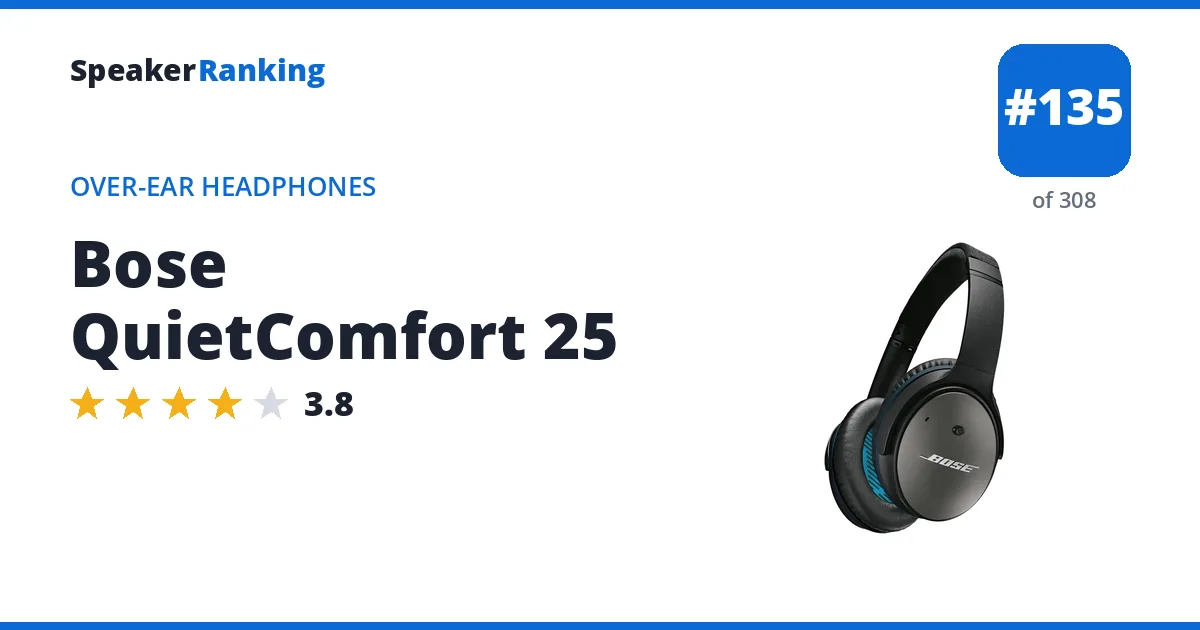
Pros: Measured response gives it a very good Harman preference score of 77 with a 2.25 dB spread. Bass sits close to target and holds down to 20 Hz, so low end sounds full without bloat.
Cons: Discontinued, so it is mainly found used. A 5.9 dB peak near 6.1 kHz can make cymbals and sibilance sound sharp.
Full Bose QuietComfort 25 review and specifications →
| Released | 2014 (12 years ago) |
|---|---|
| Back | Closed |
| Connection | Wired |
| Deviation From Target | 2.25 dB standard deviation |
| Driver Type | Dynamic |
| Form Factor | Over-ear |
| Harman Preference Score | 77 (measured by oratory1990, via AutoEQ) |
| Sub-bass Extension | Within 6 dB of target down to 20 Hz (-0.8 dB at 30 Hz) |
| Tonal Tilt | -0.55 (negative is warmer, positive brighter) |
| Weight | 0.4 lbs (196 g) |
EQ preset to match the Harman target
Set a preamp of -4.4 dB, then add these filters in any parametric equalizer (Wavelet, Equalizer APO, Peace, or a player with parametric EQ). Calculated by AutoEQ from its measured frequency response.
| Filter | Frequency | Gain | Q |
|---|---|---|---|
| Low shelf | 105 Hz | +11.4 dB | 0.70 |
| Peak | 44 Hz | -11.3 dB | 0.44 |
| Peak | 8,885 Hz | +3.1 dB | 2.73 |
| Peak | 6,317 Hz | -5.7 dB | 5.73 |
| Peak | 471 Hz | +2.1 dB | 4.74 |
| High shelf | 10,000 Hz | -1.3 dB | 0.70 |
| Peak | 1,321 Hz | -2.2 dB | 3.62 |
| Peak | 2,242 Hz | -1.8 dB | 2.57 |
| Peak | 3,113 Hz | +3.6 dB | 5.38 |
| Peak | 3,879 Hz | -2.0 dB | 6.00 |
- Reviews, Comparisons and Sound Samples
- Head-to-Head Comparisons
 Bose QuietComfort 35 II: $378.99 Wireless Discontinued Amazon $378.99 eBay
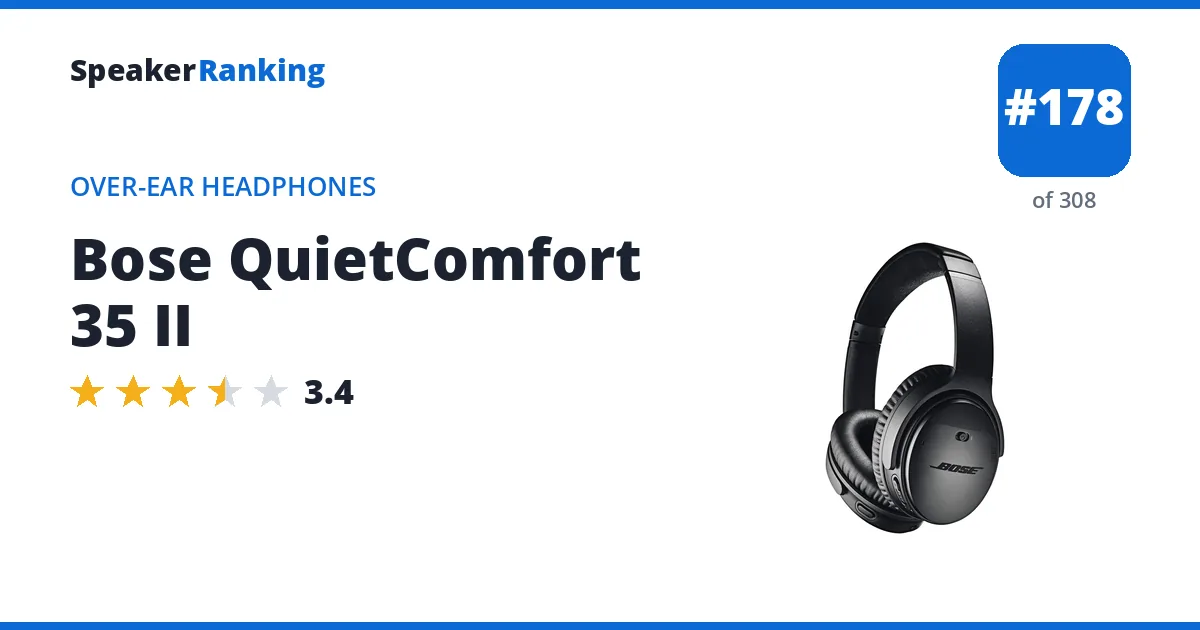
Pros: Active noise cancelling and a 20 hour battery make it a practical choice for commuting and flights. Bluetooth with SBC and AAC suits iPhones, and a wired connection is available when the battery runs out. At 240 g it is light for an over-ear with a built-in microphone, and its preference score of 69 in crinacle’s measurement is respectable for a noise cancelling model.
Cons: Bluetooth 4.0 and no aptX or LDAC support limit wireless audio quality and connection features compared with newer models. The Focal Azurys has a higher rating as a wired closed-back, though it lacks wireless and noise cancelling. The design dates from 2017, and the Fairphone Fairbuds XL offers newer Bluetooth, aptX HD and a longer battery at a lower price. Discontinued.
Full Bose QuietComfort 35 II review and specifications →
| Released | Oct 2017 (9 years ago) |
|---|---|
| Active Noise Cancelling | Yes |
| Back | Closed |
| Battery Life | 20 hours (Manufacturer specified) |
| Bluetooth Codecs | SBC, AAC |
| Bluetooth Version | 4.0 |
| Built-in Microphone | Yes |
| Connection | Wireless and wired |
| Deviation From Target | 2.61 dB standard deviation |
| Form Factor | Over-ear |
| Harman Preference Score | 69 (measured by crinacle, via AutoEQ) |
| Tonal Tilt | -0.81 (negative is warmer, positive brighter) |
| Weight | 0.5 lbs (240 g) |
EQ preset to match the Harman target
Set a preamp of -4.3 dB, then add these filters in any parametric equalizer (Wavelet, Equalizer APO, Peace, or a player with parametric EQ). Calculated by AutoEQ from its measured frequency response.
| Filter | Frequency | Gain | Q |
|---|---|---|---|
| Low shelf | 105 Hz | +2.4 dB | 0.70 |
| Peak | 99 Hz | -3.4 dB | 0.26 |
| Peak | 1,332 Hz | +3.2 dB | 0.62 |
| Peak | 2,633 Hz | -4.5 dB | 3.08 |
| Peak | 5,938 Hz | -5.2 dB | 6.00 |
| High shelf | 10,000 Hz | +1.4 dB | 0.70 |
| Peak | 9,646 Hz | +3.7 dB | 0.99 |
| Peak | 4,334 Hz | -2.3 dB | 3.66 |
| Peak | 7,076 Hz | +2.6 dB | 5.94 |
| Peak | 6,213 Hz | -3.9 dB | 6.00 |
- Reviews, Comparisons and Sound Samples
- Head-to-Head Comparisons