Short answer: the Bang & Olufsen Beoplay H95. It ranks #164 of 231 over-ear headphones by sound quality, rated 3.1/5, at $1,250. The Beyerdynamic DT 1350 ranks #179, rated 2.9/5, at $1,161.61, $88.39 cheaper, not enough of a saving to outweigh the sound-quality gap.
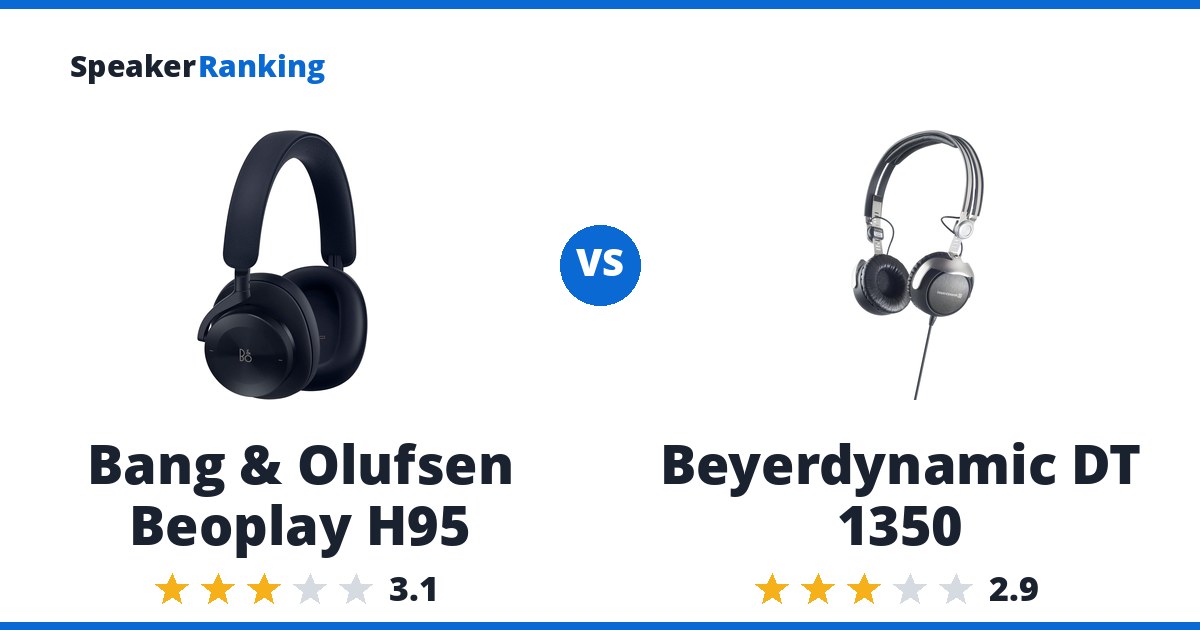
Why pick the Bang & Olufsen Beoplay H95: A full-featured wireless ANC headphone with aptX Adaptive, AAC and SBC, Bluetooth 5.1, a built-in microphone, a wired option and a rated 38 hours of battery (50 without ANC). Watch for: Treble is erratic, with a 9.6 dB peak near 11.9 kHz and a 6.7 dB dip near 10 kHz, which makes the top end uneven and slightly hot in places.
The case for the Beyerdynamic DT 1350: This closed-back headphone weighs only 0.4 lbs (174 g) and keeps sound in and outside noise out, which suits monitoring in loud spaces. The tradeoff: A preference score of 58 in crinacle’s measurement places its tonal balance well away from the response most listeners prefer.
Buy the Bang & Olufsen Beoplay H95. It is rated higher for sound quality, and the $88.39 you would save on the Beyerdynamic DT 1350 does not close the gap.
Still deciding? The full Headphones rankings cover every ranked option.
Specifications Side By Side
| Bang & Olufsen Beoplay H95 | Beyerdynamic DT 1350 | |
|---|---|---|
| Price | $1,250.00 | $1,161.61 |
| Ranked | #164 of 231 in Over-Ear Headphones | #179 of 231 in Over-Ear Headphones |
| Form Factor | Over-ear | Over-ear |
| Harman Preference Score | 62 (measured by oratory1990, via AutoEQ) | 58 (measured by crinacle, via AutoEQ) |
| Deviation From Target | 2.65 dB standard deviation | 3.50 dB standard deviation |
| Tonal Tilt | -1.22 (negative is warmer, positive brighter) | -0.78 (negative is warmer, positive brighter) |
| Sub-bass Extension | Within 6 dB of target down to 20 Hz (+5.2 dB at 30 Hz) | - |
| Connection | Wireless and wired | Wired |
| Back | Closed | Closed |
| Driver Type | Dynamic | Dynamic |
| Drivers | 1 x 40mm dynamic | 1 x dynamic |
| Impedance | 12 ohms | 80 ohms |
| Sensitivity | 101.5 dB/mW | 109 dB SPL (nominal) |
| Weight | 0.7 lbs (323 g) | 0.4 lbs (174 g) |
| Frequency Response | 20Hz - 22kHz (Manufacturer specified) | 5Hz - 30kHz (Manufacturer specified) |
| Active Noise Cancelling | Yes | - |
| Battery Life | 38 hours (50 without ANC, Manufacturer specified) | - |
| Bluetooth Version | 5.1 | - |
| Bluetooth Codecs | SBC, AAC, aptX Adaptive | - |
| Built-in Microphone | Yes | - |
Related Headphone Comparisons
More worthwhile head-to-heads for Bang & Olufsen Beoplay H95:
- Fostex TH900mk2 vs Bang & Olufsen Beoplay H95
- Beyerdynamic DT 1350 vs Focal Clear Mg
- Fostex TH900mk2 vs Beyerdynamic DT 1350
- Audio-Technica ATH-AWAS vs Beyerdynamic DT 1350
- Beyerdynamic DT 1350 vs Beyerdynamic DT 880
Prices on this page were last checked October 11, 2026 at 4:59 PM UTC. Product prices and availability are accurate as of that date/time and are subject to change; the price and availability shown on Amazon at the time of purchase will apply to the purchase of this product.
As an eBay Partner, we may be compensated if you make a purchase.
The Two Headphones In Full
 Bang & Olufsen Beoplay H95: $1,250.00 Wireless Amazon $1,250.00 eBay
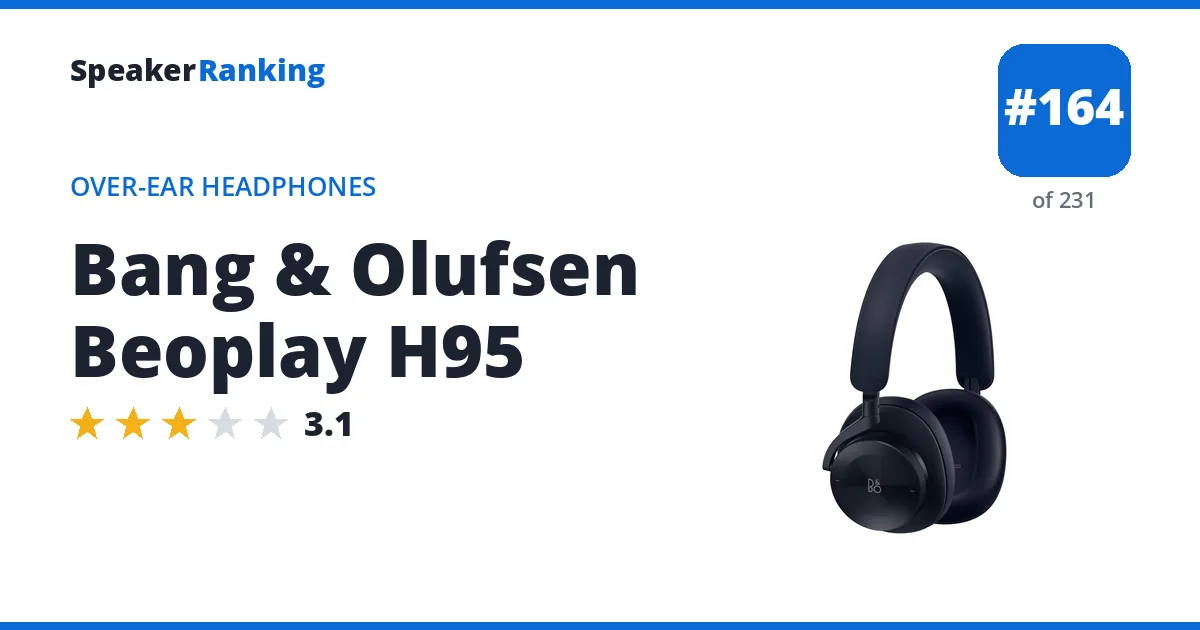
Pros: A full-featured wireless ANC headphone with aptX Adaptive, AAC and SBC, Bluetooth 5.1, a built-in microphone, a wired option and a rated 38 hours of battery (50 without ANC). Sub-bass sits about 6 dB over target and the upper bass about 3 dB over, so low notes have weight and warmth. The midrange stays close to target, within about 2 dB, and the overall curve is fairly smooth for a wireless model.
Cons: Treble is erratic, with a 9.6 dB peak near 11.9 kHz and a 6.7 dB dip near 10 kHz, which makes the top end uneven and slightly hot in places. The bass boost and a 1.9 dB lift in the low mids can make male vocals and bass guitar a little thick. At 323 g and a very high price, it asks a lot for sound that scores only 62 on the Harman preference scale.
Full Bang & Olufsen Beoplay H95 review and specifications →
| Active Noise Cancelling | Yes |
|---|---|
| Back | Closed |
| Battery Life | 38 hours (50 without ANC, Manufacturer specified) |
| Bluetooth Codecs | SBC, AAC, aptX Adaptive |
| Bluetooth Version | 5.1 |
| Built-in Microphone | Yes |
| Connection | Wireless and wired |
| Deviation From Target | 2.65 dB standard deviation |
| Driver Type | Dynamic |
| Drivers | 1 x 40mm dynamic |
| Form Factor | Over-ear |
| Frequency Response | 20Hz - 22kHz (Manufacturer specified) |
| Harman Preference Score | 62 (measured by oratory1990, via AutoEQ) |
| Impedance | 12 ohms |
| Sensitivity | 101.5 dB/mW |
| Sub-bass Extension | Within 6 dB of target down to 20 Hz (+5.2 dB at 30 Hz) |
| Tonal Tilt | -1.22 (negative is warmer, positive brighter) |
| Weight | 0.7 lbs (323 g) |
EQ preset to match the Harman target
Set a preamp of -3.6 dB, then add these filters in any parametric equalizer (Wavelet, Equalizer APO, Peace, or a player with parametric EQ). Calculated by AutoEQ from its measured frequency response.
| Filter | Frequency | Gain | Q |
|---|---|---|---|
| Low shelf | 105 Hz | -4.5 dB | 0.70 |
| Peak | 252 Hz | -3.8 dB | 1.28 |
| Peak | 2,644 Hz | +2.2 dB | 0.56 |
| Peak | 61 Hz | -2.0 dB | 0.66 |
| Peak | 93 Hz | +5.1 dB | 2.32 |
| High shelf | 10,000 Hz | -8.8 dB | 0.70 |
| Peak | 9,731 Hz | +3.6 dB | 1.42 |
| Peak | 1,253 Hz | -2.3 dB | 2.36 |
| Peak | 842 Hz | +2.1 dB | 3.42 |
| Peak | 1,919 Hz | +2.1 dB | 3.99 |
- Reviews, Comparisons and Sound Samples
- Head-to-Head Comparisons
 Beyerdynamic DT 1350: $1,161.61 Amazon $1,161.61 eBay
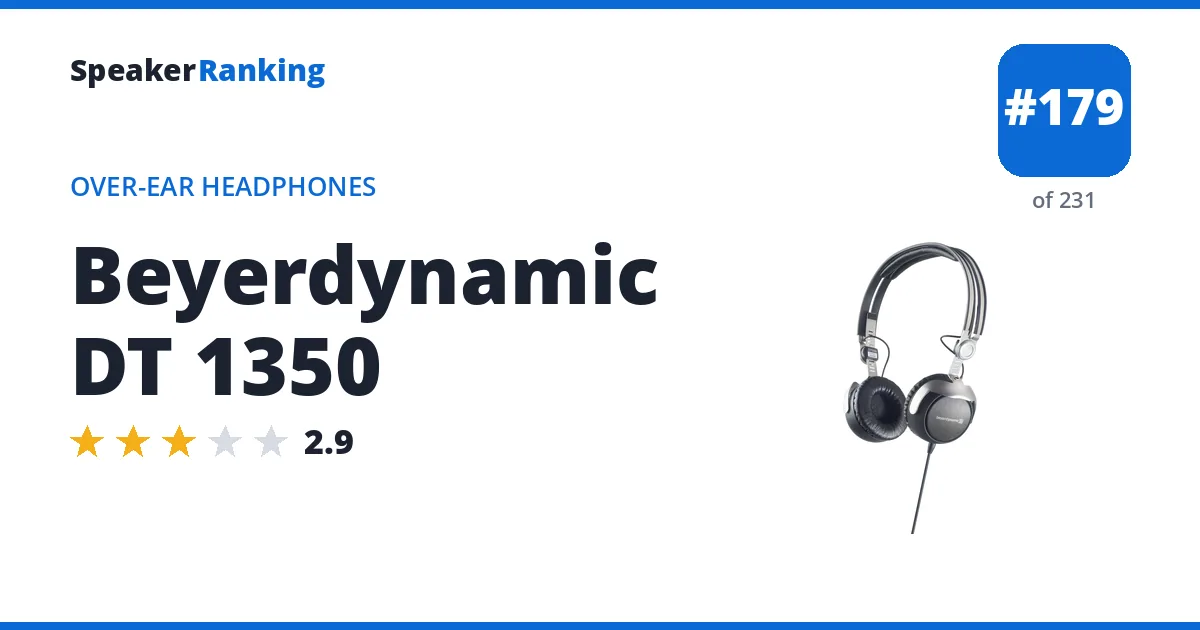
Pros: This closed-back headphone weighs only 174 g and keeps sound in and outside noise out, which suits monitoring in loud spaces. With 80 ohm impedance and a nominal 109 dB sensitivity it reaches useful volume from portable sources without a headphone amp.
Cons: A preference score of 58 in crinacle’s measurement places its tonal balance well away from the response most listeners prefer. The Focal Elegia rates higher and costs less.
Full Beyerdynamic DT 1350 review and specifications →
| Released | Feb 2011 (15 years ago) |
|---|---|
| Back | Closed |
| Connection | Wired |
| Deviation From Target | 3.50 dB standard deviation |
| Driver Type | Dynamic |
| Drivers | 1 x dynamic |
| Form Factor | Over-ear |
| Frequency Response | 5Hz - 30kHz (Manufacturer specified) |
| Harman Preference Score | 58 (measured by crinacle, via AutoEQ) |
| Impedance | 80 ohms |
| Sensitivity | 109 dB SPL (nominal) |
| Tonal Tilt | -0.78 (negative is warmer, positive brighter) |
| Weight | 0.4 lbs (174 g) |
EQ preset to match the Harman target
Set a preamp of -6.2 dB, then add these filters in any parametric equalizer (Wavelet, Equalizer APO, Peace, or a player with parametric EQ). Calculated by AutoEQ from its measured frequency response.
| Filter | Frequency | Gain | Q |
|---|---|---|---|
| Low shelf | 105 Hz | +1.1 dB | 0.70 |
| Peak | 2,762 Hz | +6.9 dB | 1.10 |
| Peak | 496 Hz | -4.5 dB | 0.48 |
| Peak | 4,606 Hz | -7.2 dB | 1.87 |
| Peak | 1,546 Hz | +5.4 dB | 1.70 |
| High shelf | 10,000 Hz | -1.7 dB | 0.70 |
| Peak | 98 Hz | -1.6 dB | 1.90 |
| Peak | 7,672 Hz | +2.5 dB | 2.60 |
| Peak | 5,822 Hz | -2.3 dB | 6.00 |
| Peak | 174 Hz | +1.4 dB | 3.45 |
- Reviews, Comparisons and Sound Samples
- Head-to-Head Comparisons