Short answer: the OneOdio Pro-10, though neither ranks well in its class. Both are rated 1.6/5 for sound quality (#224 and #223 of 231 over-ear headphones), and the OneOdio Pro-10 costs $35.99 against $55.99 for the Anker Soundcore Life Q30, with sound quality a draw, the lower price decides it. Both are rated below 3.0/5 among the 231 over-ear headphones, and the Superlux HD 660 Pro 150 Ohm, ranked #58 at $34, is a better place to start if sound quality matters.
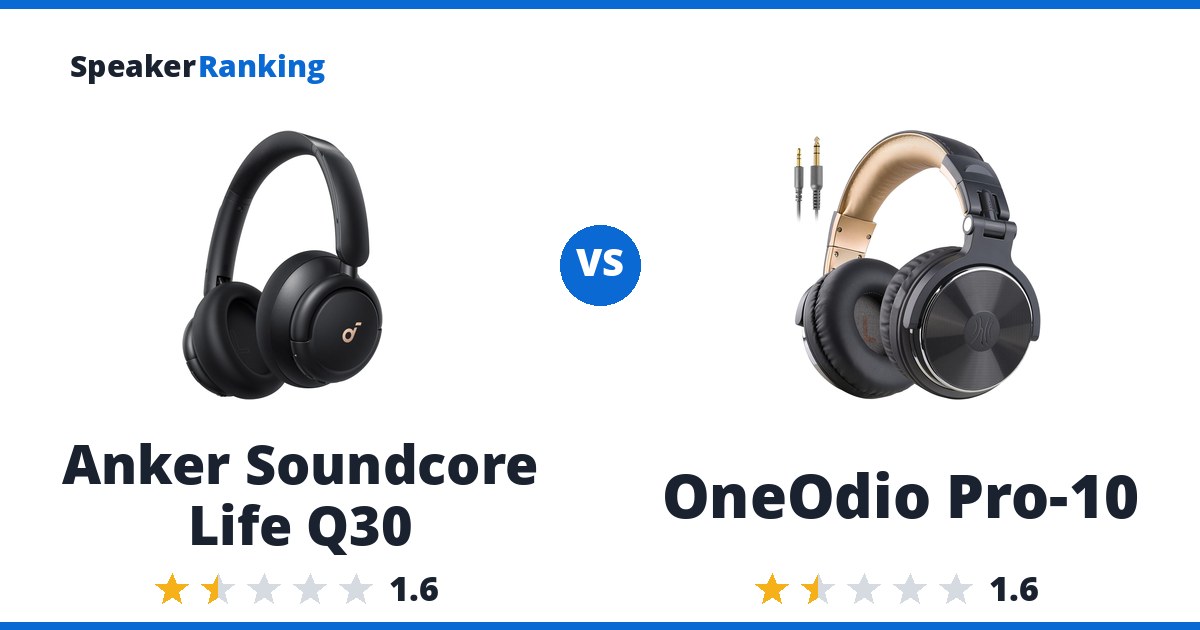
Why pick the Anker Soundcore Life Q30: Active noise cancelling and a claimed 60 hours of battery (40 with ANC on) make it an inexpensive travel and commuting option, and a wired connection is there when the battery runs out. The catch: The response is far from neutral, with a preference score of only 27.7, and the boosted bass spills over vocals and instruments.
Why pick the OneOdio Pro-10: The low price gets a wired closed headphone with a built-in microphone. Watch for: A 13.6 dB peak near 6.1 kHz makes cymbals and sibilance harsh, and low mids about 5.4 dB above target muddy voices, giving a preference score of only 27 in hobbyist measurements.
Buy the OneOdio Pro-10. Both are rated the same for sound quality, and it costs $20 less than the Anker Soundcore Life Q30.
Want more options? Browse the full Headphones rankings.
Specifications Side By Side
| Anker Soundcore Life Q30 | OneOdio Pro-10 | |
|---|---|---|
| Price | $55.99 | $35.99 |
| Ranked | #223 of 231 in Over-Ear Headphones | #224 of 231 in Over-Ear Headphones |
| Form Factor | Over-ear | Over-ear |
| Harman Preference Score | 28 (median of 1 squig.link measurements, calibrated to AutoEQ) | 27 (median of 1 squig.link measurements, calibrated to AutoEQ) |
| Deviation From Target | 4.23 dB standard deviation | 4.76 dB standard deviation |
| Tonal Tilt | -2.21 (negative is warmer, positive brighter) | -1.81 (negative is warmer, positive brighter) |
| Sub-bass Extension | Within 6 dB of target down to 20 Hz (+4.3 dB at 30 Hz) | Within 6 dB of target down to 20 Hz (-1.1 dB at 30 Hz) |
| Connection | Wireless and wired | Wired |
| Back | Closed | - |
| Driver Type | Dynamic | Dynamic |
| Drivers | 1 x 40mm dynamic | 1 x 50mm dynamic |
| Impedance | 16 ohms | 32 ohms |
| Weight | 0.6 lbs (260 g) | - |
| Frequency Response | 16Hz - 40kHz (Manufacturer specified) | 20Hz - 20kHz (Manufacturer specified) |
| Active Noise Cancelling | Yes | - |
| Battery Life | 60 hours (40 with ANC on, Manufacturer specified) | - |
| Bluetooth Version | 5.0 | - |
| Bluetooth Codecs | SBC, AAC | - |
| Built-in Microphone | Yes | Yes |
| Sensitivity | - | 110 dB ± 3dB |
Related Headphone Comparisons
More top alternatives to Anker Soundcore Life Q30:
- Anker Soundcore Life Q30 vs HIFIMAN HE-R9
- OneOdio Pro-10 vs Razer BlackShark V2 X
- Sennheiser HD 450BT vs HIFIMAN HE-R9
- HIFIMAN HE-R9 vs Razer Barracuda X
- HIFIMAN HE-R9 vs AKG K92
Prices on this page were last checked October 11, 2026 at 4:59 PM UTC. Product prices and availability are accurate as of that date/time and are subject to change; the price and availability shown on Amazon at the time of purchase will apply to the purchase of this product.
As an eBay Partner, we may be compensated if you make a purchase.
The Two Headphones In Full
 Anker Soundcore Life Q30: $55.99 Wireless Amazon $55.99 eBay
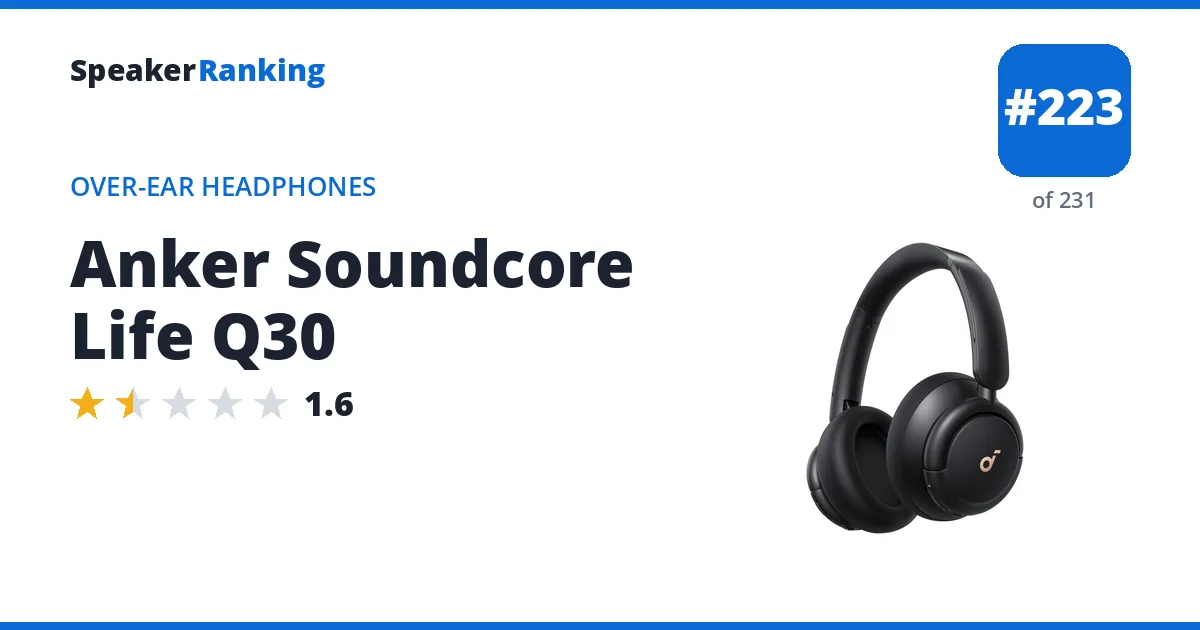
Pros: Active noise cancelling and a claimed 60 hours of battery (40 with ANC on) make it an inexpensive travel and commuting option, and a wired connection is there when the battery runs out. Listeners who want heavy bass get it: in hobbyist measurements the sub-bass sits about 6.6 dB and the bass about 7 dB above target, so kick drums and synth lines hit hard. The 16 ohm load is trivial for any phone or laptop, and AAC support suits iPhone owners.
Cons: The response is far from neutral, with a preference score of only 27.7, and the boosted bass spills over vocals and instruments. A dip of 8.5 dB near 9.2 kHz followed by a 9.8 dB peak near 11.9 kHz makes cymbals sound uneven, alternating between dull and splashy. The presence region near 3 to 6 kHz sits almost 4 dB low, so voices lack clarity next to the bass.
Full Anker Soundcore Life Q30 review and specifications →
| Released | Sep 2020 (6 years ago) |
|---|---|
| Active Noise Cancelling | Yes |
| Back | Closed |
| Battery Life | 60 hours (40 with ANC on, Manufacturer specified) |
| Bluetooth Codecs | SBC, AAC |
| Bluetooth Version | 5.0 |
| Built-in Microphone | Yes |
| Connection | Wireless and wired |
| Deviation From Target | 4.23 dB standard deviation |
| Driver Type | Dynamic |
| Drivers | 1 x 40mm dynamic |
| Form Factor | Over-ear |
| Frequency Response | 16Hz - 40kHz (Manufacturer specified) |
| Harman Preference Score | 28 (median of 1 squig.link measurements, calibrated to AutoEQ) |
| Impedance | 16 ohms |
| Sub-bass Extension | Within 6 dB of target down to 20 Hz (+4.3 dB at 30 Hz) |
| Tonal Tilt | -2.21 (negative is warmer, positive brighter) |
| Weight | 0.6 lbs (260 g) |
- Reviews, Comparisons and Sound Samples
- Head-to-Head Comparisons
 OneOdio Pro-10: $35.99 Amazon $35.99 eBay
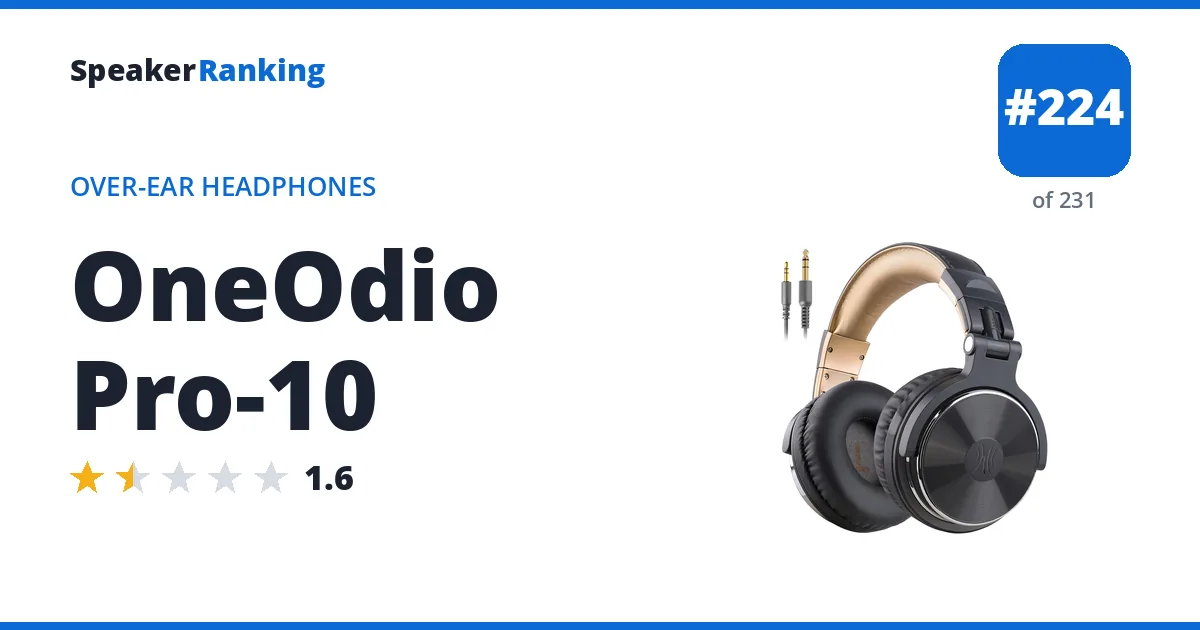
Pros: The low price gets a wired closed headphone with a built-in microphone. A 32 ohm load and 110 dB sensitivity mean a phone or laptop drives it loud with no amplifier. Bass about 8 dB above target suits listeners who want a heavy, boomy low end.
Cons: A 13.6 dB peak near 6.1 kHz makes cymbals and sibilance harsh, and low mids about 5.4 dB above target muddy voices, giving a preference score of only 27 in hobbyist measurements. The response is very uneven, deviating almost 5 dB on average from target. The Koss Porta Pro rates higher at a similar price.
Full OneOdio Pro-10 review and specifications →
| Built-in Microphone | Yes |
|---|---|
| Connection | Wired |
| Deviation From Target | 4.76 dB standard deviation |
| Driver Type | Dynamic |
| Drivers | 1 x 50mm dynamic |
| Form Factor | Over-ear |
| Frequency Response | 20Hz - 20kHz (Manufacturer specified) |
| Harman Preference Score | 27 (median of 1 squig.link measurements, calibrated to AutoEQ) |
| Impedance | 32 ohms |
| Sensitivity | 110 dB ± 3dB |
| Sub-bass Extension | Within 6 dB of target down to 20 Hz (-1.1 dB at 30 Hz) |
| Tonal Tilt | -1.81 (negative is warmer, positive brighter) |
- Reviews, Comparisons and Sound Samples
- Head-to-Head Comparisons