Coverage note. Speaker Ranking currently covers 7 Shure models across headphones. These are the products in our database, not a complete list of everything Shure makes.
What this page covers. The Shure models ranked here span headphones, including Shure SRH440, Shure SRH840 and Shure SRH1840. Use each model’s category position to compare it with alternatives of the same size and use case.
This page lists all 7 Shure speakers ranked on this site across headphones. Each model is shown in the category where it competes, with its current rank and the size of that ranking.
Use the category position rather than the brand name alone: speakers from the same manufacturer can perform very differently by size, price and product family.
Prices on this page were last checked October 10, 2026 at 5:37 PM UTC. Product prices and availability are accurate as of that date/time and are subject to change; the price and availability shown on Amazon at the time of purchase will apply to the purchase of this product.
As an eBay Partner, we may be compensated if you make a purchase.
Quick Navigation
Over-Ear Headphones
 Ranked #76 of 134 in Over-Ear Headphones - Shure SRH1840: $549.00 Amazon eBay
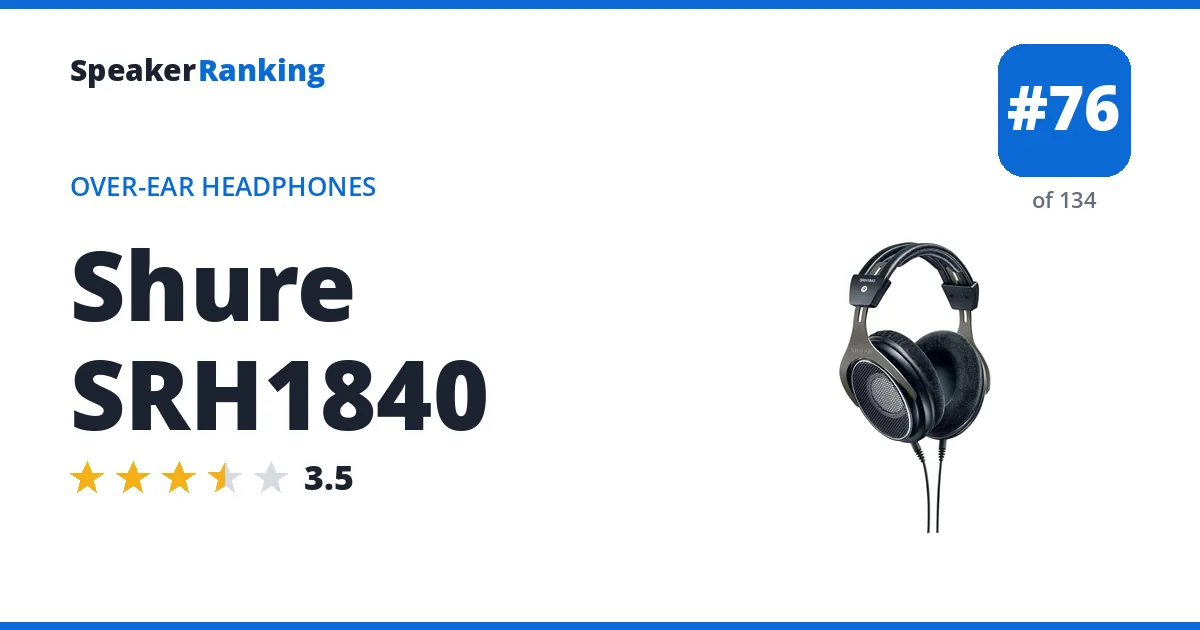
Pros: The response leans neutral to slightly bright, with upper mids about 1.8 dB above target and presence and treble within about 1 dB, which makes vocals and instrument detail clear. The preference score of 71 and 2.29 dB deviation reflect a smooth, even midrange and treble. It is an open back at 268 g.
Cons: Sub-bass is about 7.5 dB under target and bass is about 1.8 dB low, so kick drums and bass guitar are thin and lack rumble. A 4.4 dB peak near 3.1 kHz can make voices and strings sound forward or slightly harsh at higher volumes. At 65 ohms and 96 dB/mW sensitivity it benefits from a proper headphone amplifier, and the open back leaks sound. The Denon AH-D5200 earns a higher rating among its rivals.
Full Shure SRH1840 review and specifications →
| Back | Open |
|---|---|
| Connection | Wired |
| Deviation From Target | 2.29 dB standard deviation |
| Driver Type | Dynamic |
| Drivers | 1 x 40mm dynamic |
| Form Factor | Over-ear |
| Frequency Response | 10Hz - 30kHz (Manufacturer specified) |
| Harman Preference Score | 71 (measured by oratory1990, via AutoEQ) |
| Impedance | 65 ohms |
| Sensitivity | 96 dB/mW |
| Tonal Tilt | +0.91 (negative is warmer, positive brighter) |
| Weight | 0.6 lbs (268 g) |
EQ preset to match the Harman target
Set a preamp of -6.2 dB, then add these filters in any parametric equalizer (Wavelet, Equalizer APO, Peace, or a player with parametric EQ). Calculated by AutoEQ from its measured frequency response.
| Filter | Frequency | Gain | Q |
|---|---|---|---|
| Low shelf | 105 Hz | +6.2 dB | 0.70 |
| Peak | 3,060 Hz | -4.5 dB | 1.40 |
| Peak | 581 Hz | +2.0 dB | 0.95 |
| Peak | 4,732 Hz | +4.2 dB | 3.22 |
| Peak | 180 Hz | -1.2 dB | 0.82 |
| High shelf | 10,000 Hz | -1.1 dB | 0.70 |
| Peak | 59 Hz | +0.5 dB | 2.87 |
| Peak | 89 Hz | -0.2 dB | 2.05 |
| Peak | 6,333 Hz | -1.0 dB | 6.00 |
| Peak | 7,292 Hz | +1.3 dB | 5.96 |
- Reviews, Comparisons and Sound Samples
 Ranked #77 of 134 in Over-Ear Headphones - Shure SRH840A: $169.00 Amazon eBay
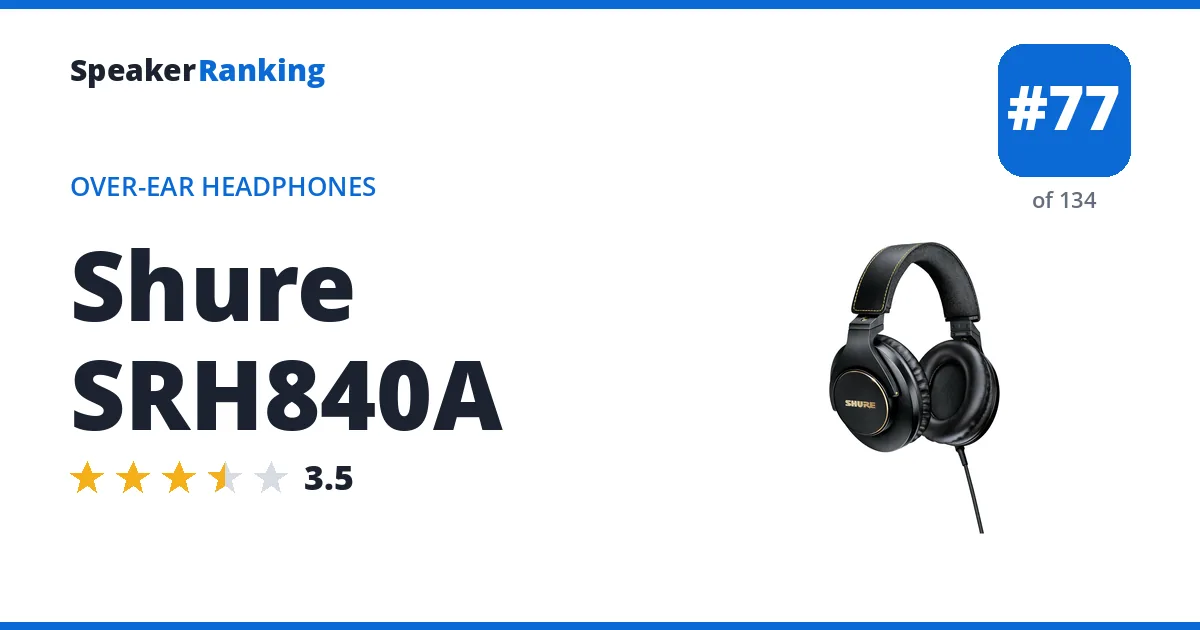
Older model: the Shure SRH840 (ranked higher, rated 4.3/5). See every Shure SRH840 generation.
Pros: Bass is big, with sub-bass about 3.9 dB and bass about 5.3 dB above target, which suits hip hop, EDM and pop where weight matters. Treble and air are lifted too, about 2 dB and 4.5 dB over target, adding sparkle and a sense of detail. At 44 ohms and 102 dB/mW sensitivity it runs well from a phone, and the closed 273 g design isolates.
Cons: The bass boost of 5.3 dB can bleed into the low mids and cloud vocals and bass guitar. A 4 dB peak near 11.9 kHz can make cymbals and sibilance a little splashy. Overall tilt is warm, so listeners who want an accurate, neutral balance will find it colored.
Full Shure SRH840A review and specifications →
| Back | Closed |
|---|---|
| Connection | Wired |
| Deviation From Target | 2.25 dB standard deviation |
| Driver Type | Dynamic |
| Drivers | 1 x 40mm dynamic |
| Form Factor | Over-ear |
| Frequency Response | 5Hz - 25kHz (Manufacturer specified) |
| Harman Preference Score | 71 (measured by oratory1990, via AutoEQ) |
| Impedance | 44 ohms |
| Sensitivity | 102 dB/mW |
| Tonal Tilt | -0.99 (negative is warmer, positive brighter) |
| Weight | 0.6 lbs (273 g) |
EQ preset to match the Harman target
Set a preamp of -3.3 dB, then add these filters in any parametric equalizer (Wavelet, Equalizer APO, Peace, or a player with parametric EQ). Calculated by AutoEQ from its measured frequency response.
| Filter | Frequency | Gain | Q |
|---|---|---|---|
| Low shelf | 105 Hz | -1.4 dB | 0.70 |
| Peak | 1,254 Hz | +2.3 dB | 0.60 |
| Peak | 121 Hz | -3.6 dB | 0.71 |
| Peak | 5,403 Hz | -3.1 dB | 2.76 |
| Peak | 4,270 Hz | +3.9 dB | 4.65 |
| High shelf | 10,000 Hz | -4.6 dB | 0.70 |
| Peak | 46 Hz | -0.4 dB | 1.73 |
| Peak | 251 Hz | +1.2 dB | 3.63 |
| Peak | 170 Hz | -0.7 dB | 3.14 |
| Peak | 418 Hz | -0.6 dB | 2.84 |
- Reviews, Comparisons and Sound Samples
 Ranked #90 of 134 in Over-Ear Headphones - Shure SRH1540: $549.00 Amazon eBay
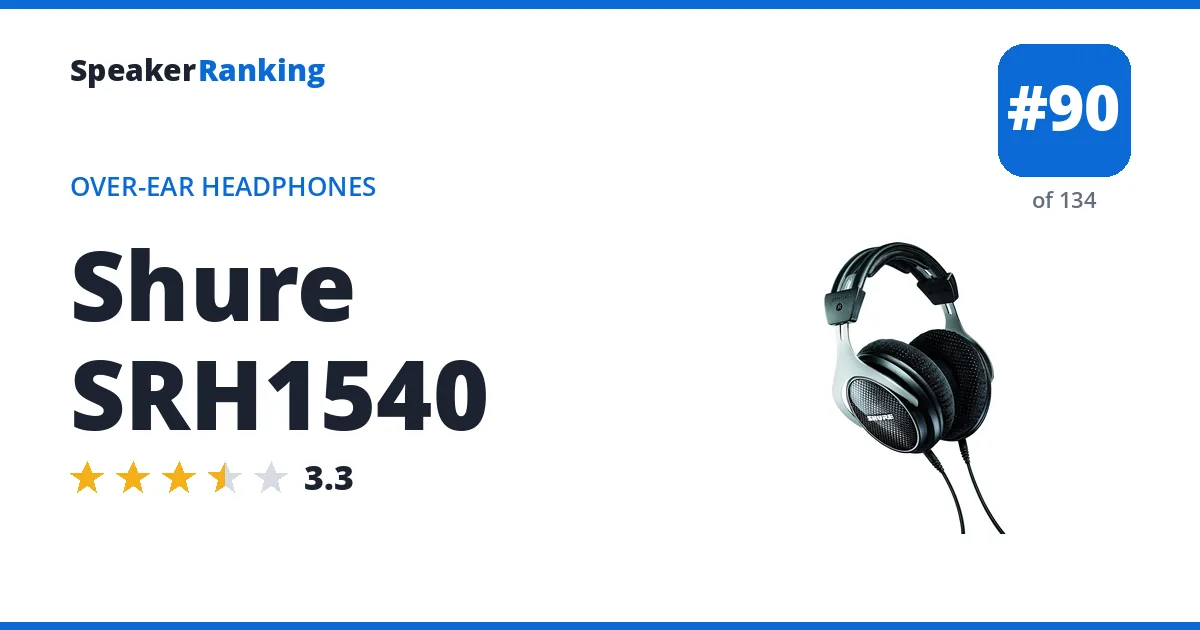
Pros: The smoothest of this group, with just 2.33 dB of deviation and a biggest dip of only 3.3 dB near 8.6 kHz, so treble is more even and cymbals keep their detail. Mids are within about 1.2 dB of target and treble sits close to it. At 286 g with a closed back, 46 ohms and 99 dB per mW, it works from a phone and isolates reasonably.
Cons: Upper bass sits about 5.1 dB above target, which adds warmth and some boom that can cloud kick drums and male vocals. Sound is warmer than the Harman target overall, so it suits listeners who like a bassy presentation more than neutral ones. It is wired only, and the Bose QuietComfort 35 II has a higher rating at a lower price with wireless.
Full Shure SRH1540 review and specifications →
| Back | Closed |
|---|---|
| Connection | Wired |
| Deviation From Target | 2.33 dB standard deviation |
| Driver Type | Dynamic |
| Drivers | 1 x 40mm dynamic |
| Form Factor | Over-ear |
| Frequency Response | 5Hz - 25kHz (Manufacturer specified) |
| Harman Preference Score | 67 (measured by oratory1990, via AutoEQ) |
| Impedance | 46 ohms |
| Sensitivity | 99 dB/mW |
| Tonal Tilt | -1.18 (negative is warmer, positive brighter) |
| Weight | 0.6 lbs (286 g) |
EQ preset to match the Harman target
Set a preamp of -3.4 dB, then add these filters in any parametric equalizer (Wavelet, Equalizer APO, Peace, or a player with parametric EQ). Calculated by AutoEQ from its measured frequency response.
| Filter | Frequency | Gain | Q |
|---|---|---|---|
| Low shelf | 105 Hz | +1.9 dB | 0.70 |
| Peak | 107 Hz | -5.7 dB | 0.58 |
| Peak | 688 Hz | +1.7 dB | 0.62 |
| Peak | 6,484 Hz | +2.0 dB | 0.31 |
| Peak | 2,709 Hz | -2.3 dB | 1.97 |
| High shelf | 10,000 Hz | -0.4 dB | 0.70 |
| Peak | 4,812 Hz | +2.0 dB | 4.68 |
| Peak | 5,940 Hz | -2.4 dB | 6.00 |
| Peak | 40 Hz | -0.6 dB | 2.05 |
| Peak | 60 Hz | +0.8 dB | 4.03 |
- Reviews, Comparisons and Sound Samples
 Ranked #111 of 134 in Over-Ear Headphones - Shure SRH440A: $109.00 Amazon eBay
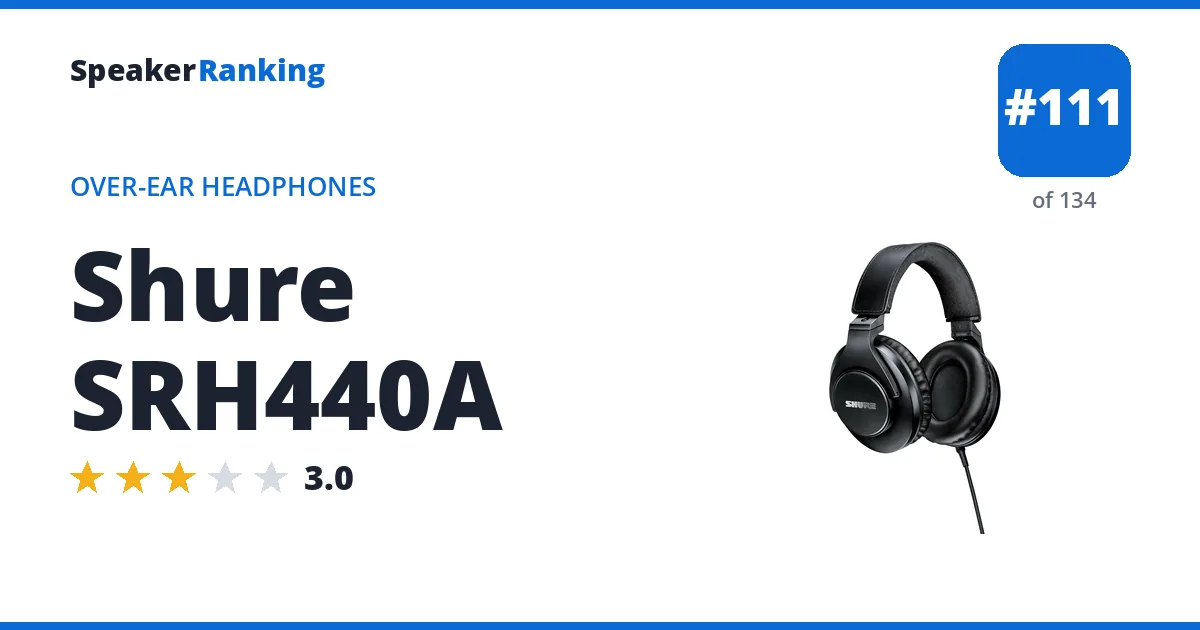
Older model: the Shure SRH440 (ranked higher, rated 4.6/5). See every Shure SRH440 generation.
Pros: Bass is lifted about 3 dB below 60 Hz and 5.6 dB from 60 to 200 Hz, which gives kick drums and bass lines a strong punch. The midrange is close to target, within about 1.3 dB, and the response is fairly smooth with a standard deviation under 3 dB in oratory1990’s measurement. At 44 ohms and 105 dB/mW it runs fine from a phone, and the closed back isolates from outside noise.
Cons: The low end is heavy enough to add warmth and some boom to the lower mids on bass-heavy music. A 3.9 dB dip near 4.1 kHz recesses vocal presence, while treble above 10 kHz sits about 3.5 dB over target. It is wired only with no microphone listed, and the Anker Soundcore Space One has a higher rating with wireless and noise cancelling.
Full Shure SRH440A review and specifications →
| Back | Closed |
|---|---|
| Connection | Wired |
| Deviation From Target | 2.73 dB standard deviation |
| Driver Type | Dynamic |
| Form Factor | Over-ear |
| Frequency Response | 10Hz - 22kHz (Manufacturer specified) |
| Harman Preference Score | 60 (measured by oratory1990, via AutoEQ) |
| Impedance | 44 ohms |
| Sensitivity | 105 dB/mW |
| Tonal Tilt | -1.32 (negative is warmer, positive brighter) |
| Weight | 0.7 lbs (311 g) |
EQ preset to match the Harman target
Set a preamp of -5.3 dB, then add these filters in any parametric equalizer (Wavelet, Equalizer APO, Peace, or a player with parametric EQ). Calculated by AutoEQ from its measured frequency response.
| Filter | Frequency | Gain | Q |
|---|---|---|---|
| Low shelf | 105 Hz | -0.5 dB | 0.70 |
| Peak | 160 Hz | -5.5 dB | 0.47 |
| Peak | 4,109 Hz | +5.0 dB | 3.87 |
| Peak | 1,427 Hz | +2.5 dB | 0.85 |
| Peak | 310 Hz | +5.5 dB | 2.14 |
| High shelf | 10,000 Hz | -4.0 dB | 0.70 |
| Peak | 51 Hz | -0.6 dB | 1.71 |
| Peak | 88 Hz | +0.7 dB | 2.65 |
| Peak | 189 Hz | -0.5 dB | 3.16 |
| Peak | 5,300 Hz | -0.7 dB | 6.00 |
- Reviews, Comparisons and Sound Samples
- Head-to-Head Comparisons
In-Ear Headphones
 Ranked #53 of 68 in In-Ear Headphones - Shure SE215: $109.00 Amazon eBay
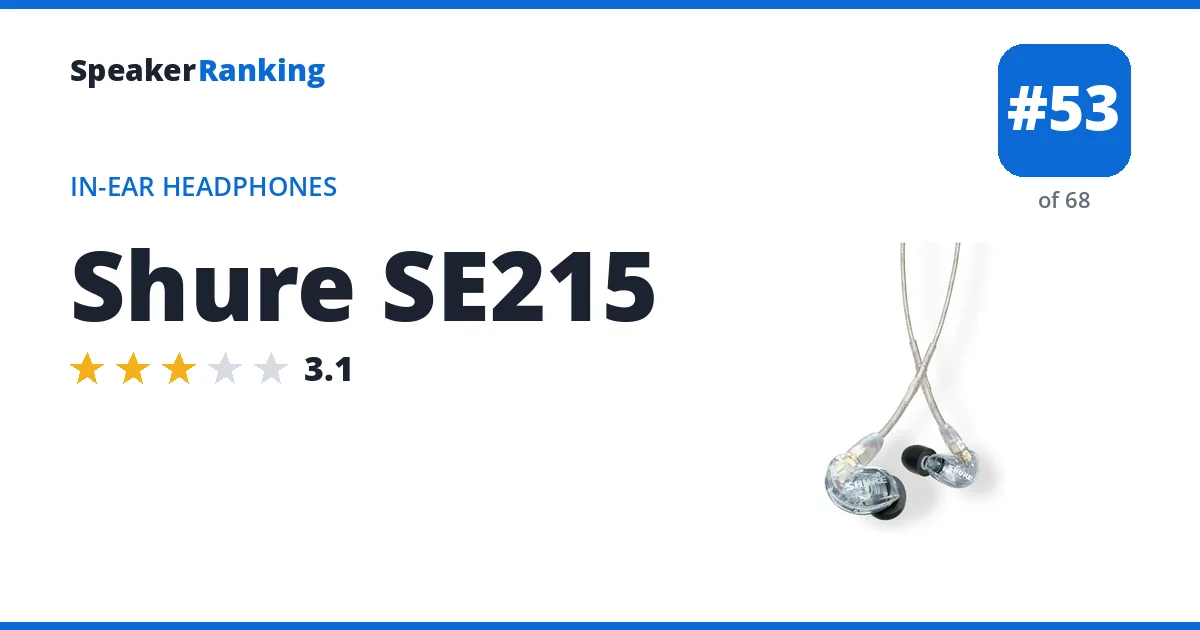
Pros: Bass from 60 to 200 Hz is lifted by about 4.2 dB with low mids up 2.2 dB, giving a warm, full sound that suits rock, pop and hip hop. A 17 ohm impedance and 107 dB SPL/mW sensitivity make it easy to drive from a phone, and the single dynamic driver keeps the design simple. Upper mids sit right on target, so vocals are not pushed back.
Cons: Treble from 6 to 10 kHz is about 3 dB low with a 5.9 dB dip near 6.7 kHz, and the top octave is down 2.7 dB, so cymbals and air sound dull. The warm balance can make the mix feel thick. The iBasso IT01S and the FiiO FH3 both have higher ratings.
Full Shure SE215 review and specifications →
| Released | Jan 2011 (15 years ago) |
|---|---|
| Back | Closed |
| Connection | Wired |
| Deviation From Target | 2.78 dB standard deviation |
| Driver Type | Dynamic |
| Drivers | 1 x dynamic |
| Form Factor | In-ear |
| Frequency Response | 22Hz - 17.5kHz (Manufacturer specified) |
| Harman Preference Score | 63 (measured by oratory1990, via AutoEQ) |
| Impedance | 17 ohms |
| Sensitivity | 107 dB SPL/mW |
| Tonal Tilt | -0.78 (negative is warmer, positive brighter) |
EQ preset to match the Harman target
Set a preamp of -5.7 dB, then add these filters in any parametric equalizer (Wavelet, Equalizer APO, Peace, or a player with parametric EQ). Calculated by AutoEQ from its measured frequency response.
| Filter | Frequency | Gain | Q |
|---|---|---|---|
| Low shelf | 105 Hz | +0.3 dB | 0.70 |
| Peak | 174 Hz | -4.6 dB | 0.68 |
| Peak | 811 Hz | +3.1 dB | 1.42 |
| Peak | 3,430 Hz | +3.8 dB | 4.37 |
| Peak | 6,943 Hz | +5.4 dB | 2.76 |
| High shelf | 10,000 Hz | +3.8 dB | 0.70 |
| Peak | 5,725 Hz | +8.1 dB | 1.13 |
| Peak | 5,056 Hz | -10.9 dB | 2.93 |
| Peak | 7,269 Hz | -6.3 dB | 3.47 |
| Peak | 2,278 Hz | -2.1 dB | 2.94 |
- Reviews, Comparisons and Sound Samples
- Head-to-Head Comparisons
Discontinued Shure Models
Still ranked, and often still worth buying used, but no longer in production. Check availability before planning around one of these.
Over-Ear Headphones
 Ranked #2 of 134 in Over-Ear Headphones - Shure SRH440: $109.00 Discontinued Amazon eBay
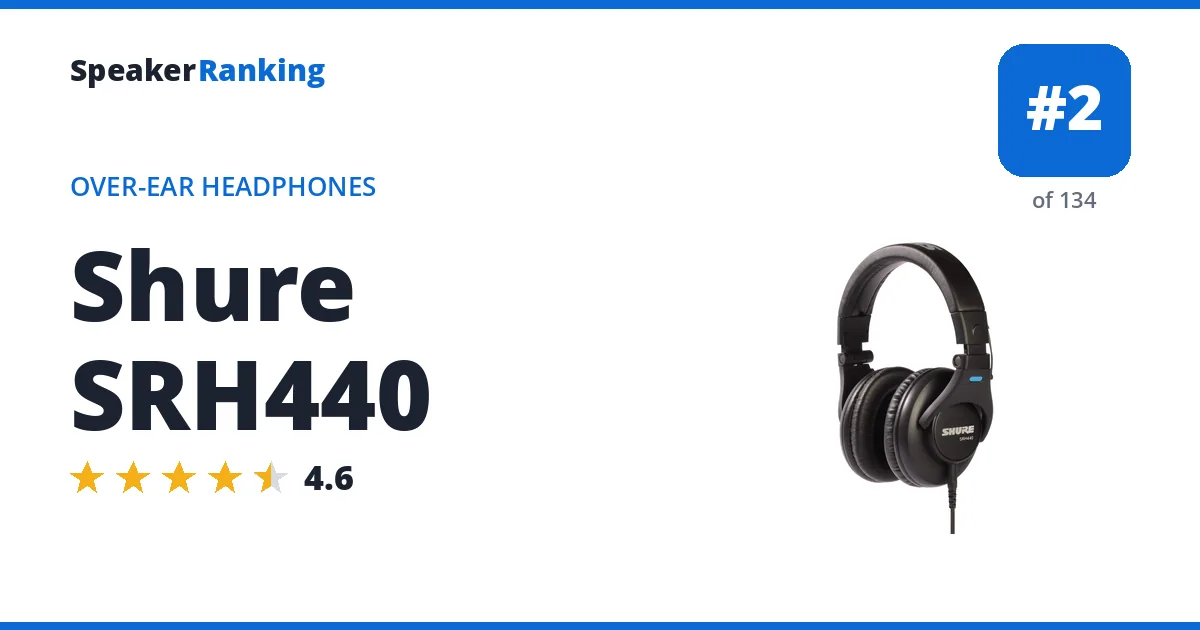
Newer model: the Shure SRH440A, ranked lower, rated 3/5. See every Shure SRH440 generation.
Pros: Its preference score of 96 is among the best in the class, and the response stays within about 1.3 dB of the Harman target overall. Bass from 60 to 200 Hz lands within half a dB of target, and the midrange is nearly dead on, so vocals and guitars sound natural. At 44 ohms and 105 dB/mW it runs loudly from a phone, the closed back isolates, and the 311 g weight is modest.
Cons: Sub-bass below 60 Hz is about 3.4 dB under target, so the deepest synth and organ notes lack rumble. Treble from 6 to 10 kHz runs about 2.2 dB hot with a 4.7 dB peak near 7.8 kHz, which can add a bit of edge to hi-hats and sibilant vocals. There is no built-in microphone or wireless connection listed. Discontinued.
Full Shure SRH440 review and specifications →
| Released | Jul 2009 (17 years ago) |
|---|---|
| Back | Closed |
| Connection | Wired |
| Deviation From Target | 1.31 dB standard deviation |
| Driver Type | Dynamic |
| Drivers | 1 x 40mm dynamic |
| Form Factor | Over-ear |
| Frequency Response | 10Hz - 22kHz (Manufacturer specified) |
| Harman Preference Score | 96 (measured by oratory1990, via AutoEQ) |
| Impedance | 44 ohms |
| Sensitivity | 105 dB/mW |
| Tonal Tilt | +0.11 (negative is warmer, positive brighter) |
| Weight | 0.7 lbs (311 g) |
EQ preset to match the Harman target
Set a preamp of -5.9 dB, then add these filters in any parametric equalizer (Wavelet, Equalizer APO, Peace, or a player with parametric EQ). Calculated by AutoEQ from its measured frequency response.
| Filter | Frequency | Gain | Q |
|---|---|---|---|
| Low shelf | 105 Hz | +8.6 dB | 0.70 |
| Peak | 63 Hz | -6.6 dB | 0.43 |
| Peak | 8,557 Hz | -2.7 dB | 2.72 |
| Peak | 3,464 Hz | +2.5 dB | 1.93 |
| Peak | 219 Hz | +3.2 dB | 1.93 |
| High shelf | 10,000 Hz | -0.9 dB | 0.70 |
| Peak | 678 Hz | +0.8 dB | 1.71 |
| Peak | 1,746 Hz | -1.0 dB | 2.28 |
| Peak | 6,183 Hz | +1.6 dB | 6.00 |
| Peak | 2,398 Hz | +0.7 dB | 4.15 |
- Reviews, Comparisons and Sound Samples
- Head-to-Head Comparisons
 Ranked #16 of 134 in Over-Ear Headphones - Shure SRH840: $186.25 Discontinued Amazon eBay
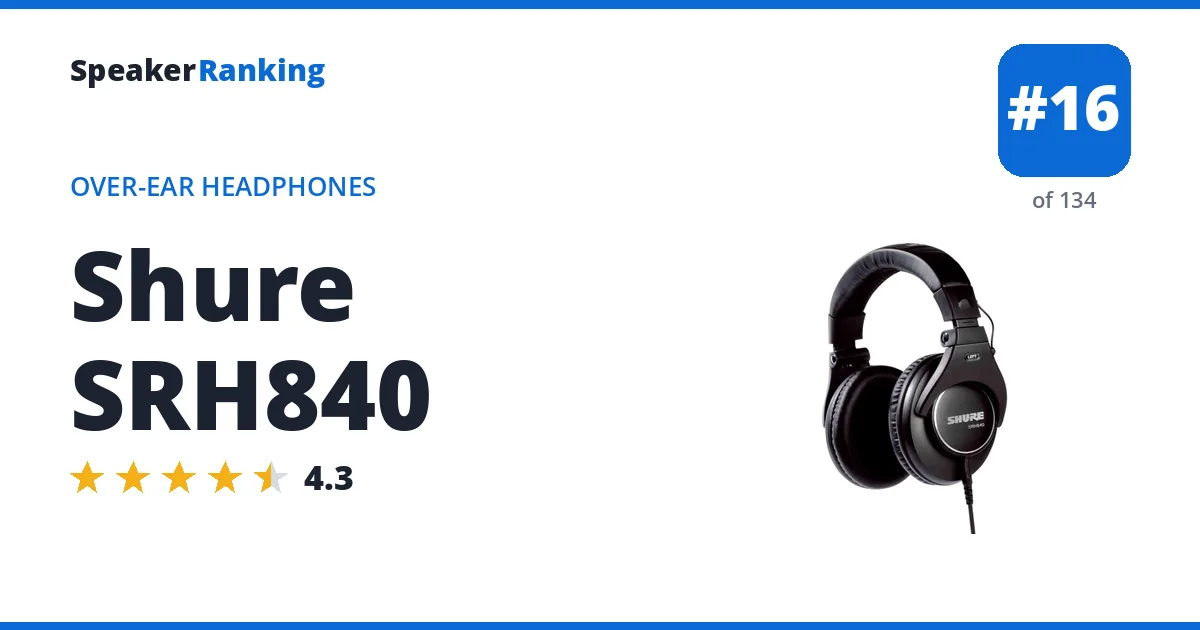
Newer model: the Shure SRH840A, ranked lower, rated 3.5/5. See every Shure SRH840 generation.
Pros: A preference score of 89 and a 1.94 dB deviation show a tuning close to Harman, with bass from 60 to 200 Hz lifted about 2.5 dB for a warm, punchy low end. Presence and treble are lifted by about 1.5 to 2 dB, which adds clarity to vocals and guitars. It is a closed back that isolates, and at 44 ohms and 105 dB/mW it plays loud from a phone or laptop.
Cons: Sub-bass is about 4 dB light under 60 Hz, so the extra bass punch stops short of deep rumble. The treble has a 3.7 dB peak near 8.1 kHz followed by a 4.9 dB dip near 10.9 kHz, which can make sibilant vocals and cymbals sound uneven. It has the same rating as the Beyerdynamic DT 880 and HIFIMAN Ananda Stealth, so it has no sound quality edge over cheaper rivals. Discontinued.
Full Shure SRH840 review and specifications →
| Back | Closed |
|---|---|
| Connection | Wired |
| Deviation From Target | 1.94 dB standard deviation |
| Driver Type | Dynamic |
| Drivers | 1 x 40mm dynamic |
| Form Factor | Over-ear |
| Frequency Response | 5Hz - 25kHz (Manufacturer specified) |
| Harman Preference Score | 89 (measured by oratory1990, via AutoEQ) |
| Impedance | 44 ohms |
| Sensitivity | 105 dB/mW |
| Tonal Tilt | +0.09 (negative is warmer, positive brighter) |
| Weight | 0.7 lbs (300 g) |
EQ preset to match the Harman target
Set a preamp of -5.8 dB, then add these filters in any parametric equalizer (Wavelet, Equalizer APO, Peace, or a player with parametric EQ). Calculated by AutoEQ from its measured frequency response.
| Filter | Frequency | Gain | Q |
|---|---|---|---|
| Low shelf | 105 Hz | +6.2 dB | 0.70 |
| Peak | 107 Hz | -8.3 dB | 0.80 |
| Peak | 279 Hz | +2.9 dB | 0.36 |
| Peak | 58 Hz | +2.4 dB | 4.17 |
| Peak | 5,991 Hz | -1.8 dB | 2.60 |
| High shelf | 10,000 Hz | -2.0 dB | 0.70 |
| Peak | 1,946 Hz | -0.7 dB | 2.63 |
| Peak | 39 Hz | -0.4 dB | 3.26 |
| Peak | 261 Hz | +0.6 dB | 3.14 |
| Peak | 332 Hz | -0.8 dB | 4.70 |
- Reviews, Comparisons and Sound Samples
Product Line History
How these product lines changed from one generation to the next.
- Shure SRH440 generations (2): SRH440 → SRH440A
- Shure SRH840 generations (2): SRH840 → SRH840A