Coverage note. Speaker Ranking currently covers 18 HIFIMAN models across headphones. These are the products in our database, not a complete list of everything HIFIMAN makes.
What this page covers. The HIFIMAN models ranked here span headphones, including HIFIMAN Ananda Nano, HIFIMAN Arya Organic and HIFIMAN Edition XS. Use each model’s category position to compare it with alternatives of the same size and use case.
This page lists all 18 HIFIMAN speakers ranked on this site across headphones. Each model is shown in the category where it competes, with its current rank and the size of that ranking.
Use the category position rather than the brand name alone: speakers from the same manufacturer can perform very differently by size, price and product family.
Prices on this page were last checked October 10, 2026 at 5:37 PM UTC. Product prices and availability are accurate as of that date/time and are subject to change; the price and availability shown on Amazon at the time of purchase will apply to the purchase of this product.
As an eBay Partner, we may be compensated if you make a purchase.
Quick Navigation
Over-Ear Headphones
 Ranked #3 of 134 in Over-Ear Headphones - HIFIMAN Ananda Nano: $319.00 Amazon eBay
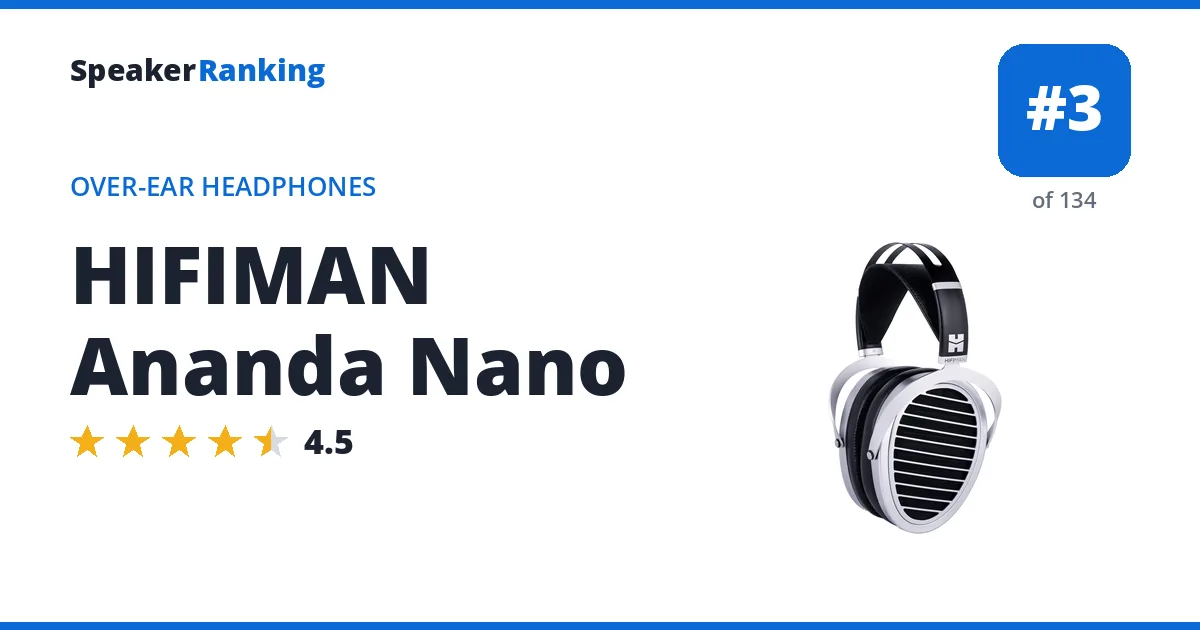
Pros: A preference score of 94 puts it close to the Harman target, with bass from 60 to 200 Hz within 0.1 dB of target and the midrange within about 1 dB. Impedance of just 14 ohms makes it simple to drive from a phone or dongle, and the open planar design gives a spacious presentation. Sub-bass is only moderately light, about 2.8 dB under target.
Cons: The top end is the weak spot, with the air region above 10 kHz running about 4.6 dB hot and a 10.8 dB peak near 11.9 kHz, preceded by a 4.4 dB dip near 9.6 kHz. That can make cymbals and strings sound bright or sharp on some recordings. At 420 g it is heavy, and the open back leaks sound and gives no isolation.
Full HIFIMAN Ananda Nano review and specifications →
| Released | Aug 2023 (3 years ago) |
|---|---|
| Back | Open |
| Connection | Wired |
| Deviation From Target | 1.43 dB standard deviation |
| Driver Type | Planar magnetic |
| Form Factor | Over-ear |
| Frequency Response | 5Hz - 55kHz (Manufacturer specified) |
| Harman Preference Score | 94 (measured by oratory1990, via AutoEQ) |
| Impedance | 14 ohms |
| Sensitivity | 94 dB |
| Tonal Tilt | +0.14 (negative is warmer, positive brighter) |
| Weight | 0.9 lbs (420 g) |
EQ preset to match the Harman target
Set a preamp of -3.9 dB, then add these filters in any parametric equalizer (Wavelet, Equalizer APO, Peace, or a player with parametric EQ). Calculated by AutoEQ from its measured frequency response.
| Filter | Frequency | Gain | Q |
|---|---|---|---|
| Low shelf | 105 Hz | +4.1 dB | 0.70 |
| Peak | 1,884 Hz | +2.9 dB | 2.00 |
| Peak | 84 Hz | -2.2 dB | 1.06 |
| Peak | 343 Hz | -0.7 dB | 1.30 |
| Peak | 2,910 Hz | -1.8 dB | 3.07 |
| High shelf | 10,000 Hz | -6.5 dB | 0.70 |
| Peak | 969 Hz | -1.0 dB | 4.06 |
| Peak | 170 Hz | +1.0 dB | 3.86 |
| Peak | 129 Hz | -0.7 dB | 3.65 |
| Peak | 752 Hz | +0.9 dB | 5.09 |
- Reviews, Comparisons and Sound Samples
- Head-to-Head Comparisons
 Ranked #10 of 134 in Over-Ear Headphones - HIFIMAN Arya Organic: $769.00 Amazon eBay
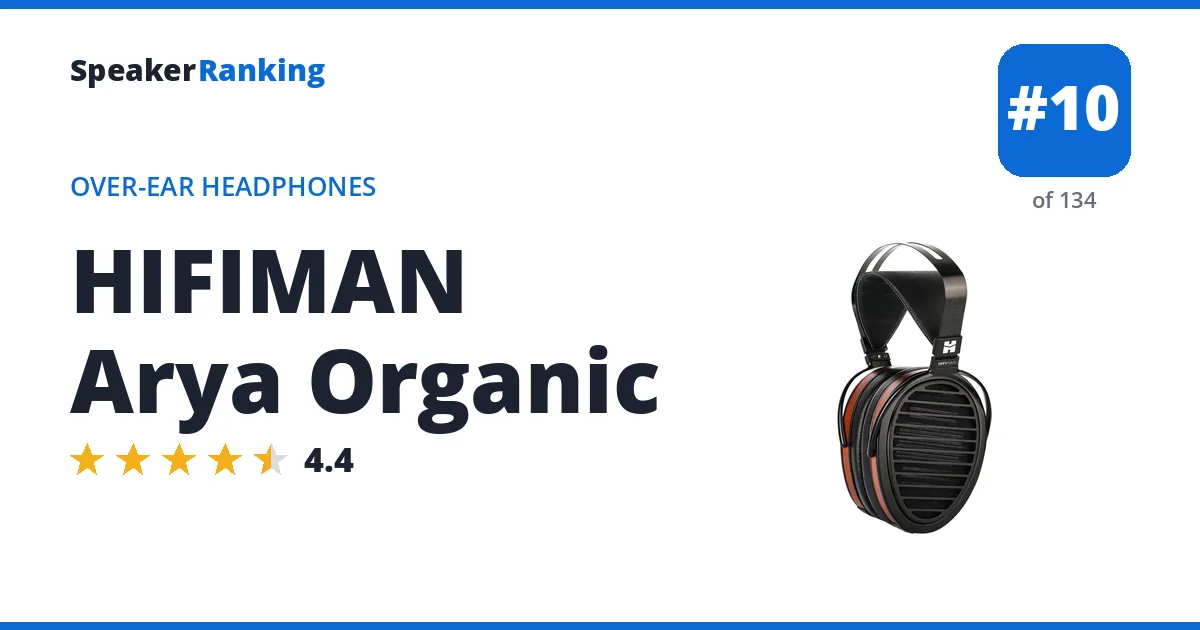
Pros: A preference score of 91 in oratory1990’s measurement means the overall balance sits very close to the Harman target, with a nearly neutral tilt and a smooth 1.77 dB deviation. Bass between 60 and 200 Hz runs only about 1 dB above target and the upper mids are within 1 dB, so vocals and instruments sound natural and unforced. At 16 ohms and 94 dB sensitivity it is easy to drive, and it rates higher than the Audeze LCD-XC and HIFIMAN HE1000 Stealth.
Cons: Sub-bass below 60 Hz sits about 2 dB under target and the air band above 10 kHz runs about 6 dB hot, with a peak of nearly 10 dB near 11.9 kHz that can add a bright sparkle to cymbals. A 4.5 dB dip around 9.5 kHz makes that treble region uneven. The open back leaks sound and offers no isolation, so it suits quiet rooms, and the 440 g weight is on the heavy side.
Full HIFIMAN Arya Organic review and specifications →
| Released | Aug 2023 (3 years ago) |
|---|---|
| Back | Open |
| Connection | Wired |
| Deviation From Target | 1.77 dB standard deviation |
| Driver Type | Planar magnetic |
| Form Factor | Over-ear |
| Frequency Response | 8Hz - 65kHz (Manufacturer specified) |
| Harman Preference Score | 91 (measured by oratory1990, via AutoEQ) |
| Impedance | 16 ohms |
| Sensitivity | 94 dB |
| Tonal Tilt | +0.06 (negative is warmer, positive brighter) |
| Weight | 1 lbs (440 g) |
EQ preset to match the Harman target
Set a preamp of -4.4 dB, then add these filters in any parametric equalizer (Wavelet, Equalizer APO, Peace, or a player with parametric EQ). Calculated by AutoEQ from its measured frequency response.
| Filter | Frequency | Gain | Q |
|---|---|---|---|
| Low shelf | 105 Hz | +4.3 dB | 0.70 |
| Peak | 1,866 Hz | +6.2 dB | 1.75 |
| Peak | 89 Hz | -2.6 dB | 0.82 |
| Peak | 3,082 Hz | -2.8 dB | 0.68 |
| Peak | 404 Hz | -0.5 dB | 1.49 |
| High shelf | 10,000 Hz | -6.9 dB | 0.70 |
| Peak | 5,536 Hz | +2.1 dB | 6.00 |
| Peak | 2,960 Hz | -0.6 dB | 4.64 |
| Peak | 3,567 Hz | +1.4 dB | 5.97 |
| Peak | 3,221 Hz | -0.9 dB | 6.00 |
- Reviews, Comparisons and Sound Samples
 Ranked #12 of 134 in Over-Ear Headphones - HIFIMAN Edition XS: $209.00 Amazon eBay
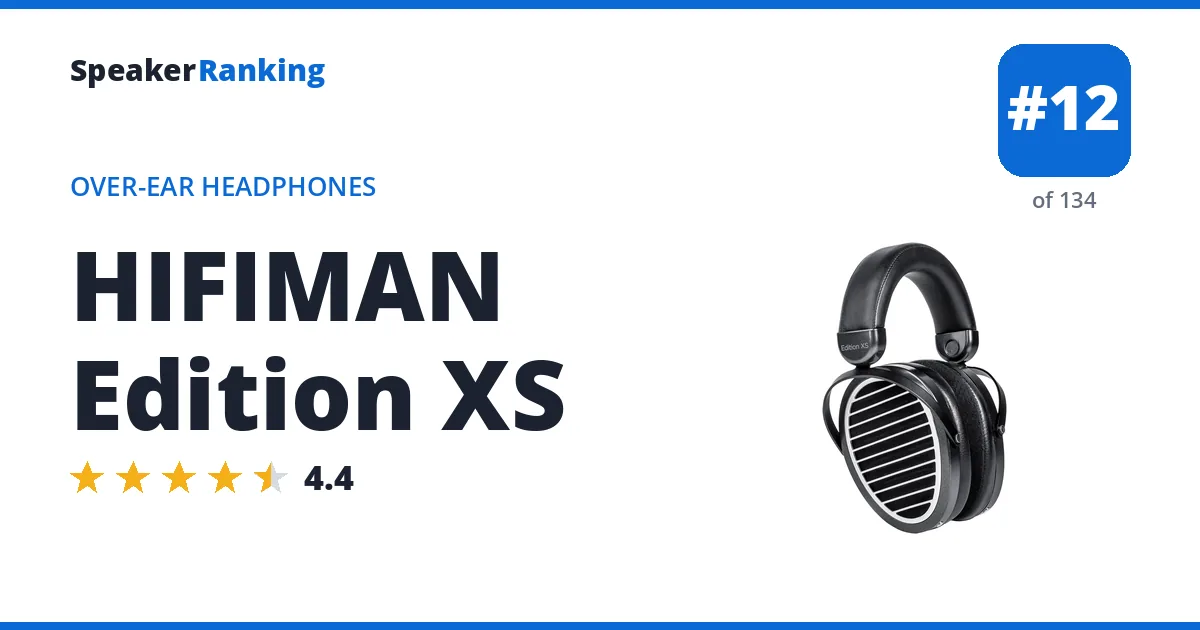
Pros: A preference score of 90 with a nearly flat tilt shows a well balanced tuning, and bass from 60 to 200 Hz is only about 1 dB above target. Presence and treble stay within about 1 dB of target, which keeps vocals and guitars clear. The planar drivers are 18 ohms and 92 dB, so it works with most amplifiers, and its rating matches the Sennheiser HD 600 and Austrian Audio Hi-X60.
Cons: A 6 dB dip near 9.4 kHz sits next to a roughly 9 dB peak at 11.9 kHz, and the air band runs about 5.5 dB above target, so the top end can sound uneven and sharp on bright recordings. Sub-bass is about 3 dB light under 60 Hz, which trims deep rumble. The open back leaks sound and gives no isolation, and at 405 g it is not especially light.
Full HIFIMAN Edition XS review and specifications →
| Released | Oct 2021 (5 years ago) |
|---|---|
| Back | Open |
| Connection | Wired |
| Deviation From Target | 1.83 dB standard deviation |
| Driver Type | Planar magnetic |
| Form Factor | Over-ear |
| Frequency Response | 8Hz - 50kHz (Manufacturer specified) |
| Harman Preference Score | 90 (measured by oratory1990, via AutoEQ) |
| Impedance | 18 ohms |
| Sensitivity | 92 dB |
| Tonal Tilt | -0.07 (negative is warmer, positive brighter) |
| Weight | 0.9 lbs (405 g) |
EQ preset to match the Harman target
Set a preamp of -4.8 dB, then add these filters in any parametric equalizer (Wavelet, Equalizer APO, Peace, or a player with parametric EQ). Calculated by AutoEQ from its measured frequency response.
| Filter | Frequency | Gain | Q |
|---|---|---|---|
| Low shelf | 105 Hz | +5.8 dB | 0.70 |
| Peak | 87 Hz | -2.8 dB | 0.33 |
| Peak | 1,896 Hz | +4.0 dB | 1.92 |
| Peak | 2,896 Hz | -3.7 dB | 3.11 |
| Peak | 1,420 Hz | +1.3 dB | 3.89 |
| High shelf | 10,000 Hz | -5.8 dB | 0.70 |
| Peak | 5,585 Hz | +1.7 dB | 6.00 |
| Peak | 70 Hz | -0.4 dB | 2.12 |
| Peak | 111 Hz | +0.4 dB | 1.64 |
| Peak | 927 Hz | -0.9 dB | 6.00 |
- Reviews, Comparisons and Sound Samples
- Head-to-Head Comparisons
 Ranked #15 of 134 in Over-Ear Headphones - HIFIMAN HE400se: $109.00 Amazon eBay
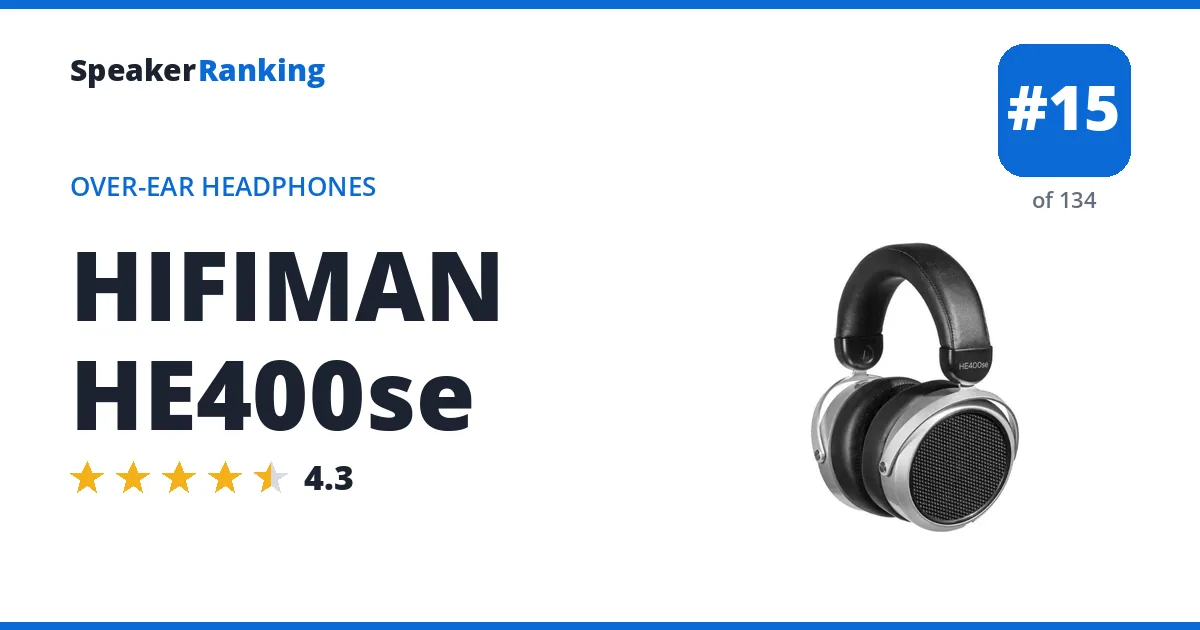
Pros: A preference score of 89 and a neutral tilt make this an accurate sounding planar for the money. Treble is within a fraction of a dB of target and the air band is only 1 dB high, so the top end is smooth and free of sharp peaks, with the largest at about 2.4 dB near 11.9 kHz. It matches the rating of the Beyerdynamic DT 880 at a lower price, with a modest 396 g weight.
Cons: Sub-bass is about 5 dB light and bass from 60 to 200 Hz is about 1 dB under target, so low end impact is limited. The low mids are about 1.6 dB elevated while a 4.8 dB dip near 2 kHz and a 2 dB upper mid shortfall can push vocals slightly back. At 91 dB/mW sensitivity it benefits from a headphone amp, and the open back leaks sound and provides no isolation.
Full HIFIMAN HE400se review and specifications →
| Released | Mar 2021 (5 years ago) |
|---|---|
| Back | Open |
| Connection | Wired |
| Deviation From Target | 1.98 dB standard deviation |
| Driver Type | Planar magnetic |
| Drivers | 1 x planar magnetic |
| Form Factor | Over-ear |
| Frequency Response | 20Hz - 20kHz (Manufacturer specified) |
| Harman Preference Score | 89 (measured by oratory1990, via AutoEQ) |
| Sensitivity | 91 dB/mW |
| Tonal Tilt | +0.05 (negative is warmer, positive brighter) |
| Weight | 0.9 lbs (396 g) |
EQ preset to match the Harman target
Set a preamp of -6.0 dB, then add these filters in any parametric equalizer (Wavelet, Equalizer APO, Peace, or a player with parametric EQ). Calculated by AutoEQ from its measured frequency response.
| Filter | Frequency | Gain | Q |
|---|---|---|---|
| Low shelf | 105 Hz | +6.7 dB | 0.70 |
| Peak | 1,968 Hz | +5.1 dB | 2.37 |
| Peak | 861 Hz | -2.3 dB | 1.86 |
| Peak | 101 Hz | -2.4 dB | 0.32 |
| Peak | 1,619 Hz | +1.1 dB | 3.53 |
| High shelf | 10,000 Hz | -2.6 dB | 0.70 |
| Peak | 138 Hz | +0.7 dB | 1.98 |
| Peak | 64 Hz | -0.7 dB | 1.95 |
| Peak | 251 Hz | -0.4 dB | 2.33 |
| Peak | 29 Hz | +0.5 dB | 2.63 |
- Reviews, Comparisons and Sound Samples
 Ranked #19 of 134 in Over-Ear Headphones - HIFIMAN Ananda Stealth: $249.00 Amazon eBay
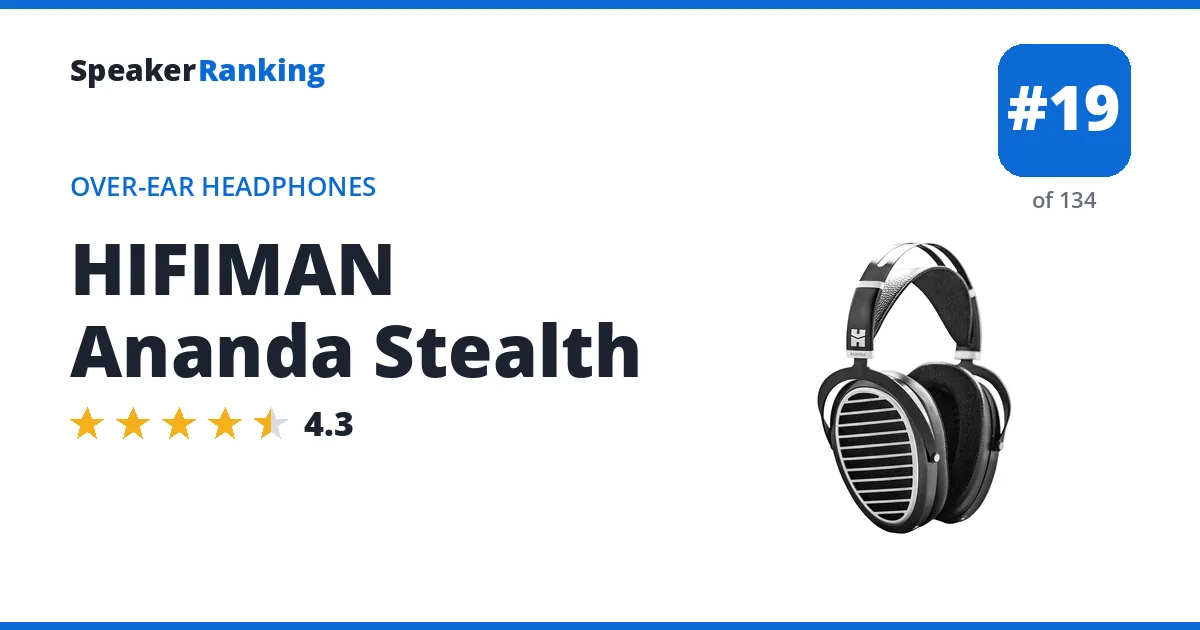
Pros: A preference score of 88 and a neutral tilt show a tuning that tracks the Harman target well, with bass from 60 to 200 Hz about 1 dB above target and presence about 1.6 dB above for added clarity. It is easy to drive at 16 ohms and 93 dB, so a phone or laptop can power it. It has the same rating as the Beyerdynamic DT 880 and Sennheiser HD 505.
Cons: An 8.8 dB dip near 9.5 kHz sits beside a 6.6 dB peak at 11.9 kHz, and the air band is about 4 dB high, so the treble can sound uneven and bright. Low mids are lifted about 1.7 dB and sub-bass is about 3 dB light under 60 Hz. The open back leaks sound and gives no isolation, and it weighs 399 g.
Full HIFIMAN Ananda Stealth review and specifications →
| Back | Open |
|---|---|
| Connection | Wired |
| Deviation From Target | 2.09 dB standard deviation |
| Driver Type | Planar magnetic |
| Form Factor | Over-ear |
| Frequency Response | 8Hz - 55kHz (Manufacturer specified) |
| Harman Preference Score | 88 (measured by oratory1990, via AutoEQ) |
| Impedance | 16 ohms |
| Sensitivity | 93 dB |
| Tonal Tilt | -0.03 (negative is warmer, positive brighter) |
| Weight | 0.9 lbs (399 g) |
EQ preset to match the Harman target
Set a preamp of -4.6 dB, then add these filters in any parametric equalizer (Wavelet, Equalizer APO, Peace, or a player with parametric EQ). Calculated by AutoEQ from its measured frequency response.
| Filter | Frequency | Gain | Q |
|---|---|---|---|
| Low shelf | 105 Hz | +5.7 dB | 0.70 |
| Peak | 84 Hz | -2.7 dB | 0.32 |
| Peak | 2,044 Hz | +4.1 dB | 2.00 |
| Peak | 3,064 Hz | -3.3 dB | 2.02 |
| Peak | 1,428 Hz | +2.0 dB | 3.19 |
| High shelf | 10,000 Hz | -4.7 dB | 0.70 |
| Peak | 6,231 Hz | -2.0 dB | 6.00 |
| Peak | 5,374 Hz | +2.1 dB | 6.00 |
| Peak | 965 Hz | -1.1 dB | 5.99 |
| Peak | 119 Hz | +0.3 dB | 2.44 |
- Reviews, Comparisons and Sound Samples
 Ranked #22 of 134 in Over-Ear Headphones - HIFIMAN Shangri-La Jr: $8,000.00 Amazon eBay
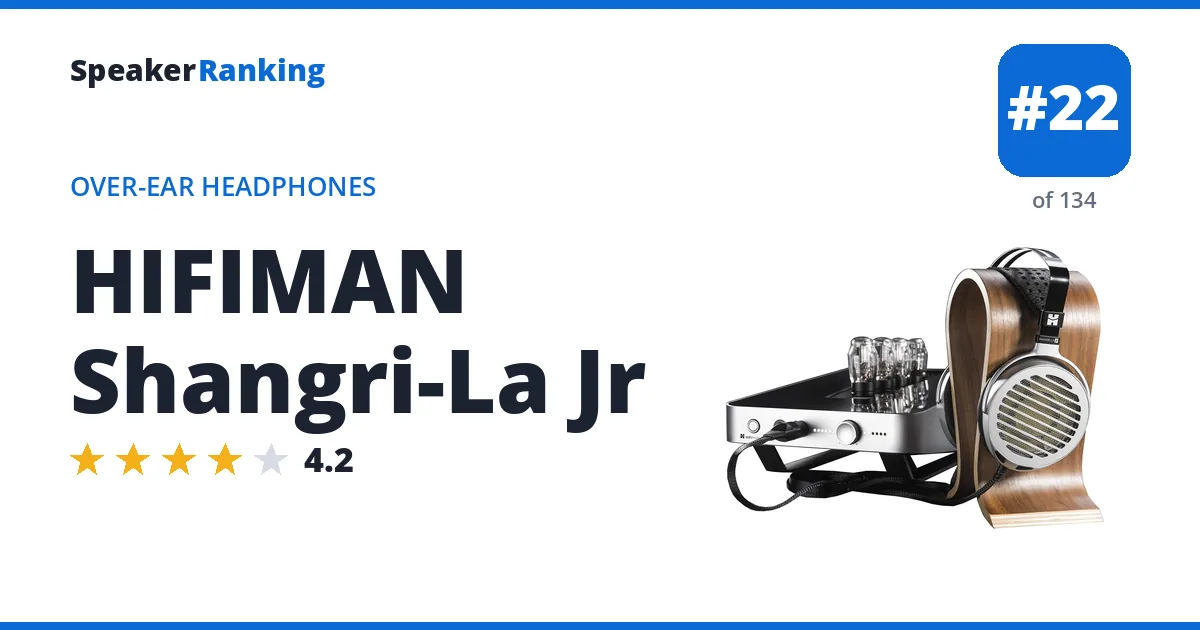
Pros: An electrostatic driver with a preference score of 87 and an unusually even response, with every band from 60 Hz to 10 kHz within about 1.4 dB of the Harman target. The air region above 10 kHz runs about 1 dB above target, giving a sense of space and fine detail. Its rating sits just above the HIFIMAN Susvara and well above the Focal Utopia 2022.
Cons: Sub-bass below 60 Hz is about 5 dB under target, so deep rumble is understated. A 7 dB dip near 9.7 kHz is followed by a 5 dB peak near 11.9 kHz, which reshapes the top end into something slightly uneven. As an electrostatic design it needs a dedicated energizer, and at 374 g it is not a casual portable option.
Full HIFIMAN Shangri-La Jr review and specifications →
| Back | Open |
|---|---|
| Connection | Wired |
| Deviation From Target | 1.99 dB standard deviation |
| Driver Type | Electrostatic |
| Form Factor | Over-ear |
| Frequency Response | 7Hz - 120kHz (Manufacturer specified) |
| Harman Preference Score | 87 (measured by oratory1990, via AutoEQ) |
| Tonal Tilt | +0.14 (negative is warmer, positive brighter) |
| Weight | 0.8 lbs (374 g) |
EQ preset to match the Harman target
Set a preamp of -6.1 dB, then add these filters in any parametric equalizer (Wavelet, Equalizer APO, Peace, or a player with parametric EQ). Calculated by AutoEQ from its measured frequency response.
| Filter | Frequency | Gain | Q |
|---|---|---|---|
| Low shelf | 105 Hz | +6.7 dB | 0.70 |
| Peak | 115 Hz | -2.2 dB | 0.29 |
| Peak | 1,885 Hz | +3.2 dB | 1.89 |
| Peak | 4,399 Hz | -2.3 dB | 4.81 |
| Peak | 3,089 Hz | -2.7 dB | 4.82 |
| High shelf | 10,000 Hz | -3.8 dB | 0.70 |
| Peak | 9,190 Hz | +2.2 dB | 2.17 |
| Peak | 5,753 Hz | +2.3 dB | 6.00 |
| Peak | 76 Hz | -0.7 dB | 3.00 |
| Peak | 139 Hz | +0.5 dB | 2.04 |
- Reviews, Comparisons and Sound Samples
 Ranked #23 of 134 in Over-Ear Headphones - HIFIMAN HE1000 Stealth: $949.00 Amazon eBay
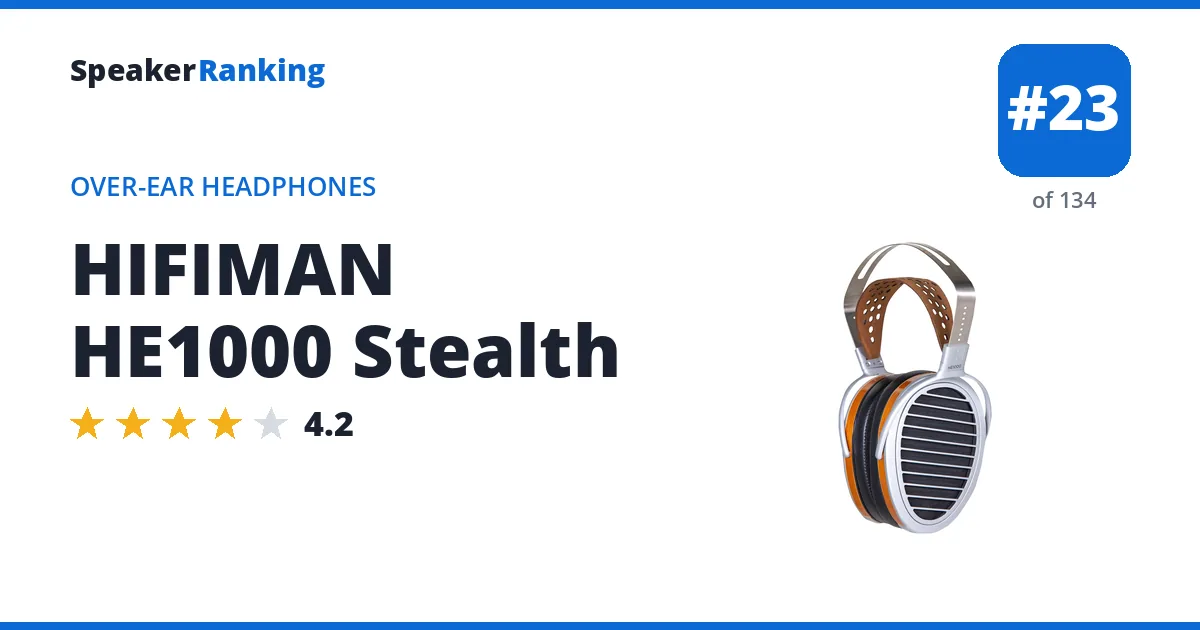
Pros: Planar magnetic drivers deliver a preference score of 87 with bass from 60 to 200 Hz about 1 dB above target and sub-bass only about 2 dB light, so low end has solid weight and extension. A 32 ohm impedance is easy to drive, although the 93 dB sensitivity still rewards a capable amp. Its rating matches the Sennheiser HD 800 S at a lower price.
Cons: The treble is uneven, with an 8 dB dip near 9.4 kHz followed by a 7 dB peak near 11.9 kHz and air above 10 kHz about 5 dB over target. That gives a sparkly, somewhat bright top end that can sound splashy or sibilant on certain recordings. At 458 g it is heavy for long sessions, and the open back leaks sound.
Full HIFIMAN HE1000 Stealth review and specifications →
| Back | Open |
|---|---|
| Connection | Wired |
| Deviation From Target | 2.10 dB standard deviation |
| Driver Type | Planar magnetic |
| Form Factor | Over-ear |
| Frequency Response | 8Hz - 65kHz (Manufacturer specified) |
| Harman Preference Score | 87 (measured by oratory1990, via AutoEQ) |
| Impedance | 32 ohms |
| Sensitivity | 93 dB |
| Tonal Tilt | +0.04 (negative is warmer, positive brighter) |
| Weight | 1 lbs (458 g) |
EQ preset to match the Harman target
Set a preamp of -5.3 dB, then add these filters in any parametric equalizer (Wavelet, Equalizer APO, Peace, or a player with parametric EQ). Calculated by AutoEQ from its measured frequency response.
| Filter | Frequency | Gain | Q |
|---|---|---|---|
| Low shelf | 105 Hz | +5.7 dB | 0.70 |
| Peak | 1,887 Hz | +5.8 dB | 2.36 |
| Peak | 74 Hz | -2.9 dB | 0.36 |
| Peak | 2,903 Hz | -4.1 dB | 3.38 |
| Peak | 5,261 Hz | -2.4 dB | 4.29 |
| High shelf | 10,000 Hz | -5.5 dB | 0.70 |
| Peak | 994 Hz | -1.1 dB | 2.91 |
| Peak | 646 Hz | +0.7 dB | 2.43 |
| Peak | 244 Hz | -0.4 dB | 1.71 |
| Peak | 135 Hz | +0.3 dB | 1.72 |
- Reviews, Comparisons and Sound Samples
 Ranked #30 of 134 in Over-Ear Headphones - HIFIMAN Arya Stealth Magnet Version: $599.00 Amazon eBay
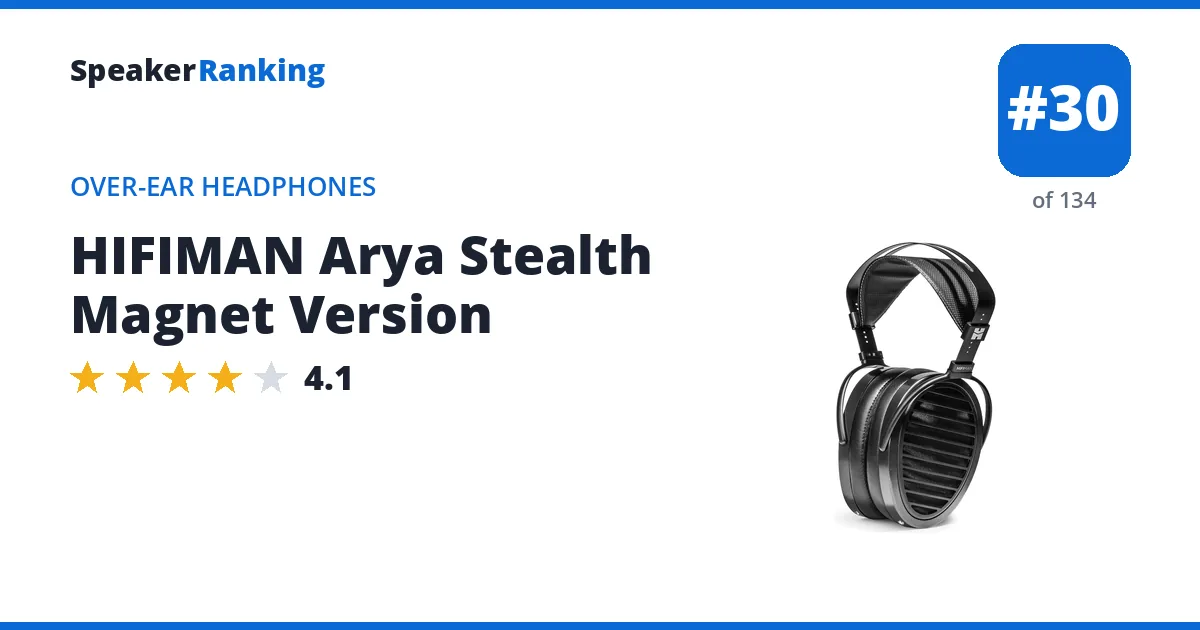
Pros: A preference score of 85 in oratory1990’s measurement and a near flat tilt of 0.02 give it a balanced overall tonality. Bass from 60 to 200 Hz sits within 1 dB of target and the upper mids are only about 1 dB low, so vocals and instruments sound natural. At 32 ohms and 94 dB sensitivity it is easier to drive than most planar headphones, and 404 g is moderate for the type.
Cons: An 8 dB dip near 9.3 kHz followed by a 7 dB peak near 11.9 kHz makes the treble uneven, so cymbals can sound recessed one moment and sharp the next. Presence is about 3 dB hot and the air band about 3 dB elevated, which adds edge to bright recordings. Sub-bass runs about 3 dB under target, and the open back leaks sound and offers no isolation.
Full HIFIMAN Arya Stealth Magnet Version review and specifications →
| Back | Open |
|---|---|
| Connection | Wired |
| Deviation From Target | 2.29 dB standard deviation |
| Driver Type | Planar magnetic |
| Form Factor | Over-ear |
| Frequency Response | 8Hz - 65kHz (Manufacturer specified) |
| Harman Preference Score | 85 (measured by oratory1990, via AutoEQ) |
| Impedance | 32 ohms |
| Sensitivity | 94 dB |
| Tonal Tilt | +0.02 (negative is warmer, positive brighter) |
| Weight | 0.9 lbs (404 g) |
EQ preset to match the Harman target
Set a preamp of -5.1 dB, then add these filters in any parametric equalizer (Wavelet, Equalizer APO, Peace, or a player with parametric EQ). Calculated by AutoEQ from its measured frequency response.
| Filter | Frequency | Gain | Q |
|---|---|---|---|
| Low shelf | 105 Hz | +5.9 dB | 0.70 |
| Peak | 1,825 Hz | +5.1 dB | 1.78 |
| Peak | 99 Hz | -2.5 dB | 0.31 |
| Peak | 4,828 Hz | -3.9 dB | 4.18 |
| Peak | 3,009 Hz | -2.8 dB | 3.29 |
| High shelf | 10,000 Hz | -3.1 dB | 0.70 |
| Peak | 969 Hz | -1.3 dB | 3.17 |
| Peak | 1,373 Hz | +0.9 dB | 4.21 |
| Peak | 652 Hz | +0.8 dB | 4.18 |
| Peak | 150 Hz | +0.2 dB | 1.75 |
- Reviews, Comparisons and Sound Samples
 Ranked #31 of 134 in Over-Ear Headphones - HIFIMAN HE6: $1,899.00 Amazon eBay
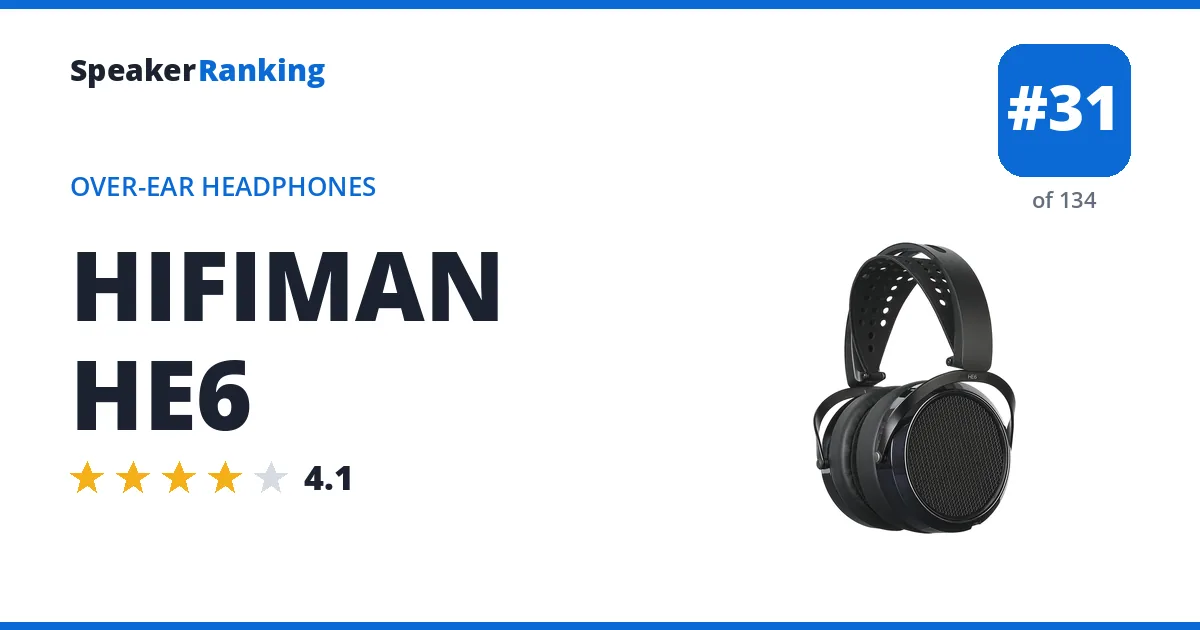
Pros: A preference score of 85 and a smooth deviation of 2.2 dB around the target show a well-controlled response, with low mids within 0.5 dB of target for natural male vocals and guitars. Presence and air sit about 1.5 dB above target, adding some openness. Its tilt is almost perfectly neutral at 0.14.
Cons: Sub-bass falls about 5 dB short under 60 Hz and the bass region is nearly 2 dB light, so kick drums and bass synths lack weight. Treble from 6 to 10 kHz is around 3.5 dB low, with a 6 dB dip near 9.8 kHz and a 6 dB peak near 11.9 kHz. At 50 ohms and 83.5 dB sensitivity it is hard to drive and needs a powerful dedicated headphone amp, and the open back leaks sound.
Full HIFIMAN HE6 review and specifications →
| Released | 2010 (16 years ago) |
|---|---|
| Back | Open |
| Connection | Wired |
| Deviation From Target | 2.20 dB standard deviation |
| Driver Type | Planar magnetic |
| Form Factor | Over-ear |
| Frequency Response | 8Hz - 65kHz (Manufacturer specified) |
| Harman Preference Score | 85 (measured by oratory1990, via AutoEQ) |
| Impedance | 50 ohms |
| Sensitivity | 83.5 dB |
| Tonal Tilt | +0.14 (negative is warmer, positive brighter) |
EQ preset to match the Harman target
Set a preamp of -4.3 dB, then add these filters in any parametric equalizer (Wavelet, Equalizer APO, Peace, or a player with parametric EQ). Calculated by AutoEQ from its measured frequency response.
| Filter | Frequency | Gain | Q |
|---|---|---|---|
| Low shelf | 105 Hz | +4.3 dB | 0.70 |
| Peak | 2,082 Hz | +6.7 dB | 1.71 |
| Peak | 1,368 Hz | -2.7 dB | 0.46 |
| Peak | 4,783 Hz | -5.9 dB | 2.45 |
| Peak | 6,698 Hz | +4.7 dB | 1.96 |
| High shelf | 10,000 Hz | -3.4 dB | 0.70 |
| Peak | 185 Hz | -0.9 dB | 0.85 |
| Peak | 698 Hz | +0.8 dB | 0.87 |
| Peak | 1,027 Hz | -1.0 dB | 2.16 |
| Peak | 71 Hz | -0.4 dB | 1.83 |
- Reviews, Comparisons and Sound Samples
 Ranked #32 of 134 in Over-Ear Headphones - HIFIMAN Susvara: $5,999.00 Amazon eBay
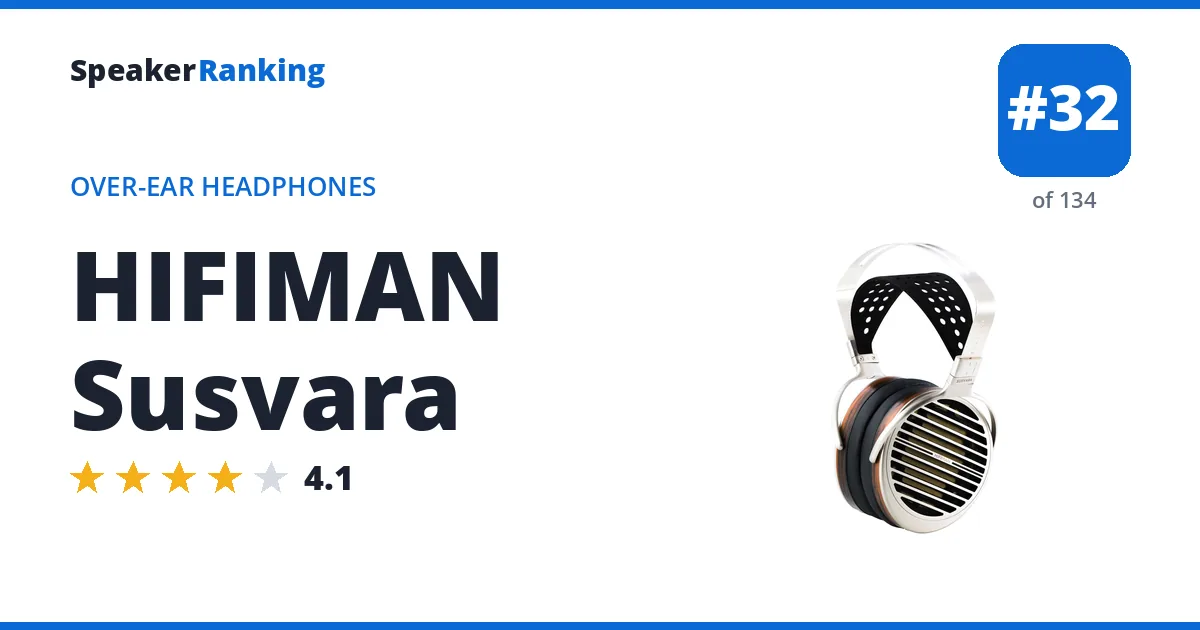
Pros: A preference score of 85 in crinacle’s measurement puts it among the closest to the Harman target in its class. The planar magnetic driver is rated down to 6 Hz and up to 75 kHz. It is a wired open-back design at 450 g.
Cons: At 60 ohms and only 83 dB sensitivity it needs a very powerful dedicated headphone amp and will sound quiet and thin from a phone or laptop. The open back leaks sound and gives no isolation. The price is far above rivals such as the HIFIMAN Shangri-La Jr, which has a slightly higher rating.
Full HIFIMAN Susvara review and specifications →
| Released | 2018 (8 years ago) |
|---|---|
| Back | Open |
| Connection | Wired |
| Deviation From Target | 2.24 dB standard deviation |
| Driver Type | Planar magnetic |
| Form Factor | Over-ear |
| Frequency Response | 6Hz - 75kHz (Manufacturer specified) |
| Harman Preference Score | 85 (measured by crinacle, via AutoEQ) |
| Impedance | 60 ohms |
| Sensitivity | 83 dB |
| Tonal Tilt | -0.07 (negative is warmer, positive brighter) |
| Weight | 1 lbs (450 g) |
EQ preset to match the Harman target
Set a preamp of -5.5 dB, then add these filters in any parametric equalizer (Wavelet, Equalizer APO, Peace, or a player with parametric EQ). Calculated by AutoEQ from its measured frequency response.
| Filter | Frequency | Gain | Q |
|---|---|---|---|
| Low shelf | 105 Hz | +5.7 dB | 0.70 |
| Peak | 1,876 Hz | +5.7 dB | 2.54 |
| Peak | 123 Hz | -2.1 dB | 0.26 |
| Peak | 485 Hz | -0.5 dB | 2.51 |
| Peak | 896 Hz | -1.1 dB | 3.26 |
| High shelf | 10,000 Hz | -1.5 dB | 0.70 |
| Peak | 4,945 Hz | -1.7 dB | 5.84 |
| Peak | 207 Hz | -0.6 dB | 2.66 |
| Peak | 121 Hz | +0.5 dB | 1.56 |
| Peak | 62 Hz | -0.3 dB | 1.77 |
- Reviews, Comparisons and Sound Samples
 Ranked #33 of 134 in Over-Ear Headphones - HIFIMAN HE6se V2: $792.24 Amazon eBay
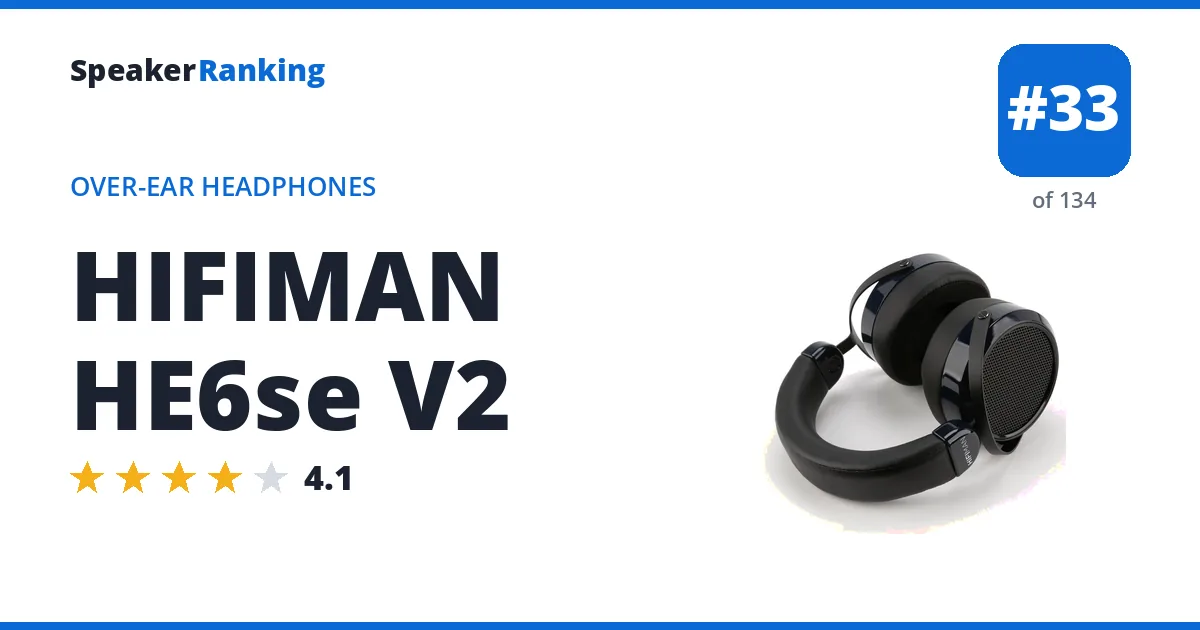
Pros: A preference score of 84 with a deviation of only 2.19 dB shows a smooth, well-controlled response, and low mids sit within 2 dB of target. Bass from 60 to 200 Hz is within 1 dB of target, so bass notes keep their body. It costs noticeably less than the HIFIMAN HE1000 Stealth, though that model carries a higher rating.
Cons: Sub-bass is roughly 4 dB under target below 60 Hz, so the lowest rumble is missing. Presence is about 2.5 dB hot with a 3.7 dB peak near 3.75 kHz, and a 5 dB dip near 9.6 kHz softens cymbals. At 83.5 dB sensitivity it needs a dedicated headphone amp, and the open back leaks sound.
Full HIFIMAN HE6se V2 review and specifications →
| Back | Open |
|---|---|
| Connection | Wired |
| Deviation From Target | 2.19 dB standard deviation |
| Driver Type | Planar magnetic |
| Form Factor | Over-ear |
| Frequency Response | 8Hz - 65kHz (Manufacturer specified) |
| Harman Preference Score | 84 (measured by oratory1990, via AutoEQ) |
| Impedance | 50 ohms |
| Sensitivity | 83.5 dB |
| Tonal Tilt | +0.18 (negative is warmer, positive brighter) |
| Weight | 1 lbs (470 g) |
EQ preset to match the Harman target
Set a preamp of -5.0 dB, then add these filters in any parametric equalizer (Wavelet, Equalizer APO, Peace, or a player with parametric EQ). Calculated by AutoEQ from its measured frequency response.
| Filter | Frequency | Gain | Q |
|---|---|---|---|
| Low shelf | 105 Hz | +5.2 dB | 0.70 |
| Peak | 340 Hz | -1.5 dB | 0.18 |
| Peak | 1,902 Hz | +6.8 dB | 1.60 |
| Peak | 3,470 Hz | -3.7 dB | 1.05 |
| Peak | 9,114 Hz | +3.4 dB | 2.07 |
| High shelf | 10,000 Hz | -3.3 dB | 0.70 |
| Peak | 970 Hz | -1.0 dB | 4.33 |
| Peak | 62 Hz | -0.4 dB | 1.81 |
| Peak | 119 Hz | +0.3 dB | 1.64 |
| Peak | 1,386 Hz | +0.6 dB | 3.74 |
- Reviews, Comparisons and Sound Samples
 Ranked #41 of 134 in Over-Ear Headphones - HIFIMAN Sundara: $179.00 Amazon eBay
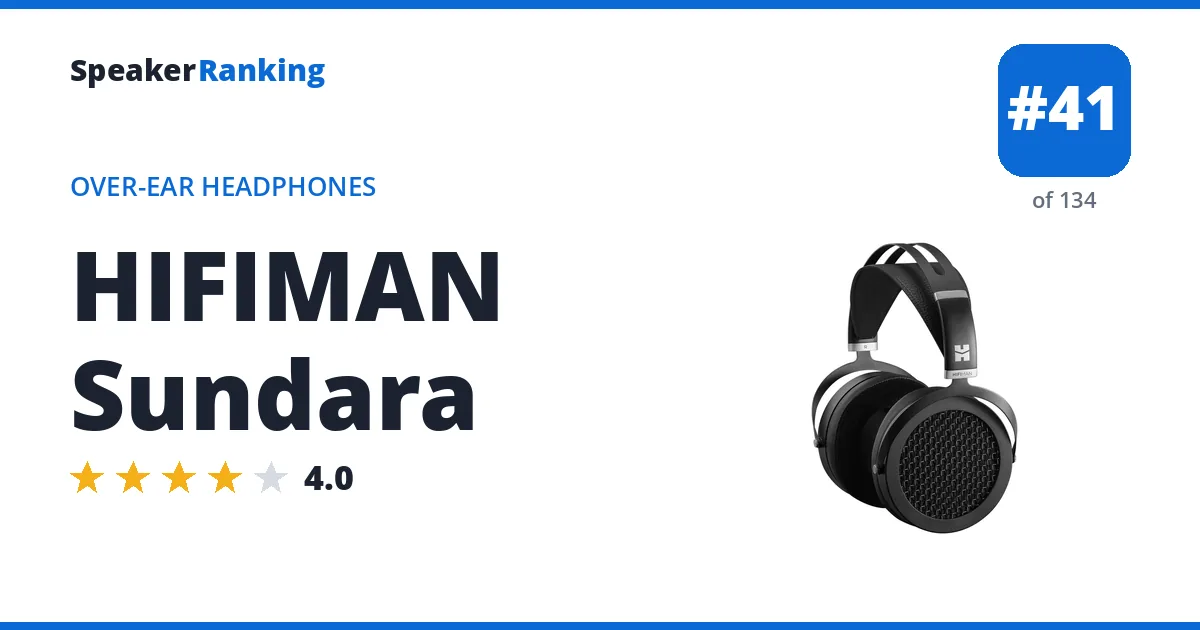
Pros: A preference score of 82 in crinacle’s measurement puts the response close to what most listeners prefer, with a deviation of 2.4 dB from target and an essentially neutral tilt. The planar magnetic driver is easy to run at 37 ohms and 94 dB/mW, so a phone dongle or modest amp is enough. The open back gives a wide, airy presentation for home listening.
Cons: Open construction leaks sound and offers no isolation, so it suits quiet rooms rather than commutes or shared spaces. At 372 g it is on the heavier side of the over-ear class, and the low sensitivity means volume headroom from a phone alone is limited.
Full HIFIMAN Sundara review and specifications →
| Released | 2018 (8 years ago) |
|---|---|
| Back | Open |
| Connection | Wired |
| Deviation From Target | 1.54 dB standard deviation |
| Driver Type | Planar magnetic |
| Drivers | 1 x planar magnetic |
| Form Factor | Over-ear |
| Frequency Response | 6Hz - 75kHz (Manufacturer specified) |
| Harman Preference Score | 82 (measured by crinacle, via AutoEQ) |
| Impedance | 37 ohms |
| Sensitivity | 94 dB/mW |
| Tonal Tilt | -0.01 (negative is warmer, positive brighter) |
| Weight | 0.8 lbs (372 g) |
EQ preset to match the Harman target
Set a preamp of -6.1 dB, then add these filters in any parametric equalizer (Wavelet, Equalizer APO, Peace, or a player with parametric EQ). Calculated by AutoEQ from its measured frequency response.
| Filter | Frequency | Gain | Q |
|---|---|---|---|
| Low shelf | 105 Hz | +6.5 dB | 0.70 |
| Peak | 127 Hz | -2.0 dB | 0.29 |
| Peak | 2,009 Hz | +6.5 dB | 2.96 |
| Peak | 4,085 Hz | -4.4 dB | 1.19 |
| Peak | 7,580 Hz | +2.3 dB | 0.66 |
| High shelf | 10,000 Hz | -1.6 dB | 0.70 |
| Peak | 63 Hz | -1.2 dB | 2.40 |
| Peak | 38 Hz | +0.9 dB | 2.27 |
| Peak | 789 Hz | -1.6 dB | 4.10 |
| Peak | 5,821 Hz | +1.9 dB | 6.00 |
- Reviews, Comparisons and Sound Samples
 Ranked #49 of 134 in Over-Ear Headphones - HIFIMAN Deva Pro: $199.00 Amazon eBay
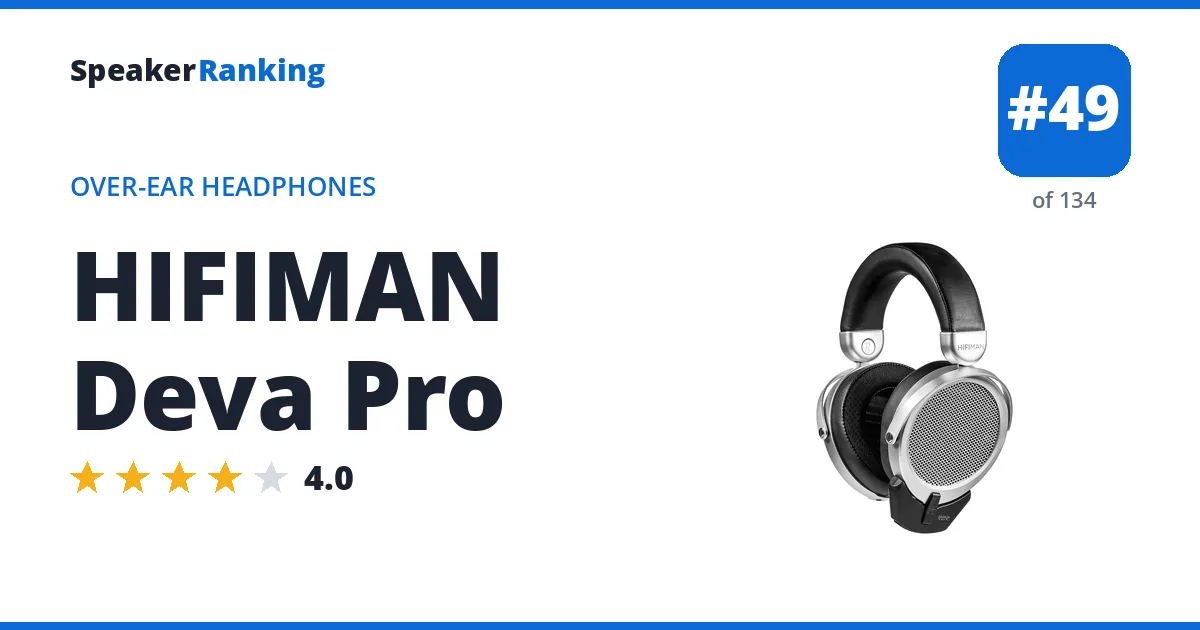
Pros: A preference score of 81 with a deviation of 2.2 dB in oratory1990’s measurement shows a smooth, slightly warm response with the midrange close to target. The planar magnetic driver is easy to drive at 18 ohms and 93.5 dB, and it can connect wirelessly or by cable. The open back gives a roomy sound.
Cons: Sub-bass is about 7.5 dB under target, so deep bass lacks rumble. Treble from 6 to 10 kHz is about 4.1 dB low with a 9.4 dB dip near 9.2 kHz, which dulls cymbals and detail. At 360 g it is heavy, and the open back leaks sound with no isolation.
Full HIFIMAN Deva Pro review and specifications →
| Released | Oct 2021 (5 years ago) |
|---|---|
| Back | Open |
| Built-in Microphone | No |
| Connection | Wireless and wired |
| Deviation From Target | 2.18 dB standard deviation |
| Driver Type | Planar magnetic |
| Form Factor | Over-ear |
| Frequency Response | 20Hz - 20kHz (Manufacturer specified) |
| Harman Preference Score | 81 (measured by oratory1990, via AutoEQ) |
| Impedance | 18 ohms |
| Sensitivity | 93.5 dB |
| Tonal Tilt | -0.38 (negative is warmer, positive brighter) |
| Weight | 0.8 lbs (360 g) |
EQ preset to match the Harman target
Set a preamp of -6.5 dB, then add these filters in any parametric equalizer (Wavelet, Equalizer APO, Peace, or a player with parametric EQ). Calculated by AutoEQ from its measured frequency response.
| Filter | Frequency | Gain | Q |
|---|---|---|---|
| Low shelf | 105 Hz | +7.3 dB | 0.70 |
| Peak | 87 Hz | -3.8 dB | 0.49 |
| Peak | 7,039 Hz | +3.6 dB | 1.30 |
| Peak | 1,960 Hz | +4.9 dB | 2.77 |
| Peak | 1,160 Hz | -2.6 dB | 0.94 |
| High shelf | 10,000 Hz | +0.9 dB | 0.70 |
| Peak | 308 Hz | -0.8 dB | 1.53 |
| Peak | 140 Hz | +0.6 dB | 2.02 |
| Peak | 439 Hz | +1.0 dB | 4.16 |
| Peak | 5,992 Hz | +1.2 dB | 6.00 |
- Reviews, Comparisons and Sound Samples
 Ranked #50 of 134 in Over-Ear Headphones - HIFIMAN HE1000se: $1,699.00 Amazon eBay
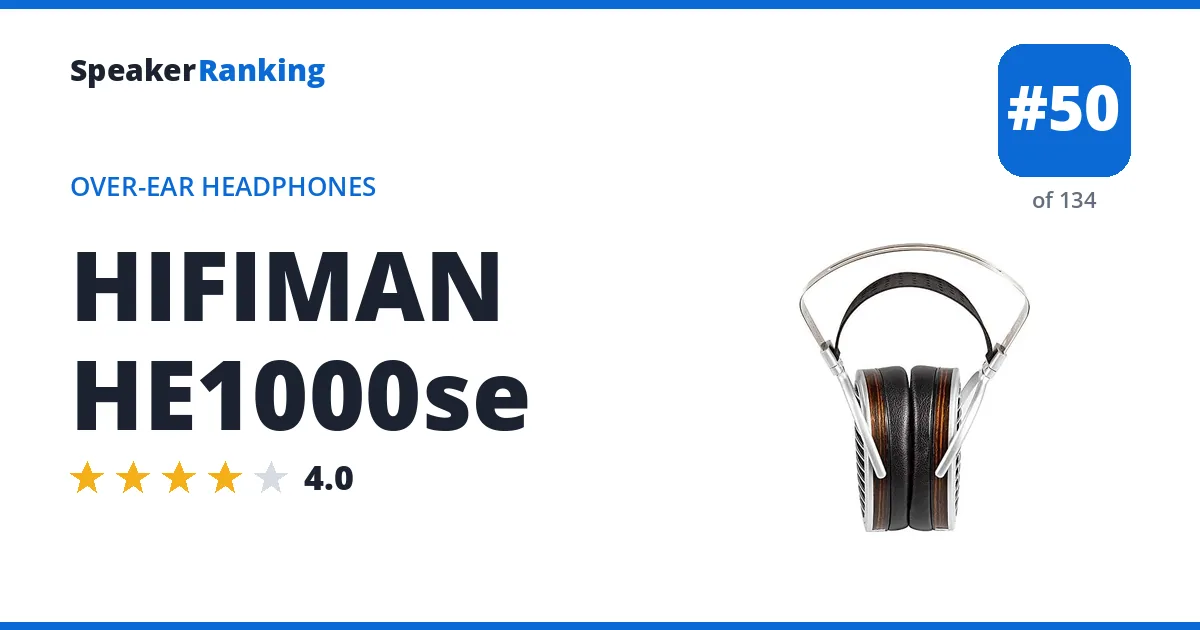
Pros: In oratory1990’s measurement the planar drivers land close to the Harman target, with a preference score of 81 and bass and midrange within about 2 dB of target. That keeps vocals and instruments natural, and the bass from 60 to 200 Hz is essentially on target, so kick and bass guitar have the right weight. At 35 ohms and 96 dB sensitivity it is easier to drive than many flagship planars, though it still benefits from a proper headphone amp. At 440 g it is moderately light for a planar.
Cons: A 9 dB dip near 9.5 kHz sits right beside an 11 dB peak near 11.9 kHz, so cymbals and sibilants can sound uneven and sparkly rather than smooth. The top octave runs about 6 dB hot and the 3 to 6 kHz presence region about 3.6 dB above target, which can sound edgy on bright recordings. Sub-bass is about 3.6 dB light under 60 Hz, and the open back leaks sound and offers no isolation.
Full HIFIMAN HE1000se review and specifications →
| Back | Open |
|---|---|
| Connection | Wired |
| Deviation From Target | 2.31 dB standard deviation |
| Driver Type | Planar magnetic |
| Form Factor | Over-ear |
| Frequency Response | 8Hz - 65kHz (Manufacturer specified) |
| Harman Preference Score | 81 (measured by oratory1990, via AutoEQ) |
| Impedance | 35 ohms |
| Sensitivity | 96 dB |
| Tonal Tilt | +0.29 (negative is warmer, positive brighter) |
| Weight | 1 lbs (440 g) |
EQ preset to match the Harman target
Set a preamp of -6.6 dB, then add these filters in any parametric equalizer (Wavelet, Equalizer APO, Peace, or a player with parametric EQ). Calculated by AutoEQ from its measured frequency response.
| Filter | Frequency | Gain | Q |
|---|---|---|---|
| Low shelf | 105 Hz | +8.5 dB | 0.70 |
| Peak | 1,847 Hz | +6.2 dB | 1.59 |
| Peak | 58 Hz | -4.7 dB | 0.49 |
| Peak | 2,978 Hz | -4.6 dB | 0.69 |
| Peak | 2,077 Hz | +2.3 dB | 2.21 |
| High shelf | 10,000 Hz | -5.8 dB | 0.70 |
| Peak | 4,160 Hz | +1.4 dB | 5.48 |
| Peak | 692 Hz | +1.2 dB | 5.75 |
| Peak | 294 Hz | -0.3 dB | 2.04 |
| Peak | 3,110 Hz | -0.7 dB | 4.39 |
- Reviews, Comparisons and Sound Samples
 Ranked #52 of 134 in Over-Ear Headphones - HIFIMAN Audivina: $636.81 Amazon eBay
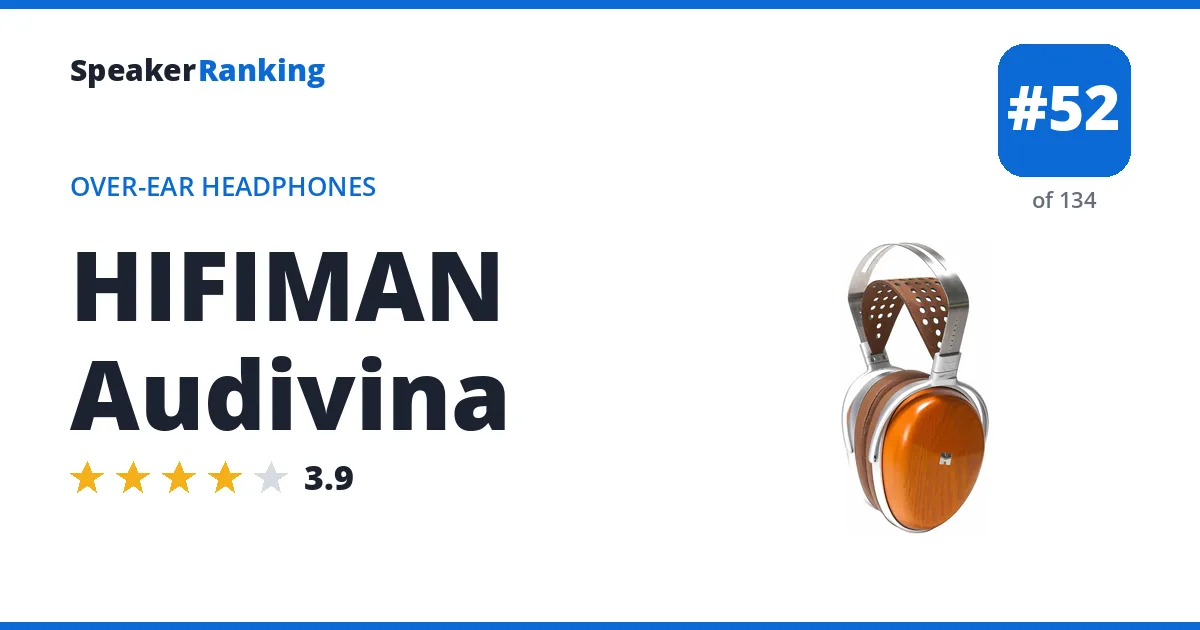
Pros: The closed back planar design isolates noise and keeps sound from leaking, which suits shared rooms better than most planar headphones. Its preference score of 80 and a deviation of about 2.4 dB show a fairly smooth response, with no single large peak (the highest is about 2.5 dB near 6.1 kHz). At 20 ohms and 97 dB sensitivity it is easy to drive from a phone or laptop dongle and it rates higher than the AKG K712 while costing more.
Cons: Sub-bass is about 8 dB below target under 60 Hz and the rest of the spectrum sits a couple of dB under, so deep bass and kick drum impact are lacking and the presentation can feel thin and laid back. A 7 dB dip near 7.2 kHz takes the edge off cymbals and sibilance, and presence around 3 to 6 kHz is about 3 dB low, which can push vocals back. At 470 g it is on the heavy side.
Full HIFIMAN Audivina review and specifications →
| Back | Closed |
|---|---|
| Connection | Wired |
| Deviation From Target | 2.41 dB standard deviation |
| Driver Type | Planar magnetic |
| Form Factor | Over-ear |
| Frequency Response | 5Hz - 55kHz (Manufacturer specified) |
| Harman Preference Score | 80 (measured by oratory1990, via AutoEQ) |
| Impedance | 20 ohms |
| Sensitivity | 97 dB |
| Tonal Tilt | +0.27 (negative is warmer, positive brighter) |
| Weight | 1 lbs (470 g) |
EQ preset to match the Harman target
Set a preamp of -6.4 dB, then add these filters in any parametric equalizer (Wavelet, Equalizer APO, Peace, or a player with parametric EQ). Calculated by AutoEQ from its measured frequency response.
| Filter | Frequency | Gain | Q |
|---|---|---|---|
| Low shelf | 105 Hz | +6.9 dB | 0.70 |
| Peak | 923 Hz | -6.5 dB | 2.05 |
| Peak | 295 Hz | +4.5 dB | 1.71 |
| Peak | 71 Hz | -5.8 dB | 1.06 |
| Peak | 3,635 Hz | +3.4 dB | 3.23 |
| High shelf | 10,000 Hz | -3.1 dB | 0.70 |
| Peak | 5,959 Hz | -4.3 dB | 6.00 |
| Peak | 1,870 Hz | +1.7 dB | 4.35 |
| Peak | 599 Hz | +2.0 dB | 6.00 |
| Peak | 727 Hz | -1.7 dB | 5.75 |
- Reviews, Comparisons and Sound Samples
 Ranked #92 of 134 in Over-Ear Headphones - HIFIMAN Sundara Closed-Back: $149.00 Amazon eBay
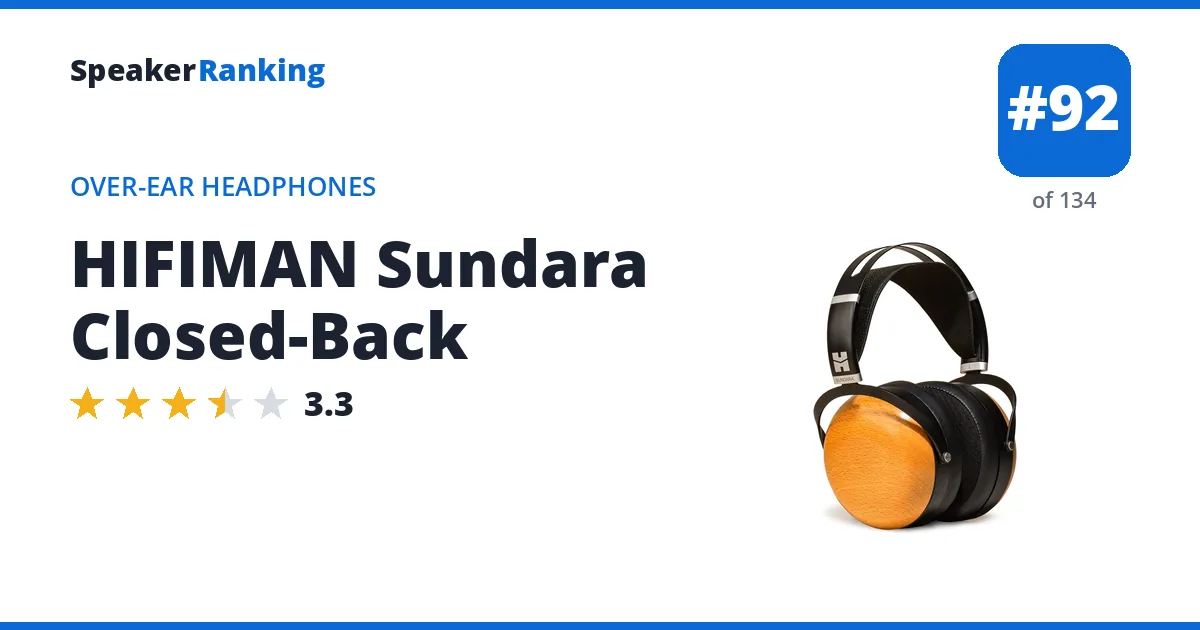
Pros: A planar magnetic closed-back at 20 ohms and 98 dB, so a phone can drive it. Bass from 60 Hz to 3 kHz is within about 0.5 dB of target, giving a natural foundation for vocals. The closed back isolates.
Cons: Presence from 3 to 6 kHz is about 4.8 dB low, with a 9.5 dB dip near 4 kHz, so vocals and snare attack sound recessed. Treble from 6 to 10 kHz is another 3.3 dB under, adding dullness, and sub-bass is about 2.6 dB light. At 426 g it is heavy, and it is wired only, with no wireless or noise cancelling.
Full HIFIMAN Sundara Closed-Back review and specifications →
| Released | Aug 2022 (4 years ago) |
|---|---|
| Back | Closed |
| Connection | Wired |
| Deviation From Target | 2.77 dB standard deviation |
| Driver Type | Planar magnetic |
| Drivers | 1 x 50mm planar magnetic |
| Form Factor | Over-ear |
| Frequency Response | 6Hz - 50kHz (Manufacturer specified) |
| Harman Preference Score | 66 (measured by oratory1990, via AutoEQ) |
| Impedance | 20 ohms |
| Sensitivity | 98 dB |
| Tonal Tilt | -0.87 (negative is warmer, positive brighter) |
| Weight | 0.9 lbs (426 g) |
EQ preset to match the Harman target
Set a preamp of -6.3 dB, then add these filters in any parametric equalizer (Wavelet, Equalizer APO, Peace, or a player with parametric EQ). Calculated by AutoEQ from its measured frequency response.
| Filter | Frequency | Gain | Q |
|---|---|---|---|
| Low shelf | 105 Hz | +2.7 dB | 0.70 |
| Peak | 3,877 Hz | +6.3 dB | 2.27 |
| Peak | 1,315 Hz | -3.9 dB | 2.53 |
| Peak | 302 Hz | -4.1 dB | 3.68 |
| Peak | 110 Hz | -3.0 dB | 0.74 |
| High shelf | 10,000 Hz | -2.7 dB | 0.70 |
| Peak | 9,405 Hz | +4.2 dB | 2.95 |
| Peak | 549 Hz | +3.8 dB | 2.49 |
| Peak | 362 Hz | -1.7 dB | 4.10 |
| Peak | 1,015 Hz | -1.6 dB | 4.84 |
- Reviews, Comparisons and Sound Samples
In-Ear Headphones
 Ranked #34 of 68 in In-Ear Headphones - HIFIMAN RE2000: $799.00 Amazon eBay
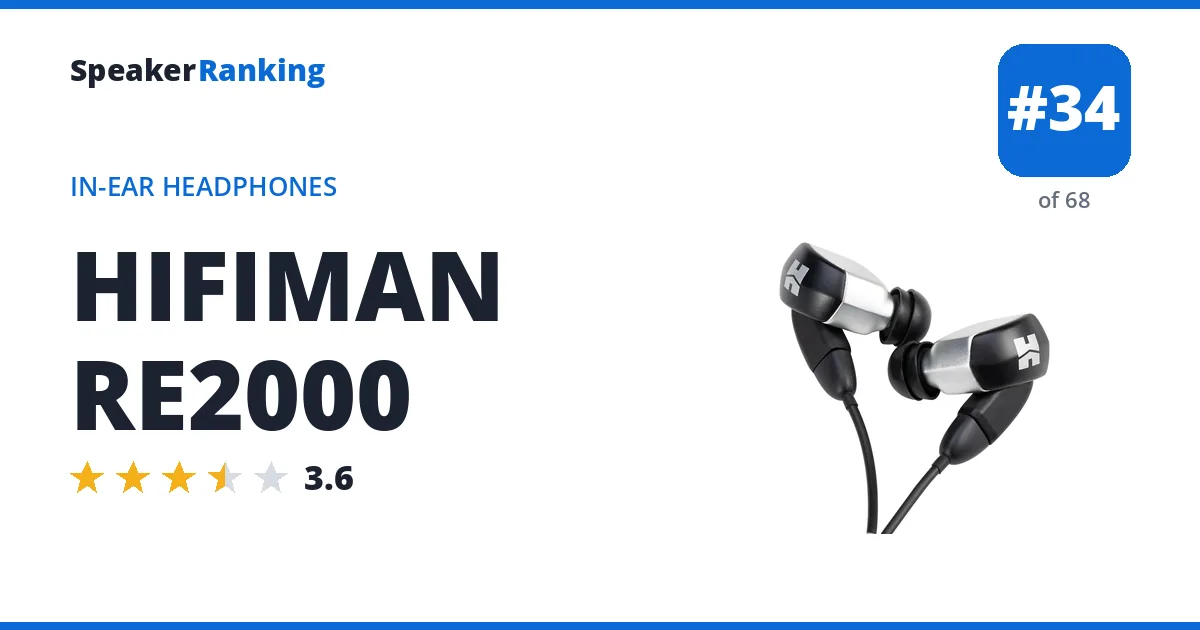
Pros: Crinacle’s measurement gives a Harman preference score of 69 with a deviation of 2.63 dB, a respectable match to the target most listeners prefer. The tonal balance is close to neutral, with a tilt of only 0.32 dB toward brightness, so it avoids sounding either dark or harsh.
Cons: A score of 69 is only middling for a flagship in-ear, and a response that deviates from the target by 2.63 dB leaves audible coloration. The wired-only design has no built-in mic or wireless option. The FiiO FD5 carries a higher rating at a notably lower cost, which makes this model a hard sell on sound value.
Full HIFIMAN RE2000 review and specifications →
| Back | Closed |
|---|---|
| Connection | Wired |
| Deviation From Target | 2.63 dB standard deviation |
| Form Factor | In-ear |
| Harman Preference Score | 69 (measured by crinacle, via AutoEQ) |
| Tonal Tilt | +0.32 (negative is warmer, positive brighter) |
EQ preset to match the Harman target
Set a preamp of -4.8 dB, then add these filters in any parametric equalizer (Wavelet, Equalizer APO, Peace, or a player with parametric EQ). Calculated by AutoEQ from its measured frequency response.
| Filter | Frequency | Gain | Q |
|---|---|---|---|
| Low shelf | 105 Hz | +7.5 dB | 0.70 |
| Peak | 76 Hz | -4.7 dB | 0.24 |
| Peak | 916 Hz | +5.3 dB | 0.86 |
| Peak | 4,638 Hz | -5.1 dB | 5.93 |
| Peak | 1,592 Hz | -2.1 dB | 1.01 |
| High shelf | 10,000 Hz | -4.6 dB | 0.70 |
| Peak | 6,553 Hz | +3.5 dB | 5.51 |
| Peak | 8,895 Hz | +3.3 dB | 2.20 |
| Peak | 5,174 Hz | -1.3 dB | 5.99 |
| Peak | 7,469 Hz | -0.3 dB | 5.72 |
- Reviews, Comparisons and Sound Samples
 Ranked #57 of 68 in In-Ear Headphones - HIFIMAN RE400: $19.99 Amazon eBay
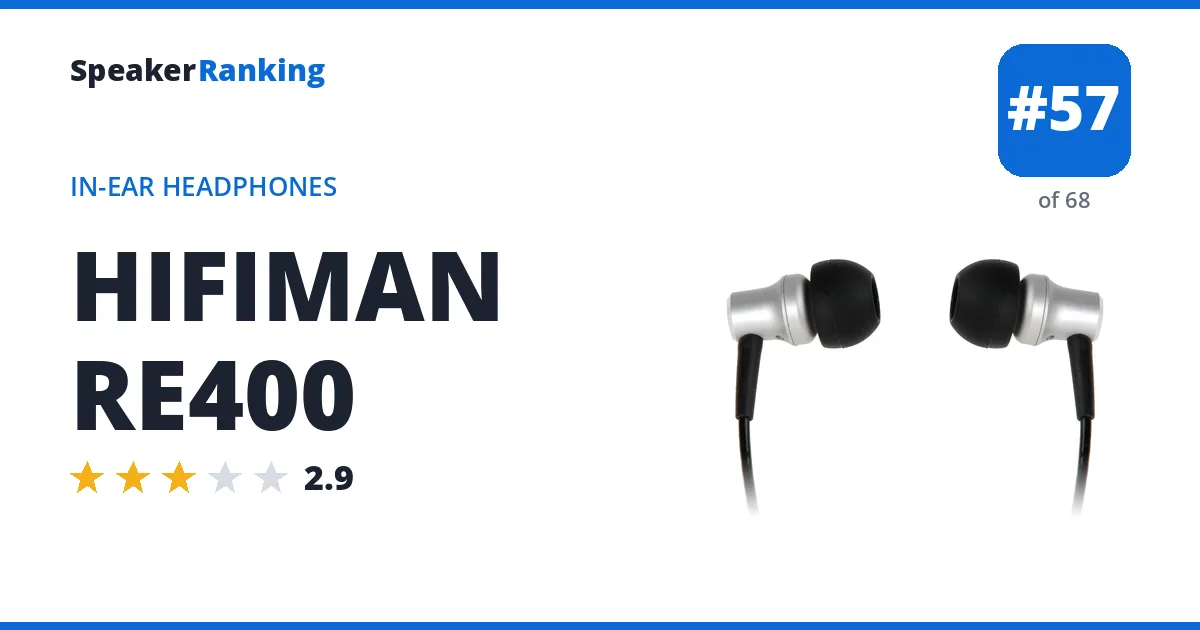
Pros: A very low price makes it an easy backup pair or first wired earphone. The single 8.5mm dynamic driver, 32 ohm impedance and 102 dB/mW sensitivity work fine straight from a phone or laptop. Crinacle’s measurement shows a slightly bright tilt of about 0.6 dB, which gives a lean, light presentation for those who dislike bass-heavy sound.
Cons: A preference score of 60 with a 3.29 dB deviation from the target means the response is quite uneven, so some instruments and vocals will sound colored. There is no built-in microphone, so it cannot take calls. The KZ ATE and SoundMAGIC E50C are rated higher at a similar price.
Full HIFIMAN RE400 review and specifications →
| Back | Closed |
|---|---|
| Built-in Microphone | No |
| Connection | Wired |
| Deviation From Target | 3.29 dB standard deviation |
| Driver Type | Dynamic |
| Drivers | 1 x 8.5mm dynamic |
| Form Factor | In-ear |
| Harman Preference Score | 60 (measured by crinacle, via AutoEQ) |
| Impedance | 32 ohms |
| Sensitivity | 102 dB/mW |
| Tonal Tilt | +0.63 (negative is warmer, positive brighter) |
EQ preset to match the Harman target
Set a preamp of -6.0 dB, then add these filters in any parametric equalizer (Wavelet, Equalizer APO, Peace, or a player with parametric EQ). Calculated by AutoEQ from its measured frequency response.
| Filter | Frequency | Gain | Q |
|---|---|---|---|
| Low shelf | 105 Hz | +6.0 dB | 0.70 |
| Peak | 3,850 Hz | +7.0 dB | 2.19 |
| Peak | 170 Hz | -2.3 dB | 0.43 |
| Peak | 2,033 Hz | -3.6 dB | 1.58 |
| Peak | 801 Hz | +1.9 dB | 1.59 |
| High shelf | 10,000 Hz | +1.7 dB | 0.70 |
| Peak | 6,033 Hz | -4.6 dB | 6.00 |
| Peak | 4,799 Hz | +2.1 dB | 4.73 |
| Peak | 3,186 Hz | +0.9 dB | 6.00 |
| Peak | 3,794 Hz | -1.0 dB | 6.00 |
- Reviews, Comparisons and Sound Samples
- Head-to-Head Comparisons