Coverage note. Speaker Ranking currently covers 6 Empire Ears models across headphones. These are the products in our database, not a complete list of everything Empire Ears makes.
What this page covers. The Empire Ears models ranked here span headphones, including Empire Ears Odin, Empire Ears ESR Mk2 and Empire Ears Valkyrie MKII. Use each model’s category position to compare it with alternatives of the same size and use case.
This page lists all 6 Empire Ears speakers ranked on this site across headphones. Each model is shown in the category where it competes, with its current rank and the size of that ranking.
Use the category position rather than the brand name alone: speakers from the same manufacturer can perform very differently by size, price and product family.
Prices on this page were last checked October 13, 2026 at 3:17 PM UTC. Product prices and availability are accurate as of that date/time and are subject to change; the price and availability shown on Amazon at the time of purchase will apply to the purchase of this product.
As an eBay Partner, we may be compensated if you make a purchase.
Discontinued Empire Ears Models
Still ranked, and often still worth buying used, but no longer in production. Check availability before planning around one of these.
In-Ear Headphones
 Ranked #340 of 793 in In-Ear Headphones - Empire Ears Odin Discontinued eBay
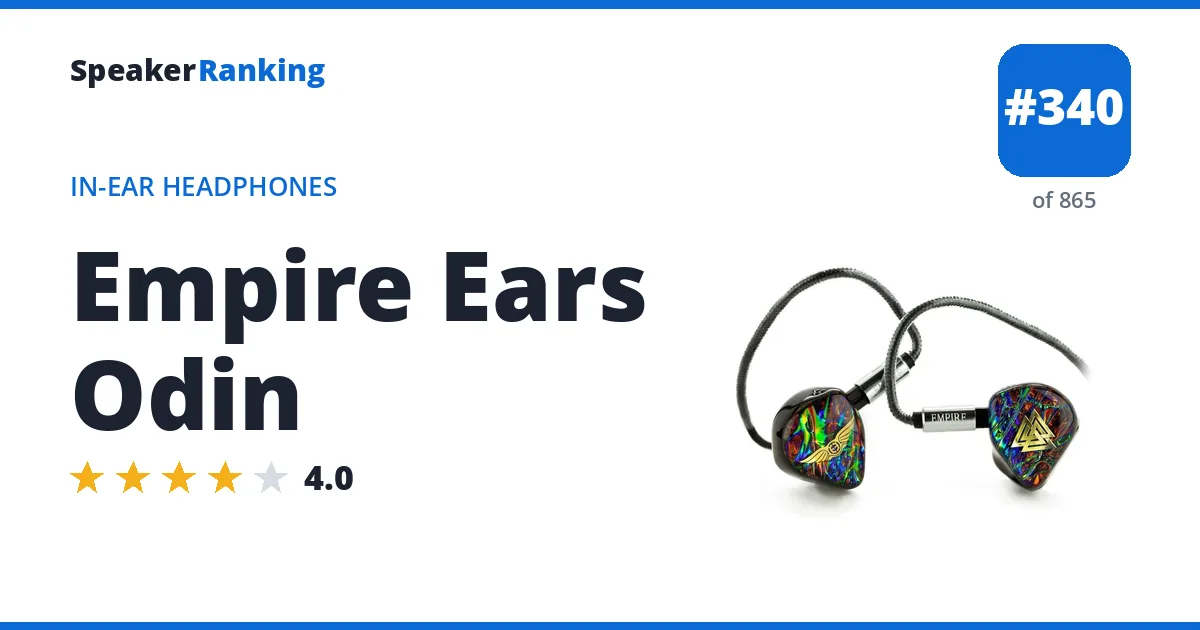
Pros: The median of 8 hobbyist measurements gives it a solid Harman preference score of 74 with a 2.28 dB spread. Bass sits close to target and holds down to 20 Hz, so low end sounds full without bloat. It uses 2 x dynamic (W9+) + 5 x balanced armature + 4 x electrostatic with an easy 3 ohm load.
Cons: Discontinued, so it is mainly found used. Its 2.28 dB spread is less even than the best measured sets.
Full Empire Ears Odin review and specifications →
| Released | 2020 (6 years ago) |
|---|---|
| Connection | Wired |
| Deviation From Target | 2.28 dB standard deviation |
| Driver Type | Tribrid |
| Drivers | 2 x dynamic (W9+) + 5 x balanced armature + 4 x electrostatic |
| Form Factor | In-ear |
| Frequency Response | 5Hz - 100kHz |
| Harman Preference Score | 74 (measured by crinacle, via AutoEQ) |
| Impedance | 3 ohms |
| Sensitivity | 108 dB/mW |
| Sub-bass Extension | Within 6 dB of target down to 20 Hz (-0.6 dB at 30 Hz) |
| Tonal Tilt | -0.21 (negative is warmer, positive brighter) |
EQ preset to match the Harman target
Set a preamp of -4.3 dB, then add these filters in any parametric equalizer (Wavelet, Equalizer APO, Peace, or a player with parametric EQ). Calculated by AutoEQ from its measured frequency response.
| Filter | Frequency | Gain | Q |
|---|---|---|---|
| Low shelf | 105 Hz | +0.2 dB | 0.70 |
| Peak | 6,520 Hz | +4.7 dB | 0.65 |
| Peak | 1,629 Hz | -4.8 dB | 1.06 |
| Peak | 820 Hz | +2.5 dB | 1.22 |
| Peak | 1,674 Hz | -1.2 dB | 1.03 |
| High shelf | 10,000 Hz | -1.1 dB | 0.70 |
| Peak | 156 Hz | -1.2 dB | 1.35 |
| Peak | 70 Hz | +0.7 dB | 1.51 |
| Peak | 4,363 Hz | -2.5 dB | 6.00 |
| Peak | 3,667 Hz | +2.0 dB | 5.21 |
- Reviews, Comparisons and Sound Samples
 Ranked #602 of 793 in In-Ear Headphones - Empire Ears ESR Mk2 Discontinued eBay
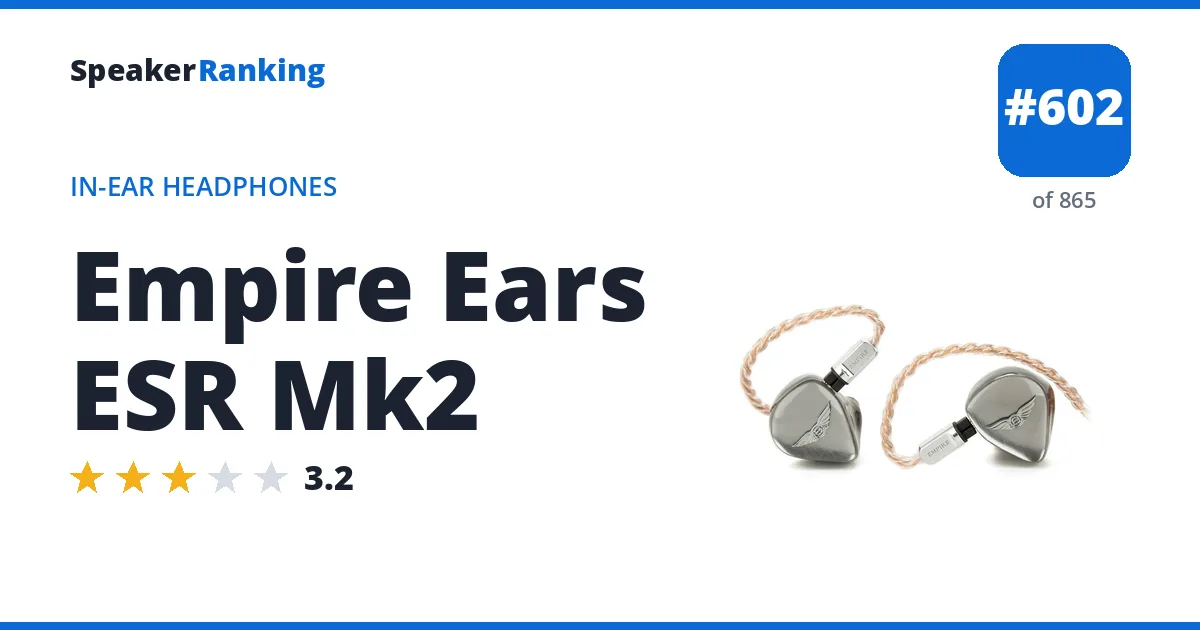
Pros: Lower mids sit within about 0.5 dB of target, keeping voices and guitars natural. It uses 3 x balanced armature + 2 x electrostatic with an easy 3.9 ohm load.
Cons: Discontinued, so it is mainly found used. Presence sits about 5.4 dB low with a 12.7 dB dip near 5.8 kHz, so vocals and instruments lose some bite. A 5 dB peak near 8.7 kHz can make cymbals and sibilance sound sharp. Sub-bass is 5.2 dB short at 30 Hz, so deep bass lacks rumble. A Harman score of 64 places it in the lower part of the in-ear rankings.
Full Empire Ears ESR Mk2 review and specifications →
| Released | 2019 (7 years ago) |
|---|---|
| Connection | Wired |
| Deviation From Target | 3.15 dB standard deviation |
| Driver Type | Hybrid |
| Drivers | 3 x balanced armature + 2 x electrostatic |
| Form Factor | In-ear |
| Frequency Response | 10Hz - 100kHz |
| Harman Preference Score | 64 (measured by HypetheSonics, via AutoEQ) |
| Impedance | 3.9 ohms |
| Sensitivity | 111 dB/mW |
| Sub-bass Extension | Within 6 dB of target down to 20 Hz (-5.2 dB at 30 Hz) |
| Tonal Tilt | -0.04 (negative is warmer, positive brighter) |
EQ preset to match the Harman target
Set a preamp of -5.7 dB, then add these filters in any parametric equalizer (Wavelet, Equalizer APO, Peace, or a player with parametric EQ). Calculated by AutoEQ from its measured frequency response.
| Filter | Frequency | Gain | Q |
|---|---|---|---|
| Low shelf | 105 Hz | +3.8 dB | 0.70 |
| Peak | 179 Hz | -3.8 dB | 0.51 |
| Peak | 6,222 Hz | +4.8 dB | 3.63 |
| Peak | 730 Hz | +1.7 dB | 1.73 |
| Peak | 3,817 Hz | +2.3 dB | 1.16 |
| High shelf | 10,000 Hz | +4.6 dB | 0.70 |
| Peak | 1,858 Hz | -1.0 dB | 2.27 |
| Peak | 2,552 Hz | +1.3 dB | 4.44 |
| Peak | 7,584 Hz | -1.2 dB | 4.37 |
| Peak | 4,995 Hz | -1.0 dB | 6.00 |
- Reviews, Comparisons and Sound Samples
 Ranked #619 of 793 in In-Ear Headphones - Empire Ears Valkyrie MKII Discontinued eBay
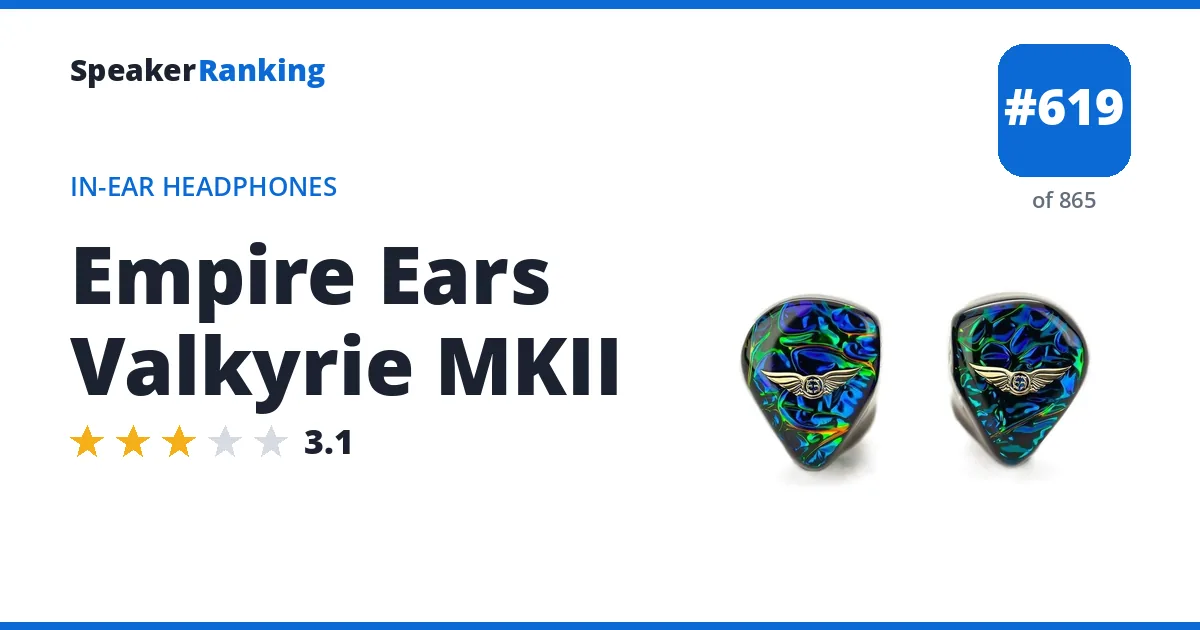
Pros: Bass is lifted about 6 dB with extension to 20 Hz, giving kick drums and bass lines extra weight. Lower mids sit within about 1 dB of target, keeping voices and guitars natural. It uses 1 x dynamic + 1 x balanced armature + 1 x electrostatic with an easy 3 ohm load.
Cons: Discontinued, so it is mainly found used. A 9 dB peak near 8.6 kHz can make cymbals and sibilance sound sharp. The 6 dB bass lift can sound boomy and mask midrange detail. A Harman score of 63 places it in the lower part of the in-ear rankings.
Full Empire Ears Valkyrie MKII review and specifications →
| Released | 2021 (5 years ago) |
|---|---|
| Connection | Wired |
| Deviation From Target | 2.46 dB standard deviation |
| Driver Type | Tribrid |
| Drivers | 1 x dynamic + 1 x balanced armature + 1 x electrostatic |
| Form Factor | In-ear |
| Frequency Response | 5Hz - 100kHz |
| Harman Preference Score | 63 (measured by crinacle, via AutoEQ) |
| Impedance | 3 ohms |
| Sub-bass Extension | Within 6 dB of target down to 20 Hz (+6.4 dB at 30 Hz) |
| Tonal Tilt | -0.64 (negative is warmer, positive brighter) |
EQ preset to match the Harman target
Set a preamp of -4.7 dB, then add these filters in any parametric equalizer (Wavelet, Equalizer APO, Peace, or a player with parametric EQ). Calculated by AutoEQ from its measured frequency response.
| Filter | Frequency | Gain | Q |
|---|---|---|---|
| Low shelf | 105 Hz | -3.7 dB | 0.70 |
| Peak | 785 Hz | +5.4 dB | 0.85 |
| Peak | 1,683 Hz | -4.3 dB | 1.34 |
| Peak | 174 Hz | -2.0 dB | 1.76 |
| Peak | 4,267 Hz | -4.1 dB | 4.96 |
| High shelf | 10,000 Hz | +2.9 dB | 0.70 |
| Peak | 5,976 Hz | +4.9 dB | 3.84 |
| Peak | 71 Hz | +1.1 dB | 1.98 |
| Peak | 4,689 Hz | -2.6 dB | 5.94 |
| Peak | 121 Hz | -0.6 dB | 2.34 |
- Reviews, Comparisons and Sound Samples
 Ranked #633 of 793 in In-Ear Headphones - Empire Ears Raven Discontinued eBay
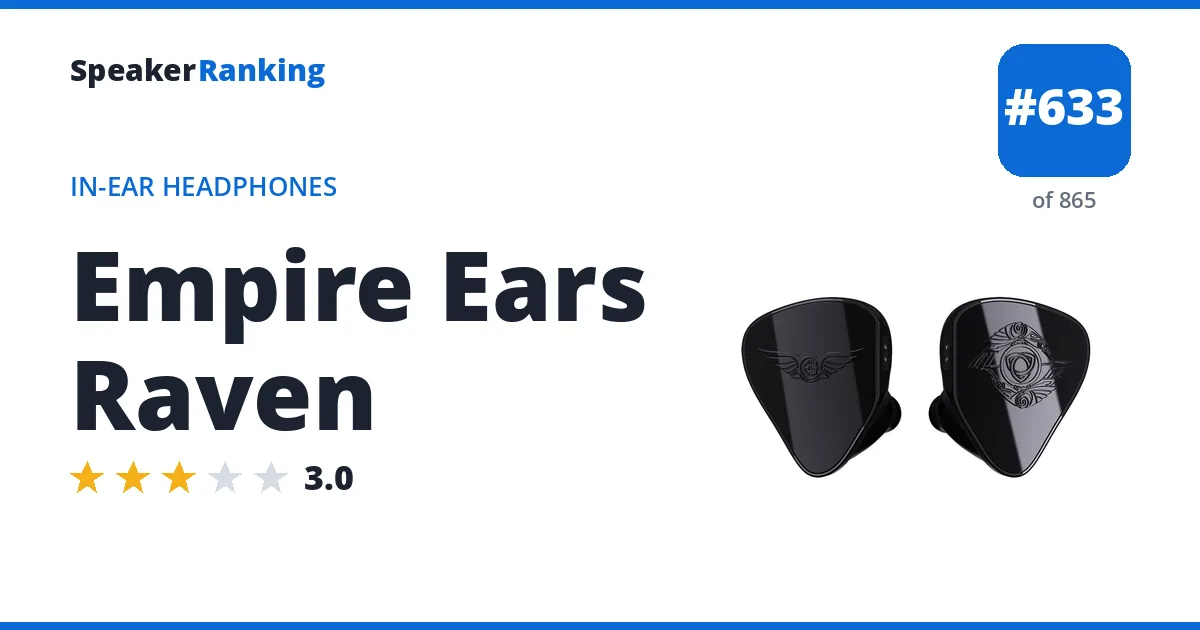
Pros: Bass is lifted about 3.5 dB with extension to 20 Hz, giving kick drums and bass lines extra weight. Upper treble lifts about 3.7 dB for extra air and sparkle. Lower mids sit within about 0.8 dB of target, keeping voices and guitars natural. It uses 2 x dynamic, 5 x balanced armature, 4 x electrostatic, 1 x bone conduction with an easy 2 ohm load.
Cons: Discontinued, so it is mainly found used. Presence sits about 4.3 dB low with a 7.3 dB dip near 3.8 kHz, so vocals and instruments lose some bite. A 4.7 dB peak near 7.9 kHz can make cymbals and sibilance sound sharp. A Harman score of 62 places it in the lower part of the in-ear rankings.
Full Empire Ears Raven review and specifications →
| Released | Aug 2023 (3 years ago) |
|---|---|
| Connection | Wired |
| Deviation From Target | 2.76 dB standard deviation |
| Driver Type | Tribrid |
| Drivers | 2 x dynamic, 5 x balanced armature, 4 x electrostatic, 1 x bone conduction |
| Form Factor | In-ear |
| Frequency Response | 5Hz - 100kHz |
| Harman Preference Score | 62 (measured by HypetheSonics, via AutoEQ) |
| Impedance | 2 ohms |
| Sensitivity | 108.1 dB/mW |
| Sub-bass Extension | Within 6 dB of target down to 20 Hz (+2.6 dB at 30 Hz) |
| Tonal Tilt | -1.01 (negative is warmer, positive brighter) |
EQ preset to match the Harman target
Set a preamp of -6.3 dB, then add these filters in any parametric equalizer (Wavelet, Equalizer APO, Peace, or a player with parametric EQ). Calculated by AutoEQ from its measured frequency response.
| Filter | Frequency | Gain | Q |
|---|---|---|---|
| Low shelf | 105 Hz | -3.0 dB | 0.70 |
| Peak | 3,420 Hz | +6.4 dB | 2.00 |
| Peak | 190 Hz | -3.3 dB | 0.99 |
| Peak | 761 Hz | +2.2 dB | 1.20 |
| Peak | 1,741 Hz | -2.0 dB | 1.95 |
| High shelf | 10,000 Hz | -6.8 dB | 0.70 |
| Peak | 68 Hz | +0.9 dB | 1.87 |
| Peak | 9,794 Hz | +1.9 dB | 3.02 |
| Peak | 121 Hz | -0.6 dB | 2.51 |
| Peak | 2,575 Hz | +0.7 dB | 5.51 |
- Reviews, Comparisons and Sound Samples
 Ranked #702 of 793 in In-Ear Headphones - Empire Ears Legend EVO Discontinued eBay
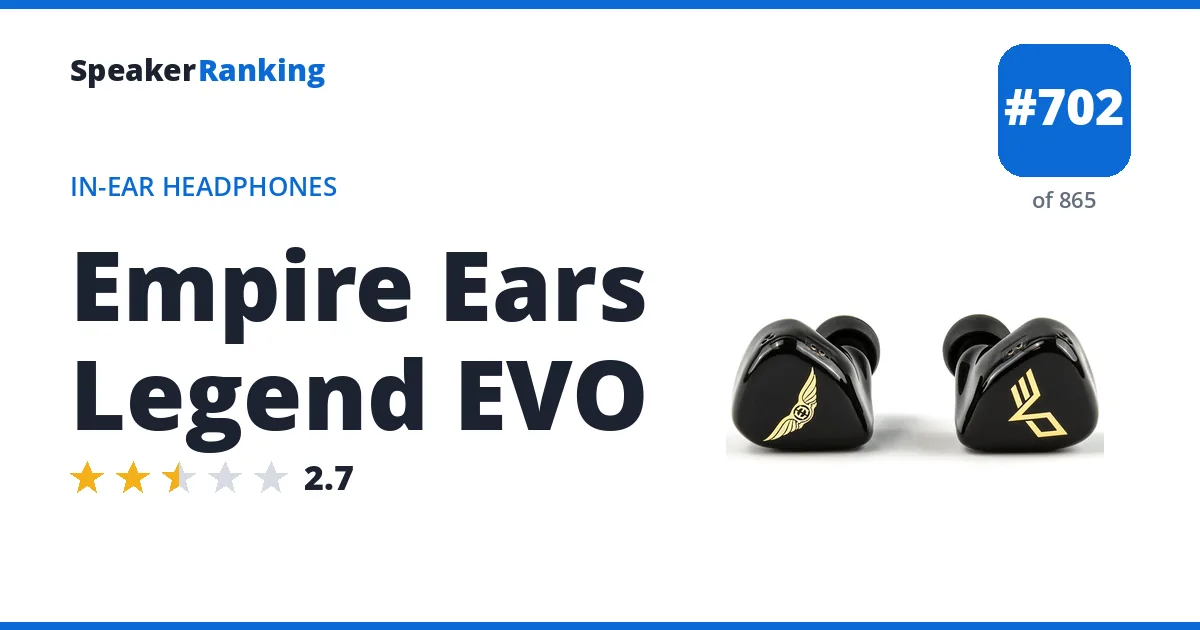
Pros: Bass is lifted about 5.5 dB with extension to 20 Hz, giving kick drums and bass lines extra weight. Lower mids sit within about 0.8 dB of target, keeping voices and guitars natural. It uses 2 x dynamic + 5 x balanced armature + 1 x bone conduction with an easy 4.5 ohm load.
Cons: Discontinued, so it is mainly found used. A 4.7 dB peak near 8.2 kHz can make cymbals and sibilance sound sharp. The 5.5 dB bass lift can sound boomy and mask midrange detail. A Harman score of 58 places it in the lower part of the in-ear rankings.
Full Empire Ears Legend EVO review and specifications →
| Released | 2021 (5 years ago) |
|---|---|
| Connection | Wired |
| Deviation From Target | 2.72 dB standard deviation |
| Driver Type | Hybrid |
| Drivers | 2 x dynamic + 5 x balanced armature + 1 x bone conduction |
| Form Factor | In-ear |
| Frequency Response | 5Hz - 35kHz |
| Harman Preference Score | 58 (measured by crinacle, via AutoEQ) |
| Impedance | 4.5 ohms |
| Sensitivity | 103 dB/mW |
| Sub-bass Extension | Within 6 dB of target down to 20 Hz (+3.7 dB at 30 Hz) |
| Tonal Tilt | -1.07 (negative is warmer, positive brighter) |
EQ preset to match the Harman target
Set a preamp of -4.5 dB, then add these filters in any parametric equalizer (Wavelet, Equalizer APO, Peace, or a player with parametric EQ). Calculated by AutoEQ from its measured frequency response.
| Filter | Frequency | Gain | Q |
|---|---|---|---|
| Low shelf | 105 Hz | -3.2 dB | 0.70 |
| Peak | 217 Hz | -3.8 dB | 0.64 |
| Peak | 739 Hz | +5.0 dB | 0.70 |
| Peak | 7,094 Hz | +3.6 dB | 0.98 |
| Peak | 1,775 Hz | -4.6 dB | 1.35 |
| High shelf | 10,000 Hz | -1.0 dB | 0.70 |
| Peak | 71 Hz | +0.7 dB | 1.64 |
| Peak | 126 Hz | -0.6 dB | 2.29 |
| Peak | 4,774 Hz | -2.0 dB | 6.00 |
| Peak | 5,797 Hz | +2.0 dB | 6.00 |
- Reviews, Comparisons and Sound Samples
 Ranked #723 of 793 in In-Ear Headphones - Empire Ears Wraith Discontinued eBay
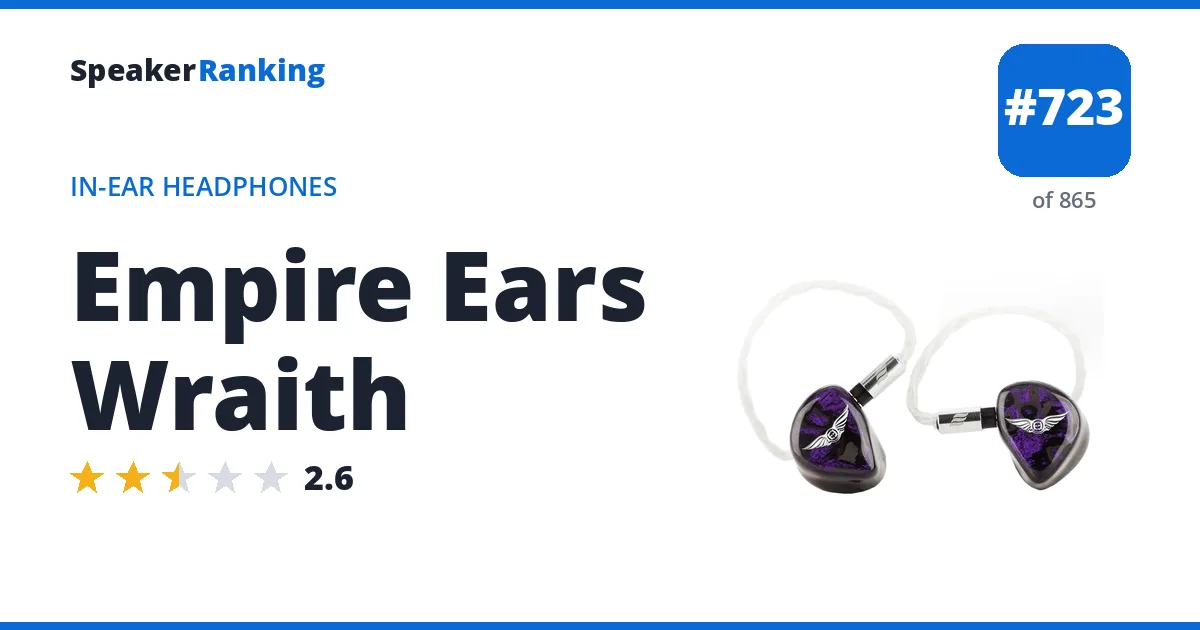
Pros: Lower mids sit within about 0.5 dB of target, keeping voices and guitars natural. It uses 7 x balanced armature + 4 x electrostatic with an easy 4 ohm load.
Cons: Discontinued, so it is mainly found used. Presence sits about 6 dB low with a 12.7 dB dip near 11.3 kHz, so vocals and instruments lose some bite. A 5.4 dB peak near 1.5 kHz can make cymbals and sibilance sound sharp. Sub-bass is 7.1 dB short at 30 Hz, so deep bass lacks rumble. A Harman score of 56 places it in the lower part of the in-ear rankings.
Full Empire Ears Wraith review and specifications →
| Released | 2019 (7 years ago) |
|---|---|
| Connection | Wired |
| Deviation From Target | 3.86 dB standard deviation |
| Driver Type | Hybrid |
| Drivers | 7 x balanced armature + 4 x electrostatic |
| Form Factor | In-ear |
| Harman Preference Score | 56 (measured by HypetheSonics, via AutoEQ) |
| Impedance | 4 ohms |
| Sensitivity | 117 dB/mW |
| Sub-bass Extension | Falls 6 dB below target at 42 Hz (-7.1 dB at 30 Hz) |
| Tonal Tilt | +0.07 (negative is warmer, positive brighter) |
EQ preset to match the Harman target
Set a preamp of -6.5 dB, then add these filters in any parametric equalizer (Wavelet, Equalizer APO, Peace, or a player with parametric EQ). Calculated by AutoEQ from its measured frequency response.
| Filter | Frequency | Gain | Q |
|---|---|---|---|
| Low shelf | 105 Hz | +8.1 dB | 0.70 |
| Peak | 7,967 Hz | +6.0 dB | 0.41 |
| Peak | 82 Hz | -4.1 dB | 0.24 |
| Peak | 1,485 Hz | -8.1 dB | 1.62 |
| Peak | 908 Hz | +2.5 dB | 1.12 |
| High shelf | 10,000 Hz | +2.7 dB | 0.70 |
| Peak | 2,790 Hz | +2.3 dB | 5.22 |
| Peak | 9,467 Hz | -1.1 dB | 2.35 |
| Peak | 2,242 Hz | -1.4 dB | 4.95 |
| Peak | 4,665 Hz | -1.5 dB | 6.00 |
- Reviews, Comparisons and Sound Samples