Short answer: the SoundMAGIC E50C. It ranks #376 of 450 in-ear headphones by sound quality, rated 3.2/5, at $32.99; the KZ DQ6S ranks #399, rated 2.9/5, at $28.99. The price gap is small enough that the sound-quality ranking should decide it.
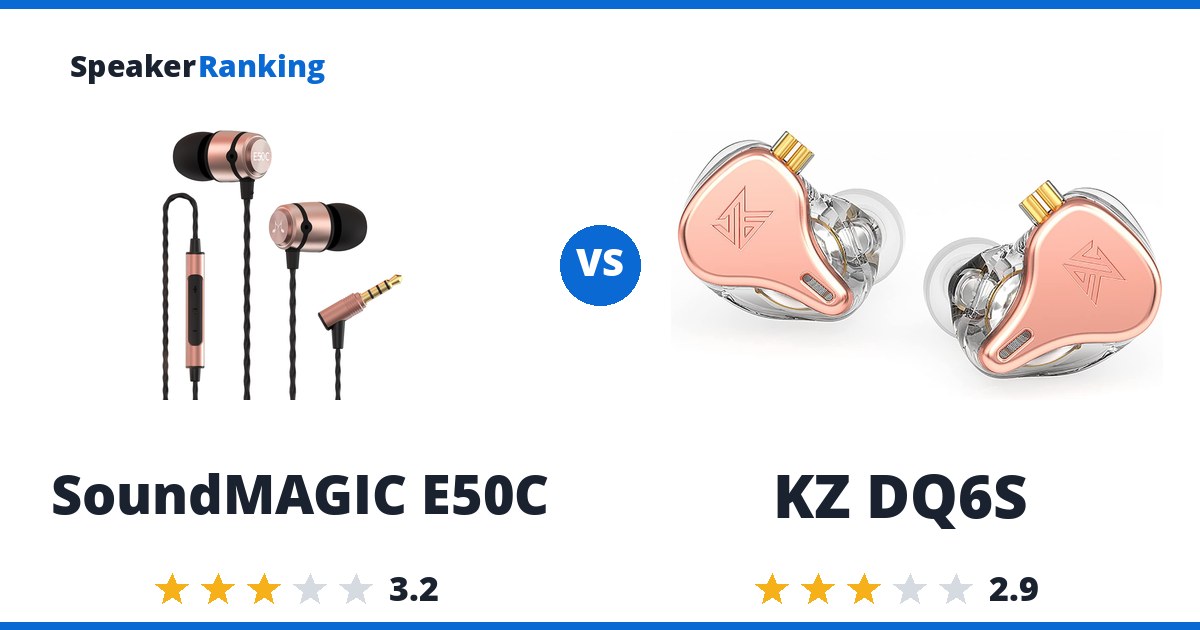
The SoundMAGIC E50C is the better-sounding pick. Bass from 60 to 200 Hz sits within 0.3 dB of target, so the low end is balanced rather than boomy. Watch for: Presence from 3 to 6 kHz is about 6.7 dB under target, with an 8.7 dB dip near 3.3 kHz, so vocals lose clarity and sound set back.
Why pick the KZ DQ6S: It is very inexpensive and its 116 dB sensitivity with 25 ohm impedance means any phone drives it loudly. Watch for: Those measurements show a 7.4 dB peak near 8.2 kHz that can make sibilant vocals and cymbals sound sharp, alongside a 6.8 dB dip near 3.2 kHz that pushes voices back.
Buy the SoundMAGIC E50C. It is rated higher for sound quality, and saving $4 with the KZ DQ6S does not make up for the sound-quality gap.
Want more options? Browse the full Headphones rankings.
Specifications Side By Side
| SoundMAGIC E50C | KZ DQ6S | |
|---|---|---|
| Price | $32.99 | $28.99 |
| Ranked | #376 of 450 in In-Ear Headphones | #399 of 450 in In-Ear Headphones |
| Form Factor | In-ear | In-ear |
| Harman Preference Score | 64 (measured by oratory1990, via AutoEQ) | 60 (measured by crinacle, via AutoEQ) |
| Deviation From Target | 2.96 dB standard deviation | 2.83 dB standard deviation |
| Tonal Tilt | -0.38 (negative is warmer, positive brighter) | -1.12 (negative is warmer, positive brighter) |
| Sub-bass Extension | Within 6 dB of target down to 20 Hz (-3.6 dB at 30 Hz) | Within 6 dB of target down to 20 Hz (+2.4 dB at 30 Hz) |
| Connection | Wired | Wired |
| Driver Type | Dynamic | Dynamic |
| Drivers | 1 x 10mm dynamic | - |
| Impedance | 51 ohms | 25 ohms |
| Sensitivity | 102 dB/mW | 116 dB |
| Weight | 0 lbs (13 g) | - |
| Frequency Response | 15Hz - 22kHz (Manufacturer specified) | 20Hz - 40kHz (Manufacturer specified) |
| Built-in Microphone | Yes | No |
| Back | Closed | Closed |
Related Headphone Comparisons
How SoundMAGIC E50C compares with other leading options:
- Whizzer HE01 vs SoundMAGIC E50C
- SoundMAGIC E50C vs KZ ZEX
- KZ DQ6S vs KZ ZEX
- HIFIMAN RE400 vs KZ DQ6S
- KZ DQ6S vs KZ EDX Pro
Prices on this page were last checked October 11, 2026 at 4:59 PM UTC. Product prices and availability are accurate as of that date/time and are subject to change; the price and availability shown on Amazon at the time of purchase will apply to the purchase of this product.
As an eBay Partner, we may be compensated if you make a purchase.
The Two Headphones In Full
 SoundMAGIC E50C: $32.99 Amazon eBay
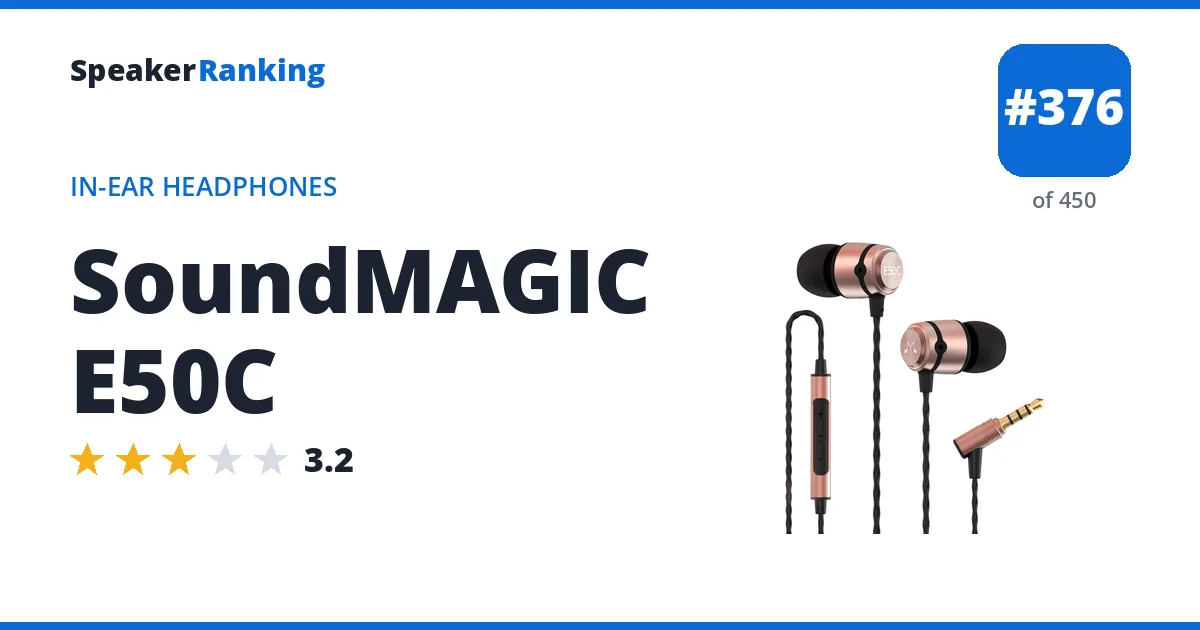
Pros: Bass from 60 to 200 Hz sits within 0.3 dB of target, so the low end is balanced rather than boomy. The inline microphone makes it usable for calls, and the 51 ohm impedance with 102 dB/mW sensitivity works with most phones. It is a very low-cost way into a warm tuning, with a preference score of 64.
Cons: Presence from 3 to 6 kHz is about 6.7 dB under target, with an 8.7 dB dip near 3.3 kHz, so vocals lose clarity and sound set back. Sub-bass is 2.8 dB low and the top octave is about 3.8 dB down, which limits both rumble and air. The Whizzer HE01 has a higher rating.
Full SoundMAGIC E50C review and specifications →
| Back | Closed |
|---|---|
| Built-in Microphone | Yes |
| Connection | Wired |
| Deviation From Target | 2.96 dB standard deviation |
| Driver Type | Dynamic |
| Drivers | 1 x 10mm dynamic |
| Form Factor | In-ear |
| Frequency Response | 15Hz - 22kHz (Manufacturer specified) |
| Harman Preference Score | 64 (measured by oratory1990, via AutoEQ) |
| Impedance | 51 ohms |
| Sensitivity | 102 dB/mW |
| Sub-bass Extension | Within 6 dB of target down to 20 Hz (-3.6 dB at 30 Hz) |
| Tonal Tilt | -0.38 (negative is warmer, positive brighter) |
| Weight | 0 lbs (13 g) |
EQ preset to match the Harman target
Set a preamp of -6.2 dB, then add these filters in any parametric equalizer (Wavelet, Equalizer APO, Peace, or a player with parametric EQ). Calculated by AutoEQ from its measured frequency response.
| Filter | Frequency | Gain | Q |
|---|---|---|---|
| Low shelf | 105 Hz | +1.3 dB | 0.70 |
| Peak | 3,391 Hz | +6.0 dB | 1.16 |
| Peak | 187 Hz | -2.7 dB | 0.60 |
| Peak | 1,404 Hz | -2.6 dB | 1.38 |
| Peak | 2,537 Hz | +1.6 dB | 2.71 |
| High shelf | 10,000 Hz | +0.4 dB | 0.70 |
| Peak | 9,380 Hz | +0.8 dB | 2.09 |
| Peak | 7,025 Hz | -0.9 dB | 4.59 |
| Peak | 71 Hz | +0.2 dB | 2.12 |
| Peak | 116 Hz | -0.2 dB | 2.33 |
- Reviews, Comparisons and Sound Samples
- Head-to-Head Comparisons
 KZ DQ6S: $28.99 Amazon eBay
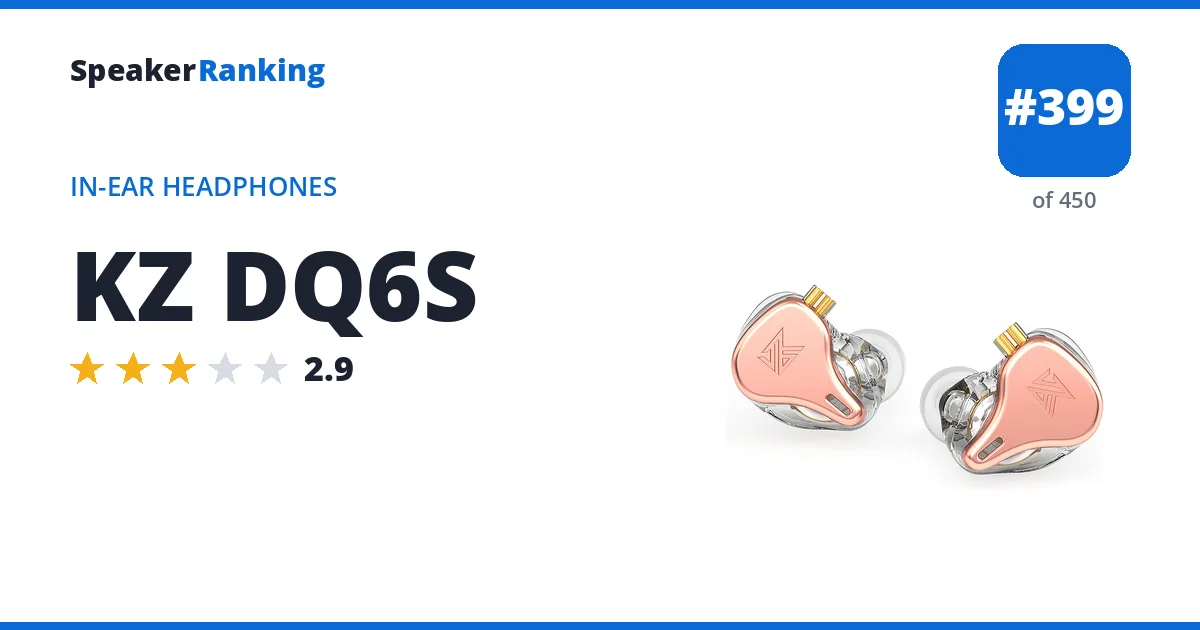
Pros: It is very inexpensive and its 116 dB sensitivity with 25 ohm impedance means any phone drives it loudly. Across nine hobbyist measurements on squig.link, sub-bass sits about 2.6 dB and bass about 3.1 dB above target, a match for listeners who want punchy, bass-heavy playback. It is rated above the KZ ZEX at the same price.
Cons: Those measurements show a 7.4 dB peak near 8.2 kHz that can make sibilant vocals and cymbals sound sharp, alongside a 6.8 dB dip near 3.2 kHz that pushes voices back. The KZ ATE earns a higher rating for even less money.
Full KZ DQ6S review and specifications →
| Back | Closed |
|---|---|
| Built-in Microphone | No |
| Connection | Wired |
| Deviation From Target | 2.83 dB standard deviation |
| Driver Type | Dynamic |
| Form Factor | In-ear |
| Frequency Response | 20Hz - 40kHz (Manufacturer specified) |
| Harman Preference Score | 60 (measured by crinacle, via AutoEQ) |
| Impedance | 25 ohms |
| Sensitivity | 116 dB |
| Sub-bass Extension | Within 6 dB of target down to 20 Hz (+2.4 dB at 30 Hz) |
| Tonal Tilt | -1.12 (negative is warmer, positive brighter) |
EQ preset to match the Harman target
Set a preamp of -4.8 dB, then add these filters in any parametric equalizer (Wavelet, Equalizer APO, Peace, or a player with parametric EQ). Calculated by AutoEQ from its measured frequency response.
| Filter | Frequency | Gain | Q |
|---|---|---|---|
| Low shelf | 105 Hz | -3.0 dB | 0.70 |
| Peak | 175 Hz | -3.2 dB | 1.13 |
| Peak | 3,170 Hz | +5.1 dB | 1.14 |
| Peak | 10,000 Hz | +4.6 dB | 2.04 |
| Peak | 1,762 Hz | -3.5 dB | 2.30 |
| High shelf | 10,000 Hz | -0.9 dB | 0.70 |
| Peak | 833 Hz | +1.6 dB | 1.64 |
| Peak | 6,050 Hz | +2.8 dB | 5.68 |
| Peak | 1,295 Hz | -1.2 dB | 3.09 |
| Peak | 4,847 Hz | -1.8 dB | 5.26 |
- Reviews, Comparisons and Sound Samples
- Head-to-Head Comparisons