Short answer: the Qudelix T71. It ranks #32 of 43 DAC and headphone amp combos by measured performance, rated 3.8/5, at $229; the SMSL M10 ranks #36, rated 3.3/5, and costs $455, so there is not much of a tradeoff to weigh.
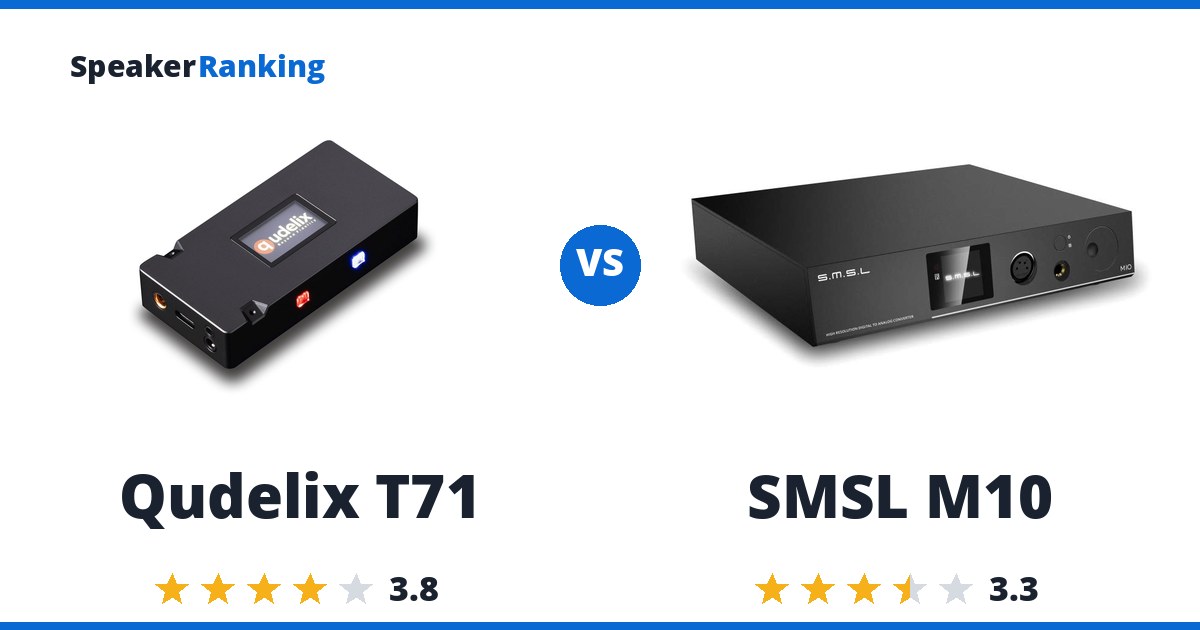
The Qudelix T71 is the better-sounding option. Audio Science Review measured 110 dB SINAD, clean enough for nearly all listening. The catch: The maker does not publish a 32 ohm power figure, so it is hard to judge how well it drives demanding headphones.
Why pick the SMSL M10: It has balanced 4-pin XLR headphone and XLR line outputs alongside a 6.35 mm jack, plus USB, optical and coaxial inputs. The catch: Audio Science Review measured 95 dB SINAD, fine for most headphones but sensitive in-ear monitors may reveal hiss or noise.
Buy the Qudelix T71. It is rated higher than the SMSL M10 and costs less, which makes it the one to get unless you need something the other one does better.
Looking for alternatives? See the complete Headphone Amps and DACs rankings.
Specifications Side By Side
| Qudelix T71 | SMSL M10 | |
|---|---|---|
| Price | $229.00 | $455.00 |
| Ranked | #32 of 43 in DAC and Headphone Amp Combos | #36 of 43 in DAC and Headphone Amp Combos |
| Device Type | DAC and headphone amp | DAC and headphone amp |
| SINAD | 110 dB (measured by Audio Science Review) | 95 dB (measured by Audio Science Review) |
| Headphone Outputs | 3.5 mm, 2.5 mm balanced, 4.4 mm balanced | 6.35 mm, 4-pin XLR balanced |
| Balanced Output | Yes (2.5 mm, 4.4 mm) | Yes (4-pin XLR, XLR line out) |
| Inputs | USB-C | USB-B, optical, coaxial |
| Battery Life | 4 to 10 hours | - |
| DAC Chip | 4 x ES9219C | AK4497 |
| Equalizer | Yes (20-band parametric/graphic) | - |
| Dimensions | 3.3” x 1.6” x 0.6” (84 x 40 x 16 mm) | 9.8” x 2” x 8.1” (250 x 50 x 205 mm) |
| Weight | 0.2 lbs (75 g) | - |
| Output Power (32 ohms) | - | 340 mW (manufacturer rated, balanced) |
| Output Power (300 ohms) | - | 87 mW (manufacturer rated, balanced) |
| Outputs | - | RCA, XLR |
Related Amp and DAC Comparisons
More worthwhile head-to-heads for Qudelix T71:
- Schiit Magni Unity with Mesh DAC vs Qudelix T71
- Khadas Tone2 Pro vs Qudelix T71
- SMSL D12 vs Qudelix T71
- Fosi Audio K7 vs Qudelix T71
- Loxjie D40 vs Qudelix T71
Prices on this page were last checked October 11, 2026 at 4:59 PM UTC. Product prices and availability are accurate as of that date/time and are subject to change; the price and availability shown on Amazon at the time of purchase will apply to the purchase of this product.
As an eBay Partner, we may be compensated if you make a purchase.
The Two Amps and DACs In Full
 Qudelix T71: $229.00 Qudelix eBay
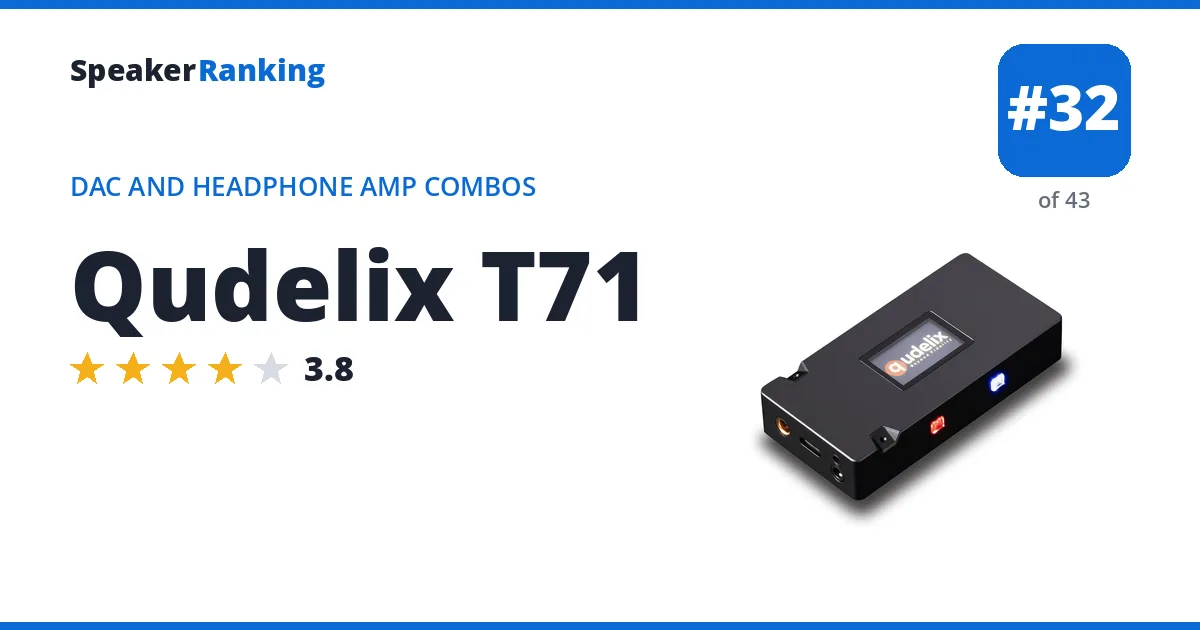
Pros: Audio Science Review measured 110 dB SINAD, clean enough for nearly all listening. A built in 20 band parametric or graphic equalizer lets you tune your headphones, and it offers 3.5 mm plus 2.5 mm and 4.4 mm balanced outputs. Its battery runs 4 to 10 hours, and it weighs 75 g.
Cons: The maker does not publish a 32 ohm power figure, so it is hard to judge how well it drives demanding headphones. USB-C is the only input. The Loxjie D30 rates higher and measured cleaner for less.
Full Qudelix T71 review and specifications →
| Released | 2023 (3 years ago) |
|---|---|
| Balanced Output | Yes (2.5 mm, 4.4 mm) |
| Battery Life | 4 to 10 hours |
| DAC Chip | 4 x ES9219C |
| Device Type | DAC and headphone amp |
| Dimensions | 3.3” x 1.6” x 0.6” (84 x 40 x 16 mm) |
| Equalizer | Yes (20-band parametric/graphic) |
| Headphone Outputs | 3.5 mm, 2.5 mm balanced, 4.4 mm balanced |
| Inputs | USB-C |
| SINAD | 110 dB (measured by Audio Science Review) |
| Weight | 0.2 lbs (75 g) |
- Reviews, Comparisons and Sound Samples
- Head-to-Head Comparisons
 SMSL M10: $455.00 Amazon eBay
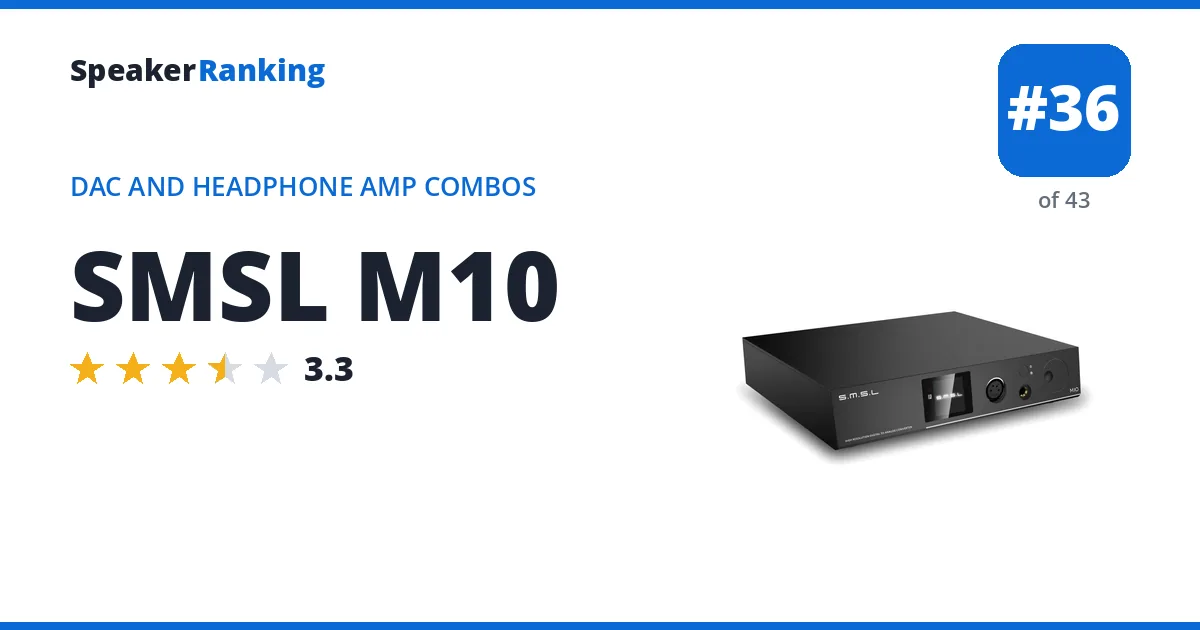
Pros: It has balanced 4-pin XLR headphone and XLR line outputs alongside a 6.35 mm jack, plus USB, optical and coaxial inputs. SMSL rates it at 340 mW balanced into 32 ohms, enough for most headphones.
Cons: Audio Science Review measured 95 dB SINAD, fine for most headphones but sensitive in-ear monitors may reveal hiss or noise. The Qudelix T71 rates higher with better measured SINAD for less, and there is no Bluetooth input.
Full SMSL M10 review and specifications →
| Balanced Output | Yes (4-pin XLR, XLR line out) |
|---|---|
| DAC Chip | AK4497 |
| Device Type | DAC and headphone amp |
| Dimensions | 9.8” x 2” x 8.1” (250 x 50 x 205 mm) |
| Headphone Outputs | 6.35 mm, 4-pin XLR balanced |
| Inputs | USB-B, optical, coaxial |
| Output Power (300 ohms) | 87 mW (manufacturer rated, balanced) |
| Output Power (32 ohms) | 340 mW (manufacturer rated, balanced) |
| Outputs | RCA, XLR |
| SINAD | 95 dB (measured by Audio Science Review) |
- Reviews, Comparisons and Sound Samples
- Head-to-Head Comparisons