Short answer: the Moritz Dragon. It ranks #208 of 450 in-ear headphones by sound quality, rated 4.2/5, at $555.99; the Oriolus Isabellae ranks #217, rated 4.1/5, and costs $600, so there is not much of a tradeoff to weigh.

The case for the Oriolus Isabellae: A single 9.8mm dynamic driver earns a preference score of 75 from crinacle, and squig.link measurements show a 3.2 dB upper bass lift that gives a warm, punchy foundation without bloating the mids. The tradeoff: Across hobbyist measurements a 7 dB peak near 11.2 kHz adds sparkle that can tip into sibilance or splash on bright recordings.
Buy the Moritz Dragon. It is rated higher for sound quality than the Oriolus Isabellae and costs less, so only choose the other one for a particular feature it does better.
Want more options? Browse the full Headphones rankings.
Specifications Side By Side
| Moritz Dragon | Oriolus Isabellae | |
|---|---|---|
| Price | $555.99 | $600.00 |
| Ranked | #208 of 450 in In-Ear Headphones | #217 of 450 in In-Ear Headphones |
| Form Factor | In-ear | In-ear |
| Back | Closed | Closed |
| Harman Preference Score | 76 (median of 5 squig.link measurements, calibrated to AutoEQ) | 75 (measured by crinacle, via AutoEQ) |
| Deviation From Target | 1.62 dB standard deviation | 2.14 dB standard deviation |
| Tonal Tilt | -0.55 (negative is warmer, positive brighter) | +0.11 (negative is warmer, positive brighter) |
| Sub-bass Extension | Within 6 dB of target down to 20 Hz (+2.3 dB at 30 Hz) | Within 6 dB of target down to 20 Hz (-1.9 dB at 30 Hz) |
| Connection | Wired | Wired |
| Driver Type | Dynamic | Dynamic |
| Drivers | 1 x dynamic | 1 x 9.8mm dynamic |
| Impedance | 19 ohms | 30 ohms |
| Sensitivity | 103.2 dB SPL/mW | 113 dB |
| Frequency Response | 5Hz - 48kHz (Manufacturer specified) | 10Hz - 40kHz (Manufacturer specified) |
| Built-in Microphone | - | No |
Related Headphone Comparisons
How Moritz Dragon compares with other leading options:
- Moondrop Meteor vs Moritz Dragon
- TANGZU TianPeng vs Moritz Dragon
- Simgot EM10 vs Moritz Dragon
- Moritz Dragon vs NiceHCK Rockies
- Moritz Dragon vs EPZ 550
Prices on this page were last checked October 11, 2026 at 4:59 PM UTC. Product prices and availability are accurate as of that date/time and are subject to change; the price and availability shown on Amazon at the time of purchase will apply to the purchase of this product.
As an eBay Partner, we may be compensated if you make a purchase.
The Two Headphones In Full
 Moritz Dragon: $555.99 HiFiGo eBay
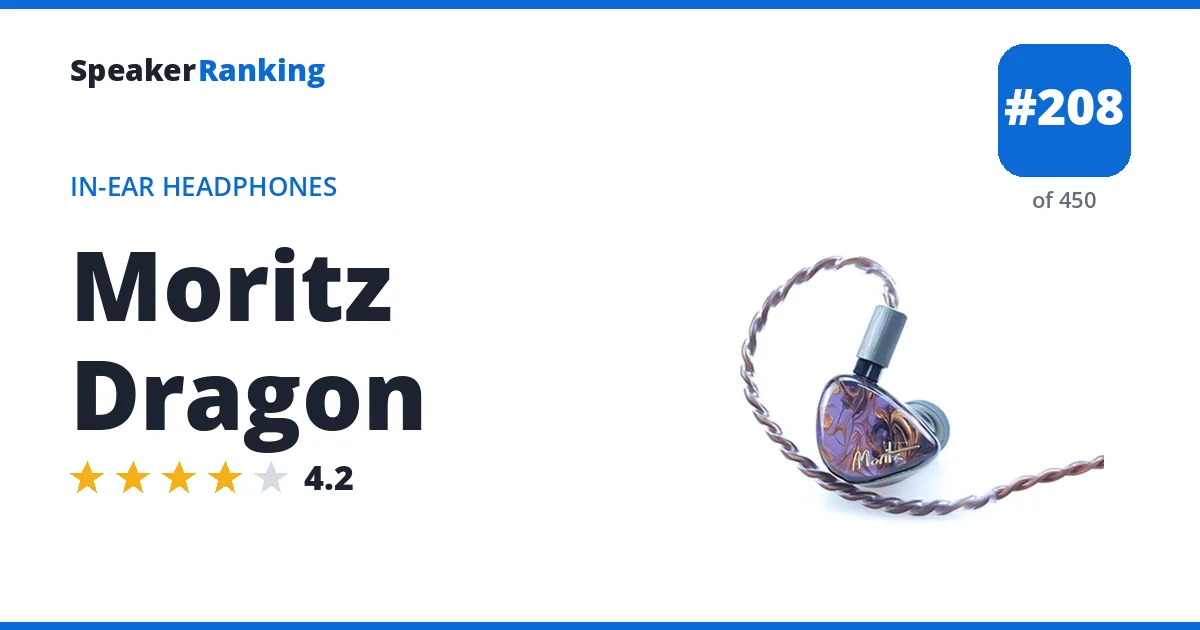
Full Moritz Dragon review and specifications →
| Released | Dec 2024 (1 year ago) |
|---|---|
| Back | Closed |
| Connection | Wired |
| Deviation From Target | 1.62 dB standard deviation |
| Driver Type | Dynamic |
| Drivers | 1 x dynamic |
| Form Factor | In-ear |
| Frequency Response | 5Hz - 48kHz (Manufacturer specified) |
| Harman Preference Score | 76 (median of 5 squig.link measurements, calibrated to AutoEQ) |
| Impedance | 19 ohms |
| Sensitivity | 103.2 dB SPL/mW |
| Sub-bass Extension | Within 6 dB of target down to 20 Hz (+2.3 dB at 30 Hz) |
| Tonal Tilt | -0.55 (negative is warmer, positive brighter) |
- Reviews, Comparisons and Sound Samples
- Head-to-Head Comparisons
 Oriolus Isabellae: $600.00 Shenzhenaudio eBay

Pros: A single 9.8mm dynamic driver earns a preference score of 75 from crinacle, and squig.link measurements show a 3.2 dB upper bass lift that gives a warm, punchy foundation without bloating the mids. The upper mids sit right on target, so vocals come through clearly, and the tuning suits warm and V-shaped tastes. At 30 ohms and 113 dB sensitivity it runs well from a phone, and it rates higher than the DUNU Zen and Unique Melody MEXT.
Cons: Across hobbyist measurements a 7 dB peak near 11.2 kHz adds sparkle that can tip into sibilance or splash on bright recordings. The presence band sits 2.2 dB low with a dip near 6.1 kHz, softening some edge on vocals and snare.
Full Oriolus Isabellae review and specifications →
| Back | Closed |
|---|---|
| Built-in Microphone | No |
| Connection | Wired |
| Deviation From Target | 2.14 dB standard deviation |
| Driver Type | Dynamic |
| Drivers | 1 x 9.8mm dynamic |
| Form Factor | In-ear |
| Frequency Response | 10Hz - 40kHz (Manufacturer specified) |
| Harman Preference Score | 75 (measured by crinacle, via AutoEQ) |
| Impedance | 30 ohms |
| Sensitivity | 113 dB |
| Sub-bass Extension | Within 6 dB of target down to 20 Hz (-1.9 dB at 30 Hz) |
| Tonal Tilt | +0.11 (negative is warmer, positive brighter) |
EQ preset to match the Harman target
Set a preamp of -3.2 dB, then add these filters in any parametric equalizer (Wavelet, Equalizer APO, Peace, or a player with parametric EQ). Calculated by AutoEQ from its measured frequency response.
| Filter | Frequency | Gain | Q |
|---|---|---|---|
| Low shelf | 105 Hz | +3.0 dB | 0.70 |
| Peak | 164 Hz | -3.0 dB | 0.57 |
| Peak | 811 Hz | +3.0 dB | 0.93 |
| Peak | 2,118 Hz | -3.7 dB | 1.06 |
| Peak | 4,046 Hz | +2.7 dB | 0.56 |
| High shelf | 10,000 Hz | -3.7 dB | 0.70 |
| Peak | 9,820 Hz | +2.1 dB | 3.00 |
| Peak | 4,929 Hz | -1.9 dB | 5.54 |
| Peak | 6,128 Hz | +1.8 dB | 6.00 |
| Peak | 3,633 Hz | +0.9 dB | 3.73 |
- Reviews, Comparisons and Sound Samples
- Head-to-Head Comparisons