Short answer: the Tanchjim Soda. Both are rated 4.7/5 for sound quality (#31 and #38 of 450 in-ear headphones), and the Tanchjim Soda costs $309.99 against $349.99 for the Moondrop Harmon, and with sound quality even, the cheaper one is the better buy.

The case for the Moondrop Harmon: Across 10 hobbyist measurements on squig.link it scores 82 for preference, with bass held within about half a decibel of target down to 20 Hz, so low end is clean and controlled. The catch: A deep 6.9 dB dip near 10.3 kHz and treble about 2 dB under target from 6 to 10 kHz make cymbals and acoustic detail sound subdued.
Why pick the Tanchjim Soda: Squig.link measurements, the median of 10 hobbyist samples, give it a preference score of 82, with bass within a decibel of target from 20 Hz and a gentle lift around 60 to 200 Hz for warmth. The tradeoff: The 3 to 6 kHz presence band sits nearly 3 dB under target, with a 3.8 dB dip near 5.6 kHz, so vocals and snare attack lose some bite, and the top octave rolls about 2 dB short, trimming airiness.
Buy the Tanchjim Soda. Both are rated the same for sound quality, and it costs $40 less than the Moondrop Harmon.
Want more options? Browse the full Headphones rankings.
Specifications Side By Side
| Moondrop Harmon | Tanchjim Soda | |
|---|---|---|
| Price | $349.99 | $309.99 |
| Ranked | #38 of 450 in In-Ear Headphones | #31 of 450 in In-Ear Headphones |
| Form Factor | In-ear | In-ear |
| Back | Closed | Closed |
| Harman Preference Score | 82 (median of 10 squig.link measurements, calibrated to AutoEQ) | 82 (median of 10 squig.link measurements, calibrated to AutoEQ) |
| Deviation From Target | 1.34 dB standard deviation | 1.32 dB standard deviation |
| Tonal Tilt | -0.26 (negative is warmer, positive brighter) | -0.13 (negative is warmer, positive brighter) |
| Sub-bass Extension | Within 6 dB of target down to 20 Hz (-0.1 dB at 30 Hz) | Within 6 dB of target down to 20 Hz (-0.6 dB at 30 Hz) |
| Connection | Wired | Wired |
| Driver Type | Dynamic | Hybrid (1 dynamic + 4 balanced armature) |
| Drivers | 3 x 10mm dynamic | 1 x 10mm dynamic + 4 x balanced armature |
| Impedance | 19 ohms | 15.5 ohms |
| Sensitivity | 114 dB/Vrms | 120 dB/Vrms |
| Frequency Response | 10Hz - 60kHz (Manufacturer specified) | 8Hz - 48kHz (Manufacturer specified) |
| Built-in Microphone | No | - |
Related Headphone Comparisons
More worthwhile head-to-heads for Tanchjim Soda:
- EPZ K9 vs Tanchjim Soda
- Tanchjim Soda vs Binary Chopin
- Moondrop Harmon vs Inawaken Twilight-DS
- EPZ K9 vs Moondrop Harmon
- IOAudio Sogno vs Moondrop Harmon
Prices on this page were last checked October 11, 2026 at 4:59 PM UTC. Product prices and availability are accurate as of that date/time and are subject to change; the price and availability shown on Amazon at the time of purchase will apply to the purchase of this product.
As an eBay Partner, we may be compensated if you make a purchase.
The Two Headphones In Full
 Moondrop Harmon: $349.99 Amazon eBay
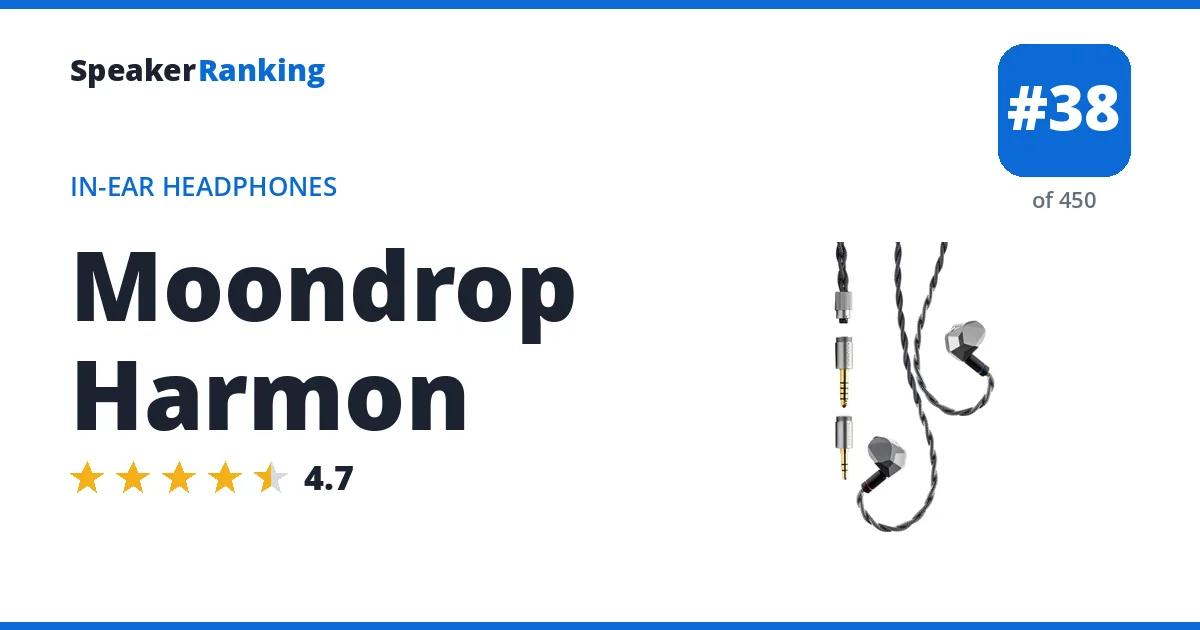
Pros: Across 10 hobbyist measurements on squig.link it scores 82 for preference, with bass held within about half a decibel of target down to 20 Hz, so low end is clean and controlled. Three 10 mm dynamic drivers at 114 dB/Vrms play loudly from a phone. The slightly warm, relaxed tuning suits listeners who are sensitive to treble glare.
Cons: A deep 6.9 dB dip near 10.3 kHz and treble about 2 dB under target from 6 to 10 kHz make cymbals and acoustic detail sound subdued. Its rating sits below the IOAudio Sogno and AKG N5005 at a similar price, and there is no built-in microphone.
Full Moondrop Harmon review and specifications →
| Released | May 2025 (1 year ago) |
|---|---|
| Back | Closed |
| Built-in Microphone | No |
| Connection | Wired |
| Deviation From Target | 1.34 dB standard deviation |
| Driver Type | Dynamic |
| Drivers | 3 x 10mm dynamic |
| Form Factor | In-ear |
| Frequency Response | 10Hz - 60kHz (Manufacturer specified) |
| Harman Preference Score | 82 (median of 10 squig.link measurements, calibrated to AutoEQ) |
| Impedance | 19 ohms |
| Sensitivity | 114 dB/Vrms |
| Sub-bass Extension | Within 6 dB of target down to 20 Hz (-0.1 dB at 30 Hz) |
| Tonal Tilt | -0.26 (negative is warmer, positive brighter) |
- Reviews, Comparisons and Sound Samples
- Head-to-Head Comparisons
 Tanchjim Soda: $309.99 Amazon eBay

Pros: Squig.link measurements, the median of 10 hobbyist samples, give it a preference score of 82, with bass within a decibel of target from 20 Hz and a gentle lift around 60 to 200 Hz for warmth. The one dynamic plus four balanced armature hybrid at 120 dB/Vrms needs very little power, so a phone is enough. It suits listeners who like a warm, bass forward balance without exaggeration.
Cons: The 3 to 6 kHz presence band sits nearly 3 dB under target, with a 3.8 dB dip near 5.6 kHz, so vocals and snare attack lose some bite, and the top octave rolls about 2 dB short, trimming airiness. Its average deviation of about 1.3 dB is less even than the higher rated Tin HiFi T7, which sells for less.
Full Tanchjim Soda review and specifications →
| Released | Dec 2025 (10 months ago) |
|---|---|
| Back | Closed |
| Connection | Wired |
| Deviation From Target | 1.32 dB standard deviation |
| Driver Type | Hybrid (1 dynamic + 4 balanced armature) |
| Drivers | 1 x 10mm dynamic + 4 x balanced armature |
| Form Factor | In-ear |
| Frequency Response | 8Hz - 48kHz (Manufacturer specified) |
| Harman Preference Score | 82 (median of 10 squig.link measurements, calibrated to AutoEQ) |
| Impedance | 15.5 ohms |
| Sensitivity | 120 dB/Vrms |
| Sub-bass Extension | Within 6 dB of target down to 20 Hz (-0.6 dB at 30 Hz) |
| Tonal Tilt | -0.13 (negative is warmer, positive brighter) |
- Reviews, Comparisons and Sound Samples
- Head-to-Head Comparisons