Short answer: the KZ ZEX, though neither ranks well in its class. It ranks #404 of 450 in-ear headphones by sound quality, rated 2.8/5, at $28.99. The KZ EDX Pro ranks #408, rated 2.7/5, at $17.99, $11 cheaper, which does not close the gap in sound quality. Both are rated below 3.0/5 among the 450 in-ear headphones, and the Intuaura Reference 2019, ranked #5 at $34.99, is a better place to start if sound quality matters.

Why pick the KZ ZEX: It pairs a 10mm dynamic driver with a 6.8mm electrostatic driver at a low price, and its 25 ohm load suits phones and dongles. The tradeoff: Across 16 hobbyist measurements a 7.4 dB dip near 3.3 kHz pushes vocals back and a 6.1 dB peak near 10.2 kHz adds sizzle to cymbals, while sub-bass sits about 3.7 dB below target under 60 Hz.
The case for the KZ EDX Pro: It costs very little and is easy to drive, with 24 ohm impedance and a 112 dB sensitivity rating that suit a phone. The catch: Crinacle’s measurement gives it a preference score of 58, well short of what most listeners prefer.
Buy the KZ ZEX. It is rated higher for sound quality, and the $11 saving on the KZ EDX Pro is not enough to make up the difference.
Still deciding? The full Headphones rankings cover every ranked option.
Specifications Side By Side
| KZ ZEX | KZ EDX Pro | |
|---|---|---|
| Price | $28.99 | $17.99 |
| Ranked | #404 of 450 in In-Ear Headphones | #408 of 450 in In-Ear Headphones |
| Form Factor | In-ear | In-ear |
| Back | Closed | Closed |
| Harman Preference Score | 59 (measured by crinacle, via AutoEQ) | 58 (measured by crinacle, via AutoEQ) |
| Deviation From Target | 3.54 dB standard deviation | 2.91 dB standard deviation |
| Tonal Tilt | -0.09 (negative is warmer, positive brighter) | -1.10 (negative is warmer, positive brighter) |
| Sub-bass Extension | Within 6 dB of target down to 20 Hz (-4.7 dB at 30 Hz) | Within 6 dB of target down to 20 Hz (+2.6 dB at 30 Hz) |
| Connection | Wired | Wired |
| Driver Type | Hybrid (1 dynamic + 1 electrostatic) | Dynamic |
| Drivers | 1 x 10mm dynamic + 1 x 6.8mm electrostatic | 1 x 10mm dynamic |
| Impedance | 25 ohms | 24 ohms |
| Frequency Response | 20Hz - 40kHz (Manufacturer specified) | 10Hz - 20kHz (Manufacturer specified) |
| Sensitivity | 103 dB | 112 dB |
Related Headphone Comparisons
More worthwhile head-to-heads for KZ ZEX:
- SoundMAGIC E50C vs KZ ZEX
- HIFIMAN RE400 vs KZ ZEX
- KZ DQ6S vs KZ ZEX
- KZ DQ6S vs KZ EDX Pro
- KZ EDX Pro vs 1MORE Stylish
Prices on this page were last checked October 11, 2026 at 4:59 PM UTC. Product prices and availability are accurate as of that date/time and are subject to change; the price and availability shown on Amazon at the time of purchase will apply to the purchase of this product.
As an eBay Partner, we may be compensated if you make a purchase.
The Two Headphones In Full
 KZ ZEX: $28.99 Amazon eBay
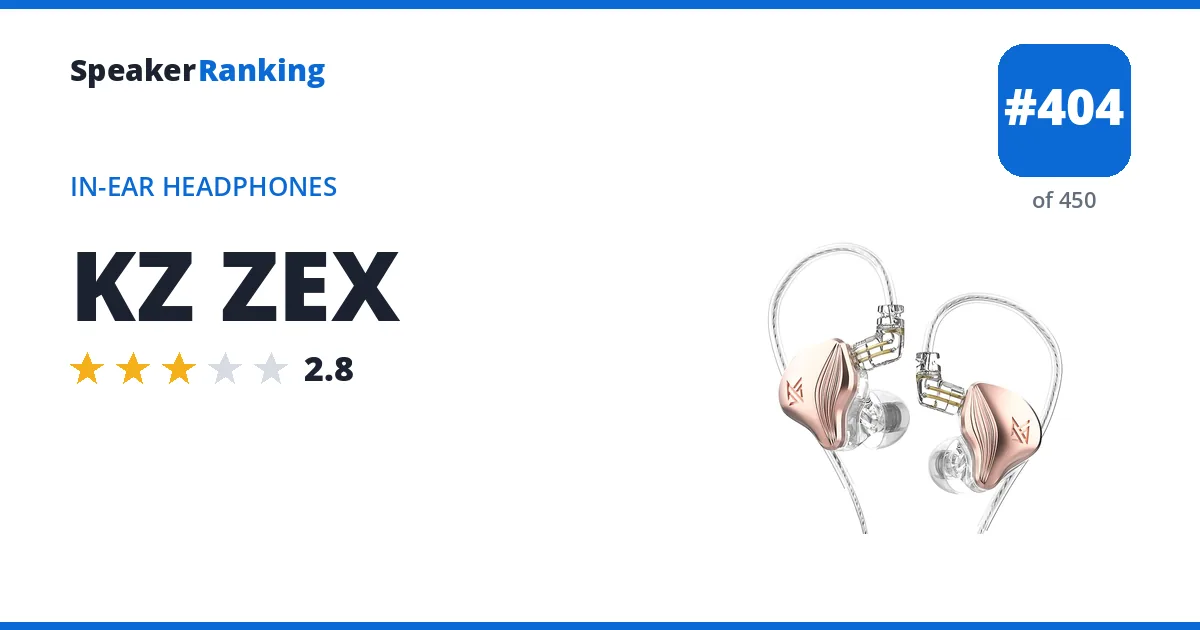
Pros: It pairs a 10mm dynamic driver with a 6.8mm electrostatic driver at a low price, and its 25 ohm load suits phones and dongles. In squig.link measurements bass runs about 2.4 dB above target from 60 to 200 Hz, a warm, V-shaped balance for listeners who like a fuller low end. It rates above the KZ EDX Pro and Final Audio E3000.
Cons: Across 16 hobbyist measurements a 7.4 dB dip near 3.3 kHz pushes vocals back and a 6.1 dB peak near 10.2 kHz adds sizzle to cymbals, while sub-bass sits about 3.7 dB below target under 60 Hz. The KZ DQ6S rates a bit higher at the same price, and the HIFIMAN RE400 rates higher for less.
Full KZ ZEX review and specifications →
| Back | Closed |
|---|---|
| Connection | Wired |
| Deviation From Target | 3.54 dB standard deviation |
| Driver Type | Hybrid (1 dynamic + 1 electrostatic) |
| Drivers | 1 x 10mm dynamic + 1 x 6.8mm electrostatic |
| Form Factor | In-ear |
| Frequency Response | 20Hz - 40kHz (Manufacturer specified) |
| Harman Preference Score | 59 (measured by crinacle, via AutoEQ) |
| Impedance | 25 ohms |
| Sensitivity | 103 dB |
| Sub-bass Extension | Within 6 dB of target down to 20 Hz (-4.7 dB at 30 Hz) |
| Tonal Tilt | -0.09 (negative is warmer, positive brighter) |
EQ preset to match the Harman target
Set a preamp of -6.1 dB, then add these filters in any parametric equalizer (Wavelet, Equalizer APO, Peace, or a player with parametric EQ). Calculated by AutoEQ from its measured frequency response.
| Filter | Frequency | Gain | Q |
|---|---|---|---|
| Low shelf | 105 Hz | +10.5 dB | 0.70 |
| Peak | 63 Hz | -7.6 dB | 0.22 |
| Peak | 2,608 Hz | +11.0 dB | 0.73 |
| Peak | 823 Hz | +4.4 dB | 1.11 |
| Peak | 1,854 Hz | -11.3 dB | 0.98 |
| High shelf | 10,000 Hz | -1.4 dB | 0.70 |
| Peak | 9,677 Hz | +1.8 dB | 2.53 |
| Peak | 4,715 Hz | -5.1 dB | 5.44 |
| Peak | 6,131 Hz | +3.3 dB | 5.78 |
| Peak | 3,526 Hz | +1.5 dB | 3.26 |
- Reviews, Comparisons and Sound Samples
- Head-to-Head Comparisons
 KZ EDX Pro: $17.99 Amazon eBay
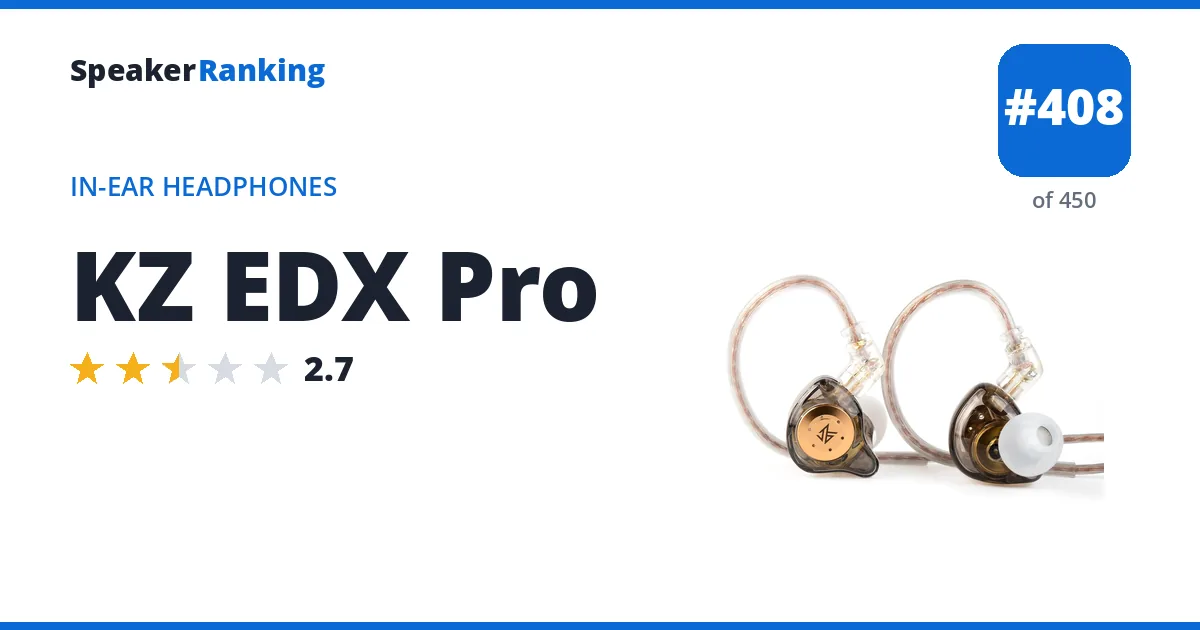
Pros: It costs very little and is easy to drive, with 24 ohm impedance and a 112 dB sensitivity rating that suit a phone. Across 15 hobbyist measurements on squig.link bass sits about 4.6 dB above target and sub-bass about 3 dB above, which matches listeners who want heavy, thumping low end for pop, hip hop and EDM.
Cons: Crinacle’s measurement gives it a preference score of 58, well short of what most listeners prefer. Hobbyist measurements show a 7.7 dB spike near 11.9 kHz that can make cymbals sound splashy and hissy, and the bass boost can crowd vocals. The KZ ATE rates higher at the same price.
Full KZ EDX Pro review and specifications →
| Released | Sep 2021 (5 years ago) |
|---|---|
| Back | Closed |
| Connection | Wired |
| Deviation From Target | 2.91 dB standard deviation |
| Driver Type | Dynamic |
| Drivers | 1 x 10mm dynamic |
| Form Factor | In-ear |
| Frequency Response | 10Hz - 20kHz (Manufacturer specified) |
| Harman Preference Score | 58 (measured by crinacle, via AutoEQ) |
| Impedance | 24 ohms |
| Sensitivity | 112 dB |
| Sub-bass Extension | Within 6 dB of target down to 20 Hz (+2.6 dB at 30 Hz) |
| Tonal Tilt | -1.10 (negative is warmer, positive brighter) |
EQ preset to match the Harman target
Set a preamp of -5.1 dB, then add these filters in any parametric equalizer (Wavelet, Equalizer APO, Peace, or a player with parametric EQ). Calculated by AutoEQ from its measured frequency response.
| Filter | Frequency | Gain | Q |
|---|---|---|---|
| Low shelf | 105 Hz | -2.3 dB | 0.70 |
| Peak | 169 Hz | -4.0 dB | 0.82 |
| Peak | 9,836 Hz | +2.9 dB | 0.18 |
| Peak | 783 Hz | +3.2 dB | 1.23 |
| Peak | 2,062 Hz | -4.8 dB | 2.53 |
| High shelf | 10,000 Hz | -6.1 dB | 0.70 |
| Peak | 9,508 Hz | +3.3 dB | 2.86 |
| Peak | 4,965 Hz | -5.7 dB | 5.27 |
| Peak | 3,516 Hz | +2.7 dB | 3.58 |
| Peak | 6,291 Hz | +3.2 dB | 5.44 |
- Reviews, Comparisons and Sound Samples
- Head-to-Head Comparisons