Short answer: the KZ ATE. It ranks #51 of 68 in-ear headphones by sound quality, rated 3.1/5, at $17.99. The Panasonic RP-HJE120 ranks #68, rated 1.3/5, at $10.99, $7 cheaper, which does not close the gap in sound quality.
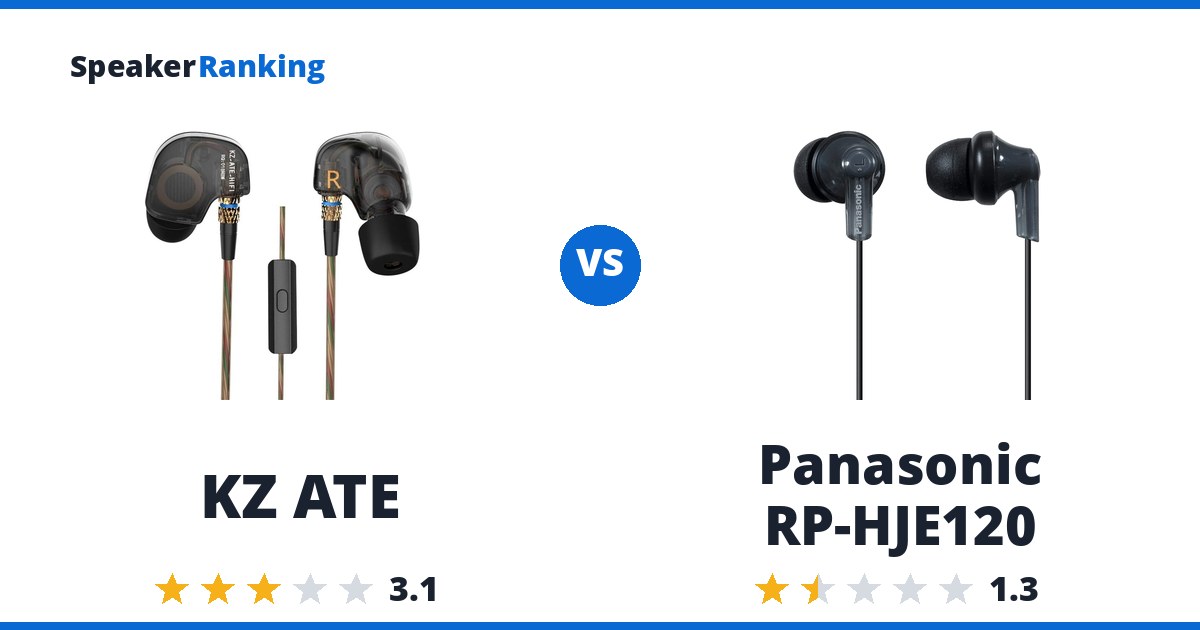
The KZ ATE is the better-sounding option. Bass from 60 to 200 Hz runs about 6.8 dB above target, with sub-bass up 2.8 dB, which delivers punchy, energetic low end for the money. Watch for: A 9 dB peak near 8.3 kHz makes cymbals and sibilants splashy and fatiguing at higher volumes.
Why pick the Panasonic RP-HJE120: It is a very cheap wired earphone with a 9 mm dynamic driver, 16 ohm impedance and 95 dB/mW sensitivity, so it plays loud from any phone or laptop. The tradeoff: That bass boost spills into the low mids, which are 4.8 dB over target, so vocals and instruments sound thick and muddy.
Buy the KZ ATE. It is rated higher for sound quality, and the $7 you would save on the Panasonic RP-HJE120 does not close the gap.
Still deciding? The full Headphones rankings cover every ranked option.
Specifications Side By Side
| KZ ATE | Panasonic RP-HJE120 | |
|---|---|---|
| Price | $17.99 | $10.99 |
| Ranked | #51 of 68 in In-Ear Headphones | #68 of 68 in In-Ear Headphones |
| Form Factor | In-ear | In-ear |
| Harman Preference Score | 63 (measured by oratory1990, via AutoEQ) | 40 (measured by oratory1990, via AutoEQ) |
| Deviation From Target | 2.88 dB standard deviation | 4.26 dB standard deviation |
| Tonal Tilt | -0.45 (negative is warmer, positive brighter) | -1.39 (negative is warmer, positive brighter) |
| Connection | Wired | Wired |
| Driver Type | Dynamic | Dynamic |
| Drivers | 1 x 8.2mm dynamic | 1 x 9mm dynamic |
| Impedance | 16 ohms | 16 ohms |
| Sensitivity | 106 dB | 95 dB/mW |
| Frequency Response | 15Hz - 29kHz (Manufacturer specified) | 20Hz - 20kHz (Manufacturer specified) |
| Back | Closed | Closed |
Related Headphone Comparisons
How KZ ATE compares with other leading options:
- KZ EDX Pro vs Panasonic RP-HJE120
- Sennheiser Momentum True Wireless 3 vs Sennheiser Momentum True Wireless 2
- Jabra Elite Active 65t vs Sennheiser Momentum True Wireless 2
- Etymotic ER4XR vs Sennheiser Momentum True Wireless 2
- Sennheiser IE 200 vs Sennheiser IE 900
Prices on this page were last checked October 10, 2026 at 5:37 PM UTC. Product prices and availability are accurate as of that date/time and are subject to change; the price and availability shown on Amazon at the time of purchase will apply to the purchase of this product.
As an eBay Partner, we may be compensated if you make a purchase.
The Two Headphones In Full
 KZ ATE: $17.99 Amazon eBay
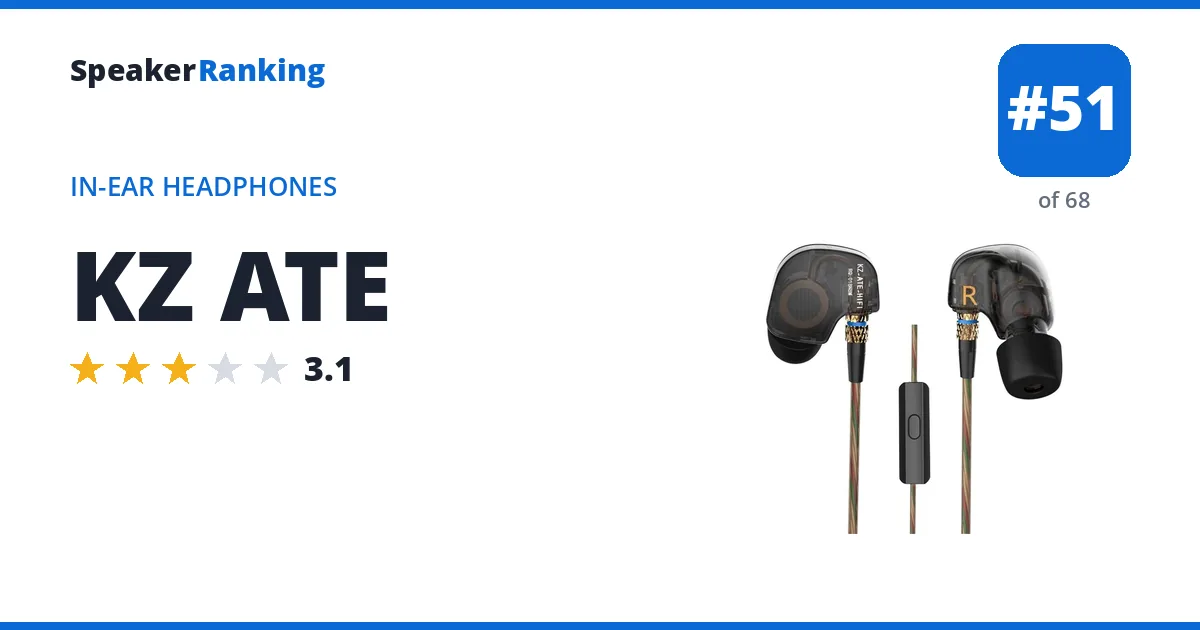
Pros: Bass from 60 to 200 Hz runs about 6.8 dB above target, with sub-bass up 2.8 dB, which delivers punchy, energetic low end for the money. The 16 ohm impedance and 106 dB sensitivity make it easy to power from a phone, and the V-shaped balance with a lift up to 4.3 dB in the 6 to 10 kHz range gives a lively, sparkling sound.
Cons: A 9 dB peak near 8.3 kHz makes cymbals and sibilants splashy and fatiguing at higher volumes. The bass lift of nearly 7 dB can overwhelm the low mids, adding 3.1 dB of thickness to male vocals. The CCA CSN has a higher rating at a similar budget.
Full KZ ATE review and specifications →
| Back | Closed |
|---|---|
| Connection | Wired |
| Deviation From Target | 2.88 dB standard deviation |
| Driver Type | Dynamic |
| Drivers | 1 x 8.2mm dynamic |
| Form Factor | In-ear |
| Frequency Response | 15Hz - 29kHz (Manufacturer specified) |
| Harman Preference Score | 63 (measured by oratory1990, via AutoEQ) |
| Impedance | 16 ohms |
| Sensitivity | 106 dB |
| Tonal Tilt | -0.45 (negative is warmer, positive brighter) |
EQ preset to match the Harman target
Set a preamp of -4.0 dB, then add these filters in any parametric equalizer (Wavelet, Equalizer APO, Peace, or a player with parametric EQ). Calculated by AutoEQ from its measured frequency response.
| Filter | Frequency | Gain | Q |
|---|---|---|---|
| Low shelf | 105 Hz | +4.4 dB | 0.70 |
| Peak | 736 Hz | +6.6 dB | 0.43 |
| Peak | 119 Hz | -6.6 dB | 0.18 |
| Peak | 8,831 Hz | -1.6 dB | 3.38 |
| Peak | 4,548 Hz | -4.0 dB | 5.04 |
| High shelf | 10,000 Hz | +0.3 dB | 0.70 |
| Peak | 6,150 Hz | +3.2 dB | 6.00 |
| Peak | 2,920 Hz | -1.3 dB | 3.23 |
| Peak | 2,035 Hz | +0.8 dB | 3.13 |
| Peak | 7,523 Hz | -1.3 dB | 5.99 |
- Reviews, Comparisons and Sound Samples
 Panasonic RP-HJE120: $10.99 Amazon eBay
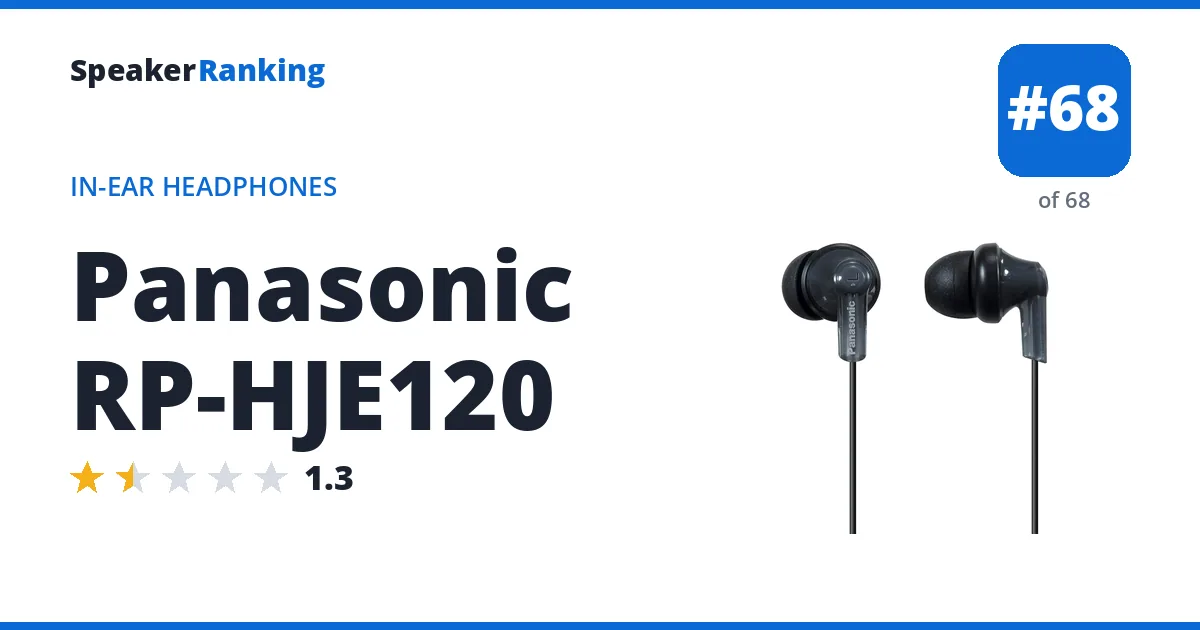
Pros: It is a very cheap wired earphone with a 9 mm dynamic driver, 16 ohm impedance and 95 dB/mW sensitivity, so it plays loud from any phone or laptop. Bass is lifted about 8 dB over target in oratory1990’s measurement and sub-bass is up 2.3 dB, which suits listeners who simply want a big, thumpy low end.
Cons: That bass boost spills into the low mids, which are 4.8 dB over target, so vocals and instruments sound thick and muddy. Treble is rolled off by about 2.2 dB and air by 4.3 dB, with an 8.7 dB dip near 11.9 kHz, so cymbals lack sparkle. The preference score of 40 is the lowest among its rivals, and each of those rivals has a higher rating, including the TRN MT1 at a similar cost.
Full Panasonic RP-HJE120 review and specifications →
| Back | Closed |
|---|---|
| Connection | Wired |
| Deviation From Target | 4.26 dB standard deviation |
| Driver Type | Dynamic |
| Drivers | 1 x 9mm dynamic |
| Form Factor | In-ear |
| Frequency Response | 20Hz - 20kHz (Manufacturer specified) |
| Harman Preference Score | 40 (measured by oratory1990, via AutoEQ) |
| Impedance | 16 ohms |
| Sensitivity | 95 dB/mW |
| Tonal Tilt | -1.39 (negative is warmer, positive brighter) |
EQ preset to match the Harman target
Set a preamp of -7.5 dB, then add these filters in any parametric equalizer (Wavelet, Equalizer APO, Peace, or a player with parametric EQ). Calculated by AutoEQ from its measured frequency response.
| Filter | Frequency | Gain | Q |
|---|---|---|---|
| Low shelf | 105 Hz | +6.9 dB | 0.70 |
| Peak | 69 Hz | -5.4 dB | 0.19 |
| Peak | 8,905 Hz | +6.2 dB | 1.77 |
| Peak | 127 Hz | -4.1 dB | 0.23 |
| Peak | 1,128 Hz | +5.1 dB | 0.41 |
| High shelf | 10,000 Hz | +2.8 dB | 0.70 |
| Peak | 5,414 Hz | -3.7 dB | 5.69 |
| Peak | 3,853 Hz | +2.0 dB | 3.18 |
| Peak | 2,384 Hz | -0.9 dB | 2.73 |
| Peak | 6,454 Hz | +1.0 dB | 6.00 |
- Reviews, Comparisons and Sound Samples
- Head-to-Head Comparisons