Short answer: the IOAudio Volare. It ranks #43 of 450 in-ear headphones by sound quality, rated 4.6/5, at $599; the TANGZU TianPeng ranks #104, rated 4.4/5, and costs $629, which makes this an easy call rather than a real tradeoff.

The case for the IOAudio Volare: Nine squig.link measurements put its preference score at 81.5 with a 1.23 dB deviation, among the smoothest in-ear results. Watch for: The presence band is about 2.6 dB under target with a 3.4 dB dip near 6 kHz, then a 4.5 dB peak near 11.9 kHz, so attack is a bit soft while the very top can sound crisp.
Why pick the TANGZU TianPeng: Squig.link measurements from six hobbyists give the TianPeng a preference score of 79.1 with a tidy 1.43 dB deviation, so its eight driver hybrid of dynamic, balanced armature and bone conduction units hangs together coherently. The tradeoff: A 4.5 dB dip near 4.1 kHz and a presence band 2.3 dB below target take some bite out of vocals and guitars, which can sound slightly veiled.
Buy the IOAudio Volare. It is rated higher for sound quality than the TANGZU TianPeng and costs less, so it is the default pick unless a specific strength of the other one matters more to you.
Want more options? Browse the full Headphones rankings.
Specifications Side By Side
| IOAudio Volare | TANGZU TianPeng | |
|---|---|---|
| Price | $599.00 | $629.00 |
| Ranked | #43 of 450 in In-Ear Headphones | #104 of 450 in In-Ear Headphones |
| Form Factor | In-ear | In-ear |
| Back | Closed | Closed |
| Harman Preference Score | 82 (median of 9 squig.link measurements, calibrated to AutoEQ) | 79 (median of 6 squig.link measurements, calibrated to AutoEQ) |
| Deviation From Target | 1.23 dB standard deviation | 1.43 dB standard deviation |
| Tonal Tilt | -0.40 (negative is warmer, positive brighter) | -0.50 (negative is warmer, positive brighter) |
| Sub-bass Extension | Within 6 dB of target down to 20 Hz (+0.6 dB at 30 Hz) | Within 6 dB of target down to 20 Hz (+1.7 dB at 30 Hz) |
| Connection | Wired | Wired |
| Driver Type | Hybrid (1 dynamic + 4 balanced armature + 4 electrostatic) | Hybrid (1 dynamic + 6 balanced armature + 1 bone conduction) |
| Drivers | 1 x dynamic + 4 x balanced armature + 4 x electrostatic | 1 x 14.2mm dynamic + 6 x balanced armature + 1 x piezoelectric bone conduction |
| Impedance | 4.8 ohms | 9.8 ohms |
| Sensitivity | 121 dB/Vrms | 104 dB |
| Frequency Response | 10Hz - 40kHz (Manufacturer specified) | - |
| Built-in Microphone | No | No |
Related Headphone Comparisons
How IOAudio Volare compares with other leading options:
- AKG N5005 vs IOAudio Volare
- IOAudio Volare vs Moondrop Meteor
- IOAudio Volare vs FlipEars Aisha Electri
- TANGZU TianPeng vs Moritz Dragon
- Moondrop Meteor vs TANGZU TianPeng
Prices on this page were last checked October 11, 2026 at 4:59 PM UTC. Product prices and availability are accurate as of that date/time and are subject to change; the price and availability shown on Amazon at the time of purchase will apply to the purchase of this product.
As an eBay Partner, we may be compensated if you make a purchase.
The Two Headphones In Full
 IOAudio Volare: $599.00 Amazon eBay
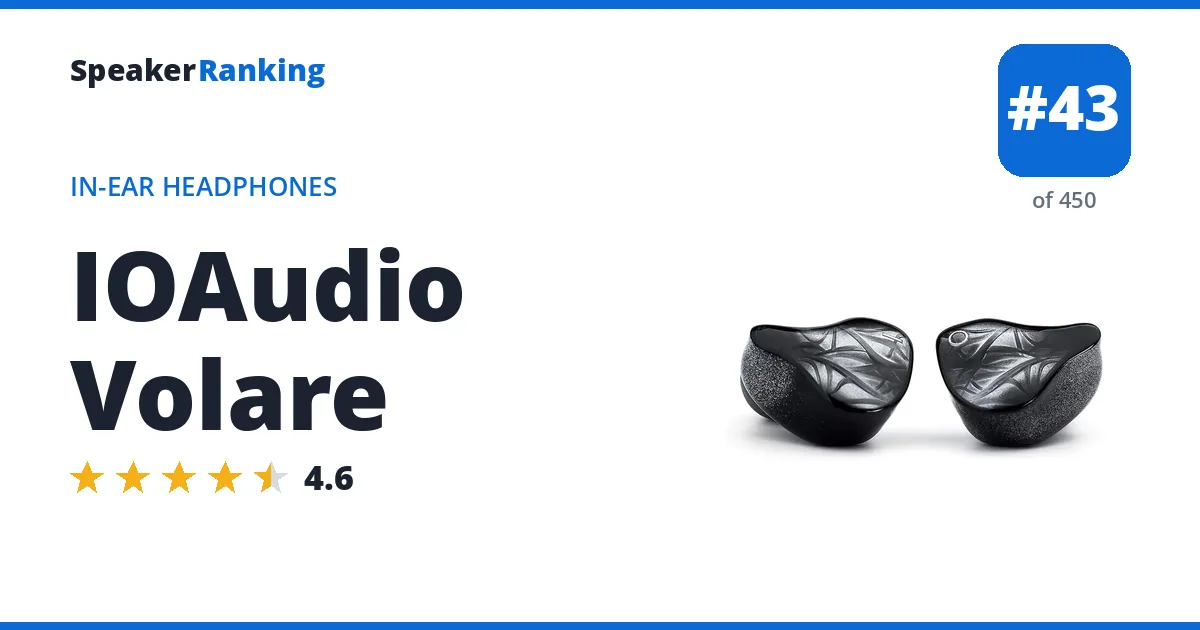
Pros: Nine squig.link measurements put its preference score at 81.5 with a 1.23 dB deviation, among the smoothest in-ear results. Bass sits about 1 dB above target down to 20 Hz, so it adds weight and rumble without crowding the midrange, which tracks the target almost exactly. It is rated higher than the cheaper Myer Audio CKLVX D62 and Moondrop Blessing 3, and 121 dB/Vrms sensitivity means any phone drives it.
Cons: The presence band is about 2.6 dB under target with a 3.4 dB dip near 6 kHz, then a 4.5 dB peak near 11.9 kHz, so attack is a bit soft while the very top can sound crisp. The very low 4.8 ohm impedance works best with a low output impedance source, and the Moondrop Meteor matches its rating for less money.
Full IOAudio Volare review and specifications →
| Back | Closed |
|---|---|
| Built-in Microphone | No |
| Connection | Wired |
| Deviation From Target | 1.23 dB standard deviation |
| Driver Type | Hybrid (1 dynamic + 4 balanced armature + 4 electrostatic) |
| Drivers | 1 x dynamic + 4 x balanced armature + 4 x electrostatic |
| Form Factor | In-ear |
| Frequency Response | 10Hz - 40kHz (Manufacturer specified) |
| Harman Preference Score | 82 (median of 9 squig.link measurements, calibrated to AutoEQ) |
| Impedance | 4.8 ohms |
| Sensitivity | 121 dB/Vrms |
| Sub-bass Extension | Within 6 dB of target down to 20 Hz (+0.6 dB at 30 Hz) |
| Tonal Tilt | -0.40 (negative is warmer, positive brighter) |
- Reviews, Comparisons and Sound Samples
- Head-to-Head Comparisons
 TANGZU TianPeng: $629.00 Linsoul eBay
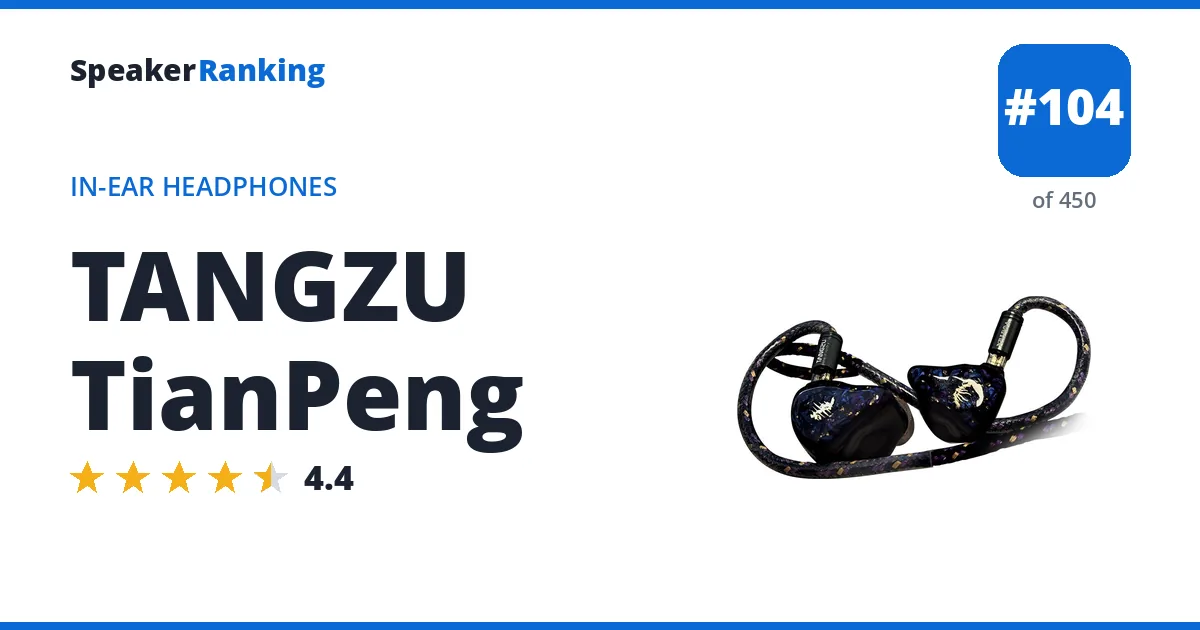
Pros: Squig.link measurements from six hobbyists give the TianPeng a preference score of 79.1 with a tidy 1.43 dB deviation, so its eight driver hybrid of dynamic, balanced armature and bone conduction units hangs together coherently. Sub-bass sits 1.7 dB above target and bass 1.1 dB above, a warm, full low end that suits bass lovers without smearing the mids. Treble stays restrained, with nothing above about 4.7 dB over target, so it is easy to listen to for hours.
Cons: A 4.5 dB dip near 4.1 kHz and a presence band 2.3 dB below target take some bite out of vocals and guitars, which can sound slightly veiled. The low 9.8 ohm impedance may let some sources color the sound, and it costs well more than the equally rated Unique Melody 3DT while trailing the higher rated Myer Audio CKLVX D62.
Full TANGZU TianPeng review and specifications →
| Released | 2025 (1 year ago) |
|---|---|
| Back | Closed |
| Built-in Microphone | No |
| Connection | Wired |
| Deviation From Target | 1.43 dB standard deviation |
| Driver Type | Hybrid (1 dynamic + 6 balanced armature + 1 bone conduction) |
| Drivers | 1 x 14.2mm dynamic + 6 x balanced armature + 1 x piezoelectric bone conduction |
| Form Factor | In-ear |
| Harman Preference Score | 79 (median of 6 squig.link measurements, calibrated to AutoEQ) |
| Impedance | 9.8 ohms |
| Sensitivity | 104 dB |
| Sub-bass Extension | Within 6 dB of target down to 20 Hz (+1.7 dB at 30 Hz) |
| Tonal Tilt | -0.50 (negative is warmer, positive brighter) |
- Reviews, Comparisons and Sound Samples
- Head-to-Head Comparisons