Short answer: the Intuaura Reference 2019. It ranks #5 of 450 in-ear headphones by sound quality, rated 4.9/5, at $34.99; the CCA Phoenix ranks #37, rated 4.7/5, at $33.99. With prices this close, go by the sound-quality ranking rather than the cost.

The case for the Intuaura Reference 2019: In the median of five hobbyist measurements on squig.link, the Reference 2019 posts a preference score of 87 with under 1 dB of unevenness, among the most accurate in-ears measured. The tradeoff: Treble runs a bit lively, with a 5.8 dB peak near 8 kHz and the air band about 2.3 dB high, so bright recordings can sound sharp.
The case for the CCA Phoenix: The median of 14 hobbyist measurements on squig.link gives the Phoenix a preference score of 81.7, with the 1.5 to 12 kHz range staying within about 2.4 dB of target. The tradeoff: Air above 10 kHz is about 4.1 dB above target, which adds a bright sheen that some listeners will find too crisp on harsh recordings.
Buy the Intuaura Reference 2019. It is rated higher for sound quality, and the $1 you would save on the CCA Phoenix does not close the gap.
Looking for alternatives? See the complete Headphones rankings.
Specifications Side By Side
| Intuaura Reference 2019 | CCA Phoenix | |
|---|---|---|
| Price | $34.99 | $33.99 |
| Ranked | #5 of 450 in In-Ear Headphones | #37 of 450 in In-Ear Headphones |
| Form Factor | In-ear | In-ear |
| Back | Closed | Closed |
| Harman Preference Score | 87 (median of 5 squig.link measurements, calibrated to AutoEQ) | 82 (median of 14 squig.link measurements, calibrated to AutoEQ) |
| Deviation From Target | 0.95 dB standard deviation | 1.39 dB standard deviation |
| Tonal Tilt | -0.04 (negative is warmer, positive brighter) | -0.07 (negative is warmer, positive brighter) |
| Sub-bass Extension | Within 6 dB of target down to 20 Hz (+1.4 dB at 30 Hz) | Within 6 dB of target down to 20 Hz (-1.7 dB at 30 Hz) |
| Connection | Wired | Wired |
| Driver Type | Dynamic | Dynamic |
| Drivers | 1 x 10mm dynamic | 1 x 10mm dynamic |
| Impedance | 32 ohms | 33 ohms |
| Sensitivity | 105 dB/Vrms | 108 dB |
| Frequency Response | 5Hz - 22kHz (Manufacturer specified) | 20Hz - 40kHz (Manufacturer specified) |
| Built-in Microphone | No | - |
Related Headphone Comparisons
More top alternatives to Intuaura Reference 2019:
- EPZ Q1 Pro vs Intuaura Reference 2019
- Intuaura Reference 2019 vs KZ Duonic
- CCA Phoenix vs KZ Duonic
- CCA Phoenix vs Tin HiFi C2 Mech Warrior
- Aoshida E20 vs KZ EDZ
Prices on this page were last checked October 11, 2026 at 4:59 PM UTC. Product prices and availability are accurate as of that date/time and are subject to change; the price and availability shown on Amazon at the time of purchase will apply to the purchase of this product.
As an eBay Partner, we may be compensated if you make a purchase.
The Two Headphones In Full
 Intuaura Reference 2019: $34.99 Amazon eBay
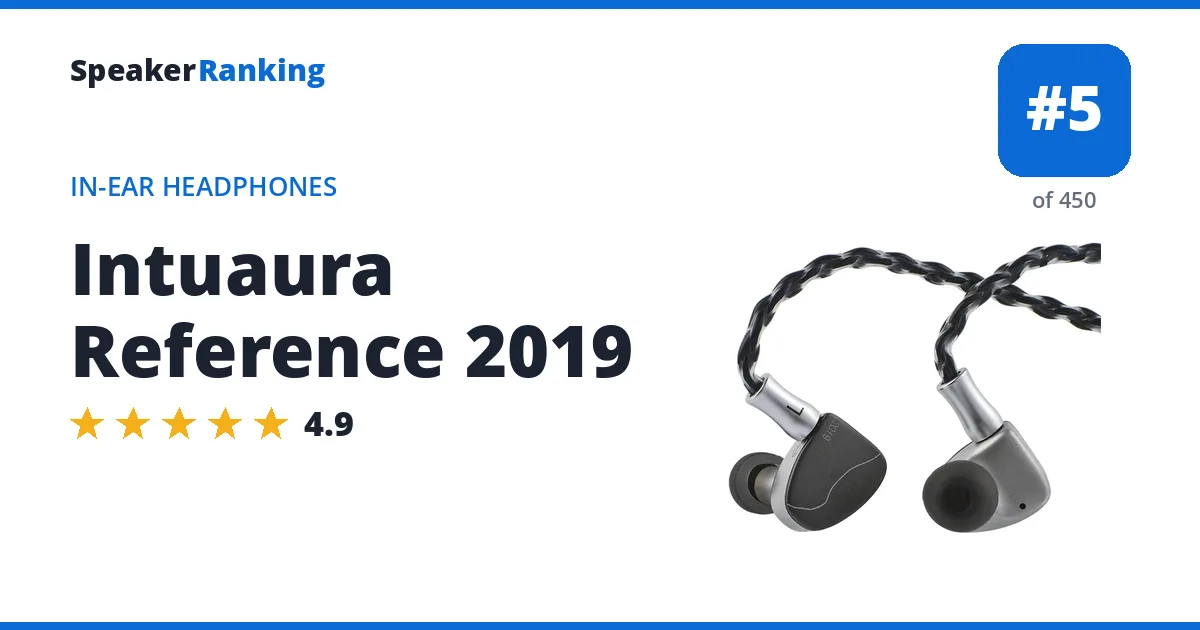
Pros: In the median of five hobbyist measurements on squig.link, the Reference 2019 posts a preference score of 87 with under 1 dB of unevenness, among the most accurate in-ears measured. Sub-bass sits about 1 dB above target, giving kick drums a satisfying thump, while mids stay neutral. Its single 10 mm dynamic driver is an inexpensive way to get top tier tuning.
Cons: Treble runs a bit lively, with a 5.8 dB peak near 8 kHz and the air band about 2.3 dB high, so bright recordings can sound sharp. The EPZ G10 earns the same rating for less, and there is no microphone for calls.
Full Intuaura Reference 2019 review and specifications →
| Released | Sep 2025 (1 year ago) |
|---|---|
| Back | Closed |
| Built-in Microphone | No |
| Connection | Wired |
| Deviation From Target | 0.95 dB standard deviation |
| Driver Type | Dynamic |
| Drivers | 1 x 10mm dynamic |
| Form Factor | In-ear |
| Frequency Response | 5Hz - 22kHz (Manufacturer specified) |
| Harman Preference Score | 87 (median of 5 squig.link measurements, calibrated to AutoEQ) |
| Impedance | 32 ohms |
| Sensitivity | 105 dB/Vrms |
| Sub-bass Extension | Within 6 dB of target down to 20 Hz (+1.4 dB at 30 Hz) |
| Tonal Tilt | -0.04 (negative is warmer, positive brighter) |
- Reviews, Comparisons and Sound Samples
- Head-to-Head Comparisons
 CCA Phoenix: $33.99 Amazon eBay

Pros: The median of 14 hobbyist measurements on squig.link gives the Phoenix a preference score of 81.7, with the 1.5 to 12 kHz range staying within about 2.4 dB of target. Bass runs about 2.2 dB above target from 60 to 200 Hz, giving drums and bass guitar a warm, full body. Its 108 dB sensitivity at 33 ohms means a phone drives it easily.
Cons: Air above 10 kHz is about 4.1 dB above target, which adds a bright sheen that some listeners will find too crisp on harsh recordings. The low mids run about 1.3 dB heavy, slightly thickening male vocals. It is rated equal to cheaper models like the Aoshida E20 and KZ Gale, so it offers no rating advantage for the extra cost.
Full CCA Phoenix review and specifications →
| Back | Closed |
|---|---|
| Connection | Wired |
| Deviation From Target | 1.39 dB standard deviation |
| Driver Type | Dynamic |
| Drivers | 1 x 10mm dynamic |
| Form Factor | In-ear |
| Frequency Response | 20Hz - 40kHz (Manufacturer specified) |
| Harman Preference Score | 82 (median of 14 squig.link measurements, calibrated to AutoEQ) |
| Impedance | 33 ohms |
| Sensitivity | 108 dB |
| Sub-bass Extension | Within 6 dB of target down to 20 Hz (-1.7 dB at 30 Hz) |
| Tonal Tilt | -0.07 (negative is warmer, positive brighter) |
- Reviews, Comparisons and Sound Samples
- Head-to-Head Comparisons