Short answer: the Fatfreq Reference Pro SE. It ranks #392 of 450 in-ear headphones by sound quality, rated 3.0/5, at $599; the Audio-Technica ATH-CK2000Ti ranks #396, rated 2.9/5, and costs $750, so there is not much of a tradeoff to weigh.
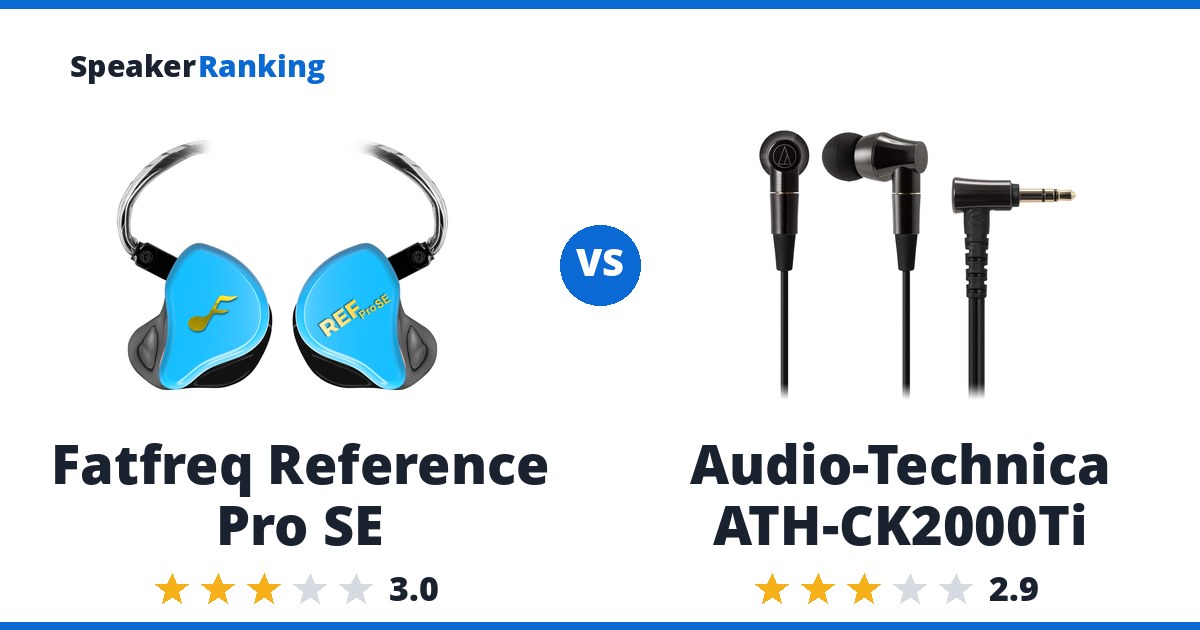
What the Fatfreq Reference Pro SE does well: It is a wired, closed-back in-ear that blocks outside noise passively. The catch: In crinacle’s measurement it scores only 62.0 for preference, with a 3.18 dB deviation from target, so the tuning departs noticeably from what most listeners prefer.
What the Audio-Technica ATH-CK2000Ti does well: The dual phase push-pull design uses two dynamic drivers (9.8mm and 8.8mm) per side, and the manufacturer quotes a very wide 5 Hz to 45 kHz range. Watch for: A preference score of 60 and a 2.97 dB deviation from the target mean the tonal balance is noticeably off for most listeners.
Buy the Fatfreq Reference Pro SE. It is rated higher for sound quality than the Audio-Technica ATH-CK2000Ti and costs less, so only choose the other one for a particular feature it does better.
Looking for alternatives? See the complete Headphones rankings.
Specifications Side By Side
| Fatfreq Reference Pro SE | Audio-Technica ATH-CK2000Ti | |
|---|---|---|
| Price | $599.00 | $750.00 |
| Ranked | #392 of 450 in In-Ear Headphones | #396 of 450 in In-Ear Headphones |
| Form Factor | In-ear | In-ear |
| Back | Closed | Closed |
| Harman Preference Score | 62 (measured by crinacle, via AutoEQ) | 60 (measured by crinacle, via AutoEQ) |
| Deviation From Target | 3.18 dB standard deviation | 2.97 dB standard deviation |
| Tonal Tilt | +0.31 (negative is warmer, positive brighter) | -0.77 (negative is warmer, positive brighter) |
| Connection | Wired | Wired |
| Frequency Response | 20Hz - 20kHz (Manufacturer specified) | 5Hz - 45kHz (Manufacturer specified) |
| Driver Type | - | Dynamic |
| Drivers | - | 2 x dynamic (9.8mm + 8.8mm, dual phase push-pull) |
| Impedance | - | 10 ohms |
| Sensitivity | - | 100 dB/mW |
Related Headphone Comparisons
More top alternatives to Fatfreq Reference Pro SE:
- OpenAudio Mercury vs Fatfreq Reference Pro SE
- Fatfreq Reference Pro SE vs Yanyin Mahina
- Fatfreq Reference Pro SE vs Shanling ME700
- InEar StageDiver SD5 vs Audio-Technica ATH-CK2000Ti
- Audio-Technica ATH-CK2000Ti vs DUNU DK4001
Prices on this page were last checked October 11, 2026 at 4:59 PM UTC. Product prices and availability are accurate as of that date/time and are subject to change; the price and availability shown on Amazon at the time of purchase will apply to the purchase of this product.
As an eBay Partner, we may be compensated if you make a purchase.
The Two Headphones In Full
 Fatfreq Reference Pro SE: $599.00 FATfreq eBay
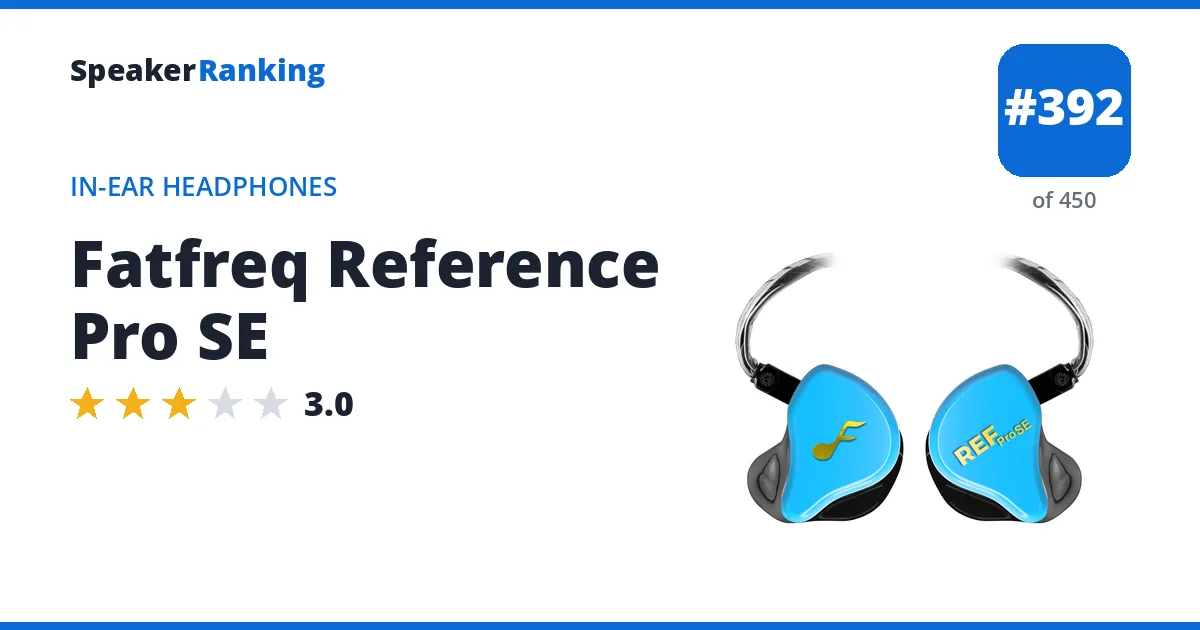
Pros: It is a wired, closed-back in-ear that blocks outside noise passively. It holds an equal rating to the Cayin Fantasy and the Shanling ME700.
Cons: In crinacle’s measurement it scores only 62.0 for preference, with a 3.18 dB deviation from target, so the tuning departs noticeably from what most listeners prefer. The equally rated Cayin Fantasy costs less.
Full Fatfreq Reference Pro SE review and specifications →
| Released | 2022 (4 years ago) |
|---|---|
| Back | Closed |
| Connection | Wired |
| Deviation From Target | 3.18 dB standard deviation |
| Form Factor | In-ear |
| Frequency Response | 20Hz - 20kHz (Manufacturer specified) |
| Harman Preference Score | 62 (measured by crinacle, via AutoEQ) |
| Tonal Tilt | +0.31 (negative is warmer, positive brighter) |
EQ preset to match the Harman target
Set a preamp of -7.8 dB, then add these filters in any parametric equalizer (Wavelet, Equalizer APO, Peace, or a player with parametric EQ). Calculated by AutoEQ from its measured frequency response.
| Filter | Frequency | Gain | Q |
|---|---|---|---|
| Low shelf | 105 Hz | +8.5 dB | 0.70 |
| Peak | 78 Hz | -4.1 dB | 0.20 |
| Peak | 996 Hz | +3.3 dB | 0.84 |
| Peak | 1,675 Hz | -4.1 dB | 1.47 |
| Peak | 9,708 Hz | +6.2 dB | 0.76 |
| High shelf | 10,000 Hz | +3.3 dB | 0.70 |
| Peak | 5,897 Hz | +2.6 dB | 6.00 |
| Peak | 4,550 Hz | -1.9 dB | 3.96 |
| Peak | 7,117 Hz | -2.9 dB | 5.77 |
| Peak | 5,664 Hz | +0.7 dB | 4.21 |
- Reviews, Comparisons and Sound Samples
- Head-to-Head Comparisons
 Audio-Technica ATH-CK2000Ti: $750.00 Amazon eBay
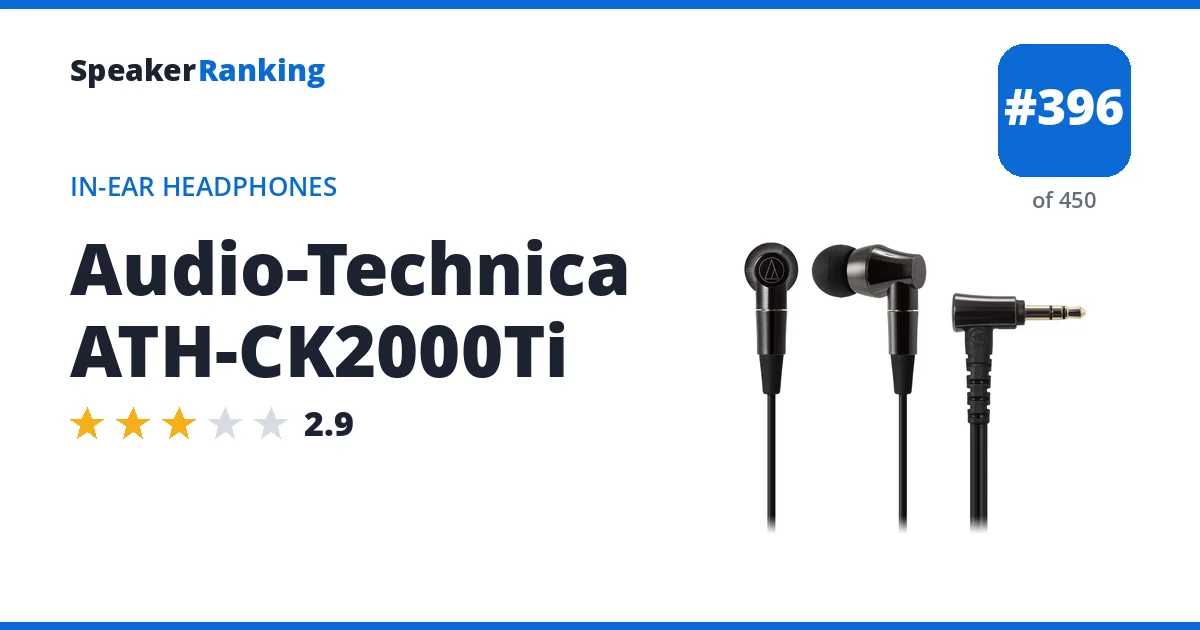
Pros: The dual phase push-pull design uses two dynamic drivers (9.8mm and 8.8mm) per side, and the manufacturer quotes a very wide 5 Hz to 45 kHz range. At 10 ohms and 100 dB/mW it works from a phone or portable player without a dedicated amp. Crinacle’s measurement gives a preference score of 60, with a mild warm tilt of about 0.8 dB.
Cons: A preference score of 60 and a 2.97 dB deviation from the target mean the tonal balance is noticeably off for most listeners. It is rated below the FiiO FH5 and well below the HIFIMAN RE2000, which offer more accurate tuning at similar money. No inline microphone or other convenience features are listed.
Full Audio-Technica ATH-CK2000Ti review and specifications →
| Back | Closed |
|---|---|
| Connection | Wired |
| Deviation From Target | 2.97 dB standard deviation |
| Driver Type | Dynamic |
| Drivers | 2 x dynamic (9.8mm + 8.8mm, dual phase push-pull) |
| Form Factor | In-ear |
| Frequency Response | 5Hz - 45kHz (Manufacturer specified) |
| Harman Preference Score | 60 (measured by crinacle, via AutoEQ) |
| Impedance | 10 ohms |
| Sensitivity | 100 dB/mW |
| Tonal Tilt | -0.77 (negative is warmer, positive brighter) |
EQ preset to match the Harman target
Set a preamp of -6.5 dB, then add these filters in any parametric equalizer (Wavelet, Equalizer APO, Peace, or a player with parametric EQ). Calculated by AutoEQ from its measured frequency response.
| Filter | Frequency | Gain | Q |
|---|---|---|---|
| Low shelf | 105 Hz | -1.7 dB | 0.70 |
| Peak | 172 Hz | -3.8 dB | 0.82 |
| Peak | 2,043 Hz | +6.0 dB | 2.32 |
| Peak | 788 Hz | +2.4 dB | 0.92 |
| Peak | 5,869 Hz | -6.2 dB | 4.43 |
| High shelf | 10,000 Hz | +0.4 dB | 0.70 |
| Peak | 9,575 Hz | +4.0 dB | 1.76 |
| Peak | 3,866 Hz | -4.4 dB | 4.04 |
| Peak | 2,847 Hz | +1.6 dB | 3.89 |
| Peak | 6,549 Hz | -1.4 dB | 6.00 |
- Reviews, Comparisons and Sound Samples
- Head-to-Head Comparisons