Short answer: the JBL CBT 70J-1. Both are rated 3.4/5 for sound quality (#10 and #12 of 23 column and line array PA speakers), and the JBL CBT 70J-1 costs $1,480 against $37,000 for the Danley ILE3, so with nothing between them on sound quality, price settles it.
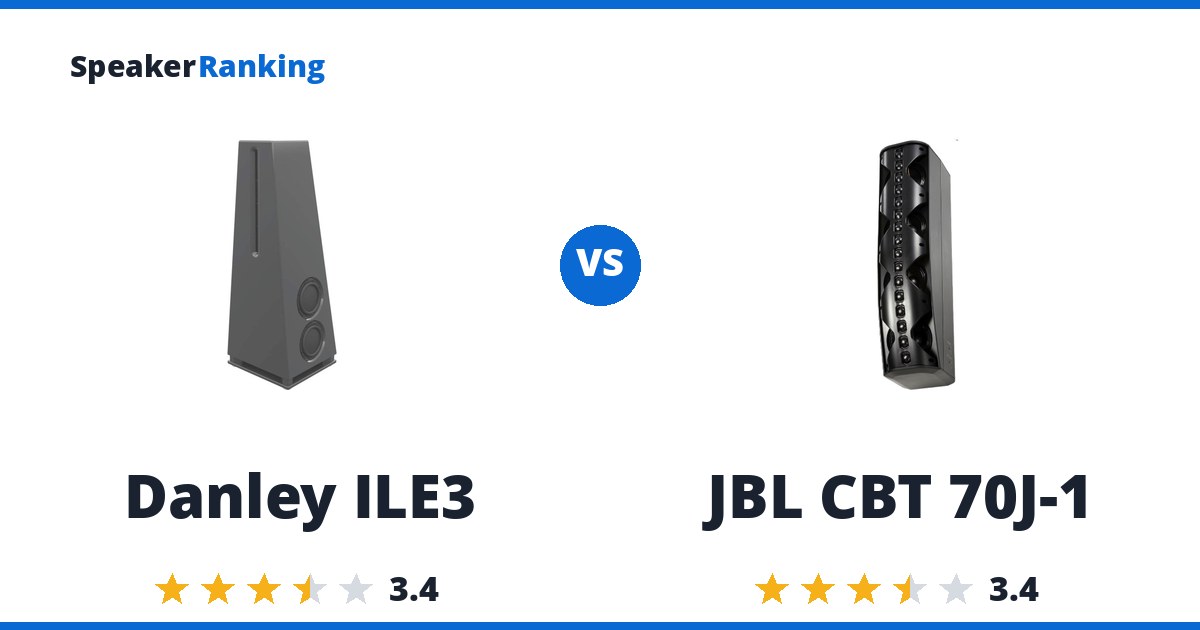
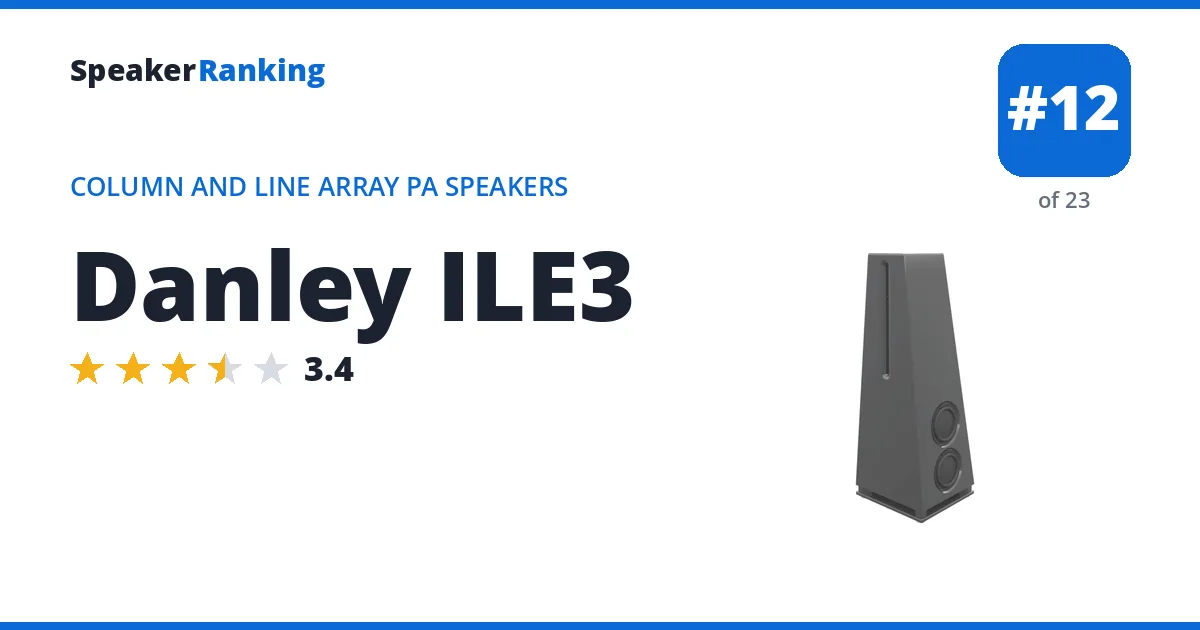
The Danley ILE3 is the more accurate choice. A 3-way powered speaker from Tom Danley’s Signature Series with four 10” woofers and five coaxial 5” mid/1” high drivers on a Paraline lens for a wide 140 degree by narrow 20 degree pattern, driven by a 1,400W amplifier. Its measured preference score, a predictor of how neutral it sounds, is 5.18 against 2.95 for the JBL CBT 70J-1. Watch for: It is very large and expensive, and the on-axis response is less even (0.85 average deviation).
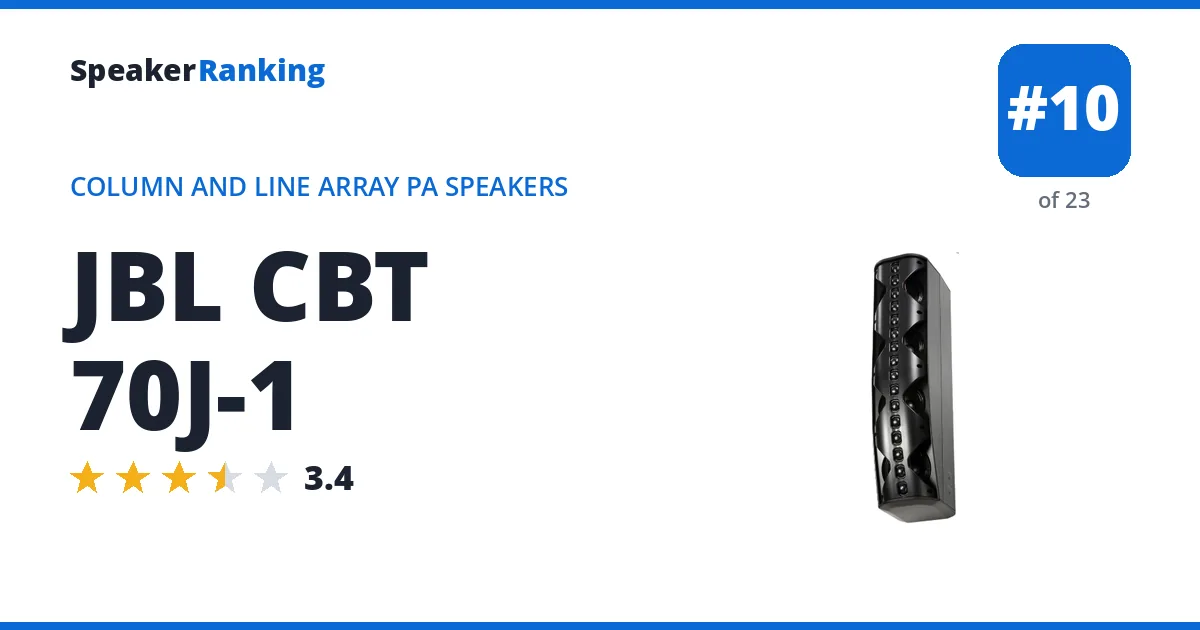
What the JBL CBT 70J-1 does well: Independently measured by Audio Science Review, with a 5.87 preference score with an ideal subwoofer and a 3.20 directivity-index deviation. The catch: Bass measures 120Hz at -3dB and about 62Hz at -10dB, and the standalone score is only 2.95, so it needs a subwoofer for music.
Buy the JBL CBT 70J-1. Both are rated the same for sound quality, and it costs $35,520 less than the Danley ILE3.
Looking for alternatives? See the complete PA & Live Sound rankings.
Specifications Side By Side
| Danley ILE3 | JBL CBT 70J-1 | |
|---|---|---|
| Price | $37,000 per pair | $1,480.00 Passive |
| Ranked | #12 of 23 in Column and Line Array PA Speakers | #10 of 23 in Column and Line Array PA Speakers |
| Maximum SPL | 125dB peak (manufacturer specified) | 131dB peak (narrow, speech mode, manufacturer specified) |
| Passive | No | Yes |
| XLR Input | Yes | No |
| RCA Input | No | No |
| TRS Input | No | No |
| Optical Input | No | No |
| Coaxial Input | No | No |
| USB Input | No | No |
| HDMI Input | No | No |
| AES Input | No | No |
| Aux Input | No | No |
| Bluetooth | No | No |
| Drivers | 4x 10” woofers, 5x coaxial 5” mid / 1” HF drivers on Paraline lens | 4x 5” neodymium woofers, 16x 1” neodymium tweeters |
| Amplifier Power | 1,400W (2 channels) | Passive speaker; requires external amplification |
| Spinorama Preference Score | 5.18 | 2.95 |
| Spinorama Preference Score with Perfect Sub | 5.99 | 5.87 |
| DIY Kit | No | - |
| Rigging | - | 10 x M6 rear inserts; swivel/tilt wall bracket included |
| Configuration | - | Passive 2-way Constant Beamwidth Technology column |
| Frequency Response | - | 60Hz - 20kHz (-10dB, manufacturer specified) |
| Dimensions | - | 27.3”H x 6.7”W x 9.3”D (694 x 170 x 237 mm) |
| Power Handling | - | 500W (2,000W peak) |
| Coverage | - | Switchable 25° or 45° vertical |
| Impedance | - | 8 ohms |
| DSP | - | No (passive) |
| Weight | - | 20.9 lbs (9.5 kg) |
| Microphone Input | - | No |
| Guitar Input | - | No |
| Bass Extension (-3dB) | - | 120.1Hz (measured, Audio Science Review data on spinorama.org) |
| Bass Extension (-10dB) | - | about 61.5Hz (measured, Audio Science Review data on spinorama.org) |
Frequency Response Compared
Both speakers’ spinorama measurements, overlaid. A flatter line is more neutral: peaks sound forward or harsh, dips sound recessed. Each curve is shifted so its average from 300 Hz to 3 kHz sits at 0 dB, so loudness differences between the two are removed and only the shape is compared. The two were measured by different sources, so small differences, especially in the bass, can come from the measurement setup rather than the speakers.
Measurement data: Danley ILE3 (measured by the manufacturer) and JBL CBT 70J-1 (measured by Audio Science Review), via spinorama.org.
Related Speaker Comparisons
More worthwhile head-to-heads for JBL CBT 70J-1:
- JBL CBT 1000 vs JBL CBT 70J-1
- Alcons Audio QRP20 vs JBL CBT 70J-1
- L-Acoustics SOKA vs JBL CBT 70J-1
- JBL CBT 70J-1 vs JBL COL800
- JBL CBT 70J-1 vs JBL COL600
Prices on this page were last checked October 11, 2026 at 4:59 PM UTC. Product prices and availability are accurate as of that date/time and are subject to change; the price and availability shown on Amazon at the time of purchase will apply to the purchase of this product.
As an eBay Partner, we may be compensated if you make a purchase.
The Two Speakers In Full
 Danley ILE3: $37,000 per pair Sweetwater eBay
Same family: the Danley HRE1 (larger model, ranked lower, rated 3.3/5).
Pros: A 3-way powered speaker from Tom Danley’s Signature Series with four 10” woofers and five coaxial 5” mid/1” high drivers on a Paraline lens for a wide 140 degree by narrow 20 degree pattern, driven by a 1,400W amplifier. Danley’s measurements show a preference score of 5.18 that reaches 5.99 with an ideal subwoofer, with 0.42 listening window deviation.
Cons: It is very large and expensive, and the on-axis response is less even (0.85 average deviation). The data comes from Danley. That data is low quality.
Full Danley ILE3 review and specifications →
| AES Input | No |
|---|---|
| Amplifier Power | 1,400W (2 channels) |
| Aux Input | No |
| Bluetooth | No |
| Coaxial Input | No |
| DIY Kit | No |
| Drivers | 4x 10” woofers, 5x coaxial 5” mid / 1” HF drivers on Paraline lens |
| HDMI Input | No |
| Maximum SPL | 125dB peak (manufacturer specified) |
| Optical Input | No |
| Passive | No |
| RCA Input | No |
| Spinorama Preference Score | 5.18 |
| Spinorama Preference Score with Perfect Sub | 5.99 |
| TRS Input | No |
| USB Input | No |
| XLR Input | Yes |
- Reviews, Comparisons and Sound Samples
- Head-to-Head Comparisons
 JBL CBT 70J-1: $1,480.00 Passive Amazon B&H Photo Video eBay
Same family: the JBL CBT 50LA-1 (smaller model, ranked lower, estimated 3.1/5), the JBL CBT 100LA-1 (larger model, ranked lower, estimated 3.1/5), the JBL CBT 200LA-1 (larger model, ranked lower, estimated 3.2/5) and the JBL CBT 1000 (larger model, ranked higher, rated 4.1/5).
Pros: Independently measured by Audio Science Review, with a 5.87 preference score with an ideal subwoofer and a 3.20 directivity-index deviation. Sixteen 1-inch tweeters and four 5-inch woofers give switchable 25° or 45° vertical coverage for long-throw or medium rooms, with a 131dB peak and a speech or music voicing switch. A pan and tilt wall bracket is included. Measured bass extension of 120.1Hz (-3dB).
Cons: Bass measures 120Hz at -3dB and about 62Hz at -10dB, and the standalone score is only 2.95, so it needs a subwoofer for music. A 4.0dB reference band and 0.573 listening-window deviation mean tonal balance is uneven. It is passive and needs an external amplifier.
Full JBL CBT 70J-1 review and specifications →
| AES Input | No |
|---|---|
| Amplifier Power | Passive speaker; requires external amplification |
| Aux Input | No |
| Bass Extension (-10dB) | about 61.5Hz (measured, Audio Science Review data on spinorama.org) |
| Bass Extension (-3dB) | 120.1Hz (measured, Audio Science Review data on spinorama.org) |
| Bluetooth | No |
| Coaxial Input | No |
| Configuration | Passive 2-way Constant Beamwidth Technology column |
| Coverage | Switchable 25° or 45° vertical |
| DSP | No (passive) |
| Dimensions | 27.3”H x 6.7”W x 9.3”D (694 x 170 x 237 mm) |
| Drivers | 4x 5” neodymium woofers, 16x 1” neodymium tweeters |
| Frequency Response | 60Hz - 20kHz (-10dB, manufacturer specified) |
| Guitar Input | No |
| HDMI Input | No |
| Impedance | 8 ohms |
| Maximum SPL | 131dB peak (narrow, speech mode, manufacturer specified) |
| Microphone Input | No |
| Optical Input | No |
| Passive | Yes |
| Power Handling | 500W (2,000W peak) |
| RCA Input | No |
| Rigging | 10 x M6 rear inserts; swivel/tilt wall bracket included |
| Spinorama Preference Score | 2.95 |
| Spinorama Preference Score with Perfect Sub | 5.87 |
| TRS Input | No |
| USB Input | No |
| Weight | 20.9 lbs (9.5 kg) |
| XLR Input | No |
- Links
- Reviews, Comparisons and Sound Samples
- Head-to-Head Comparisons