Short answer: the CCA Polaris. It ranks #231 of 450 in-ear headphones by sound quality, rated 4.1/5, at $13; the Sony MDR-EX15LP ranks #351, rated 3.5/5, at $11.99. With prices this close, go by the sound-quality ranking rather than the cost.
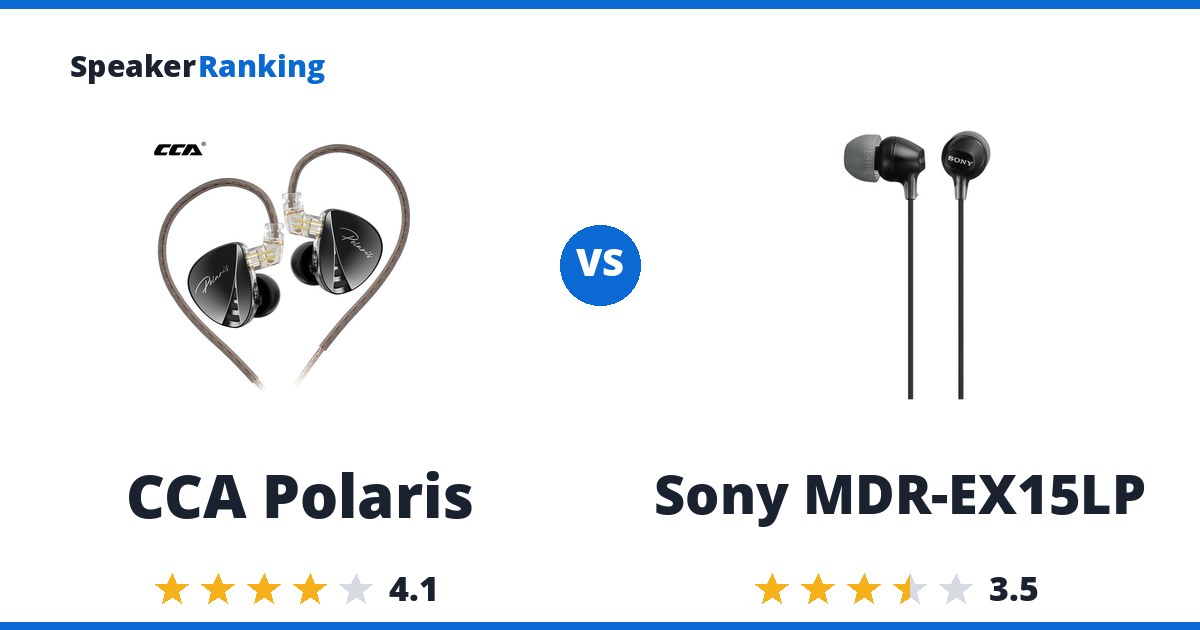
The CCA Polaris is the better-sounding choice.
The case for the Sony MDR-EX15LP: In oratory1990’s measurement it earns a preference score of 68, a strong result for such an inexpensive in-ear, with the midrange from 1 to 10 kHz within half a decibel of the Harman target. The tradeoff: A 7.2 dB dip near 11.9 kHz and air about 3 dB below target take some sparkle off cymbals.
Buy the CCA Polaris. It is rated higher for sound quality, and the $1.01 you would save on the Sony MDR-EX15LP does not close the gap.
Still deciding? The full Headphones rankings cover every ranked option.
Specifications Side By Side
| CCA Polaris | Sony MDR-EX15LP | |
|---|---|---|
| Price | $13.00 | $11.99 |
| Ranked | #231 of 450 in In-Ear Headphones | #351 of 450 in In-Ear Headphones |
| Form Factor | In-ear | In-ear |
| Back | Closed | Closed |
| Harman Preference Score | 75 (median of 7 squig.link measurements, calibrated to AutoEQ) | 68 (measured by oratory1990, via AutoEQ) |
| Deviation From Target | 1.98 dB standard deviation | 2.24 dB standard deviation |
| Tonal Tilt | -0.07 (negative is warmer, positive brighter) | -0.88 (negative is warmer, positive brighter) |
| Sub-bass Extension | Within 6 dB of target down to 20 Hz (-3.1 dB at 30 Hz) | Within 6 dB of target down to 20 Hz (+1.5 dB at 30 Hz) |
| Connection | Wired | Wired |
| Driver Type | Dynamic | Dynamic |
| Drivers | 1 x 10mm dynamic | 1 x 9mm dynamic |
| Frequency Response | 20Hz - 40kHz (Manufacturer specified) | 8Hz - 22kHz (Manufacturer specified) |
| Impedance | - | 16 ohms |
| Sensitivity | - | 100 dB/mW |
| Weight | - | 0 lbs (3 g) per earbud |
| Built-in Microphone | - | No |
Related Headphone Comparisons
More top alternatives to CCA Polaris:
- TRN MT5 vs CCA Polaris
- CCA Polaris vs TRN MT1 Pro
- CCA Polaris vs KZ ZSN Pro 2
- TRN MT1 vs Sony MDR-EX15LP
- Sony MDR-EX15LP vs Panasonic RP-HJE120
Prices on this page were last checked October 11, 2026 at 4:59 PM UTC. Product prices and availability are accurate as of that date/time and are subject to change; the price and availability shown on Amazon at the time of purchase will apply to the purchase of this product.
As an eBay Partner, we may be compensated if you make a purchase.
The Two Headphones In Full
 CCA Polaris: $13.00 Linsoul eBay
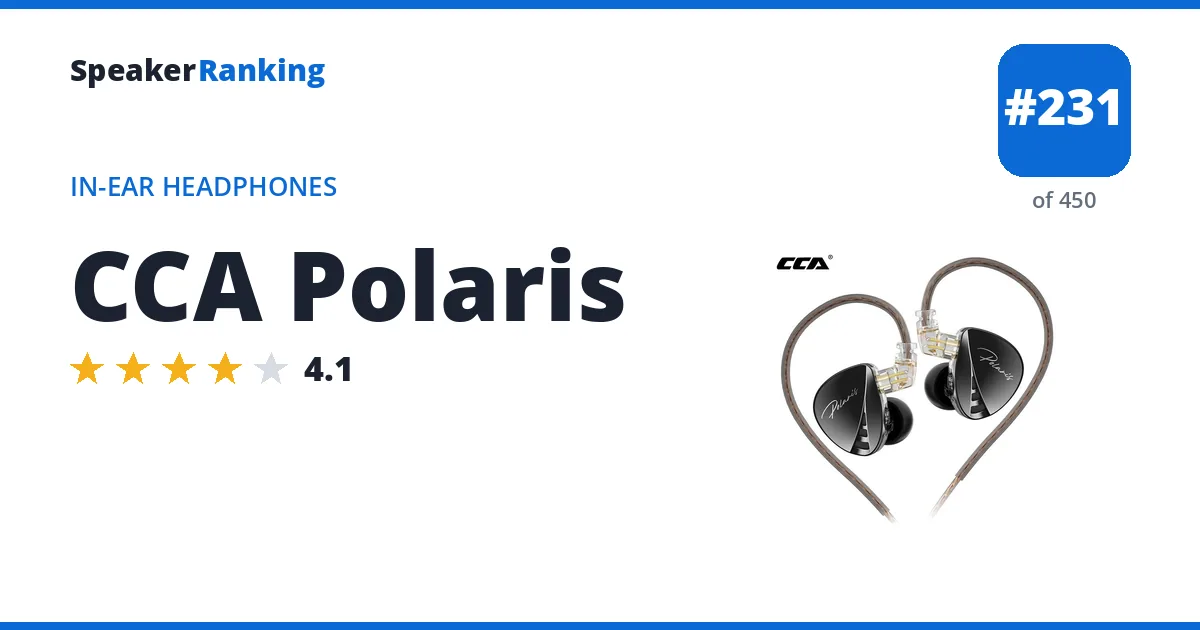
Full CCA Polaris review and specifications →
| Back | Closed |
|---|---|
| Connection | Wired |
| Deviation From Target | 1.98 dB standard deviation |
| Driver Type | Dynamic |
| Drivers | 1 x 10mm dynamic |
| Form Factor | In-ear |
| Frequency Response | 20Hz - 40kHz (Manufacturer specified) |
| Harman Preference Score | 75 (median of 7 squig.link measurements, calibrated to AutoEQ) |
| Sub-bass Extension | Within 6 dB of target down to 20 Hz (-3.1 dB at 30 Hz) |
| Tonal Tilt | -0.07 (negative is warmer, positive brighter) |
- Reviews, Comparisons and Sound Samples
- Head-to-Head Comparisons
 Sony MDR-EX15LP: $11.99 B&H Photo Video eBay

Pros: In oratory1990’s measurement it earns a preference score of 68, a strong result for such an inexpensive in-ear, with the midrange from 1 to 10 kHz within half a decibel of the Harman target. Bass runs about 4.7 dB above target, giving pop and hip hop a full, punchy low end. At 16 ohms, 100 dB/mW and 3 g per earbud it is light and easy to drive from a phone, and it rates above the KZ ATE and the HIFIMAN RE400.
Cons: A 7.2 dB dip near 11.9 kHz and air about 3 dB below target take some sparkle off cymbals. The TRN MT1 and the TANGZU Wan’er S.G both rate higher at a similar low price.
Full Sony MDR-EX15LP review and specifications →
| Released | 2013 (13 years ago) |
|---|---|
| Back | Closed |
| Built-in Microphone | No |
| Connection | Wired |
| Deviation From Target | 2.24 dB standard deviation |
| Driver Type | Dynamic |
| Drivers | 1 x 9mm dynamic |
| Form Factor | In-ear |
| Frequency Response | 8Hz - 22kHz (Manufacturer specified) |
| Harman Preference Score | 68 (measured by oratory1990, via AutoEQ) |
| Impedance | 16 ohms |
| Sensitivity | 100 dB/mW |
| Sub-bass Extension | Within 6 dB of target down to 20 Hz (+1.5 dB at 30 Hz) |
| Tonal Tilt | -0.88 (negative is warmer, positive brighter) |
| Weight | 0 lbs (3 g) per earbud |
EQ preset to match the Harman target
Set a preamp of -4.2 dB, then add these filters in any parametric equalizer (Wavelet, Equalizer APO, Peace, or a player with parametric EQ). Calculated by AutoEQ from its measured frequency response.
| Filter | Frequency | Gain | Q |
|---|---|---|---|
| Low shelf | 105 Hz | -1.7 dB | 0.70 |
| Peak | 214 Hz | -3.3 dB | 0.70 |
| Peak | 9,261 Hz | +4.4 dB | 1.08 |
| Peak | 696 Hz | +3.0 dB | 0.85 |
| Peak | 119 Hz | -1.4 dB | 1.73 |
| High shelf | 10,000 Hz | -0.4 dB | 0.70 |
| Peak | 3,346 Hz | -1.1 dB | 2.02 |
| Peak | 2,190 Hz | +1.1 dB | 2.86 |
| Peak | 6,044 Hz | +1.3 dB | 5.44 |
| Peak | 1,228 Hz | -0.4 dB | 3.91 |
- Reviews, Comparisons and Sound Samples
- Head-to-Head Comparisons