Short answer: the Beyerdynamic DT770 Pro X Limited Edition. It ranks #121 of 216 over-ear headphones by sound quality, rated 3.6/5, at $229.99; the Fairphone Fairbuds XL ranks #136, rated 3.4/5, at $229.99. The price gap is small enough that the sound-quality ranking should decide it.
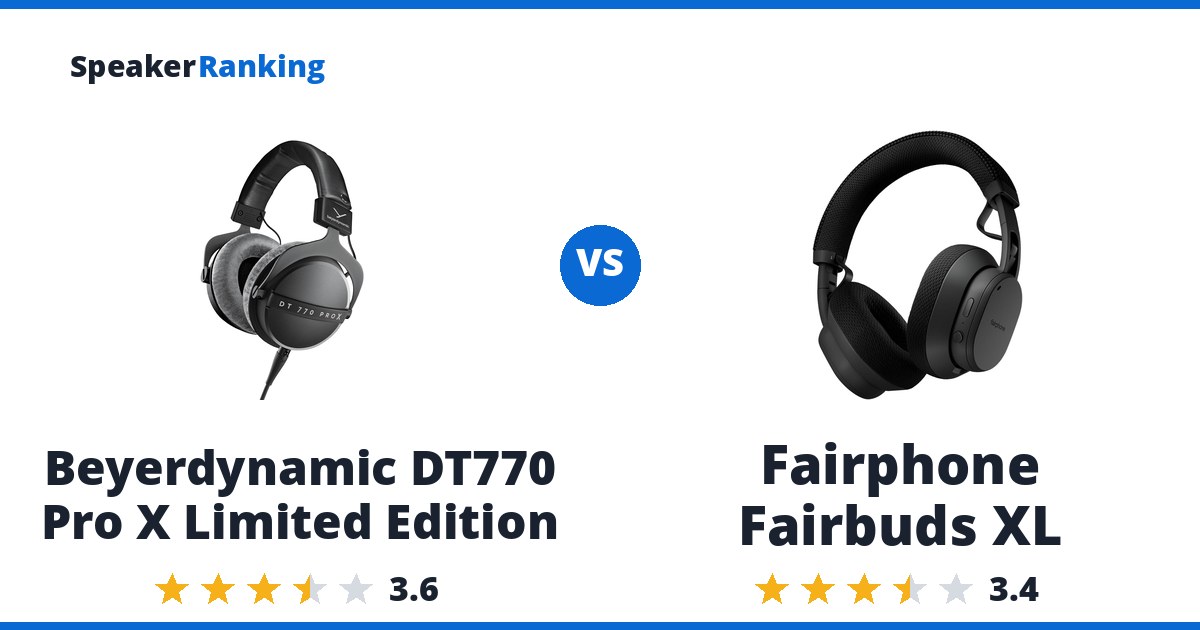
What the Beyerdynamic DT770 Pro X Limited Edition does well: Oratory1990’s measurement gives it a preference score of 72, and sub-bass is lifted about 4 dB with a boost of 5 dB at 30 Hz, so electronic and hip hop tracks hit with real rumble. The tradeoff: An 8.5 dB peak near 6.4 kHz and treble about 4 dB high from 6 to 10 kHz can make sibilance and cymbals sound sharp, while a 5 dB dip near 3 kHz pulls vocals back.
Why pick the Fairphone Fairbuds XL: Wireless with active noise cancelling, Bluetooth 5.1 and aptX HD, plus a 30 hour battery (26 hours with ANC on), so it covers travel and desk use. The catch: The presence region from 3 to 6 kHz sits about 5.3 dB under target, with a 10.2 dB dip near 3.4 kHz, which pushes vocals and instrument attack back and makes music sound recessed.
Buy the Beyerdynamic DT770 Pro X Limited Edition. It is rated higher for sound quality than the Fairphone Fairbuds XL at the same price, so it is the default pick unless a specific strength of the other one matters more to you.
Looking for alternatives? See the complete Headphones rankings.
Specifications Side By Side
| Beyerdynamic DT770 Pro X Limited Edition | Fairphone Fairbuds XL | |
|---|---|---|
| Price | $229.99 | $229.99 |
| Ranked | #121 of 216 in Over-Ear Headphones | #136 of 216 in Over-Ear Headphones |
| Form Factor | Over-ear | Over-ear |
| Harman Preference Score | 72 (measured by oratory1990, via AutoEQ) | 69 (measured by oratory1990, via AutoEQ) |
| Deviation From Target | 3.31 dB standard deviation | 2.74 dB standard deviation |
| Tonal Tilt | -0.05 (negative is warmer, positive brighter) | -0.70 (negative is warmer, positive brighter) |
| Sub-bass Extension | Within 6 dB of target down to 20 Hz (+5.3 dB at 30 Hz) | Within 6 dB of target down to 20 Hz (+4.2 dB at 30 Hz) |
| Connection | Wired | Wireless and wired |
| Back | Closed | Closed |
| Driver Type | Dynamic | Dynamic |
| Drivers | 1 x 45mm dynamic | 1 x 40mm dynamic |
| Impedance | 48 ohms | 32 ohms |
| Sensitivity | 98 dB SPL/mW | 99 dB at 1kHz |
| Weight | 0.7 lbs (305 g) | 0.7 lbs (330 g) |
| Frequency Response | 5Hz - 40kHz (Manufacturer specified) | 20Hz - 20kHz (Manufacturer specified) |
| Built-in Microphone | No | Yes |
| Active Noise Cancelling | - | Yes |
| Battery Life | - | 30 hours (26 with ANC on, Manufacturer specified) |
| Bluetooth Version | - | 5.1 |
| Bluetooth Codecs | - | SBC, AAC, aptX HD |
| IP Rating | - | IP54 |
Related Headphone Comparisons
How Beyerdynamic DT770 Pro X Limited Edition compares with other leading options:
- Audio-Technica ATH-M60x vs Beyerdynamic DT770 Pro X Limited Edition
- Beyerdynamic DT770 Pro X Limited Edition vs Sennheiser HD 599
- Beyerdynamic DT770 Pro X Limited Edition vs Sony MDR-CD900ST
- Sennheiser HD 599 vs Fairphone Fairbuds XL
- Sony MDR-CD900ST vs Fairphone Fairbuds XL
Prices on this page were last checked October 11, 2026 at 4:59 PM UTC. Product prices and availability are accurate as of that date/time and are subject to change; the price and availability shown on Amazon at the time of purchase will apply to the purchase of this product.
As an eBay Partner, we may be compensated if you make a purchase.
The Two Headphones In Full
 Beyerdynamic DT770 Pro X Limited Edition: $229.99 Audio46 eBay
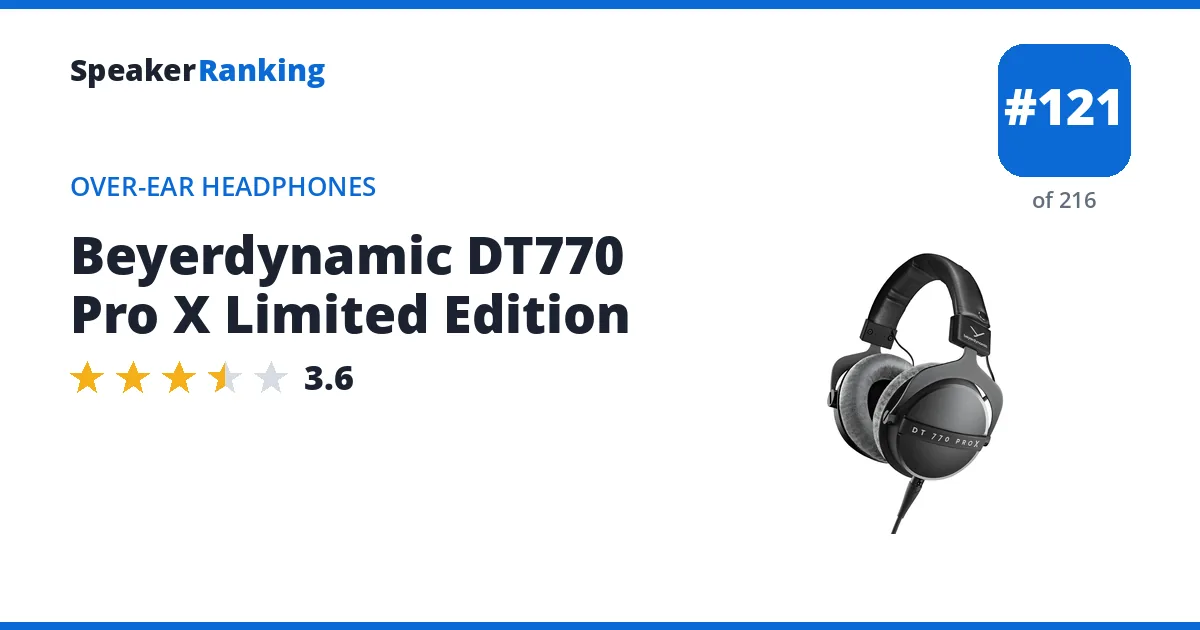
Pros: Oratory1990’s measurement gives it a preference score of 72, and sub-bass is lifted about 4 dB with a boost of 5 dB at 30 Hz, so electronic and hip hop tracks hit with real rumble. The closed back isolates well for recording or noisy rooms. At 48 ohms and 98 dB/mW it plays loudly enough from most phones and interfaces, and it weighs 305 g.
Cons: An 8.5 dB peak near 6.4 kHz and treble about 4 dB high from 6 to 10 kHz can make sibilance and cymbals sound sharp, while a 5 dB dip near 3 kHz pulls vocals back. The 3.3 dB standard deviation marks it as a less even response, and the AKG K240 MKII is rated higher for less money.
Full Beyerdynamic DT770 Pro X Limited Edition review and specifications →
| Released | Jan 2024 (2 years ago) |
|---|---|
| Back | Closed |
| Built-in Microphone | No |
| Connection | Wired |
| Deviation From Target | 3.31 dB standard deviation |
| Driver Type | Dynamic |
| Drivers | 1 x 45mm dynamic |
| Form Factor | Over-ear |
| Frequency Response | 5Hz - 40kHz (Manufacturer specified) |
| Harman Preference Score | 72 (measured by oratory1990, via AutoEQ) |
| Impedance | 48 ohms |
| Sensitivity | 98 dB SPL/mW |
| Sub-bass Extension | Within 6 dB of target down to 20 Hz (+5.3 dB at 30 Hz) |
| Tonal Tilt | -0.05 (negative is warmer, positive brighter) |
| Weight | 0.7 lbs (305 g) |
EQ preset to match the Harman target
Set a preamp of -6.0 dB, then add these filters in any parametric equalizer (Wavelet, Equalizer APO, Peace, or a player with parametric EQ). Calculated by AutoEQ from its measured frequency response.
| Filter | Frequency | Gain | Q |
|---|---|---|---|
| Low shelf | 105 Hz | -3.7 dB | 0.70 |
| Peak | 6,299 Hz | -7.5 dB | 1.45 |
| Peak | 255 Hz | +6.8 dB | 1.74 |
| Peak | 145 Hz | -5.9 dB | 2.39 |
| Peak | 3,454 Hz | +6.3 dB | 2.55 |
| High shelf | 10,000 Hz | -4.4 dB | 0.70 |
| Peak | 83 Hz | +3.2 dB | 2.91 |
| Peak | 2,268 Hz | -2.1 dB | 4.62 |
| Peak | 46 Hz | -1.0 dB | 1.61 |
| Peak | 112 Hz | -1.9 dB | 3.99 |
- Reviews, Comparisons and Sound Samples
- Head-to-Head Comparisons
 Fairphone Fairbuds XL: $229.99 Wireless Amazon eBay

Pros: Wireless with active noise cancelling, Bluetooth 5.1 and aptX HD, plus a 30 hour battery (26 hours with ANC on), so it covers travel and desk use. An IP54 rating adds splash and dust resistance, which is uncommon among over-ears, and a wired connection at 32 ohms and 99 dB is available too. Mids and low bass track the target closely, within about 0.3 dB from 60 Hz to 1 kHz.
Cons: The presence region from 3 to 6 kHz sits about 5.3 dB under target, with a 10.2 dB dip near 3.4 kHz, which pushes vocals and instrument attack back and makes music sound recessed. A 2.8 dB peak near 6.4 kHz adds some sharpness on top of that. Sub-bass is lifted about 2.9 dB, and at 330 g it is heavier than most wireless rivals such as the Bose QuietComfort 35 II.
Full Fairphone Fairbuds XL review and specifications →
| Active Noise Cancelling | Yes |
|---|---|
| Back | Closed |
| Battery Life | 30 hours (26 with ANC on, Manufacturer specified) |
| Bluetooth Codecs | SBC, AAC, aptX HD |
| Bluetooth Version | 5.1 |
| Built-in Microphone | Yes |
| Connection | Wireless and wired |
| Deviation From Target | 2.74 dB standard deviation |
| Driver Type | Dynamic |
| Drivers | 1 x 40mm dynamic |
| Form Factor | Over-ear |
| Frequency Response | 20Hz - 20kHz (Manufacturer specified) |
| Harman Preference Score | 69 (measured by oratory1990, via AutoEQ) |
| IP Rating | IP54 |
| Impedance | 32 ohms |
| Sensitivity | 99 dB at 1kHz |
| Sub-bass Extension | Within 6 dB of target down to 20 Hz (+4.2 dB at 30 Hz) |
| Tonal Tilt | -0.70 (negative is warmer, positive brighter) |
| Weight | 0.7 lbs (330 g) |
EQ preset to match the Harman target
Set a preamp of -7.2 dB, then add these filters in any parametric equalizer (Wavelet, Equalizer APO, Peace, or a player with parametric EQ). Calculated by AutoEQ from its measured frequency response.
| Filter | Frequency | Gain | Q |
|---|---|---|---|
| Low shelf | 105 Hz | -7.6 dB | 0.70 |
| Peak | 3,409 Hz | +7.2 dB | 2.60 |
| Peak | 60 Hz | +7.1 dB | 1.03 |
| Peak | 979 Hz | -2.0 dB | 1.35 |
| Peak | 242 Hz | -1.8 dB | 1.04 |
| High shelf | 10,000 Hz | +0.9 dB | 0.70 |
| Peak | 6,413 Hz | -4.2 dB | 5.06 |
| Peak | 2,037 Hz | -2.5 dB | 4.81 |
| Peak | 1,598 Hz | +1.3 dB | 4.26 |
| Peak | 2,813 Hz | +1.6 dB | 5.68 |
- Reviews, Comparisons and Sound Samples
- Head-to-Head Comparisons