Short answer: the Audio-Technica ATH-MSR7b. Both are rated 3.9/5 for sound quality (#83 and #81 of 216 over-ear headphones), and the Audio-Technica ATH-MSR7b costs $249 against $299 for the Sivga Luan, so with nothing between them on sound quality, price settles it.
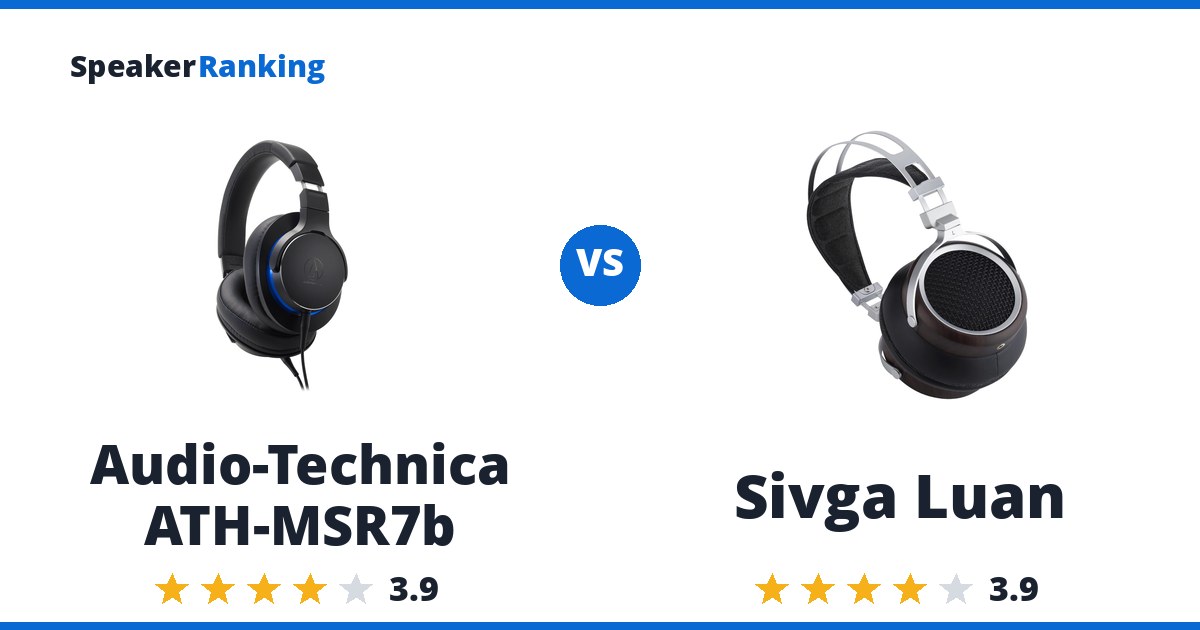
Why pick the Audio-Technica ATH-MSR7b: A preference score of 80 in oratory1990’s measurement, with bass close to target from 60 to 200 Hz for punchy, even low end. Watch for: Presence sits about 3.1 dB below target from 3 to 6 kHz and an 8.8 dB dip near 9.5 kHz takes the bite out of guitars and the shimmer off cymbals.
What the Sivga Luan does well: The open back tuning leans warm, with bass from 60 to 200 Hz about 3 dB above target and the lows and mids around 1.5 dB above, which gives music body and weight that suits rock, pop and hip hop. The catch: A 5 dB peak near 2.8 kHz can make vocals and guitars sound forward or slightly shouty at higher volume, and a 5.8 dB dip near 9.3 kHz takes the edge off cymbals while the top octave runs 6 dB above target.
Buy the Audio-Technica ATH-MSR7b. Both are rated the same for sound quality, and it costs $50 less than the Sivga Luan.
Looking for alternatives? See the complete Headphones rankings.
Specifications Side By Side
| Audio-Technica ATH-MSR7b | Sivga Luan | |
|---|---|---|
| Price | $249.00 | $299.00 |
| Ranked | #83 of 216 in Over-Ear Headphones | #81 of 216 in Over-Ear Headphones |
| Form Factor | Over-ear | Over-ear |
| Harman Preference Score | 80 (measured by oratory1990, via AutoEQ) | 80 (measured by oratory1990, via AutoEQ) |
| Deviation From Target | 1.98 dB standard deviation | 2.04 dB standard deviation |
| Tonal Tilt | -0.64 (negative is warmer, positive brighter) | -0.58 (negative is warmer, positive brighter) |
| Sub-bass Extension | Within 6 dB of target down to 20 Hz (-3.3 dB at 30 Hz) | Within 6 dB of target down to 20 Hz (-3.6 dB at 30 Hz) |
| Connection | Wired | Wired |
| Back | Closed | Open |
| Driver Type | Dynamic | Dynamic |
| Drivers | 1 x 45mm dynamic | 1 x 50mm dynamic |
| Impedance | 36 ohms | 38 ohms |
| Sensitivity | 101 dB/mW | 100 dB |
| Weight | 0.5 lbs (237 g) | 0.8 lbs (354 g) |
| Frequency Response | 5Hz - 50kHz (Manufacturer specified) | 20Hz - 40kHz (Manufacturer specified) |
| Built-in Microphone | No | No |
Related Headphone Comparisons
More worthwhile head-to-heads for Sivga Luan:
- AKG K612 vs Sivga Luan
- Meze 105 Aer vs Sivga Luan
- Sivga Luan vs Austrian Audio Hi-X65
- Sivga Luan vs Beyerdynamic DT 700 Pro X
- Audio-Technica ATH-MSR7b vs Meze 105 Aer
Prices on this page were last checked October 11, 2026 at 4:59 PM UTC. Product prices and availability are accurate as of that date/time and are subject to change; the price and availability shown on Amazon at the time of purchase will apply to the purchase of this product.
As an eBay Partner, we may be compensated if you make a purchase.
The Two Headphones In Full
 Audio-Technica ATH-MSR7b: $249.00 Apos Audio eBay
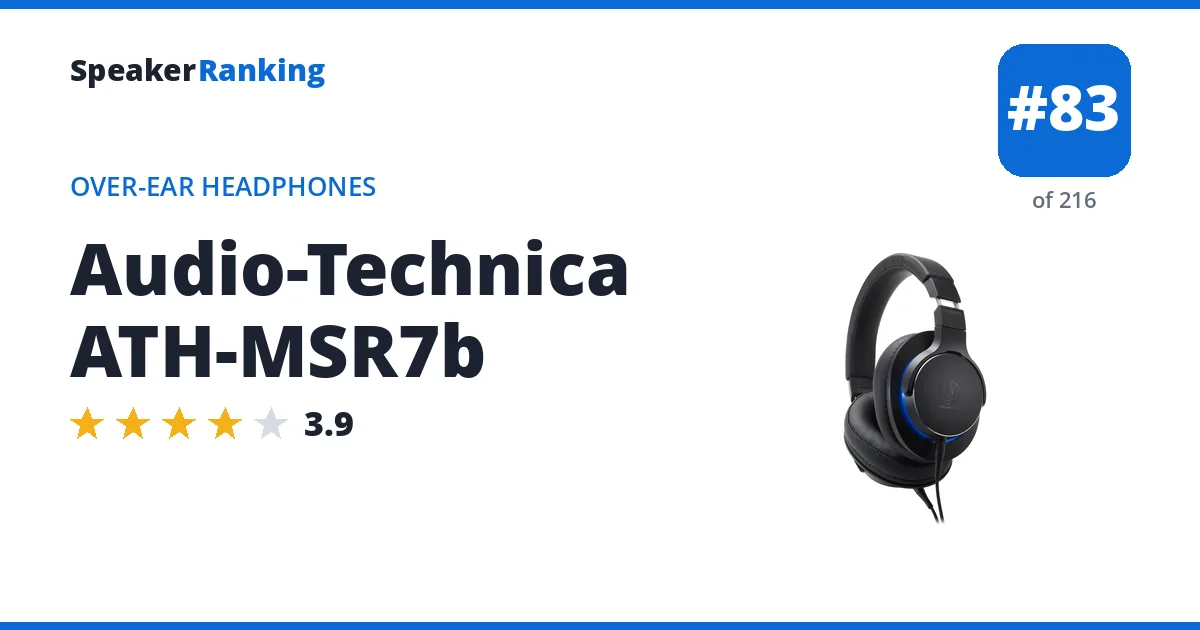
Pros: A preference score of 80 in oratory1990’s measurement, with bass close to target from 60 to 200 Hz for punchy, even low end. At 101 dB/mW and 36 ohms it plays loud straight from a phone or laptop, and the closed back keeps sound in and outside noise out. At 237 g it is light for a full-size headphone.
Cons: Presence sits about 3.1 dB below target from 3 to 6 kHz and an 8.8 dB dip near 9.5 kHz takes the bite out of guitars and the shimmer off cymbals. Sub-bass falls about 3.5 dB under target below 60 Hz, so the deepest bass is lighter. The higher rated AKG K612 Pro costs less, though it is open back.
Full Audio-Technica ATH-MSR7b review and specifications →
| Back | Closed |
|---|---|
| Built-in Microphone | No |
| Connection | Wired |
| Deviation From Target | 1.98 dB standard deviation |
| Driver Type | Dynamic |
| Drivers | 1 x 45mm dynamic |
| Form Factor | Over-ear |
| Frequency Response | 5Hz - 50kHz (Manufacturer specified) |
| Harman Preference Score | 80 (measured by oratory1990, via AutoEQ) |
| Impedance | 36 ohms |
| Sensitivity | 101 dB/mW |
| Sub-bass Extension | Within 6 dB of target down to 20 Hz (-3.3 dB at 30 Hz) |
| Tonal Tilt | -0.64 (negative is warmer, positive brighter) |
| Weight | 0.5 lbs (237 g) |
EQ preset to match the Harman target
Set a preamp of -6.0 dB, then add these filters in any parametric equalizer (Wavelet, Equalizer APO, Peace, or a player with parametric EQ). Calculated by AutoEQ from its measured frequency response.
| Filter | Frequency | Gain | Q |
|---|---|---|---|
| Low shelf | 105 Hz | +13.1 dB | 0.70 |
| Peak | 56 Hz | -12.7 dB | 0.36 |
| Peak | 263 Hz | +5.4 dB | 1.17 |
| Peak | 1,421 Hz | -2.4 dB | 1.01 |
| Peak | 3,205 Hz | +4.3 dB | 1.79 |
| High shelf | 10,000 Hz | -0.1 dB | 0.70 |
| Peak | 6,071 Hz | +1.7 dB | 3.77 |
| Peak | 5,177 Hz | -1.3 dB | 6.00 |
| Peak | 513 Hz | +0.1 dB | 2.03 |
| Peak | 4,296 Hz | -0.6 dB | 6.00 |
- Reviews, Comparisons and Sound Samples
- Head-to-Head Comparisons
 Sivga Luan: $299.00 Amazon eBay
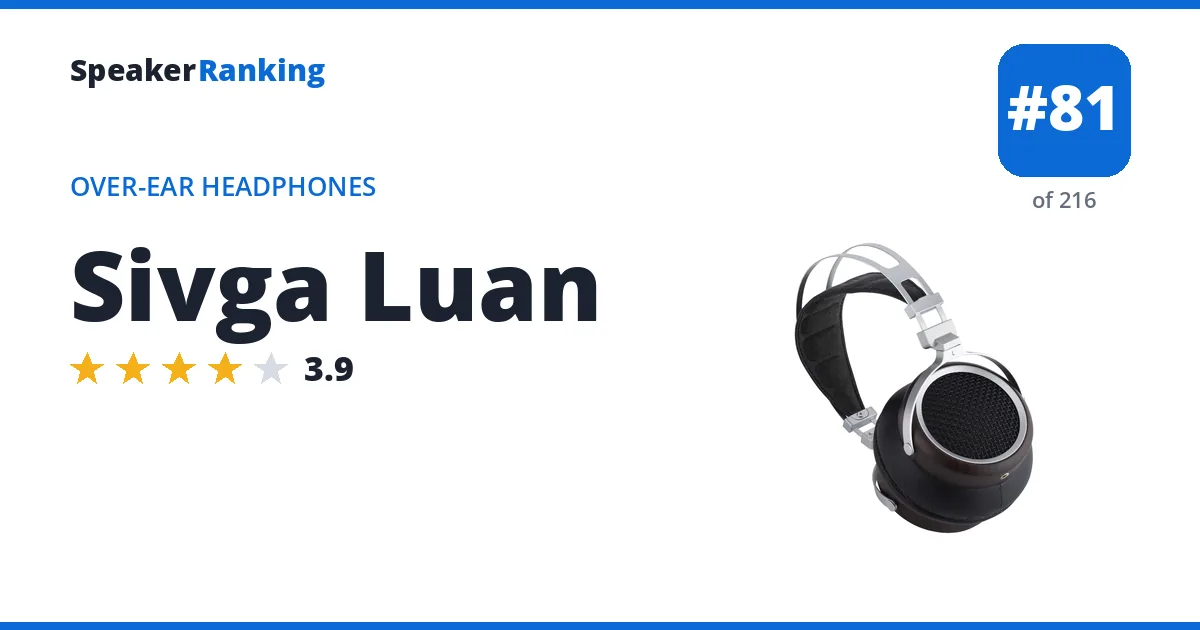
Pros: The open back tuning leans warm, with bass from 60 to 200 Hz about 3 dB above target and the lows and mids around 1.5 dB above, which gives music body and weight that suits rock, pop and hip hop. A deviation of 2.0 dB is among the smoothest in this group, and the preference score is 80. At 38 ohms and 100 dB sensitivity a phone or dongle can drive it, and it weighs 354 g.
Cons: A 5 dB peak near 2.8 kHz can make vocals and guitars sound forward or slightly shouty at higher volume, and a 5.8 dB dip near 9.3 kHz takes the edge off cymbals while the top octave runs 6 dB above target. Listeners who want a neutral balance will find the bass and low mids heavy. The open back leaks sound and has no isolation, and there is no built in microphone.
Full Sivga Luan review and specifications →
| Back | Open |
|---|---|
| Built-in Microphone | No |
| Connection | Wired |
| Deviation From Target | 2.04 dB standard deviation |
| Driver Type | Dynamic |
| Drivers | 1 x 50mm dynamic |
| Form Factor | Over-ear |
| Frequency Response | 20Hz - 40kHz (Manufacturer specified) |
| Harman Preference Score | 80 (measured by oratory1990, via AutoEQ) |
| Impedance | 38 ohms |
| Sensitivity | 100 dB |
| Sub-bass Extension | Within 6 dB of target down to 20 Hz (-3.6 dB at 30 Hz) |
| Tonal Tilt | -0.58 (negative is warmer, positive brighter) |
| Weight | 0.8 lbs (354 g) |
EQ preset to match the Harman target
Set a preamp of -7.0 dB, then add these filters in any parametric equalizer (Wavelet, Equalizer APO, Peace, or a player with parametric EQ). Calculated by AutoEQ from its measured frequency response.
| Filter | Frequency | Gain | Q |
|---|---|---|---|
| Low shelf | 105 Hz | +13.5 dB | 0.70 |
| Peak | 54 Hz | -11.3 dB | 0.36 |
| Peak | 1,033 Hz | +2.6 dB | 0.39 |
| Peak | 2,697 Hz | -5.0 dB | 2.19 |
| Peak | 7,643 Hz | +2.9 dB | 1.41 |
| High shelf | 10,000 Hz | -7.5 dB | 0.70 |
| Peak | 4,022 Hz | -2.2 dB | 6.00 |
| Peak | 5,210 Hz | +2.7 dB | 5.98 |
| Peak | 3,497 Hz | +1.7 dB | 6.00 |
| Peak | 4,281 Hz | -0.8 dB | 4.36 |
- Reviews, Comparisons and Sound Samples
- Head-to-Head Comparisons