Short answer: the Audio-Technica ATH-IEX1, though neither ranks well in its class. It ranks #420 of 450 in-ear headphones by sound quality, rated 2.4/5, at $1,200. The FiiO FA7S ranks #433, rated 1.9/5, at $947.19, $252.81 cheaper, not enough of a saving to outweigh the sound-quality gap. Both are rated below 3.0/5 among the 450 in-ear headphones, so if sound quality matters, consider the ThieAudio Monarch MKIII instead, ranked #1 at $999.

The Audio-Technica ATH-IEX1 is the better-sounding choice. A hybrid design pairing two dynamic drivers with two balanced armatures, and its 102 dB/mW sensitivity makes it easy to drive from a phone. Watch for: A preference score of 54 in crinacle’s measurement places its tuning far from what most listeners prefer, a weak result for a flagship in ear.
Why pick the FiiO FA7S: Six balanced armature drivers per side at 18 ohms and 111 dB/mW make it very easy to drive from a phone or a small dongle. Watch for: Crinacle’s measurement yields a preference score of just 48 with a 3.7 dB spread around the target, a poor tonal result at a flagship price.
Buy the Audio-Technica ATH-IEX1. It is rated higher for sound quality, and the $252.81 saving on the FiiO FA7S is not enough to make up the difference.
Want more options? Browse the full Headphones rankings.
Specifications Side By Side
| Audio-Technica ATH-IEX1 | FiiO FA7S | |
|---|---|---|
| Price | $1,200.00 | $947.19 |
| Ranked | #420 of 450 in In-Ear Headphones | #433 of 450 in In-Ear Headphones |
| Form Factor | In-ear | In-ear |
| Back | Closed | Closed |
| Harman Preference Score | 54 (measured by crinacle, via AutoEQ) | 48 (measured by crinacle, via AutoEQ) |
| Deviation From Target | 3.30 dB standard deviation | 3.72 dB standard deviation |
| Tonal Tilt | -0.55 (negative is warmer, positive brighter) | -0.89 (negative is warmer, positive brighter) |
| Connection | Wired | Wired |
| Driver Type | Hybrid (2 dynamic + 2 balanced armature) | Balanced armature |
| Drivers | 1 x 9.8mm dynamic + 1 x 8.8mm dynamic + 2 x balanced armature | 6 x balanced armature |
| Impedance | 5 ohms | 18 ohms |
| Sensitivity | 102 dB/mW | 111 dB/mW |
| Frequency Response | 5Hz - 50kHz (Manufacturer specified) | 10Hz - 40kHz (Manufacturer specified) |
| Built-in Microphone | No | No |
| Weight | - | 0 lbs (8.4 g) per earbud |
Related Headphone Comparisons
How Audio-Technica ATH-IEX1 compares with other leading options:
- FiiO FH5 vs Audio-Technica ATH-IEX1
- Westone MACH 80 vs Audio-Technica ATH-IEX1
- Audio-Technica ATH-IEX1 vs Fidue A91 Sirius
- Fidue A91 Sirius vs FiiO FA7S
- FiiO FA7S vs Campfire Audio Dorado 2020
Prices on this page were last checked October 11, 2026 at 4:59 PM UTC. Product prices and availability are accurate as of that date/time and are subject to change; the price and availability shown on Amazon at the time of purchase will apply to the purchase of this product.
As an eBay Partner, we may be compensated if you make a purchase.
The Two Headphones In Full
 Audio-Technica ATH-IEX1: $1,200.00 B&H Photo Video eBay
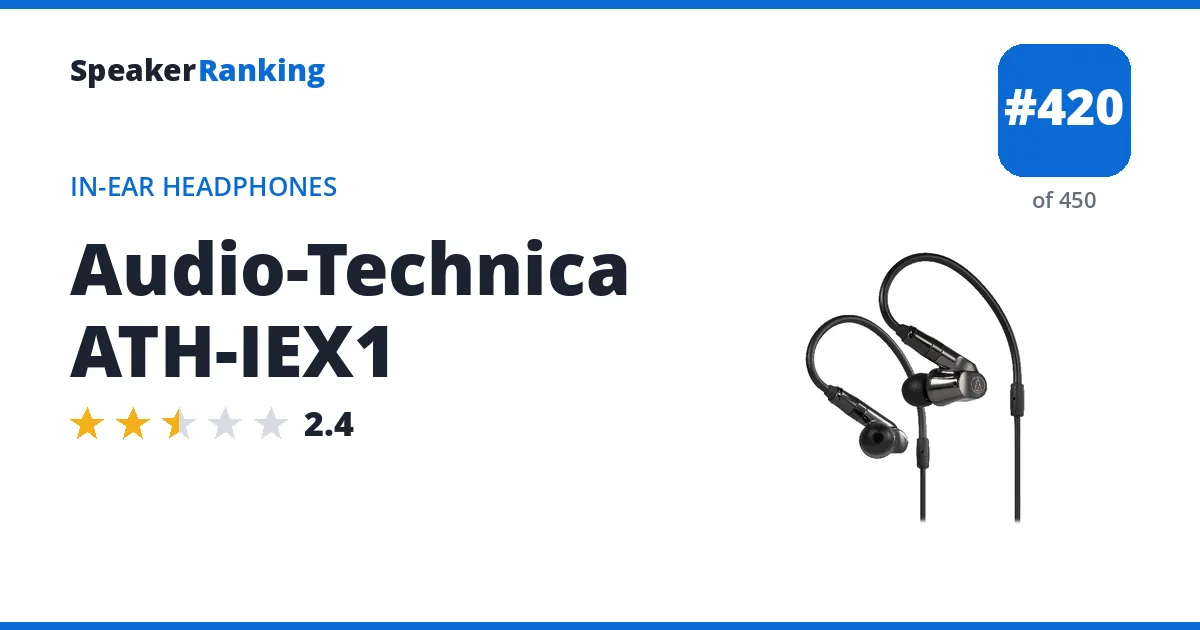
Pros: A hybrid design pairing two dynamic drivers with two balanced armatures, and its 102 dB/mW sensitivity makes it easy to drive from a phone. It is rated above the Fidue A91 Sirius and FiiO FA7S.
Cons: A preference score of 54 in crinacle’s measurement places its tuning far from what most listeners prefer, a weak result for a flagship in ear. The Audio-Technica ATH-CK2000Ti is rated higher and costs less.
Full Audio-Technica ATH-IEX1 review and specifications →
| Released | Nov 2019 (6 years ago) |
|---|---|
| Back | Closed |
| Built-in Microphone | No |
| Connection | Wired |
| Deviation From Target | 3.30 dB standard deviation |
| Driver Type | Hybrid (2 dynamic + 2 balanced armature) |
| Drivers | 1 x 9.8mm dynamic + 1 x 8.8mm dynamic + 2 x balanced armature |
| Form Factor | In-ear |
| Frequency Response | 5Hz - 50kHz (Manufacturer specified) |
| Harman Preference Score | 54 (measured by crinacle, via AutoEQ) |
| Impedance | 5 ohms |
| Sensitivity | 102 dB/mW |
| Tonal Tilt | -0.55 (negative is warmer, positive brighter) |
EQ preset to match the Harman target
Set a preamp of -6.9 dB, then add these filters in any parametric equalizer (Wavelet, Equalizer APO, Peace, or a player with parametric EQ). Calculated by AutoEQ from its measured frequency response.
| Filter | Frequency | Gain | Q |
|---|---|---|---|
| Low shelf | 105 Hz | -2.4 dB | 0.70 |
| Peak | 641 Hz | +5.0 dB | 1.22 |
| Peak | 1,454 Hz | -7.5 dB | 1.77 |
| Peak | 5,117 Hz | +7.4 dB | 1.56 |
| Peak | 3,198 Hz | -6.2 dB | 3.37 |
| High shelf | 10,000 Hz | +0.8 dB | 0.70 |
| Peak | 154 Hz | -2.2 dB | 1.07 |
| Peak | 67 Hz | +1.0 dB | 1.34 |
| Peak | 373 Hz | +1.2 dB | 2.14 |
| Peak | 6,320 Hz | +0.9 dB | 6.00 |
- Reviews, Comparisons and Sound Samples
- Head-to-Head Comparisons
 FiiO FA7S: $947.19 Amazon eBay
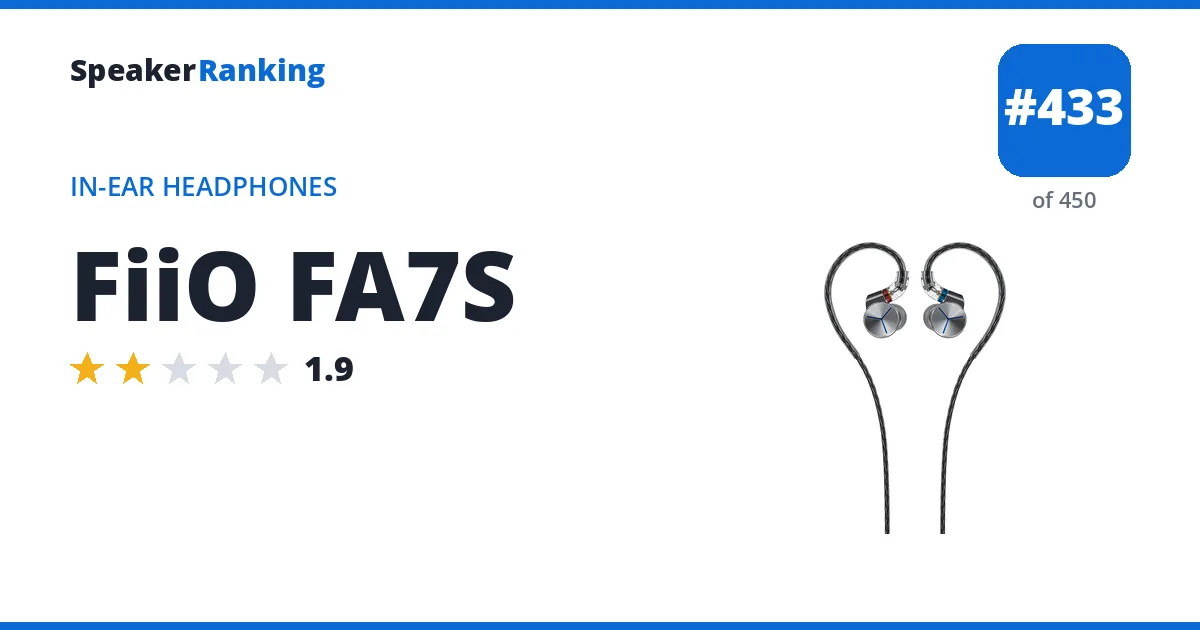
Pros: Six balanced armature drivers per side at 18 ohms and 111 dB/mW make it very easy to drive from a phone or a small dongle. At 8.4 g per earbud it is light for a multi-driver in-ear.
Cons: Crinacle’s measurement yields a preference score of just 48 with a 3.7 dB spread around the target, a poor tonal result at a flagship price. The Fidue A91 Sirius rates higher at a similar cost, and there is no inline microphone for calls.
Full FiiO FA7S review and specifications →
| Released | Oct 2021 (5 years ago) |
|---|---|
| Back | Closed |
| Built-in Microphone | No |
| Connection | Wired |
| Deviation From Target | 3.72 dB standard deviation |
| Driver Type | Balanced armature |
| Drivers | 6 x balanced armature |
| Form Factor | In-ear |
| Frequency Response | 10Hz - 40kHz (Manufacturer specified) |
| Harman Preference Score | 48 (measured by crinacle, via AutoEQ) |
| Impedance | 18 ohms |
| Sensitivity | 111 dB/mW |
| Tonal Tilt | -0.89 (negative is warmer, positive brighter) |
| Weight | 0 lbs (8.4 g) per earbud |
EQ preset to match the Harman target
Set a preamp of -6.5 dB, then add these filters in any parametric equalizer (Wavelet, Equalizer APO, Peace, or a player with parametric EQ). Calculated by AutoEQ from its measured frequency response.
| Filter | Frequency | Gain | Q |
|---|---|---|---|
| Low shelf | 105 Hz | +1.6 dB | 0.70 |
| Peak | 192 Hz | -4.8 dB | 0.57 |
| Peak | 2,618 Hz | +6.2 dB | 1.61 |
| Peak | 9,159 Hz | +5.6 dB | 1.14 |
| Peak | 388 Hz | -1.1 dB | 1.47 |
| High shelf | 10,000 Hz | -0.5 dB | 0.70 |
| Peak | 4,349 Hz | -2.4 dB | 4.22 |
| Peak | 5,384 Hz | +2.5 dB | 6.00 |
| Peak | 940 Hz | +0.8 dB | 3.02 |
| Peak | 3,246 Hz | +1.3 dB | 6.00 |
- Reviews, Comparisons and Sound Samples
- Head-to-Head Comparisons