Short answer: the Audio-Technica ATH-A990Z, though neither ranks well in its class. It ranks #208 of 216 over-ear headphones by sound quality, rated 1.8/5, at $249; the iBasso SR1 ranks #211, rated 1.5/5, and costs $399, so there is not much of a tradeoff to weigh. Both are rated below 3.0/5 among the 216 over-ear headphones, so if sound quality matters, consider the HIFIMAN Ananda Nano instead, ranked #4 at $319.

The Audio-Technica ATH-A990Z is the better-sounding option. The closed back keeps sound in and outside noise out, which suits shared rooms and late night listening. The catch: A preference score of 32 in crinacle’s measurement puts it far from the response most listeners prefer, so it will sound noticeably colored without EQ.
The case for the iBasso SR1: A low 22 ohm impedance means the 50 mm dynamic driver runs from a phone or laptop without a separate amp. The tradeoff: Crinacle’s measurement gives it a preference score of only 25, with a steep warm tilt and large deviations of about 4.5 dB on average from the Harman target, so most listeners will hear a muffled, uneven balance.
Buy the Audio-Technica ATH-A990Z. It is rated higher for sound quality than the iBasso SR1 and costs less, so only choose the other one for a particular feature it does better.
Want more options? Browse the full Headphones rankings.
Specifications Side By Side
| Audio-Technica ATH-A990Z | iBasso SR1 | |
|---|---|---|
| Price | $249.00 | $399.00 |
| Ranked | #208 of 216 in Over-Ear Headphones | #211 of 216 in Over-Ear Headphones |
| Form Factor | Over-ear | Over-ear |
| Harman Preference Score | 32 (measured by crinacle, via AutoEQ) | 25 (measured by crinacle, via AutoEQ) |
| Deviation From Target | 4.08 dB standard deviation | 4.48 dB standard deviation |
| Tonal Tilt | -2.02 (negative is warmer, positive brighter) | -2.12 (negative is warmer, positive brighter) |
| Connection | Wired | Wired |
| Back | Closed | Semi-open |
| Driver Type | Dynamic | Dynamic |
| Drivers | 1 x 53mm dynamic | 1 x 50mm dynamic |
| Impedance | 44 ohms | 22 ohms |
| Sensitivity | 100 dB/mW | 108 dB |
| Weight | 0.7 lbs (335 g) | 0.9 lbs (420 g) |
| Frequency Response | 5Hz - 42kHz (Manufacturer specified) | 3Hz - 40kHz (Manufacturer specified) |
| Built-in Microphone | No | No |
Related Headphone Comparisons
More top alternatives to Audio-Technica ATH-A990Z:
- Audio-Technica ATH-AD900X vs Audio-Technica ATH-A990Z
- Sennheiser Momentum 4 Wireless vs Audio-Technica ATH-A990Z
- Beyerdynamic DT 770 M vs Audio-Technica ATH-A990Z
- Audio-Technica ATH-A990Z vs Sennheiser HD 569
- Audio-Technica ATH-A990Z vs Audio-Technica ATH-G1
Prices on this page were last checked October 11, 2026 at 4:59 PM UTC. Product prices and availability are accurate as of that date/time and are subject to change; the price and availability shown on Amazon at the time of purchase will apply to the purchase of this product.
As an eBay Partner, we may be compensated if you make a purchase.
The Two Headphones In Full
 Audio-Technica ATH-A990Z: $249.00 Amazon eBay

Pros: The closed back keeps sound in and outside noise out, which suits shared rooms and late night listening. At 44 ohms and 100 dB/mW it gets loud from a phone or laptop without a dedicated amp, and the large 53 mm dynamic driver suits listeners who like a warm, colored sound.
Cons: A preference score of 32 in crinacle’s measurement puts it far from the response most listeners prefer, so it will sound noticeably colored without EQ. The AKG K271 MKII and the Audio-Technica ATH-AD900X both rate higher and cost less, and at 335 g it is on the heavy side.
Full Audio-Technica ATH-A990Z review and specifications →
| Released | 2015 (11 years ago) |
|---|---|
| Back | Closed |
| Built-in Microphone | No |
| Connection | Wired |
| Deviation From Target | 4.08 dB standard deviation |
| Driver Type | Dynamic |
| Drivers | 1 x 53mm dynamic |
| Form Factor | Over-ear |
| Frequency Response | 5Hz - 42kHz (Manufacturer specified) |
| Harman Preference Score | 32 (measured by crinacle, via AutoEQ) |
| Impedance | 44 ohms |
| Sensitivity | 100 dB/mW |
| Tonal Tilt | -2.02 (negative is warmer, positive brighter) |
| Weight | 0.7 lbs (335 g) |
EQ preset to match the Harman target
Set a preamp of -7.2 dB, then add these filters in any parametric equalizer (Wavelet, Equalizer APO, Peace, or a player with parametric EQ). Calculated by AutoEQ from its measured frequency response.
| Filter | Frequency | Gain | Q |
|---|---|---|---|
| Low shelf | 105 Hz | +10.1 dB | 0.70 |
| Peak | 81 Hz | -10.2 dB | 0.44 |
| Peak | 8,626 Hz | +4.9 dB | 1.18 |
| Peak | 2,626 Hz | +4.2 dB | 0.85 |
| Peak | 905 Hz | -2.2 dB | 0.97 |
| High shelf | 10,000 Hz | -2.8 dB | 0.70 |
| Peak | 4,151 Hz | -3.8 dB | 6.00 |
| Peak | 5,030 Hz | +2.5 dB | 5.35 |
| Peak | 3,282 Hz | +2.5 dB | 5.47 |
| Peak | 2,359 Hz | -1.4 dB | 5.88 |
- Reviews, Comparisons and Sound Samples
- Head-to-Head Comparisons
 iBasso SR1: $399.00 Amazon eBay
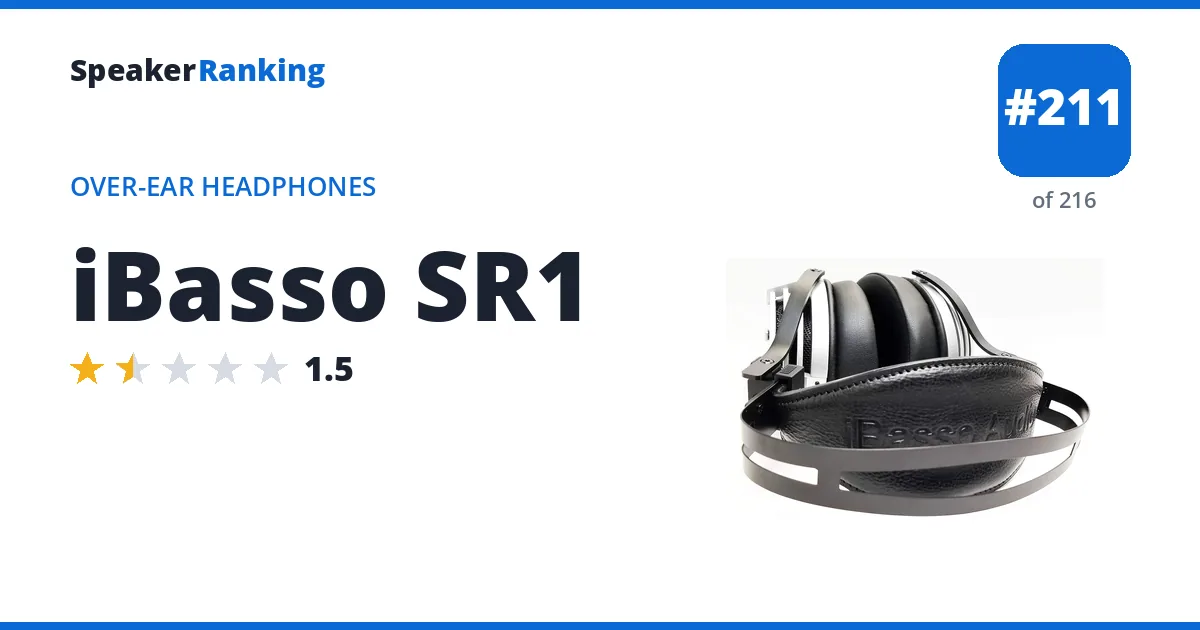
Pros: A low 22 ohm impedance means the 50 mm dynamic driver runs from a phone or laptop without a separate amp. Its very warm tilt can appeal to listeners who want a dark, bass-heavy sound and dislike any brightness.
Cons: Crinacle’s measurement gives it a preference score of only 25, with a steep warm tilt and large deviations of about 4.5 dB on average from the Harman target, so most listeners will hear a muffled, uneven balance. The semi-open back leaks sound and lets outside noise in, and the cheaper Sony WH-1000XM5 rates noticeably higher.
Full iBasso SR1 review and specifications →
| Released | 2018 (8 years ago) |
|---|---|
| Back | Semi-open |
| Built-in Microphone | No |
| Connection | Wired |
| Deviation From Target | 4.48 dB standard deviation |
| Driver Type | Dynamic |
| Drivers | 1 x 50mm dynamic |
| Form Factor | Over-ear |
| Frequency Response | 3Hz - 40kHz (Manufacturer specified) |
| Harman Preference Score | 25 (measured by crinacle, via AutoEQ) |
| Impedance | 22 ohms |
| Sensitivity | 108 dB |
| Tonal Tilt | -2.12 (negative is warmer, positive brighter) |
| Weight | 0.9 lbs (420 g) |
EQ preset to match the Harman target
Set a preamp of -6.8 dB, then add these filters in any parametric equalizer (Wavelet, Equalizer APO, Peace, or a player with parametric EQ). Calculated by AutoEQ from its measured frequency response.
| Filter | Frequency | Gain | Q |
|---|---|---|---|
| Low shelf | 105 Hz | +1.7 dB | 0.70 |
| Peak | 196 Hz | -5.9 dB | 0.52 |
| Peak | 5,980 Hz | +10.5 dB | 0.63 |
| Peak | 103 Hz | -0.7 dB | 3.84 |
| Peak | 5,700 Hz | -13.9 dB | 2.77 |
| High shelf | 10,000 Hz | +4.5 dB | 0.70 |
| Peak | 1,100 Hz | -1.1 dB | 2.13 |
| Peak | 3,462 Hz | +2.2 dB | 4.43 |
| Peak | 8,402 Hz | -2.5 dB | 4.80 |
| Peak | 3,096 Hz | -1.9 dB | 6.00 |
- Reviews, Comparisons and Sound Samples
- Head-to-Head Comparisons