Short answer: the Audeze Maxwell. It ranks #96 of 216 over-ear headphones by sound quality, rated 3.8/5, at $329.99. The Sivga Audio Phoenix ranks #120, rated 3.6/5, at $309, $20.99 cheaper, a saving that is not big enough to make up the sound-quality gap.

What the Sivga Audio Phoenix does well: Oratory1990’s measurement gives it a preference score of 72 with a fairly even 2.3 dB standard deviation, and its warm tilt with bass about 2 dB above target suits warm and bassy tastes. Watch for: Low mids sit nearly 3 dB above target, which can thicken vocals and make dense mixes sound slightly muddy, and a 4.3 dB dip near 3 kHz recesses voices a touch.
Buy the Audeze Maxwell. It is rated higher for sound quality, and the $20.99 saving on the Sivga Audio Phoenix is not enough to make up the difference.
Still deciding? The full Headphones rankings cover every ranked option.
Specifications Side By Side
| Audeze Maxwell | Sivga Audio Phoenix | |
|---|---|---|
| Price | $329.99 | $309.00 |
| Ranked | #96 of 216 in Over-Ear Headphones | #120 of 216 in Over-Ear Headphones |
| Form Factor | Over-ear | Over-ear |
| Harman Preference Score | 78 (median of 8 squig.link measurements, calibrated to AutoEQ) | 72 (measured by oratory1990, via AutoEQ) |
| Deviation From Target | 1.85 dB standard deviation | 2.28 dB standard deviation |
| Tonal Tilt | -0.79 (negative is warmer, positive brighter) | -0.86 (negative is warmer, positive brighter) |
| Sub-bass Extension | Within 6 dB of target down to 20 Hz (+2.5 dB at 30 Hz) | Within 6 dB of target down to 20 Hz (-3.5 dB at 30 Hz) |
| Connection | Wireless and wired | Wired |
| Back | Closed | Open |
| Driver Type | Planar magnetic | Dynamic |
| Drivers | 1 x 90mm planar magnetic | 1 x 50mm dynamic |
| Weight | 1.1 lbs (490 g) | 0.7 lbs (296 g) |
| Frequency Response | 10Hz - 50kHz (Manufacturer specified) | 20Hz - 20kHz (Manufacturer specified) |
| Active Noise Cancelling | No | - |
| Battery Life | 80 hours (Manufacturer specified) | - |
| Bluetooth Version | 5.3 | - |
| Bluetooth Codecs | SBC, AAC, LDAC, LC3, LC3plus | - |
| Built-in Microphone | Yes | No |
| Impedance | - | 32 ohms |
| Sensitivity | - | 103 dB |
Related Headphone Comparisons
How Audeze Maxwell compares with other leading options:
- HarmonicDyne Romantic vs Audeze Maxwell
- Audeze Maxwell vs Austrian Audio Hi-X65
- Audeze Maxwell vs Sony MDR-MV1
- Audeze Maxwell vs Beyerdynamic DT 700 Pro X
- Audeze Maxwell vs Sennheiser HD 490 Pro
Prices on this page were last checked October 11, 2026 at 4:59 PM UTC. Product prices and availability are accurate as of that date/time and are subject to change; the price and availability shown on Amazon at the time of purchase will apply to the purchase of this product.
As an eBay Partner, we may be compensated if you make a purchase.
The Two Headphones In Full
 Audeze Maxwell: $329.99 Wireless Amazon eBay
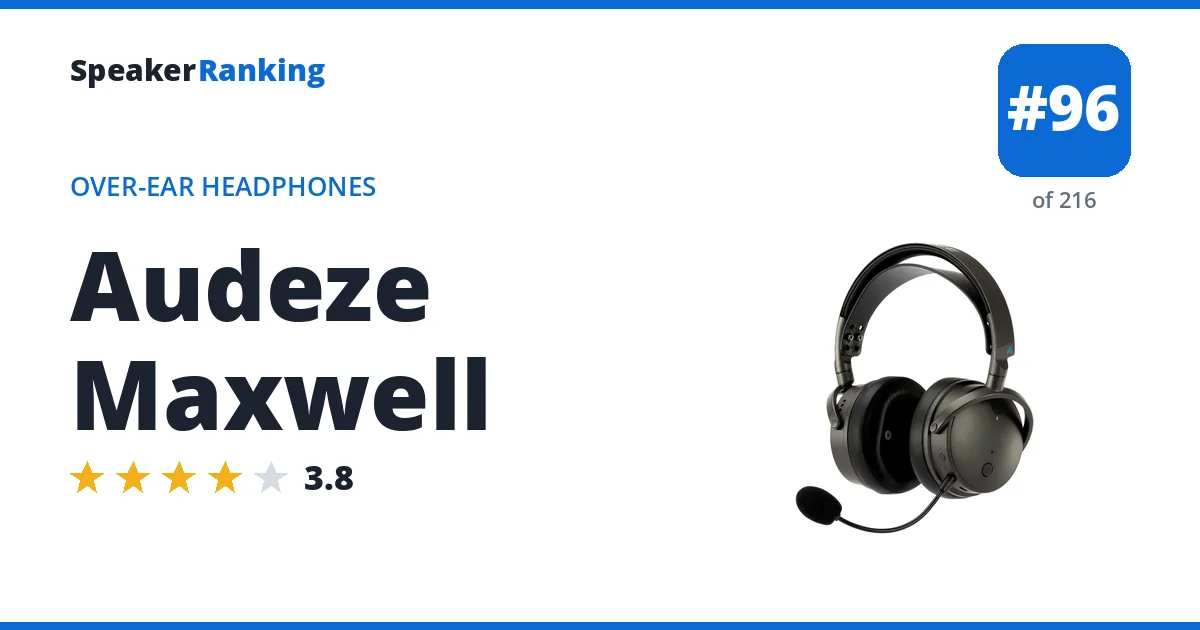
Full Audeze Maxwell review and specifications →
| Released | 2023 (3 years ago) |
|---|---|
| Active Noise Cancelling | No |
| Back | Closed |
| Battery Life | 80 hours (Manufacturer specified) |
| Bluetooth Codecs | SBC, AAC, LDAC, LC3, LC3plus |
| Bluetooth Version | 5.3 |
| Built-in Microphone | Yes |
| Connection | Wireless and wired |
| Deviation From Target | 1.85 dB standard deviation |
| Driver Type | Planar magnetic |
| Drivers | 1 x 90mm planar magnetic |
| Form Factor | Over-ear |
| Frequency Response | 10Hz - 50kHz (Manufacturer specified) |
| Harman Preference Score | 78 (median of 8 squig.link measurements, calibrated to AutoEQ) |
| Sub-bass Extension | Within 6 dB of target down to 20 Hz (+2.5 dB at 30 Hz) |
| Tonal Tilt | -0.79 (negative is warmer, positive brighter) |
| Weight | 1.1 lbs (490 g) |
- Reviews, Comparisons and Sound Samples
- Head-to-Head Comparisons
 Sivga Audio Phoenix: $309.00 HiFiGo eBay

Pros: Oratory1990’s measurement gives it a preference score of 72 with a fairly even 2.3 dB standard deviation, and its warm tilt with bass about 2 dB above target suits warm and bassy tastes. Treble stays within about 1 dB of target from 3 to 10 kHz, so it never turns harsh. At 32 ohms and 103 dB sensitivity it runs well from a phone or laptop, and it weighs 296 g.
Cons: Low mids sit nearly 3 dB above target, which can thicken vocals and make dense mixes sound slightly muddy, and a 4.3 dB dip near 3 kHz recesses voices a touch. The open back leaks sound and blocks little outside noise. The Audio-Technica ATH-M60x is rated higher for less money.
Full Sivga Audio Phoenix review and specifications →
| Released | 2020 (6 years ago) |
|---|---|
| Back | Open |
| Built-in Microphone | No |
| Connection | Wired |
| Deviation From Target | 2.28 dB standard deviation |
| Driver Type | Dynamic |
| Drivers | 1 x 50mm dynamic |
| Form Factor | Over-ear |
| Frequency Response | 20Hz - 20kHz (Manufacturer specified) |
| Harman Preference Score | 72 (measured by oratory1990, via AutoEQ) |
| Impedance | 32 ohms |
| Sensitivity | 103 dB |
| Sub-bass Extension | Within 6 dB of target down to 20 Hz (-3.5 dB at 30 Hz) |
| Tonal Tilt | -0.86 (negative is warmer, positive brighter) |
| Weight | 0.7 lbs (296 g) |
EQ preset to match the Harman target
Set a preamp of -5.2 dB, then add these filters in any parametric equalizer (Wavelet, Equalizer APO, Peace, or a player with parametric EQ). Calculated by AutoEQ from its measured frequency response.
| Filter | Frequency | Gain | Q |
|---|---|---|---|
| Low shelf | 105 Hz | +4.9 dB | 0.70 |
| Peak | 143 Hz | -4.0 dB | 0.18 |
| Peak | 8,971 Hz | +2.1 dB | 1.28 |
| Peak | 1,214 Hz | +3.1 dB | 0.64 |
| Peak | 3,160 Hz | +4.4 dB | 4.21 |
| High shelf | 10,000 Hz | -0.3 dB | 0.70 |
| Peak | 4,592 Hz | -2.6 dB | 4.75 |
| Peak | 5,893 Hz | +2.2 dB | 5.71 |
| Peak | 49 Hz | -0.6 dB | 1.65 |
| Peak | 121 Hz | +0.5 dB | 1.62 |
- Reviews, Comparisons and Sound Samples
- Head-to-Head Comparisons