Short answer: the Audeze CRBN. It ranks #67 of 216 over-ear headphones by sound quality, rated 4.0/5, at $4,500; the Stax SR-009S ranks #113, rated 3.7/5, and costs $4,545, so there is little reason to consider the other one.
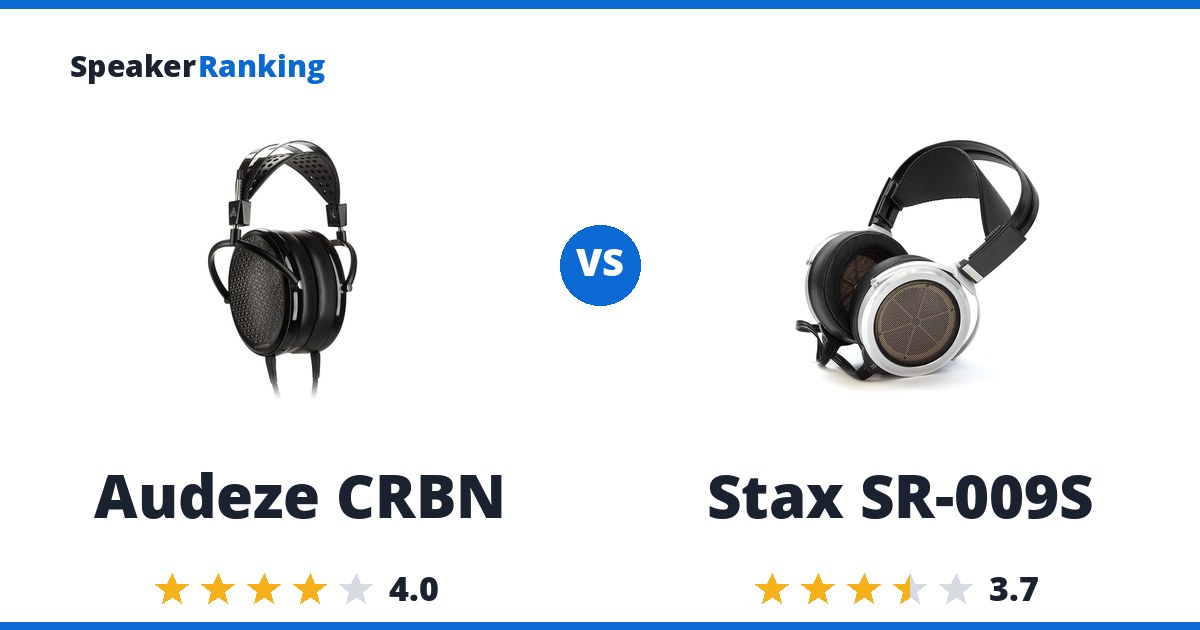
What the Audeze CRBN does well: A preference score of 82 in oratory1990’s measurement, with the midrange from 200 Hz to 6 kHz held within about 0.6 dB of target, so vocals and acoustic instruments sound accurate and natural. Watch for: It is an electrostatic headphone and needs a dedicated energizer, a significant extra cost on top of the headphone.
Why pick the Stax SR-009S: The open electrostatic design keeps the midrange close to neutral, with the low mids and upper mids each within about 1.4 dB of target in oratory1990’s measurement. Watch for: It needs a dedicated electrostatic energizer and cannot be plugged into a normal headphone amp, phone or DAC, which adds substantial cost and limits where it can be used.
Buy the Audeze CRBN. It is rated higher for sound quality than the Stax SR-009S and costs less, so only choose the other one for a particular feature it does better.
Looking for alternatives? See the complete Headphones rankings.
Specifications Side By Side
| Audeze CRBN | Stax SR-009S | |
|---|---|---|
| Price | $4,500.00 | $4,545.00 |
| Ranked | #67 of 216 in Over-Ear Headphones | #113 of 216 in Over-Ear Headphones |
| Form Factor | Over-ear | Over-ear |
| Harman Preference Score | 82 (measured by oratory1990, via AutoEQ) | 74 (measured by oratory1990, via AutoEQ) |
| Deviation From Target | 2.53 dB standard deviation | 2.93 dB standard deviation |
| Tonal Tilt | +0.05 (negative is warmer, positive brighter) | +0.22 (negative is warmer, positive brighter) |
| Sub-bass Extension | Falls 6 dB below target at 50 Hz (-7.1 dB at 30 Hz) | Falls 6 dB below target at 60 Hz (-9.3 dB at 30 Hz) |
| Connection | Wired | Wired |
| Back | Open | Open |
| Driver Type | Electrostatic | Electrostatic |
| Drivers | 1 x 120mm x 90mm push-pull electrostatic | - |
| Weight | 0.7 lbs (300 g) | - |
| Built-in Microphone | No | No |
| Sensitivity | - | 101 dB/100V rms |
| Frequency Response | - | 5Hz - 42kHz (Manufacturer specified) |
Related Headphone Comparisons
More top alternatives to Audeze CRBN:
- Dan Clark Audio Stealth vs Audeze CRBN
- HIFIMAN Susvara vs Audeze CRBN
- Final Audio D8000 Pro Edition vs Audeze CRBN
- Dan Clark Audio EXPANSE vs Audeze CRBN
- Stax SR-009S vs Audeze LCD-5
Prices on this page were last checked October 11, 2026 at 4:59 PM UTC. Product prices and availability are accurate as of that date/time and are subject to change; the price and availability shown on Amazon at the time of purchase will apply to the purchase of this product.
As an eBay Partner, we may be compensated if you make a purchase.
The Two Headphones In Full
 Audeze CRBN: $4,500.00 Headphones.com eBay

Pros: A preference score of 82 in oratory1990’s measurement, with the midrange from 200 Hz to 6 kHz held within about 0.6 dB of target, so vocals and acoustic instruments sound accurate and natural. The large 120 by 90 mm push-pull electrostatic driver weighs in at only 300 g, light for a flagship. Listeners who want a neutral or gently warm sound are the closest match.
Cons: It is an electrostatic headphone and needs a dedicated energizer, a significant extra cost on top of the headphone. Bass falls 6 dB below target by 50 Hz and a 10.3 dB dip near 9.2 kHz dims cymbals and detail, so it can sound thin at the bottom and soft at the top. The Final Audio D8000 Pro Edition costs a bit less and carries a higher rating.
Full Audeze CRBN review and specifications →
| Released | Aug 2021 (5 years ago) |
|---|---|
| Back | Open |
| Built-in Microphone | No |
| Connection | Wired |
| Deviation From Target | 2.53 dB standard deviation |
| Driver Type | Electrostatic |
| Drivers | 1 x 120mm x 90mm push-pull electrostatic |
| Form Factor | Over-ear |
| Harman Preference Score | 82 (measured by oratory1990, via AutoEQ) |
| Sub-bass Extension | Falls 6 dB below target at 50 Hz (-7.1 dB at 30 Hz) |
| Tonal Tilt | +0.05 (negative is warmer, positive brighter) |
| Weight | 0.7 lbs (300 g) |
EQ preset to match the Harman target
Set a preamp of -6.2 dB, then add these filters in any parametric equalizer (Wavelet, Equalizer APO, Peace, or a player with parametric EQ). Calculated by AutoEQ from its measured frequency response.
| Filter | Frequency | Gain | Q |
|---|---|---|---|
| Low shelf | 105 Hz | +6.7 dB | 0.70 |
| Peak | 8,815 Hz | +5.4 dB | 1.73 |
| Peak | 1,053 Hz | -2.9 dB | 2.95 |
| Peak | 105 Hz | -1.6 dB | 0.33 |
| Peak | 3,129 Hz | -3.5 dB | 3.95 |
| High shelf | 10,000 Hz | -0.7 dB | 0.70 |
| Peak | 1,856 Hz | +1.9 dB | 4.22 |
| Peak | 5,905 Hz | -4.2 dB | 5.74 |
| Peak | 4,752 Hz | +2.5 dB | 5.44 |
| Peak | 6,913 Hz | +2.5 dB | 5.96 |
- Reviews, Comparisons and Sound Samples
- Head-to-Head Comparisons
 Stax SR-009S: $4,545.00 Audio46 eBay
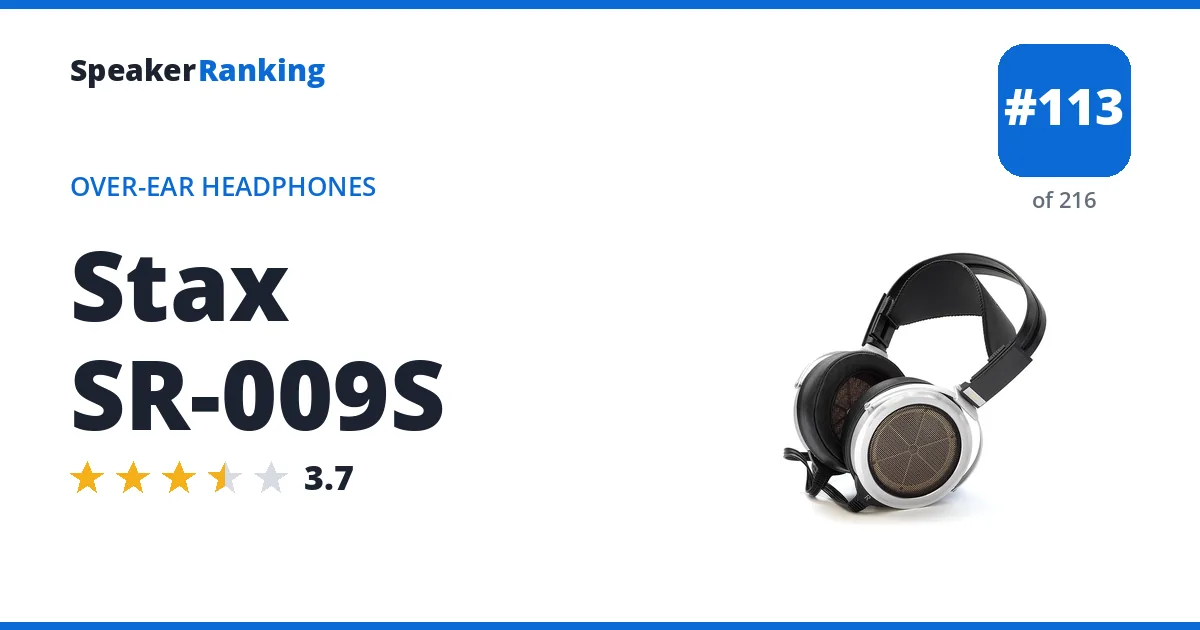
Pros: The open electrostatic design keeps the midrange close to neutral, with the low mids and upper mids each within about 1.4 dB of target in oratory1990’s measurement. It reaches a preference score of 74, and nothing between 1.5 and 12 kHz rises more than 2.2 dB above target, so there is no glare or harsh peak. Listeners who favor a neutral or lean presentation get a clean, uncolored midrange.
Cons: It needs a dedicated electrostatic energizer and cannot be plugged into a normal headphone amp, phone or DAC, which adds substantial cost and limits where it can be used. Sub-bass sits nearly 10 dB below target and falls 9.3 dB short at 30 Hz, so kick drums and synth bass lack weight and rumble. A deep 12.5 dB dip near 6 kHz softens cymbals and detail, and the open back leaks sound and blocks no outside noise.
Full Stax SR-009S review and specifications →
| Released | Apr 2018 (8 years ago) |
|---|---|
| Back | Open |
| Built-in Microphone | No |
| Connection | Wired |
| Deviation From Target | 2.93 dB standard deviation |
| Driver Type | Electrostatic |
| Form Factor | Over-ear |
| Frequency Response | 5Hz - 42kHz (Manufacturer specified) |
| Harman Preference Score | 74 (measured by oratory1990, via AutoEQ) |
| Sensitivity | 101 dB/100V rms |
| Sub-bass Extension | Falls 6 dB below target at 60 Hz (-9.3 dB at 30 Hz) |
| Tonal Tilt | +0.22 (negative is warmer, positive brighter) |
EQ preset to match the Harman target
Set a preamp of -6.3 dB, then add these filters in any parametric equalizer (Wavelet, Equalizer APO, Peace, or a player with parametric EQ). Calculated by AutoEQ from its measured frequency response.
| Filter | Frequency | Gain | Q |
|---|---|---|---|
| Low shelf | 105 Hz | +5.7 dB | 0.70 |
| Peak | 1,140 Hz | -4.2 dB | 1.04 |
| Peak | 8,102 Hz | +3.6 dB | 1.17 |
| Peak | 2,342 Hz | +4.4 dB | 3.37 |
| Peak | 5,079 Hz | -5.7 dB | 4.77 |
| High shelf | 10,000 Hz | -3.8 dB | 0.70 |
| Peak | 68 Hz | -1.1 dB | 2.84 |
| Peak | 213 Hz | -0.6 dB | 1.95 |
| Peak | 50 Hz | +1.2 dB | 4.06 |
| Peak | 76 Hz | -0.2 dB | 2.13 |
- Reviews, Comparisons and Sound Samples
- Head-to-Head Comparisons