Coverage note. Speaker Ranking currently covers 2 TANGZU models across headphones. These are the products in our database, not a complete list of everything TANGZU makes.
What this page covers. The TANGZU models ranked here span headphones, including TANGZU Zetian Wu and TANGZU Wan’er S.G. Use each model’s category position to compare it with alternatives of the same size and use case.
This page lists all 2 TANGZU speakers ranked on this site across headphones. Each model is shown in the category where it competes, with its current rank and the size of that ranking.
Use the category position rather than the brand name alone: speakers from the same manufacturer can perform very differently by size, price and product family.
Prices on this page were last checked October 10, 2026 at 5:37 PM UTC. Product prices and availability are accurate as of that date/time and are subject to change; the price and availability shown on Amazon at the time of purchase will apply to the purchase of this product.
As an eBay Partner, we may be compensated if you make a purchase.
In-Ear Headphones
 Ranked #23 of 115 in In-Ear Headphones - TANGZU Zetian Wu AliExpress eBay
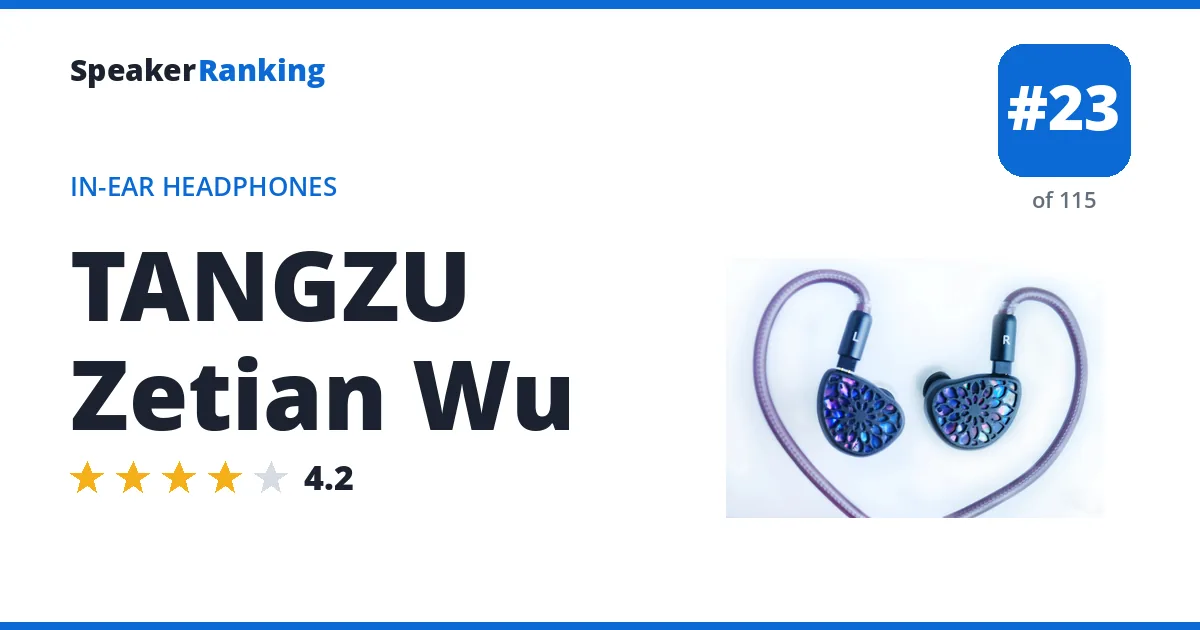
Pros: A single 14.5 mm planar magnetic driver earns a preference score of 76 in crinacle’s measurement with a low 1.76 dB deviation. Sub-bass and bass run about 1.5 dB above target, 1.6 dB over at 30 Hz, so it suits listeners who want a warm, full sound with real low-end depth. The midrange from 200 Hz to 3 kHz is essentially on target, keeping voices clear.
Cons: Hobbyist measurements on squig.link show a 4.1 dB dip near 6.7 kHz that blunts snare snap and sibilance, followed by a 4.7 dB peak near 11.9 kHz that adds some airy sizzle. It is wired only and lists no microphone.
Full TANGZU Zetian Wu review and specifications →
| Released | 2022 (4 years ago) |
|---|---|
| Back | Closed |
| Connection | Wired |
| Deviation From Target | 1.76 dB standard deviation |
| Driver Type | Planar magnetic |
| Drivers | 1 x 14.5mm planar magnetic |
| Form Factor | In-ear |
| Frequency Response | 20Hz - 20kHz (Manufacturer specified) |
| Harman Preference Score | 76 (measured by crinacle, via AutoEQ) |
| Impedance | 16 ohms |
| Sensitivity | 100 dB |
| Sub-bass Extension | Within 6 dB of target down to 20 Hz (+1.6 dB at 30 Hz) |
| Tonal Tilt | -0.66 (negative is warmer, positive brighter) |
EQ preset to match the Harman target
Set a preamp of -2.8 dB, then add these filters in any parametric equalizer (Wavelet, Equalizer APO, Peace, or a player with parametric EQ). Calculated by AutoEQ from its measured frequency response.
| Filter | Frequency | Gain | Q |
|---|---|---|---|
| Low shelf | 105 Hz | -2.0 dB | 0.70 |
| Peak | 8,716 Hz | +3.3 dB | 1.43 |
| Peak | 181 Hz | -2.0 dB | 1.43 |
| Peak | 810 Hz | +2.2 dB | 1.04 |
| Peak | 1,735 Hz | -1.5 dB | 1.21 |
| High shelf | 10,000 Hz | -2.8 dB | 0.70 |
| Peak | 65 Hz | +0.8 dB | 1.98 |
| Peak | 6,193 Hz | +1.9 dB | 5.87 |
| Peak | 4,753 Hz | -1.2 dB | 4.09 |
| Peak | 26 Hz | -1.0 dB | 3.20 |
- Reviews, Comparisons and Sound Samples
 Ranked #41 of 115 in In-Ear Headphones - TANGZU Wan’er S.G: $18.00 Amazon AliExpress eBay
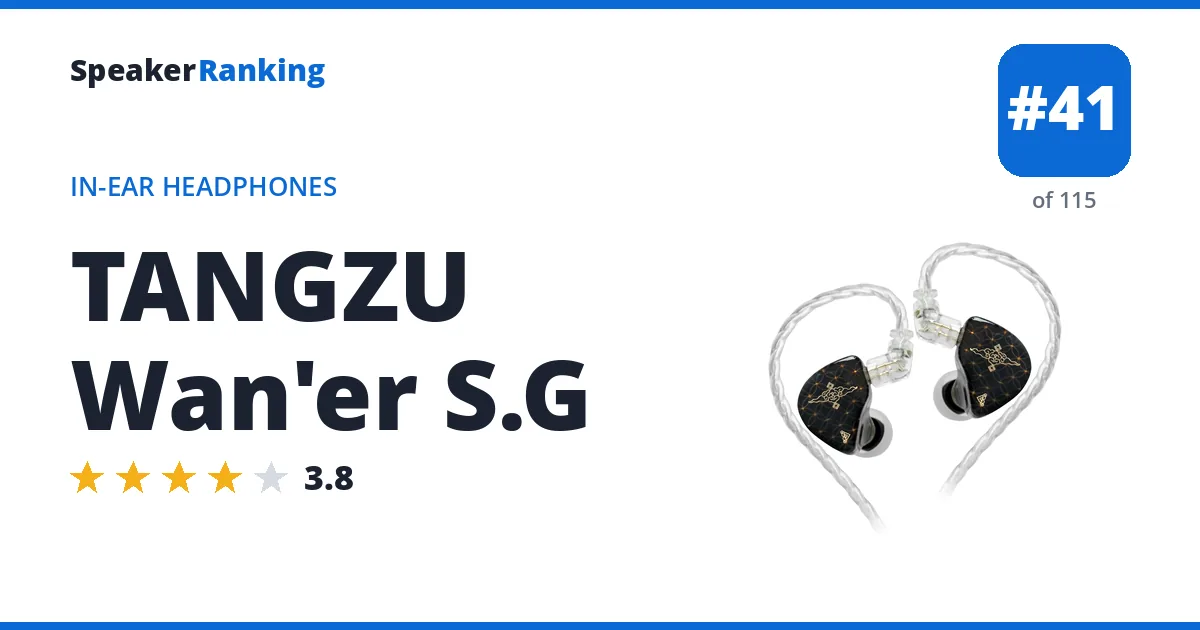
Pros: Crinacle’s measurement gives it a preference score of 71, and squig.link measurements show bass and midrange within about 1 dB of target from 20 Hz to 3 kHz, so voices and instruments sound natural at a very low price. Each earbud weighs 4.2 g, and a built-in microphone handles calls. It rates above the KZ ZST and costs less.
Cons: Across 25 hobbyist measurements presence and treble sit about 3.5 to 4 dB below target from 3 to 10 kHz, with a 7 dB dip near 6.3 kHz, so cymbals and fine detail sound a bit softened. The CCA CRA and 7Hz x Crinacle Zero 2 rate a little higher for only slightly more money.
Full TANGZU Wan’er S.G review and specifications →
| Released | 2023 (3 years ago) |
|---|---|
| Back | Closed |
| Built-in Microphone | Yes |
| Connection | Wired |
| Deviation From Target | 2.48 dB standard deviation |
| Driver Type | Dynamic |
| Drivers | 1 x 10mm dynamic |
| Form Factor | In-ear |
| Frequency Response | 20Hz - 20kHz (Manufacturer specified) |
| Harman Preference Score | 71 (measured by crinacle, via AutoEQ) |
| Sub-bass Extension | Within 6 dB of target down to 20 Hz (-0.8 dB at 30 Hz) |
| Tonal Tilt | -0.32 (negative is warmer, positive brighter) |
| Weight | 0 lbs (4.2 g) per earbud |
EQ preset to match the Harman target
Set a preamp of -5.4 dB, then add these filters in any parametric equalizer (Wavelet, Equalizer APO, Peace, or a player with parametric EQ). Calculated by AutoEQ from its measured frequency response.
| Filter | Frequency | Gain | Q |
|---|---|---|---|
| Low shelf | 105 Hz | +1.8 dB | 0.70 |
| Peak | 6,638 Hz | +5.1 dB | 1.36 |
| Peak | 145 Hz | -2.6 dB | 0.76 |
| Peak | 1,930 Hz | -2.9 dB | 1.79 |
| Peak | 9,431 Hz | +3.0 dB | 2.56 |
| High shelf | 10,000 Hz | -1.1 dB | 0.70 |
| Peak | 894 Hz | +1.2 dB | 1.34 |
| Peak | 1,321 Hz | -1.2 dB | 2.81 |
| Peak | 275 Hz | -0.4 dB | 1.71 |
| Peak | 570 Hz | +0.5 dB | 2.18 |
- Reviews, Comparisons and Sound Samples
- Head-to-Head Comparisons