Coverage note. Speaker Ranking currently covers 8 EPZ models across headphones. These are the products in our database, not a complete list of everything EPZ makes.
What this page covers. The EPZ models ranked here span headphones, including EPZ Q5, EPZ P40 and EPZ G20. Use each model’s category position to compare it with alternatives of the same size and use case.
This page lists all 8 EPZ speakers ranked on this site across headphones. Each model is shown in the category where it competes, with its current rank and the size of that ranking.
Use the category position rather than the brand name alone: speakers from the same manufacturer can perform very differently by size, price and product family.
Prices on this page were last checked October 10, 2026 at 5:37 PM UTC. Product prices and availability are accurate as of that date/time and are subject to change; the price and availability shown on Amazon at the time of purchase will apply to the purchase of this product.
As an eBay Partner, we may be compensated if you make a purchase.
In-Ear Headphones
 Ranked #6 of 297 in In-Ear Headphones - EPZ Q5: $99.00 Amazon eBay
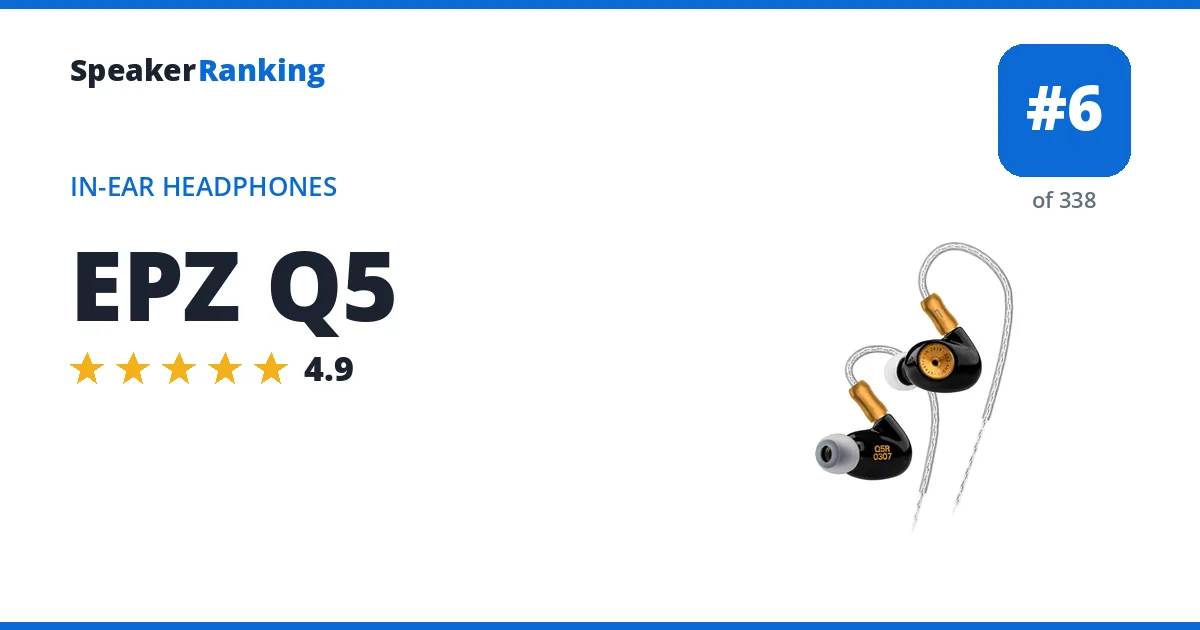
Pros: The median of 28 hobbyist measurements gives it a preference score of 87 with only about 0.85 dB average deviation, so tonal balance is very close to what most listeners prefer. Bass, midrange and lower treble all sit within about 1.3 dB of target, with a slight bass lift that adds warmth. It shares its rating with the EPZ P40 while costing noticeably less.
Cons: The 10 to 16 kHz air region sits about 4 dB above target, so bright recordings and hi hats can sound slightly sharp. A single dynamic driver and no built-in microphone mean no inline calling, and the Truthear Zero Blue 2 shares its rating for less money.
Full EPZ Q5 review and specifications →
| Released | 2023 (3 years ago) |
|---|---|
| Back | Closed |
| Built-in Microphone | No |
| Connection | Wired |
| Deviation From Target | 0.85 dB standard deviation |
| Driver Type | Dynamic |
| Drivers | 1 x 10mm dynamic |
| Form Factor | In-ear |
| Frequency Response | 20Hz - 20kHz (Manufacturer specified) |
| Harman Preference Score | 87 (median of 28 squig.link measurements, calibrated to AutoEQ) |
| Impedance | 26 ohms |
| Sensitivity | 109 dB |
| Sub-bass Extension | Within 6 dB of target down to 20 Hz (+0.5 dB at 30 Hz) |
| Tonal Tilt | -0.12 (negative is warmer, positive brighter) |
- Reviews, Comparisons and Sound Samples
 Ranked #8 of 297 in In-Ear Headphones - EPZ P40: $159.99 Amazon eBay
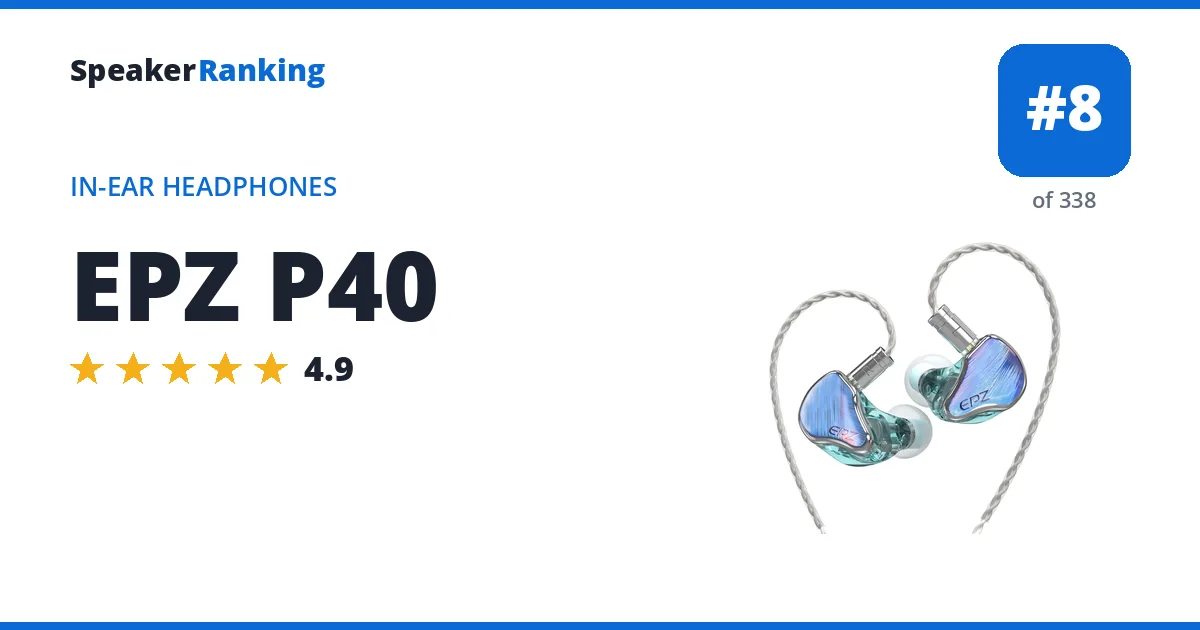
Pros: The median of 14 hobbyist measurements gives it a preference score of 86, with only about 0.9 dB of average deviation from the Harman target, so tonal balance is close to what most listeners prefer. Bass sits within a decibel of target from 20 Hz upward, which keeps kick drums full without bloating vocals. A four driver hybrid setup (two dynamic, one planar and one piezoelectric) at 14 ohms runs easily from a phone dongle. It is rated above the Juzear 81T and Simgot EA500LM at a similar price.
Cons: The 10 to 16 kHz air region measures about 6 dB above target, with a peak of roughly 5 dB near 11.9 kHz, so cymbals and breath noise can sound a little crisp and sparkly. The EPZ Q5 shares its rating for less money, and a small dip near 3.7 kHz slightly softens vocal presence.
Full EPZ P40 review and specifications →
| Released | Jan 2026 (9 months ago) |
|---|---|
| Back | Closed |
| Connection | Wired |
| Deviation From Target | 0.93 dB standard deviation |
| Driver Type | Hybrid (2 dynamic + 1 planar magnetic + 1 piezoelectric) |
| Drivers | 1 x 9mm dynamic + 1 x 7mm dynamic + 1 x micro planar + 1 x piezoelectric |
| Form Factor | In-ear |
| Frequency Response | 20Hz - 20kHz (Manufacturer specified) |
| Harman Preference Score | 86 (median of 14 squig.link measurements, calibrated to AutoEQ) |
| Impedance | 14 ohms |
| Sensitivity | 100 dB |
| Sub-bass Extension | Within 6 dB of target down to 20 Hz (-0.8 dB at 30 Hz) |
| Tonal Tilt | +0.14 (negative is warmer, positive brighter) |
- Reviews, Comparisons and Sound Samples
 Ranked #9 of 297 in In-Ear Headphones - EPZ G20: $49.99 Amazon eBay
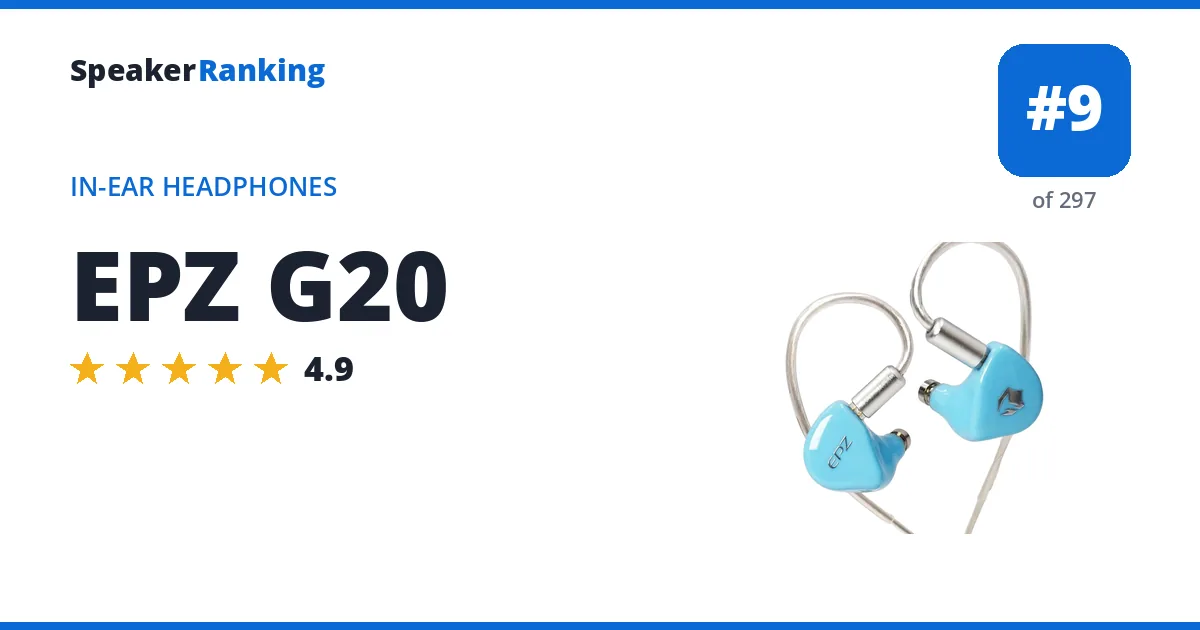
Pros: The G20 is one of the most accurate inexpensive in-ears measured, with a preference score of 86 and under 1 dB of unevenness in the median of twelve hobbyist measurements on squig.link. Bass, midrange and lower treble all land within about 1 dB of target, and sub-bass stays full down to 20 Hz. It matches the rating of the costlier Truthear Zero Blue 2 and includes an inline microphone.
Cons: A 6.3 dB peak near 11.9 kHz adds extra air that can make some recordings sound a little hissy or splashy. The EPZ Q1 Pro earns the same rating for a bit less money, and the 100 dB sensitivity figure is unremarkable, though still fine for a phone.
Full EPZ G20 review and specifications →
| Back | Closed |
|---|---|
| Built-in Microphone | Yes |
| Connection | Wired |
| Deviation From Target | 0.99 dB standard deviation |
| Driver Type | Dynamic |
| Drivers | 1 x 10mm dynamic |
| Form Factor | In-ear |
| Frequency Response | 20Hz - 20kHz (Manufacturer specified) |
| Harman Preference Score | 86 (median of 12 squig.link measurements, calibrated to AutoEQ) |
| Sensitivity | 100 dB |
| Sub-bass Extension | Within 6 dB of target down to 20 Hz (-0.7 dB at 30 Hz) |
| Tonal Tilt | +0.10 (negative is warmer, positive brighter) |
- Reviews, Comparisons and Sound Samples
- Head-to-Head Comparisons
 Ranked #10 of 297 in In-Ear Headphones - EPZ G10: $23.74 Amazon eBay
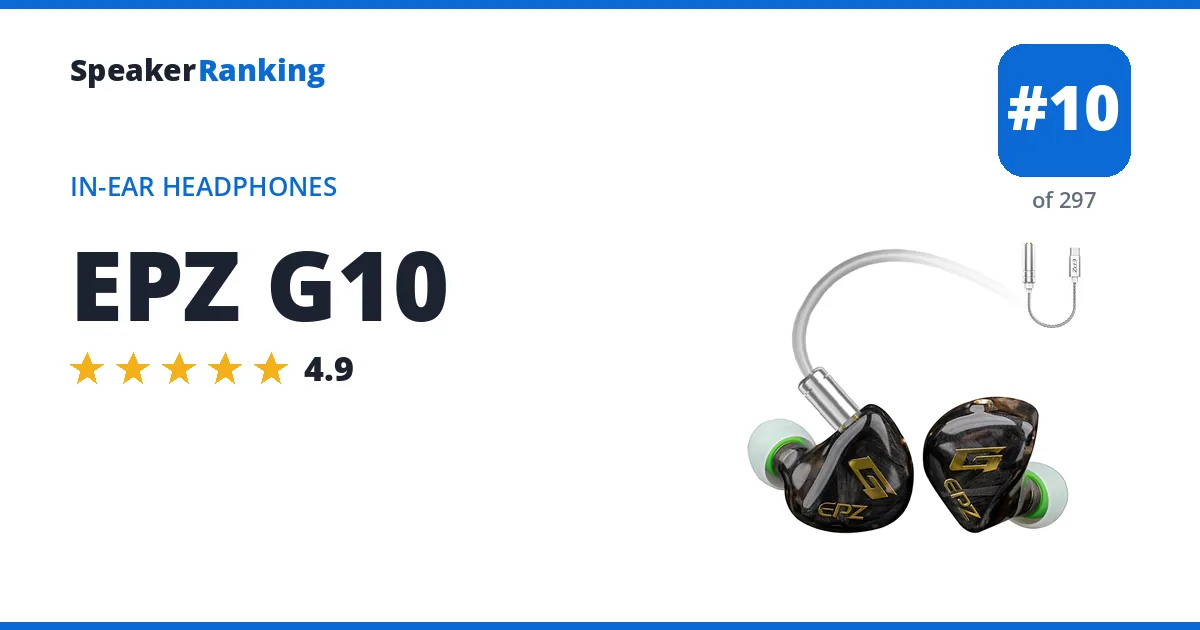
Pros: Across 22 hobbyist measurements on squig.link, the G10 tracks the Harman target with only 1.11 dB of deviation and a preference score of 84.7, an exceptionally even result for a single dynamic driver at a budget price. Bass, low mids and upper mids all land within half a decibel of target, so vocals sound natural and bass lines are full without bloat. Sub-bass holds within 1.2 dB of target at 30 Hz, and the 32 ohm, 100 dB sensitivity rating plays comfortably from a phone. It shares its rating with the pricier EPZ Q1 Pro and Intuaura Reference 2019.
Cons: The presence region around 3 to 6 kHz runs about 1.5 dB low, with a 3.6 dB dip near 6.3 kHz that slightly softens the edge of vocals and snare hits. A 4.6 dB peak near 11.9 kHz adds a touch of sparkle that treble sensitive listeners may notice on bright recordings. It is a plain wired set with no microphone or wireless option listed.
Full EPZ G10 review and specifications →
| Released | 2023 (3 years ago) |
|---|---|
| Back | Closed |
| Connection | Wired |
| Deviation From Target | 1.11 dB standard deviation |
| Driver Type | Dynamic |
| Drivers | 1 x 10mm dynamic |
| Form Factor | In-ear |
| Frequency Response | 20Hz - 20kHz (Manufacturer specified) |
| Harman Preference Score | 85 (median of 22 squig.link measurements, calibrated to AutoEQ) |
| Impedance | 32 ohms |
| Sensitivity | 100 dB |
| Sub-bass Extension | Within 6 dB of target down to 20 Hz (-1.2 dB at 30 Hz) |
| Tonal Tilt | +0.08 (negative is warmer, positive brighter) |
- Reviews, Comparisons and Sound Samples
- Head-to-Head Comparisons
 Ranked #11 of 297 in In-Ear Headphones - EPZ Q1 Pro: $39.99 Amazon eBay
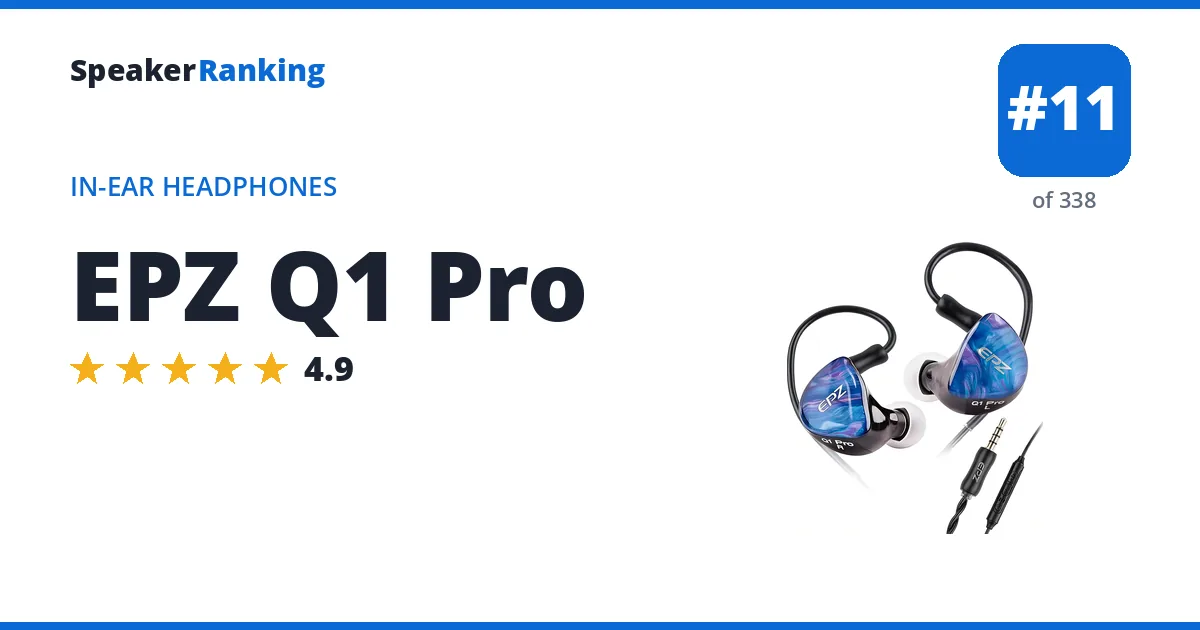
Pros: For a budget single dynamic in-ear, the median of 29 hobbyist measurements is impressive: a preference score of 85 and an average deviation of about 1 dB from the Harman target. Midrange and treble bands track the target within about 1 dB, so voices and instruments sound natural rather than hyped. It shares its rating with the EPZ G20 and Intuaura Reference 2019 at a similar price.
Cons: Sub-bass sits about 1.6 dB under target, so deep electronic bass has slightly less rumble than bass fans may want. Sensitivity of 100 dB/Vrms at 32 ohms is low for an in-ear, so expect to turn a phone up more than usual. A 3.4 dB dip near 6.3 kHz and a 4.6 dB peak near 11.9 kHz add a little unevenness in the treble.
Full EPZ Q1 Pro review and specifications →
| Back | Closed |
|---|---|
| Connection | Wired |
| Deviation From Target | 1.05 dB standard deviation |
| Driver Type | Dynamic |
| Drivers | 1 x 10mm dynamic |
| Form Factor | In-ear |
| Frequency Response | 20Hz - 20kHz (Manufacturer specified) |
| Harman Preference Score | 85 (median of 29 squig.link measurements, calibrated to AutoEQ) |
| Impedance | 32 ohms |
| Sensitivity | 100 dB/Vrms |
| Sub-bass Extension | Within 6 dB of target down to 20 Hz (-1.2 dB at 30 Hz) |
| Tonal Tilt | +0.17 (negative is warmer, positive brighter) |
- Reviews, Comparisons and Sound Samples
 Ranked #33 of 297 in In-Ear Headphones - EPZ K9: $349.99 Amazon eBay
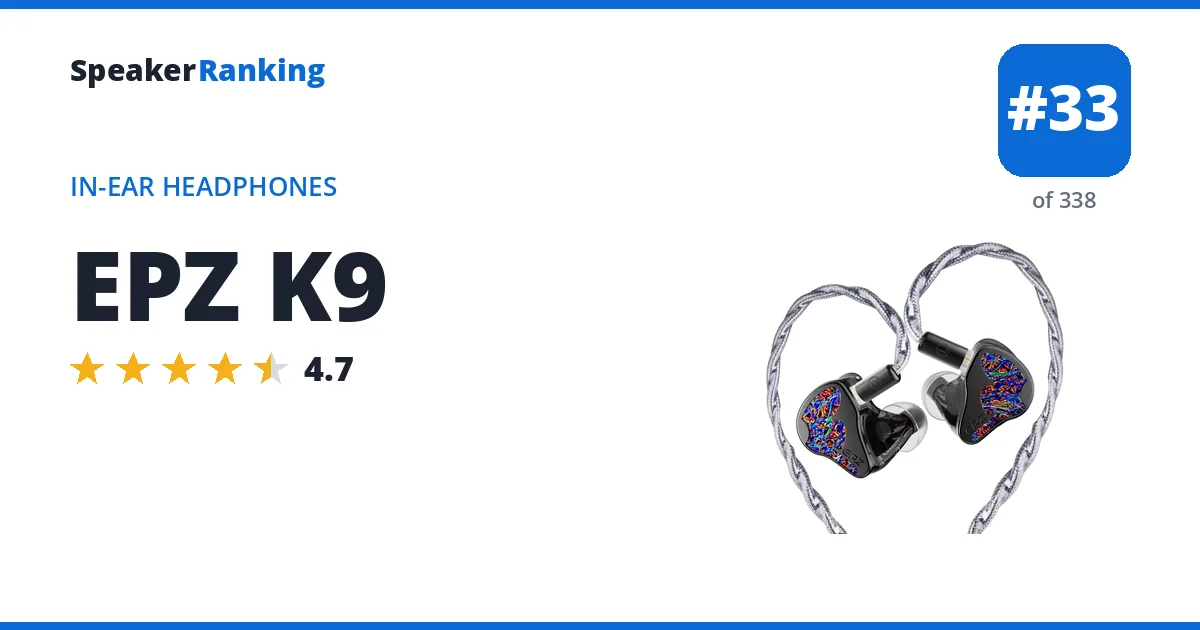
Pros: In the median of 19 hobbyist measurements on squig.link, the K9 earns a preference score of 82 with a low 1.26 dB deviation, so its eight balanced armatures and dynamic woofer blend into a cohesive, gently warm tuning. Sub-bass is within half a decibel of target and bass about 1.9 dB above it, giving a full low end without boom. The 14 ohm, 108 dB sensitivity rating means it plays loud from a phone.
Cons: Air above 10 kHz runs about 3.4 dB above target and a 4 dB peak sits near 8.1 kHz, which can add a slightly bright edge to cymbals. It is rated below the similarly priced AKG N5005 and IOAudio Sogno, which makes it a harder sell at this price. The very low 14 ohm impedance can make the tuning shift on sources with high output impedance.
Full EPZ K9 review and specifications →
| Back | Closed |
|---|---|
| Connection | Wired |
| Deviation From Target | 1.25 dB standard deviation |
| Driver Type | Hybrid (1 dynamic + 8 balanced armature) |
| Drivers | 1 x dynamic + 8 x balanced armature |
| Form Factor | In-ear |
| Harman Preference Score | 82 (median of 20 squig.link measurements, calibrated to AutoEQ) |
| Impedance | 14 ohms |
| Sensitivity | 108 dB |
| Sub-bass Extension | Within 6 dB of target down to 20 Hz (-1.2 dB at 30 Hz) |
| Tonal Tilt | -0.15 (negative is warmer, positive brighter) |
- Reviews, Comparisons and Sound Samples
 Ranked #41 of 297 in In-Ear Headphones - EPZ G30: $79.99 Amazon eBay
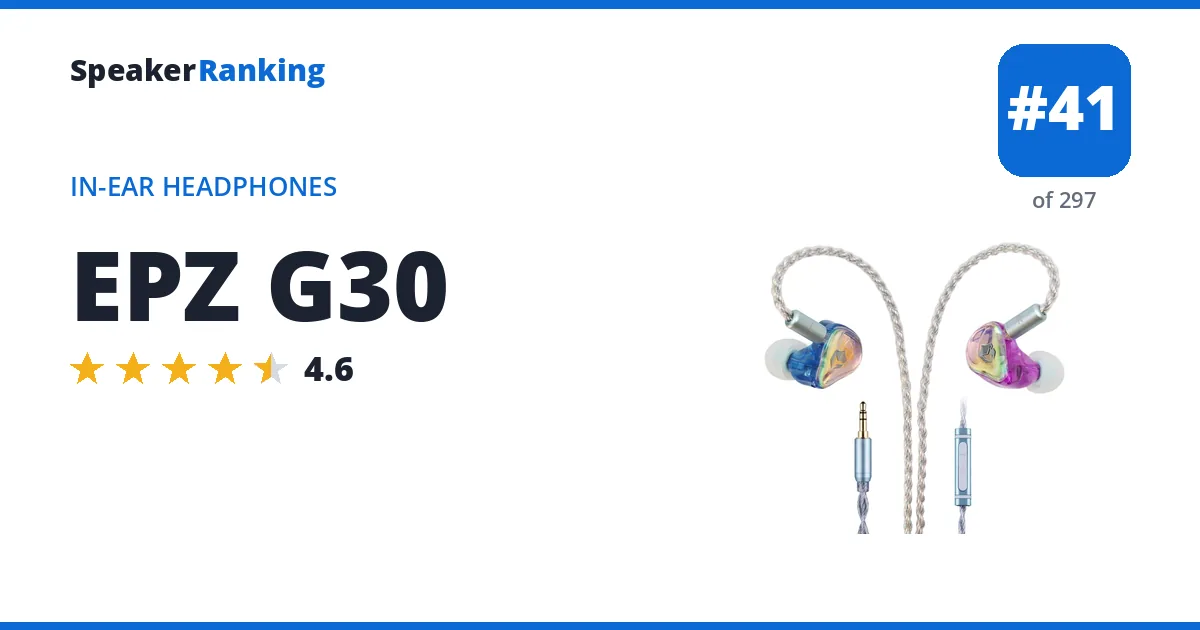
Pros: Four hobbyist measurements on squig.link give it a preference score of 81.5 with a smooth 1.35 dB deviation. Bass sits about 0.9 dB above target with low mids close behind, giving a warm, full sound that suits bassy tastes. It weighs just 4.4 g per earbud and includes a built-in microphone, so it works for calls as well as music.
Cons: Presence falls about 3.2 dB below target, which tucks vocals slightly behind the instruments. A 5.0 dB peak near 8.1 kHz followed by a 5.6 dB dip near 11.9 kHz gives cymbals an uneven sheen and trims top-end air.
Full EPZ G30 review and specifications →
| Back | Closed |
|---|---|
| Built-in Microphone | Yes |
| Connection | Wired |
| Deviation From Target | 1.35 dB standard deviation |
| Driver Type | Hybrid (1 dynamic + 1 balanced armature) |
| Drivers | 1 x 9.2mm dynamic + 1 x balanced armature |
| Form Factor | In-ear |
| Harman Preference Score | 82 (median of 4 squig.link measurements, calibrated to AutoEQ) |
| Sub-bass Extension | Within 6 dB of target down to 20 Hz (-1.4 dB at 30 Hz) |
| Tonal Tilt | -0.17 (negative is warmer, positive brighter) |
| Weight | 0 lbs (4.4 g) per earbud |
- Reviews, Comparisons and Sound Samples
- Head-to-Head Comparisons
 Ranked #144 of 297 in In-Ear Headphones - EPZ K5: $59.00 Amazon eBay
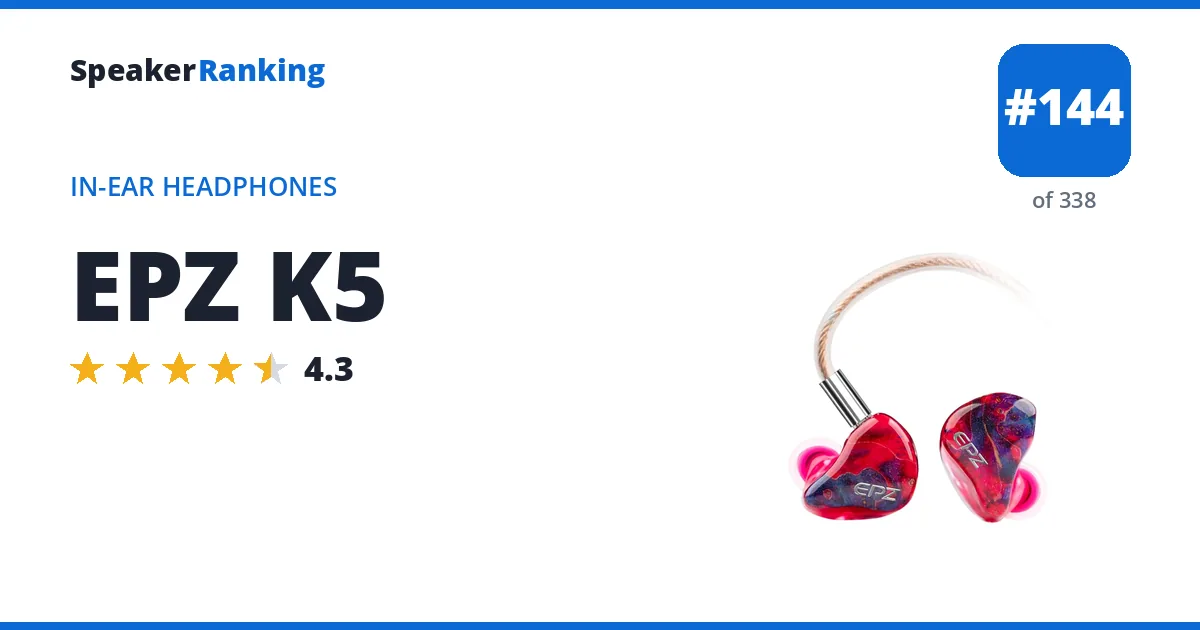
Full EPZ K5 review and specifications →
| Back | Closed |
|---|---|
| Built-in Microphone | No |
| Connection | Wired |
| Deviation From Target | 1.68 dB standard deviation |
| Driver Type | Hybrid (1 dynamic + 4 balanced armature) |
| Drivers | 1 x 8mm dynamic + 4 x balanced armature |
| Form Factor | In-ear |
| Frequency Response | 20Hz - 20kHz (Manufacturer specified) |
| Harman Preference Score | 77 (median of 11 squig.link measurements, calibrated to AutoEQ) |
| Impedance | 30 ohms |
| Sensitivity | 114 dB/mW |
| Sub-bass Extension | Within 6 dB of target down to 20 Hz (-2.3 dB at 30 Hz) |
| Tonal Tilt | +0.27 (negative is warmer, positive brighter) |
- Reviews, Comparisons and Sound Samples