Short answer: the Audio-Technica ATH-AD500X, if you are buying new, though neither ranks well in its class. The Jabra Evolve 40 measures as well as it (#123 vs #122 of 134 over-ear headphones, 2.6/5 vs 2.6/5) but is discontinued, so only consider it used; the Audio-Technica ATH-AD500X is still sold new at $119. Both are rated below 3.0/5 among the 134 over-ear headphones, so if sound quality matters, consider the HIFIMAN HE400se instead, ranked #15 at $109.
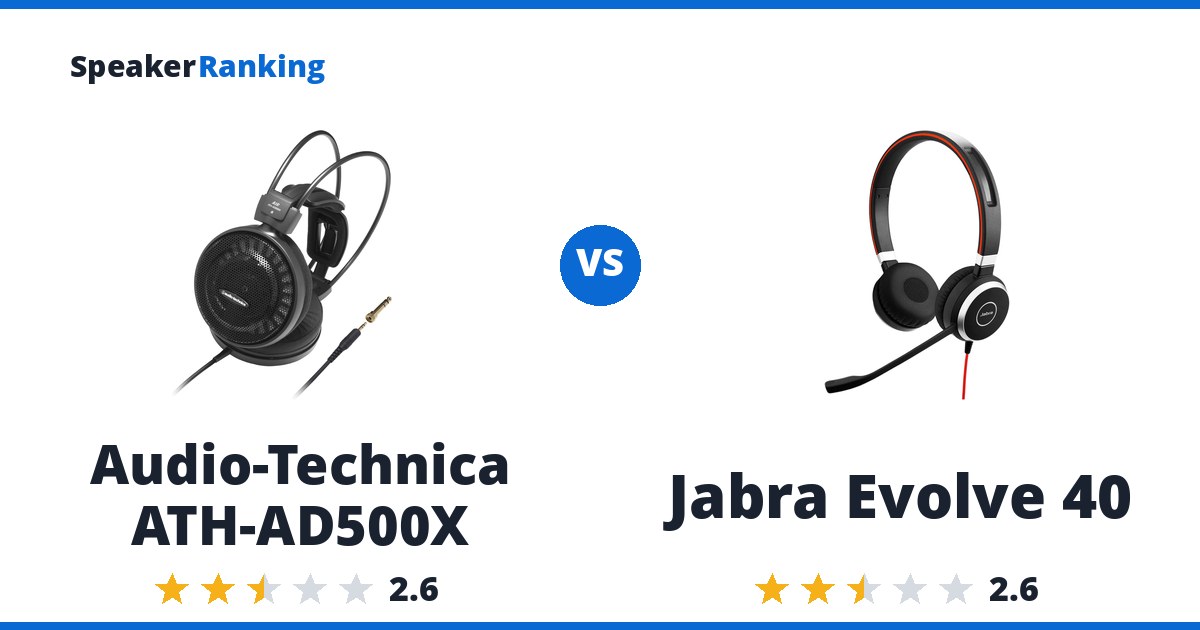
What the Audio-Technica ATH-AD500X does well: The open-back design gives a spacious, airy presentation, and the 48 ohm impedance with 100 dB sensitivity works directly from a phone or laptop. The catch: Treble from 6 to 10 kHz is about 9 dB below target and a 16 dB dip near 7.2 kHz removes cymbal and sibilance detail, so the sound is dark and veiled.
The case for the Jabra Evolve 40: Closed-back, 0.2 lbs (113 g) and a built-in microphone make this a light office headset that also works for calls. The catch: Sub-bass below 60 Hz sits about 20 dB under the target, so kick drums and bass synths have almost no rumble.
Buy the Audio-Technica ATH-AD500X if you want one new; the Jabra Evolve 40 is discontinued, so only look for it used.
Want more options? Browse the full Headphones rankings.
Specifications Side By Side
| Audio-Technica ATH-AD500X | Jabra Evolve 40 | |
|---|---|---|
| Price | $119.00 | $142.73 Discontinued |
| Ranked | #122 of 134 in Over-Ear Headphones | #123 of 134 in Over-Ear Headphones |
| Form Factor | Over-ear | Over-ear |
| Harman Preference Score | 50 (measured by oratory1990, via AutoEQ) | 50 (measured by oratory1990, via AutoEQ) |
| Deviation From Target | 3.75 dB standard deviation | 4.29 dB standard deviation |
| Tonal Tilt | -1.10 (negative is warmer, positive brighter) | +0.69 (negative is warmer, positive brighter) |
| Connection | Wired | Wired |
| Back | Open | Closed |
| Driver Type | Dynamic | - |
| Drivers | 1 x 53mm dynamic | 1 x 28mm |
| Impedance | 48 ohms | 32 ohms |
| Sensitivity | 100 dB/mW | 93.6 dB |
| Weight | 0.5 lbs (235 g) | 0.2 lbs (113 g) |
| Frequency Response | 5Hz - 25kHz (Manufacturer specified) | 20Hz - 20kHz (Manufacturer specified) |
| Built-in Microphone | - | Yes |
Related Headphone Comparisons
More top alternatives to Audio-Technica ATH-AD500X:
- Razer BlackShark V2 Pro vs Audio-Technica ATH-AD500X
- Jabra Evolve 40 vs AKG K271 MKII
- Jabra Evolve 40 vs Sennheiser Momentum 4 Wireless
- AKG K271 MKII vs Sennheiser HD 569
- AKG K271 MKII vs Sennheiser Momentum 4 Wireless
Prices on this page were last checked October 10, 2026 at 5:37 PM UTC. Product prices and availability are accurate as of that date/time and are subject to change; the price and availability shown on Amazon at the time of purchase will apply to the purchase of this product.
As an eBay Partner, we may be compensated if you make a purchase.
The Two Headphones In Full
 Audio-Technica ATH-AD500X: $119.00 Amazon eBay
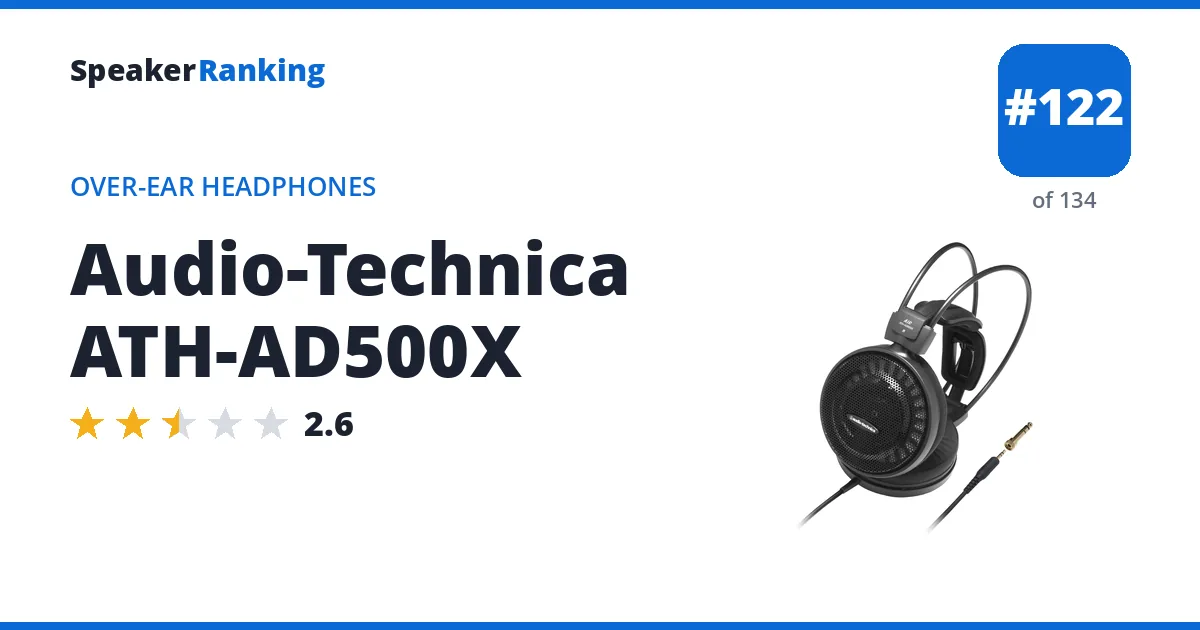
Pros: The open-back design gives a spacious, airy presentation, and the 48 ohm impedance with 100 dB sensitivity works directly from a phone or laptop. At 235 g it is light for a full-size headphone. The lower midrange is within half a dB of target, so the body of voices and guitars sounds natural.
Cons: Treble from 6 to 10 kHz is about 9 dB below target and a 16 dB dip near 7.2 kHz removes cymbal and sibilance detail, so the sound is dark and veiled. Sub-bass is about 9 dB low under 60 Hz, so deep bass lacks rumble. Open backs leak sound and give no isolation. The Anker Soundcore Space One has a higher rating at a lower price.
Full Audio-Technica ATH-AD500X review and specifications →
| Released | 2012 (14 years ago) |
|---|---|
| Back | Open |
| Connection | Wired |
| Deviation From Target | 3.75 dB standard deviation |
| Driver Type | Dynamic |
| Drivers | 1 x 53mm dynamic |
| Form Factor | Over-ear |
| Frequency Response | 5Hz - 25kHz (Manufacturer specified) |
| Harman Preference Score | 50 (measured by oratory1990, via AutoEQ) |
| Impedance | 48 ohms |
| Sensitivity | 100 dB/mW |
| Tonal Tilt | -1.10 (negative is warmer, positive brighter) |
| Weight | 0.5 lbs (235 g) |
EQ preset to match the Harman target
Set a preamp of -6.5 dB, then add these filters in any parametric equalizer (Wavelet, Equalizer APO, Peace, or a player with parametric EQ). Calculated by AutoEQ from its measured frequency response.
| Filter | Frequency | Gain | Q |
|---|---|---|---|
| Low shelf | 105 Hz | +7.0 dB | 0.70 |
| Peak | 132 Hz | -4.4 dB | 0.44 |
| Peak | 8,349 Hz | +6.5 dB | 1.37 |
| Peak | 1,295 Hz | -3.9 dB | 1.00 |
| Peak | 2,506 Hz | +4.7 dB | 1.39 |
| High shelf | 10,000 Hz | -2.0 dB | 0.70 |
| Peak | 4,177 Hz | -3.9 dB | 5.95 |
| Peak | 3,282 Hz | +3.3 dB | 5.84 |
| Peak | 2,773 Hz | -1.6 dB | 6.00 |
| Peak | 4,931 Hz | +1.7 dB | 6.00 |
- Reviews, Comparisons and Sound Samples
- Head-to-Head Comparisons
 Jabra Evolve 40: $142.73 Discontinued Amazon eBay
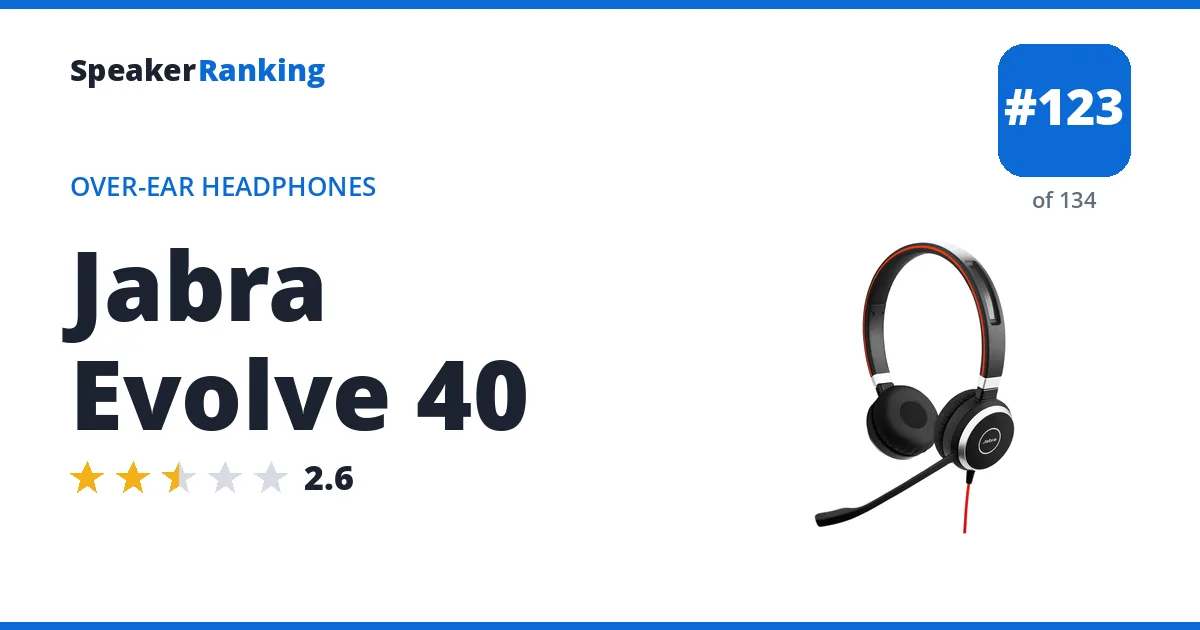
Pros: Closed-back, 113 g and a built-in microphone make this a light office headset that also works for calls. A 32 ohm impedance runs fine straight from a laptop or phone. Midrange and treble sit within about 2 dB of the Harman target from 1 kHz to 10 kHz, so voices are reasonably natural, and it suits neutral or bright tastes.
Cons: Sub-bass below 60 Hz sits about 20 dB under the target, so kick drums and bass synths have almost no rumble. A 9 dB dip near 11 kHz and air that is about 6 dB low make cymbals dull. Its preference score of 50 is middling for the class, and the Bowers & Wilkins Px7 S2 is rated higher at a similar price. Discontinued.
Full Jabra Evolve 40 review and specifications →
| Released | Nov 2014 (11 years ago) |
|---|---|
| Back | Closed |
| Built-in Microphone | Yes |
| Connection | Wired |
| Deviation From Target | 4.29 dB standard deviation |
| Drivers | 1 x 28mm |
| Form Factor | Over-ear |
| Frequency Response | 20Hz - 20kHz (Manufacturer specified) |
| Harman Preference Score | 50 (measured by oratory1990, via AutoEQ) |
| Impedance | 32 ohms |
| Sensitivity | 93.6 dB |
| Tonal Tilt | +0.69 (negative is warmer, positive brighter) |
| Weight | 0.2 lbs (113 g) |
EQ preset to match the Harman target
Set a preamp of -6.2 dB, then add these filters in any parametric equalizer (Wavelet, Equalizer APO, Peace, or a player with parametric EQ). Calculated by AutoEQ from its measured frequency response.
| Filter | Frequency | Gain | Q |
|---|---|---|---|
| Low shelf | 105 Hz | +6.1 dB | 0.70 |
| Peak | 200 Hz | -4.1 dB | 0.76 |
| Peak | 90 Hz | +3.4 dB | 1.81 |
| Peak | 1,208 Hz | +4.4 dB | 2.15 |
| Peak | 703 Hz | -2.5 dB | 1.74 |
| High shelf | 10,000 Hz | +2.7 dB | 0.70 |
| Peak | 2,662 Hz | +2.7 dB | 1.26 |
| Peak | 1,969 Hz | -3.8 dB | 3.23 |
| Peak | 9,699 Hz | +3.6 dB | 2.55 |
| Peak | 2,750 Hz | +0.8 dB | 4.49 |
- Reviews, Comparisons and Sound Samples
- Head-to-Head Comparisons