Coverage note. Speaker Ranking currently covers 4 Stax models across headphones. These are the products in our database, not a complete list of everything Stax makes.
What this page covers. The Stax models ranked here span headphones, including Stax SR-L300, Stax SR-X1 and Stax SR-X9000. Use each model’s category position to compare it with alternatives of the same size and use case.
This page lists all 4 Stax speakers ranked on this site across headphones. Each model is shown in the category where it competes, with its current rank and the size of that ranking.
Use the category position rather than the brand name alone: speakers from the same manufacturer can perform very differently by size, price and product family.
Prices on this page were last checked October 10, 2026 at 5:37 PM UTC. Product prices and availability are accurate as of that date/time and are subject to change; the price and availability shown on Amazon at the time of purchase will apply to the purchase of this product.
As an eBay Partner, we may be compensated if you make a purchase.
Over-Ear Headphones
 Ranked #20 of 201 in Over-Ear Headphones - Stax SR-L300: $455.00 Audio46 eBay
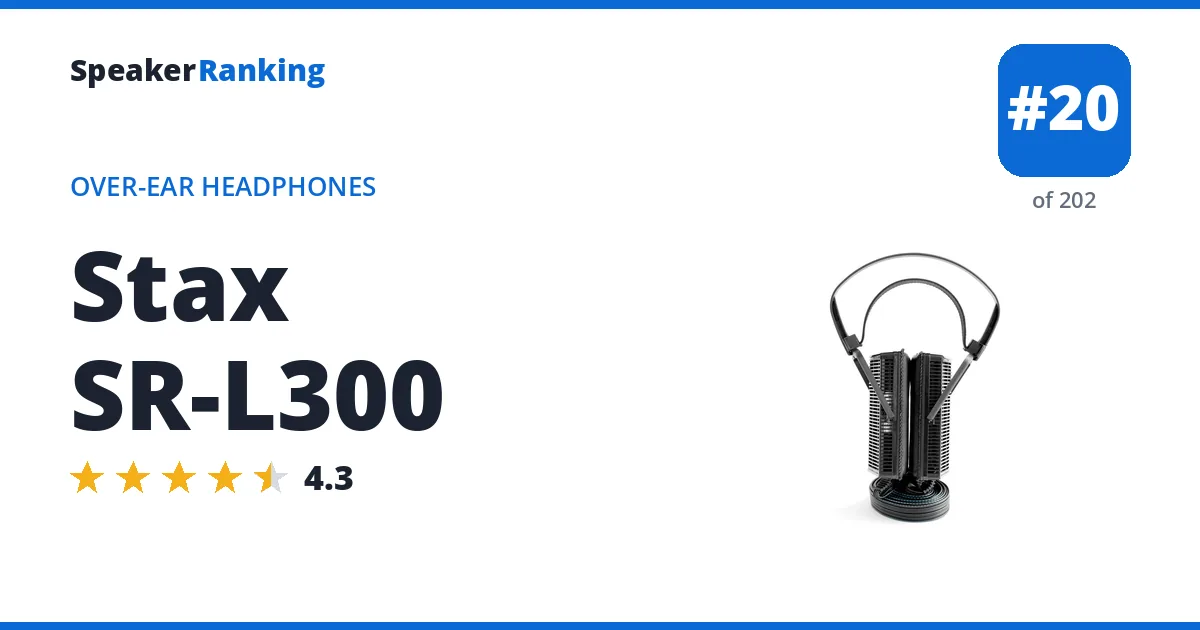
Pros: An excellent preference score of 89 in crinacle’s measurement, among the closest tunings to the Harman target in its class. The open back push-pull electrostatic driver gives a wide, airy presentation, and at 323 g it is light for a full size headphone.
Cons: As an electrostatic headphone it needs a dedicated Stax-compatible energizer to run at all, which adds real cost and a box on the desk. The open back leaks sound and blocks no outside noise. The Beyerdynamic DT 900 Pro X shares the same rating for less money and plugs into ordinary gear.
Full Stax SR-L300 review and specifications →
| Released | 2016 (10 years ago) |
|---|---|
| Back | Open |
| Built-in Microphone | No |
| Connection | Wired |
| Deviation From Target | 1.94 dB standard deviation |
| Driver Type | Electrostatic |
| Drivers | 1 x oval push-pull electrostatic |
| Form Factor | Over-ear |
| Frequency Response | 7Hz - 41kHz (Manufacturer specified) |
| Harman Preference Score | 89 (measured by crinacle, via AutoEQ) |
| Sensitivity | 101 dB/100V rms |
| Tonal Tilt | -0.03 (negative is warmer, positive brighter) |
| Weight | 0.7 lbs (323 g) |
EQ preset to match the Harman target
Set a preamp of -6.5 dB, then add these filters in any parametric equalizer (Wavelet, Equalizer APO, Peace, or a player with parametric EQ). Calculated by AutoEQ from its measured frequency response.
| Filter | Frequency | Gain | Q |
|---|---|---|---|
| Low shelf | 105 Hz | +6.7 dB | 0.70 |
| Peak | 1,213 Hz | -2.9 dB | 1.92 |
| Peak | 82 Hz | -4.1 dB | 1.03 |
| Peak | 4,035 Hz | +3.7 dB | 5.20 |
| Peak | 2,474 Hz | +2.5 dB | 3.36 |
| High shelf | 10,000 Hz | -2.3 dB | 0.70 |
| Peak | 5,544 Hz | -3.1 dB | 5.36 |
| Peak | 225 Hz | -0.7 dB | 2.42 |
| Peak | 413 Hz | +0.2 dB | 1.37 |
| Peak | 42 Hz | +0.7 dB | 4.57 |
- Reviews, Comparisons and Sound Samples
 Ranked #69 of 201 in Over-Ear Headphones - Stax SR-X1: $571.79 Amazon eBay
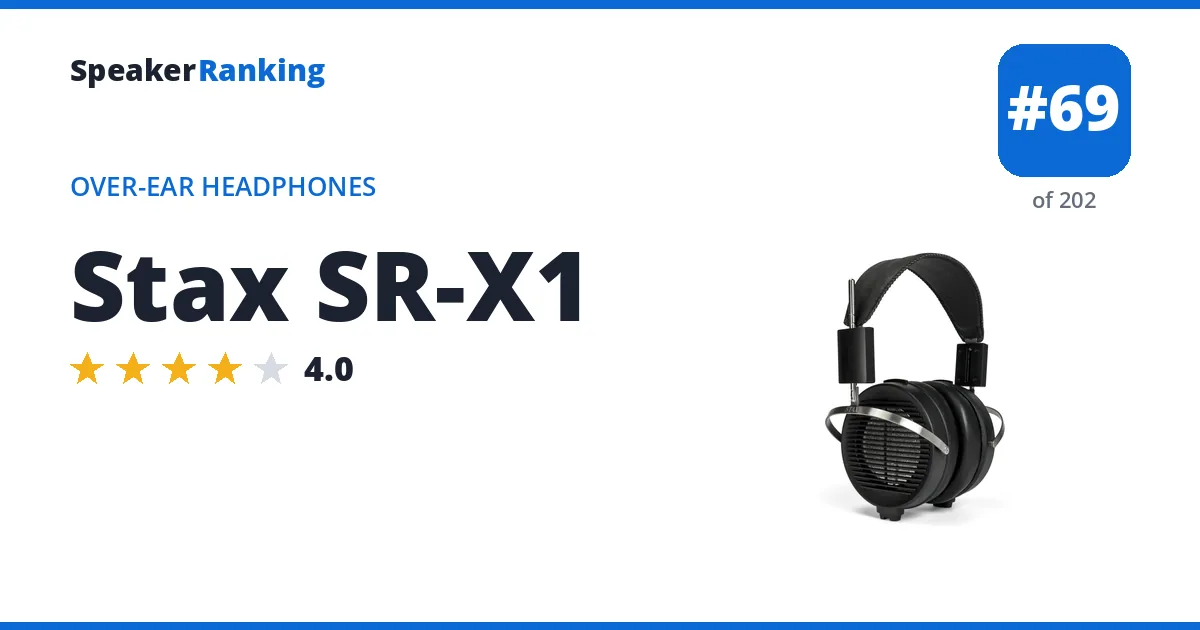
Pros: A preference score of 81 in oratory1990’s measurement is excellent for an electrostatic headphone, with a smoothness of 2.62 dB and a neutral tilt of 0.06. Midrange from 1 to 3 kHz sits within 0.1 dB of target, so vocals and instruments sound natural, and air above 10 kHz is on target at +0.6 dB. It is open back and light at 234 g, a good match for the warm and neutral taste profiles.
Cons: Sub-bass under 60 Hz is about 8 dB below target and the bass range is 4 dB low, so kick drums and bass synths lack rumble and weight. A 9.4 dB dip near 6.5 kHz and treble 7 dB under target soften cymbals and make the sound dull. It needs a dedicated electrostatic energizer, since it cannot run from a phone, and the open back leaks sound and offers no isolation.
Full Stax SR-X1 review and specifications →
| Back | Open |
|---|---|
| Connection | Wired |
| Deviation From Target | 2.62 dB standard deviation |
| Driver Type | Electrostatic |
| Form Factor | Over-ear |
| Frequency Response | 7Hz - 41kHz (Manufacturer specified) |
| Harman Preference Score | 81 (measured by oratory1990, via AutoEQ) |
| Sensitivity | 101 dB SPL/100V |
| Sub-bass Extension | Falls 6 dB below target at 40 Hz (-7.2 dB at 30 Hz) |
| Tonal Tilt | +0.06 (negative is warmer, positive brighter) |
| Weight | 0.5 lbs (234 g) |
EQ preset to match the Harman target
Set a preamp of -6.3 dB, then add these filters in any parametric equalizer (Wavelet, Equalizer APO, Peace, or a player with parametric EQ). Calculated by AutoEQ from its measured frequency response.
| Filter | Frequency | Gain | Q |
|---|---|---|---|
| Low shelf | 105 Hz | +7.5 dB | 0.70 |
| Peak | 1,236 Hz | -4.1 dB | 1.22 |
| Peak | 7,163 Hz | +5.4 dB | 2.20 |
| Peak | 4,125 Hz | +2.9 dB | 4.23 |
| Peak | 55 Hz | -2.4 dB | 0.43 |
| High shelf | 10,000 Hz | -6.0 dB | 0.70 |
| Peak | 233 Hz | -0.5 dB | 2.53 |
| Peak | 553 Hz | +0.3 dB | 1.42 |
| Peak | 6,608 Hz | +1.9 dB | 5.85 |
| Peak | 5,454 Hz | -1.1 dB | 6.00 |
- Reviews, Comparisons and Sound Samples
 Ranked #91 of 201 in Over-Ear Headphones - Stax SR-X9000: $6,819.99 Elusive Disc eBay
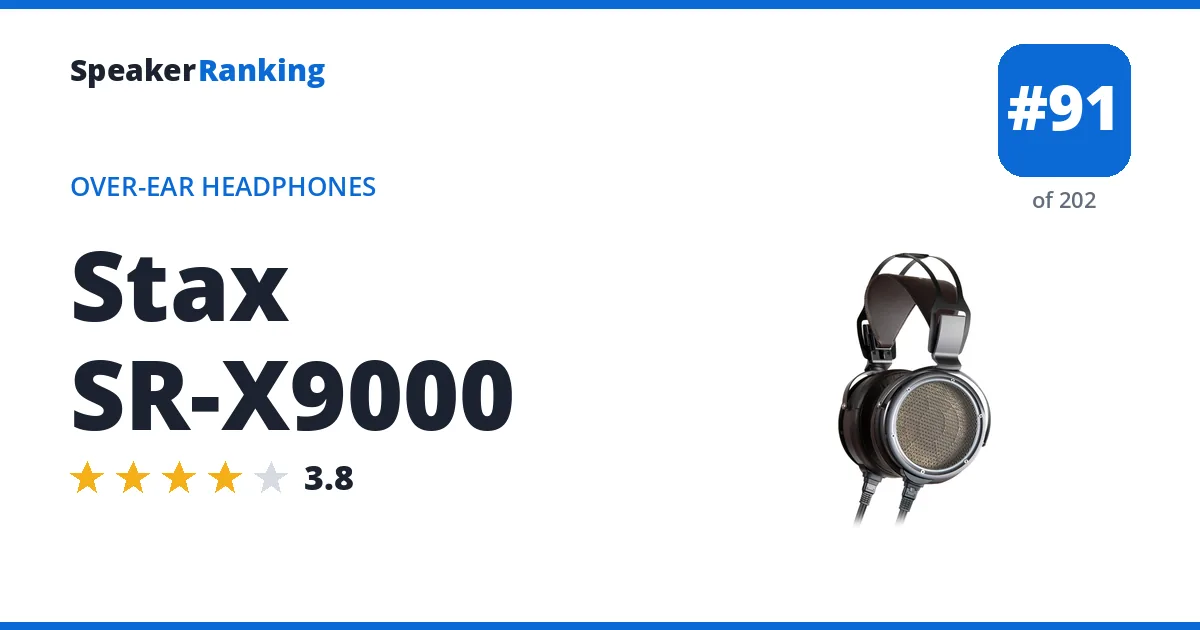
Pros: A preference score of 77, with the midrange from 200 Hz to 3 kHz staying within about 1.3 dB of target for natural, uncolored voices and instruments. Air above 10 kHz rises 1.7 dB, adding openness to the top end, and the neutral, slightly warm balance suits critical listening. It earns a higher rating than the Focal Utopia 2022.
Cons: It needs a dedicated electrostatic energizer, and bass falls 6 dB below target by 56 Hz, about 9.5 dB short across the sub-bass, so the deepest notes are faint. A 14.1 dB dip near 9.7 kHz dulls cymbals and detail. The Final Audio D8000 Pro Edition and Dan Clark Audio EXPANSE cost much less and rate higher.
Full Stax SR-X9000 review and specifications →
| Released | 2021 (5 years ago) |
|---|---|
| Back | Open |
| Built-in Microphone | No |
| Connection | Wired |
| Deviation From Target | 2.72 dB standard deviation |
| Driver Type | Electrostatic |
| Drivers | 1 x large round push-pull electrostatic |
| Form Factor | Over-ear |
| Frequency Response | 5Hz - 42kHz (Manufacturer specified) |
| Harman Preference Score | 77 (measured by oratory1990, via AutoEQ) |
| Sensitivity | 100 dB |
| Sub-bass Extension | Falls 6 dB below target at 56 Hz (-9.0 dB at 30 Hz) |
| Tonal Tilt | +0.20 (negative is warmer, positive brighter) |
| Weight | 1 lbs (432 g) |
EQ preset to match the Harman target
Set a preamp of -6.3 dB, then add these filters in any parametric equalizer (Wavelet, Equalizer APO, Peace, or a player with parametric EQ). Calculated by AutoEQ from its measured frequency response.
| Filter | Frequency | Gain | Q |
|---|---|---|---|
| Low shelf | 105 Hz | +5.7 dB | 0.70 |
| Peak | 1,081 Hz | -5.9 dB | 1.99 |
| Peak | 2,699 Hz | +2.5 dB | 1.47 |
| Peak | 201 Hz | -0.9 dB | 1.69 |
| Peak | 5,305 Hz | +2.1 dB | 6.00 |
| High shelf | 10,000 Hz | -4.2 dB | 0.70 |
| Peak | 7,973 Hz | +2.4 dB | 1.92 |
| Peak | 71 Hz | -1.7 dB | 3.73 |
| Peak | 6,342 Hz | -1.8 dB | 6.00 |
| Peak | 45 Hz | +1.0 dB | 4.46 |
- Reviews, Comparisons and Sound Samples
 Ranked #99 of 201 in Over-Ear Headphones - Stax SR-009S: $4,545.00 Audio46 eBay
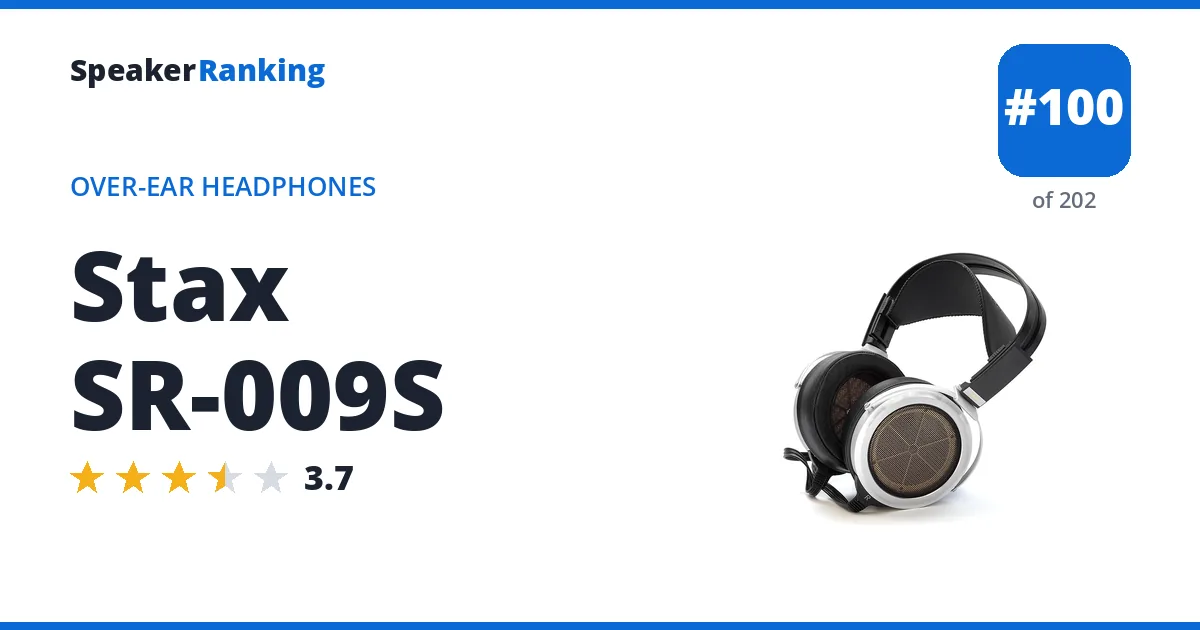
Pros: The open electrostatic design keeps the midrange close to neutral, with the low mids and upper mids each within about 1.4 dB of target in oratory1990’s measurement. It reaches a preference score of 74, and nothing between 1.5 and 12 kHz rises more than 2.2 dB above target, so there is no glare or harsh peak. Listeners who favor a neutral or lean presentation get a clean, uncolored midrange.
Cons: It needs a dedicated electrostatic energizer and cannot be plugged into a normal headphone amp, phone or DAC, which adds substantial cost and limits where it can be used. Sub-bass sits nearly 10 dB below target and falls 9.3 dB short at 30 Hz, so kick drums and synth bass lack weight and rumble. A deep 12.5 dB dip near 6 kHz softens cymbals and detail, and the open back leaks sound and blocks no outside noise.
Full Stax SR-009S review and specifications →
| Released | Apr 2018 (8 years ago) |
|---|---|
| Back | Open |
| Built-in Microphone | No |
| Connection | Wired |
| Deviation From Target | 2.93 dB standard deviation |
| Driver Type | Electrostatic |
| Form Factor | Over-ear |
| Frequency Response | 5Hz - 42kHz (Manufacturer specified) |
| Harman Preference Score | 74 (measured by oratory1990, via AutoEQ) |
| Sensitivity | 101 dB/100V rms |
| Sub-bass Extension | Falls 6 dB below target at 60 Hz (-9.3 dB at 30 Hz) |
| Tonal Tilt | +0.22 (negative is warmer, positive brighter) |
EQ preset to match the Harman target
Set a preamp of -6.3 dB, then add these filters in any parametric equalizer (Wavelet, Equalizer APO, Peace, or a player with parametric EQ). Calculated by AutoEQ from its measured frequency response.
| Filter | Frequency | Gain | Q |
|---|---|---|---|
| Low shelf | 105 Hz | +5.7 dB | 0.70 |
| Peak | 1,140 Hz | -4.2 dB | 1.04 |
| Peak | 8,102 Hz | +3.6 dB | 1.17 |
| Peak | 2,342 Hz | +4.4 dB | 3.37 |
| Peak | 5,079 Hz | -5.7 dB | 4.77 |
| High shelf | 10,000 Hz | -3.8 dB | 0.70 |
| Peak | 68 Hz | -1.1 dB | 2.84 |
| Peak | 213 Hz | -0.6 dB | 1.95 |
| Peak | 50 Hz | +1.2 dB | 4.06 |
| Peak | 76 Hz | -0.2 dB | 2.13 |
- Reviews, Comparisons and Sound Samples