Coverage note. Speaker Ranking currently covers 3 Simgot models across headphones. These are the products in our database, not a complete list of everything Simgot makes.
What this page covers. The Simgot models ranked here span headphones, including Simgot EW100P, Simgot EW200 and Simgot EM6L. Use each model’s category position to compare it with alternatives of the same size and use case.
This page lists all 3 Simgot speakers ranked on this site across headphones. Each model is shown in the category where it competes, with its current rank and the size of that ranking.
Use the category position rather than the brand name alone: speakers from the same manufacturer can perform very differently by size, price and product family.
Prices on this page were last checked October 10, 2026 at 5:37 PM UTC. Product prices and availability are accurate as of that date/time and are subject to change; the price and availability shown on Amazon at the time of purchase will apply to the purchase of this product.
As an eBay Partner, we may be compensated if you make a purchase.
In-Ear Headphones
 Ranked #6 of 115 in In-Ear Headphones - Simgot EW100P AliExpress eBay
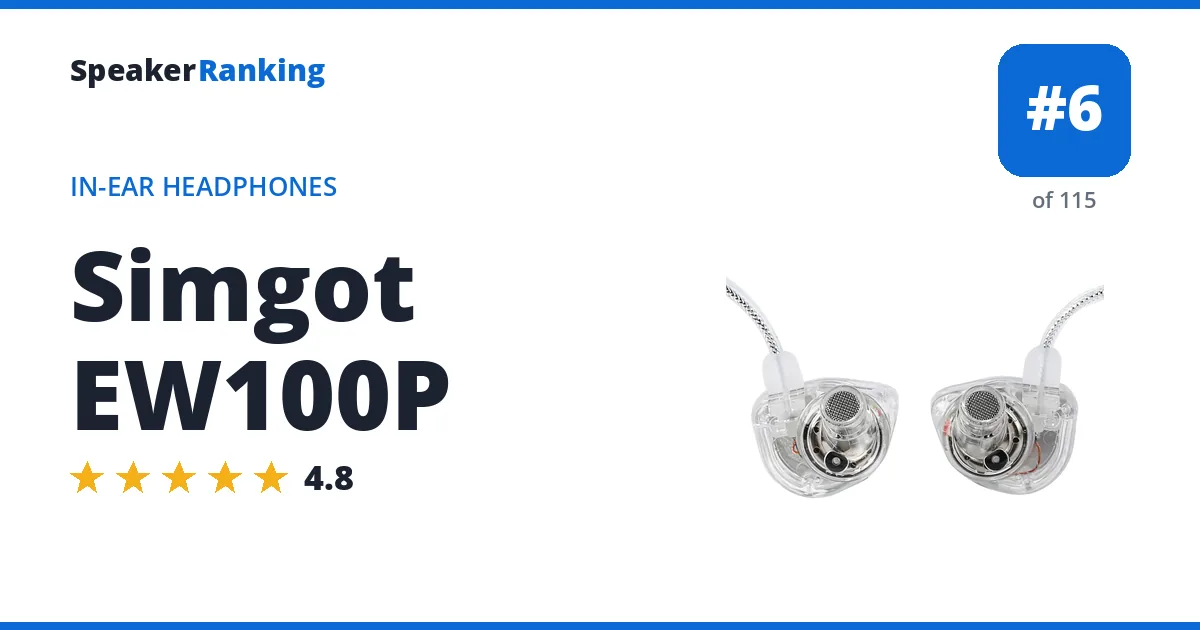
Pros: In oratory1990’s measurement it earns a preference score of 83 with a deviation of only 1.49 dB, so its single 10mm dynamic driver tracks the Harman target unusually closely. Bass and low mids sit within 1 dB of target and sub-bass is only 2.4 dB down at 30 Hz, giving kick drums real weight without boom. At 32 ohms and 122 dB sensitivity it reaches loud levels from a phone or a basic dongle.
Cons: A 5.8 dB dip near 9.7 kHz and treble running about 2.4 dB under target between 6 and 10 kHz soften cymbals and string texture, while the 10 to 16 kHz air region is 3.6 dB hot. It is wired only and has no microphone for calls.
Full Simgot EW100P review and specifications →
| Released | Apr 2023 (3 years ago) |
|---|---|
| Back | Closed |
| Connection | Wired |
| Deviation From Target | 1.49 dB standard deviation |
| Driver Type | Dynamic |
| Drivers | 1 x 10mm dynamic |
| Form Factor | In-ear |
| Frequency Response | 20Hz - 20kHz (Manufacturer specified) |
| Harman Preference Score | 83 (measured by oratory1990, via AutoEQ) |
| Impedance | 32 ohms |
| Sensitivity | 122 dB |
| Sub-bass Extension | Within 6 dB of target down to 20 Hz (-2.4 dB at 30 Hz) |
| Tonal Tilt | -0.07 (negative is warmer, positive brighter) |
EQ preset to match the Harman target
Set a preamp of -3.0 dB, then add these filters in any parametric equalizer (Wavelet, Equalizer APO, Peace, or a player with parametric EQ). Calculated by AutoEQ from its measured frequency response.
| Filter | Frequency | Gain | Q |
|---|---|---|---|
| Low shelf | 105 Hz | +1.5 dB | 0.70 |
| Peak | 162 Hz | -1.7 dB | 0.67 |
| Peak | 7,485 Hz | +3.1 dB | 1.75 |
| Peak | 634 Hz | +1.2 dB | 1.50 |
| Peak | 5,323 Hz | -1.9 dB | 5.08 |
| High shelf | 10,000 Hz | -5.2 dB | 0.70 |
| Peak | 9,319 Hz | +2.4 dB | 2.15 |
| Peak | 1,359 Hz | -0.7 dB | 1.98 |
| Peak | 3,552 Hz | -0.4 dB | 2.15 |
| Peak | 877 Hz | +0.5 dB | 3.25 |
- Reviews, Comparisons and Sound Samples
 Ranked #8 of 115 in In-Ear Headphones - Simgot EW200 AliExpress eBay
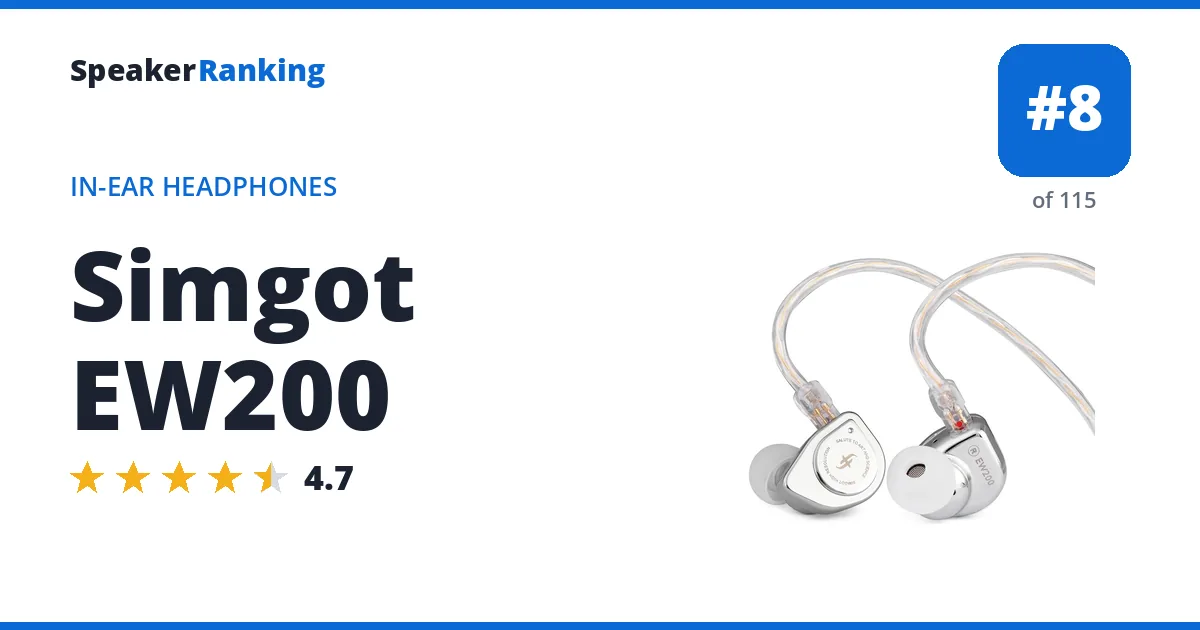
Pros: Crinacle’s measurement gives it an excellent preference score of 82, and the median of 37 hobbyist measurements on squig.link keeps every band from sub-bass to presence within about 1.5 dB of target, so music sounds natural and balanced across genres. Sub-bass holds right to 20 Hz with only 0.2 dB of shortfall at 30 Hz, giving kick drums real depth, and a 1.56 dB spread marks an unusually smooth response. Its 16 ohm load and 126 dB/V sensitivity let it run loud from any phone.
Cons: A 3.5 dB peak near 8.1 kHz and air about 2.3 dB above target can make cymbals and sibilance a little crisp for treble-sensitive listeners. The 1.5 dB bass lift gives a slightly warm tilt that strict neutral purists may not want.
Full Simgot EW200 review and specifications →
| Released | Jun 2023 (3 years ago) |
|---|---|
| Back | Closed |
| Connection | Wired |
| Deviation From Target | 1.56 dB standard deviation |
| Driver Type | Dynamic |
| Drivers | 1 x 10mm dynamic |
| Form Factor | In-ear |
| Frequency Response | 10Hz - 50kHz (Manufacturer specified) |
| Harman Preference Score | 82 (measured by crinacle, via AutoEQ) |
| Impedance | 16 ohms |
| Sensitivity | 126 dB/Vrms |
| Sub-bass Extension | Within 6 dB of target down to 20 Hz (-0.2 dB at 30 Hz) |
| Tonal Tilt | -0.16 (negative is warmer, positive brighter) |
EQ preset to match the Harman target
Set a preamp of -2.7 dB, then add these filters in any parametric equalizer (Wavelet, Equalizer APO, Peace, or a player with parametric EQ). Calculated by AutoEQ from its measured frequency response.
| Filter | Frequency | Gain | Q |
|---|---|---|---|
| Low shelf | 105 Hz | +1.0 dB | 0.70 |
| Peak | 8,017 Hz | +3.6 dB | 1.13 |
| Peak | 153 Hz | -2.1 dB | 0.78 |
| Peak | 794 Hz | +2.8 dB | 1.01 |
| Peak | 2,472 Hz | -1.4 dB | 0.30 |
| High shelf | 10,000 Hz | -2.4 dB | 0.70 |
| Peak | 4,761 Hz | -1.7 dB | 4.96 |
| Peak | 6,133 Hz | +1.6 dB | 5.59 |
| Peak | 3,418 Hz | +0.9 dB | 3.56 |
| Peak | 1,477 Hz | -0.3 dB | 2.90 |
- Reviews, Comparisons and Sound Samples
 Ranked #12 of 115 in In-Ear Headphones - Simgot EM6L AliExpress eBay
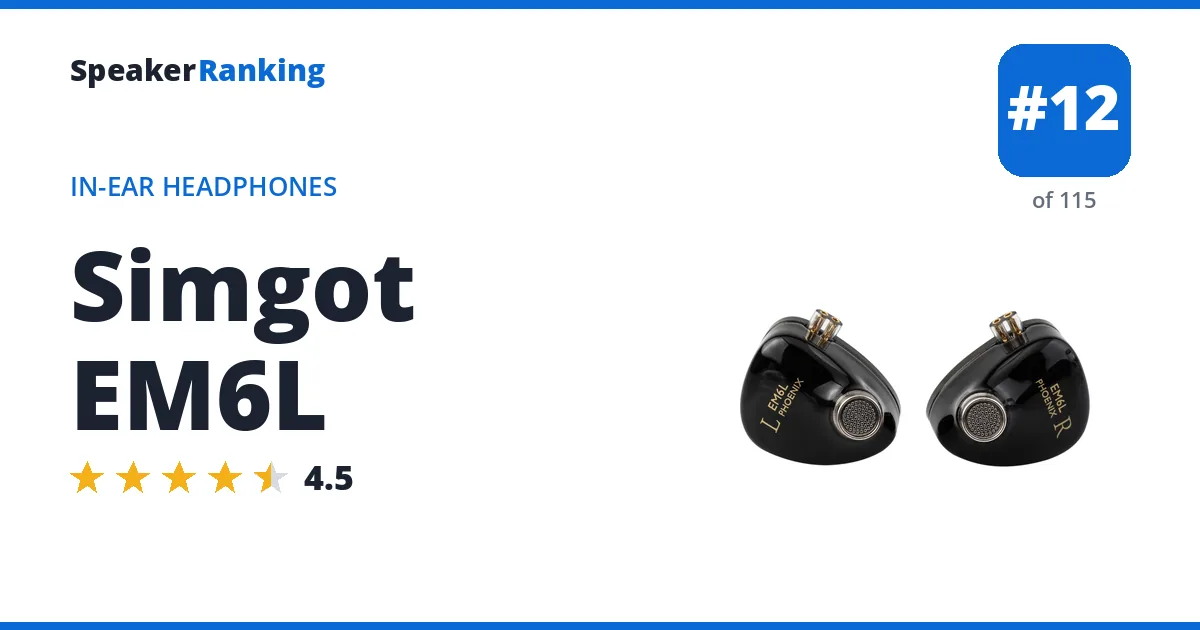
Pros: Crinacle’s measurement returns a preference score of 80, and a deviation of only 1.51 dB means few uneven spots anywhere in the range. Across 46 hobbyist measurements on squig.link the presence and upper mids sit within 0.3 dB of target, so vocals and instruments sound natural, while bass about 2.5 dB above target adds warmth. With 119 dB/V sensitivity and 26 ohms it drives easily from a phone or basic dongle.
Cons: The air band rises 5.5 dB above target with a 6.7 dB peak near 11.9 kHz, which some listeners will hear as extra sparkle or sharpness on cymbals. It is wired only and lists no microphone.
Full Simgot EM6L review and specifications →
| Released | 2023 (3 years ago) |
|---|---|
| Back | Closed |
| Connection | Wired |
| Deviation From Target | 1.51 dB standard deviation |
| Driver Type | Hybrid (1 dynamic + 4 balanced armature) |
| Drivers | 1 x 8mm dynamic + 4 x balanced armature |
| Form Factor | In-ear |
| Frequency Response | 8Hz - 40kHz (Manufacturer specified) |
| Harman Preference Score | 80 (measured by crinacle, via AutoEQ) |
| Impedance | 26 ohms |
| Sensitivity | 119 dB/Vrms |
| Sub-bass Extension | Within 6 dB of target down to 20 Hz (+0.1 dB at 30 Hz) |
| Tonal Tilt | -0.31 (negative is warmer, positive brighter) |
EQ preset to match the Harman target
Set a preamp of -1.9 dB, then add these filters in any parametric equalizer (Wavelet, Equalizer APO, Peace, or a player with parametric EQ). Calculated by AutoEQ from its measured frequency response.
| Filter | Frequency | Gain | Q |
|---|---|---|---|
| Low shelf | 105 Hz | +0.5 dB | 0.70 |
| Peak | 176 Hz | -2.5 dB | 0.73 |
| Peak | 839 Hz | +2.1 dB | 1.27 |
| Peak | 8,479 Hz | +1.8 dB | 2.59 |
| Peak | 5,586 Hz | +1.6 dB | 4.29 |
| High shelf | 10,000 Hz | -1.8 dB | 0.70 |
| Peak | 3,212 Hz | -0.8 dB | 2.70 |
| Peak | 2,167 Hz | +0.8 dB | 2.93 |
| Peak | 37 Hz | -0.2 dB | 2.16 |
| Peak | 1,399 Hz | -0.4 dB | 3.64 |
- Reviews, Comparisons and Sound Samples