Coverage note. Speaker Ranking currently covers 2 Kiwi Ears models across headphones. These are the products in our database, not a complete list of everything Kiwi Ears makes.
What this page covers. The Kiwi Ears models ranked here span headphones, including Kiwi Ears Orchestra Lite and Kiwi Ears Orchestra. Use each model’s category position to compare it with alternatives of the same size and use case.
This page lists all 2 Kiwi Ears speakers ranked on this site across headphones. Each model is shown in the category where it competes, with its current rank and the size of that ranking.
Use the category position rather than the brand name alone: speakers from the same manufacturer can perform very differently by size, price and product family.
Prices on this page were last checked October 10, 2026 at 5:37 PM UTC. Product prices and availability are accurate as of that date/time and are subject to change; the price and availability shown on Amazon at the time of purchase will apply to the purchase of this product.
As an eBay Partner, we may be compensated if you make a purchase.
In-Ear Headphones
 Ranked #20 of 115 in In-Ear Headphones - Kiwi Ears Orchestra Lite: $249.00 Amazon AliExpress eBay
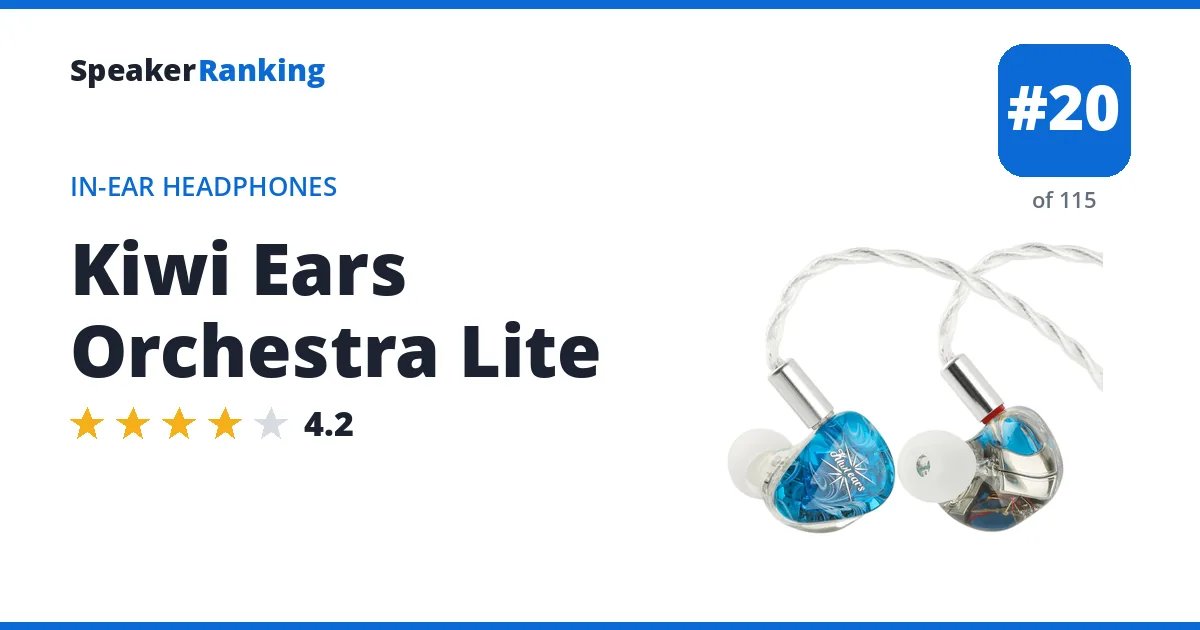
Pros: Bass and lower midrange land within about 0.2 dB of the Harman target from 60 Hz to 1 kHz, so vocals and instruments sound natural and unboosted. The response is smooth, with a deviation of only about 2 dB around the target and a preference score of 76. Eight balanced armature drivers and 112 dB sensitivity make it easy to drive from a phone or portable player, and it suits warm and bass leaning tastes.
Cons: Presence from 3 to 6 kHz runs about 5.6 dB under target, with a 6.7 dB dip near 3.6 kHz, so voices and guitars sound recessed and a little veiled. Treble from 6 to 10 kHz is about 2.8 dB low, which softens cymbals and reduces sparkle. It is rated below the Etymotic EVO, and there is no built in microphone.
Full Kiwi Ears Orchestra Lite review and specifications →
| Released | 2023 (3 years ago) |
|---|---|
| Back | Closed |
| Built-in Microphone | No |
| Connection | Wired |
| Deviation From Target | 2.03 dB standard deviation |
| Driver Type | Balanced armature |
| Drivers | 8 x balanced armature |
| Form Factor | In-ear |
| Frequency Response | 20Hz - 20kHz (Manufacturer specified) |
| Harman Preference Score | 76 (measured by oratory1990, via AutoEQ) |
| Sensitivity | 112 dB SPL/mW |
| Sub-bass Extension | Within 6 dB of target down to 20 Hz (-2.9 dB at 30 Hz) |
| Tonal Tilt | -0.26 (negative is warmer, positive brighter) |
EQ preset to match the Harman target
Set a preamp of -4.1 dB, then add these filters in any parametric equalizer (Wavelet, Equalizer APO, Peace, or a player with parametric EQ). Calculated by AutoEQ from its measured frequency response.
| Filter | Frequency | Gain | Q |
|---|---|---|---|
| Low shelf | 105 Hz | +1.1 dB | 0.70 |
| Peak | 128 Hz | -2.0 dB | 0.87 |
| Peak | 5,834 Hz | +3.8 dB | 2.20 |
| Peak | 1,508 Hz | -1.9 dB | 1.09 |
| Peak | 3,467 Hz | +4.0 dB | 2.99 |
| High shelf | 10,000 Hz | -0.7 dB | 0.70 |
| Peak | 8,847 Hz | +0.8 dB | 4.64 |
| Peak | 45 Hz | -0.2 dB | 2.08 |
| Peak | 4,617 Hz | -1.0 dB | 6.00 |
| Peak | 5,106 Hz | +0.8 dB | 6.00 |
- Reviews, Comparisons and Sound Samples
 Ranked #37 of 115 in In-Ear Headphones - Kiwi Ears Orchestra AliExpress eBay
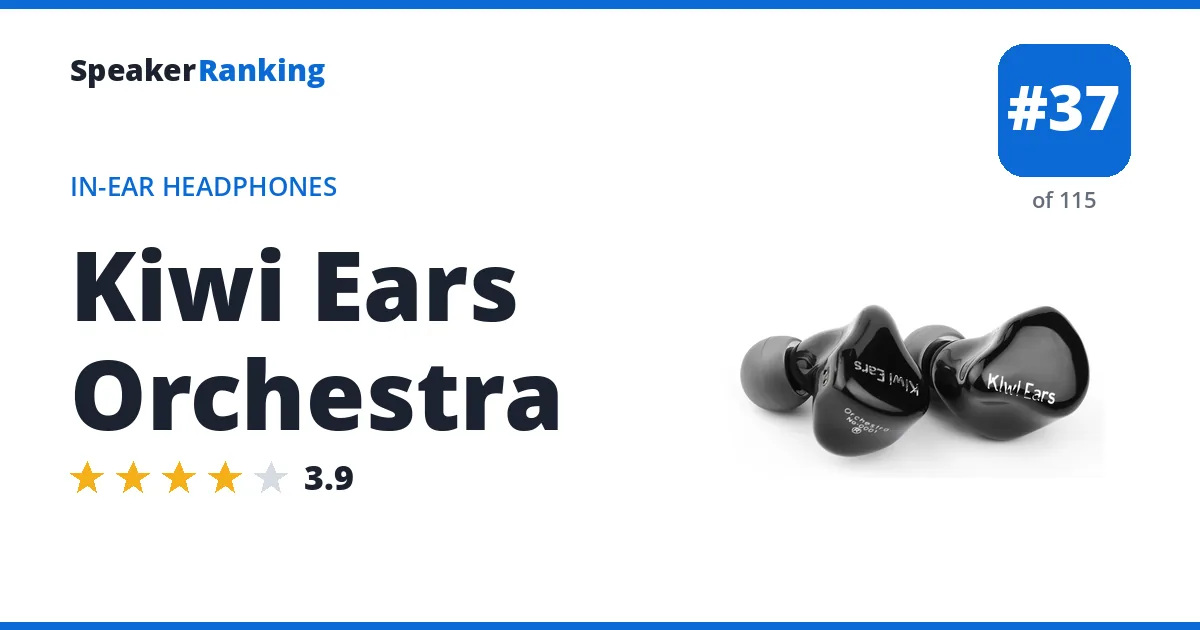
Pros: Eight balanced armatures per side earn a preference score of 72 in crinacle’s measurement. Across hobbyist measurements on squig.link the bass and lower midrange sit within 1 dB of target and the largest treble peak is only 2.4 dB, so the sound stays clean and free of harshness. At 17 ohms and 111 dB it plays loud from a phone or small dongle.
Cons: Presence sits 5.5 dB below target with a 6.7 dB dip near 5.3 kHz, which pushes vocals and guitar bite back and makes some recordings sound distant. Sub-bass runs 4.4 dB under target and is 5.3 dB down at 30 Hz, so the all armature design gives less deep rumble than a dynamic driver set. It is wired only.
Full Kiwi Ears Orchestra review and specifications →
| Released | May 2021 (5 years ago) |
|---|---|
| Back | Closed |
| Connection | Wired |
| Deviation From Target | 2.33 dB standard deviation |
| Driver Type | Balanced armature |
| Drivers | 8 x balanced armature |
| Form Factor | In-ear |
| Frequency Response | 20Hz - 20kHz (Manufacturer specified) |
| Harman Preference Score | 72 (measured by crinacle, via AutoEQ) |
| Impedance | 17 ohms |
| Sensitivity | 111 dB |
| Sub-bass Extension | Within 6 dB of target down to 20 Hz (-5.3 dB at 30 Hz) |
| Tonal Tilt | +0.13 (negative is warmer, positive brighter) |
EQ preset to match the Harman target
Set a preamp of -4.3 dB, then add these filters in any parametric equalizer (Wavelet, Equalizer APO, Peace, or a player with parametric EQ). Calculated by AutoEQ from its measured frequency response.
| Filter | Frequency | Gain | Q |
|---|---|---|---|
| Low shelf | 105 Hz | +2.8 dB | 0.70 |
| Peak | 4,518 Hz | +4.3 dB | 1.08 |
| Peak | 203 Hz | -2.0 dB | 0.70 |
| Peak | 6,642 Hz | -3.1 dB | 4.68 |
| Peak | 1,670 Hz | -1.6 dB | 2.02 |
| High shelf | 10,000 Hz | -2.3 dB | 0.70 |
| Peak | 879 Hz | +1.0 dB | 2.21 |
| Peak | 443 Hz | -0.3 dB | 1.47 |
| Peak | 1,294 Hz | -0.6 dB | 3.70 |
| Peak | 5,298 Hz | +1.0 dB | 6.00 |
- Reviews, Comparisons and Sound Samples