Coverage note. Speaker Ranking currently covers 4 Kinera models across headphones. These are the products in our database, not a complete list of everything Kinera makes.
What this page covers. The Kinera models ranked here span headphones, including Kinera Freya 2.0, Kinera Celest Wyvern Pro and Kinera Norn. Use each model’s category position to compare it with alternatives of the same size and use case.
This page lists all 4 Kinera speakers ranked on this site across headphones. Each model is shown in the category where it competes, with its current rank and the size of that ranking.
Use the category position rather than the brand name alone: speakers from the same manufacturer can perform very differently by size, price and product family.
Prices on this page were last checked October 10, 2026 at 5:37 PM UTC. Product prices and availability are accurate as of that date/time and are subject to change; the price and availability shown on Amazon at the time of purchase will apply to the purchase of this product.
As an eBay Partner, we may be compensated if you make a purchase.
In-Ear Headphones
 Ranked #48 of 297 in In-Ear Headphones - Kinera Freya 2.0: $269.00 Amazon eBay
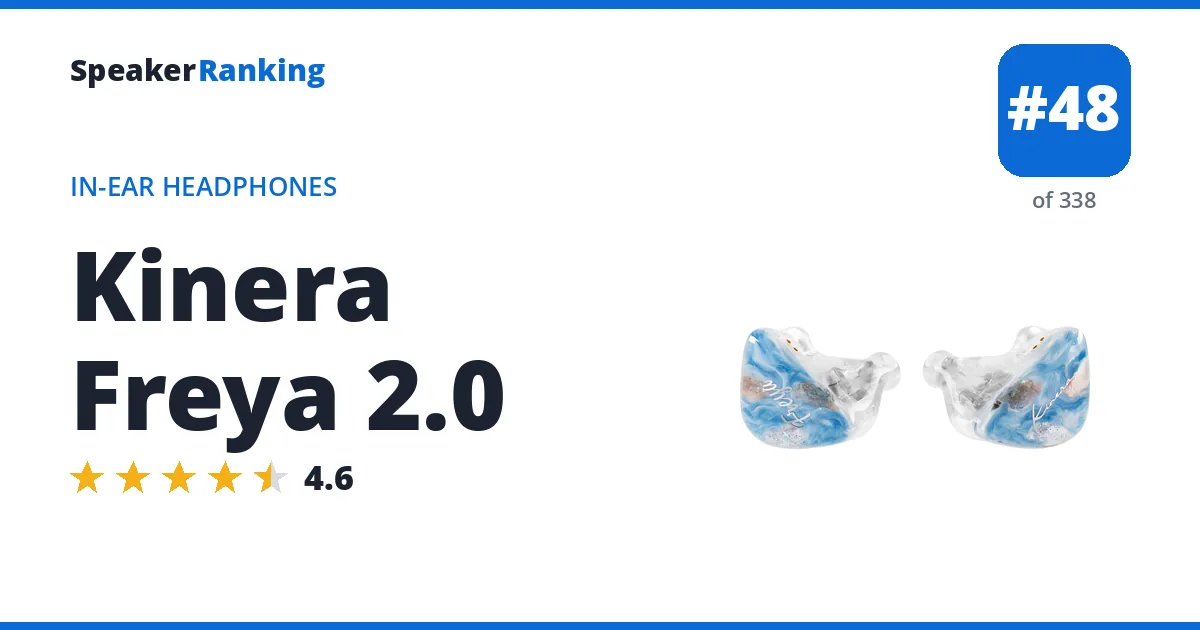
Pros: Six hobbyist measurements on squig.link give it a preference score of 81.2 and a smooth 1.31 dB deviation. Bass sits about 1.6 dB above target while the mids stay within a fraction of a decibel, so it sounds warm and full without clouding vocals. At 3.6 g per earbud it is light, and 20 ohms with 105 dB sensitivity runs fine from a phone.
Cons: The air band above 10 kHz falls about 3.4 dB short, with a 4.8 dB dip near 10.7 kHz, so recordings lose a little openness and shimmer. A 4.6 dB peak near 8.1 kHz can emphasize sibilance on some vocals.
Full Kinera Freya 2.0 review and specifications →
| Back | Closed |
|---|---|
| Built-in Microphone | No |
| Connection | Wired |
| Deviation From Target | 1.31 dB standard deviation |
| Driver Type | Hybrid (1 dynamic + 3 balanced armature) |
| Drivers | 1 x 7mm dynamic + 3 x balanced armature |
| Form Factor | In-ear |
| Frequency Response | 20Hz - 50kHz (Manufacturer specified) |
| Harman Preference Score | 81 (median of 6 squig.link measurements, calibrated to AutoEQ) |
| Impedance | 20 ohms |
| Sensitivity | 105 dB |
| Sub-bass Extension | Within 6 dB of target down to 20 Hz (-0.2 dB at 30 Hz) |
| Tonal Tilt | -0.09 (negative is warmer, positive brighter) |
| Weight | 0 lbs (3.6 g) per earbud |
- Reviews, Comparisons and Sound Samples
 Ranked #127 of 297 in In-Ear Headphones - Kinera Celest Wyvern Pro: $18.04 Amazon eBay
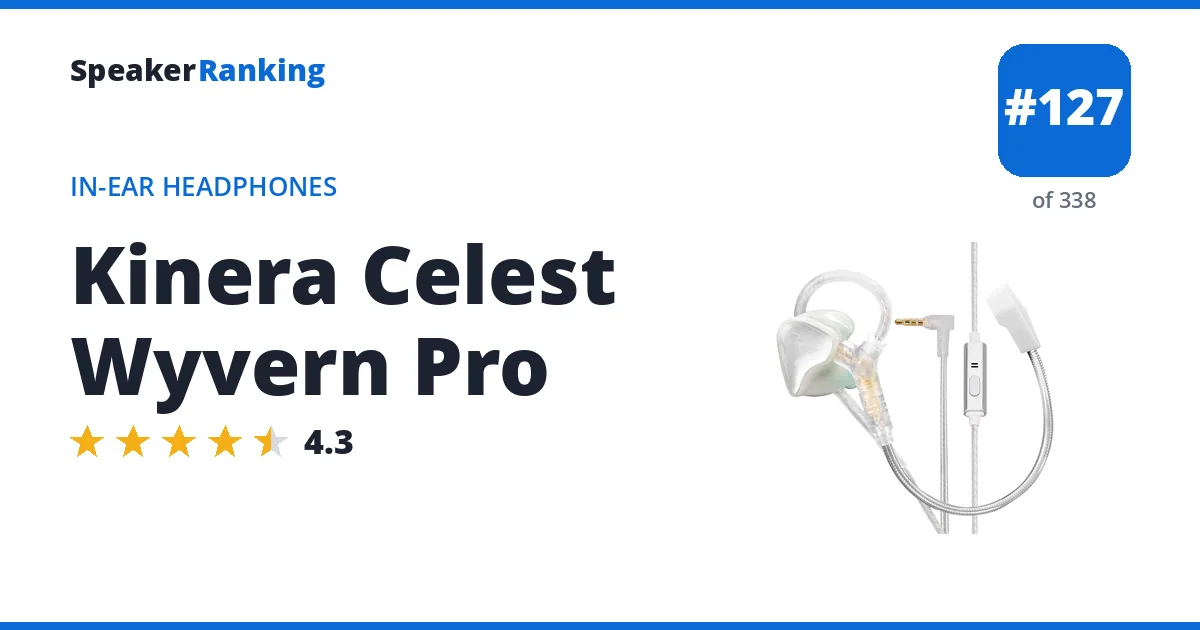
Full Kinera Celest Wyvern Pro review and specifications →
| Released | Aug 2023 (3 years ago) |
|---|---|
| Back | Closed |
| Built-in Microphone | Yes |
| Connection | Wired |
| Deviation From Target | 1.72 dB standard deviation |
| Driver Type | Dynamic |
| Drivers | 1 x 10mm dynamic |
| Form Factor | In-ear |
| Frequency Response | 20Hz - 20kHz (Manufacturer specified) |
| Harman Preference Score | 78 (median of 4 squig.link measurements, calibrated to AutoEQ) |
| Impedance | 32 ohms |
| Sensitivity | 105 dB |
| Sub-bass Extension | Within 6 dB of target down to 20 Hz (-0.2 dB at 30 Hz) |
| Tonal Tilt | -0.25 (negative is warmer, positive brighter) |
- Reviews, Comparisons and Sound Samples
 Ranked #197 of 297 in In-Ear Headphones - Kinera Norn: $509.00 Kinera eBay
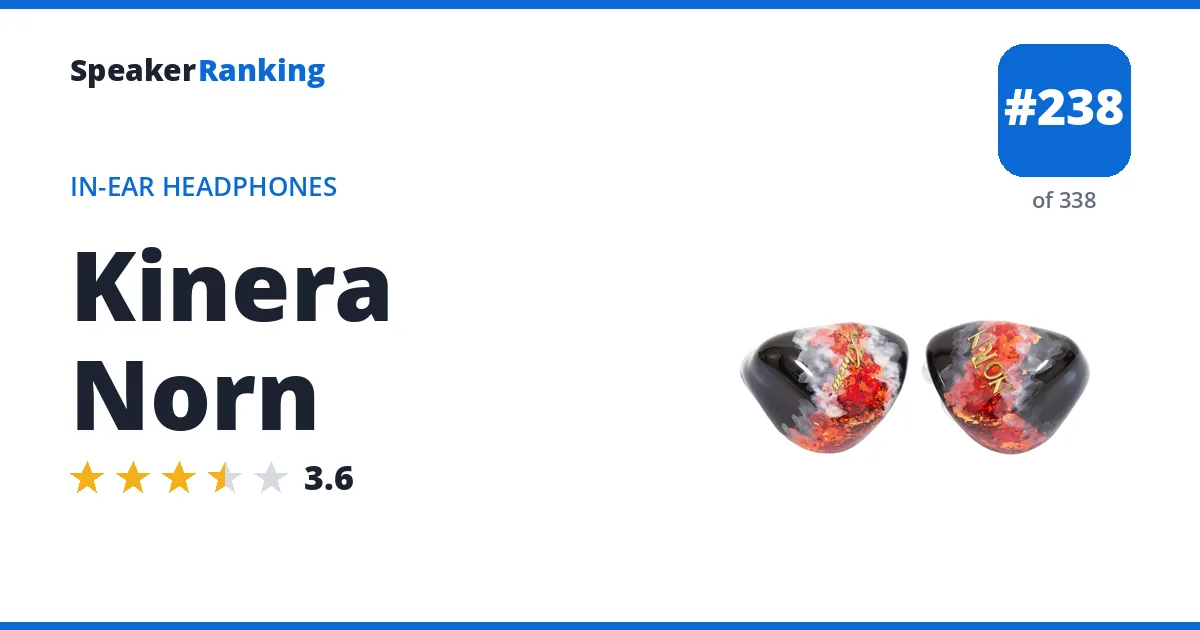
Pros: A bassy, energetic tuning with roughly 3 to 4 dB of extra sub-bass and bass, still 4.7 dB above target at 30 Hz, so electronic and hip-hop tracks hit with real rumble. The midrange and treble track the target within about 2 dB up to 10 kHz, and a 5.2 dB lift above 10 kHz adds air. A preference score of 69 from crinacle and a 2.2 dB standard deviation point to an even response overall. It matches the rating of the HIFIMAN RE2000 for noticeably less and rates above the Fearless Audio S8F.
Cons: A 5 dB peak near 1.7 kHz in squig.link measurements pushes vocals and guitars forward, which can sound shouty on bright recordings. Listeners who want a neutral low end will find the bass boost too much. The FiiO FD5 rates higher at nearly the same price.
Full Kinera Norn review and specifications →
| Released | May 2026 (5 months ago) |
|---|---|
| Back | Closed |
| Built-in Microphone | No |
| Connection | Wired |
| Deviation From Target | 2.23 dB standard deviation |
| Driver Type | Hybrid (1 dynamic + 4 balanced armature) |
| Drivers | 1 x dynamic + 4 x balanced armature |
| Form Factor | In-ear |
| Frequency Response | 5Hz - 50kHz (Manufacturer specified) |
| Harman Preference Score | 69 (measured by crinacle, via AutoEQ) |
| Impedance | 32 ohms |
| Sensitivity | 110 dB |
| Sub-bass Extension | Within 6 dB of target down to 20 Hz (+4.7 dB at 30 Hz) |
| Tonal Tilt | +0.02 (negative is warmer, positive brighter) |
EQ preset to match the Harman target
Set a preamp of -4.9 dB, then add these filters in any parametric equalizer (Wavelet, Equalizer APO, Peace, or a player with parametric EQ). Calculated by AutoEQ from its measured frequency response.
| Filter | Frequency | Gain | Q |
|---|---|---|---|
| Low shelf | 105 Hz | +0.4 dB | 0.70 |
| Peak | 995 Hz | +16.1 dB | 0.43 |
| Peak | 1,544 Hz | -16.9 dB | 0.58 |
| Peak | 6,828 Hz | +3.6 dB | 1.99 |
| Peak | 206 Hz | -4.2 dB | 0.61 |
| High shelf | 10,000 Hz | -1.6 dB | 0.70 |
| Peak | 4,707 Hz | -3.2 dB | 5.83 |
| Peak | 2,442 Hz | +1.7 dB | 3.97 |
| Peak | 5,574 Hz | +2.3 dB | 6.00 |
| Peak | 1,827 Hz | -1.1 dB | 4.83 |
- Reviews, Comparisons and Sound Samples
 Ranked #258 of 297 in In-Ear Headphones - Kinera Skuld: $550.00 Amazon eBay
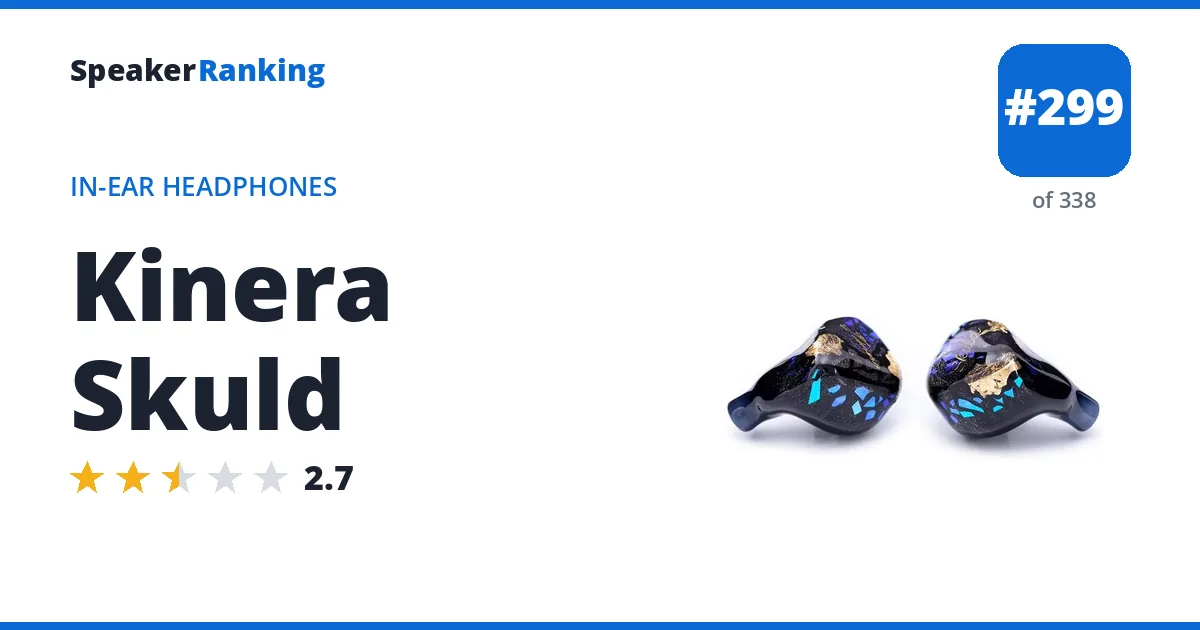
Pros: Five balanced armatures and 120 dB sensitivity mean it reaches loud levels easily from a phone. Bass and low mids sit within about 1 dB of target, giving a full, warm midrange that suits listeners who prefer a dark, relaxed sound. The closed in-ear design isolates well from outside noise.
Cons: Hobbyist measurements on squig.link show the presence region about 7.5 dB under target with a 9.7 dB dip near 5.5 kHz, which makes vocals and guitars recessed and dull. Sub-bass also falls about 4 dB short, so electronic music lacks rumble. The FiiO FA9 carries a higher rating for less money.
Full Kinera Skuld review and specifications →
| Released | Jun 2021 (5 years ago) |
|---|---|
| Back | Closed |
| Built-in Microphone | No |
| Connection | Wired |
| Deviation From Target | 3.57 dB standard deviation |
| Driver Type | Balanced armature |
| Drivers | 5 x balanced armature |
| Form Factor | In-ear |
| Frequency Response | 5Hz - 50kHz (Manufacturer specified) |
| Harman Preference Score | 58 (measured by crinacle, via AutoEQ) |
| Impedance | 23 ohms |
| Sensitivity | 120 dB |
| Sub-bass Extension | Within 6 dB of target down to 20 Hz (-5.4 dB at 30 Hz) |
| Tonal Tilt | -0.15 (negative is warmer, positive brighter) |
EQ preset to match the Harman target
Set a preamp of -5.9 dB, then add these filters in any parametric equalizer (Wavelet, Equalizer APO, Peace, or a player with parametric EQ). Calculated by AutoEQ from its measured frequency response.
| Filter | Frequency | Gain | Q |
|---|---|---|---|
| Low shelf | 105 Hz | +5.2 dB | 0.70 |
| Peak | 9,986 Hz | +5.8 dB | 0.19 |
| Peak | 151 Hz | -3.5 dB | 0.39 |
| Peak | 1,435 Hz | -5.0 dB | 2.04 |
| Peak | 3,102 Hz | -3.4 dB | 4.12 |
| High shelf | 10,000 Hz | -4.3 dB | 0.70 |
| Peak | 697 Hz | +0.5 dB | 1.91 |
| Peak | 294 Hz | -0.3 dB | 1.56 |
| Peak | 4,766 Hz | -1.5 dB | 6.00 |
| Peak | 5,372 Hz | +1.6 dB | 5.99 |
- Reviews, Comparisons and Sound Samples