Coverage note. Speaker Ranking currently covers 5 DUNU models across headphones. These are the products in our database, not a complete list of everything DUNU makes.
What this page covers. The DUNU models ranked here span headphones, including DUNU Kima Classic, DUNU Titan S and DUNU Zen. Use each model’s category position to compare it with alternatives of the same size and use case.
This page lists all 5 DUNU speakers ranked on this site across headphones. Each model is shown in the category where it competes, with its current rank and the size of that ranking.
Use the category position rather than the brand name alone: speakers from the same manufacturer can perform very differently by size, price and product family.
Prices on this page were last checked October 10, 2026 at 5:37 PM UTC. Product prices and availability are accurate as of that date/time and are subject to change; the price and availability shown on Amazon at the time of purchase will apply to the purchase of this product.
As an eBay Partner, we may be compensated if you make a purchase.
In-Ear Headphones
 Ranked #39 of 238 in In-Ear Headphones - DUNU Kima Classic: $22.99 Amazon eBay
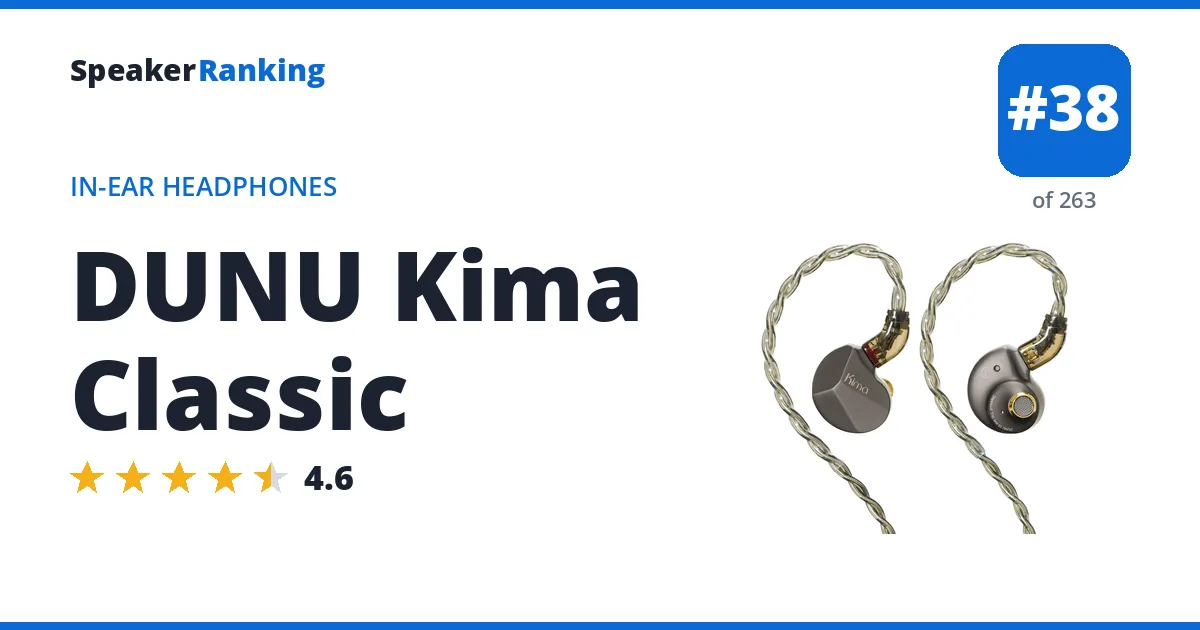
Pros: Across 10 hobbyist measurements on squig.link it earns a preference score of 81.6 with only 1.22 dB of deviation, so the tuning stays close to what most listeners prefer from deep bass through the upper mids. Bass sits about 1.2 dB above target and sub-bass reaches 20 Hz without rolling off, giving kick drums real weight without muddying vocals. The single 10mm dynamic driver at 32 ohms and 108 dB plays loudly from a phone dongle, and it carries a higher rating than the pricier KBEAR KB01.
Cons: A 6.6 dB dip near 10.9 kHz takes some sparkle and shimmer off cymbals. There is no inline microphone, so it cannot double as a calling headset.
Full DUNU Kima Classic review and specifications →
| Released | Apr 2023 (3 years ago) |
|---|---|
| Back | Closed |
| Built-in Microphone | No |
| Connection | Wired |
| Deviation From Target | 1.22 dB standard deviation |
| Driver Type | Dynamic |
| Drivers | 1 x 10mm dynamic |
| Form Factor | In-ear |
| Frequency Response | 5Hz - 40kHz (Manufacturer specified) |
| Harman Preference Score | 82 (median of 10 squig.link measurements, calibrated to AutoEQ) |
| Impedance | 32 ohms |
| Sensitivity | 108 dB |
| Sub-bass Extension | Within 6 dB of target down to 20 Hz (+0.8 dB at 30 Hz) |
| Tonal Tilt | -0.26 (negative is warmer, positive brighter) |
- Reviews, Comparisons and Sound Samples
 Ranked #108 of 238 in In-Ear Headphones - DUNU Titan S AliExpress eBay
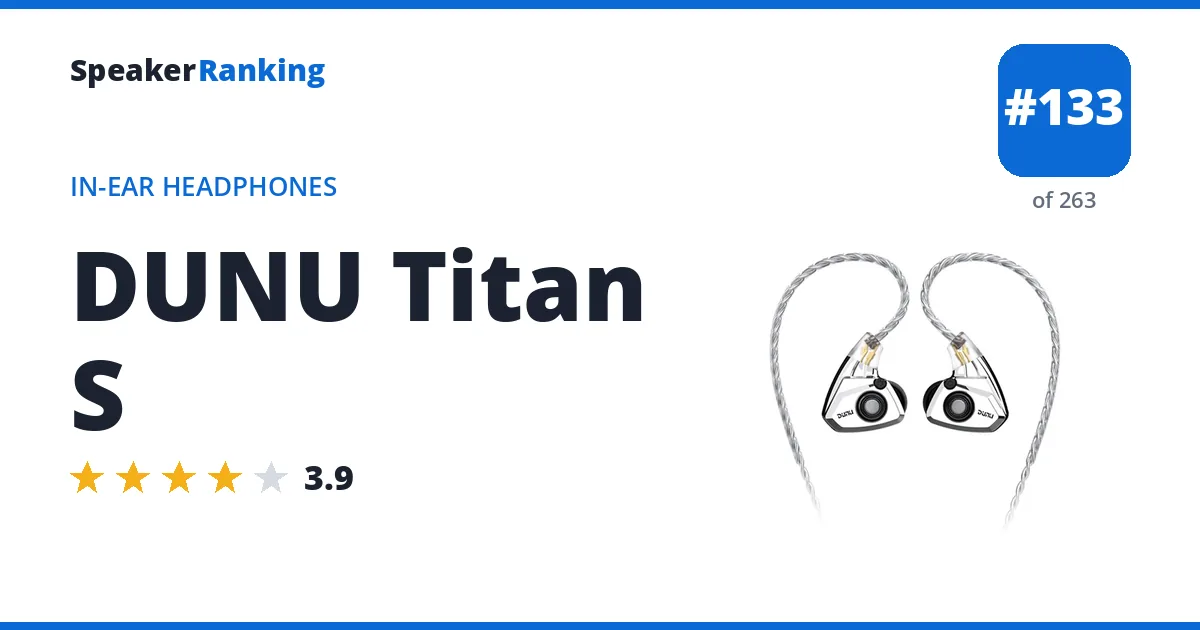
Pros: Crinacle’s measurement gives it a preference score of 73, and across 34 hobbyist measurements on squig.link the bass, low mids and upper mids all land within half a decibel of the Harman target. That keeps vocals, piano and guitars sounding natural rather than pushed forward or recessed. With a 32 ohm load and a 110 dB sensitivity rating, it plays at comfortable volume straight from a phone.
Cons: Hobbyist measurements put sub-bass about 3.2 dB below target, so the deepest synth and cinematic bass hits carry less rumble than the Harman curve calls for. A 4.9 dB dip near 6.1 kHz followed by a 4.1 dB peak near 11.9 kHz gives the treble an uneven texture, softening some detail while adding a touch of glare up top.
Full DUNU Titan S review and specifications →
| Released | Dec 2021 (4 years ago) |
|---|---|
| Back | Closed |
| Connection | Wired |
| Deviation From Target | 2.29 dB standard deviation |
| Driver Type | Dynamic |
| Drivers | 1 x 11mm dynamic |
| Form Factor | In-ear |
| Frequency Response | 5Hz - 40kHz (Manufacturer specified) |
| Harman Preference Score | 73 (measured by crinacle, via AutoEQ) |
| Impedance | 32 ohms |
| Sensitivity | 110 dB |
| Sub-bass Extension | Within 6 dB of target down to 20 Hz (-3.4 dB at 30 Hz) |
| Tonal Tilt | +0.29 (negative is warmer, positive brighter) |
EQ preset to match the Harman target
Set a preamp of -5.2 dB, then add these filters in any parametric equalizer (Wavelet, Equalizer APO, Peace, or a player with parametric EQ). Calculated by AutoEQ from its measured frequency response.
| Filter | Frequency | Gain | Q |
|---|---|---|---|
| Low shelf | 105 Hz | +10.1 dB | 0.70 |
| Peak | 5,993 Hz | +13.5 dB | 0.87 |
| Peak | 4,479 Hz | -9.3 dB | 0.51 |
| Peak | 40 Hz | -7.2 dB | 0.34 |
| Peak | 762 Hz | +2.2 dB | 1.04 |
| High shelf | 10,000 Hz | -5.4 dB | 0.70 |
| Peak | 9,592 Hz | +2.8 dB | 2.45 |
| Peak | 1,411 Hz | -0.8 dB | 2.84 |
| Peak | 2,335 Hz | +0.3 dB | 1.89 |
| Peak | 1,030 Hz | +0.5 dB | 3.30 |
- Reviews, Comparisons and Sound Samples
 Ranked #117 of 238 in In-Ear Headphones - DUNU Zen: $699.99 Shenzhenaudio eBay
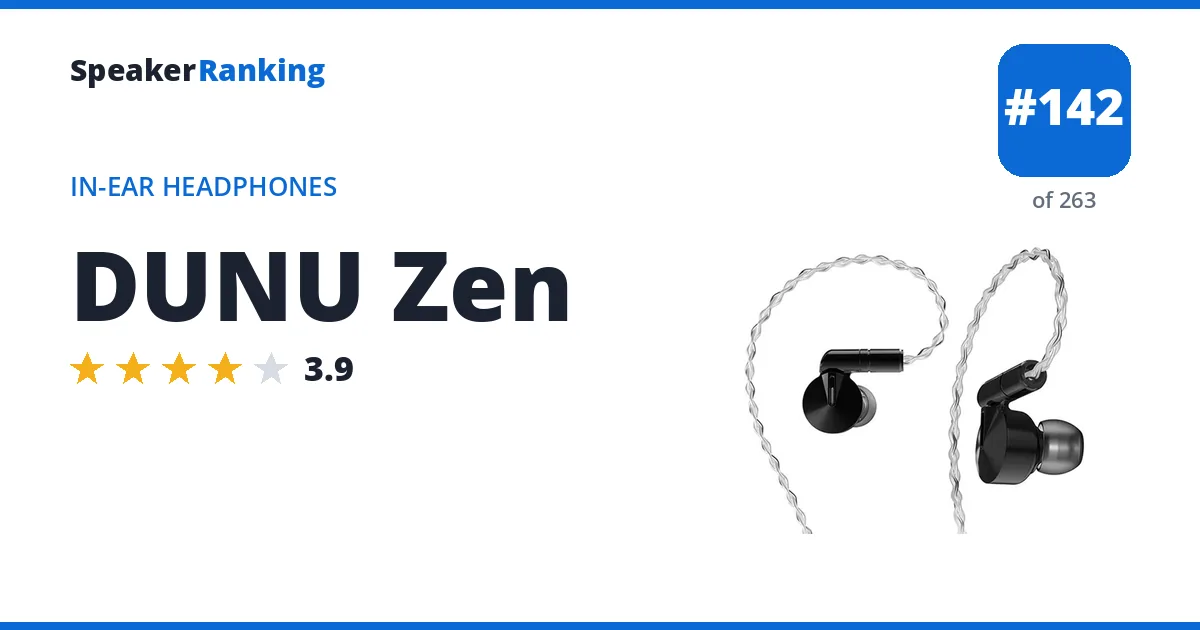
Pros: Crinacle’s measurement earns it a preference score of 72, and squig.link measurements show a warm, slightly bass-lifted tuning with bass about 1.6 dB above target that suits warm and bassy tastes. A single dynamic driver at 16 ohms and 112 dB sensitivity plays loudly from a phone. It matches the rating of the Unique Melody MEXT while costing less.
Cons: Air above 10 kHz falls about 8 dB short of target, with an 11 dB hole near 11.9 kHz, so the top end sounds rolled off and lacks shimmer. A 6 dB peak near 8.1 kHz sits right before that drop and can make some cymbal hits and sibilants stand out. The Fearless Audio S8Z is rated higher for less money.
Full DUNU Zen review and specifications →
| Released | Dec 2020 (5 years ago) |
|---|---|
| Back | Closed |
| Built-in Microphone | No |
| Connection | Wired |
| Deviation From Target | 2.48 dB standard deviation |
| Driver Type | Dynamic |
| Drivers | 1 x dynamic |
| Form Factor | In-ear |
| Frequency Response | 5Hz - 40kHz (Manufacturer specified) |
| Harman Preference Score | 72 (measured by crinacle, via AutoEQ) |
| Impedance | 16 ohms |
| Sensitivity | 112 dB |
| Sub-bass Extension | Within 6 dB of target down to 20 Hz (-1.6 dB at 30 Hz) |
| Tonal Tilt | +0.21 (negative is warmer, positive brighter) |
EQ preset to match the Harman target
Set a preamp of -6.6 dB, then add these filters in any parametric equalizer (Wavelet, Equalizer APO, Peace, or a player with parametric EQ). Calculated by AutoEQ from its measured frequency response.
| Filter | Frequency | Gain | Q |
|---|---|---|---|
| Low shelf | 105 Hz | +10.4 dB | 0.70 |
| Peak | 1,937 Hz | -5.1 dB | 0.78 |
| Peak | 44 Hz | -8.2 dB | 0.33 |
| Peak | 900 Hz | +3.5 dB | 0.58 |
| Peak | 6,107 Hz | +6.5 dB | 1.54 |
| High shelf | 10,000 Hz | +6.5 dB | 0.70 |
| Peak | 7,456 Hz | -2.8 dB | 4.76 |
| Peak | 4,201 Hz | -1.7 dB | 4.97 |
| Peak | 3,114 Hz | +1.5 dB | 3.87 |
| Peak | 2,317 Hz | -0.9 dB | 4.50 |
- Reviews, Comparisons and Sound Samples
 Ranked #154 of 238 in In-Ear Headphones - DUNU Zen Pro: $899.99 HiFiGo eBay
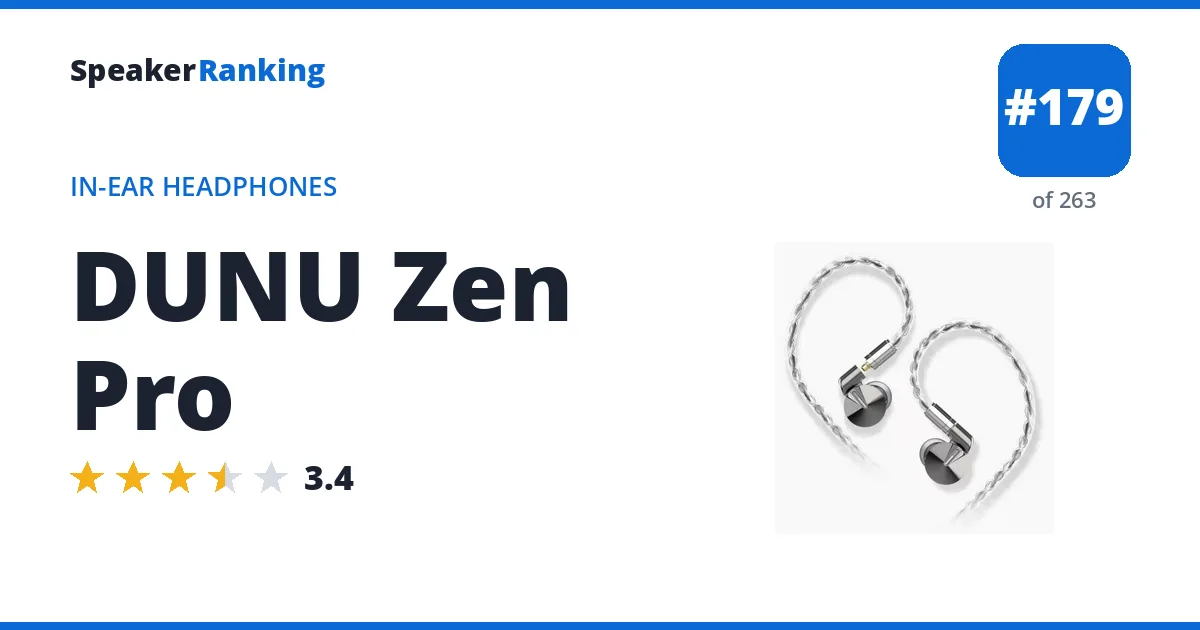
Pros: A single dynamic driver with bass, low mids and upper mids all within half a dB of target in squig.link’s hobbyist measurements, so voices and instruments keep a natural, even body. It matches the rating of the Unique Melody MEST Mk2 at a much lower price. At 16 ohms and 112 dB sensitivity it is easy to drive from a phone.
Cons: An 8.3 dB dip near 6.4 kHz and a 4 dB shortfall across 3 to 10 kHz dull cymbals and blunt the edge of vocals, while a 4.6 dB peak near 11.5 kHz adds a little uneven sparkle. Sub-bass sits about 3.5 dB below target, so the deepest rumble is lighter than the midbass suggests, and its 3.1 dB deviation makes it one of the less even tunings at this level.
Full DUNU Zen Pro review and specifications →
| Back | Closed |
|---|---|
| Built-in Microphone | No |
| Connection | Wired |
| Deviation From Target | 3.11 dB standard deviation |
| Driver Type | Dynamic |
| Form Factor | In-ear |
| Frequency Response | 5Hz - 40kHz (Manufacturer specified) |
| Harman Preference Score | 66 (measured by crinacle, via AutoEQ) |
| Impedance | 16 ohms |
| Sensitivity | 112 dB |
| Sub-bass Extension | Within 6 dB of target down to 20 Hz (-3.7 dB at 30 Hz) |
| Tonal Tilt | -0.11 (negative is warmer, positive brighter) |
EQ preset to match the Harman target
Set a preamp of -6.5 dB, then add these filters in any parametric equalizer (Wavelet, Equalizer APO, Peace, or a player with parametric EQ). Calculated by AutoEQ from its measured frequency response.
| Filter | Frequency | Gain | Q |
|---|---|---|---|
| Low shelf | 105 Hz | +8.7 dB | 0.70 |
| Peak | 58 Hz | -6.7 dB | 0.39 |
| Peak | 7,366 Hz | +4.8 dB | 0.84 |
| Peak | 2,185 Hz | -3.8 dB | 1.50 |
| Peak | 5,792 Hz | +2.4 dB | 2.90 |
| High shelf | 10,000 Hz | +3.7 dB | 0.70 |
| Peak | 821 Hz | +1.1 dB | 1.20 |
| Peak | 1,358 Hz | -1.0 dB | 2.21 |
| Peak | 207 Hz | -0.3 dB | 1.05 |
| Peak | 503 Hz | +0.3 dB | 1.77 |
- Reviews, Comparisons and Sound Samples
 Ranked #189 of 238 in In-Ear Headphones - DUNU DK4001: $899.00 HiFiGo eBay
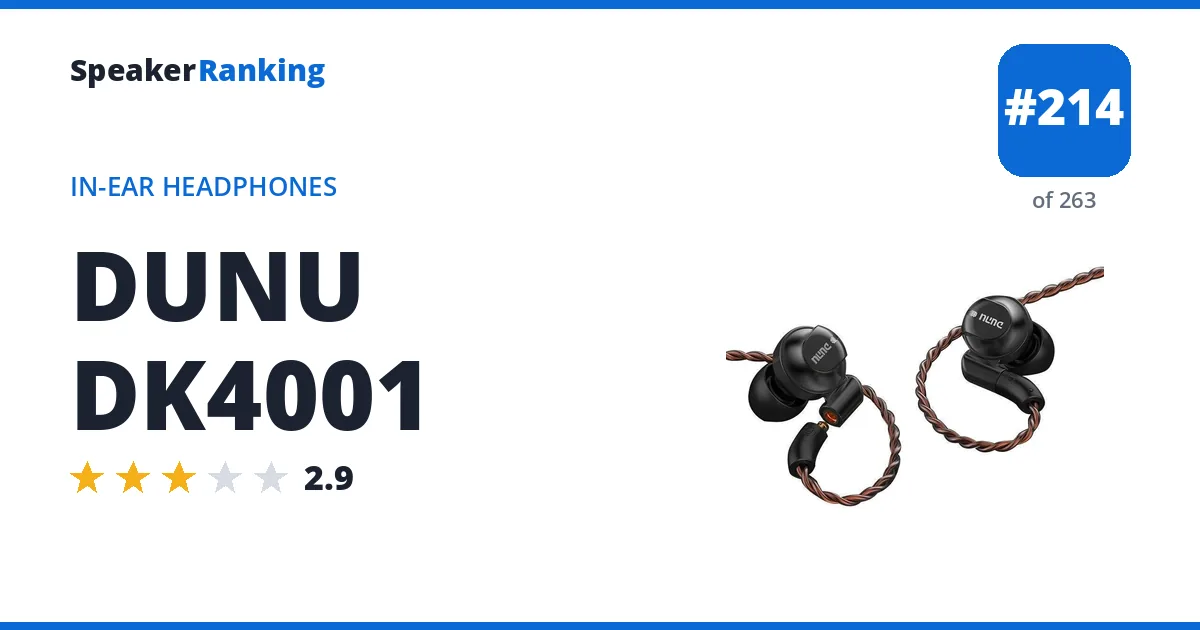
Pros: Its hybrid design pairs a 13mm dynamic driver with four balanced armatures, and at 112 dB sensitivity and 32 ohms it plays loud from a phone. HypetheSonics’ measurement shows its best match is a warm, bass leaning taste, and its rating equals the Audio-Technica ATH-CK2000Ti. A preference score of 60 leaves plenty of room for listeners willing to apply EQ.
Cons: Presence is about 8.1 dB under target and air about 7.7 dB under, with a 12 dB hole near 11.9 kHz, so vocals sound distant and cymbals lose shimmer. A 6.1 dB peak near 7.7 kHz on top of that uneven treble, 3.52 dB of deviation overall, adds edginess to sibilants. Sub-bass sits about 5.2 dB low, and it rates below the Fatfreq Reference Pro SE and InEar StageDiver SD5.
Full DUNU DK4001 review and specifications →
| Released | 2019 (7 years ago) |
|---|---|
| Back | Closed |
| Built-in Microphone | No |
| Connection | Wired |
| Deviation From Target | 3.52 dB standard deviation |
| Driver Type | Hybrid (1 dynamic + 4 balanced armature) |
| Drivers | 1 x 13mm dynamic + 4 x balanced armature |
| Form Factor | In-ear |
| Frequency Response | 5Hz - 40kHz (Manufacturer specified) |
| Harman Preference Score | 60 (measured by HypetheSonics, via AutoEQ) |
| Impedance | 32 ohms |
| Sensitivity | 112 dB |
| Sub-bass Extension | Within 6 dB of target down to 20 Hz (-5.1 dB at 30 Hz) |
| Tonal Tilt | +0.16 (negative is warmer, positive brighter) |
EQ preset to match the Harman target
Set a preamp of -6.2 dB, then add these filters in any parametric equalizer (Wavelet, Equalizer APO, Peace, or a player with parametric EQ). Calculated by AutoEQ from its measured frequency response.
| Filter | Frequency | Gain | Q |
|---|---|---|---|
| Low shelf | 105 Hz | +2.4 dB | 0.70 |
| Peak | 5,069 Hz | +19.7 dB | 0.43 |
| Peak | 6,458 Hz | -20.0 dB | 1.04 |
| Peak | 1,949 Hz | -18.2 dB | 0.73 |
| Peak | 2,310 Hz | +12.4 dB | 1.07 |
| High shelf | 10,000 Hz | -4.6 dB | 0.70 |
| Peak | 176 Hz | -1.6 dB | 1.09 |
| Peak | 9,726 Hz | +3.0 dB | 3.09 |
| Peak | 705 Hz | +0.9 dB | 1.20 |
| Peak | 1,405 Hz | -1.0 dB | 3.61 |
- Reviews, Comparisons and Sound Samples