Coverage note. Speaker Ranking currently covers 7 Beyerdynamic models across headphones. These are the products in our database, not a complete list of everything Beyerdynamic makes.
What this page covers. The Beyerdynamic models ranked here span headphones, including Beyerdynamic MMX 300, Beyerdynamic DT 880 and Beyerdynamic DT 900 Pro X. Use each model’s category position to compare it with alternatives of the same size and use case.
This page lists all 7 Beyerdynamic speakers ranked on this site across headphones. Each model is shown in the category where it competes, with its current rank and the size of that ranking.
Use the category position rather than the brand name alone: speakers from the same manufacturer can perform very differently by size, price and product family.
Prices on this page were last checked October 10, 2026 at 5:37 PM UTC. Product prices and availability are accurate as of that date/time and are subject to change; the price and availability shown on Amazon at the time of purchase will apply to the purchase of this product.
As an eBay Partner, we may be compensated if you make a purchase.
Over-Ear Headphones
 Ranked #9 of 134 in Over-Ear Headphones - Beyerdynamic MMX 300: $325.00 Amazon eBay
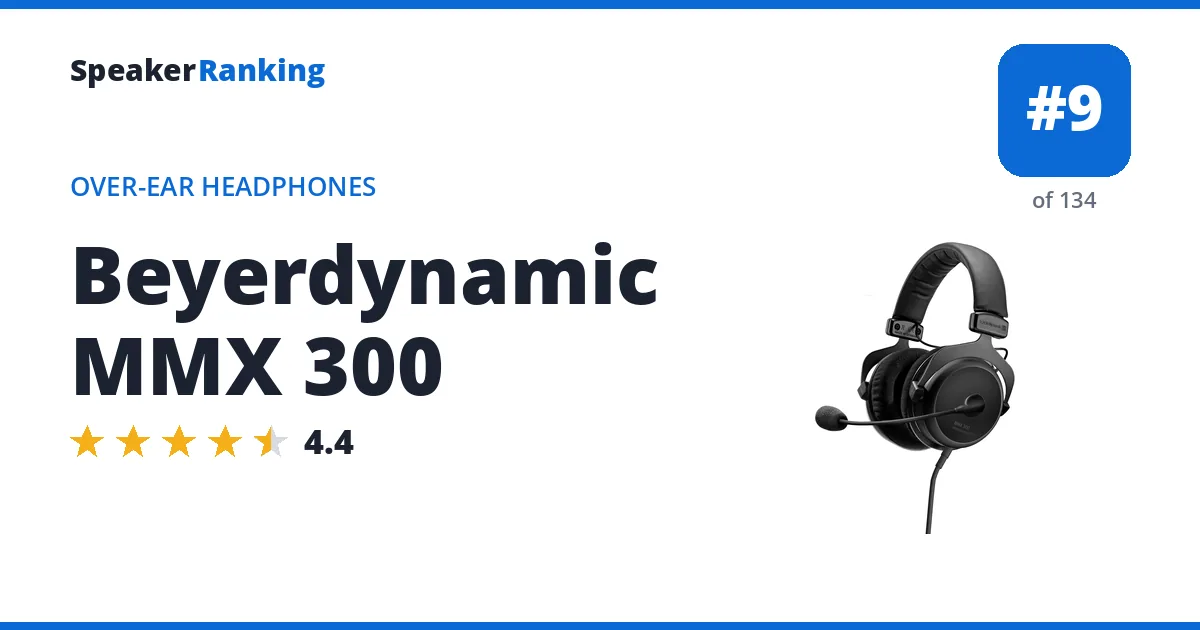
Pros: It scores 91 on the Harman model, with bass from 60 to 200 Hz and the whole midrange within about half a dB of target. A built-in microphone and closed back make it practical for calls, gaming and noisy rooms, and 32 ohms with 96 dB SPL sensitivity runs from a phone or laptop. Its tuning is slightly warm.
Cons: The top end is uneven, with a 4.3 dB dip near 9.5 kHz followed by a 6.1 dB peak near 11.9 kHz and air above 10 kHz about 5.3 dB hot. That can make cymbals and strings sound sharp or glassy. Sub-bass is about 3.2 dB under target, so the deepest bass notes lack some rumble.
Full Beyerdynamic MMX 300 review and specifications →
| Released | Feb 2017 (9 years ago) |
|---|---|
| Back | Closed |
| Built-in Microphone | Yes |
| Connection | Wired |
| Deviation From Target | 1.73 dB standard deviation |
| Driver Type | Dynamic |
| Form Factor | Over-ear |
| Frequency Response | 5Hz - 35kHz (Manufacturer specified) |
| Harman Preference Score | 91 (measured by oratory1990, via AutoEQ) |
| Impedance | 32 ohms |
| Sensitivity | 96 dB SPL |
| Tonal Tilt | -0.09 (negative is warmer, positive brighter) |
EQ preset to match the Harman target
Set a preamp of -5.8 dB, then add these filters in any parametric equalizer (Wavelet, Equalizer APO, Peace, or a player with parametric EQ). Calculated by AutoEQ from its measured frequency response.
| Filter | Frequency | Gain | Q |
|---|---|---|---|
| Low shelf | 105 Hz | +7.1 dB | 0.70 |
| Peak | 73 Hz | -7.9 dB | 0.69 |
| Peak | 3,829 Hz | +3.8 dB | 3.33 |
| Peak | 79 Hz | +6.7 dB | 2.65 |
| Peak | 5,667 Hz | -4.2 dB | 6.00 |
| High shelf | 10,000 Hz | -8.0 dB | 0.70 |
| Peak | 8,787 Hz | +3.1 dB | 1.63 |
| Peak | 216 Hz | +1.9 dB | 3.10 |
| Peak | 142 Hz | -1.4 dB | 2.61 |
| Peak | 1,207 Hz | +0.6 dB | 1.60 |
- Reviews, Comparisons and Sound Samples
- Head-to-Head Comparisons
 Ranked #17 of 134 in Over-Ear Headphones - Beyerdynamic DT 880: $159.95 Amazon eBay
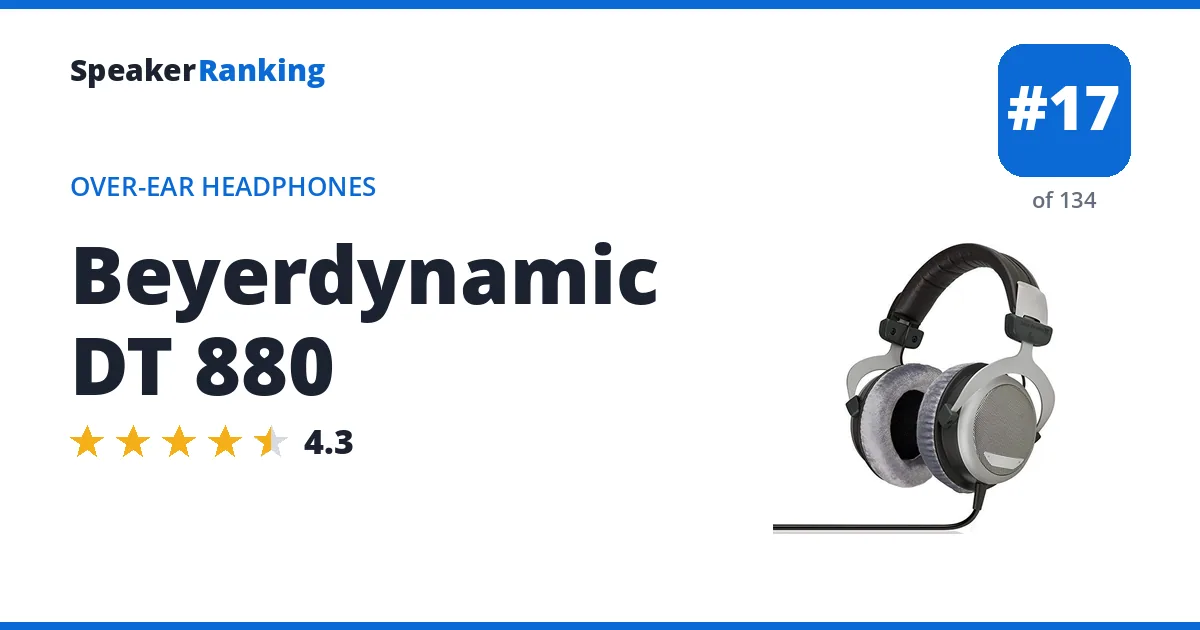
Pros: A preference score of 88 and a neutral tilt show a well balanced tuning, with bass from 60 to 200 Hz within 1 dB of target and upper mids within half a dB. The semi-open design offers a more spacious feel than a closed back. It has the same rating as the HIFIMAN Ananda Stealth and Sennheiser HD 505 while costing less than both.
Cons: A 6 dB peak near 5.8 kHz can make hi-hats, snare and sibilant vocals sound sharp, and the treble from 6 to 10 kHz runs about 2 dB hot. The low mids are lifted by about 2 dB and sub-bass is about 4 dB light under 60 Hz, giving a slightly boxy, bass-shy balance. The semi-open back leaks some sound and gives limited isolation.
Full Beyerdynamic DT 880 review and specifications →
| Back | Semi-open |
|---|---|
| Connection | Wired |
| Deviation From Target | 2.05 dB standard deviation |
| Driver Type | Dynamic |
| Form Factor | Over-ear |
| Frequency Response | 5Hz - 35kHz (Manufacturer specified) |
| Harman Preference Score | 88 (measured by oratory1990, via AutoEQ) |
| Tonal Tilt | +0.02 (negative is warmer, positive brighter) |
EQ preset to match the Harman target
Set a preamp of -6.4 dB, then add these filters in any parametric equalizer (Wavelet, Equalizer APO, Peace, or a player with parametric EQ). Calculated by AutoEQ from its measured frequency response.
| Filter | Frequency | Gain | Q |
|---|---|---|---|
| Low shelf | 105 Hz | +7.4 dB | 0.70 |
| Peak | 112 Hz | -3.4 dB | 0.30 |
| Peak | 1,320 Hz | +2.1 dB | 0.54 |
| Peak | 5,760 Hz | -6.1 dB | 4.97 |
| Peak | 4,480 Hz | +3.9 dB | 4.24 |
| High shelf | 10,000 Hz | -3.1 dB | 0.70 |
| Peak | 480 Hz | +0.5 dB | 2.40 |
| Peak | 234 Hz | -0.4 dB | 2.41 |
| Peak | 940 Hz | -0.6 dB | 4.04 |
| Peak | 2,939 Hz | -0.5 dB | 4.92 |
- Reviews, Comparisons and Sound Samples
 Ranked #18 of 134 in Over-Ear Headphones - Beyerdynamic DT 900 Pro X: $279.99 Amazon eBay
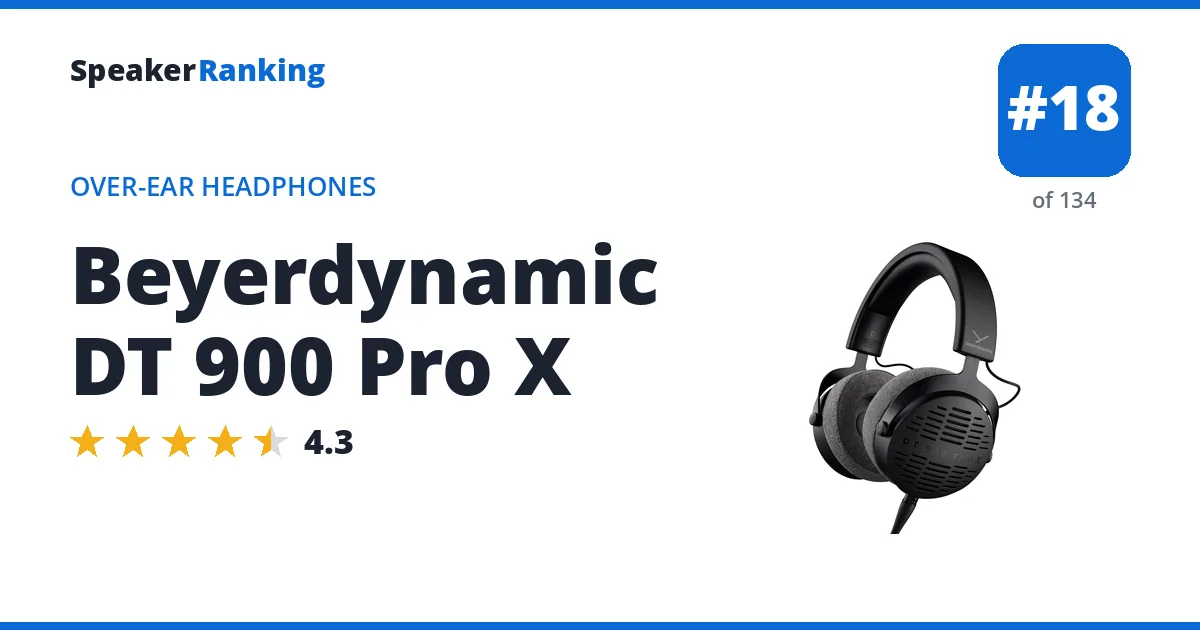
Pros: A preference score of 88 with a warm-leaning, near neutral tilt means most of the spectrum sits close to target, with bass within 0.3 dB and treble within 0.5 dB. At 48 ohms it plays loudly from most sources and its 345 g weight is moderate. It is rated the same as the Sennheiser HD 505 and Shure SRH840 and higher than the Audio-Technica ATH-M70x.
Cons: A 9.5 dB dip near 4 kHz is the largest deviation in this group and can pull the bite out of vocals, snares and guitars. The air band above 10 kHz is about 2 dB under target and sub-bass is about 3.5 dB light, so highs lack sparkle and deep bass lacks rumble. The open back leaks sound and gives no isolation.
Full Beyerdynamic DT 900 Pro X review and specifications →
| Released | Oct 2021 (5 years ago) |
|---|---|
| Back | Open |
| Connection | Wired |
| Deviation From Target | 2.08 dB standard deviation |
| Driver Type | Dynamic |
| Form Factor | Over-ear |
| Frequency Response | 5Hz - 40kHz (Manufacturer specified) |
| Harman Preference Score | 88 (measured by oratory1990, via AutoEQ) |
| Impedance | 48 ohms |
| Sensitivity | 100 dB SPL (1mW/500Hz) |
| Tonal Tilt | -0.04 (negative is warmer, positive brighter) |
| Weight | 0.8 lbs (345 g) |
EQ preset to match the Harman target
Set a preamp of -4.5 dB, then add these filters in any parametric equalizer (Wavelet, Equalizer APO, Peace, or a player with parametric EQ). Calculated by AutoEQ from its measured frequency response.
| Filter | Frequency | Gain | Q |
|---|---|---|---|
| Low shelf | 105 Hz | +5.7 dB | 0.70 |
| Peak | 94 Hz | -2.3 dB | 0.22 |
| Peak | 6,103 Hz | -5.3 dB | 1.81 |
| Peak | 4,103 Hz | +3.8 dB | 4.69 |
| Peak | 6,339 Hz | +1.5 dB | 0.18 |
| High shelf | 10,000 Hz | -1.2 dB | 0.70 |
| Peak | 2,503 Hz | -0.8 dB | 3.03 |
| Peak | 59 Hz | -0.3 dB | 1.39 |
| Peak | 82 Hz | +0.7 dB | 3.97 |
| Peak | 2,966 Hz | +1.0 dB | 6.00 |
- Reviews, Comparisons and Sound Samples
 Ranked #25 of 134 in Over-Ear Headphones - Beyerdynamic TYGR 300 R: $159.99 Amazon eBay
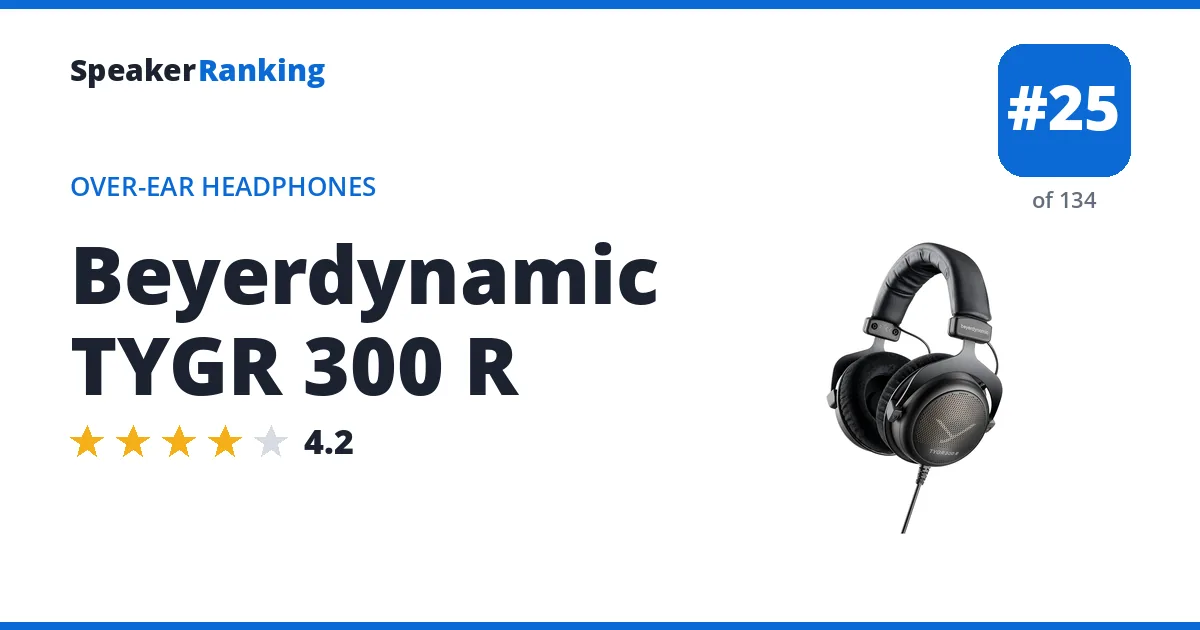
Pros: A preference score of 86 in crinacle’s measurement shows it tracks the Harman target closely, with a smoothness of 1.9 dB. The 32 ohm impedance and 96 dB sensitivity mean it runs fine from a phone or laptop, and 290 g is manageable for an open-back design. It shares its rating with the FiiO FT1 Pro at a lower price.
Cons: Only the overall score is available, so there is no band by band breakdown of where it deviates from target. The open back leaks sound and offers no isolation, and there is no built-in microphone, so it suits quiet listening and desk use rather than commuting or calls.
Full Beyerdynamic TYGR 300 R review and specifications →
| Released | 2019 (7 years ago) |
|---|---|
| Back | Open |
| Built-in Microphone | No |
| Connection | Wired |
| Deviation From Target | 1.90 dB standard deviation |
| Form Factor | Over-ear |
| Frequency Response | 5Hz - 35kHz (Manufacturer specified) |
| Harman Preference Score | 86 (measured by crinacle, via AutoEQ) |
| Impedance | 32 ohms |
| Sensitivity | 96 dB SPL |
| Tonal Tilt | -0.30 (negative is warmer, positive brighter) |
| Weight | 0.6 lbs (290 g) |
EQ preset to match the Harman target
Set a preamp of -5.9 dB, then add these filters in any parametric equalizer (Wavelet, Equalizer APO, Peace, or a player with parametric EQ). Calculated by AutoEQ from its measured frequency response.
| Filter | Frequency | Gain | Q |
|---|---|---|---|
| Low shelf | 105 Hz | +16.5 dB | 0.70 |
| Peak | 43 Hz | -14.1 dB | 0.32 |
| Peak | 2,772 Hz | +2.4 dB | 1.07 |
| Peak | 626 Hz | +2.7 dB | 1.03 |
| Peak | 5,621 Hz | -6.0 dB | 5.22 |
| High shelf | 10,000 Hz | -6.3 dB | 0.70 |
| Peak | 4,679 Hz | +1.3 dB | 6.00 |
| Peak | 23 Hz | -0.5 dB | 4.16 |
| Peak | 30 Hz | +0.3 dB | 2.29 |
| Peak | 6,882 Hz | +1.3 dB | 5.99 |
- Reviews, Comparisons and Sound Samples
 Ranked #43 of 134 in Over-Ear Headphones - Beyerdynamic DT 770 Pro: $154.99 Amazon eBay
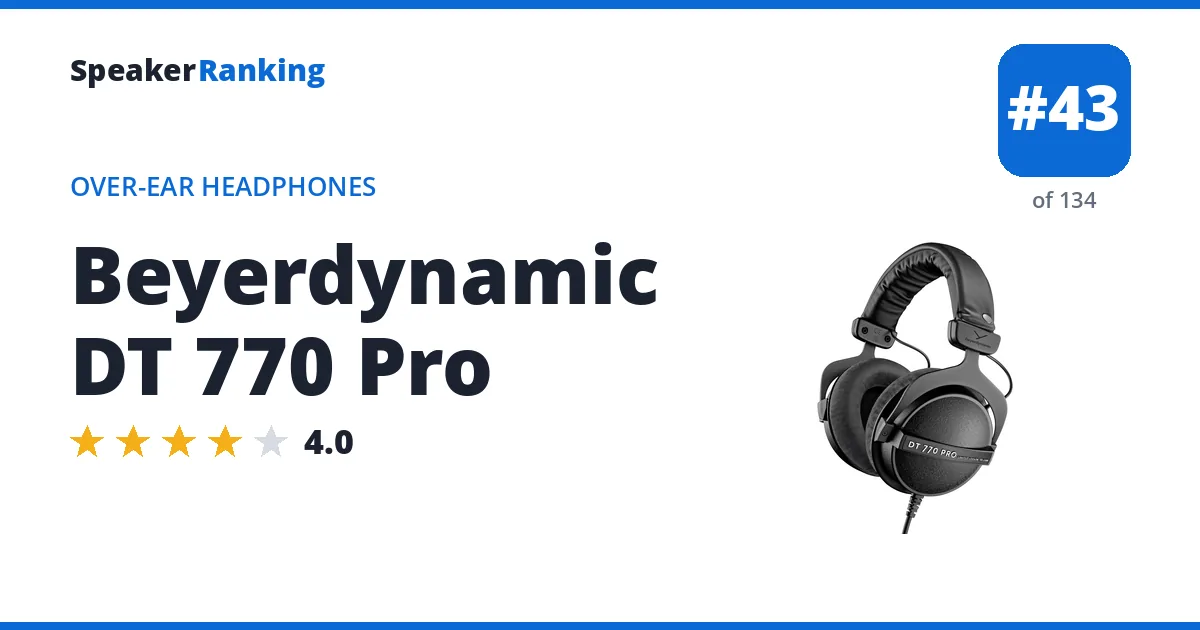
Pros: A preference score of 82 in oratory1990’s measurement reflects a lively closed-back sound with extra low end: sub-bass is about 3.4 dB above target, which adds weight to kick drums and bass lines. The closed back isolates well for tracking or noisy rooms. At 80 ohms and 96 dB SPL it works with most interfaces and decent amps.
Cons: A 7.8 dB dip near 3.75 kHz pulls back vocal presence, while a 5 dB peak near 8.1 kHz and treble about 2.6 dB above target make cymbals and S sounds sharp. The deviation of 2.3 dB is the least smooth of the group. The 80 ohm impedance is demanding for a phone alone.
Full Beyerdynamic DT 770 Pro review and specifications →
| Back | Closed |
|---|---|
| Connection | Wired |
| Deviation From Target | 2.31 dB standard deviation |
| Driver Type | Dynamic |
| Form Factor | Over-ear |
| Frequency Response | 5Hz - 35kHz (Manufacturer specified) |
| Harman Preference Score | 82 (measured by oratory1990, via AutoEQ) |
| Impedance | 80 ohms |
| Sensitivity | 96 dB SPL |
| Tonal Tilt | -0.19 (negative is warmer, positive brighter) |
EQ preset to match the Harman target
Set a preamp of -5.1 dB, then add these filters in any parametric equalizer (Wavelet, Equalizer APO, Peace, or a player with parametric EQ). Calculated by AutoEQ from its measured frequency response.
| Filter | Frequency | Gain | Q |
|---|---|---|---|
| Low shelf | 105 Hz | -3.0 dB | 0.70 |
| Peak | 6,430 Hz | -4.2 dB | 0.97 |
| Peak | 3,684 Hz | +6.8 dB | 2.88 |
| Peak | 213 Hz | +3.5 dB | 2.46 |
| Peak | 139 Hz | -3.9 dB | 4.92 |
| High shelf | 10,000 Hz | -5.4 dB | 0.70 |
| Peak | 93 Hz | +3.5 dB | 3.00 |
| Peak | 9,561 Hz | +2.3 dB | 1.86 |
| Peak | 45 Hz | -1.3 dB | 1.74 |
| Peak | 119 Hz | -2.1 dB | 5.83 |
- Reviews, Comparisons and Sound Samples
- Head-to-Head Comparisons
 Ranked #44 of 134 in Over-Ear Headphones - Beyerdynamic DT 990 Pro: $149.99 Amazon eBay
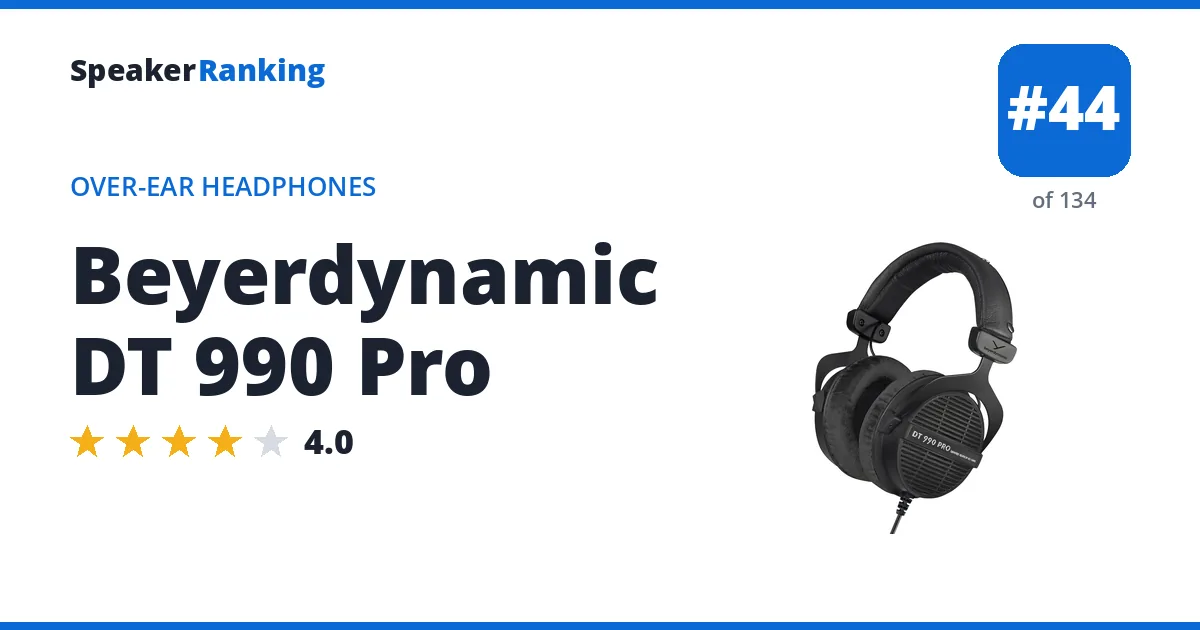
Pros: A preference score of 82 comes from a lively, bass-forward tuning, with bass from 60 to 200 Hz about 2.4 dB above target for punch and drive. The open back gives a spacious, airy soundstage, and the presence and treble lift adds a sense of detail on bright recordings.
Cons: Treble runs about 5 dB above target and air above 10 kHz is nearly 9 dB hot, with a peak near 10.9 dB at 11.9 kHz, so cymbals and sibilance can sound harsh, especially at high volume. Sub-bass is about 2.5 dB low. The 250 ohm impedance needs a headphone amp, and the open back leaks sound.
Full Beyerdynamic DT 990 Pro review and specifications →
| Back | Open |
|---|---|
| Connection | Wired |
| Deviation From Target | 2.08 dB standard deviation |
| Driver Type | Dynamic |
| Form Factor | Over-ear |
| Frequency Response | 5Hz - 35kHz (Manufacturer specified) |
| Harman Preference Score | 82 (measured by oratory1990, via AutoEQ) |
| Impedance | 250 ohms |
| Sensitivity | 96 dB SPL |
| Tonal Tilt | +0.40 (negative is warmer, positive brighter) |
| Weight | 0.6 lbs (250 g) |
EQ preset to match the Harman target
Set a preamp of -6.7 dB, then add these filters in any parametric equalizer (Wavelet, Equalizer APO, Peace, or a player with parametric EQ). Calculated by AutoEQ from its measured frequency response.
| Filter | Frequency | Gain | Q |
|---|---|---|---|
| Low shelf | 105 Hz | +10.1 dB | 0.70 |
| Peak | 541 Hz | +3.1 dB | 0.52 |
| Peak | 64 Hz | -7.4 dB | 0.38 |
| Peak | 7,731 Hz | -4.6 dB | 1.06 |
| Peak | 640 Hz | +0.6 dB | 2.47 |
| High shelf | 10,000 Hz | -9.8 dB | 0.70 |
| Peak | 7,136 Hz | +3.1 dB | 2.08 |
| Peak | 5,897 Hz | -4.8 dB | 5.30 |
| Peak | 4,193 Hz | +1.1 dB | 1.51 |
| Peak | 9,436 Hz | +2.7 dB | 3.53 |
- Reviews, Comparisons and Sound Samples
- Head-to-Head Comparisons
 Ranked #62 of 134 in Over-Ear Headphones - Beyerdynamic DT 700 Pro X: $279.99 Amazon eBay
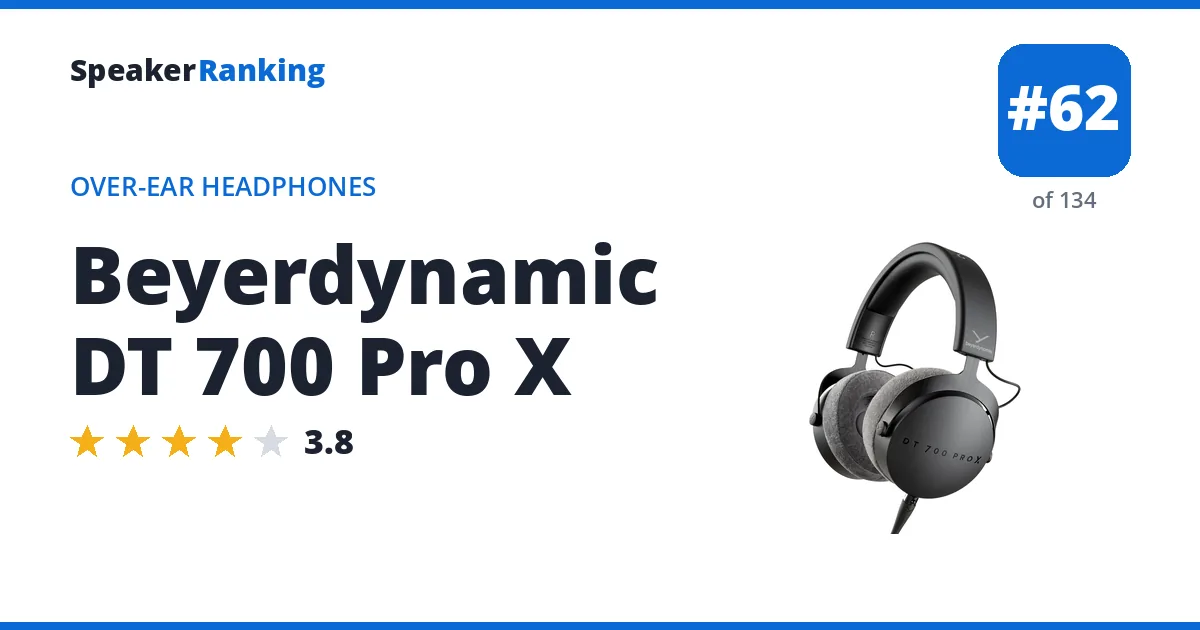
Pros: Bass from 60 to 200 Hz lands right on the Harman target, and the 48 ohm, 100 dB sensitivity design drives easily from a laptop or interface. The closed back and 350 g weight suit tracking and long monitoring sessions where bleed matters. A preference score of 77 with a fairly smooth 2.6 dB deviation makes it an easy listen overall.
Cons: A deep 12.8 dB dip near 3.9 kHz pulls vocal presence and consonant clarity backward, and presence overall runs about 3.5 dB under target. Sub-bass is about 2 dB light, so the lowest notes lack rumble. The Austrian Audio Hi-X65 matches its rating for noticeably less money, so the price is hard to justify on sound alone.
Full Beyerdynamic DT 700 Pro X review and specifications →
| Released | Oct 2021 (5 years ago) |
|---|---|
| Back | Closed |
| Connection | Wired |
| Deviation From Target | 2.58 dB standard deviation |
| Driver Type | Dynamic |
| Form Factor | Over-ear |
| Frequency Response | 5Hz - 40kHz (Manufacturer specified) |
| Harman Preference Score | 77 (measured by oratory1990, via AutoEQ) |
| Impedance | 48 ohms |
| Sensitivity | 100 dB SPL (1mW/500Hz) |
| Tonal Tilt | -0.34 (negative is warmer, positive brighter) |
| Weight | 0.8 lbs (350 g) |
EQ preset to match the Harman target
Set a preamp of -4.6 dB, then add these filters in any parametric equalizer (Wavelet, Equalizer APO, Peace, or a player with parametric EQ). Calculated by AutoEQ from its measured frequency response.
| Filter | Frequency | Gain | Q |
|---|---|---|---|
| Low shelf | 105 Hz | +1.0 dB | 0.70 |
| Peak | 131 Hz | -4.1 dB | 1.24 |
| Peak | 2,692 Hz | -2.6 dB | 0.37 |
| Peak | 265 Hz | +4.2 dB | 1.71 |
| Peak | 3,557 Hz | +6.8 dB | 2.70 |
| High shelf | 10,000 Hz | -0.2 dB | 0.70 |
| Peak | 5,709 Hz | -2.0 dB | 3.38 |
| Peak | 62 Hz | +1.5 dB | 3.47 |
| Peak | 88 Hz | -0.8 dB | 3.25 |
| Peak | 4,028 Hz | +1.4 dB | 5.91 |
- Reviews, Comparisons and Sound Samples