Coverage note. Speaker Ranking currently covers 5 64 Audio models across headphones. These are the products in our database, not a complete list of everything 64 Audio makes.
What this page covers. The 64 Audio models ranked here span headphones, including 64 Audio Tia Trio, 64 Audio A12t and 64 Audio U12t. Use each model’s category position to compare it with alternatives of the same size and use case.
This page lists all 5 64 Audio speakers ranked on this site across headphones. Each model is shown in the category where it competes, with its current rank and the size of that ranking.
Use the category position rather than the brand name alone: speakers from the same manufacturer can perform very differently by size, price and product family.
Prices on this page were last checked October 10, 2026 at 5:37 PM UTC. Product prices and availability are accurate as of that date/time and are subject to change; the price and availability shown on Amazon at the time of purchase will apply to the purchase of this product.
As an eBay Partner, we may be compensated if you make a purchase.
In-Ear Headphones
 Ranked #220 of 297 in In-Ear Headphones - 64 Audio Tia Trio: $2,299.00 64 Audio eBay
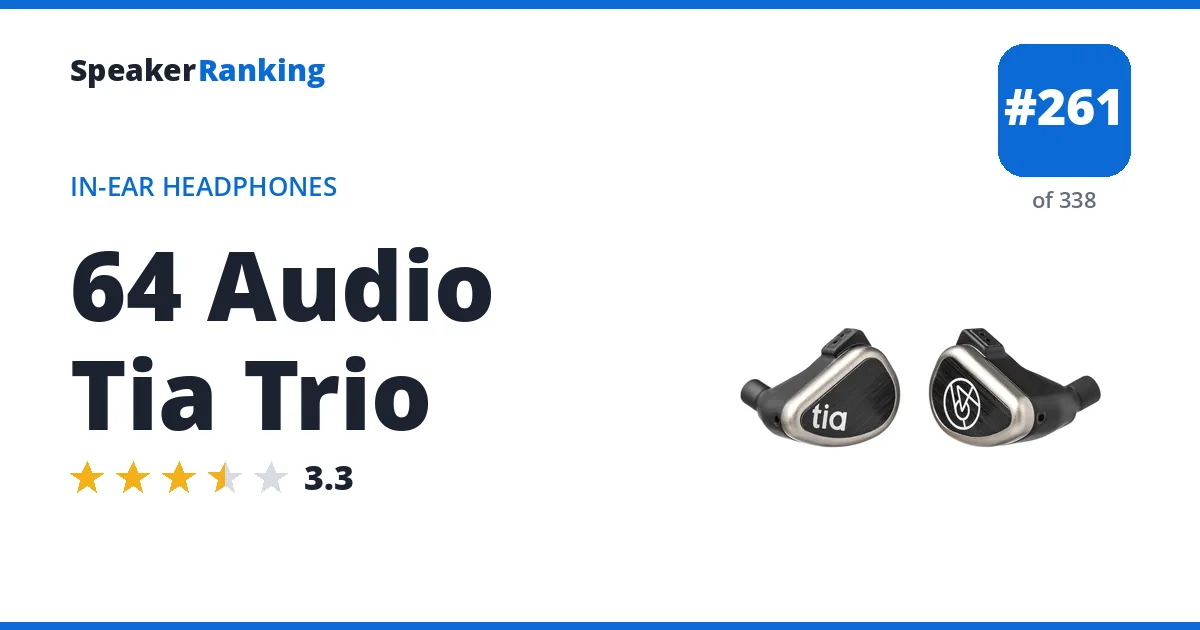
Pros: A single dynamic driver and two balanced armatures give near-neutral sub-bass down to 20 Hz and about 1.8 dB of extra bass for warmth and weight. Air above 10 kHz rises about 4.9 dB, giving cymbals shimmer and a sense of space. At 104 dB/mW it runs fine from a phone. It rates above the 64 Audio U12t and the SoftEars Cerberus.
Cons: In squig.link measurements the 3 to 6 kHz presence band sits about 4.7 dB below target with a 6.6 dB dip near 5.5 kHz, so vocals and strings can sound recessed. A 5.9 dB peak near 11.9 kHz may add a touch of sizzle. The 64 Audio A12t from the same maker earns the same rating for less money.
Full 64 Audio Tia Trio review and specifications →
| Released | 2017 (9 years ago) |
|---|---|
| Back | Closed |
| Built-in Microphone | No |
| Connection | Wired |
| Deviation From Target | 2.59 dB standard deviation |
| Driver Type | Hybrid (1 dynamic + 2 balanced armature) |
| Drivers | 1 x dynamic + 2 x balanced armature |
| Form Factor | In-ear |
| Frequency Response | 5Hz - 22kHz (Manufacturer specified) |
| Harman Preference Score | 65 (measured by crinacle, via AutoEQ) |
| Impedance | 5.5 ohms |
| Sensitivity | 104 dB/mW |
| Sub-bass Extension | Within 6 dB of target down to 20 Hz (-0.6 dB at 30 Hz) |
| Tonal Tilt | -0.76 (negative is warmer, positive brighter) |
EQ preset to match the Harman target
Set a preamp of -5.3 dB, then add these filters in any parametric equalizer (Wavelet, Equalizer APO, Peace, or a player with parametric EQ). Calculated by AutoEQ from its measured frequency response.
| Filter | Frequency | Gain | Q |
|---|---|---|---|
| Low shelf | 105 Hz | -0.1 dB | 0.70 |
| Peak | 173 Hz | -2.9 dB | 0.47 |
| Peak | 5,866 Hz | +5.1 dB | 2.52 |
| Peak | 1,079 Hz | +3.6 dB | 3.41 |
| Peak | 3,899 Hz | +3.2 dB | 3.50 |
| High shelf | 10,000 Hz | -10.9 dB | 0.70 |
| Peak | 9,335 Hz | +5.3 dB | 1.90 |
| Peak | 2,172 Hz | -1.4 dB | 3.36 |
| Peak | 642 Hz | -1.1 dB | 3.27 |
| Peak | 364 Hz | +0.6 dB | 1.70 |
- Reviews, Comparisons and Sound Samples
 Ranked #221 of 297 in In-Ear Headphones - 64 Audio A12t: $1,999.00 64 Audio eBay
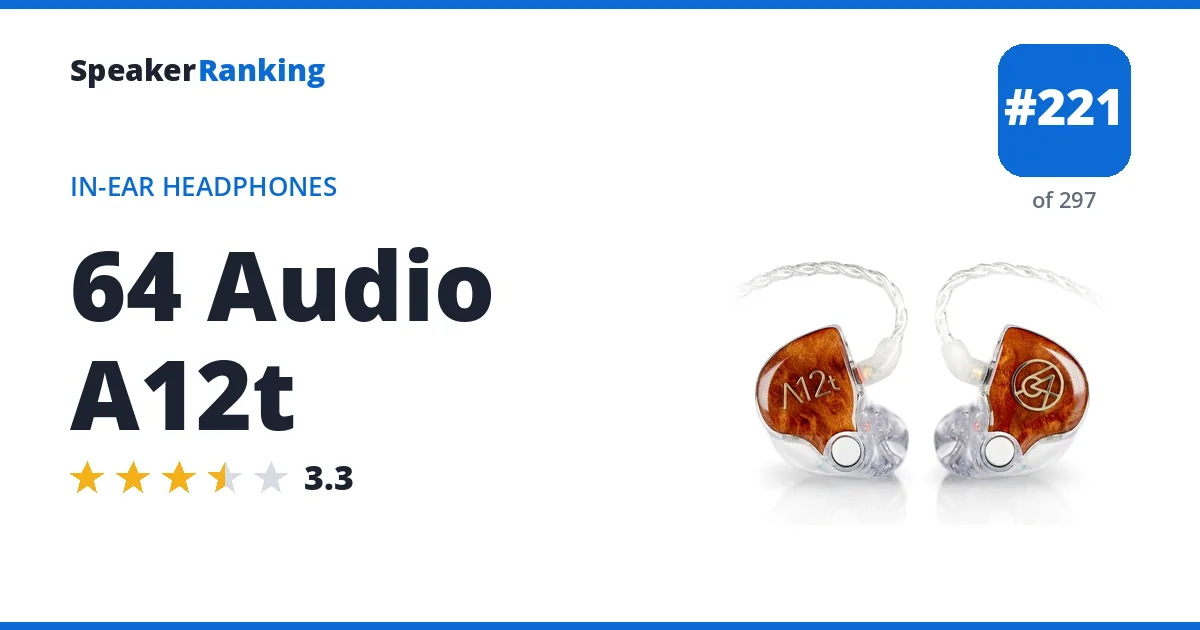
Pros: Bass is on target down to 20 Hz with a slight 1.9 dB lift from 60 to 200 Hz, so low end feels full and solid without boom. That warm balance suits listeners who prefer a relaxed, bass rich sound for long sessions. At 12.6 ohms and 108 dB/mW it runs easily from a phone.
Cons: In the two hobbyist measurements on squig.link, treble from 6 to 10 kHz sits about 10 dB below target with a 13.7 dB dip near 8.7 kHz, and presence is 7.3 dB low, so cymbals, strings and vocal clarity sound noticeably dark and muffled. The qdc Anole V6 earns the same rating for considerably less.
Full 64 Audio A12t review and specifications →
| Released | Mar 2018 (8 years ago) |
|---|---|
| Back | Closed |
| Built-in Microphone | No |
| Connection | Wired |
| Deviation From Target | 2.50 dB standard deviation |
| Driver Type | Balanced armature |
| Drivers | 12 x balanced armature (incl. 1 tia high driver) |
| Form Factor | In-ear |
| Frequency Response | 10Hz - 20kHz (Manufacturer specified) |
| Harman Preference Score | 65 (measured by crinacle, via AutoEQ) |
| Impedance | 12.6 ohms |
| Sensitivity | 108 dB/mW |
| Sub-bass Extension | Within 6 dB of target down to 20 Hz (+0.2 dB at 30 Hz) |
| Tonal Tilt | -0.87 (negative is warmer, positive brighter) |
EQ preset to match the Harman target
Set a preamp of -4.8 dB, then add these filters in any parametric equalizer (Wavelet, Equalizer APO, Peace, or a player with parametric EQ). Calculated by AutoEQ from its measured frequency response.
| Filter | Frequency | Gain | Q |
|---|---|---|---|
| Low shelf | 105 Hz | -0.9 dB | 0.70 |
| Peak | 206 Hz | -2.2 dB | 0.47 |
| Peak | 9,038 Hz | +5.2 dB | 1.59 |
| Peak | 3,244 Hz | +5.1 dB | 2.01 |
| Peak | 2,134 Hz | -2.6 dB | 2.47 |
| High shelf | 10,000 Hz | -6.1 dB | 0.70 |
| Peak | 5,789 Hz | +2.4 dB | 5.93 |
| Peak | 599 Hz | -0.7 dB | 2.55 |
| Peak | 951 Hz | +0.8 dB | 3.06 |
| Peak | 5,061 Hz | -1.6 dB | 6.00 |
- Reviews, Comparisons and Sound Samples
 Ranked #228 of 297 in In-Ear Headphones - 64 Audio U12t: $1,999.00 64 Audio eBay
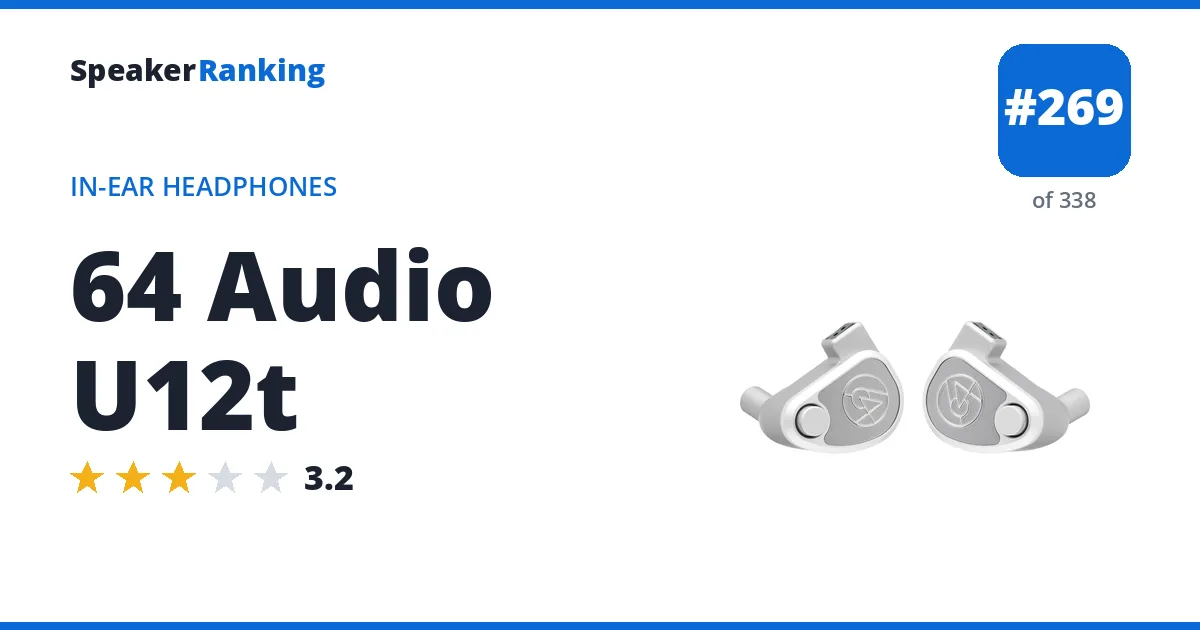
Pros: Twelve balanced armatures produce a warm, smooth tuning with sub-bass right on target down to 20 Hz and about 1.6 dB of extra bass for body. In the median of 22 hobbyist measurements on squig.link, the treble never rises more than a fraction of a decibel above target between 1.5 and 12 kHz, so there is no harshness or sibilance at any volume. At 108 dB/mW it plays loud from a phone. It matches the rating of the SoftEars Cerberus for less money.
Cons: Presence sits about 5.7 dB below target from 3 to 6 kHz, with a 7.9 dB dip near 3.3 kHz, so vocals and guitars sound distant and detail is subdued. The 64 Audio A12t from the same maker rates higher at the same price, and the Fir Audio e12 matches its rating for less.
Full 64 Audio U12t review and specifications →
| Back | Closed |
|---|---|
| Built-in Microphone | No |
| Connection | Wired |
| Deviation From Target | 2.67 dB standard deviation |
| Driver Type | Balanced armature |
| Drivers | 12 x balanced armature |
| Form Factor | In-ear |
| Frequency Response | 10Hz - 20kHz (Manufacturer specified) |
| Harman Preference Score | 64 (measured by crinacle, via AutoEQ) |
| Impedance | 12.6 ohms |
| Sensitivity | 108 dB/mW |
| Sub-bass Extension | Within 6 dB of target down to 20 Hz (-0.4 dB at 30 Hz) |
| Tonal Tilt | -0.86 (negative is warmer, positive brighter) |
EQ preset to match the Harman target
Set a preamp of -5.3 dB, then add these filters in any parametric equalizer (Wavelet, Equalizer APO, Peace, or a player with parametric EQ). Calculated by AutoEQ from its measured frequency response.
| Filter | Frequency | Gain | Q |
|---|---|---|---|
| Low shelf | 105 Hz | -0.4 dB | 0.70 |
| Peak | 191 Hz | -2.3 dB | 0.44 |
| Peak | 8,941 Hz | +5.5 dB | 1.20 |
| Peak | 3,118 Hz | +5.7 dB | 2.53 |
| Peak | 2,054 Hz | -3.1 dB | 2.08 |
| High shelf | 10,000 Hz | -6.7 dB | 0.70 |
| Peak | 5,678 Hz | +3.0 dB | 5.76 |
| Peak | 4,885 Hz | -1.9 dB | 6.00 |
| Peak | 314 Hz | +0.4 dB | 3.39 |
| Peak | 540 Hz | -0.4 dB | 2.46 |
- Reviews, Comparisons and Sound Samples
 Ranked #233 of 297 in In-Ear Headphones - 64 Audio U18S: $2,999.00 64 Audio eBay
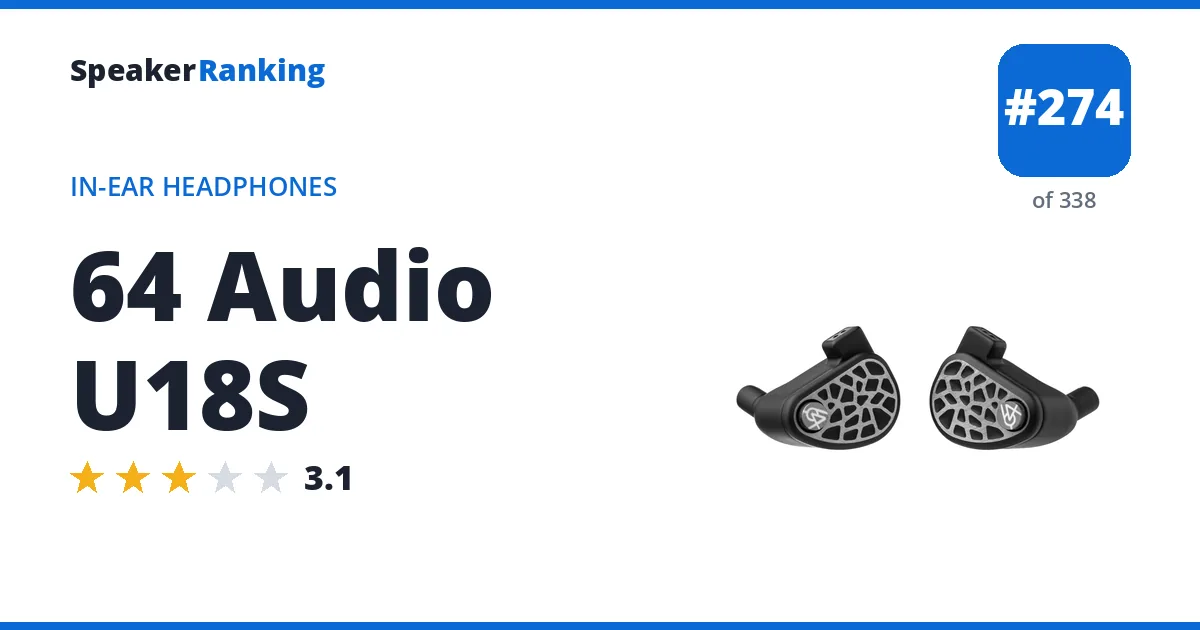
Pros: Eighteen balanced armature drivers per side deliver a warm, relaxed tuning with bass about 1.6 dB above target and sub-bass within 6 dB of target down to 20 Hz. The upper treble near 10 kHz stays close to neutral, so the top end keeps some air without glare. At 106 dB/mW it plays comfortably loud from a phone. It rates above the 64 Audio Volur from the same maker.
Cons: Across seven hobbyist measurements on squig.link, the 3 to 6 kHz presence region sits about 6 dB below target with a 9 dB dip near 5.8 kHz, so vocals and guitars lose bite and fine detail sounds veiled. The 64 Audio U12t rates higher for about a third less money. Its 8 ohm impedance makes the tuning sensitive to sources with high output impedance.
Full 64 Audio U18S review and specifications →
| Released | Mar 2021 (5 years ago) |
|---|---|
| Back | Closed |
| Built-in Microphone | No |
| Connection | Wired |
| Deviation From Target | 2.78 dB standard deviation |
| Driver Type | Balanced armature |
| Drivers | 18 x balanced armature (1 tia high + 1 high-mid + 8 mid + 8 low) |
| Form Factor | In-ear |
| Frequency Response | 10Hz - 20kHz (Manufacturer specified) |
| Harman Preference Score | 63 (measured by crinacle, via AutoEQ) |
| Impedance | 8 ohms |
| Sensitivity | 106 dB/mW |
| Sub-bass Extension | Within 6 dB of target down to 20 Hz (-2.7 dB at 30 Hz) |
| Tonal Tilt | -0.81 (negative is warmer, positive brighter) |
EQ preset to match the Harman target
Set a preamp of -6.4 dB, then add these filters in any parametric equalizer (Wavelet, Equalizer APO, Peace, or a player with parametric EQ). Calculated by AutoEQ from its measured frequency response.
| Filter | Frequency | Gain | Q |
|---|---|---|---|
| Low shelf | 105 Hz | -0.2 dB | 0.70 |
| Peak | 3,810 Hz | +5.3 dB | 0.39 |
| Peak | 188 Hz | -2.5 dB | 0.55 |
| Peak | 1,693 Hz | -5.3 dB | 0.92 |
| Peak | 9,264 Hz | +3.3 dB | 2.44 |
| High shelf | 10,000 Hz | -4.7 dB | 0.70 |
| Peak | 6,104 Hz | +2.5 dB | 5.82 |
| Peak | 2,983 Hz | +1.3 dB | 4.04 |
| Peak | 5,102 Hz | -1.7 dB | 6.00 |
| Peak | 2,279 Hz | -1.0 dB | 5.11 |
- Reviews, Comparisons and Sound Samples
 Ranked #238 of 297 in In-Ear Headphones - 64 Audio Volur: $2,499.00 64 Audio eBay
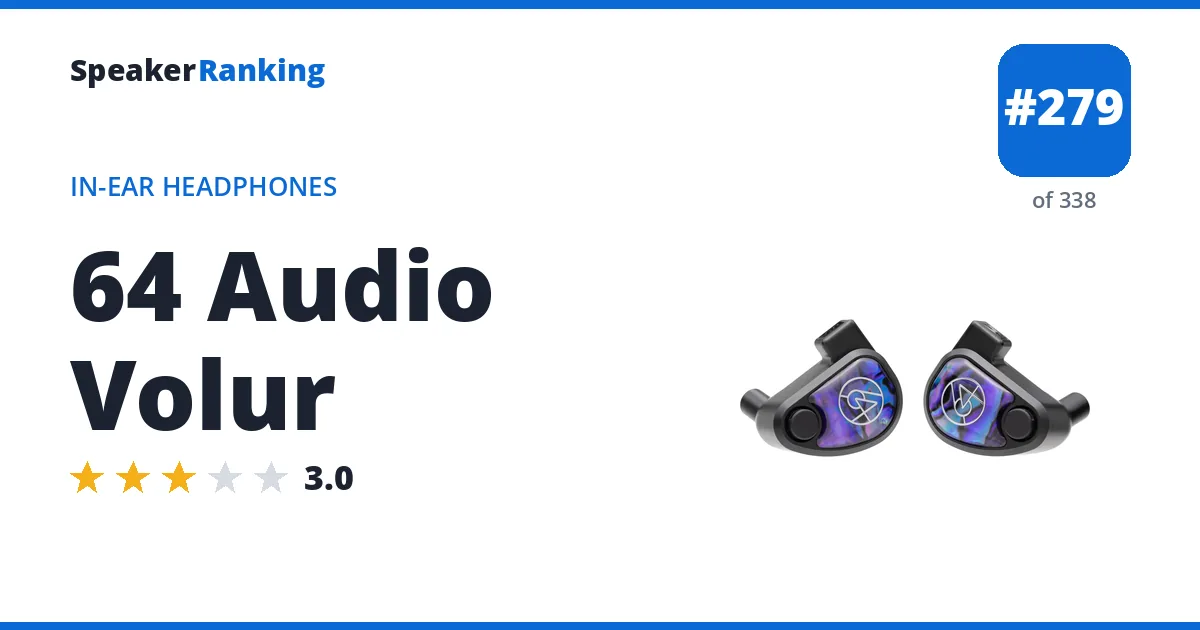
Pros: Two 9mm dynamic drivers deliver about 3 to 4 dB of extra sub-bass and bass in HypetheSonics’ measurement, still 2 dB above target at 30 Hz, so bass-heavy music has real depth and slam. Air above 10 kHz rises about 5.5 dB for shimmer on cymbals. The treble avoids sharp peaks, topping out at 3.8 dB near 11.9 kHz, so it stays easy to listen to at volume. At 103 dB/mW a phone drives it adequately.
Cons: A 4.6 dB dip near 3.4 kHz and a 2.4 dB shortfall across 3 to 6 kHz push vocals back behind the bass. A 1.9 dB lift in the lower mids adds thickness that can muddy dense mixes. The 64 Audio U12t and Fir Audio e12 both rate higher for less money.
Full 64 Audio Volur review and specifications →
| Released | Sep 2023 (3 years ago) |
|---|---|
| Back | Closed |
| Built-in Microphone | No |
| Connection | Wired |
| Deviation From Target | 2.56 dB standard deviation |
| Driver Type | Hybrid (2 dynamic + 8 balanced armature) |
| Drivers | 2 x 9mm dynamic + 8 x balanced armature |
| Form Factor | In-ear |
| Frequency Response | 5Hz - 22kHz (Manufacturer specified) |
| Harman Preference Score | 62 (measured by HypetheSonics, via AutoEQ) |
| Impedance | 6.3 ohms |
| Sensitivity | 103 dB/mW |
| Sub-bass Extension | Within 6 dB of target down to 20 Hz (+2.0 dB at 30 Hz) |
| Tonal Tilt | -1.19 (negative is warmer, positive brighter) |
EQ preset to match the Harman target
Set a preamp of -4.4 dB, then add these filters in any parametric equalizer (Wavelet, Equalizer APO, Peace, or a player with parametric EQ). Calculated by AutoEQ from its measured frequency response.
| Filter | Frequency | Gain | Q |
|---|---|---|---|
| Low shelf | 105 Hz | -3.0 dB | 0.70 |
| Peak | 193 Hz | -3.4 dB | 0.86 |
| Peak | 3,229 Hz | +4.2 dB | 3.02 |
| Peak | 883 Hz | +2.0 dB | 1.56 |
| Peak | 8,213 Hz | +2.8 dB | 2.15 |
| High shelf | 10,000 Hz | -11.7 dB | 0.70 |
| Peak | 9,744 Hz | +5.1 dB | 1.56 |
| Peak | 69 Hz | +0.7 dB | 1.81 |
| Peak | 2,041 Hz | -0.8 dB | 4.65 |
| Peak | 119 Hz | -0.5 dB | 2.33 |
- Reviews, Comparisons and Sound Samples