Coverage note. Speaker Ranking currently covers 10 Wharfedale models across pa speakers, passive speakers and subwoofers (plus 1 not yet ranked). These are the products in our database, not a complete list of everything Wharfedale makes.
What this page covers. The Wharfedale models ranked here span pa speakers, passive speakers and subwoofers, including Wharfedale Aura 2, Wharfedale Super Linton and Wharfedale Super Denton. Use each model’s category position to compare it with alternatives of the same size and use case.
This page lists all 10 Wharfedale speakers ranked on this site across pa speakers, passive speakers and subwoofers. Each model is shown in the category where it competes, with its current rank and the size of that ranking.
Use the category position rather than the brand name alone: speakers from the same manufacturer can perform very differently by size, price and product family.
Prices on this page were last checked September 30, 2026 at 2:57 PM UTC. Product prices and availability are accurate as of that date/time and are subject to change; the price and availability shown on Amazon at the time of purchase will apply to the purchase of this product.
As an eBay Partner, we may be compensated if you make a purchase.
Quick Navigation
- 10-Inch PA Speakers
- Medium Size Bookshelf Speakers
- Large Size Bookshelf Speakers
- Discontinued Wharfedale Models
- Wharfedale Models Not Yet Ranked
10-Inch PA Speakers
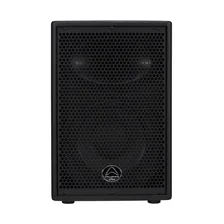 Ranked #28 of 28 in 10-Inch PA Speakers - Wharfedale Pro Delta X10: $640.00 Passive eBay
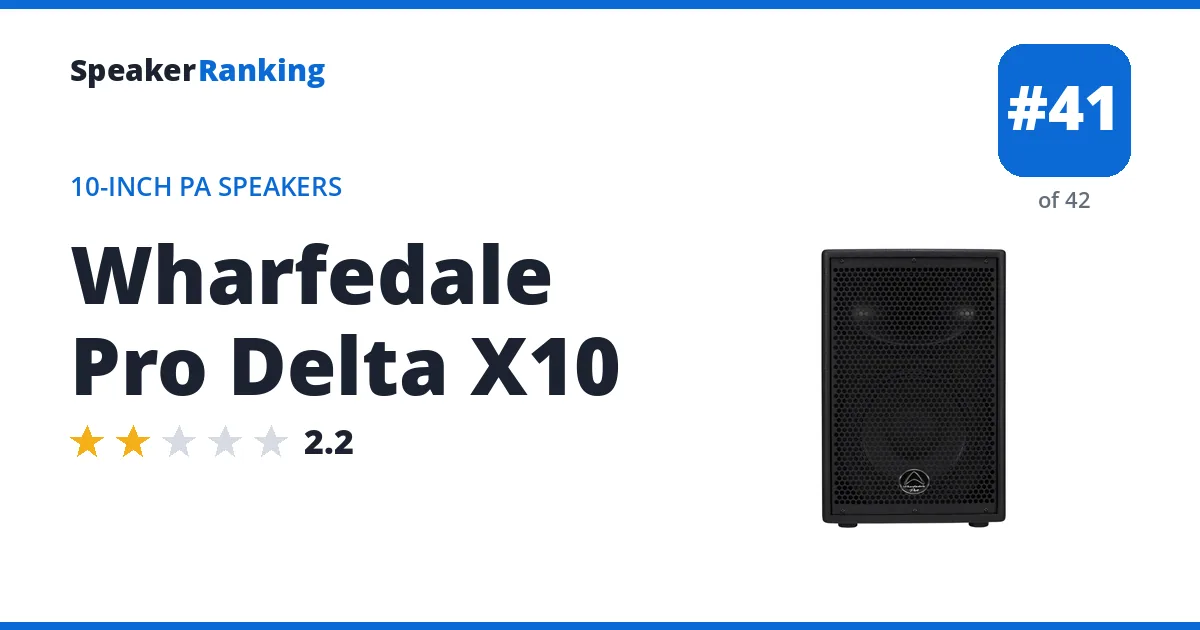
Pros: Built from 15mm birch plywood with a titanium-diaphragm compression driver, it can run full-range passive or switch to bi-amp mode for more control when paired with separate amplifiers, and its 300W continuous/1,200W peak handling is a genuine budget entry point for a 10-inch box. Measured bass extension of 100Hz (-3dB).
Cons: Low-quality independent data shows a 1.49 ideal-subwoofer preference score with bass extension only to roughly 100Hz, the weakest measured result in this entire ranking; a subwoofer partner is effectively mandatory.
Full Wharfedale Pro Delta X10 review and specifications →
| AES Input | No |
|---|---|
| Amplifier Power | Passive/bi-amp speaker; use external amplification within the 300W continuous / 600W program / 1,200W peak handling rating |
| Aux Input | No |
| Bass Extension (-3dB) | 100Hz (measured, independent data) |
| Bluetooth | No |
| Cabinet Material | 15mm plywood with Rhino Rock finish |
| Coaxial Input | No |
| Configuration | Passive 2-way (bi-amp capable) bass-reflex PA speaker |
| Coverage | 90° x 60° |
| Crossover Frequency | 2.8kHz (manufacturer specified) |
| DSP | No (passive; switchable full-range or external bi-amp mode) |
| Dimensions | 19.7”H x 13.3”W x 13”D (500 x 338 x 330 mm) |
| Drivers | 10” woofer, titanium-diaphragm compression driver |
| Frequency Response | 65Hz - 20kHz (±3dB, manufacturer specified); 60Hz - 20kHz (-10dB) |
| Guitar Input | No |
| HDMI Input | No |
| Inputs | Two NL4 speakON-compatible connectors |
| Maximum SPL | 128dB peak (manufacturer specified) |
| Microphone Input | No |
| Optical Input | No |
| Power Handling | 300W continuous / 600W program / 1,200W peak (manufacturer specified) |
| RCA Input | No |
| Rigging | Dual-angle 35mm (0°/10°) pole mount |
| Spinorama Preference Score | -2.02 |
| Spinorama Preference Score with Perfect Sub | 1.49 |
| TRS Input | No |
| USB Input | No |
| Weight | 40.1 lbs (18.2 kg) |
| XLR Input | No |
- Links
- Reviews, Comparisons and Sound Samples
- Head-to-Head Comparisons
Medium Size Bookshelf Speakers
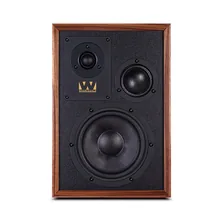 Ranked #19 of 90 in Medium Size Bookshelf Speakers - Wharfedale Super Denton: $1499 per pair Crutchfield eBay
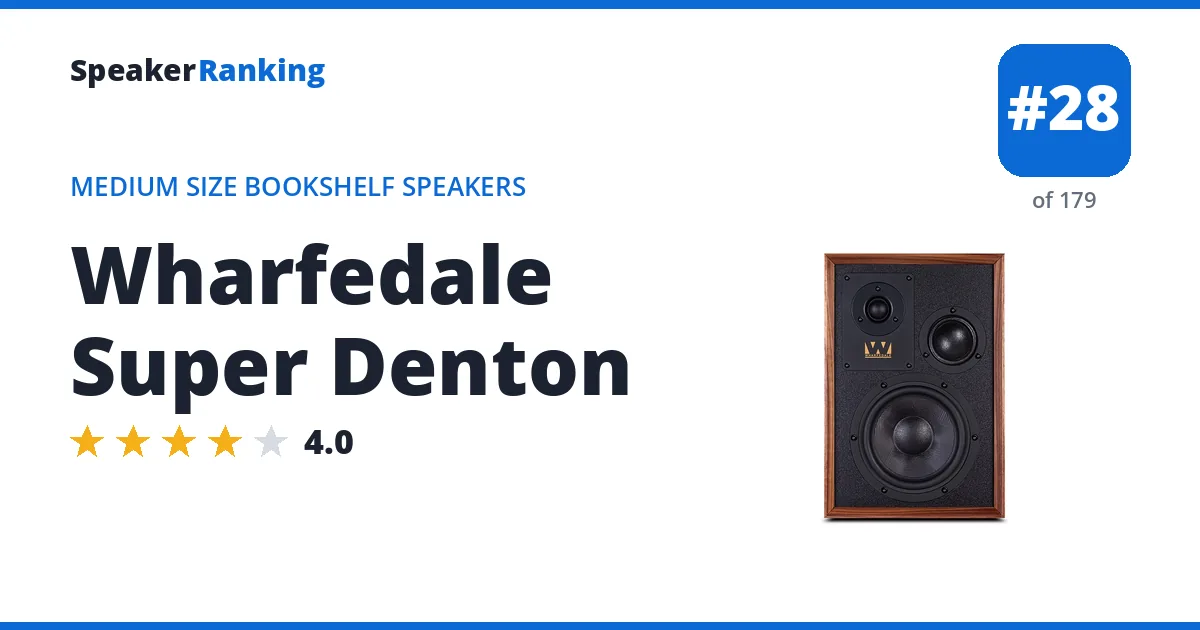
Pros: A 3-way design with a 1” soft dome tweeter, a 2” soft dome midrange offset to the side of a centered 6.5” woven Kevlar woofer: a more compact alternative to Wharfedale’s own Linton 85 with a similar overall character. Measured sensitivity around 86.6-87dB with on-axis linearity within about ±3dB. No cabinet or box resonances turned up in impedance testing, and there are no spike feet to install. Harmonic distortion looks good at both 86dB and 96dB, with about 20dB of usable dynamic range up to 96dB before compression starts to affect the midrange more noticeably near 102dB. Because bass rolls off starting around 60Hz, placing it closer to a wall (about 1-2 feet) than usual boosts low-end punch without the midbass bloat a deeper-extending speaker would get from the same placement. In the reviewer’s own comparison, its estimated in-room response actually measured more linear than the pricier Linton 85’s, despite being a bit less linear on-axis. Measured bass extension of 61Hz (-3dB), with a measured sensitivity of 86.6dB.
Cons: A mid-range scoop from about 200-800Hz and a separate upper-midrange scoop were both audible in direct ABX comparison against a reference-neutral speaker, giving aggressive-sounding material a more subdued character. A resonance around 660-700Hz shows up in measurement, though the reviewer couldn’t reliably hear it with real music in his own blind-ish A/B testing. The offset tweeter-and-midrange layout makes horizontal off-axis response noticeably asymmetric (response drops as much as 8dB more to one side than the other at wider angles) so the reviewer recommends aiming the speakers directly at the listener (not toed out, which loses upper treble) and suggests sidewall absorption to control uneven reflections. Must be listened to with the grille on: measurements are noticeably worse with it off (wider 2-4kHz dip, extra treble bump). Horizontal soundstage width felt a bit narrower than the reviewer personally prefers, likely related to the same offset driver layout. Multitone distortion gets high in the midrange at 96dB/1m, a concern mainly in larger rooms where you’d need to play louder.
Full Wharfedale Super Denton review and specifications →
| Bass Extension (-10dB) | 41Hz (measured, Erin’s Audio Corner) |
|---|---|
| Bass Extension (-3dB) | 61Hz (measured, Erin’s Audio Corner) |
| Crossover Frequency | 940Hz, 4.6kHz |
| DIY Kit | No |
| Dimensions | 14.2”H x 9.7”W x 10.8”D (360 x 246 x 275 mm) |
| Drivers | 1” soft dome tweeter, 2” soft dome midrange, 6.5” woven Kevlar woofer |
| Frequency Response | 52Hz - 20kHz (±3dB, manufacturer specified); -6dB to 40Hz |
| Impedance | 6 ohms nominal, 3 ohms minimum (measured, Erin’s Audio Corner) |
| Sensitivity | 86.6dB (measured by Erin’s Audio Corner) |
| Spinorama Preference Score | 5.9 (Erin’s Audio Corner) |
| Weight | 20.3 lbs (9.2 kg) each |
| Woofer Cabinet | ported |
- Links
- Reviews, Comparisons and Sound Samples
- Head-to-Head Comparisons
- Wharfedale Super Denton vs Klipsch RP-500M II
- Wharfedale Super Denton vs Wharfedale Diamond 12.1
- Wharfedale Super Denton vs Elac Carina BS243.4
- Wharfedale Super Denton vs Radiant Acoustics Clarity 4.2
- Wharfedale Super Denton vs Monitor Audio Silver 50 7G
- Wharfedale Super Denton vs Revel M105
- Wharfedale Super Denton vs KEF Q150
- Wharfedale Super Denton vs Aalto Speakers Aalto 1 EVO
- See all 43 comparisons
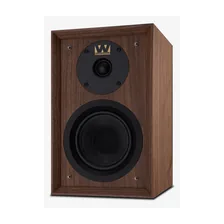 Ranked #52 of 90 in Medium Size Bookshelf Speakers - Wharfedale Denton 80th Anniversary: $599 per pair Wharfedale USA eBay
Pros: Handsome real-wood cabinetry and a relaxed compact-speaker format are backed by useful 55Hz measured extension. Its local Spinorama score improves from 2.48 to 5.00 with a subwoofer, and the broad dispersion is friendly to more than one listener. Measured bass extension of 71.8Hz (-3dB).
Cons: Response smoothness and directivity consistency are only average, limiting how completely EQ can correct it. At 86dB specified sensitivity it also needs more amplifier power than its vintage appearance may suggest, and deeper bass still benefits from a subwoofer.
Full Wharfedale Denton 80th Anniversary review and specifications →
| Bass Extension (-10dB) | 44.8Hz (derived, log-interpolated between spinorama.org -9dB/-12dB points) |
|---|---|
| Bass Extension (-3dB) | 71.8Hz (measured, ASR via spinorama.org) |
| DIY Kit | No |
| Dimensions | 12.6H x 7.9W x 12D in |
| Drivers | 1” textile-dome tweeter, 5” woven-Kevlar woofer |
| Enclosure | 2-way bass reflex |
| Frequency Response | 44Hz-24kHz |
| Impedance | 6 ohms |
| Sensitivity | 86dB |
| Spinorama Preference Score | 2.48 |
| Spinorama Preference Score with Perfect Sub | 5.00 |
| Weight | 17.4 lbs (7.9 kg) each |
- Links
- Reviews, Comparisons and Sound Samples
- Head-to-Head Comparisons
Large Size Bookshelf Speakers
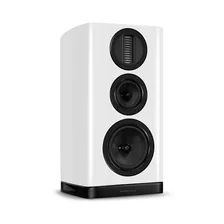 Ranked #13 of 134 in Large Size Bookshelf Speakers - Wharfedale Aura 2: $2799 per pair Crutchfield eBay
Pros: Three-way “mini tower” design with a 27x90mm AMT tweeter, 4” mid-range, and 6.5” midwoofer, using an unusual bottom-firing port. Nearly “ruler flat” on-axis linearity (within about 1.5dB for most of the range) apart from one specific breakup point. Exceptional output capability with very low distortion even at high volume: the reviewer reached about 100dB average at 10 feet with no audible strain, outperforming rivals like the KEF LS50 Meta in multitone distortion above 1kHz. Wide horizontal radiation of about ±70° combined with excellent imaging and pair matching: passed demanding stereo-separation test tracks with precise instrument placement. Bass reaches a genuine 40Hz in most rooms, potentially eliminating the need for a subwoofer for material that doesn’t demand extreme sub-bass. About 20dB of usable dynamic range with no compression issues at 96dB/1m. Considered by the reviewer one of the best speakers he’s tested, potentially challenging his personal all-time top five. Measured bass extension of 56Hz (-3dB), with a measured sensitivity of 87dB.
Cons: A breakup/peak around 13kHz can sound sharp or shrill depending on the track, the main tonal flaw noted. Minor midbase-to-midrange balance discrepancy (about 1dB), most noticeable if the speaker sits more than about 2 feet from the rear wall. Vertical listening window is narrower than typical, a consequence of the AMT ribbon tweeter’s tall physical size: staying within about ±15-20° of the tweeter reference axis (or slightly below it) is important. Impedance dips to about 3.1 ohms with a 1.4-ohm minimum EPDR, meaning a dedicated amplifier is recommended over an AVR due to potential power-supply strain. Distortion rises at the very lowest frequencies (an expected limitation of a 6.5” woofer), and the woofer audibly struggles with extreme 30-35Hz content at high volume. Horizontal directivity narrows from about ±70° to ±50° above roughly 6-7kHz as the ribbon tweeter’s pattern collapses inward.
Full Wharfedale Aura 2 review and specifications →
| Bass Extension (-10dB) | 30Hz (measured, Erin’s Audio Corner) |
|---|---|
| Bass Extension (-3dB) | 56Hz (measured, Erin’s Audio Corner) |
| DIY Kit | No |
| Dimensions | 22.1”H x 11.3”W x 15.3”D (561.3 x 287 x 388.6 mm) |
| Drivers | 6.5” Black Glass Fibre Matrix Cone woofer, 4” Black Glass Fibre Matrix Cone midrange, 27x90mm AMT tweeter |
| Impedance | 6 ohms nominal (3.1 ohms minimum above 80Hz, measured, Erin’s Audio Corner) |
| Sensitivity | 87dB (measured, Erin’s Audio Corner) |
| Spinorama Preference Score | 6.03 |
| Spinorama Preference Score with Perfect Sub | 7.65 |
| Weight | 45 lbs (20.4 kg) each |
| Woofer Cabinet | ported, rear |
- Links
- Reviews, Comparisons and Sound Samples
- Erin’s Audio Corner: Why the Wharfedale AURA 2 Will Blow Your Mind More from Erin’s Audio Corner →
- Erin’s Audio Corner Website Wharfedale Aura 2
- Erin’s Audio Corner: Upgrade Your Sound with These 6 Surprisingly Affordable Speakers!
- Erin’s Audio Corner: My Personal Favorite Speakers Under $2500
- Erin’s Audio Corner Measurements (spinorama.org)
- Head-to-Head Comparisons
- Wharfedale Aura 2 vs KEF Q Concerto Meta
- Wharfedale Aura 2 vs KEF R3
- Wharfedale Aura 2 vs KEF R3 Meta
- Wharfedale Aura 2 vs Buchardt Audio E50
- Wharfedale Aura 2 vs MoFi SourcePoint 8
- Wharfedale Aura 2 vs Revel M106
- Wharfedale Aura 2 vs Audio First Cadentia 3
- Wharfedale Aura 2 vs AsciLab C6B
- See all 50 comparisons
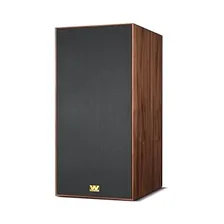 Ranked #24 of 134 in Large Size Bookshelf Speakers - Wharfedale Super Linton: $2,699.00 per pair Amazon Crutchfield eBay
Pros: Three-way design with a 1” soft dome tweeter, 5” woven Kevlar mid-range, and 8” woven Kevlar woofer in a dual rear-ported, heavily damped MDF/particle-board cabinet. Comes as a genuinely matched pair (measured within about 1dB of each other) and includes custom matching stands. A major dynamic-range improvement over the original Heritage Linton: kick drums retain their impact from low to high volume instead of compressing, the standout objective improvement in this update. Fixes the original Linton’s main flaw: a 1-3kHz scoop that made it sound a bit soft and subdued is filled in here, giving noticeably more attack and dynamic punch. About 3dB more sensitivity than the original Linton (measured ~88.2dB), meaning roughly half the amplifier power for the same output. Wide horizontal radiation of about ±70°, right in the reviewer’s preferred range for an enveloping soundstage. Lower midrange distortion than the original Linton. Bass-shelf tuning intentionally allows closer-to-wall placement (about 1 foot worked well) without excess boominess, more flexible than the original Linton in that regard. Measured bass extension of 77Hz (-3dB), with a measured sensitivity of 88.2dB.
Cons: Rolls off earlier than the original Linton (F3 77Hz versus the original’s 52Hz), a deliberate trade-off for the closer-wall-placement flexibility. On-axis, there’s a mild treble lift around 4-6kHz that can sound a touch sibilant, though the reviewer found it not very noteworthy in practice. Diffraction shows up around 1.5-2kHz on-axis; needs about 10° of toe-out to smooth this out, though going further to 30° starts to lose some top-end air. Distortion peaks slightly higher than the original Linton in the 50-70Hz region. Minimum impedance dips to about 3 ohms around 150Hz, so a 4-ohm-stable amplifier is recommended for best results. Vertical dispersion of about ±20° means multi-row home theater seating outside that window will hear reduced top-end. Asymmetrical design requires attention to setup (tweeters need to face outward) for the most linear in-room response. A costly upgrade for existing Linton owners if the original’s specific flaws didn’t bother them.
Full Wharfedale Super Linton review and specifications →
| Bass Extension (-10dB) | 34Hz (measured, Erin’s Audio Corner) |
|---|---|
| Bass Extension (-3dB) | 77Hz (measured, Erin’s Audio Corner) |
| DIY Kit | No |
| Dimensions | 23.8”H x 11.8”W x 13”D (604.5 x 299.7 x 330.2 mm) |
| Drivers | 8”(200mm) black woven Kevlar® cone woofer, 5”(135mm) black woven Kevlar® cone midrange, 1” (25mm) soft dome tweeter |
| Impedance | 4 ohms nominal (3 ohms minimum, measured, Erin’s Audio Corner) |
| Sensitivity | 88.2dB (measured, Erin’s Audio Corner) |
| Spinorama Preference Score | 6.09 |
| Spinorama Preference Score with Perfect Sub | 7.94 |
| Weight | 43.7 lbs (19.8 kg) each |
| Woofer Cabinet | ported, rear |
- Links
- Reviews, Comparisons and Sound Samples
- Erin’s Audio Corner: 5 Reasons Wharfedale Super Linton is the Hidden Gem of Audio Equipment More from Erin’s Audio Corner →
- Erin’s Audio Corner Website Wharfedale Super Linton Review
- Erin’s Audio Corner: Upgrade Your Sound with These 6 Surprisingly Affordable Speakers!
- Erin’s Audio Corner: My Absolute Favorite Products of 2024 Revealed
- Erin’s Audio Corner Measurements (spinorama.org)
- Head-to-Head Comparisons
- Wharfedale Super Linton vs Ascend Acoustics CMT-340 SE2
- Wharfedale Super Linton vs Arendal 1528 Monitor 8
- Wharfedale Super Linton vs MoFi SourcePoint 10
- Wharfedale Super Linton vs Radiant Acoustics Clarity 6.2
- Wharfedale Super Linton vs Perlisten R4b
- Wharfedale Super Linton vs Dynaudio Heritage Special
- Wharfedale Super Linton vs AsciLab F6Bs
- Wharfedale Super Linton vs Epos ES14N
- See all 63 comparisons
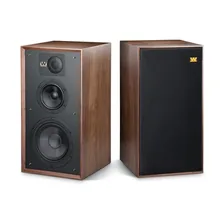 Ranked #32 of 134 in Large Size Bookshelf Speakers - Wharfedale Linton 85: $1999 per pair Crutchfield eBay
Pros: Very neutral frequency response and good bass extension. Measured bass extension of 52Hz (-3dB), with a measured sensitivity of 85.1dB.
Cons: The spacing of the drivers makes the vertical off axis not very good
Full Wharfedale Linton 85 review and specifications →
| Bass Extension (-10dB) | 35Hz (measured, Erin’s Audio Corner) |
|---|---|
| Bass Extension (-3dB) | 52Hz (measured, Erin’s Audio Corner) |
| DIY Kit | No |
| Dimensions | 22.2”H x 11.8”W x 13”D (563.9 x 299.7 x 330.2 mm) |
| Drivers | 8”(200mm) black woven Kevlar® cone woofer, 5”(135mm) black woven Kevlar® cone midrange, 1” (25mm) soft dome tweeter |
| Impedance | 6 ohms nominal, 3.5 ohms minimum (measured above 80Hz, Erin’s Audio Corner) |
| Sensitivity | 85.1dB (measured average 300Hz-3kHz @ 2.83V/1m, Erin’s Audio Corner) |
| Spinorama Preference Score | 6.07 |
| Spinorama Preference Score with Perfect Sub | 7.87 |
| Weight | 40.6 lbs (18.4 kg) each |
| Woofer Cabinet | ported, rear |
- Links
- Reviews, Comparisons and Sound Samples
- Erin’s Audio Corner: Discover Why I Can’t Stop Raving About the Wharfedale Linton 85th Anniversary Speaker More from Erin’s Audio Corner →
- Erin’s Audio Corner Website Wharfedale Linton 85 Review
- Erin’s Audio Corner: My Top 5 Speakers at Any Price
- Erin’s Audio Corner: Upgrade Your Sound with These 6 Surprisingly Affordable Speakers!
- Erin’s Audio Corner: My Personal Favorite Speakers Under $2500
- Erin’s Audio Corner Measurements (spinorama.org)
- Erin’s Audio Corner: KLH Model 5 or Wharfedale Linton? Linton for me. But you may disagree. Here is why.
- Head-to-Head Comparisons
- Wharfedale Linton 85 vs Ascend Acoustics Sierra-LX
- Wharfedale Linton 85 vs Revel M126Be
- Wharfedale Linton 85 vs ELAC VELA BS 403
- Wharfedale Linton 85 vs Dynaudio Heritage Special
- Wharfedale Linton 85 vs Philharmonic BMR (v1)
- Wharfedale Linton 85 vs Radiant Acoustics Clarity 6.2
- Wharfedale Linton 85 vs Ascend Acoustics Sierra-2EX V2
- Wharfedale Linton 85 vs MoFi SourcePoint 10
- See all 68 comparisons
Discontinued Wharfedale Models
Still ranked, and often still worth buying used, but no longer in production. Check availability before planning around one of these.
Medium Size Bookshelf Speakers
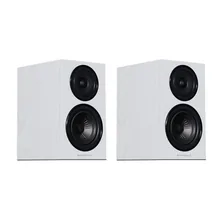 Ranked #21 of 90 in Medium Size Bookshelf Speakers - Wharfedale Diamond 12.1: $599 per pair Discontinued eBay
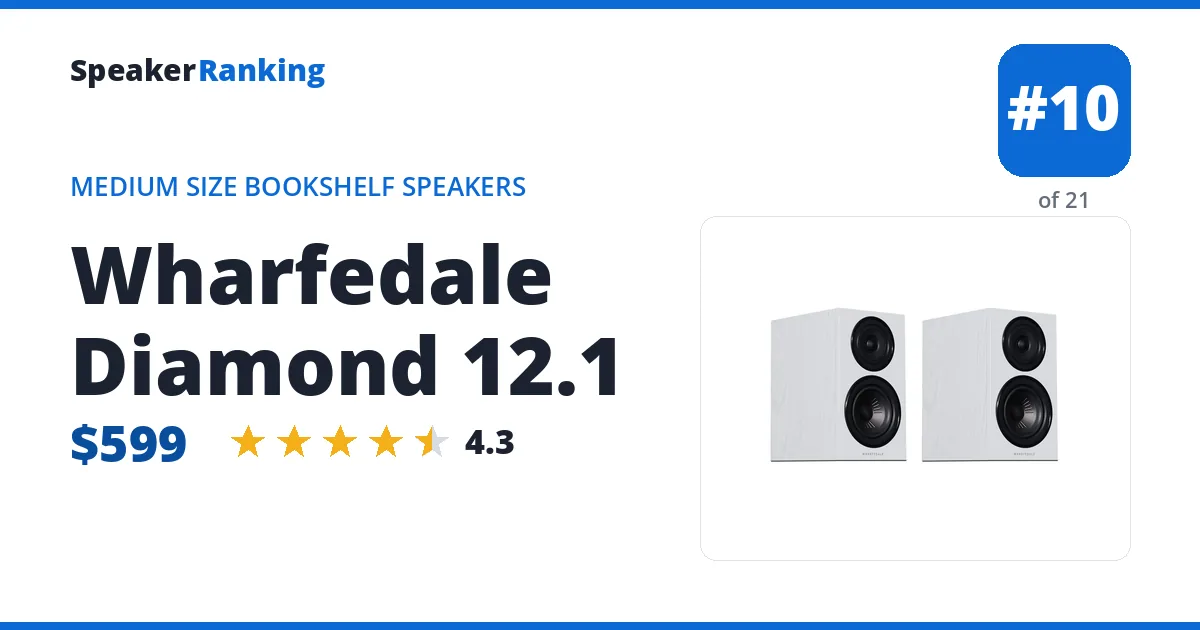
Newer model: the Wharfedale Diamond 12.1i. It’s likely to perform similarly, though we don’t have measurements to confirm that yet.
Pros: A budget two-way bookshelf speaker (5” polypropylene woofer, 1” textile dome tweeter) that measures well for its price: harmonic distortion at 86dB stays under 1% THD down to about 60Hz, genuinely good for a 5” mid-woofer. Wide horizontal radiation of about ±60° up to roughly 5kHz before the tweeter starts to beam. Tonally smooth and easy to listen to at moderate volumes, with a pleasant, non-fatiguing character the reviewer said he’d happily recommend to someone who wants noticeably better fit, finish and looks than typical speakers in the $300-400 range. A high-pass crossover around 80Hz meaningfully cleans up midrange multitone distortion, so pairing it with a subwoofer helps more than usual for a speaker this size. Measured bass extension of 61Hz (-3dB), with a measured sensitivity of 84dB.
Cons: A dip of about 3dB in the 1-3kHz crossover region (on-axis, in the predicted in-room response, and even off-axis) gives the speaker a soft, “laid-back” character that noticeably saps attack and transient bite from drums, guitar and other percussive material: possibly an intentional BBC-style dip, but one the reviewer would still prefer tuned flat. Vertical directivity is unusually tight for this class of speaker, holding together only within about ±5° of the tweeter axis before a real hole opens up in the response, so seating height matters a lot more than on most bookshelf designs. Diffraction artifacts around 3kHz and 5kHz show up as differences between the listening-window and on-axis curves. Distortion climbs well past acceptable levels at higher output: harmonic distortion exceeds 3% around 150Hz at 96dB (versus under 1% at 86dB), multitone distortion tops 10% at 96dB/1m, and real compression sets in between 96-102dB (about 1.5dB of lost dynamic range around 300Hz at 102dB/1m, roughly equivalent to 92dB for a pair at 4m in a room). A genuine limitation on how loud or how far away this speaker can be pushed. Measured average sensitivity (84dB) runs a few dB below the 87dB spec. Only a 5” woofer, so a subwoofer is required for real bass. Discontinued.
Full Wharfedale Diamond 12.1 review and specifications →
| Bass Extension (-10dB) | 46Hz (measured, Erin’s Audio Corner) |
|---|---|
| Bass Extension (-3dB) | 61Hz (measured, Erin’s Audio Corner) |
| Crossover Frequency | 2.6kHz |
| DIY Kit | No |
| Dimensions | 12.2”H x 7”W x 10.9”D (310 x 178 x 277 mm) |
| Drivers | 5” advanced polypropylene cone woofer, 1” textile dome tweeter |
| Impedance | 8 ohms nominal (3.9 ohms minimum above 80Hz, measured, Erin’s Audio Corner) |
| Sensitivity | 84dB (measured by Erin’s Audio Corner; 87dB manufacturer specified) |
| Spinorama Preference Score | 5.01 |
| Spinorama Preference Score with Perfect Sub | 7.42 |
| Weight | 15 lbs (6.8 kg) each |
| Woofer Cabinet | ported |
- Links
- Reviews, Comparisons and Sound Samples
- Erin’s Audio Corner: Wharfedale 12.1 Budget Bookshelf Speaker with “Laid Back” sound but output limited. More from Erin’s Audio Corner →
- Audio Science Review Wharfedale Diamond 12.1 More from Audio Science Review →
- Erin’s Audio Corner Website: Wharfedale Diamond 12.1
- Audio Science Review Measurements (spinorama.org)
- Head-to-Head Comparisons
- Wharfedale Diamond 12.1 vs Carmody S2000
- Wharfedale Diamond 12.1 vs Radiant Acoustics Clarity 4.2
- Wharfedale Diamond 12.1 vs Wharfedale Super Denton
- Wharfedale Diamond 12.1 vs Klipsch RP-500M II
- Wharfedale Diamond 12.1 vs KEF Q150
- Wharfedale Diamond 12.1 vs Wharfedale Diamond 220
- Wharfedale Diamond 12.1 vs Monitor Audio Silver 50 7G
- Wharfedale Diamond 12.1 vs Revel M105
- See all 39 comparisons
 Ranked #28 of 90 in Medium Size Bookshelf Speakers - Wharfedale Diamond 220: $299 per pair Discontinued eBay
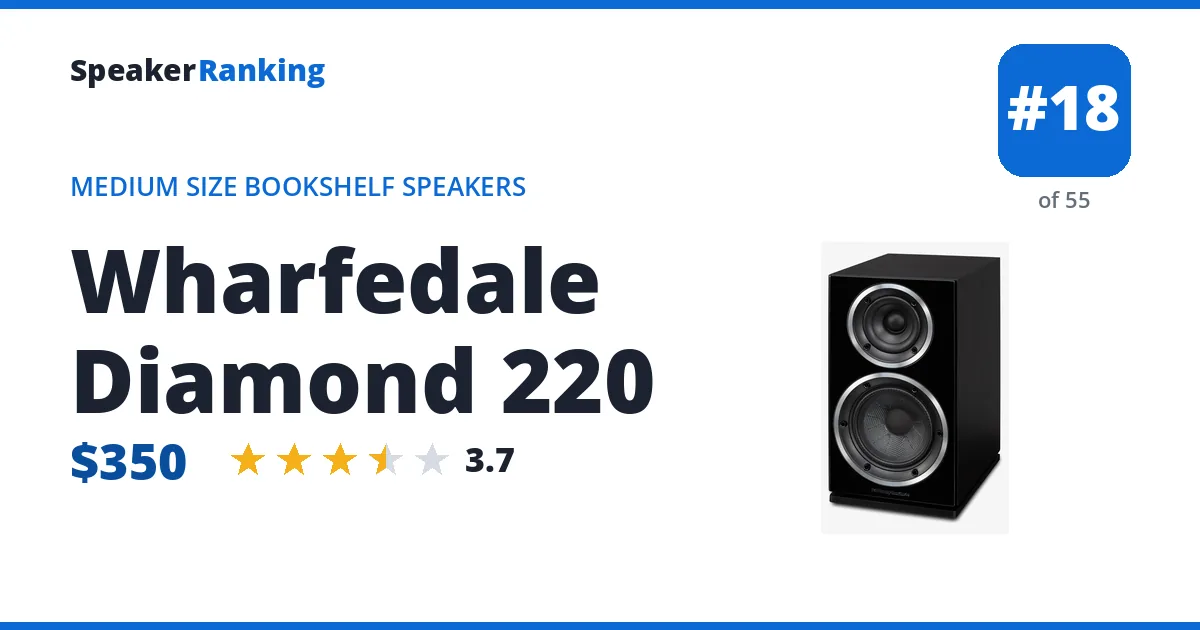
Newer model: the Wharfedale Diamond 12.1i. It’s likely to perform similarly, though we don’t have measurements to confirm that yet.
Pros: Amir found the on-axis response smooth once the grille is removed, calling grille removal “a huge improvement” since the stock grille caused unusually strong comb filtering around 5kHz. Good horizontal dispersion from the waveguide-loaded tweeter and controlled distortion. After some EQ (a room mode filter and treble shelf), the reviewer called it “a truly hifi speaker” where “every audiophile track..sounded very good,” and said he was “happy to recommend” it for the budget class. Measured bass extension of 117.2Hz (-3dB), with a measured sensitivity of 86.9dB.
Cons: Response rolls off below 200Hz, so a subwoofer is recommended for full-range use. Some port rattling was noted at high volumes, traced to vibration rather than the woofer itself. Best performance requires removing the grille and applying the reviewer’s EQ filters. Discontinued, with only limited remaining stock available direct from Wharfedale.
Full Wharfedale Diamond 220 review and specifications →
| Bass Extension (-10dB) | 58.0Hz (measured, Audio Science Review) |
|---|---|
| Bass Extension (-3dB) | 117.2Hz (measured, Audio Science Review) |
| DIY Kit | No |
| Dimensions | 12.4”H x 6.9”W x 8.9”D (315 x 174 x 227 mm) |
| Drivers | 5” (130mm) woven Kevlar woofer, 1” (25mm) tweeter |
| Impedance | 8 ohms |
| Sensitivity | 86.9dB (2.83V/1m, measured, Audio Science Review; 86dB manufacturer specified) |
| Spinorama Preference Score | 3.40 |
| Spinorama Preference Score with Perfect Sub | 6.64 |
| Weight | 11.7 lbs (5.3 kg) each |
| Woofer Cabinet | ported, bottom-firing into secondary enclosure |
- Links
- Reviews, Comparisons and Sound Samples
- Head-to-Head Comparisons
- Wharfedale Diamond 220 vs Polk Audio XT15
- Wharfedale Diamond 220 vs KEF Q150
- Wharfedale Diamond 220 vs Boston Acoustics A25
- Wharfedale Diamond 220 vs Wharfedale Diamond 12.1
- Wharfedale Diamond 220 vs Wharfedale Super Denton
- Wharfedale Diamond 220 vs Klipsch RP-500M II
- Wharfedale Diamond 220 vs Monitor Audio Silver 50 7G
- Wharfedale Diamond 220 vs Revel M105
- See all 34 comparisons
Large Size Bookshelf Speakers
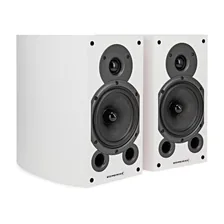 Ranked #112 of 134 in Large Size Bookshelf Speakers - Wharfedale Diamond 9.1 Discontinued eBay
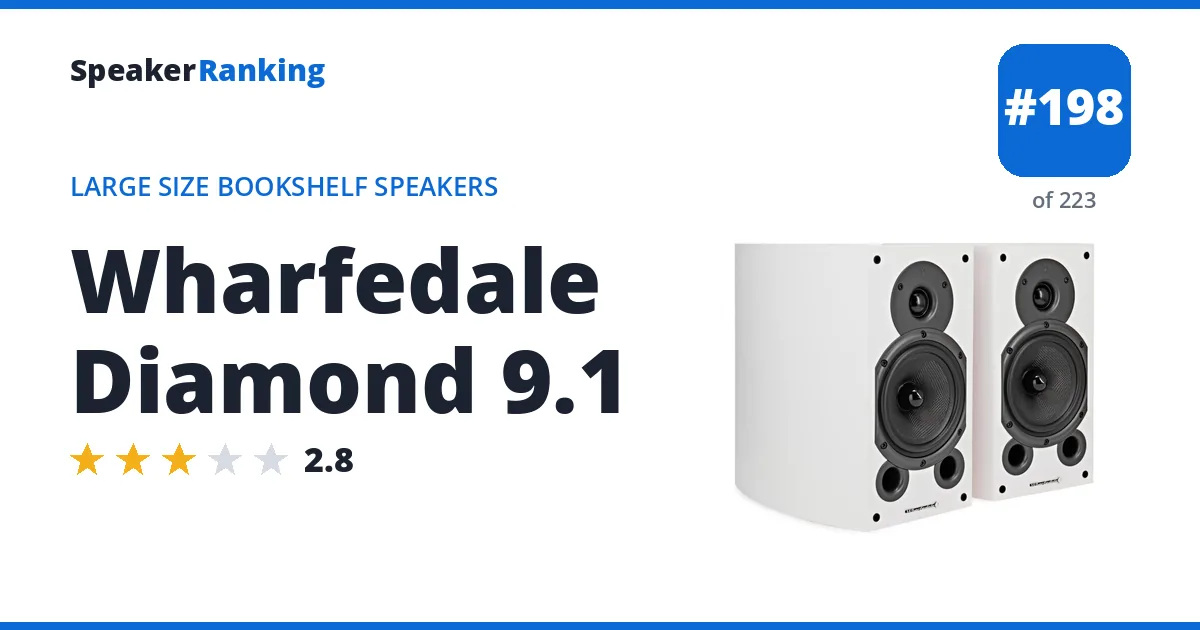
Newer model: the Wharfedale Diamond 12.1i. It’s likely to perform similarly, though we don’t have measurements to confirm that yet.
Pros: The first design was a pretty good sounding speaker, the speaker was then outsourced to China and lost 1.5kg and was made with cheap parts and sounds much worse. Slightly rolled off in the treble by about 3dB. Measured bass extension of 40Hz (-3dB).
Cons: All current new ones sold today are the crap version. Discontinued.
Full Wharfedale Diamond 9.1 review and specifications →
| Bass Extension (-3dB) | 40Hz (measured, Hi-Fi World) |
|---|---|
| DIY Kit | No |
| Dimensions | 11.7”H x 7.6”W x 10.9”D (296.0 x 194.0 x 278.0 mm) |
| Drivers | 6.5” Kevlar cone woofer, 1” soft dome tweeter |
| Impedance | 6 ohms |
| Sensitivity | 87dB |
| Weight | 12.1 lbs (5.5 kg) (good version), 9.9 lbs (4.5 kg) (bad version) each |
| Woofer Cabinet | ported |
- Reviews, Comparisons and Sound Samples
- Head-to-Head Comparisons
- Wharfedale Diamond 9.1 vs Klipsch RP-600M
- Wharfedale Diamond 9.1 vs Triangle Borea BR03
- Wharfedale Diamond 9.1 vs Sonus Faber Lumina II Amator
- Wharfedale Diamond 9.1 vs B&W 805S
- Wharfedale Diamond 9.1 vs KEF Q350
- Wharfedale Diamond 9.1 vs Aperion Audio Verus V8B
- Wharfedale Diamond 9.1 vs Emotiva Airmotiv B2+
- Wharfedale Diamond 9.1 vs Triad In-Room Gold LCR
- See all 26 comparisons
Small Home Subwoofers (Under 30 lbs)
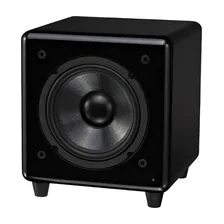 Ranked #40 of 48 in Small Home Subwoofers (Under 30 lbs) - Wharfedale DX-1: $399 Discontinued eBay
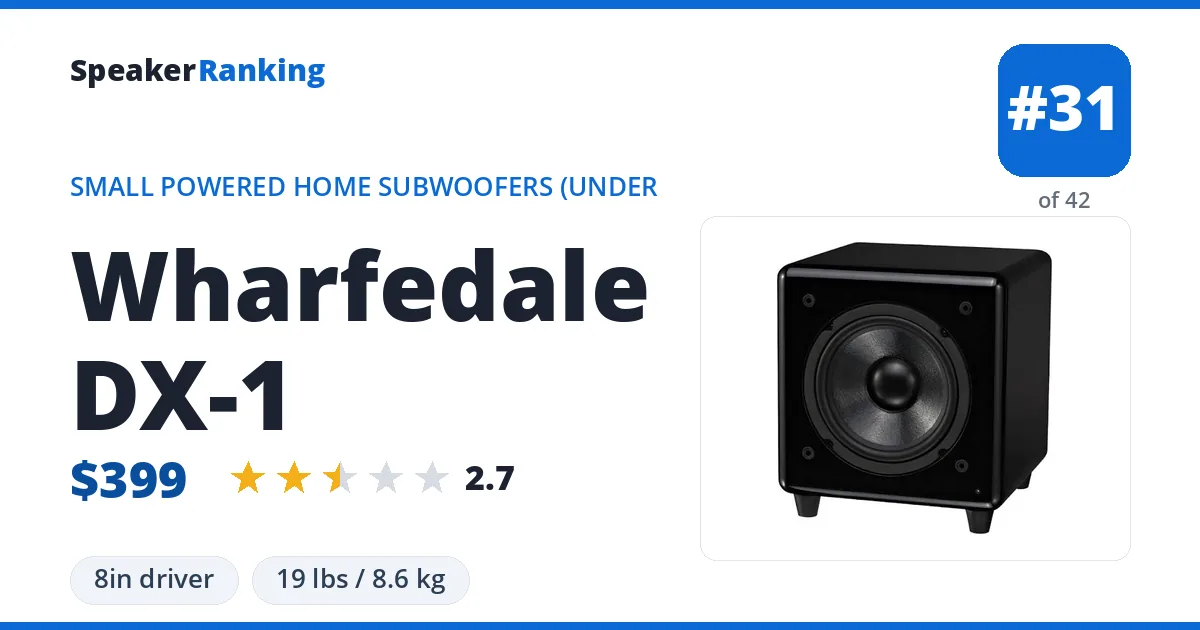
Pros: Independent CEA-2010 testing records 101.9 dB (avg of 3/4 bands) through 40-80 Hz. The ported, rear enclosure with 8” (203mm) driver is intended to add useful bass support without a full-size cabinet.
Cons: Without a published 20 Hz output result, deep-bass capability is less certain than its midbass figure. The 340.4H x 289.6W x 325.1D mm cabinet and 8.6 kg mass still need careful placement and calibration. Discontinued.
Full Wharfedale DX-1 review and specifications →
| CEA-2010-A Average (40-80Hz) | 101.9 dB (avg of 3/4 bands) |
|---|---|
| Country | United Kingdom |
| Dimensions | 13.4”H x 11.4”W x 12.8”D (340.4 x 289.6 x 325.1 mm) |
| Drivers | 8” (203mm) driver |
| Enclosure | ported, rear |
| Measurement Source | Brent Butterworth |
| Output SPL at 31.5 Hz | 82.9 dB |
| Output SPL at 40 Hz | 97.7 dB |
| Output SPL at 50 Hz | 104.1 dB |
| Output SPL at 63 Hz | 103.8 dB |
| Weight | 19 lbs (8.6 kg) |
- Reviews, Comparisons and Sound Samples
- Independently measured by Brent Butterworth; the published figures above come from this ASR subwoofer measurement thread.
- Head-to-Head Comparisons
Wharfedale Models Not Yet Ranked
Newer or recently added Wharfedale models we track but haven’t ranked yet, because no measurements we can rank them on have been published. See speakers not yet ranked for how that works.
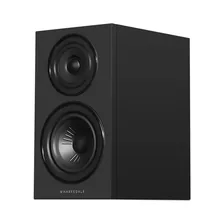 Not yet ranked, replaces Wharfedale Diamond 12.1, Wharfedale Diamond 220, Wharfedale Diamond 9.1 - Wharfedale Diamond 12.1i: $499 per pair Music Direct eBay
Older models: the Wharfedale Diamond 12.1 (rated 3.9/5), the Wharfedale Diamond 220 (rated 3.7/5) and the Wharfedale Diamond 9.1 (rated 2.8/5).
Pros: Two-way bookshelf with a 5” Klarity polypropylene and mica woofer and a 1” woven polyester dome tweeter, joined by a Linkwitz-Riley crossover at 2.6kHz with air-core inductors. Wharfedale rates it at 88dB sensitivity with an 8 ohm load and a 20W minimum amplifier, easy to drive, and it keeps the price of the Diamond 12.1 it replaces.
Cons: No independent measurements yet, so its tonal balance and directivity can’t be compared with ranked speakers. Rated bass reaches only 60Hz (-6dB), so plan on a subwoofer for full-range listening.
Full Wharfedale Diamond 12.1i review and specifications →
| Crossover Frequency | 2.6kHz |
|---|---|
| Dimensions | 12.3”H x 7.1”W x 10.9”D (312 x 180 x 278 mm) |
| Drivers | 5” Klarity polypropylene cone woofer, 1” woven polyester dome tweeter |
| Frequency Response | 65Hz - 20kHz ±3dB, 60Hz -6dB (Manufacturer specified) |
| Impedance | 8 ohms nominal (4 ohms minimum) |
| Power Handling | 20-100W |
| Sensitivity | 88dB (2.83V/1m, manufacturer specified) |
| Weight | 15 lbs (6.8 kg) each |
| Woofer Cabinet | ported, rear |
- Links
- Reviews, Comparisons and Sound Samples
- These figures are manufacturer-specified rather than independently measured.
- Head-to-Head Comparisons