Short answer: the Moondrop Starfield 2. It ranks #138 of 946 in-ear headphones by sound quality, rated 4.4/5, at $129.99; the Moondrop Starfield 3 ranks #302, rated 4.1/5, and costs $149.99, so there is little reason to consider the other one.
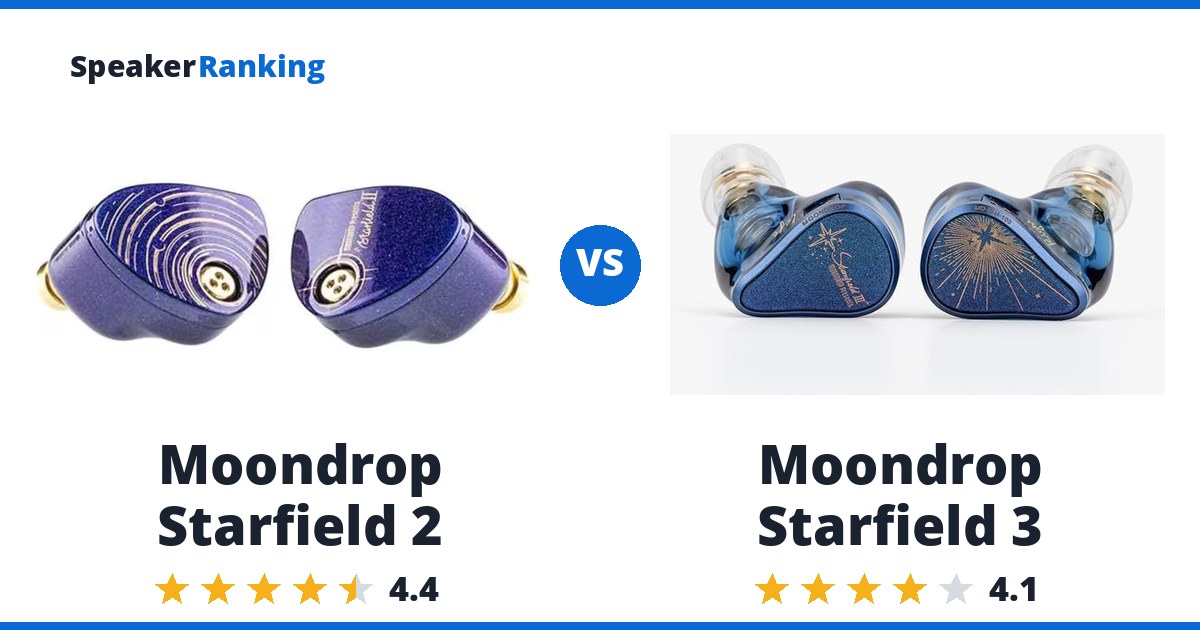
The Moondrop Starfield 2 is the better-sounding option. Seven squig.link measurements give the Starfield 2 a preference score of 78.6, with mids and presence all within about 1 dB of target so vocals and instruments sound open and well defined. Watch for: Sub-bass falls about 2.5 dB short at 30 Hz, so the deepest rumble is lighter than on bassier sets.
The case for the Moondrop Starfield 3: Its dual dynamic driver setup reaches a preference score of 75 with a very smooth 1.82 dB deviation from target in two hobbyist measurements, so it avoids harsh peaks. Watch for: Presence and treble run about 2 dB below target, and a 3.9 dB dip near 10 kHz takes some shimmer off cymbals.
Buy the Moondrop Starfield 2. It is rated higher for sound quality than the Moondrop Starfield 3 and costs less, which makes it the one to get unless you need something the other one does better.
Want more options? Browse the full Headphones rankings.
Specifications Side By Side
| Moondrop Starfield 2 | Moondrop Starfield 3 | |
|---|---|---|
| Price | $129.99 | $149.99 |
| Ranked | #138 of 946 in In-Ear Headphones | #302 of 946 in In-Ear Headphones |
| Form Factor | In-ear | In-ear |
| Back | Closed | Closed |
| Harman Preference Score | 78 (median of 18 squig.link measurements, calibrated to AutoEQ) | 74 (median of 2 squig.link measurements, calibrated to AutoEQ) |
| Deviation From Target | 1.65 dB standard deviation | 1.82 dB standard deviation |
| Tonal Tilt | +0.26 (negative is warmer, positive brighter) | -0.26 (negative is warmer, positive brighter) |
| Sub-bass Extension | Within 6 dB of target down to 20 Hz (-2.3 dB at 30 Hz) | Within 6 dB of target down to 20 Hz (-2.2 dB at 30 Hz) |
| Connection | Wired | Wired |
| Driver Type | Dynamic | Dynamic |
| Drivers | 1 x 10mm dynamic | 1 x 10mm dynamic + 1 x 7.8mm dynamic |
| Impedance | 15 ohms | 7.7 ohms |
| Sensitivity | 122 dB/Vrms | 119 dB/Vrms |
| Frequency Response | 12Hz - 24kHz (Manufacturer specified) | 12Hz - 44kHz (Manufacturer specified) |
| Built-in Microphone | No | No |
Related Headphone Comparisons
How Moondrop Starfield 2 compares with other leading options:
- Kiwi Ears Ember vs Moondrop Starfield 2
- Moondrop Starfield 2 vs Sennheiser IE 200
- Kefine Quatio vs Moondrop Starfield 2
- Moondrop Starfield 2 vs Queen of Audio Ryusei
- Moondrop Starfield 2 vs Tanchjim Fission
Prices on this page were last checked October 13, 2026 at 3:17 PM UTC. Product prices and availability are accurate as of that date/time and are subject to change; the price and availability shown on Amazon at the time of purchase will apply to the purchase of this product.
As an eBay Partner, we may be compensated if you make a purchase.
The Two Headphones In Full
 Moondrop Starfield 2: $129.99 Amazon $129.99 eBay
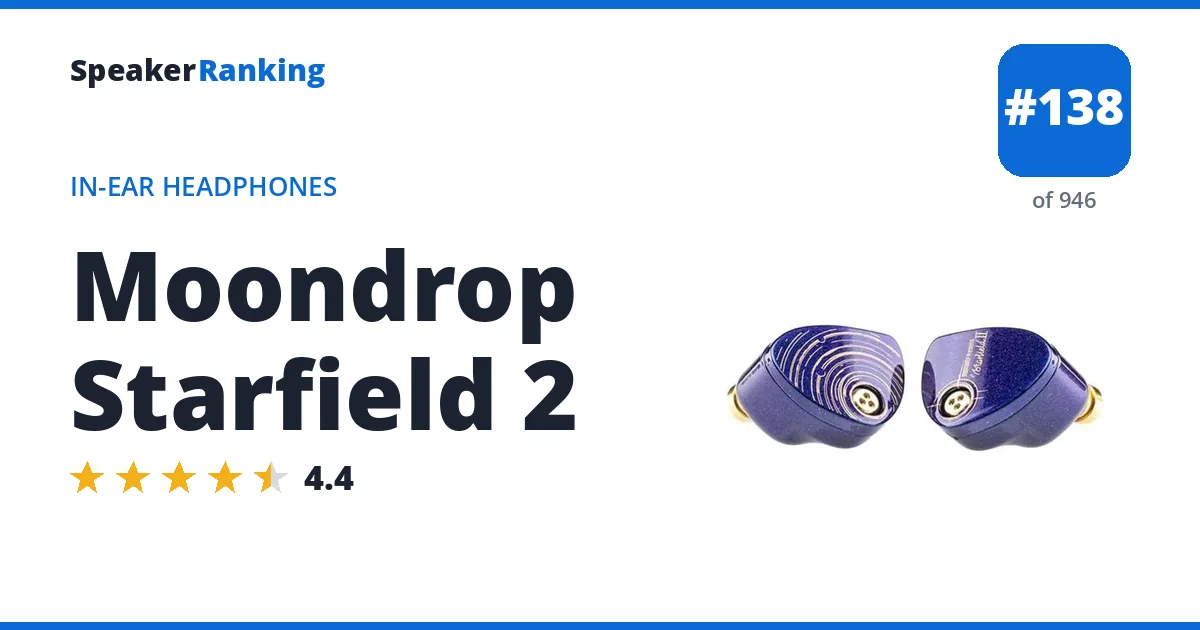
Older model: the Moondrop Starfield (ranked lower, rated 4.2/5). See every Moondrop Starfield generation.
Pros: Seven squig.link measurements give the Starfield 2 a preference score of 78.6, with mids and presence all within about 1 dB of target so vocals and instruments sound open and well defined. Midbass sits 1.7 dB above target for warmth without masking detail. At 15 ohms and 122 dB/Vrms it gets loud from any phone or dongle.
Cons: Sub-bass falls about 2.5 dB short at 30 Hz, so the deepest rumble is lighter than on bassier sets. Air runs 3.9 dB high with a 6.6 dB peak near 8.1 kHz, which can make cymbals and esses sound hot, and the low 15 ohm impedance can let high output impedance sources shift its tuning.
Full Moondrop Starfield 2 review and specifications →
| Released | Jul 2023 (3 years ago) |
|---|---|
| Back | Closed |
| Built-in Microphone | No |
| Connection | Wired |
| Deviation From Target | 1.65 dB standard deviation |
| Driver Type | Dynamic |
| Drivers | 1 x 10mm dynamic |
| Form Factor | In-ear |
| Frequency Response | 12Hz - 24kHz (Manufacturer specified) |
| Harman Preference Score | 78 (median of 18 squig.link measurements, calibrated to AutoEQ) |
| Impedance | 15 ohms |
| Sensitivity | 122 dB/Vrms |
| Sub-bass Extension | Within 6 dB of target down to 20 Hz (-2.3 dB at 30 Hz) |
| Tonal Tilt | +0.26 (negative is warmer, positive brighter) |
- Reviews, Comparisons and Sound Samples
- Head-to-Head Comparisons
 Moondrop Starfield 3: $149.99 Amazon $149.99 eBay
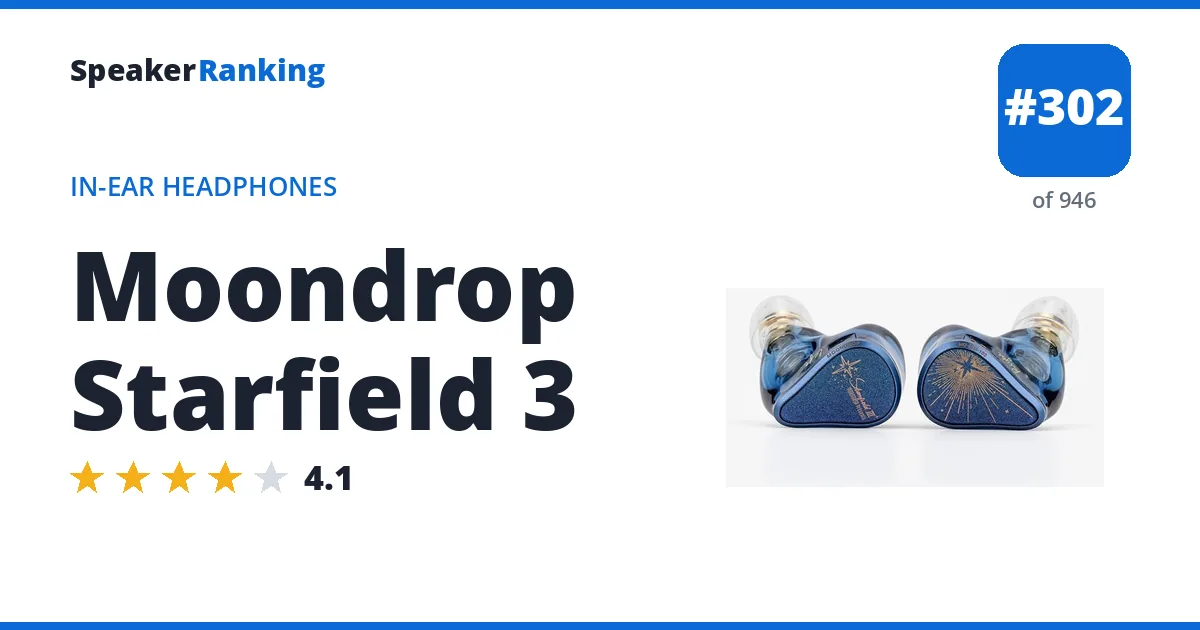
Pros: Its dual dynamic driver setup reaches a preference score of 75 with a very smooth 1.82 dB deviation from target in two hobbyist measurements, so it avoids harsh peaks. Bass sits within about 1 dB of target and the largest treble peak is only 2.8 dB near 11.9 kHz, giving a warm, easygoing sound with clean cymbals. The 7.7 ohm, 119 dB/Vrms design is extremely easy to drive from a phone. It matches the rating of the AUNE Jasper and AFUL Performer 5 Plus 2, which cost considerably more.
Cons: Presence and treble run about 2 dB below target, and a 3.9 dB dip near 10 kHz takes some shimmer off cymbals. The 7.7 ohm load is low enough that sources with high output impedance can audibly shift its tonal balance.
Full Moondrop Starfield 3 review and specifications →
| Back | Closed |
|---|---|
| Built-in Microphone | No |
| Connection | Wired |
| Deviation From Target | 1.82 dB standard deviation |
| Driver Type | Dynamic |
| Drivers | 1 x 10mm dynamic + 1 x 7.8mm dynamic |
| Form Factor | In-ear |
| Frequency Response | 12Hz - 44kHz (Manufacturer specified) |
| Harman Preference Score | 74 (median of 2 squig.link measurements, calibrated to AutoEQ) |
| Impedance | 7.7 ohms |
| Sensitivity | 119 dB/Vrms |
| Sub-bass Extension | Within 6 dB of target down to 20 Hz (-2.2 dB at 30 Hz) |
| Tonal Tilt | -0.26 (negative is warmer, positive brighter) |
- Reviews, Comparisons and Sound Samples
- Head-to-Head Comparisons