Short answer: the Aalto Speakers Aalto 3 Passive, if you are buying new. The JBL HDI-1600 measures as well as it (#53 vs #54 of 203 bookshelf speakers, 4.2/5 vs 4.2/5) but is discontinued, so only consider it used; the Aalto Speakers Aalto 3 Passive is still sold new.
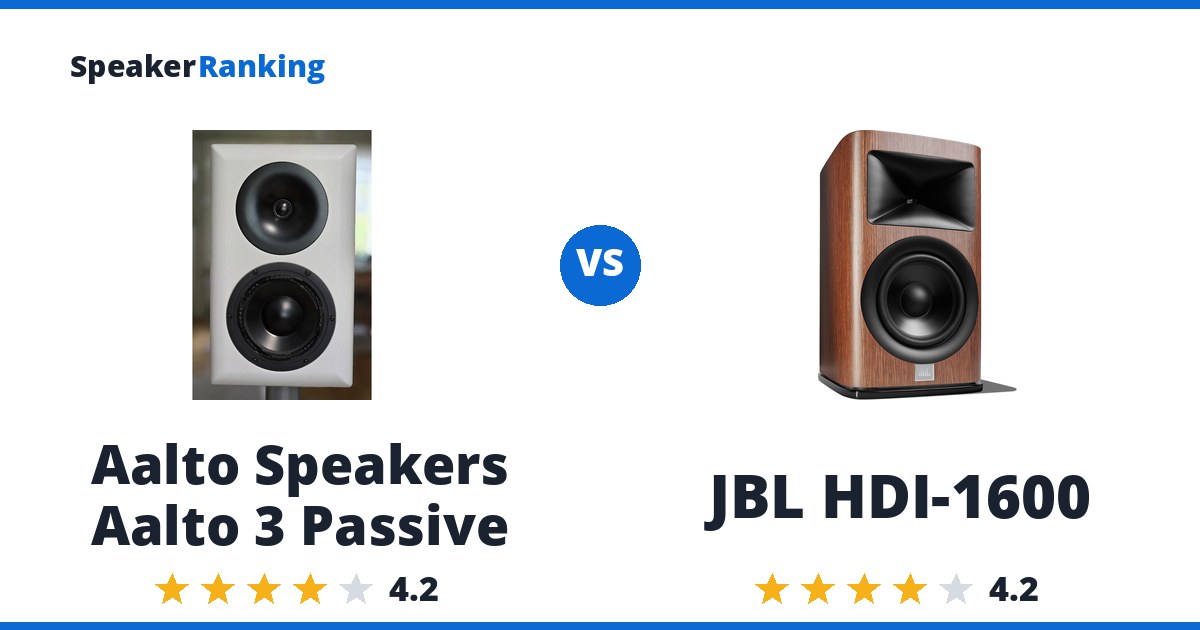
The Aalto Speakers Aalto 3 Passive is the more accurate option. The passive version of the same cabinet as Aalto’s Active Pro model, sharing its 26mm aluminum tweeter and 6.5” bass-midrange driver but without the built-in amp module, for buyers who already have their own amplification. Its measured preference score, a predictor of how neutral it sounds, is 6.82 against 5.37 for the JBL HDI-1600. Watch for: Requires an external amplifier (50-250W recommended) that the Active Pro doesn’t, and shares the same review gap: no independent editorial coverage found, only manufacturer-supplied specs, with factory-direct-only sales from Finland.
Why pick the JBL HDI-1600: CEA2034 spinorama is very flat in the critical mid-to-upper frequencies, with a slight bass boost that should have a good subjective effect and very smooth early-window directivity. The catch: A dip appears above 10kHz on-axis.
Buy the Aalto Speakers Aalto 3 Passive, since the JBL HDI-1600 is discontinued and only worth hunting down used.
Looking for alternatives? See the complete Passive Home rankings.
Specifications Side By Side
| Aalto Speakers Aalto 3 Passive | JBL HDI-1600 | |
|---|---|---|
| Price | €3,490 per pair | $1980 per pair Discontinued |
| Ranked | #54 of 203 in Large Size Bookshelf Speakers | #53 of 203 in Large Size Bookshelf Speakers |
| Enclosure | 2-way, passive-radiator loaded, MDF | - |
| Drivers | 26mm aluminum dome tweeter, 6.5” long-throw bass-midrange, 8” passive radiator | 1” tweeter + 6.5” woofer |
| Dimensions | 9.4”W x 15.7”H x 9.8”D (240 x 400 x 250 mm) | 14.6”H x 9.1”W x 11.4”D (370.0 x 230.0 x 288.9 mm) |
| Weight | 20.7 lbs (9.4 kg) each | 53.4 lbs (24.2 kg) |
| Sensitivity | 83.5dB @ 2.83V/1m | 85dB (2.83V/1m, measured, Audio Science Review) |
| Impedance | 4 ohms nominal (min 4 ohms @ 18kHz) | 4 ohms nominal (measured, Audio Science Review) |
| Power Handling | 50-250W RMS recommended amplifier power | - |
| Country | Finland | - |
| Spinorama Preference Score | 6.82 | 5.37 (spinorama.org) |
| Spinorama Preference Score with Perfect Sub | 8.45 | 7.32 (spinorama.org) |
| Bass Extension (-3dB) | 56.6Hz (measured, manufacturer spinorama data) | 55.7Hz (measured, Audio Science Review) |
| Bass Extension (-10dB) | 32.1Hz (derived, log-interpolated between manufacturer spinorama -9dB/-12dB points) | 40Hz (derived, log-interpolated between spinorama.org -9dB/-12dB points) |
| DIY Kit | No | No |
| Woofer Cabinet | - | ported, rear |
Related Speaker Comparisons
More top alternatives to JBL HDI-1600:
- KEF R3 Meta vs JBL HDI-1600
- KEF Q Concerto Meta vs JBL HDI-1600
- MoFi SourcePoint 8 vs JBL HDI-1600
- Dynaudio Heritage Special vs JBL HDI-1600
- Wharfedale Linton 85 vs JBL HDI-1600
Prices on this page were last checked October 7, 2026 at 9:25 PM UTC. Product prices and availability are accurate as of that date/time and are subject to change; the price and availability shown on Amazon at the time of purchase will apply to the purchase of this product.
As an eBay Partner, we may be compensated if you make a purchase.
The Two Speakers In Full
 Aalto Speakers Aalto 3 Passive: €3,490 per pair Aalto Speakers eBay
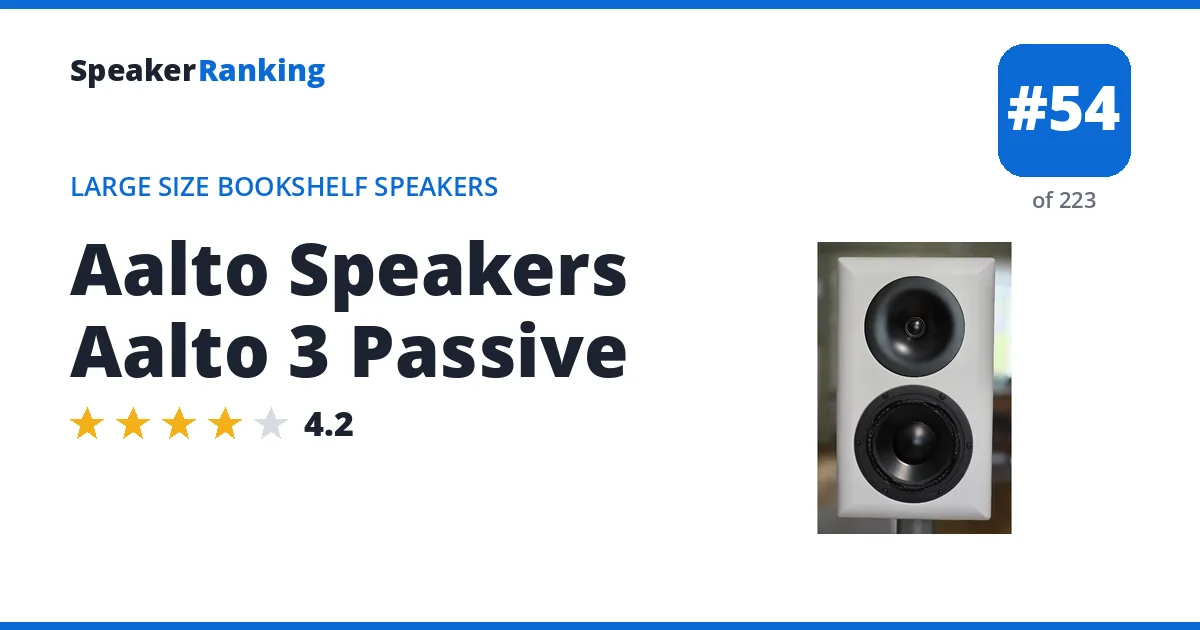
Same family: the Aalto Speakers Aalto 1 EVO (smaller bookshelf, rated 4.3/5), the Aalto Speakers Aalto 3 Active Pro (larger bookshelf, rated 4.7/5) and the Aalto Speakers Aalto 9 (floorstanding, rated 4.7/5).
Pros: The passive version of the same cabinet as Aalto’s Active Pro model, sharing its 26mm aluminum tweeter and 6.5” bass-midrange driver but without the built-in amp module, for buyers who already have their own amplification. Measures a -3dB extension of 56.6Hz with an on-axis deviation of 0.192dB, close to tonally neutral, a well-damped bass-alignment Q of 0.64, and reaches a deeper 34Hz Harman in-room extension estimate.
Cons: Requires an external amplifier (50-250W recommended) that the Active Pro doesn’t, and shares the same review gap: no independent editorial coverage found, only manufacturer-supplied specs, with factory-direct-only sales from Finland.
Full Aalto Speakers Aalto 3 Passive review and specifications →
| Bass Extension (-10dB) | 32.1Hz (derived, log-interpolated between manufacturer spinorama -9dB/-12dB points) |
|---|---|
| Bass Extension (-3dB) | 56.6Hz (measured, manufacturer spinorama data) |
| Country | Finland |
| DIY Kit | No |
| Dimensions | 9.4”W x 15.7”H x 9.8”D (240 x 400 x 250 mm) |
| Drivers | 26mm aluminum dome tweeter, 6.5” long-throw bass-midrange, 8” passive radiator |
| Enclosure | 2-way, passive-radiator loaded, MDF |
| Impedance | 4 ohms nominal (min 4 ohms @ 18kHz) |
| Power Handling | 50-250W RMS recommended amplifier power |
| Sensitivity | 83.5dB @ 2.83V/1m |
| Spinorama Preference Score | 6.82 |
| Spinorama Preference Score with Perfect Sub | 8.45 |
| Weight | 20.7 lbs (9.4 kg) each |
- Links
- Reviews, Comparisons and Sound Samples
- Head-to-Head Comparisons
- Aalto Speakers Aalto 3 Passive vs Perlisten A3m
- Aalto Speakers Aalto 3 Passive vs ELAC Debut 3.0 DB63
- Aalto Speakers Aalto 3 Passive vs Emotiva Airmotiv XB2
- Aalto Speakers Aalto 3 Passive vs Ascend Acoustics Sierra-2EX V2
- Aalto Speakers Aalto 3 Passive vs Philharmonic BMR (v1)
- Aalto Speakers Aalto 3 Passive vs Ascend Acoustics Sierra-LX
- Aalto Speakers Aalto 3 Passive vs Wharfedale Linton 85
- Aalto Speakers Aalto 3 Passive vs ELAC DBR62
- See all 45 comparisons
 JBL HDI-1600: $1980 per pair Discontinued Crutchfield eBay
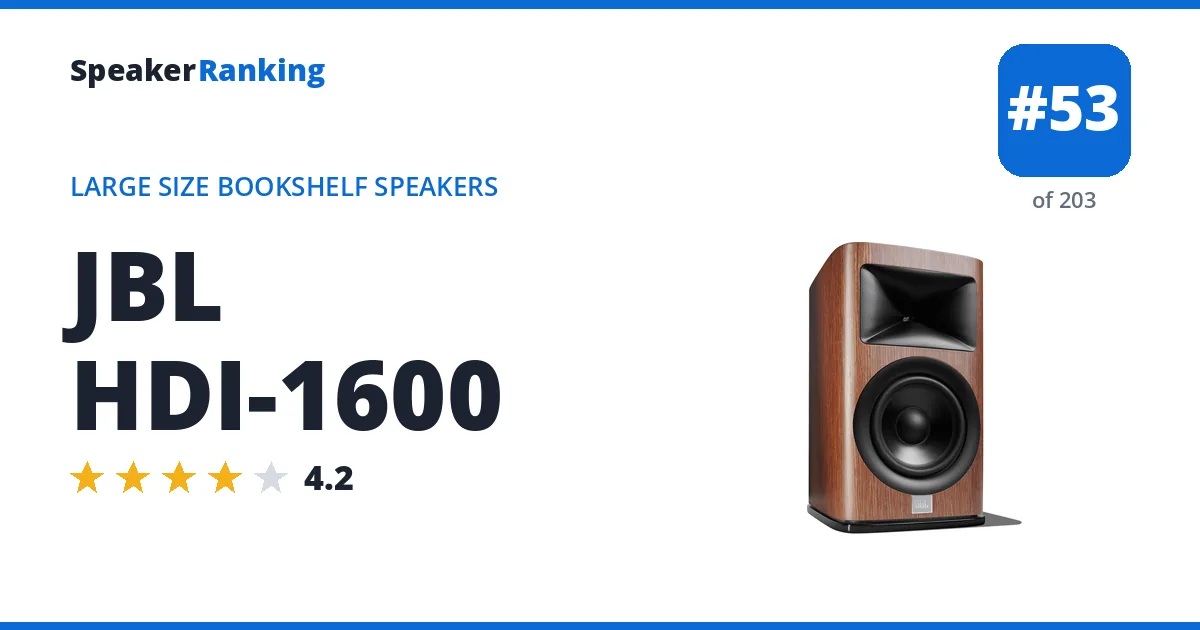
Same family: the JBL HDI-3600 (smaller floorstanding, rated 4.3/5), the JBL HDI-3800 (larger floorstanding, rated 4.5/5) and the JBL HDI-4500 (center, rated 3.7/5).
Pros: CEA2034 spinorama is very flat in the critical mid-to-upper frequencies, with a slight bass boost that should have a good subjective effect and very smooth early-window directivity. Predicted in-room response in a simulated average listening room closely tracks the reviewer’s own preferred target curve. Measured bass extension of 55.7Hz (-3dB), with a measured sensitivity of 85dB.
Cons: A dip appears above 10kHz on-axis. Cumulative spectral decay (waterfall) shows some messiness around the crossover along with a 700Hz resonance. Harmonic distortion rises to nearly 2% right at the 1.9kHz crossover point at 96dB SPL/1m. Discontinued.
Full JBL HDI-1600 review and specifications →
| Bass Extension (-10dB) | 40Hz (derived, log-interpolated between spinorama.org -9dB/-12dB points) |
|---|---|
| Bass Extension (-3dB) | 55.7Hz (measured, Audio Science Review) |
| DIY Kit | No |
| Dimensions | 14.6”H x 9.1”W x 11.4”D (370.0 x 230.0 x 288.9 mm) |
| Drivers | 1” tweeter + 6.5” woofer |
| Impedance | 4 ohms nominal (measured, Audio Science Review) |
| Sensitivity | 85dB (2.83V/1m, measured, Audio Science Review) |
| Spinorama Preference Score | 5.37 (spinorama.org) |
| Spinorama Preference Score with Perfect Sub | 7.32 (spinorama.org) |
| Weight | 53.4 lbs (24.2 kg) |
| Woofer Cabinet | ported, rear |
- Links
- Reviews, Comparisons and Sound Samples
- Head-to-Head Comparisons
- JBL HDI-1600 vs Arendal 1723 Bookshelf S THX
- JBL HDI-1600 vs ELAC Debut 3.0 DB63
- JBL HDI-1600 vs Emotiva Airmotiv XB2
- JBL HDI-1600 vs Revel Concerta2 M16
- JBL HDI-1600 vs ELAC Uni-Fi Reference UBR62
- JBL HDI-1600 vs ELAC VELA BS 403
- JBL HDI-1600 vs Revel M126Be
- JBL HDI-1600 vs Ascend Acoustics Sierra-LX
- See all 29 comparisons