Short answer: the Q Acoustics 3020i for measurements, the Micca RB42 for finish, though neither ranks well in its class. The RB42’s curved cabinet looks far more expensive than it is, but its CEA2034 spinorama shows significant peaks and valleys in the on-axis and listening-window response starting a few kHz up. The 3020i ranks #72 of 90 against the Micca’s #75 of 90, though it has its own 2-4kHz dip and 366Hz resonance. Both are rated below 3.0/5 among the 90 bookshelf speakers, and the Ascend Acoustics HTM-200SE2, ranked #7 at $368, is a better place to start if sound quality matters.
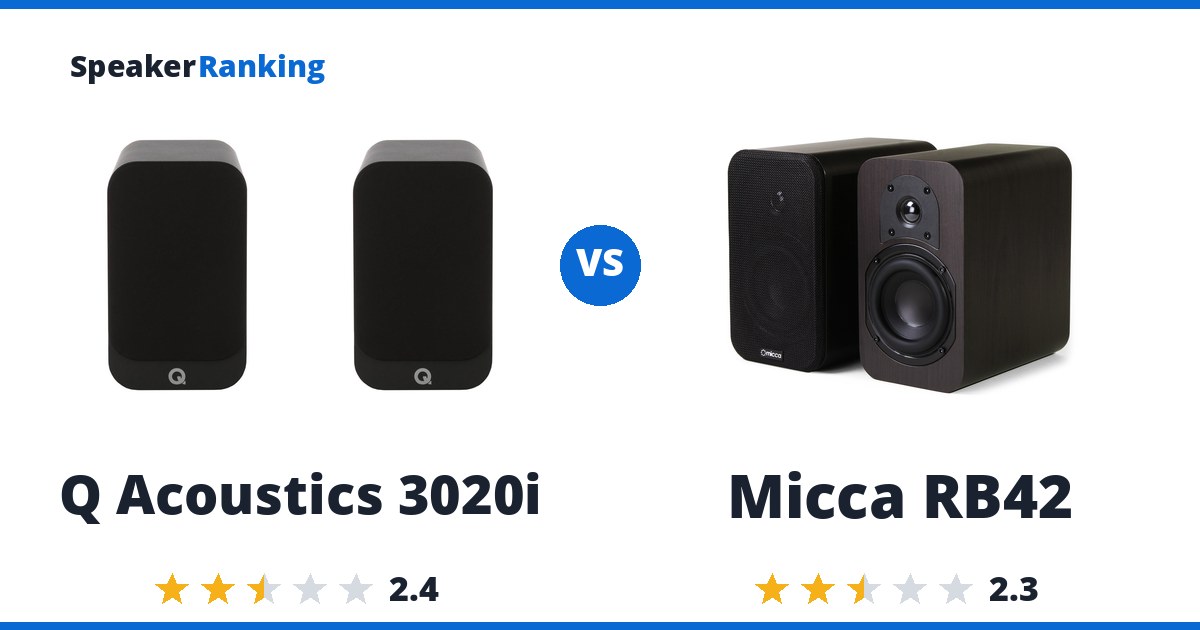
Buy the Micca RB42, since the Q Acoustics 3020i is discontinued and only worth hunting down used.
Want more options? Browse the full Passive Home rankings.
Specifications Side By Side
| Q Acoustics 3020i | Micca RB42 | |
|---|---|---|
| Price | $314.99 per pair Discontinued | $159.99 per pair |
| Ranked | #72 of 90 in Medium Size Bookshelf Speakers | #75 of 90 in Medium Size Bookshelf Speakers |
| Drivers | 125mm (5”) bass driver, 22mm (0.9”) tweeter | 4” coated paper woofer, 0.75” silk dome tweeter |
| Dimensions | 10.9”H x 6.7”W x 11.1”D (278 x 170 x 282 mm) | 8.7H x 4.9W x 7.9D in |
| Weight | 10.6 lbs (4.8 kg) each | 6 lbs (2.7 kg) each (per retailer listing) |
| Sensitivity | 86dB (2.83V/1m, manufacturer specified) | 80dB (2.83V/1m, measured, Audio Science Review) |
| Crossover Frequency | 2.4kHz | - |
| Impedance | 6 ohms nominal, 4 ohms minimum | 4-8 ohms |
| Woofer Cabinet | ported, reflex | ported, front |
| Bass Extension (-3dB) | 82.0Hz (measured, Audio Science Review) | 85Hz (measured, Audio Science Review) - the reviewer noted an artificial boost around 100-300Hz, so true extension may be worse than this on-axis reading suggests |
| Bass Extension (-10dB) | 49.8Hz (measured, Audio Science Review) | 62Hz (measured, Audio Science Review) - the reviewer noted an artificial boost around 100-300Hz, so true extension may be worse than this on-axis reading suggests |
| Spinorama Preference Score | 3.86 | 4.59 |
| Spinorama Preference Score with Perfect Sub | 6.38 | 6.87 |
| DIY Kit | No | No |
| Frequency Response | - | 50Hz - 20kHz (Manufacturer specified, typical in-room) |
| Power Handling | - | 15-100W each |
Related Speaker Comparisons
How Q Acoustics 3020i compares with other leading options:
- Q Acoustics 3020i vs Ascend Sierra 1 v2
- KEF LS50 Meta vs Q Acoustics 3020i
- Q Acoustics 3020i vs Arendal 1961 Monitor
- Q Acoustics 3020i vs Revel M105
- Q Acoustics 3020i vs Klipsch RP-500M II
Prices on this page were last checked October 2, 2026 at 10:18 PM UTC. Product prices and availability are accurate as of that date/time and are subject to change; the price and availability shown on Amazon at the time of purchase will apply to the purchase of this product.
As an eBay Partner, we may be compensated if you make a purchase.
The Two Speakers In Full
 Q Acoustics 3020i: $314.99 per pair Discontinued eBay
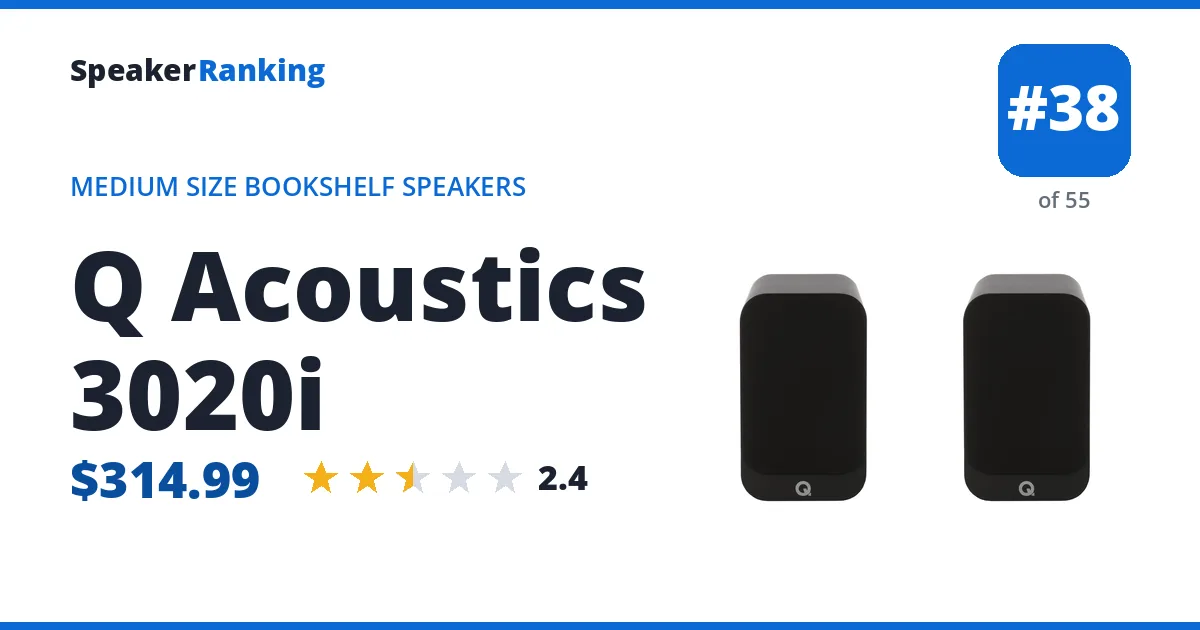
Newer model: the Q Acoustics 3020c. It’s likely to perform similarly, though we don’t have measurements to confirm that yet.
Pros: UK-designed (Finkteam) with attractive styling, including recessed binding posts and custom connectors. Vertical directivity is good enough that the tweeter doesn’t need to be exactly at ear level. With EQ correction, especially high-frequency shelving and a sub-40Hz high-pass filter, Amir found performance “improves substantially.”. Measured bass extension of 82.0Hz (-3dB).
Cons: On-axis response shows a rising upper-frequency trend and a dip in the 2-4kHz crossover region alongside two resonance-related dips; a significant resonance appears at 366Hz in the waterfall plot. Horizontal directivity is narrow and uneven due to a woofer/tweeter beamwidth mismatch. Amir cautions the speaker is “merely a distortion generator” if played too low, and its low impedance demands a quality amplifier. Without EQ, Amir “can’t recommend the Q Acoustics 3020i.”. Discontinued; Q Acoustics now sells the 3030i and 3010c in its place.
Full Q Acoustics 3020i review and specifications →
| Bass Extension (-10dB) | 49.8Hz (measured, Audio Science Review) |
|---|---|
| Bass Extension (-3dB) | 82.0Hz (measured, Audio Science Review) |
| Crossover Frequency | 2.4kHz |
| DIY Kit | No |
| Dimensions | 10.9”H x 6.7”W x 11.1”D (278 x 170 x 282 mm) |
| Drivers | 125mm (5”) bass driver, 22mm (0.9”) tweeter |
| Impedance | 6 ohms nominal, 4 ohms minimum |
| Sensitivity | 86dB (2.83V/1m, manufacturer specified) |
| Spinorama Preference Score | 3.86 |
| Spinorama Preference Score with Perfect Sub | 6.38 |
| Weight | 10.6 lbs (4.8 kg) each |
| Woofer Cabinet | ported, reflex |
- Reviews, Comparisons and Sound Samples
- Head-to-Head Comparisons
- Q Acoustics 3020i vs KEF Q100
- Q Acoustics 3020i vs ELAC Uni-Fi 2.0 UB52
- Q Acoustics 3020i vs JBL Stage A120
- Q Acoustics 3020i vs Q Acoustics 5020
- Q Acoustics 3020i vs JBL L52 Classic
- Q Acoustics 3020i vs JBL Stage A130
- Q Acoustics 3020i vs Fluance Signature HFS
- Q Acoustics 3020i vs JBL Control 1 Pro
- See all 34 comparisons
 Micca RB42: $159.99 per pair Amazon eBay
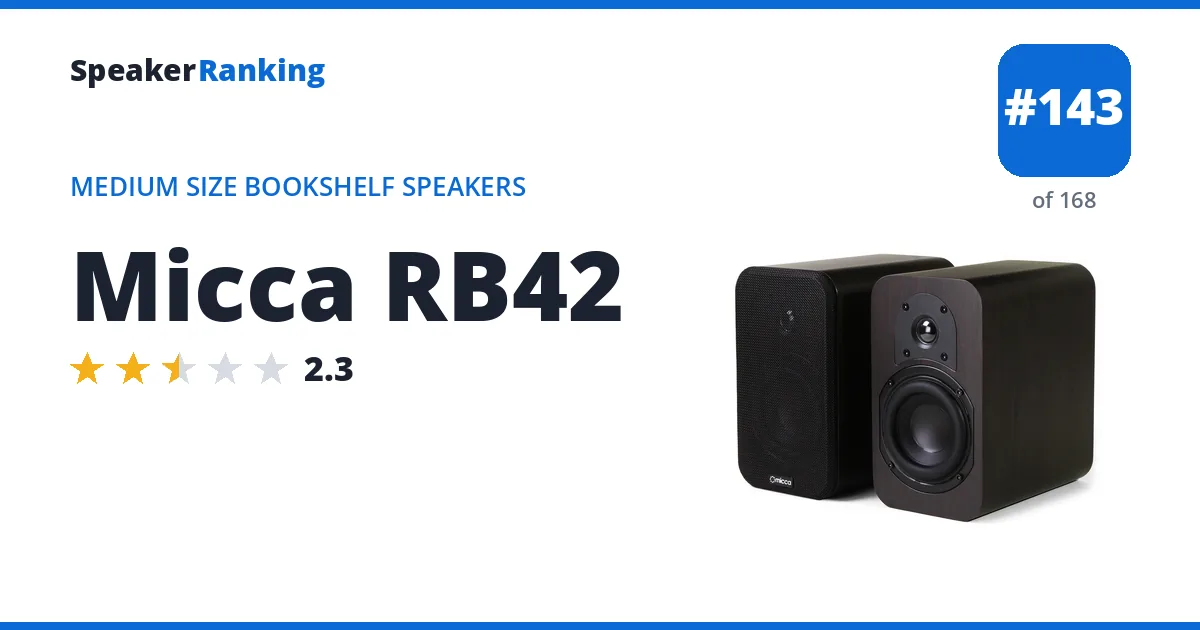
Pros: Curved cabinet fit and finish look closer to a speaker costing three times as much. Rated for a wide 15-100W amplifier range with 4-8 ohm compatibility, giving flexibility with modest amplification. Measured bass extension of 85Hz (-3dB), with a measured sensitivity of 80dB.
Cons: CEA2034 spinorama shows significant peaks and valleys in the on-axis and listening-window response starting a few kHz up, with excess high-frequency energy the reviewer found fatiguing over time despite an initial impression of “detail.” Off-axis response diverges heavily from on-axis, meaning tonality shifts with room and listening position in ways EQ can’t correct. Distorts and the woofer visibly flaps under moderate volume; low 83dB sensitivity makes it a harder amplifier load than its size suggests.
Full Micca RB42 review and specifications →
| Bass Extension (-10dB) | 62Hz (measured, Audio Science Review) - the reviewer noted an artificial boost around 100-300Hz, so true extension may be worse than this on-axis reading suggests |
|---|---|
| Bass Extension (-3dB) | 85Hz (measured, Audio Science Review) - the reviewer noted an artificial boost around 100-300Hz, so true extension may be worse than this on-axis reading suggests |
| DIY Kit | No |
| Dimensions | 8.7H x 4.9W x 7.9D in |
| Drivers | 4” coated paper woofer, 0.75” silk dome tweeter |
| Frequency Response | 50Hz - 20kHz (Manufacturer specified, typical in-room) |
| Impedance | 4-8 ohms |
| Power Handling | 15-100W each |
| Sensitivity | 80dB (2.83V/1m, measured, Audio Science Review) |
| Spinorama Preference Score | 4.59 |
| Spinorama Preference Score with Perfect Sub | 6.87 |
| Weight | 6 lbs (2.7 kg) each (per retailer listing) |
| Woofer Cabinet | ported, front |
- Links
- Reviews, Comparisons and Sound Samples
- Head-to-Head Comparisons