Short answer: the Sennheiser HD 560S. It ranks #8 of 429 over-ear headphones by sound quality, rated 4.5/5, at $199.95; the Moondrop Horizon ranks #286, rated 3.1/5, and costs $199.99, which makes this an easy call rather than a real tradeoff.
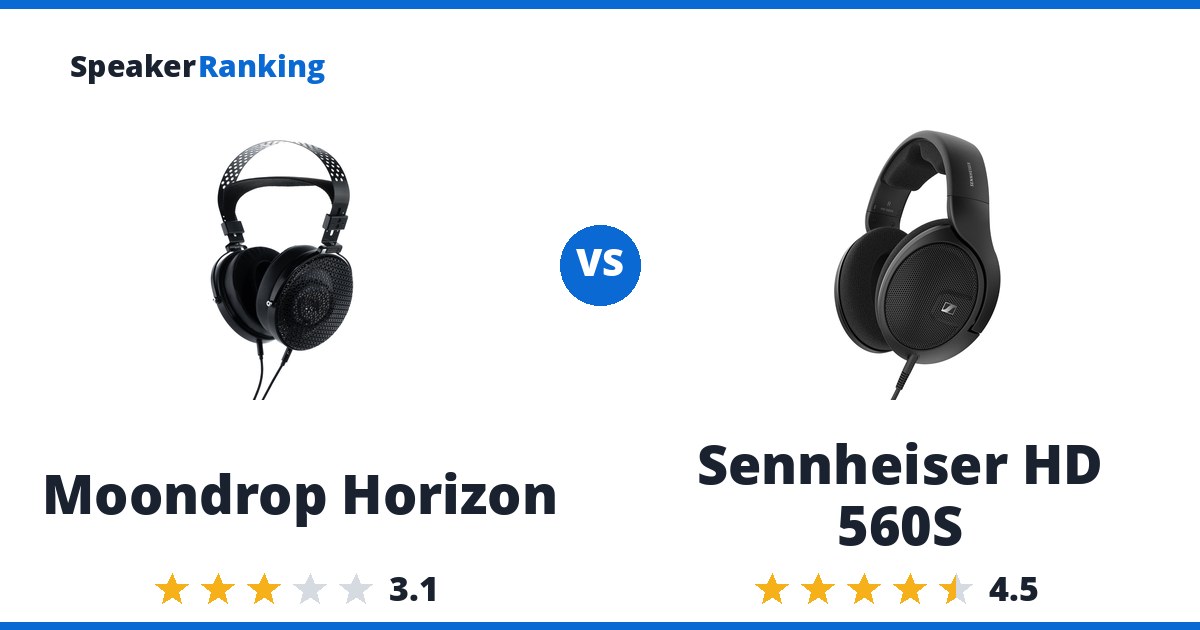
Why pick the Moondrop Horizon: Lower mids sit within about 0.5 dB of target, keeping voices and guitars natural. The catch: Presence sits about 3.4 dB low with a 14.6 dB dip near 10.6 kHz, so vocals and instruments lose some bite.
The Sennheiser HD 560S is the better-sounding option. It scores 93 on the Harman preference model, with the midrange and presence region (200 Hz to 6 kHz) within about 0.2 dB of target, so vocals and instruments sound very natural. The catch: Bass is lean, with sub-bass about 5 dB under target and 60 to 200 Hz about 1.2 dB under, which can sound thin on pop, hip hop and electronic music.
Buy the Sennheiser HD 560S. It is rated higher for sound quality than the Moondrop Horizon and costs less, so it is the default pick unless a specific strength of the other one matters more to you.
Want more options? Browse the full Headphones rankings.
Specifications Side By Side
| Moondrop Horizon | Sennheiser HD 560S | |
|---|---|---|
| Price | $199.99 | $199.95 |
| Ranked | #286 of 429 in Over-Ear Headphones | #8 of 429 in Over-Ear Headphones |
| Form Factor | Over-ear | Over-ear |
| Back | Open | Open |
| Connection | Wired | Wired |
| Driver Type | Dynamic | Dynamic |
| Drivers | 1 x 50mm dynamic | - |
| Impedance | 32 ohms | 120 ohms |
| Sensitivity | 109 dB/Vrms | 110 dB SPL (1 kHz, 1 V) |
| Frequency Response | 20Hz - 34kHz | 6Hz - 38kHz (Manufacturer specified) |
| Harman Preference Score | 62 (median of 7 squig.link measurements, calibrated to AutoEQ) | 93 (measured by oratory1990, via AutoEQ) |
| Deviation From Target | 3.12 dB standard deviation | 1.58 dB standard deviation |
| Tonal Tilt | -0.78 (negative is warmer, positive brighter) | +0.08 (negative is warmer, positive brighter) |
| Sub-bass Extension | Falls 6 dB below target at 53 Hz (-10.2 dB at 30 Hz) | Within 6 dB of target down to 20 Hz (-5.2 dB at 30 Hz) |
| Weight | - | 0.5 lbs (240 g) |
Related Headphone Comparisons
More top alternatives to Sennheiser HD 560S:
- HIFIMAN Ananda Nano vs Sennheiser HD 560S
- Philips Fidelio X2HR vs Sennheiser HD 560S
- Sennheiser HD 550 vs Sennheiser HD 560S
- Sennheiser HD 560S vs HIFIMAN Edition XS
- Sennheiser HD 560S vs Sennheiser HD 505
Prices on this page were last checked October 13, 2026 at 3:17 PM UTC. Product prices and availability are accurate as of that date/time and are subject to change; the price and availability shown on Amazon at the time of purchase will apply to the purchase of this product.
As an eBay Partner, we may be compensated if you make a purchase.
The Two Headphones In Full
 Moondrop Horizon: $199.99 Amazon $199.99 eBay
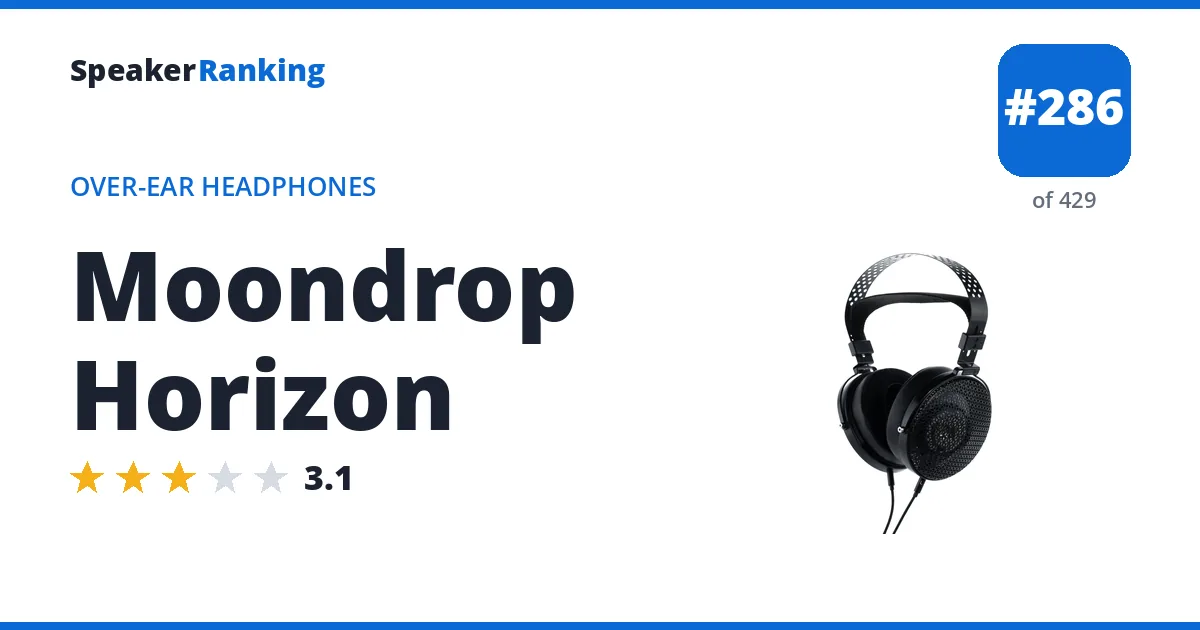
Pros: Lower mids sit within about 0.5 dB of target, keeping voices and guitars natural. It uses 1 x 50mm dynamic with an easy 32 ohm load.
Cons: Presence sits about 3.4 dB low with a 14.6 dB dip near 10.6 kHz, so vocals and instruments lose some bite. Sub-bass is 10.2 dB short at 30 Hz, so deep bass lacks rumble. A Harman score of 62 places it in the lower part of the over-ear rankings.
Full Moondrop Horizon review and specifications →
| Released | Jul 2025 (1 year ago) |
|---|---|
| Back | Open |
| Connection | Wired |
| Deviation From Target | 3.12 dB standard deviation |
| Driver Type | Dynamic |
| Drivers | 1 x 50mm dynamic |
| Form Factor | Over-ear |
| Frequency Response | 20Hz - 34kHz |
| Harman Preference Score | 62 (median of 7 squig.link measurements, calibrated to AutoEQ) |
| Impedance | 32 ohms |
| Sensitivity | 109 dB/Vrms |
| Sub-bass Extension | Falls 6 dB below target at 53 Hz (-10.2 dB at 30 Hz) |
| Tonal Tilt | -0.78 (negative is warmer, positive brighter) |
- Reviews, Comparisons and Sound Samples
 Sennheiser HD 560S: $199.95 Amazon $199.95 eBay
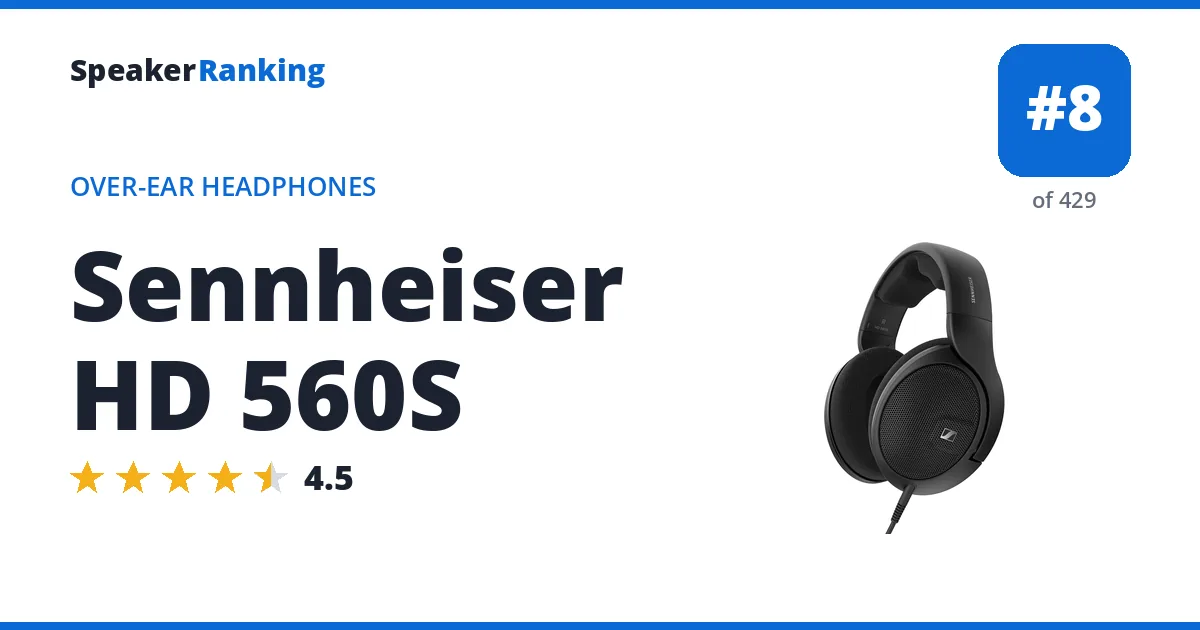
Pros: It scores 93 on the Harman preference model, with the midrange and presence region (200 Hz to 6 kHz) within about 0.2 dB of target, so vocals and instruments sound very natural. At 240 g it is the lightest of the top group, and the open design gives a wide soundstage. Its 120 ohm impedance is still manageable from most modern sources.
Cons: Bass is lean, with sub-bass about 5 dB under target and 60 to 200 Hz about 1.2 dB under, which can sound thin on pop, hip hop and electronic music. Treble is also pulled back, with a deep 8.5 dB dip near 9.8 kHz that softens cymbals and sibilance. The open back leaks sound and provides no isolation.
Full Sennheiser HD 560S review and specifications →
| Released | Sep 2020 (6 years ago) |
|---|---|
| Back | Open |
| Connection | Wired |
| Deviation From Target | 1.58 dB standard deviation |
| Driver Type | Dynamic |
| Form Factor | Over-ear |
| Frequency Response | 6Hz - 38kHz (Manufacturer specified) |
| Harman Preference Score | 93 (measured by oratory1990, via AutoEQ) |
| Impedance | 120 ohms |
| Sensitivity | 110 dB SPL (1 kHz, 1 V) |
| Sub-bass Extension | Within 6 dB of target down to 20 Hz (-5.2 dB at 30 Hz) |
| Tonal Tilt | +0.08 (negative is warmer, positive brighter) |
| Weight | 0.5 lbs (240 g) |
EQ preset to match the Harman target
Set a preamp of -6.6 dB, then add these filters in any parametric equalizer (Wavelet, Equalizer APO, Peace, or a player with parametric EQ). Calculated by AutoEQ from its measured frequency response.
| Filter | Frequency | Gain | Q |
|---|---|---|---|
| Low shelf | 105 Hz | +9.0 dB | 0.70 |
| Peak | 8,983 Hz | +4.4 dB | 2.63 |
| Peak | 54 Hz | -5.4 dB | 0.48 |
| Peak | 1,148 Hz | -1.5 dB | 2.38 |
| Peak | 491 Hz | +0.6 dB | 1.23 |
| High shelf | 10,000 Hz | -3.9 dB | 0.70 |
| Peak | 7,451 Hz | +2.0 dB | 3.91 |
| Peak | 4,502 Hz | -1.7 dB | 6.00 |
| Peak | 1,937 Hz | +0.9 dB | 3.93 |
| Peak | 5,639 Hz | -0.9 dB | 6.00 |
- Reviews, Comparisons and Sound Samples
- Head-to-Head Comparisons