Short answer: both are discontinued, so this only matters if you are buying used. Used, the Minirig 2 is the better pick: it ranks #9 of 164 medium speakers by sound quality (rated 4.3/5), against #80 (rated 3.3/5) for the JBL Flip 5. If you want one new, the Earfun Uboom L ranks #2 at $49.79.
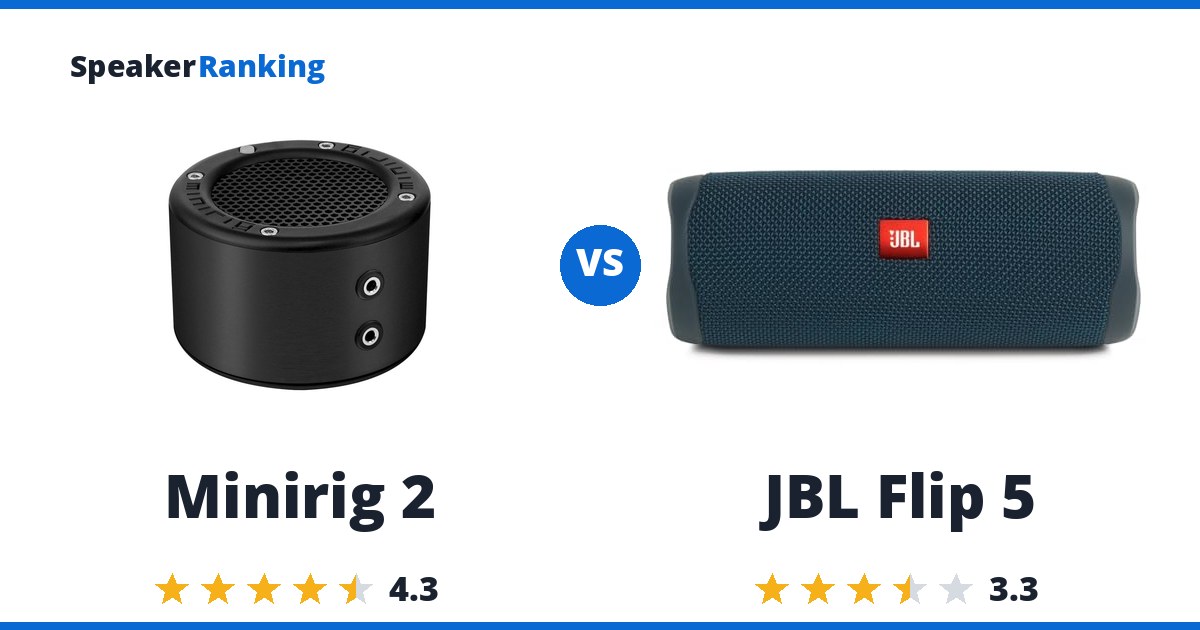
The Minirig 2 is the better-sounding, louder choice. Modular, can easily attach a subwoofer. Alan Ross Reviews measured it at 95dB at full volume, against 92dB for the JBL Flip 5. It is rated for 40 hours of battery against 12 for the JBL Flip 5. It supports aptX Bluetooth, which the JBL Flip 5 lacks. The catch: Calls itself splash resistant and has no official water rating.
The JBL Flip 5 is the tougher pick. Compact and light (1.1 lb) with a carry lanyard. It is rated IPX7 against Splash resistant for the Minirig 2. Watch for: Boosted upper bass.
Buy the Minirig 2 only if you find one used in good condition; both are discontinued, and it is the better rated of the two. For a new speaker, start with the Earfun Uboom L instead.
Still deciding? The full Portable Bluetooth rankings cover every ranked option.
Specifications Side By Side
| Minirig 2 | JBL Flip 5 | |
|---|---|---|
| Price | $140 Discontinued | $64.97 Discontinued |
| Ranked | #9 of 164 in Medium Size Portable Bluetooth Speakers | #80 of 164 in Medium Size Portable Bluetooth Speakers |
| App | Yes | Yes |
| Aux Input | Yes | No |
| Aux Latency | 0ms | - |
| Bass Extension (-10dB) | 54Hz | 59Hz |
| Battery Life | 40 hours (Manufacturer specified) | 12 hours (Manufacturer specified) |
| Built-in Microphone | No | No |
| EQ | Yes | Yes (via JBL app, sunsetted in 2024) |
| IP Rating | Splash resistant | IPX7 |
| Maximum SPL | 95dB (measured by Alan Ross Reviews) | 92dB (measured by Alan Ross Reviews) |
| Power Bank | No | - |
| Power Input | Proprietary USB cable | USB-C |
| Stereo | No | No |
| Omnidirectional | Pointing up | No |
| TWS | Yes (cable) | Yes |
| Weight | 1.1 lbs (488 g) | 1.2 lbs (540 g) |
| Bluetooth | Yes | Yes |
| Bluetooth Codecs | aptX | SBC |
| Bluetooth Latency | 150ms (1 speaker) / 500ms (2 speakers stereo) | 200ms |
| Bluetooth Version | 4.2 | 4.2 |
| Drivers | 70mm speaker driver | 1x 44x80mm fullrange |
| Amplifier Power | 15W | 20W RMS |
| Dimensions | 4” x 3” (102 x 76 mm) (diameter x height) | 7.1” x 2.7” x 2.9” (181 x 69 x 74 mm) |
| Digital Aux Input | No | No |
| Party Mode | - | Yes (PartyBoost up to 100 speakers) |
| Frequency Response | - | 65Hz - 20kHz (Manufacturer specified) |
| Strap | - | Yes (lanyard) |
Related Speaker Comparisons
More top alternatives to Minirig 2:
- Earfun Uboom L vs Minirig 2
- Soundcore Motion 300 vs Minirig 2
- Minirig 2 vs Minirig 4
- Minirig 2 vs Minirig 3
- B&O Beosound A1 vs Minirig 2
Prices on this page were last checked October 4, 2026 at 9:58 PM UTC. Product prices and availability are accurate as of that date/time and are subject to change; the price and availability shown on Amazon at the time of purchase will apply to the purchase of this product.
As an eBay Partner, we may be compensated if you make a purchase.
The Two Speakers In Full
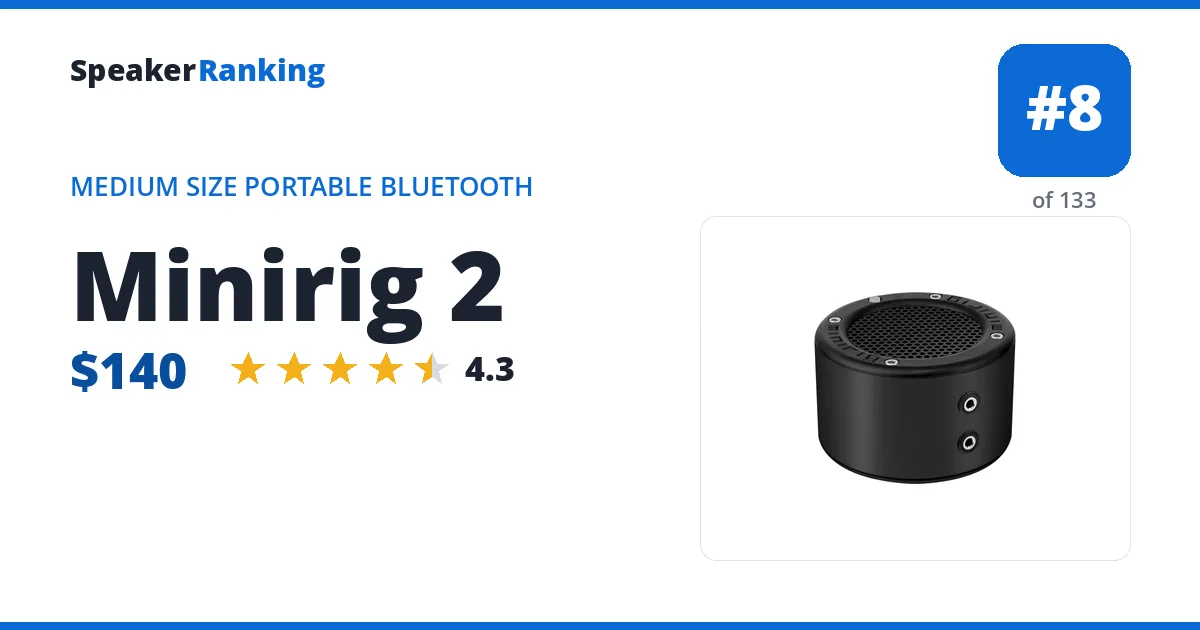
 Minirig 2: $140 Discontinued eBay
Newer model: the Minirig 4, ranked higher, rated 4.3/5.
Pros: Modular, can easily attach a subwoofer. Measured bass extension of 54Hz (-10dB).
Cons: Not stereo. Calls itself splash resistant and has no official water rating. App is buggy. Wireless TWS pairing is buggy. A bit expensive. Has reliability issues more often than any other speaker. Discontinued; Minirig’s current lineup is the Minirig 4, Subwoofer 4 Ultra and Finite MR-79.
Full Minirig 2 review and specifications →
| Amplifier Power | 15W |
|---|---|
| App | Yes |
| Aux Input | Yes |
| Aux Latency | 0ms |
| Bass Extension (-10dB) | 54Hz |
| Battery Life | 40 hours (Manufacturer specified) |
| Bluetooth | Yes |
| Bluetooth Codecs | aptX |
| Bluetooth Latency | 150ms (1 speaker) / 500ms (2 speakers stereo) |
| Bluetooth Version | 4.2 |
| Built-in Microphone | No |
| Digital Aux Input | No |
| Dimensions | 4” x 3” (102 x 76 mm) (diameter x height) |
| Drivers | 70mm speaker driver |
| EQ | Yes |
| IP Rating | Splash resistant |
| Maximum SPL | 95dB (measured by Alan Ross Reviews) |
| Omnidirectional | Pointing up |
| Power Bank | No |
| Power Input | Proprietary USB cable |
| Stereo | No |
| TWS | Yes (cable) |
| Weight | 1.1 lbs (488 g) |
- Reviews, Comparisons and Sound Samples
- Head-to-Head Comparisons
 JBL Flip 5: $64.97 Discontinued Amazon eBay
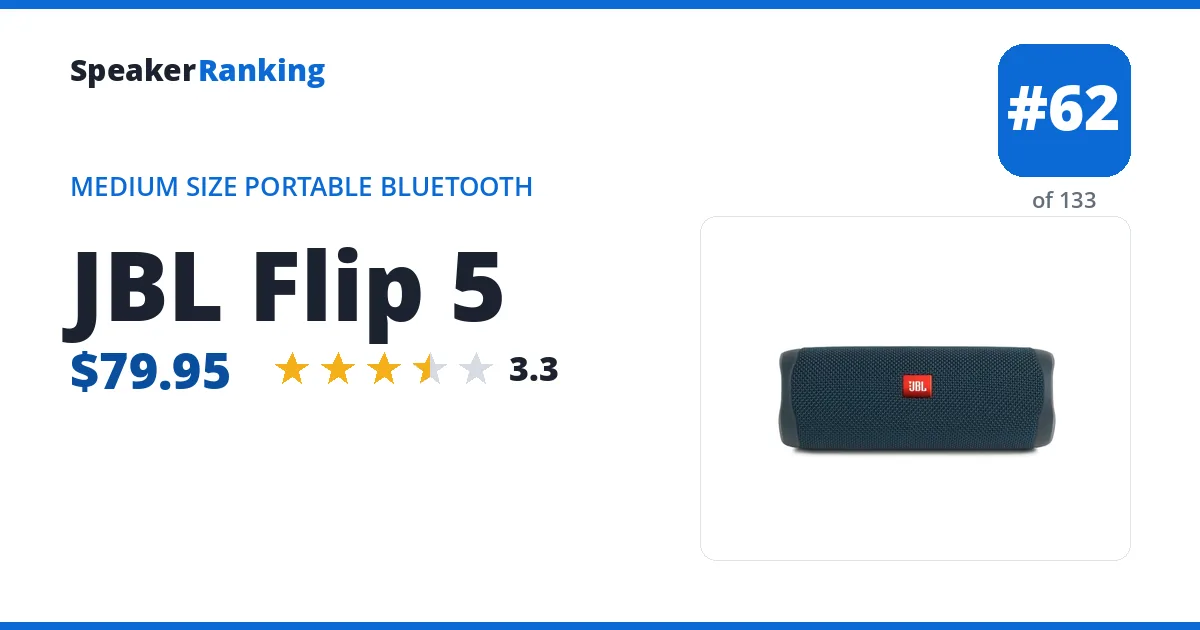
Newer model: the JBL Flip 7, ranked higher, rated 4.2/5.
Pros: Compact and light (1.1 lb) with a carry lanyard. Charges via USB-C, topping off in about 2.5 hours. IP67 rated. Measured bass extension of 59Hz (-10dB).
Cons: Not stereo. Boosted upper bass. Piercing sound when turned up. Peaky lower treble at higher volumes. Discontinued.
Full JBL Flip 5 review and specifications →
| Amplifier Power | 20W RMS |
|---|---|
| App | Yes |
| Aux Input | No |
| Bass Extension (-10dB) | 59Hz |
| Battery Life | 12 hours (Manufacturer specified) |
| Bluetooth | Yes |
| Bluetooth Codecs | SBC |
| Bluetooth Latency | 200ms |
| Bluetooth Version | 4.2 |
| Built-in Microphone | No |
| Digital Aux Input | No |
| Dimensions | 7.1” x 2.7” x 2.9” (181 x 69 x 74 mm) |
| Drivers | 1x 44x80mm fullrange |
| EQ | Yes (via JBL app, sunsetted in 2024) |
| Frequency Response | 65Hz - 20kHz (Manufacturer specified) |
| IP Rating | IPX7 |
| Maximum SPL | 92dB (measured by Alan Ross Reviews) |
| Omnidirectional | No |
| Party Mode | Yes (PartyBoost up to 100 speakers) |
| Power Input | USB-C |
| Stereo | No |
| Strap | Yes (lanyard) |
| TWS | Yes |
| Weight | 1.2 lbs (540 g) |
- Links
- Reviews, Comparisons and Sound Samples
- Alan Ross Reviews: Beoplay A1 Denon 250bt JBL Flip 5 Anker Flare 2 More from alanrossreviews →
- DLX Willington: JBL Flip 5 vs Flip 4 :Sound Battle: Almost to the size of the JBL Charge 3? More from DLXWillington →
- Alan Ross Reviews: Sony XB23 vs JBL Flip 5 v Tribit Maxsound Plus
- Techder Audios: #JBL Flip 5 VS #JBL Flip Essential "IMPRESSIVE COMPARISON!?" More from techderaudios →
- Alan Ross Reviews: Marshall Emberton vs JBL Flip 5 & Soundcore Boost - true stereophonic 🤓
- Head-to-Head Comparisons