Short answer: the Genelec 8020D for better sound quality, the KRK Classic 5 for the lower price. The Genelec 8020D ranks #12 of 100 powered bookshelf speakers, rated 4.4/5, at $1,390. The KRK Classic 5 ranks #72, rated 3.4/5, at $319.99, $1,070.01 cheaper.
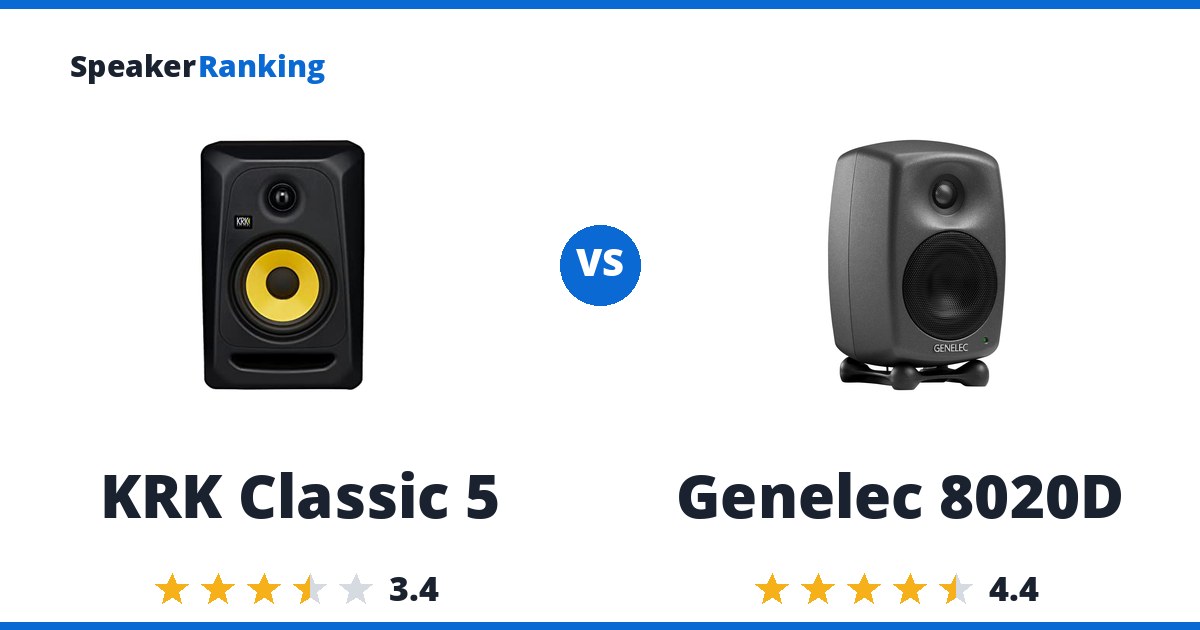
What the KRK Classic 5 does well: ASR’s Klippel data gives -3dB bass around 60Hz and a 5.99 preference score with an ideal subwoofer. The catch: The native standalone score is 3.47 and the midrange span is a large 6.5dB.
The Genelec 8020D is the better-sounding option. A compact waveguided monitor with balanced XLR input and placement filters, well suited to a small studio desk. Watch for: Small size limits deep-bass reach and headroom.
Buy the KRK Classic 5 when the price outweighs sound quality for you, and the Genelec 8020D when sound quality outweighs the price instead.
Want more options? Browse the full Powered Home rankings.
Specifications Side By Side
| KRK Classic 5 | Genelec 8020D | |
|---|---|---|
| Price | $319.99 per pair | $1,390 per pair |
| Ranked | #72 of 100 in Medium Size Powered Bookshelf Speakers | #12 of 100 in Medium Size Powered Bookshelf Speakers |
| Bass Extension (-3dB) | 60.1Hz (Spinorama/Audio Science Review) | 56Hz (measured, Audio Science Review) |
| Bass Extension (-6dB) | 54.2Hz (Spinorama/Audio Science Review) | - |
| Spinorama Preference Score | 3.47 | - |
| Dimensions | 9.7”H x 7.4”W x 11.2”D (246.4 x 188 x 284.5 mm) | 9.5”H x 5.8”W x 5.6”D (241.3 x 147.3 x 142.2 mm) |
| Frequency Response | 56Hz-30kHz (+-3dB) (Manufacturer specified) | 56 Hz - 25 kHz (-6 dB) (Manufacturer specified) |
| Inputs | RCA, TRS, XLR | XLR |
| Weight | 12.9 lbs (5.87 kg) | 7.1 lbs (3.2 kg) each |
| Drivers | 5” (127mm) woofer | 4.1” woofer, 0.75” metal dome tweeter |
| App | No | No |
| Bluetooth | No | No |
| EQ | Yes (Room adjustment) | Yes (Bass tilt, desk proximity) |
| Amplifier Power | 50w RMS Per Speaker | 100W (50W woofer + 50W tweeter) |
| Spinorama Preference Score with Perfect Sub | 5.99 | - |
| XLR Input | Yes | Yes |
| RCA Input | Yes | No |
| TRS Input | Yes | No |
| Optical Input | No | No |
| Coaxial Input | No | No |
| USB Input | No | No |
| HDMI Input | No | No |
| AES Input | No | No |
| Aux Input | No | No |
| Bass Extension (-10dB) | - | 50Hz (measured, Audio Science Review) |
| Maximum SPL | - | 103dB @ 1m (manufacturer specified) |
Related Speaker Comparisons
How Genelec 8020D compares with other leading options:
- Genelec 8331A vs Genelec 8020D
- Genelec 8020D vs Neumann KH120 MKII
- Genelec 8020D vs Genelec 8030C
- Genelec 8020D vs Neumann KH80 DSP
- Genelec 8020D vs Dynaudio LYD 5
Prices on this page were last checked October 7, 2026 at 9:25 PM UTC. Product prices and availability are accurate as of that date/time and are subject to change; the price and availability shown on Amazon at the time of purchase will apply to the purchase of this product.
As an eBay Partner, we may be compensated if you make a purchase.
The Two Speakers In Full
 KRK Classic 5: $319.99 per pair Amazon eBay
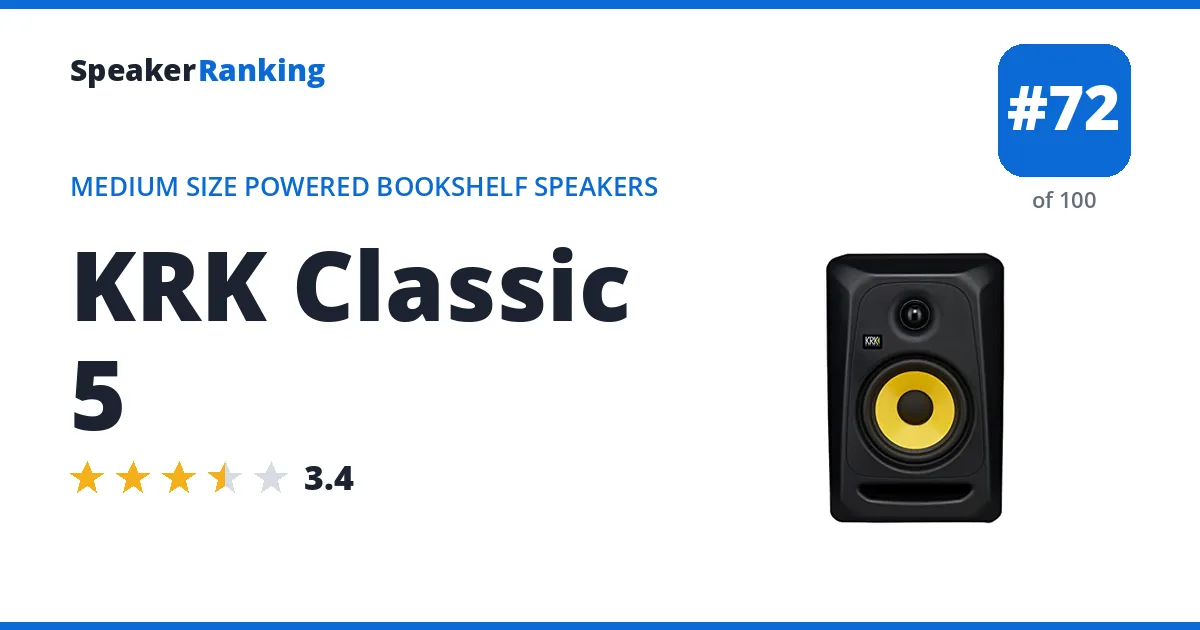
Pros: ASR’s Klippel data gives -3dB bass around 60Hz and a 5.99 preference score with an ideal subwoofer. Broad tonal correction can improve it, so it may be useful to someone willing to measure and EQ a basic studio setup. Measured bass extension of 60.1Hz (-3dB).
Cons: The native standalone score is 3.47 and the midrange span is a large 6.5dB. Excess treble and crossover/directivity errors keep it from being neutral out of the box, while low-bass distortion limits loud playback. Modeled EQ scores are not stock performance and do not demonstrate corrected distortion or dispersion.
Full KRK Classic 5 review and specifications →
| AES Input | No |
|---|---|
| Amplifier Power | 50w RMS Per Speaker |
| App | No |
| Aux Input | No |
| Bass Extension (-3dB) | 60.1Hz (Spinorama/Audio Science Review) |
| Bass Extension (-6dB) | 54.2Hz (Spinorama/Audio Science Review) |
| Bluetooth | No |
| Coaxial Input | No |
| Dimensions | 9.7”H x 7.4”W x 11.2”D (246.4 x 188 x 284.5 mm) |
| Drivers | 5” (127mm) woofer |
| EQ | Yes (Room adjustment) |
| Frequency Response | 56Hz-30kHz (+-3dB) (Manufacturer specified) |
| HDMI Input | No |
| Inputs | RCA, TRS, XLR |
| Optical Input | No |
| RCA Input | Yes |
| Spinorama Preference Score | 3.47 |
| Spinorama Preference Score with Perfect Sub | 5.99 |
| TRS Input | Yes |
| USB Input | No |
| Weight | 12.9 lbs (5.87 kg) |
| XLR Input | Yes |
- Links
- Reviews, Comparisons and Sound Samples
- Audio Science Review Measurements More from Audio Science Review →
- DSAUDIO.review: DSAUDIO.review Edifier S1000MKII vs Edifier S2000MKIII sound.DEMO More from DSAUDIOreview →
- DSAUDIO.review: Edifier S2000MKIII vs Edifier S3000PRO Sound & Frequency Response Comparison
- DSAUDIO.review: DSAUDIO.review Focal Alpha 50 EVO vs KRK Classic 5 CL5G3 sound.DEMO
- DSAUDIO.review: DSAUDIO.review JBL 305P MKII vs KRK Classic 5 CL5G3 sound.DEMO
- DSAUDIO.review: DSAUDIO.review KRK Classic 5 CL5G3 vs Yamaha HS5 sound.DEMO
- DSAUDIO.review: DSAUDIO.review KRK Classic 5 CL5G3 vs KRK Rokit 5 RP5G4 sound.DEMO
- Audio Science Review Measurements (spinorama.org)
- Head-to-Head Comparisons
 Genelec 8020D: $1,390 per pair B&H Photo Video eBay
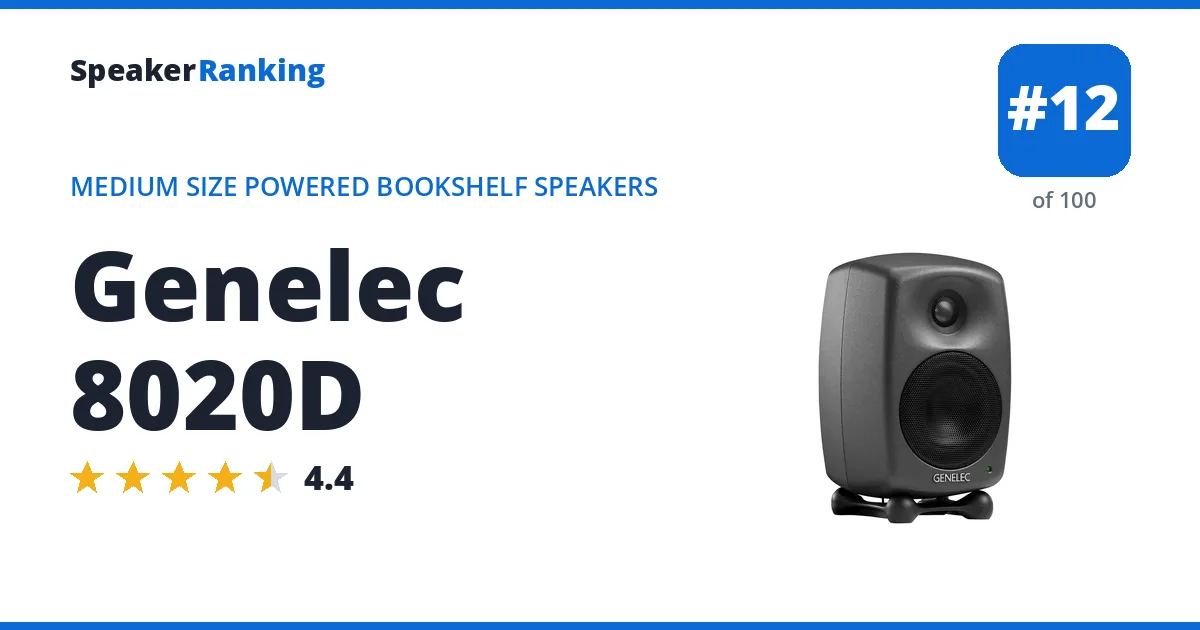
Same family: the Genelec 8010A (smaller bookshelf, rated 4.5/5), the Genelec 8030C (larger bookshelf, ranked higher, rated 4.6/5), the Genelec 8040B (larger bookshelf, rated 4.3/5) and the Genelec 8050B (larger bookshelf, rated 4.4/5).
Pros: A compact waveguided monitor with balanced XLR input and placement filters, well suited to a small studio desk. Klippel measurements show a flat, well-behaved on-axis response from about 60Hz to 10kHz, with listening-window and early-reflection curves tracking closely, a sign of well-controlled directivity. Measured bass extension of 56Hz (-3dB).
Cons: Small size limits deep-bass reach and headroom. It lacks the GLM calibration of the SAM models, and the price is substantial for a compact analog-input monitor. Sound power starts rolling off around 500Hz to 1kHz as the small drivers begin to beam.
Full Genelec 8020D review and specifications →
| AES Input | No |
|---|---|
| Amplifier Power | 100W (50W woofer + 50W tweeter) |
| App | No |
| Aux Input | No |
| Bass Extension (-10dB) | 50Hz (measured, Audio Science Review) |
| Bass Extension (-3dB) | 56Hz (measured, Audio Science Review) |
| Bluetooth | No |
| Coaxial Input | No |
| Dimensions | 9.5”H x 5.8”W x 5.6”D (241.3 x 147.3 x 142.2 mm) |
| Drivers | 4.1” woofer, 0.75” metal dome tweeter |
| EQ | Yes (Bass tilt, desk proximity) |
| Frequency Response | 56 Hz - 25 kHz (-6 dB) (Manufacturer specified) |
| HDMI Input | No |
| Inputs | XLR |
| Maximum SPL | 103dB @ 1m (manufacturer specified) |
| Optical Input | No |
| RCA Input | No |
| TRS Input | No |
| USB Input | No |
| Weight | 7.1 lbs (3.2 kg) each |
| XLR Input | Yes |
- Links
- Reviews, Comparisons and Sound Samples
- Audio Science Review Measurements More from Audio Science Review →
- DSAUDIO.review: Genelec 8020D vs Yamaha HS5 Soun & Frequency Response Comparison More from DSAUDIOreview →
- DSAUDIO.review: Genelec 8020D vs Yamaha HS8 Sound & Frequency Response Comparison
- DSAUDIO.review: Neumann KH80 DSP vs Genelec 8020D Sound & Frequency Response Comparison
- DSAUDIO.review: IK Multimedia iLoud MTM vs Genelec 8020D Sound & Frequency Response Comparison
- DSAUDIO.review: KEF LSX vs Genelec 8020D Sound & Frequency Response Comparison
- DSAUDIO.review: Genelec 8020D vs Adam Audo T5V Sound & Frequency Response Comparison
- DSAUDIO.review: Genelec 8020D & KRK Rokit 5 G4 PR5G4 - Same, same, but different Sound & Response Comparison
- Head-to-Head Comparisons