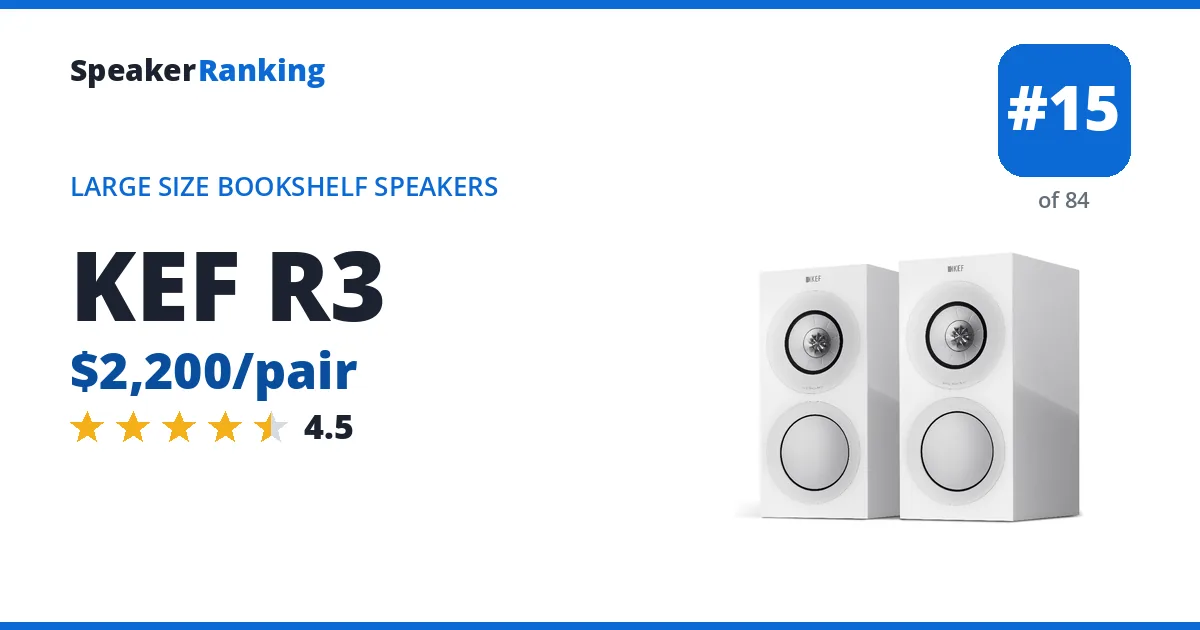
Short answer: the KEF R3. It ranks #15 of 130 bookshelf speakers by sound quality at $2200; the Dynaudio Contour 20i ranks #60 and costs $5750, so there is not much of a tradeoff to weigh.
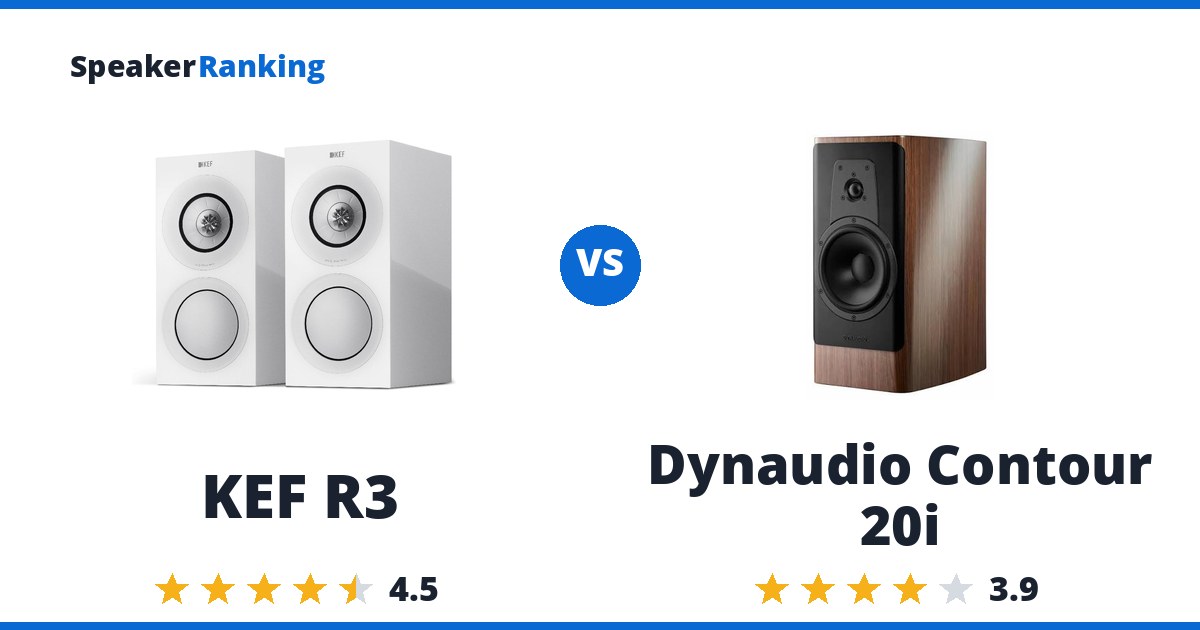
What the KEF R3 offers: True three-way stand-mount with a 6.5-inch woofer below KEF’s 5-inch Uni-Q midrange/1-inch tweeter. Erin measured approximately 86-87dB/2.83V/1m sensitivity, exceptionally low sub-1% distortion at 86dB and orderly directivity in both planes. The coaxial geometry maintains image stability across seats, while Flexible Port Technology avoids the strong midrange port resonance common to rear-vented competitors. A 110W Parasound drove it successfully in Erin’s listening. Watch for: The low-frequency alignment rolls gradually rather than delivering high-output sub-bass; KEF specifies 58Hz +/-3dB and Erin’s high-level data supports using an 80Hz subwoofer crossover. Narrow high-frequency features and natural Uni-Q narrowing toward the top octave make toe angle audible, although off-axis tracking remains smooth. Sensitivity is moderate, the cabinet weighs almost 30 lb, and this original R3 lacks the Meta successor’s MAT absorber.
What the Dynaudio Contour 20i offers: Two-way design with a 1.125” Esotar2i silk dome tweeter and a 7” magnesium silicate polymer woofer in a vented enclosure. A shallow bass rolloff profile lets it sit closer to a wall (about 1-2 feet worked best in testing) without becoming boomy, and makes subwoofer integration comparatively easy. Very wide horizontal radiation (about ±70° through the midrange) gives an enveloping, spacious sound in a suitably sized room. On-axis response holds within about ±3dB overall and ±1.5dB through the midrange. Attractive build quality with a distinctive metal front baffle and gloss finish options. Long-term compression stays good up to 96dB, and short-term compression is within about 0.5dB at that same level. Watch for: Notably room-dependent: sounds too bright in the lower treble in smaller rooms with close sidewalls, needing sidewall absorption to sound neutral, while performing better in larger or more open rooms without that treatment. A roughly 2dB lift in the lower treble combined with wide dispersion means more energy reflecting off sidewalls than some listeners will prefer. Relatively low sensitivity (about 82.5dB measured). Unusually sensitive to amplifier output impedance - high-output-impedance amps like tube or SET designs introduce up to a 2dB dip in the midrange, making the sound more mellow rather than “warmer,” the opposite of what many tube-amp buyers expect. Elevated harmonic and multitone distortion around 700Hz, which the reviewer attributes to typical cone-edge/surround behavior common across many driver brands, though it stands out on the measurement graphs. An upper-midrange dip around 2kHz can reduce attack and clarity on vocals and brass instruments. Vertical listening window is fairly narrow (roughly -20° to +30°) - moving outside that range causes a noticeable tonal shift, unlike coaxial designs that tolerate more vertical movement.
Buy the KEF R3. It ranks higher for sound quality than the Dynaudio Contour 20i and costs less, so there is no real case for the other one.
Still deciding? The full Passive Home rankings cover every ranked option.
Specifications Side By Side
| KEF R3 | Dynaudio Contour 20i | |
|---|---|---|
| Price | $2,200 per pair | $5750 per pair |
| Ranked | #15 of 130 in Large Size Bookshelf Speakers | #60 of 130 in Large Size Bookshelf Speakers |
| Bass Extension (-3dB) | Approximately 58Hz (manufacturer specified; consistent with Erin's measured roll-off) | 56Hz (measured, Erin's Audio Corner) |
| Bass Extension (-10dB) | 35.2Hz (measured, Audio Science Review) | 32Hz (measured, Erin's Audio Corner) |
| Sensitivity | Approximately 86-87dB/2.83V/1m (measured, Erin's Audio Corner) | 82.5dB |
| Impedance | 8 ohms nominal; suitable for Erin's 4/8-ohm-rated amplifier | 4 ohms |
| Drivers | 1" tweeter coaxial with 5" midrange; 6.5" woofer | 18 cm MSP woofer, 28mm Esotar 2i with Hexis tweeter |
| Dimensions | 16.6"H x 7.9"W x 13.2"D | 17.4"H x 8.5"W x 14.2"D (442 x 215.9 x 360.7 mm) |
| Woofer Cabinet | ported, rear Flexible Port | ported, rear |
| Weight | - | 30.9 lbs (14 kg) each |
Related Speaker Comparisons
How KEF R3 compares with other leading options:
- KEF R3 vs Perlisten S4b
- KEF Reference 1 Meta vs KEF R3
- KEF R3 vs GR-Research NX-Studio
- AsciLab C6B vs KEF R3
- KEF R3 vs Audio First Cadentia 3
Prices on this page were last checked September 16, 2026 at 12:41 AM UTC. Product prices and availability are accurate as of that date/time and are subject to change; the price and availability shown on Amazon at the time of purchase will apply to the purchase of this product.
As an eBay Partner, we may be compensated if you make a purchase.
The Two Speakers In Full
 KEF R3: $2,200 per pair Amazon eBay
Pros: True three-way stand-mount with a 6.5-inch woofer below KEF’s 5-inch Uni-Q midrange/1-inch tweeter. Erin measured approximately 86-87dB/2.83V/1m sensitivity, exceptionally low sub-1% distortion at 86dB and orderly directivity in both planes. The coaxial geometry maintains image stability across seats, while Flexible Port Technology avoids the strong midrange port resonance common to rear-vented competitors. A 110W Parasound drove it successfully in Erin’s listening. Measured bass extension of 35.2Hz (-10dB), with a measured sensitivity of 87dB.
Cons: The low-frequency alignment rolls gradually rather than delivering high-output sub-bass; KEF specifies 58Hz +/-3dB and Erin’s high-level data supports using an 80Hz subwoofer crossover. Narrow high-frequency features and natural Uni-Q narrowing toward the top octave make toe angle audible, although off-axis tracking remains smooth. Sensitivity is moderate, the cabinet weighs almost 30 lb, and this original R3 lacks the Meta successor’s MAT absorber.
Full KEF R3 review and specifications →
| Bass Extension (-10dB) | 35.2Hz (measured, Audio Science Review) |
|---|---|
| Bass Extension (-3dB) | Approximately 58Hz (manufacturer specified; consistent with Erin's measured roll-off) |
| Dimensions | 16.6"H x 7.9"W x 13.2"D |
| Drivers | 1" tweeter coaxial with 5" midrange; 6.5" woofer |
| Impedance | 8 ohms nominal; suitable for Erin's 4/8-ohm-rated amplifier |
| Sensitivity | Approximately 86-87dB/2.83V/1m (measured, Erin's Audio Corner) |
| Woofer Cabinet | ported, rear Flexible Port |
- Links
- Reviews, Comparisons and Sound Samples
- Head-to-Head Comparisons
 Dynaudio Contour 20i: $5750 per pair Safeandsoundhq eBay
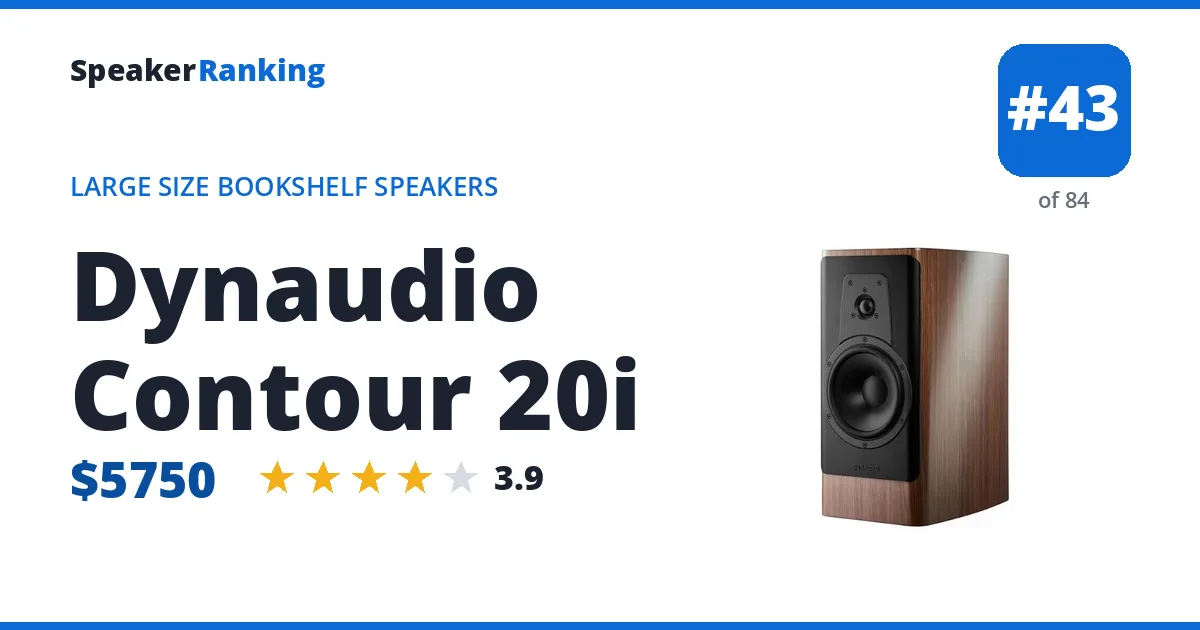
Pros: Two-way design with a 1.125” Esotar2i silk dome tweeter and a 7” magnesium silicate polymer woofer in a vented enclosure. A shallow bass rolloff profile lets it sit closer to a wall (about 1-2 feet worked best in testing) without becoming boomy, and makes subwoofer integration comparatively easy. Very wide horizontal radiation (about ±70° through the midrange) gives an enveloping, spacious sound in a suitably sized room. On-axis response holds within about ±3dB overall and ±1.5dB through the midrange. Attractive build quality with a distinctive metal front baffle and gloss finish options. Long-term compression stays good up to 96dB, and short-term compression is within about 0.5dB at that same level. Measured bass extension of 56Hz (-3dB).
Cons: Notably room-dependent: sounds too bright in the lower treble in smaller rooms with close sidewalls, needing sidewall absorption to sound neutral, while performing better in larger or more open rooms without that treatment. A roughly 2dB lift in the lower treble combined with wide dispersion means more energy reflecting off sidewalls than some listeners will prefer. Relatively low sensitivity (about 82.5dB measured). Unusually sensitive to amplifier output impedance - high-output-impedance amps like tube or SET designs introduce up to a 2dB dip in the midrange, making the sound more mellow rather than “warmer,” the opposite of what many tube-amp buyers expect. Elevated harmonic and multitone distortion around 700Hz, which the reviewer attributes to typical cone-edge/surround behavior common across many driver brands, though it stands out on the measurement graphs. An upper-midrange dip around 2kHz can reduce attack and clarity on vocals and brass instruments. Vertical listening window is fairly narrow (roughly -20° to +30°) - moving outside that range causes a noticeable tonal shift, unlike coaxial designs that tolerate more vertical movement.
Full Dynaudio Contour 20i review and specifications →
| Bass Extension (-10dB) | 32Hz (measured, Erin's Audio Corner) |
|---|---|
| Bass Extension (-3dB) | 56Hz (measured, Erin's Audio Corner) |
| Dimensions | 17.4"H x 8.5"W x 14.2"D (442 x 215.9 x 360.7 mm) |
| Drivers | 18 cm MSP woofer, 28mm Esotar 2i with Hexis tweeter |
| Impedance | 4 ohms |
| Sensitivity | 82.5dB |
| Weight | 30.9 lbs (14 kg) each |
| Woofer Cabinet | ported, rear |
- Links
- Reviews, Comparisons and Sound Samples
- Head-to-Head Comparisons
- Dynaudio Contour 20i vs SVS Ultra Bookshelf
- Dynaudio Contour 20i vs Technics SB-C700
- Dynaudio Contour 20i vs Definitive Technology Demand D11
- Dynaudio Contour 20i vs Yamaha NS-800A
- Dynaudio Contour 20i vs ELAC DBR62
- Dynaudio Contour 20i vs Infinity Reference R162
- Dynaudio Contour 20i vs ELAC Uni-Fi Reference UBR62
- Dynaudio Contour 20i vs Ascend CBM-170 SE2
- See all 57 comparisons