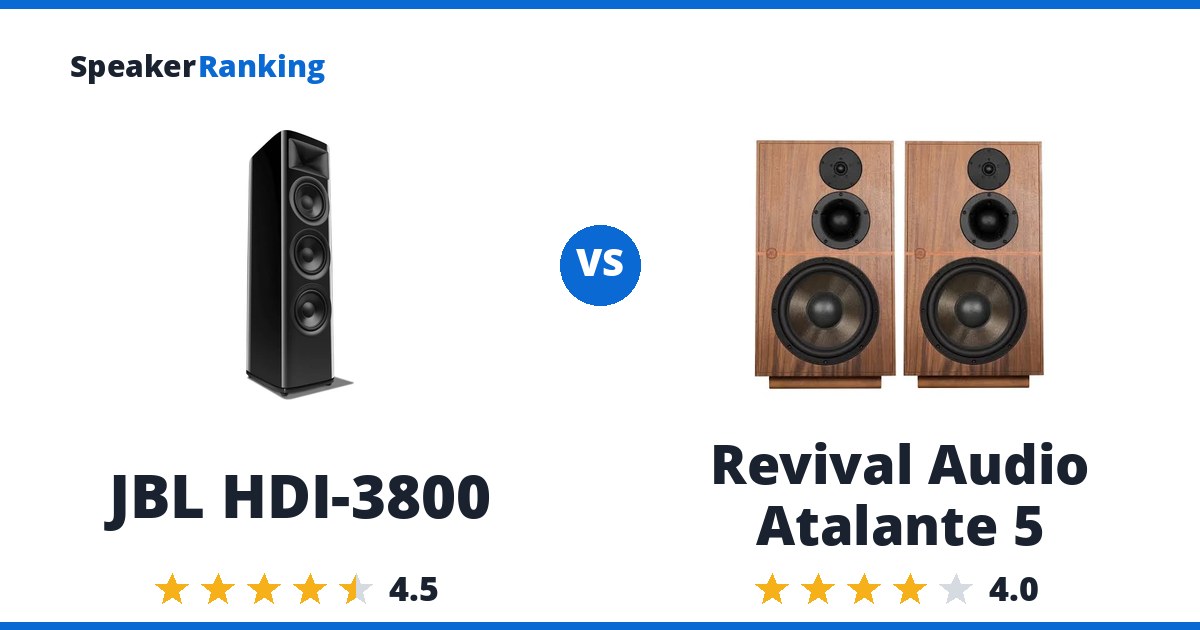
Short answer: the Revival Audio Atalante 5, if you are buying new. The JBL HDI-3800 ranks higher than it (#14 vs #43 of 73 floorstanding speakers, 4.5/5 vs 4.0/5) but is discontinued, so only consider it used; the Revival Audio Atalante 5 is still sold new at $5,000.
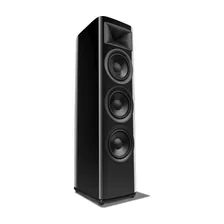
The case for the JBL HDI-3800: 2410H-2 1” Teonex compression driver matched to a custom High-Definition Imaging (HDI) horn geometry achieves exceptional horizontal directivity control, high output capability, and effortless transient response. The catch: On-axis frequency response features a narrow upper-frequency elevation around 8-10kHz, performing noticeably smoother when toed out 10-20° off-axis.
What the Revival Audio Atalante 5 does well: Strong, punchy mid-bass at moderate-to-loud volumes with no port chuffing or excursion strain even pushed hard: a rarity at this price. The catch: A pronounced on-axis peak around 4kHz creates real glare/shoutiness on some material, and combined with a mid-bass emphasis that overshadows lower-midrange detail at higher volumes, tonal balance can feel inconsistent: the reviewer described some tracks as sounding notably different from the neutral mix.
Buy the Revival Audio Atalante 5, since the JBL HDI-3800 is discontinued and only worth hunting down used.
Want more options? Browse the full Passive Home rankings.
Specifications Side By Side
| JBL HDI-3800 | Revival Audio Atalante 5 | |
|---|---|---|
| Price | $5,000.00 per pair Discontinued | $5000 per pair |
| Ranked | #14 of 73 in Large Size Floorstanding Speakers | #43 of 73 in Large Size Floorstanding Speakers |
| Bass Extension (-10dB) | 28Hz (measured, Erin’s Audio Corner) | 30Hz (measured, Erin’s Audio Corner) |
| Bass Extension (-3dB) | 37Hz (measured, Erin’s Audio Corner) | 42Hz (measured, Erin’s Audio Corner) |
| Dimensions | 43.3”H x 11.8”W x 16.4”D (1100.5 x 300.0 x 417.8 mm) | 28” x 16.5” x 14” (710 x 420 x 355 mm) |
| Impedance | 4 ohms nominal (3.8 ohms minimum, measured by Erin’s Audio Corner) | 4 ohms nominal (3.2 ohms minimum, measured above 80Hz, Erin’s Audio Corner) |
| Sensitivity | 92dB (measured average, Erin’s Audio Corner) | 88.6dB (2.83V/1m, measured by Erin’s Audio Corner) |
| Drivers | 1 in. 2410H-2 Teonex compression driver with HDI horn, triple 8 in. Advanced Aluminum Matrix cone woofers | 1.1” (28mm) dome tweeter, 3” dome midrange, 12” woofer |
| Weight | 83.8 lbs (38.0 kg) each | 72.8 lbs (33 kg) |
| Woofer Cabinet | ported, rear | 3-way, switchable ported/sealed via port bungs |
| Spinorama Preference Score | 5.62 | 5.11 |
| Spinorama Preference Score with Perfect Sub | 7.03 | 6.69 |
| DIY Kit | No | No |
| Crossover Frequency | - | 450Hz, 3.5kHz |
| Power Handling | - | 30-200W recommended |
| Frequency Response | - | 28Hz - 22kHz -3dB (Manufacturer specified) |
| Country | - | France |
Related Speaker Comparisons
More top alternatives to JBL HDI-3800:
- KEF Blade Two Meta vs JBL HDI-3800
- JBL HDI-3800 vs MoFi SourcePoint V10 Master Edition
- MoFi SourcePoint 888 vs JBL HDI-3800
- JBL HDI-3800 vs Revel F328Be
- Ascend Acoustics ELX Ribbon Tower vs JBL HDI-3800
Prices on this page were last checked September 29, 2026 at 3:43 PM UTC. Product prices and availability are accurate as of that date/time and are subject to change; the price and availability shown on Amazon at the time of purchase will apply to the purchase of this product.
As an eBay Partner, we may be compensated if you make a purchase.
The Two Speakers In Full
 JBL HDI-3800: $5,000.00 per pair Discontinued eBay
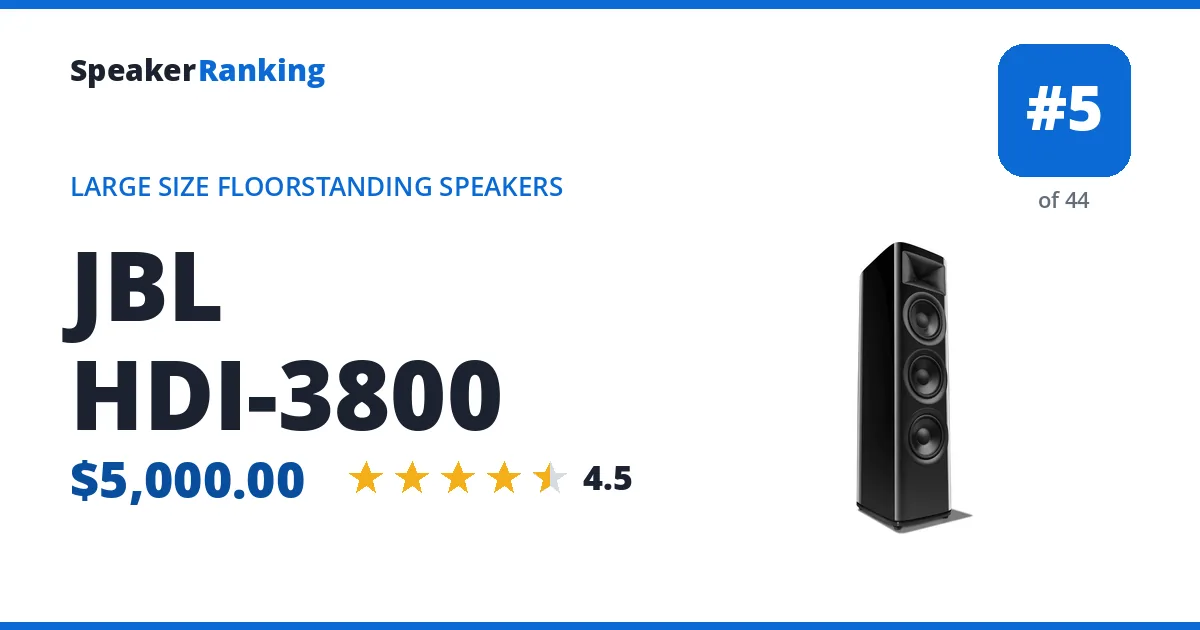
Pros: 2410H-2 1” Teonex compression driver matched to a custom High-Definition Imaging (HDI) horn geometry achieves exceptional horizontal directivity control, high output capability, and effortless transient response. Triple 8” Advanced Aluminum Matrix woofers deliver deep, authoritative bass extension down to an F3 of 37Hz and F10 of 28Hz with minimal low-frequency compression. Outstanding sensitivity (92dB SPL at 2.83V/1m) and ultra-low THD/multitone distortion allow extremely high undistorted SPL output in large home theater spaces. Measured bass extension of 37Hz (-3dB), with a measured sensitivity of 92dB.
Cons: On-axis frequency response features a narrow upper-frequency elevation around 8-10kHz, performing noticeably smoother when toed out 10-20° off-axis. Vertical directivity handoff across the triple woofer layout creates vertical soundstage height tilt depending on listening distance and ear height. Minimum impedance dips to 3.8 ohms, requiring high-current amplifier stability. Substantial cabinet dimensions and 38kg weight require significant room real estate. Discontinued.
Full JBL HDI-3800 review and specifications →
| Bass Extension (-10dB) | 28Hz (measured, Erin’s Audio Corner) |
|---|---|
| Bass Extension (-3dB) | 37Hz (measured, Erin’s Audio Corner) |
| DIY Kit | No |
| Dimensions | 43.3”H x 11.8”W x 16.4”D (1100.5 x 300.0 x 417.8 mm) |
| Drivers | 1 in. 2410H-2 Teonex compression driver with HDI horn, triple 8 in. Advanced Aluminum Matrix cone woofers |
| Impedance | 4 ohms nominal (3.8 ohms minimum, measured by Erin’s Audio Corner) |
| Sensitivity | 92dB (measured average, Erin’s Audio Corner) |
| Spinorama Preference Score | 5.62 |
| Spinorama Preference Score with Perfect Sub | 7.03 |
| Weight | 83.8 lbs (38.0 kg) each |
| Woofer Cabinet | ported, rear |
- Links
- Reviews, Comparisons and Sound Samples
- Head-to-Head Comparisons
 Revival Audio Atalante 5: $5000 per pair Don Better Audio eBay
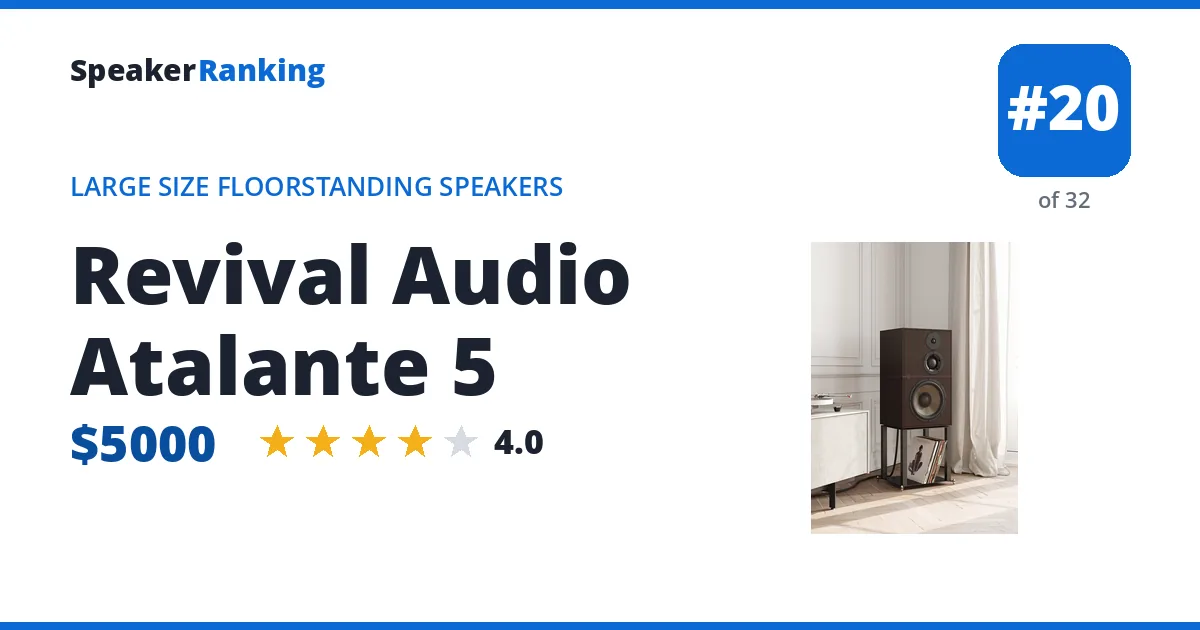
Pros: Strong, punchy mid-bass at moderate-to-loud volumes with no port chuffing or excursion strain even pushed hard: a rarity at this price. Good bass extension for the class (F3 42Hz, F10 30Hz), reaching about 40Hz in-room with authority. Distortion is very low (under 1% through most of the range) and compression is well controlled outside the extreme top octave. Striking build and looks, with a large 12” woofer and 3” dome midrange that give real visual presence. Measured bass extension of 42Hz (-3dB), with a measured sensitivity of 88.6dB.
Cons: A pronounced on-axis peak around 4kHz creates real glare/shoutiness on some material, and combined with a mid-bass emphasis that overshadows lower-midrange detail at higher volumes, tonal balance can feel inconsistent: the reviewer described some tracks as sounding notably different from the neutral mix. Imaging precision is looser than more directivity-controlled designs (coaxial or waveguide speakers), with instrument placement sounding a bit fuzzy rather than pinpoint. Horizontal directivity fluctuates between about 40-60 degrees rather than staying constant, worst right around the mid/tweeter crossover. Needs real room to breathe: at least 2-3 feet from the rear wall in ported mode (about a foot if sealed via the included port bungs), and benefits from 5-10 degrees of toe-out to tame the top end.
Full Revival Audio Atalante 5 review and specifications →
| Bass Extension (-10dB) | 30Hz (measured, Erin’s Audio Corner) |
|---|---|
| Bass Extension (-3dB) | 42Hz (measured, Erin’s Audio Corner) |
| Country | France |
| Crossover Frequency | 450Hz, 3.5kHz |
| DIY Kit | No |
| Dimensions | 28” x 16.5” x 14” (710 x 420 x 355 mm) |
| Drivers | 1.1” (28mm) dome tweeter, 3” dome midrange, 12” woofer |
| Frequency Response | 28Hz - 22kHz -3dB (Manufacturer specified) |
| Impedance | 4 ohms nominal (3.2 ohms minimum, measured above 80Hz, Erin’s Audio Corner) |
| Power Handling | 30-200W recommended |
| Sensitivity | 88.6dB (2.83V/1m, measured by Erin’s Audio Corner) |
| Spinorama Preference Score | 5.11 |
| Spinorama Preference Score with Perfect Sub | 6.69 |
| Weight | 72.8 lbs (33 kg) |
| Woofer Cabinet | 3-way, switchable ported/sealed via port bungs |
- Links
- Reviews, Comparisons and Sound Samples
- Head-to-Head Comparisons