Short answer: the Dockin D Fine+. It ranks #36 of 85 large speakers by sound quality, rated 3.9/5, at $199; the Rocksteady Stadium Speakers and Subwoofer ranks #55, rated 3.2/5, and costs $440, which makes this an easy call rather than a real tradeoff.
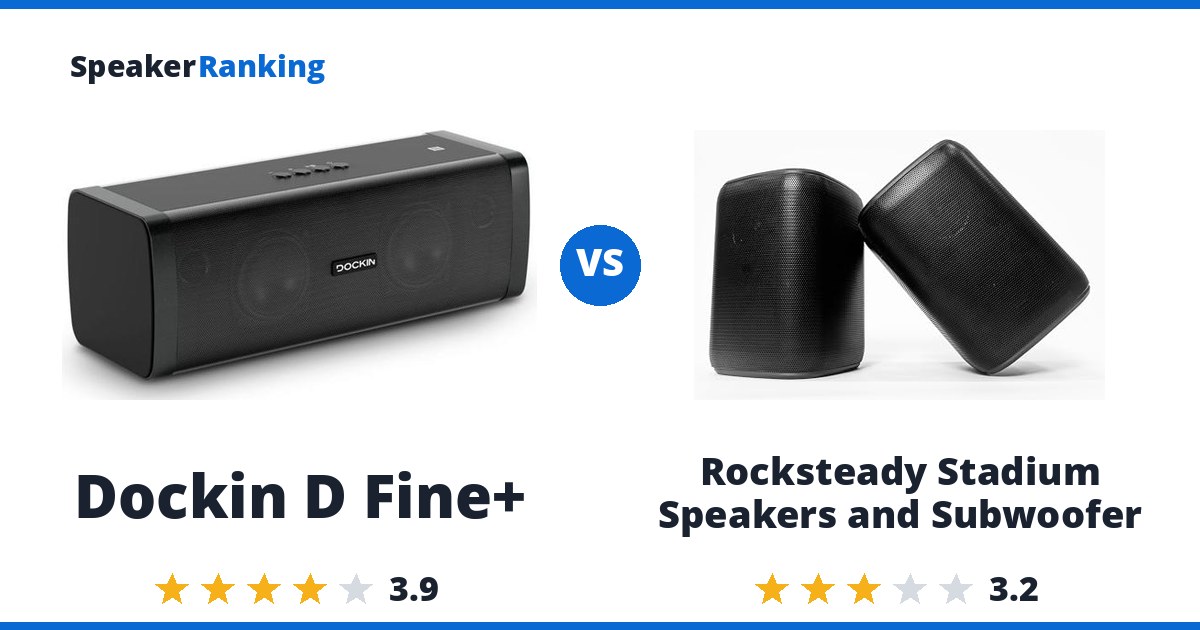
Why pick the Dockin D Fine+: At 1930 g, Dockin D Fine+ combines 2x high-frequency drivers + 2x low-frequency drivers + 2 passive bass radiators with Bluetooth and aux. The catch: There is no companion app.
What the Rocksteady Stadium Speakers and Subwoofer does well: 60W output system with satellite speakers and dedicated subwoofer, 104dB max volume, 16-hour battery life, IPX7 waterproof, modular 2.1 setup with true wireless stereo, TWS pairing, dual mid/bass + tweeters per satellite with passive radiators, Bluetooth 5.0, built-in microphone, AUX input, USB-C charging, compact satellite speakers. Watch for: 7kHz upper mids peak.
One note: the Dockin D Fine+ is no longer sold new, but at #36 of 85 large speakers by sound quality it still outranks most current models, so used is worth considering.
Buy the Dockin D Fine+. It is rated higher for sound quality than the Rocksteady Stadium Speakers and Subwoofer and costs less, so it is the default pick unless a specific strength of the other one matters more to you.
Still deciding? The full Portable Bluetooth rankings cover every ranked option.
Specifications Side By Side
| Dockin D Fine+ | Rocksteady Stadium Speakers and Subwoofer | |
|---|---|---|
| Price | $199 Discontinued | $440 Discontinued |
| Ranked | #36 of 85 in Large Size Portable Bluetooth Speakers | #55 of 85 in Large Size Portable Bluetooth Speakers |
| Power Bank | Yes (USB-A, 5V/1A) | No |
| Power Input | USB-C | USB-C |
| App | No | No |
| Aux Input | Yes | Yes |
| Bluetooth | Yes | Yes |
| Bluetooth Codecs | SBC | SBC |
| Built-in Microphone | Yes | Yes |
| EQ | No | No |
| IP Rating | IPX7 | IPX7 |
| Party Mode | No | No |
| Stereo | Yes | Yes |
| Omnidirectional | No | No |
| TWS | Yes | Yes |
| Amplifier Power | 50W RMS | 60W |
| Dimensions | 11.2” x 3.9” x 4.1” (285 x 100 x 103 mm) | 6.5”H x 4” x 8” (165.1 x 101.6 x 203.2 mm) (footprint) |
| Drivers | 2x high-frequency drivers + 2x low-frequency drivers + 2 passive bass radiators | Satellites: 1x 70mm (2.75”) mid/bass + 1x 28mm (1.1”) tweeter + 2x 72mm passive radiators each; Sub: 1x 130mm (5.1”) bass driver |
| Weight | 4.3 lbs (1930 g) | 9 lbs (4.1 kg) |
| Digital Aux Input | No | No |
| Battery Life | 14 hours (Manufacturer specified) | 16 hours (Manufacturer specified) |
| Bluetooth Version | 4.2 | 5.0 |
| Bass Extension (-10dB) | - | 49Hz |
| Maximum SPL | - | 104dB (measured by Alan Ross Reviews) |
Related Speaker Comparisons
More worthwhile head-to-heads for Dockin D Fine+:
- Dockin D Fine+ vs Fugoo XL
- Dockin D Fine+ vs Hopestar A6 Pro
- JBL Xtreme 5 vs Rocksteady Stadium Speakers and Subwoofer
- Ultimate Ears Everboom vs Brane X
- Sonos Move 2 vs Ultimate Ears Everboom
Prices on this page were last checked September 29, 2026 at 3:43 PM UTC. Product prices and availability are accurate as of that date/time and are subject to change; the price and availability shown on Amazon at the time of purchase will apply to the purchase of this product.
As an eBay Partner, we may be compensated if you make a purchase.
The Two Speakers In Full
 Dockin D Fine+: $199 Discontinued eBay
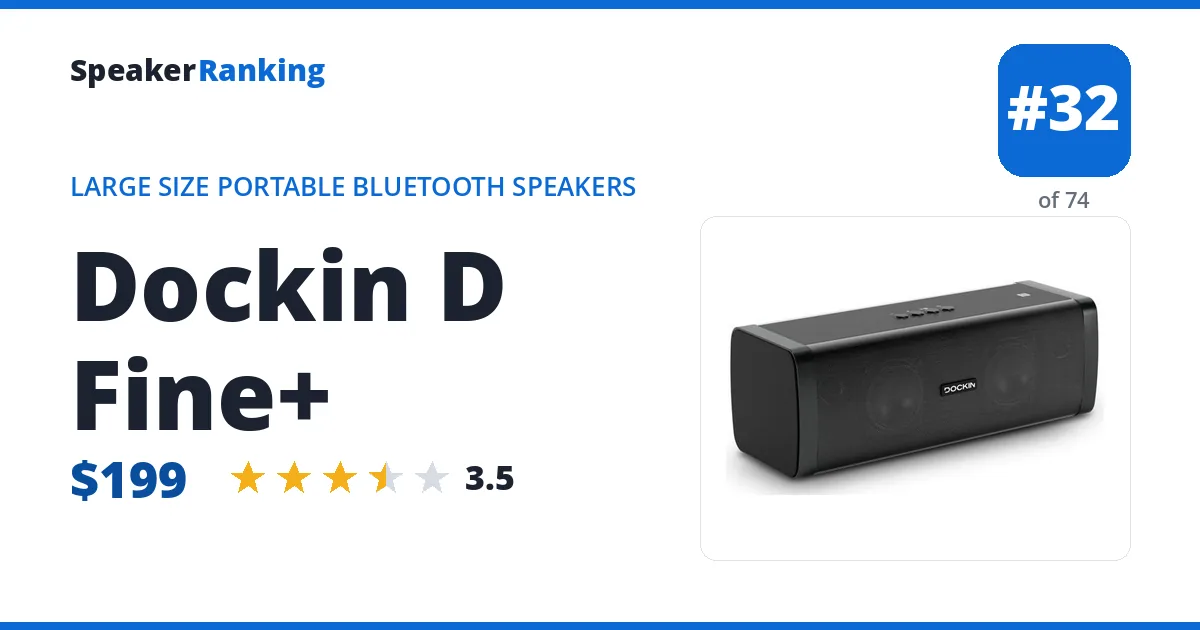
Newer model: the Dockin D Fine+ 2, ranked higher, rated 4.1/5 (also discontinued).
Pros: At 1930 g, Dockin D Fine+ combines 2x high-frequency drivers + 2x low-frequency drivers + 2 passive bass radiators with Bluetooth and aux. Ipx7 protection and stereo playback make its feature set practical for its intended room or portable use.
Cons: There is no companion app. No EQ adjustment. Discontinued.
Full Dockin D Fine+ review and specifications →
| Amplifier Power | 50W RMS |
|---|---|
| App | No |
| Aux Input | Yes |
| Battery Life | 14 hours (Manufacturer specified) |
| Bluetooth | Yes |
| Bluetooth Codecs | SBC |
| Bluetooth Version | 4.2 |
| Built-in Microphone | Yes |
| Digital Aux Input | No |
| Dimensions | 11.2” x 3.9” x 4.1” (285 x 100 x 103 mm) |
| Drivers | 2x high-frequency drivers + 2x low-frequency drivers + 2 passive bass radiators |
| EQ | No |
| IP Rating | IPX7 |
| Omnidirectional | No |
| Party Mode | No |
| Power Bank | Yes (USB-A, 5V/1A) |
| Power Input | USB-C |
| Stereo | Yes |
| TWS | Yes |
| Weight | 4.3 lbs (1930 g) |
- Reviews, Comparisons and Sound Samples
- No independent measurement review is linked for this model; it is ranked from hands-on listening and comparison against similarly priced speakers.
- Head-to-Head Comparisons
 Rocksteady Stadium Speakers and Subwoofer: $440 Discontinued Amazon eBay
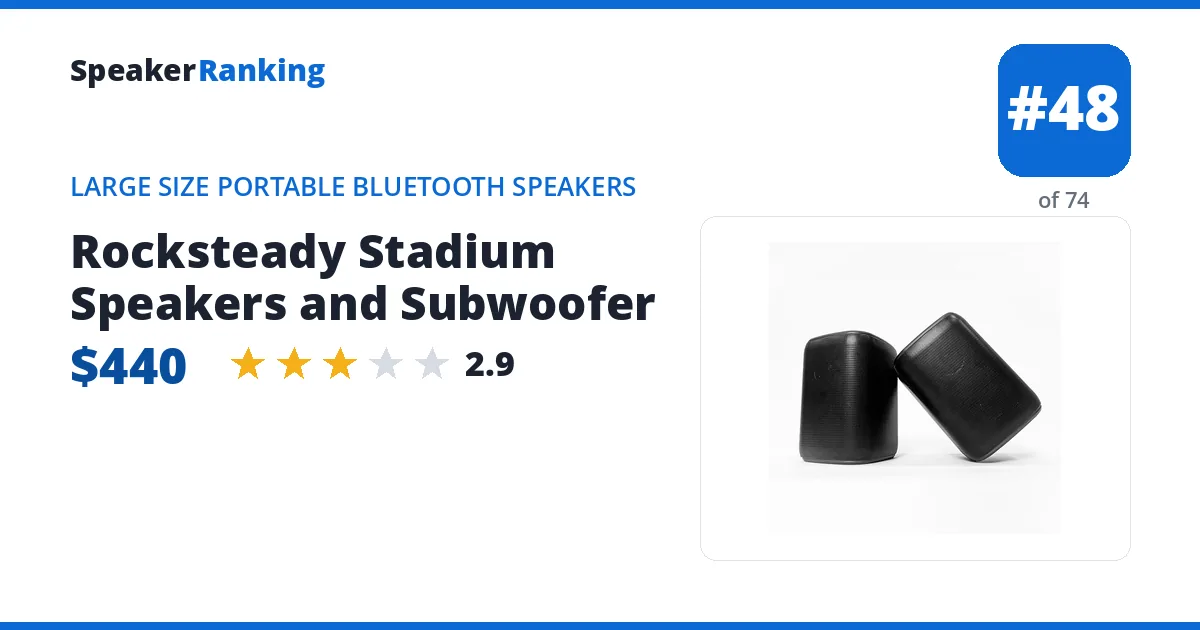
Newer model: the Rocksteady Stadium 2.0. It’s likely to perform similarly, though we don’t have measurements to confirm that yet.
Pros: 60W output system with satellite speakers and dedicated subwoofer, 104dB max volume, 16-hour battery life, IPX7 waterproof, modular 2.1 setup with true wireless stereo, TWS pairing, dual mid/bass + tweeters per satellite with passive radiators, Bluetooth 5.0, built-in microphone, AUX input, USB-C charging, compact satellite speakers. Measured bass extension of 49Hz (-10dB).
Cons: 7kHz upper mids peak. Upper bass boosted. Discontinued.
Full Rocksteady Stadium Speakers and Subwoofer review and specifications →
| Amplifier Power | 60W |
|---|---|
| App | No |
| Aux Input | Yes |
| Bass Extension (-10dB) | 49Hz |
| Battery Life | 16 hours (Manufacturer specified) |
| Bluetooth | Yes |
| Bluetooth Codecs | SBC |
| Bluetooth Version | 5.0 |
| Built-in Microphone | Yes |
| Digital Aux Input | No |
| Dimensions | 6.5”H x 4” x 8” (165.1 x 101.6 x 203.2 mm) (footprint) |
| Drivers | Satellites: 1x 70mm (2.75”) mid/bass + 1x 28mm (1.1”) tweeter + 2x 72mm passive radiators each; Sub: 1x 130mm (5.1”) bass driver |
| EQ | No |
| IP Rating | IPX7 |
| Maximum SPL | 104dB (measured by Alan Ross Reviews) |
| Omnidirectional | No |
| Party Mode | No |
| Power Bank | No |
| Power Input | USB-C |
| Stereo | Yes |
| TWS | Yes |
| Weight | 9 lbs (4.1 kg) |
- Links
- Reviews, Comparisons and Sound Samples
- Head-to-Head Comparisons