Short answer: the Apple AirPods Max. It ranks #291 of 429 over-ear headphones by sound quality (rated 3.1/5) at $496.49 and is still sold new; the Sony WH-1000XM4 ranks #368 (rated 2.5/5) and is discontinued, so it is only an option used. The Sony WH-1000XM4’s replacement, the Sony WH-1000XM6, is rated 2.3/5 at $458.
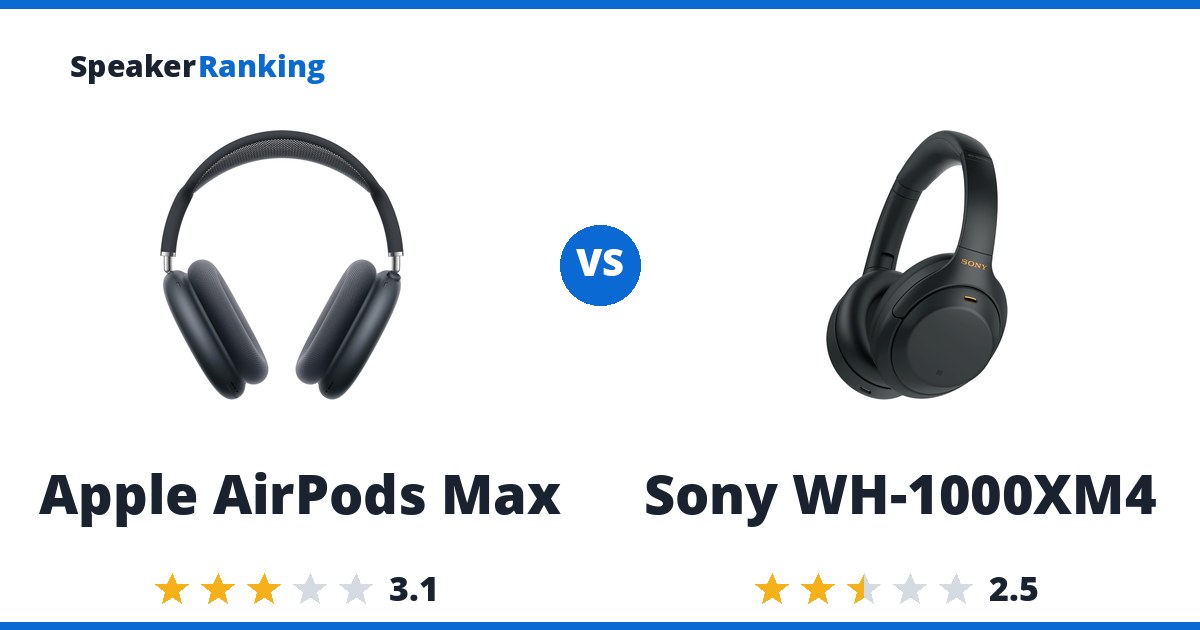
The Apple AirPods Max is the better-sounding option. Bass sits close to target and holds down to 20 Hz, so low end sounds full without bloat. Watch for: Presence sits about 4.5 dB low with an 8.9 dB dip near 7.3 kHz, so vocals and instruments lose some bite.
Why pick the Sony WH-1000XM4: Strong noise cancelling, 30 hour battery life, LDAC support and multipoint pairing made it one of the most popular wireless headphones ever sold. Watch for: Discontinued and replaced by the Sony WH-1000XM5.
Buy the Apple AirPods Max. It is rated higher for sound quality; the Sony WH-1000XM4 is no longer sold new.
Want more options? Browse the full Headphones rankings.
Specifications Side By Side
| Apple AirPods Max | Sony WH-1000XM4 | |
|---|---|---|
| Price | $496.49 | Discontinued |
| Ranked | #291 of 429 in Over-Ear Headphones | #368 of 429 in Over-Ear Headphones |
| Form Factor | Over-ear | Over-ear |
| Back | Closed | - |
| Connection | Bluetooth | Wireless and wired |
| Driver Type | Dynamic | Dynamic |
| Drivers | 1 x 40mm dynamic | 1 x 40mm dynamic |
| Weight | 0.8 lbs (384.8 g) | 0.6 lbs (254 g) |
| Harman Preference Score | 62 (measured by oratory1990, via AutoEQ) | 49 (measured by oratory1990, via AutoEQ) |
| Deviation From Target | 2.53 dB standard deviation | 3.26 dB standard deviation |
| Tonal Tilt | -1.35 (negative is warmer, positive brighter) | -1.55 (negative is warmer, positive brighter) |
| Sub-bass Extension | Within 6 dB of target down to 20 Hz (+1.9 dB at 30 Hz) | Within 6 dB of target down to 20 Hz (+4.2 dB at 30 Hz) |
| Bluetooth Version | - | 5.0 |
| Bluetooth Codecs | - | SBC, AAC, LDAC |
| Active Noise Cancelling | - | Yes |
| Battery Life | - | 30 hours (ANC on) |
| Built-in Microphone | - | Yes |
Related Headphone Comparisons
How Apple AirPods Max compares with other leading options:
- Apple AirPods Max vs Sennheiser HDB 630
- Apple AirPods Max vs Sony WH-1000XM5
- Apple AirPods Max vs Sony WH-1000XM6
- Shure Aonic 50 vs Sony WH-1000XM4
- KLH Ultimate One vs iBasso SR1
Prices on this page were last checked October 13, 2026 at 3:17 PM UTC. Product prices and availability are accurate as of that date/time and are subject to change; the price and availability shown on Amazon at the time of purchase will apply to the purchase of this product.
As an eBay Partner, we may be compensated if you make a purchase.
The Two Headphones In Full
 Apple AirPods Max: $496.49 Amazon $496.49 eBay
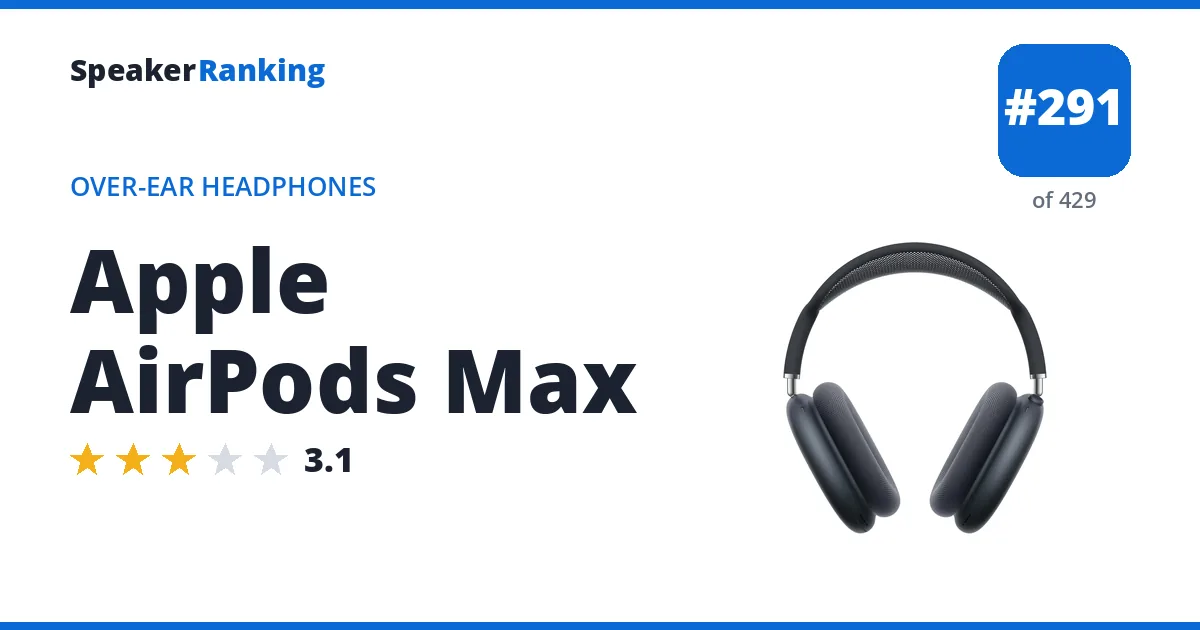
Pros: Bass sits close to target and holds down to 20 Hz, so low end sounds full without bloat. Lower mids sit within about 0.5 dB of target, keeping voices and guitars natural. It uses 1 x 40mm dynamic.
Cons: Presence sits about 4.5 dB low with an 8.9 dB dip near 7.3 kHz, so vocals and instruments lose some bite. A Harman score of 62 places it in the lower part of the over-ear rankings.
Full Apple AirPods Max review and specifications →
| Released | Dec 2020 (5 years ago) |
|---|---|
| Back | Closed |
| Connection | Bluetooth |
| Deviation From Target | 2.53 dB standard deviation |
| Driver Type | Dynamic |
| Drivers | 1 x 40mm dynamic |
| Form Factor | Over-ear |
| Harman Preference Score | 62 (measured by oratory1990, via AutoEQ) |
| Sub-bass Extension | Within 6 dB of target down to 20 Hz (+1.9 dB at 30 Hz) |
| Tonal Tilt | -1.35 (negative is warmer, positive brighter) |
| Weight | 0.8 lbs (384.8 g) |
EQ preset to match the Harman target
Set a preamp of -4.7 dB, then add these filters in any parametric equalizer (Wavelet, Equalizer APO, Peace, or a player with parametric EQ). Calculated by AutoEQ from its measured frequency response.
| Filter | Frequency | Gain | Q |
|---|---|---|---|
| Low shelf | 105 Hz | -3.0 dB | 0.70 |
| Peak | 7,273 Hz | +3.6 dB | 2.41 |
| Peak | 218 Hz | -2.9 dB | 1.41 |
| Peak | 1,031 Hz | -3.2 dB | 0.99 |
| Peak | 3,185 Hz | +3.1 dB | 0.56 |
| High shelf | 10,000 Hz | -5.5 dB | 0.70 |
| Peak | 9,508 Hz | +2.7 dB | 2.20 |
| Peak | 66 Hz | +0.6 dB | 1.65 |
| Peak | 4,045 Hz | +2.1 dB | 5.82 |
| Peak | 4,834 Hz | -1.8 dB | 6.00 |
- Reviews, Comparisons and Sound Samples
- Head-to-Head Comparisons
 Sony WH-1000XM4 Wireless Discontinued eBay
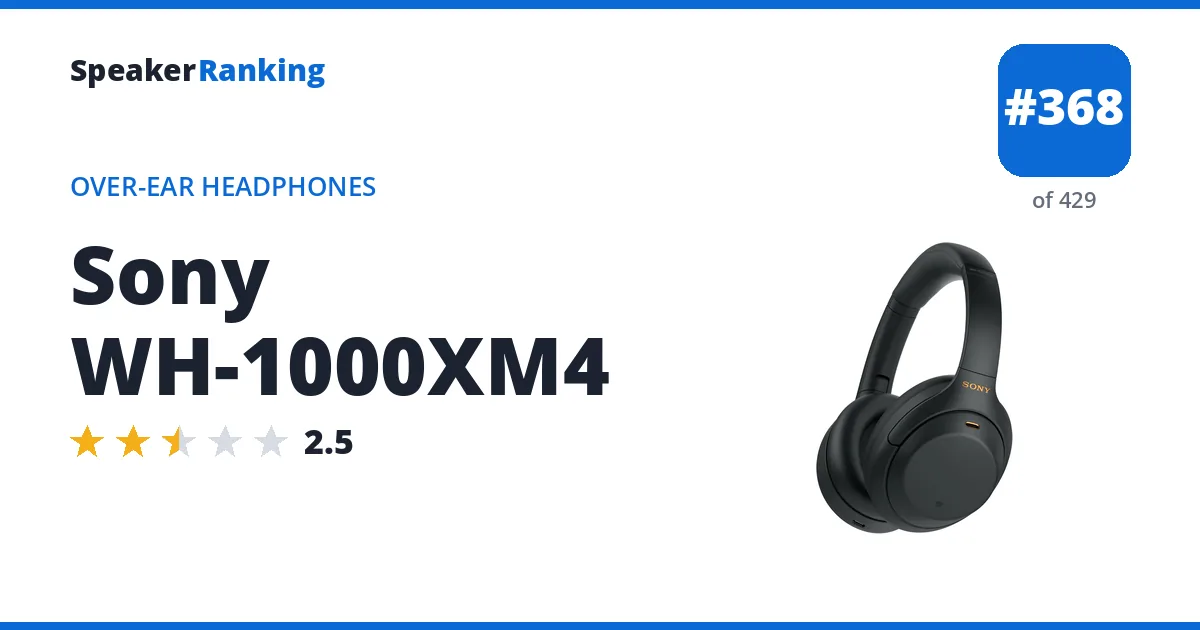
Newer model: the Sony WH-1000XM6, ranked lower, rated 2.3/5, released May 2025.
Older models: the Sony MDR-1000X (ranked higher, rated 3.9/5), the Sony WH-1000XM2 (ranked higher, rated 3.7/5) and the Sony WH-1000XM3 (ranked lower, rated 1.8/5). See every Sony WH-1000X generation.
Pros: Strong noise cancelling, 30 hour battery life, LDAC support and multipoint pairing made it one of the most popular wireless headphones ever sold. Bass extends deep with about 4 dB of extra weight below 250 Hz, which suits pop, hip hop and electronic music.
Cons: Discontinued and replaced by the Sony WH-1000XM5. Its default tuning measures poorly, with a Harman preference score of just 49: bass is boosted about 4 to 5 dB and a 6.2 dB dip near 2.3 kHz pushes vocals back, so it sounds muddy and dark until you use the app’s EQ.
Full Sony WH-1000XM4 review and specifications →
| Released | Aug 2020 (6 years ago) |
|---|---|
| Active Noise Cancelling | Yes |
| Battery Life | 30 hours (ANC on) |
| Bluetooth Codecs | SBC, AAC, LDAC |
| Bluetooth Version | 5.0 |
| Built-in Microphone | Yes |
| Connection | Wireless and wired |
| Deviation From Target | 3.26 dB standard deviation |
| Driver Type | Dynamic |
| Drivers | 1 x 40mm dynamic |
| Form Factor | Over-ear |
| Harman Preference Score | 49 (measured by oratory1990, via AutoEQ) |
| Sub-bass Extension | Within 6 dB of target down to 20 Hz (+4.2 dB at 30 Hz) |
| Tonal Tilt | -1.55 (negative is warmer, positive brighter) |
| Weight | 0.6 lbs (254 g) |
EQ preset to match the Harman target
Set a preamp of -6.1 dB, then add these filters in any parametric equalizer (Wavelet, Equalizer APO, Peace, or a player with parametric EQ). Calculated by AutoEQ from its measured frequency response.
| Filter | Frequency | Gain | Q |
|---|---|---|---|
| Low shelf | 105 Hz | -4.2 dB | 0.70 |
| Peak | 143 Hz | -5.2 dB | 1.10 |
| Peak | 2,289 Hz | +6.1 dB | 1.57 |
| Peak | 56 Hz | +1.2 dB | 1.19 |
| Peak | 5,144 Hz | -3.2 dB | 6.00 |
| High shelf | 10,000 Hz | -1.0 dB | 0.70 |
| Peak | 407 Hz | +1.7 dB | 3.14 |
| Peak | 6,715 Hz | +3.0 dB | 5.99 |
| Peak | 1,007 Hz | +1.0 dB | 3.41 |
| Peak | 576 Hz | -1.2 dB | 3.55 |
- Reviews, Comparisons and Sound Samples
- Head-to-Head Comparisons