Coverage note. Speaker Ranking currently covers 22 Sennheiser models across headphones. These are the products in our database, not a complete list of everything Sennheiser makes.
What this page covers. The Sennheiser models ranked here span headphones, including Sennheiser HD 560S, Sennheiser HD 600 and Sennheiser IE 200. Use each model’s category position to compare it with alternatives of the same size and use case.
This page lists all 22 Sennheiser speakers ranked on this site across headphones. Each model is shown in the category where it competes, with its current rank and the size of that ranking.
Use the category position rather than the brand name alone: speakers from the same manufacturer can perform very differently by size, price and product family.
Prices on this page were last checked October 10, 2026 at 5:37 PM UTC. Product prices and availability are accurate as of that date/time and are subject to change; the price and availability shown on Amazon at the time of purchase will apply to the purchase of this product.
As an eBay Partner, we may be compensated if you make a purchase.
Quick Navigation
Over-Ear Headphones
 Ranked #5 of 134 in Over-Ear Headphones - Sennheiser HD 560S: $199.95 Amazon eBay
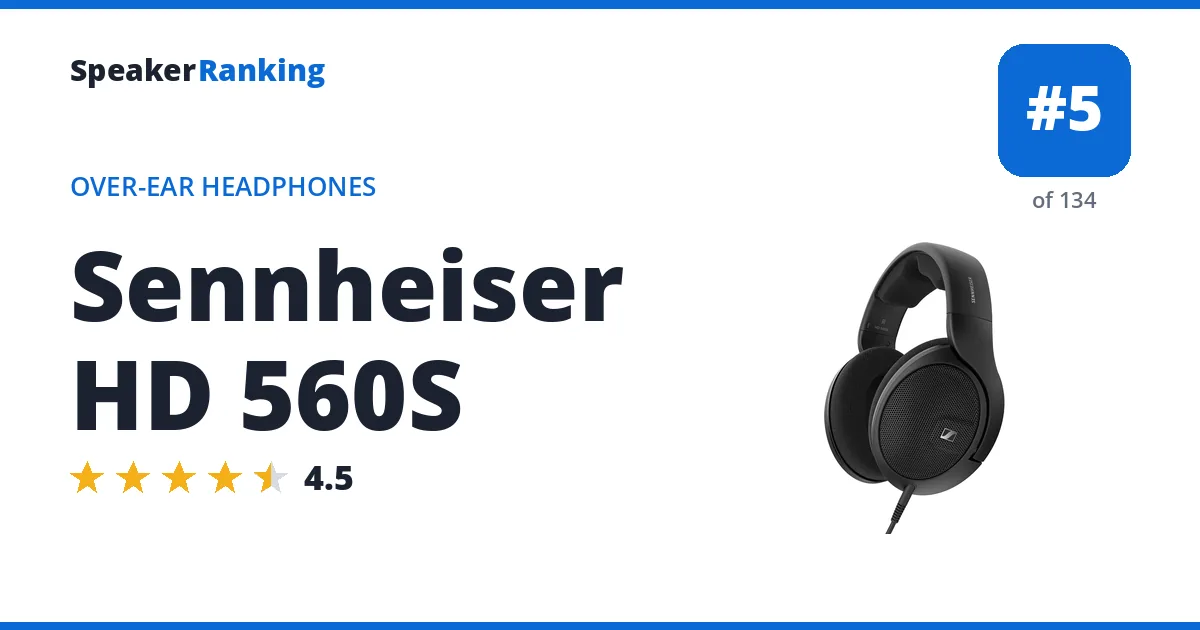
Pros: It scores 93 on the Harman preference model, with the midrange and presence region (200 Hz to 6 kHz) within about 0.2 dB of target, so vocals and instruments sound very natural. At 240 g it is the lightest of the top group, and the open design gives a wide soundstage. Its 120 ohm impedance is still manageable from most modern sources.
Cons: Bass is lean, with sub-bass about 5 dB under target and 60 to 200 Hz about 1.2 dB under, which can sound thin on pop, hip hop and electronic music. Treble is also pulled back, with a deep 8.5 dB dip near 9.8 kHz that softens cymbals and sibilance. The open back leaks sound and provides no isolation.
Full Sennheiser HD 560S review and specifications →
| Released | Sep 2020 (6 years ago) |
|---|---|
| Back | Open |
| Connection | Wired |
| Deviation From Target | 1.58 dB standard deviation |
| Driver Type | Dynamic |
| Form Factor | Over-ear |
| Frequency Response | 6Hz - 38kHz (Manufacturer specified) |
| Harman Preference Score | 93 (measured by oratory1990, via AutoEQ) |
| Impedance | 120 ohms |
| Sensitivity | 110 dB SPL (1 kHz, 1 V) |
| Tonal Tilt | +0.08 (negative is warmer, positive brighter) |
| Weight | 0.5 lbs (240 g) |
EQ preset to match the Harman target
Set a preamp of -6.6 dB, then add these filters in any parametric equalizer (Wavelet, Equalizer APO, Peace, or a player with parametric EQ). Calculated by AutoEQ from its measured frequency response.
| Filter | Frequency | Gain | Q |
|---|---|---|---|
| Low shelf | 105 Hz | +9.0 dB | 0.70 |
| Peak | 8,983 Hz | +4.4 dB | 2.63 |
| Peak | 54 Hz | -5.4 dB | 0.48 |
| Peak | 1,148 Hz | -1.5 dB | 2.38 |
| Peak | 491 Hz | +0.6 dB | 1.23 |
| High shelf | 10,000 Hz | -3.9 dB | 0.70 |
| Peak | 7,451 Hz | +2.0 dB | 3.91 |
| Peak | 4,502 Hz | -1.7 dB | 6.00 |
| Peak | 1,937 Hz | +0.9 dB | 3.93 |
| Peak | 5,639 Hz | -0.9 dB | 6.00 |
- Reviews, Comparisons and Sound Samples
- Head-to-Head Comparisons
 Ranked #7 of 134 in Over-Ear Headphones - Sennheiser HD 600: $272.36 Amazon eBay
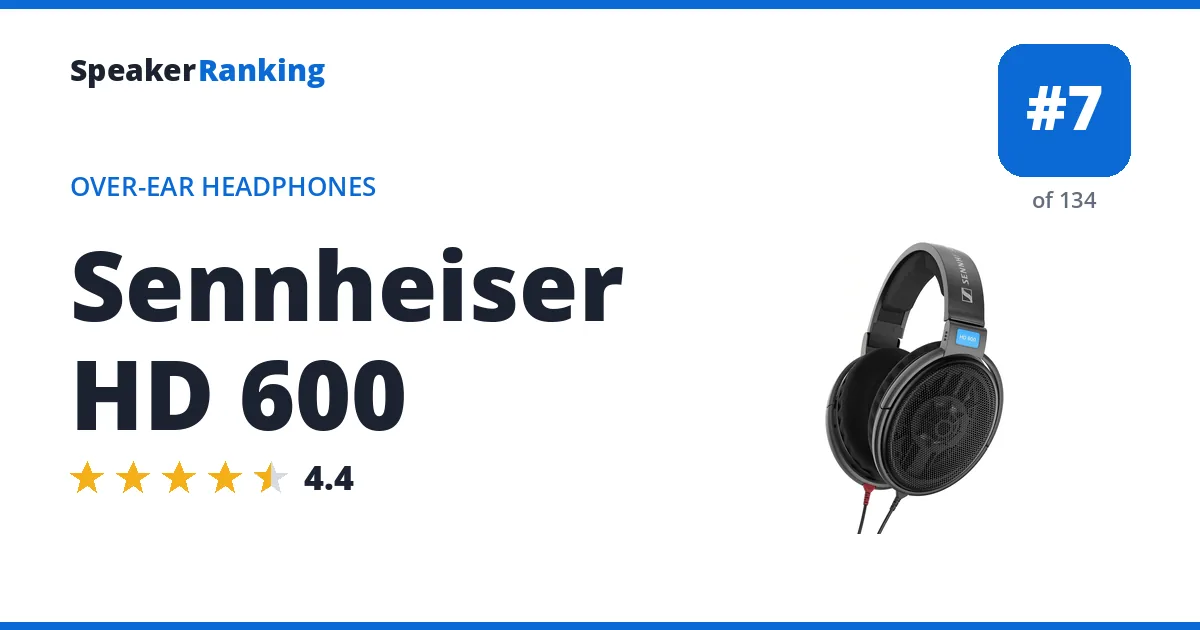
Pros: It earns a preference score of 91, with the midrange from 200 Hz to 6 kHz within about 0.1 dB of target, giving vocals and acoustic instruments a very natural tone. At 260 g it is light, and the long-running design from 1997 remains a reference for neutral midrange tuning. The warm and neutral tilt suits listeners who dislike bright treble.
Cons: Sub-bass is about 7.9 dB below target, so bass lacks rumble and weight on electronic and hip hop tracks. Treble from 6 to 10 kHz is about 3.6 dB low, with a 7.5 dB dip near 9.6 kHz that softens cymbals. At 300 ohms and 97 dB SPL/V it needs a dedicated headphone amp for proper volume, and the open back leaks sound.
Full Sennheiser HD 600 review and specifications →
| Released | 1997 (29 years ago) |
|---|---|
| Back | Open |
| Connection | Wired |
| Deviation From Target | 1.88 dB standard deviation |
| Driver Type | Dynamic |
| Drivers | 1 x 42mm dynamic |
| Form Factor | Over-ear |
| Frequency Response | 12Hz - 40.5kHz (Manufacturer specified) |
| Harman Preference Score | 91 (measured by oratory1990, via AutoEQ) |
| Impedance | 300 ohms |
| Sensitivity | 97 dB SPL/V |
| Tonal Tilt | +0.02 (negative is warmer, positive brighter) |
| Weight | 0.6 lbs (260 g) |
EQ preset to match the Harman target
Set a preamp of -6.3 dB, then add these filters in any parametric equalizer (Wavelet, Equalizer APO, Peace, or a player with parametric EQ). Calculated by AutoEQ from its measured frequency response.
| Filter | Frequency | Gain | Q |
|---|---|---|---|
| Low shelf | 105 Hz | +6.5 dB | 0.70 |
| Peak | 125 Hz | -2.7 dB | 0.55 |
| Peak | 8,445 Hz | +3.3 dB | 1.61 |
| Peak | 522 Hz | +0.7 dB | 1.02 |
| Peak | 1,298 Hz | -1.2 dB | 2.14 |
| High shelf | 10,000 Hz | -3.1 dB | 0.70 |
| Peak | 3,158 Hz | -1.8 dB | 3.67 |
| Peak | 2,166 Hz | +0.9 dB | 3.32 |
| Peak | 6,639 Hz | +2.2 dB | 5.82 |
| Peak | 5,433 Hz | -1.2 dB | 5.70 |
- Reviews, Comparisons and Sound Samples
- Head-to-Head Comparisons
 Ranked #20 of 134 in Over-Ear Headphones - Sennheiser HD 505: $199.95 Amazon eBay
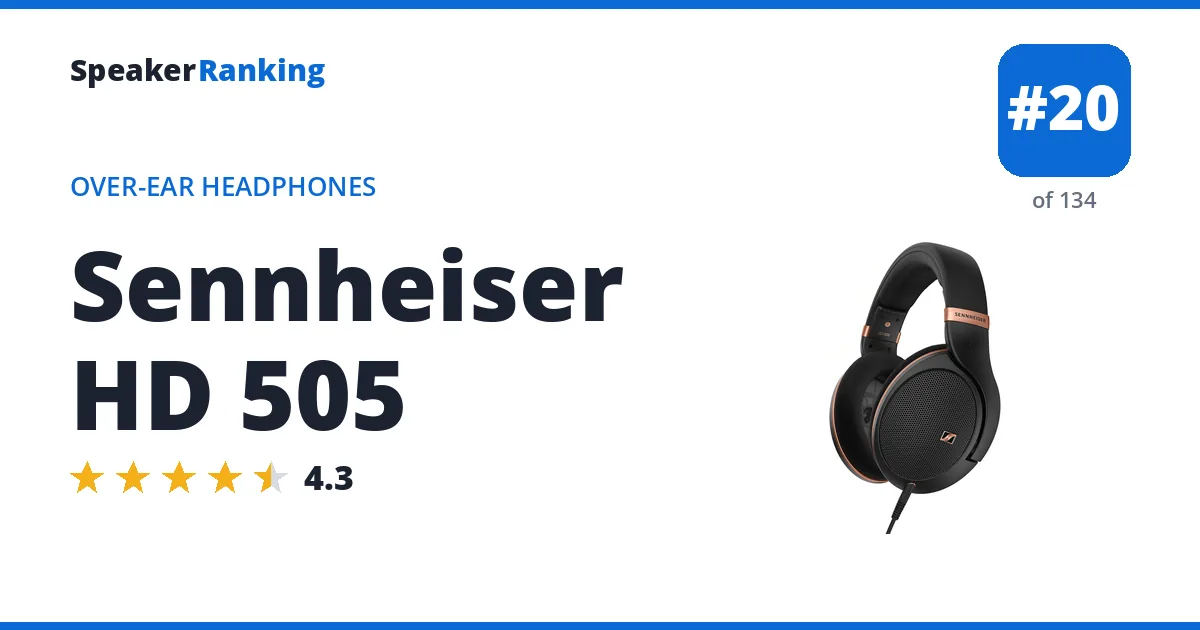
Pros: A preference score of 88 in oratory1990’s measurement puts it among the closest to the Harman target, with the midrange from 200 Hz to 6 kHz within about 0.5 dB of target, so vocals and instruments sound natural and unforced. The 120 ohm impedance and 107.9 dB per volt sensitivity let it run from a decent DAC or portable amp, and at 237 g the open-back design is light.
Cons: Sub-bass under 60 Hz sits about 6 dB below target, so deep synth bass and kick drum weight are thin. A narrow 9 dB dip near 9.9 kHz and treble running about 2.7 dB low soften cymbals and make it a little dark on airy recordings. Being open-back it leaks sound and offers no isolation.
Full Sennheiser HD 505 review and specifications →
| Back | Open |
|---|---|
| Connection | Wired |
| Deviation From Target | 1.85 dB standard deviation |
| Driver Type | Dynamic |
| Form Factor | Over-ear |
| Frequency Response | 12Hz - 38.5kHz (Manufacturer specified) |
| Harman Preference Score | 88 (measured by oratory1990, via AutoEQ) |
| Impedance | 120 ohms |
| Sensitivity | 107.9 dB SPL/V |
| Tonal Tilt | +0.17 (negative is warmer, positive brighter) |
| Weight | 0.5 lbs (237 g) |
EQ preset to match the Harman target
Set a preamp of -6.3 dB, then add these filters in any parametric equalizer (Wavelet, Equalizer APO, Peace, or a player with parametric EQ). Calculated by AutoEQ from its measured frequency response.
| Filter | Frequency | Gain | Q |
|---|---|---|---|
| Low shelf | 105 Hz | +7.0 dB | 0.70 |
| Peak | 9,030 Hz | +3.9 dB | 2.25 |
| Peak | 84 Hz | -2.7 dB | 0.44 |
| Peak | 560 Hz | +1.1 dB | 1.13 |
| Peak | 1,256 Hz | -1.5 dB | 1.71 |
| High shelf | 10,000 Hz | -2.5 dB | 0.70 |
| Peak | 3,218 Hz | -1.8 dB | 2.89 |
| Peak | 5,479 Hz | -2.6 dB | 4.99 |
| Peak | 4,145 Hz | +2.5 dB | 5.93 |
| Peak | 6,870 Hz | +2.4 dB | 5.70 |
- Reviews, Comparisons and Sound Samples
- Head-to-Head Comparisons
 Ranked #27 of 134 in Over-Ear Headphones - Sennheiser HD 800 S: $1,599.95 Amazon eBay
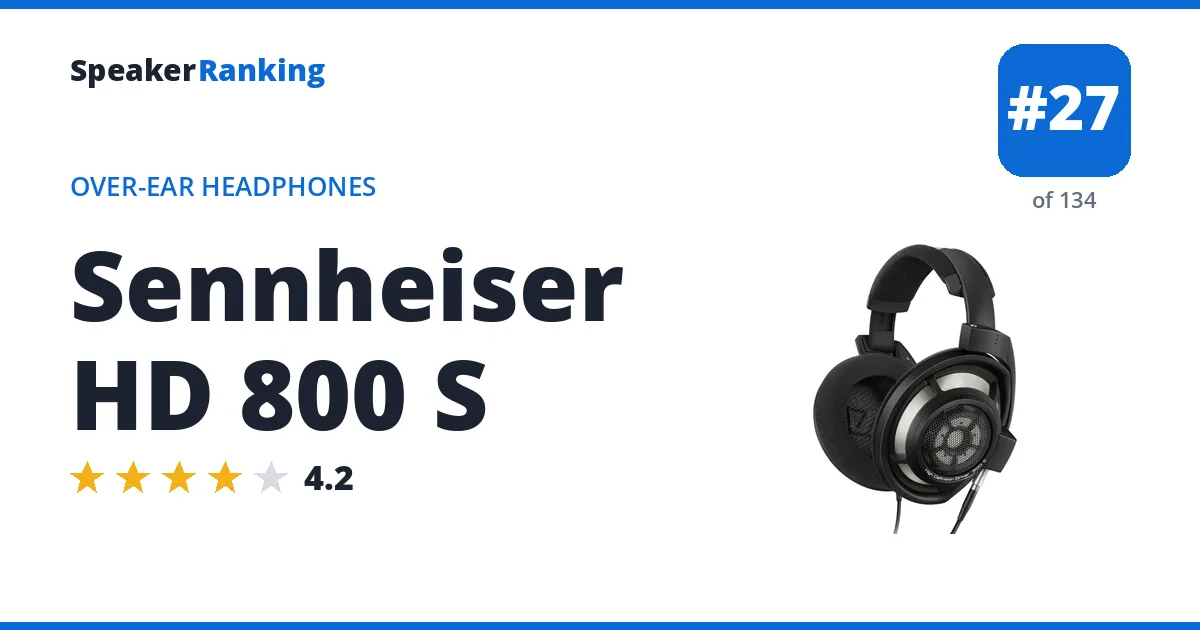
Pros: A preference score of 86 with a near neutral tilt and bands from 60 Hz to 10 kHz mostly within about 1.7 dB of target gives a natural, spacious presentation with good tonal balance. Air above 10 kHz runs about 4 dB above target, adding openness and perceived detail. It rates the same as the HIFIMAN HE1000 Stealth.
Cons: A 6 dB dip near 9.1 kHz followed by a 5.4 dB peak near 11.4 kHz makes the treble uneven. Sub-bass is about 5 dB under target, so rumble is limited. The 300 ohm impedance and 102 dB per volt sensitivity call for a dedicated headphone amp, and the open back leaks sound.
Full Sennheiser HD 800 S review and specifications →
| Back | Open |
|---|---|
| Connection | Wired |
| Deviation From Target | 2.19 dB standard deviation |
| Driver Type | Dynamic |
| Drivers | 1 x 56mm dynamic |
| Form Factor | Over-ear |
| Frequency Response | 4Hz - 51kHz (Manufacturer specified) |
| Harman Preference Score | 86 (measured by oratory1990, via AutoEQ) |
| Impedance | 300 ohms |
| Sensitivity | 102 dB SPL/V |
| Tonal Tilt | +0.07 (negative is warmer, positive brighter) |
| Weight | 0.7 lbs (330 g) |
EQ preset to match the Harman target
Set a preamp of -6.2 dB, then add these filters in any parametric equalizer (Wavelet, Equalizer APO, Peace, or a player with parametric EQ). Calculated by AutoEQ from its measured frequency response.
| Filter | Frequency | Gain | Q |
|---|---|---|---|
| Low shelf | 105 Hz | +6.6 dB | 0.70 |
| Peak | 142 Hz | -2.3 dB | 0.30 |
| Peak | 1,959 Hz | +2.5 dB | 0.88 |
| Peak | 5,679 Hz | -4.4 dB | 4.36 |
| Peak | 212 Hz | -0.5 dB | 2.36 |
| High shelf | 10,000 Hz | -4.3 dB | 0.70 |
| Peak | 1,043 Hz | -1.0 dB | 2.89 |
| Peak | 1,445 Hz | +1.0 dB | 3.43 |
| Peak | 2,640 Hz | -0.9 dB | 4.01 |
| Peak | 3,421 Hz | +1.3 dB | 5.47 |
- Reviews, Comparisons and Sound Samples
 Ranked #34 of 134 in Over-Ear Headphones - Sennheiser HD 650: $329.80 Amazon eBay
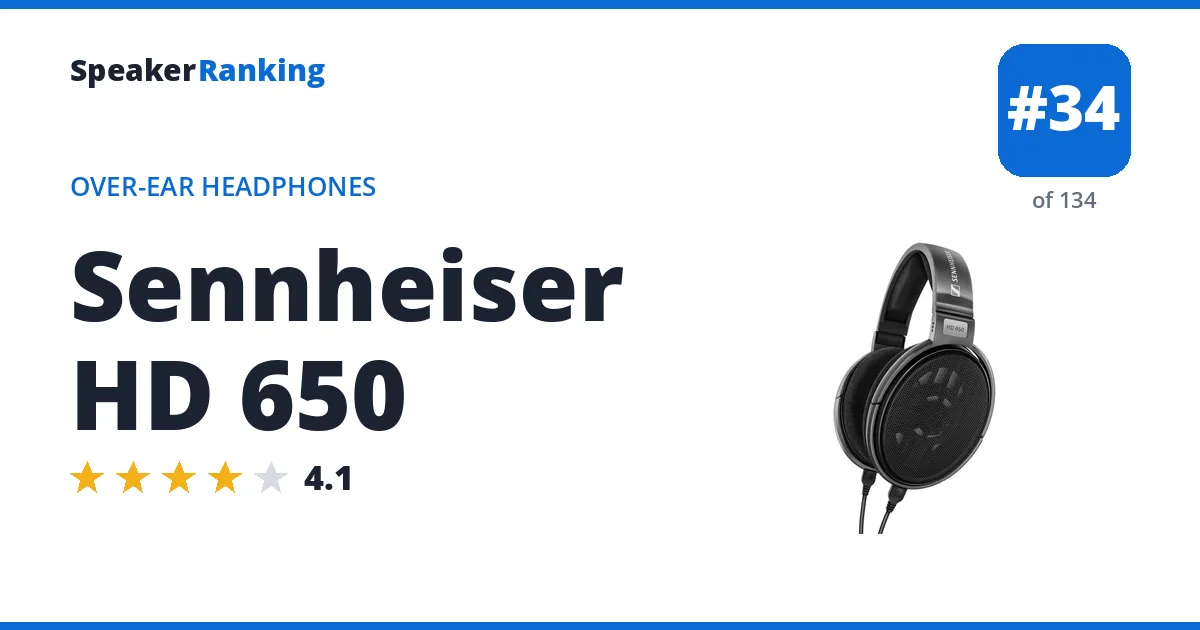
Pros: A preference score of 84 and a warm tilt of minus 0.27 give a relaxed, smooth sound, with bass from 60 to 200 Hz, mids and presence all within about 0.6 dB of target. The largest peak in the upper range is just 1.1 dB, so it avoids harshness on vocals and guitars. At 260 g it is fairly light, and it is a good match for listeners who like a warm tonality.
Cons: Sub-bass is about 7 dB under target and the 6 to 10 kHz treble is nearly 5 dB low, with a 9 dB dip near 9.3 kHz, so cymbals and air sound dull and rumble is missing. At 300 ohms it wants a dedicated headphone amp to reach its potential, and the open back leaks sound.
Full Sennheiser HD 650 review and specifications →
| Released | 2003 (23 years ago) |
|---|---|
| Back | Open |
| Connection | Wired |
| Deviation From Target | 2.10 dB standard deviation |
| Driver Type | Dynamic |
| Drivers | 1 x 42mm dynamic |
| Form Factor | Over-ear |
| Frequency Response | 10Hz - 41kHz (Manufacturer specified) |
| Harman Preference Score | 84 (measured by oratory1990, via AutoEQ) |
| Impedance | 300 ohms |
| Sensitivity | 103 dB SPL/V |
| Tonal Tilt | -0.27 (negative is warmer, positive brighter) |
| Weight | 0.6 lbs (260 g) |
EQ preset to match the Harman target
Set a preamp of -6.1 dB, then add these filters in any parametric equalizer (Wavelet, Equalizer APO, Peace, or a player with parametric EQ). Calculated by AutoEQ from its measured frequency response.
| Filter | Frequency | Gain | Q |
|---|---|---|---|
| Low shelf | 105 Hz | +6.4 dB | 0.70 |
| Peak | 8,800 Hz | +5.1 dB | 1.42 |
| Peak | 118 Hz | -3.1 dB | 0.50 |
| Peak | 37 Hz | +0.7 dB | 3.96 |
| Peak | 3,169 Hz | -1.7 dB | 3.89 |
| High shelf | 10,000 Hz | -2.1 dB | 0.70 |
| Peak | 1,227 Hz | -1.2 dB | 2.53 |
| Peak | 2,055 Hz | +1.2 dB | 3.23 |
| Peak | 587 Hz | +0.4 dB | 1.19 |
| Peak | 5,332 Hz | -1.1 dB | 5.75 |
- Reviews, Comparisons and Sound Samples
- Head-to-Head Comparisons
 Ranked #39 of 134 in Over-Ear Headphones - Sennheiser HD 25 Plus: $199.95 Amazon eBay
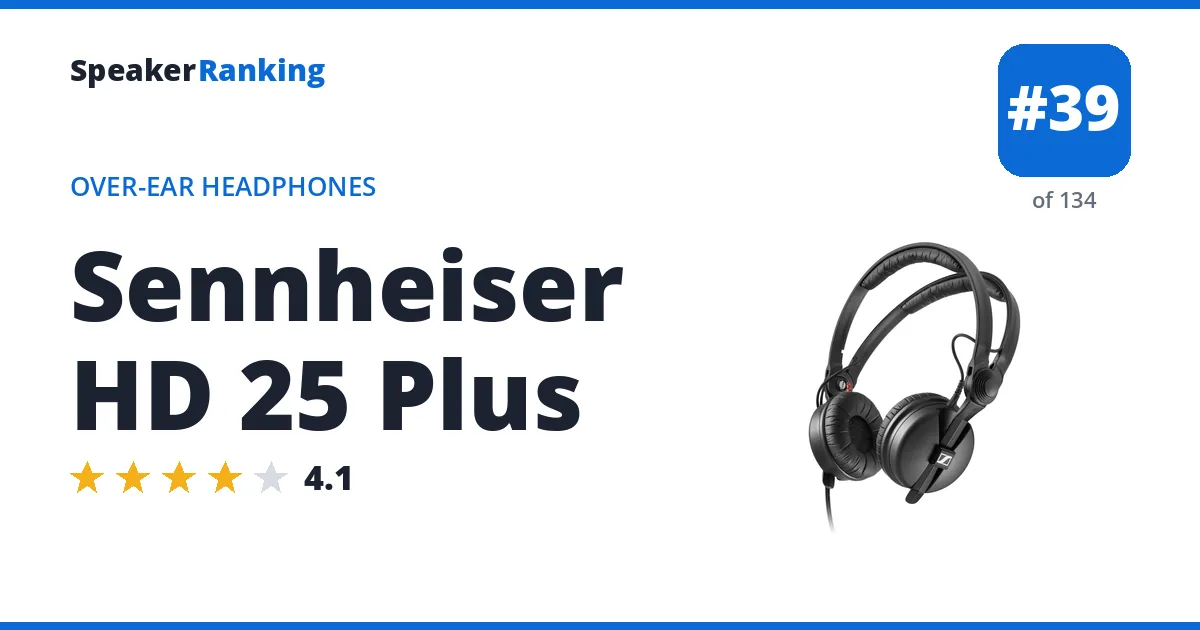
Pros: A preference score of 83 in crinacle’s measurement is excellent for a closed-back headphone, and a slightly warm tilt of minus 0.28 suits listeners who like a smooth, full sound. At 140 g it is very light, and 70 ohms is manageable for most sources. Its closed back keeps sound in and offers some isolation.
Cons: It is a wired design with no wireless or ANC features. It costs more than the Audio-Technica ATH-R50x at the same rating.
Full Sennheiser HD 25 Plus review and specifications →
| Back | Closed |
|---|---|
| Connection | Wired |
| Deviation From Target | 2.15 dB standard deviation |
| Driver Type | Dynamic |
| Form Factor | Over-ear |
| Frequency Response | 16Hz - 22kHz (Manufacturer specified) |
| Harman Preference Score | 83 (measured by crinacle, via AutoEQ) |
| Impedance | 70 ohms |
| Tonal Tilt | -0.28 (negative is warmer, positive brighter) |
| Weight | 0.3 lbs (140 g) |
EQ preset to match the Harman target
Set a preamp of -5.8 dB, then add these filters in any parametric equalizer (Wavelet, Equalizer APO, Peace, or a player with parametric EQ). Calculated by AutoEQ from its measured frequency response.
| Filter | Frequency | Gain | Q |
|---|---|---|---|
| Low shelf | 105 Hz | +6.6 dB | 0.70 |
| Peak | 89 Hz | -6.3 dB | 0.65 |
| Peak | 5,384 Hz | +4.8 dB | 1.87 |
| Peak | 347 Hz | +2.2 dB | 0.84 |
| Peak | 2,055 Hz | -1.5 dB | 0.79 |
| High shelf | 10,000 Hz | +5.8 dB | 0.70 |
| Peak | 8,635 Hz | -2.2 dB | 1.35 |
| Peak | 37 Hz | -0.9 dB | 3.57 |
| Peak | 51 Hz | +1.1 dB | 5.00 |
| Peak | 6,437 Hz | +1.4 dB | 6.00 |
- Reviews, Comparisons and Sound Samples
 Ranked #70 of 134 in Over-Ear Headphones - Sennheiser HD 620S: $259.19 Amazon eBay
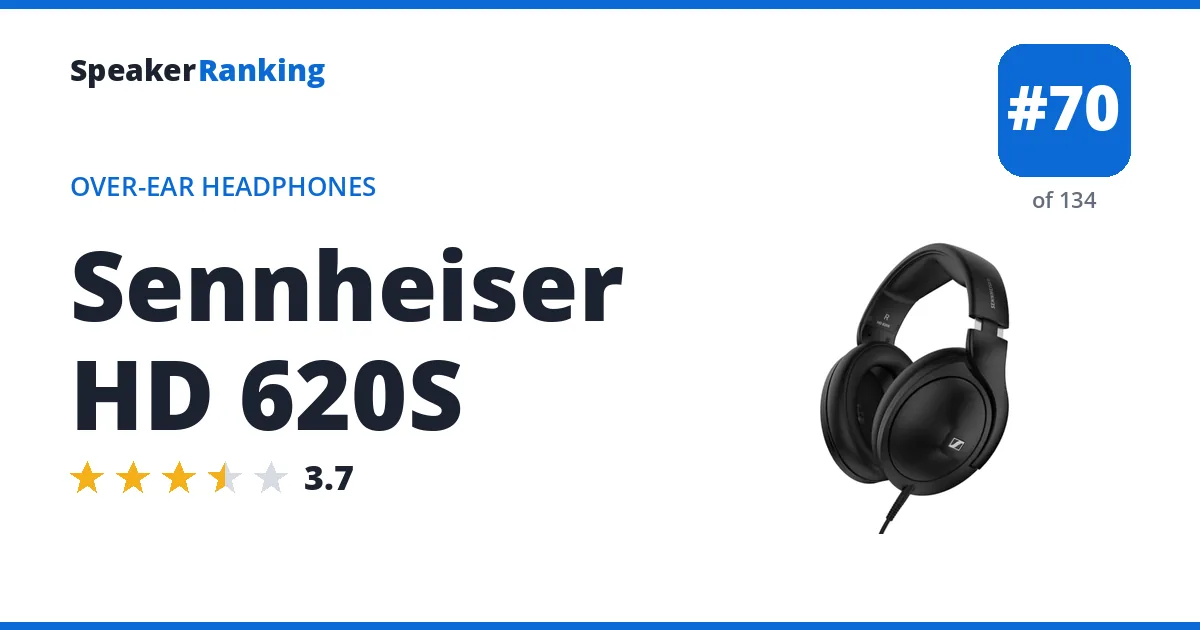
Pros: Bass from 60 to 200 Hz is lifted about 2.6 dB while sub-bass sits within half a dB of target, giving a punchy, well extended low end. The upper mids and presence stay close to the target, so vocals sound natural and clear. The closed back isolates well for private listening.
Cons: At 150 ohms and 110 dB SPL/V it is more demanding than most headphones here and benefits from a headphone amp rather than a phone. Treble from 6 to 10 kHz is about 2.6 dB low with a 6.9 dB dip near 9.5 kHz, which softens cymbals and sibilance. The Audio-Technica ATH-M50x holds a higher rating for a much lower price.
Full Sennheiser HD 620S review and specifications →
| Back | Closed |
|---|---|
| Connection | Wired |
| Deviation From Target | 2.19 dB standard deviation |
| Driver Type | Dynamic |
| Drivers | 1 x 42mm dynamic |
| Form Factor | Over-ear |
| Frequency Response | 6Hz - 30kHz (Manufacturer specified) |
| Harman Preference Score | 74 (measured by oratory1990, via AutoEQ) |
| Impedance | 150 ohms |
| Sensitivity | 110 dB SPL/V |
| Tonal Tilt | -0.80 (negative is warmer, positive brighter) |
EQ preset to match the Harman target
Set a preamp of -1.8 dB, then add these filters in any parametric equalizer (Wavelet, Equalizer APO, Peace, or a player with parametric EQ). Calculated by AutoEQ from its measured frequency response.
| Filter | Frequency | Gain | Q |
|---|---|---|---|
| Low shelf | 105 Hz | +0.4 dB | 0.70 |
| Peak | 112 Hz | -5.7 dB | 1.93 |
| Peak | 8,995 Hz | +3.2 dB | 1.57 |
| Peak | 49 Hz | +0.9 dB | 1.25 |
| Peak | 1,644 Hz | +2.0 dB | 3.09 |
| High shelf | 10,000 Hz | -4.3 dB | 0.70 |
| Peak | 615 Hz | -1.9 dB | 1.75 |
| Peak | 234 Hz | +2.0 dB | 3.58 |
| Peak | 2,761 Hz | -2.7 dB | 6.00 |
| Peak | 843 Hz | +1.6 dB | 4.59 |
- Reviews, Comparisons and Sound Samples
 Ranked #71 of 134 in Over-Ear Headphones - Sennheiser HD 599: $239.95 Amazon eBay
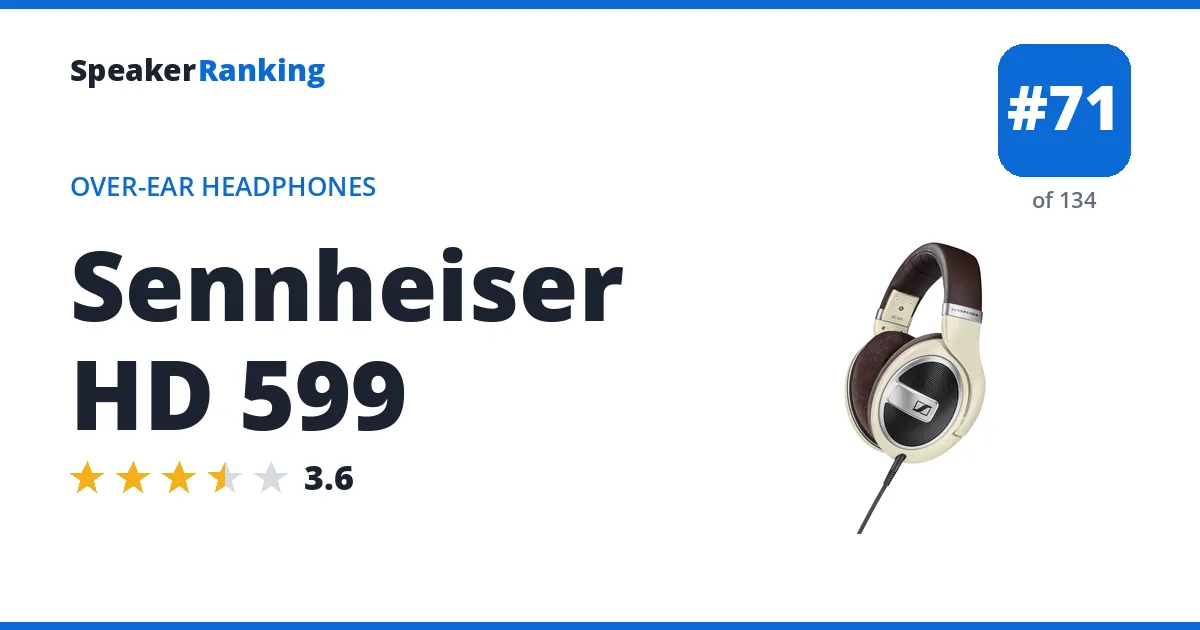
Pros: A preference score of 73 and a modest 2.74 dB deviation from the Harman target in oratory1990’s measurement make this a fairly smooth open back. Bass runs about 2 dB above target and the lows through the low mids are about 2.7 dB up, which gives vocals and guitars a full, warm body. At 50 ohms and 106 dB sensitivity it is easy to drive, and at 250 g it is light.
Cons: Sub-bass falls about 6 dB under target below 60 Hz, so the extra warmth sits higher up and the deepest rumble is missing. A 9.6 dB dip near 9.8 kHz and about 3.5 dB less air above 10 kHz take the sparkle off cymbals, while a 3.7 dB peak near 5.7 kHz can add some edge to vocals. The open back leaks sound and offers no isolation.
Full Sennheiser HD 599 review and specifications →
| Released | Sep 2016 (10 years ago) |
|---|---|
| Back | Open |
| Connection | Wired |
| Deviation From Target | 2.74 dB standard deviation |
| Driver Type | Dynamic |
| Form Factor | Over-ear |
| Frequency Response | 12Hz - 38.5kHz (Manufacturer specified) |
| Harman Preference Score | 73 (measured by oratory1990, via AutoEQ) |
| Impedance | 50 ohms |
| Sensitivity | 106 dB SPL (1 kHz, 1 Vrms) |
| Tonal Tilt | -0.42 (negative is warmer, positive brighter) |
| Weight | 0.6 lbs (250 g) |
EQ preset to match the Harman target
Set a preamp of -6.2 dB, then add these filters in any parametric equalizer (Wavelet, Equalizer APO, Peace, or a player with parametric EQ). Calculated by AutoEQ from its measured frequency response.
| Filter | Frequency | Gain | Q |
|---|---|---|---|
| Low shelf | 105 Hz | +6.1 dB | 0.70 |
| Peak | 152 Hz | -4.3 dB | 0.59 |
| Peak | 1,751 Hz | +4.4 dB | 1.45 |
| Peak | 4,485 Hz | -1.9 dB | 2.72 |
| Peak | 40 Hz | +1.0 dB | 3.06 |
| High shelf | 10,000 Hz | -0.7 dB | 0.70 |
| Peak | 9,629 Hz | +6.0 dB | 1.71 |
| Peak | 5,771 Hz | -2.8 dB | 5.56 |
| Peak | 3,175 Hz | -2.0 dB | 4.70 |
| Peak | 3,690 Hz | +0.7 dB | 4.38 |
- Reviews, Comparisons and Sound Samples
- Head-to-Head Comparisons
 Ranked #87 of 134 in Over-Ear Headphones - Sennheiser ACCENTUM Plus: $129.95 Amazon eBay
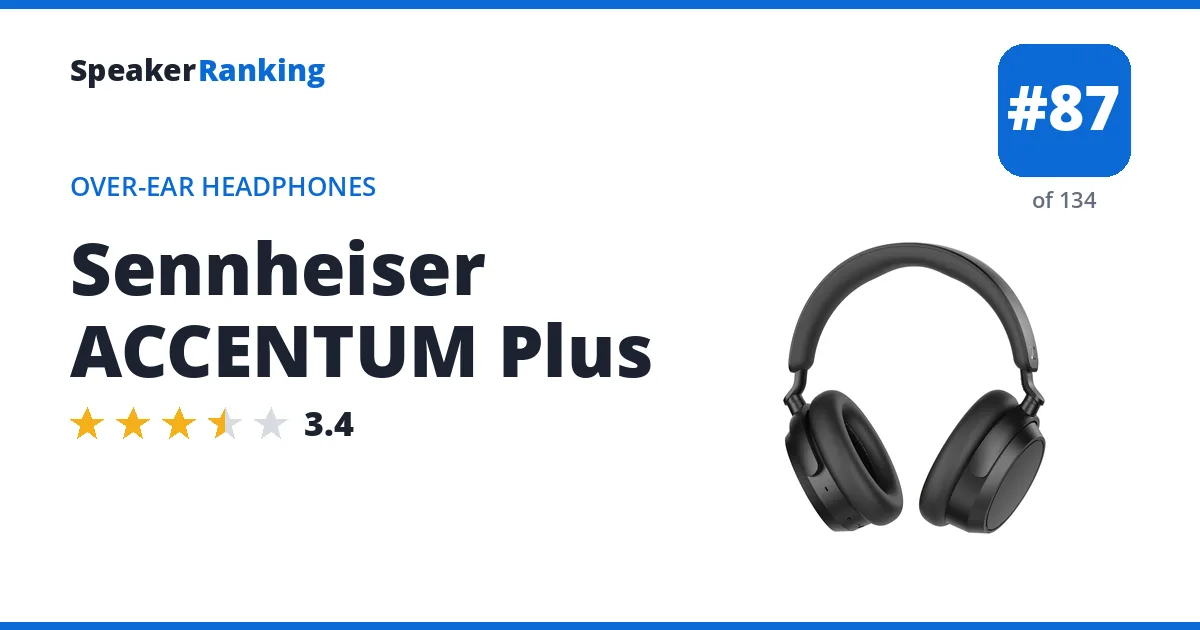
Pros: A 50 hour battery, active noise cancelling and a light 227 g body make this an easy all day travel headphone. Bluetooth 5.2 with SBC, AAC, aptX and aptX Adaptive covers most phones, and a built-in microphone handles calls. Bass is strong, with sub-bass about 7.4 dB above target, so electronic and pop tracks have plenty of weight.
Cons: The bass boost runs about 7.4 dB in the sub-bass and 3.8 dB in the upper bass, which can thicken vocals and mask detail. A 4.1 dB peak near 11.4 kHz adds some treble sizzle, and a 6.5 dB dip near 4.4 kHz pulls back vocal clarity. It has no weather rating, and the AKG K361 has a higher rating for less money if wireless is not needed.
Full Sennheiser ACCENTUM Plus review and specifications →
| Released | Feb 2024 (2 years ago) |
|---|---|
| Active Noise Cancelling | Yes |
| Back | Closed |
| Battery Life | 50 hours (Manufacturer specified) |
| Bluetooth Codecs | SBC, AAC, aptX, aptX Adaptive |
| Bluetooth Version | 5.2 |
| Built-in Microphone | Yes |
| Connection | Wireless and wired |
| Deviation From Target | 2.36 dB standard deviation |
| Driver Type | Dynamic |
| Drivers | 1 x 37mm dynamic |
| Form Factor | Over-ear |
| Frequency Response | 10Hz - 22kHz (Manufacturer specified) |
| Harman Preference Score | 68 (measured by oratory1990, via AutoEQ) |
| IP Rating | None |
| Sensitivity | 106 dB SPL |
| Tonal Tilt | -1.07 (negative is warmer, positive brighter) |
| Weight | 0.5 lbs (227 g) |
EQ preset to match the Harman target
Set a preamp of -4.3 dB, then add these filters in any parametric equalizer (Wavelet, Equalizer APO, Peace, or a player with parametric EQ). Calculated by AutoEQ from its measured frequency response.
| Filter | Frequency | Gain | Q |
|---|---|---|---|
| Low shelf | 105 Hz | -6.0 dB | 0.70 |
| Peak | 245 Hz | -1.8 dB | 1.27 |
| Peak | 1,884 Hz | +3.4 dB | 1.83 |
| Peak | 4,135 Hz | +4.7 dB | 4.12 |
| Peak | 2,934 Hz | -3.2 dB | 3.46 |
| High shelf | 10,000 Hz | -4.5 dB | 0.70 |
| Peak | 87 Hz | +2.3 dB | 2.24 |
| Peak | 146 Hz | -1.2 dB | 2.10 |
| Peak | 817 Hz | +0.8 dB | 3.06 |
| Peak | 5,714 Hz | -1.3 dB | 5.18 |
- Reviews, Comparisons and Sound Samples
 Ranked #97 of 134 in Over-Ear Headphones - Sennheiser HD 280 Pro: $89.98 Amazon eBay
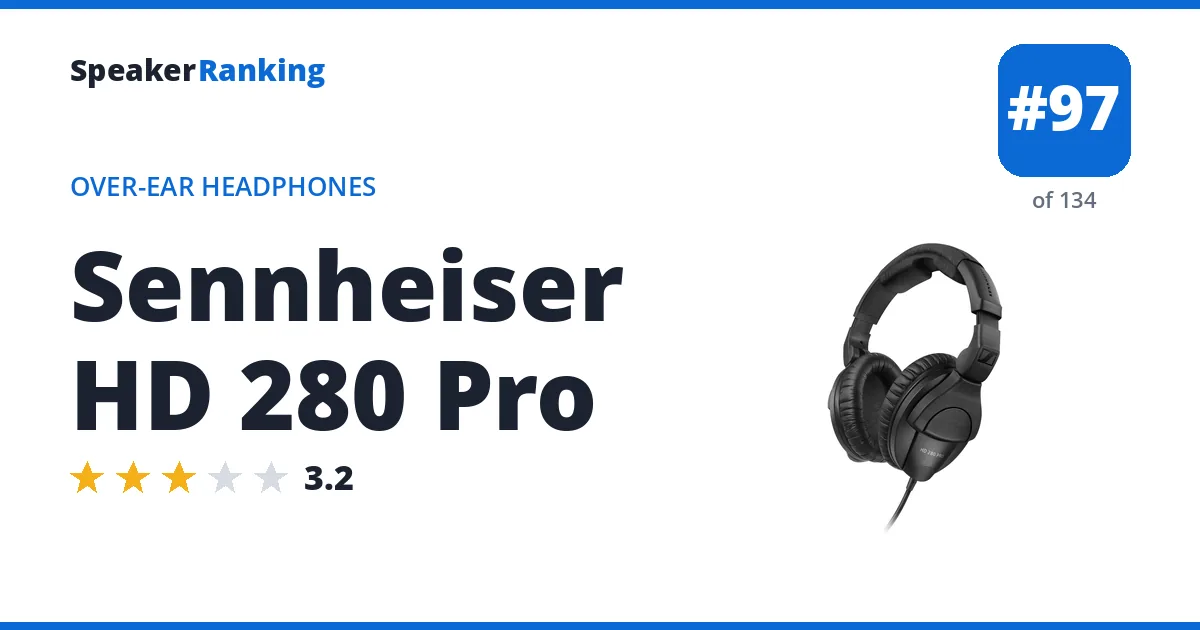
Pros: Sub-bass is about 4 dB above target while mid and upper bass are right on it, so low notes gain depth without muddiness. The closed back isolates well for monitoring and tracking, and 113 dB sensitivity makes the 64 ohm driver easy to power from a phone. It weighs 285 g.
Cons: A 8 dB dip near 4.2 kHz and presence about 5 dB low push vocals and snare attack back, and treble above 6 kHz also runs 4 dB low. The result is dark and a little veiled, with less air and sparkle than the target. It is wired only and has no built-in microphone listed.
Full Sennheiser HD 280 Pro review and specifications →
| Released | 2003 (23 years ago) |
|---|---|
| Back | Closed |
| Connection | Wired |
| Deviation From Target | 2.55 dB standard deviation |
| Driver Type | Dynamic |
| Form Factor | Over-ear |
| Frequency Response | 8Hz - 25kHz (Manufacturer specified) |
| Harman Preference Score | 64 (measured by oratory1990, via AutoEQ) |
| Impedance | 64 ohms |
| Sensitivity | 113 dB SPL |
| Tonal Tilt | -1.16 (negative is warmer, positive brighter) |
| Weight | 0.6 lbs (285 g) |
EQ preset to match the Harman target
Set a preamp of -5.8 dB, then add these filters in any parametric equalizer (Wavelet, Equalizer APO, Peace, or a player with parametric EQ). Calculated by AutoEQ from its measured frequency response.
| Filter | Frequency | Gain | Q |
|---|---|---|---|
| Low shelf | 105 Hz | -4.2 dB | 0.70 |
| Peak | 475 Hz | -2.1 dB | 0.42 |
| Peak | 3,946 Hz | +5.9 dB | 1.82 |
| Peak | 77 Hz | +4.7 dB | 2.17 |
| Peak | 41 Hz | -3.0 dB | 1.35 |
| High shelf | 10,000 Hz | +3.0 dB | 0.70 |
| Peak | 126 Hz | -3.7 dB | 3.71 |
| Peak | 178 Hz | +2.3 dB | 3.81 |
| Peak | 101 Hz | +2.7 dB | 6.00 |
| Peak | 7,834 Hz | +1.1 dB | 3.95 |
- Reviews, Comparisons and Sound Samples
- Head-to-Head Comparisons
 Ranked #114 of 134 in Over-Ear Headphones - Sennheiser HD 598 CS: $449.00 Amazon eBay
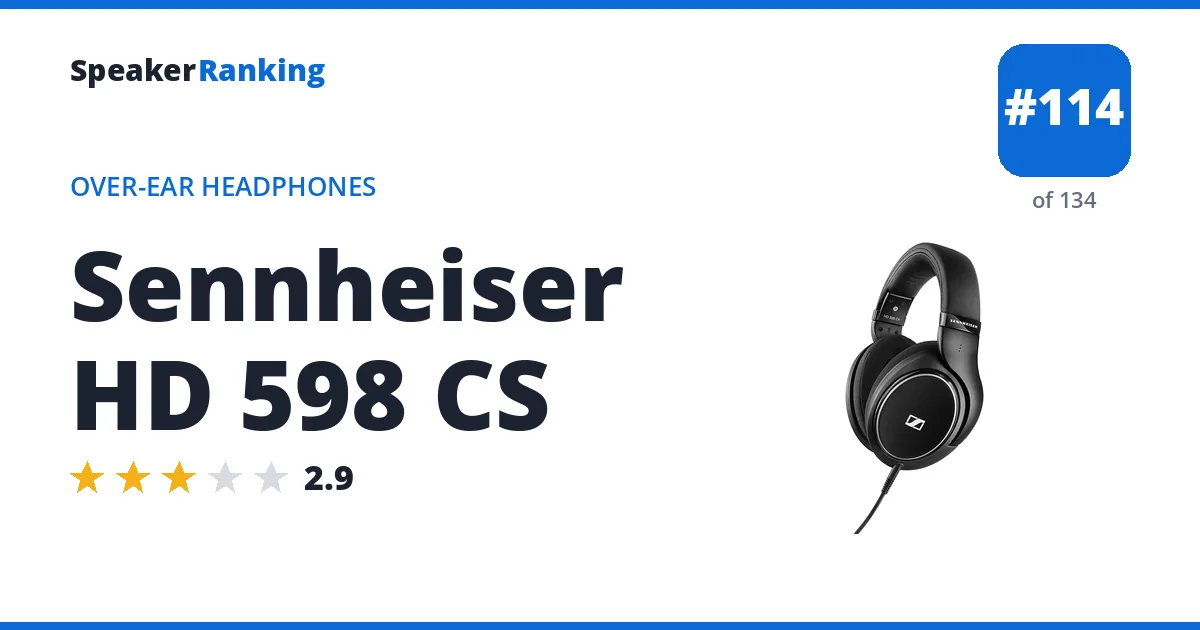
Pros: A low 23 ohm impedance and very high 115 dB sensitivity let it play loudly from a phone or laptop with no headphone amp. The closed-back build keeps sound in and outside noise down, which is useful for shared spaces. Bass is close to target, only about 1 dB above it, so the low end is warm without being boomy.
Cons: Treble is the weak point, running about 6 dB below target from 6 kHz up and dropping into a 13.5 dB dip near 9.9 kHz, so cymbals, air and detail sound dull and closed in. Presence between 3 and 6 kHz is also about 4 dB low, which pushes voices back. The Sony MDR-M1ST has a higher rating at a lower price.
Full Sennheiser HD 598 CS review and specifications →
| Released | 2016 (10 years ago) |
|---|---|
| Back | Closed |
| Connection | Wired |
| Deviation From Target | 2.84 dB standard deviation |
| Driver Type | Dynamic |
| Form Factor | Over-ear |
| Frequency Response | 10Hz - 28kHz (Manufacturer specified) |
| Harman Preference Score | 58 (measured by oratory1990, via AutoEQ) |
| Impedance | 23 ohms |
| Sensitivity | 115 dB |
| Tonal Tilt | -1.31 (negative is warmer, positive brighter) |
EQ preset to match the Harman target
Set a preamp of -4.8 dB, then add these filters in any parametric equalizer (Wavelet, Equalizer APO, Peace, or a player with parametric EQ). Calculated by AutoEQ from its measured frequency response.
| Filter | Frequency | Gain | Q |
|---|---|---|---|
| Low shelf | 105 Hz | -2.1 dB | 0.70 |
| Peak | 10,000 Hz | +6.1 dB | 0.40 |
| Peak | 1,121 Hz | -2.7 dB | 0.57 |
| Peak | 178 Hz | -3.9 dB | 1.12 |
| Peak | 297 Hz | +4.2 dB | 1.74 |
| High shelf | 10,000 Hz | -3.6 dB | 0.70 |
| Peak | 3,480 Hz | -3.3 dB | 5.91 |
| Peak | 4,410 Hz | +1.7 dB | 4.27 |
| Peak | 2,845 Hz | +1.7 dB | 5.08 |
| Peak | 55 Hz | -0.4 dB | 1.59 |
- Reviews, Comparisons and Sound Samples
- Head-to-Head Comparisons
 Ranked #125 of 134 in Over-Ear Headphones - Sennheiser Momentum 4 Wireless: $227.38 Amazon eBay
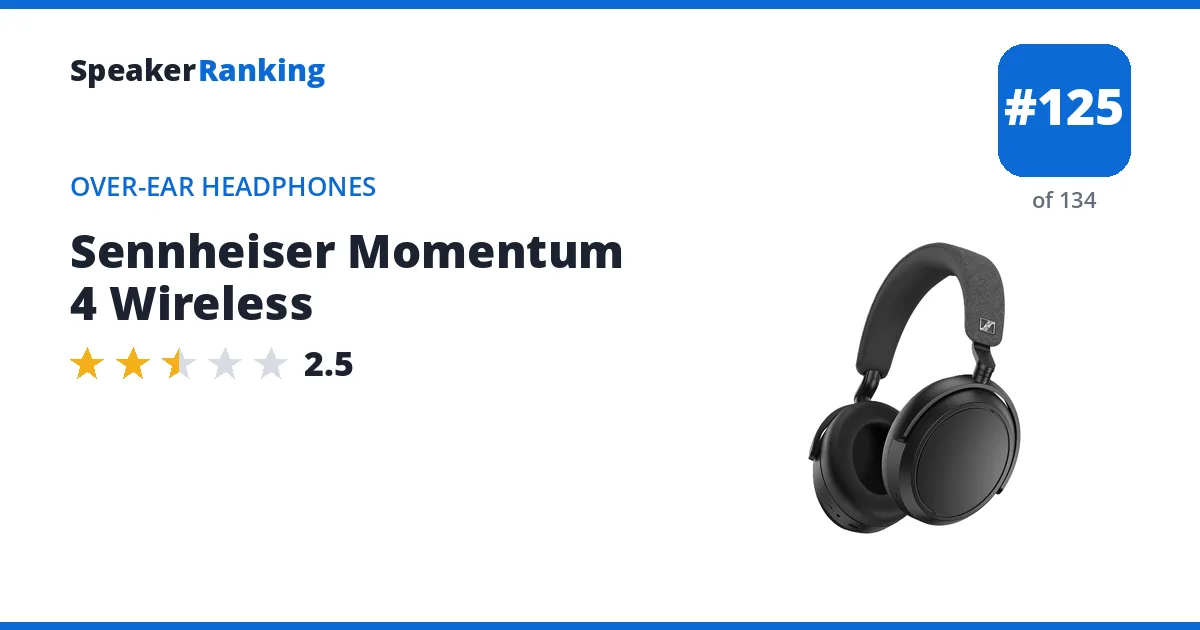
Pros: Feature set is strong: active noise cancelling, Bluetooth 5.2 with SBC, AAC, aptX and aptX Adaptive, and a rated 60 hours of battery. It also plays wired and has a built-in microphone. The deep bass lift, about 9 dB in the sub-bass and 6 dB in the bass, suits listeners who like a warm, bass-heavy sound.
Cons: That bass boost overshoots the Harman target by a clear margin and adds about 2 dB in the low mids, which can make vocals and bass guitar thick. A 4.7 dB dip near 2.4 kHz followed by a 3.5 dB peak near 6.8 kHz makes the upper midrange uneven. Its preference score of 47 trails the Beats Studio3 Wireless, which is rated higher.
Full Sennheiser Momentum 4 Wireless review and specifications →
| Released | Aug 2022 (4 years ago) |
|---|---|
| Active Noise Cancelling | Yes |
| Back | Closed |
| Battery Life | 60 hours (Manufacturer specified) |
| Bluetooth Codecs | SBC, AAC, aptX, aptX Adaptive |
| Bluetooth Version | 5.2 |
| Built-in Microphone | Yes |
| Connection | Wireless and wired |
| Deviation From Target | 3.31 dB standard deviation |
| Driver Type | Dynamic |
| Drivers | 1 x 42mm dynamic |
| Form Factor | Over-ear |
| Frequency Response | 6Hz - 22kHz (Manufacturer specified) |
| Harman Preference Score | 47 (measured by oratory1990, via AutoEQ) |
| IP Rating | None |
| Sensitivity | 106 dB SPL (1 kHz / 0 dB FS) |
| Tonal Tilt | -1.68 (negative is warmer, positive brighter) |
| Weight | 0.6 lbs (293 g) |
EQ preset to match the Harman target
Set a preamp of -6.4 dB, then add these filters in any parametric equalizer (Wavelet, Equalizer APO, Peace, or a player with parametric EQ). Calculated by AutoEQ from its measured frequency response.
| Filter | Frequency | Gain | Q |
|---|---|---|---|
| Low shelf | 105 Hz | -7.4 dB | 0.70 |
| Peak | 195 Hz | -3.6 dB | 1.22 |
| Peak | 2,393 Hz | +6.1 dB | 1.81 |
| Peak | 1,726 Hz | +1.6 dB | 1.71 |
| Peak | 2,893 Hz | -3.2 dB | 5.94 |
| High shelf | 10,000 Hz | +0.5 dB | 0.70 |
| Peak | 63 Hz | +1.7 dB | 2.86 |
| Peak | 652 Hz | +1.2 dB | 2.25 |
| Peak | 952 Hz | -1.0 dB | 3.69 |
| Peak | 316 Hz | -0.9 dB | 3.46 |
- Reviews, Comparisons and Sound Samples
- Head-to-Head Comparisons
 Ranked #127 of 134 in Over-Ear Headphones - Sennheiser HD 450BT: $69.00 Amazon eBay
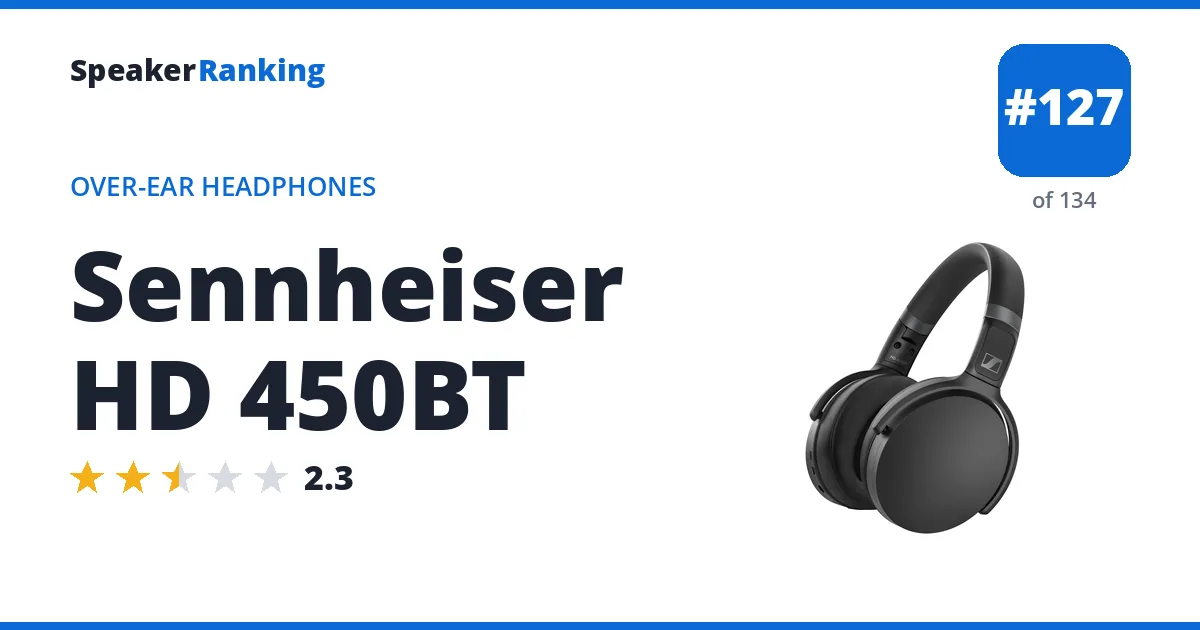
Pros: Wireless with active noise cancelling, about 30 hours of battery and Bluetooth 5.0 with SBC, AAC, aptX and aptX Low Latency. It also has a wired mode and a built-in microphone at a modest price. Bass from sub-bass through 200 Hz is within about 1 dB of the Harman target, which suits warm tastes.
Cons: A deep 15.7 dB dip near 4.4 kHz and presence about 8.5 dB low make vocals recessed and distant. Treble from 6 to 16 kHz is also 4 to 7 dB under target, so the sound is dark and lacks sparkle. The HyperX Cloud II is rated higher for less money.
Full Sennheiser HD 450BT review and specifications →
| Released | Feb 2020 (6 years ago) |
|---|---|
| Active Noise Cancelling | Yes |
| Back | Closed |
| Battery Life | 30 hours (Manufacturer specified) |
| Bluetooth Codecs | SBC, AAC, aptX, aptX Low Latency |
| Bluetooth Version | 5.0 |
| Built-in Microphone | Yes |
| Connection | Wireless and wired |
| Deviation From Target | 3.64 dB standard deviation |
| Driver Type | Dynamic |
| Form Factor | Over-ear |
| Frequency Response | 18Hz - 22kHz (Manufacturer specified) |
| Harman Preference Score | 44 (measured by oratory1990, via AutoEQ) |
| Sensitivity | 108 dB SPL (1 kHz, 0 dBFS) |
| Tonal Tilt | -1.56 (negative is warmer, positive brighter) |
| Weight | 0.5 lbs (238 g) |
EQ preset to match the Harman target
Set a preamp of -6.4 dB, then add these filters in any parametric equalizer (Wavelet, Equalizer APO, Peace, or a player with parametric EQ). Calculated by AutoEQ from its measured frequency response.
| Filter | Frequency | Gain | Q |
|---|---|---|---|
| Low shelf | 105 Hz | -2.7 dB | 0.70 |
| Peak | 2,417 Hz | -4.2 dB | 0.56 |
| Peak | 3,855 Hz | +8.3 dB | 1.65 |
| Peak | 151 Hz | -3.0 dB | 1.14 |
| Peak | 6,571 Hz | +3.5 dB | 1.15 |
| High shelf | 10,000 Hz | +5.6 dB | 0.70 |
| Peak | 8,215 Hz | -2.8 dB | 4.27 |
| Peak | 374 Hz | +0.9 dB | 2.79 |
| Peak | 656 Hz | -0.6 dB | 2.31 |
| Peak | 41 Hz | -0.2 dB | 1.75 |
- Reviews, Comparisons and Sound Samples
- Head-to-Head Comparisons
 Ranked #130 of 134 in Over-Ear Headphones - Sennheiser HD 569: $129.95 Amazon eBay
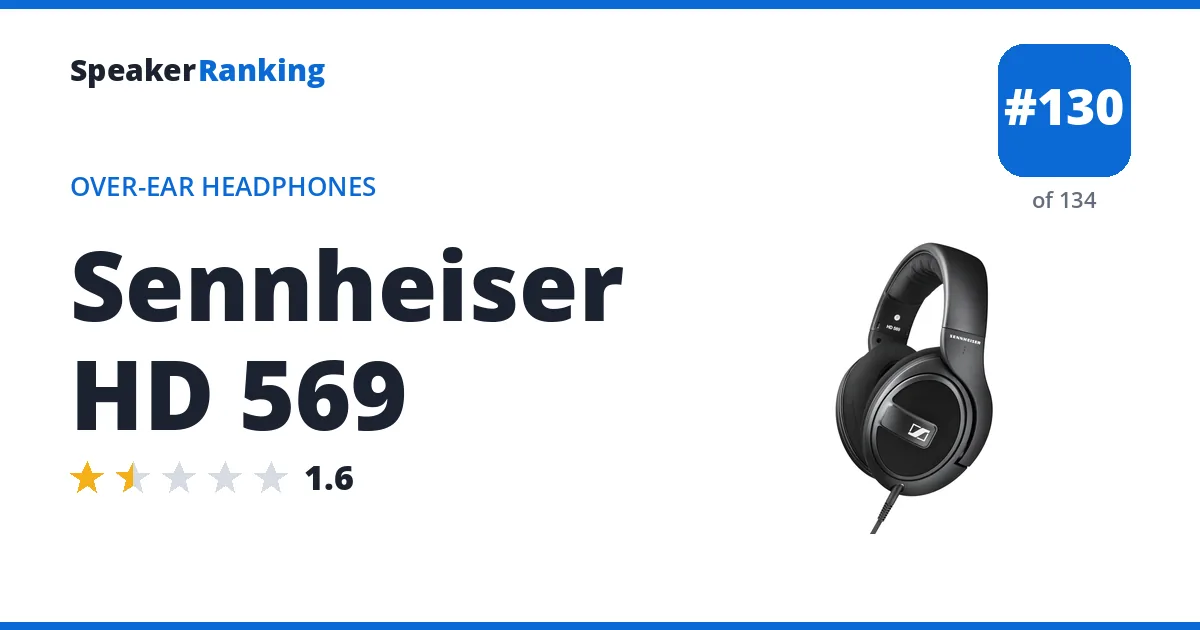
Pros: A wired closed-back headphone with a built-in microphone. A 23 ohm impedance and 115 dB sensitivity make it very easy to drive from a phone. A bass lift of about 5 dB suits listeners who prefer a warm, bassy sound.
Cons: Treble from 6 to 10 kHz is about 5 dB low and presence is down 4 dB, with an 11.7 dB dip near 10 kHz, so the sound is dull and veiled. The warm tilt and bass emphasis can make mixes sound heavy. At 300 g, wired only, it is rated below the Logitech G Pro X and the Jabra Evolve 40.
Full Sennheiser HD 569 review and specifications →
| Back | Closed |
|---|---|
| Built-in Microphone | Yes |
| Connection | Wired |
| Deviation From Target | 3.97 dB standard deviation |
| Driver Type | Dynamic |
| Drivers | 1 x 38mm dynamic |
| Form Factor | Over-ear |
| Frequency Response | 10Hz - 28kHz (Manufacturer specified) |
| Harman Preference Score | 28 (measured by oratory1990, via AutoEQ) |
| Impedance | 23 ohms |
| Sensitivity | 115 dB SPL/V |
| Tonal Tilt | -2.31 (negative is warmer, positive brighter) |
| Weight | 0.7 lbs (300 g) |
EQ preset to match the Harman target
Set a preamp of -6.2 dB, then add these filters in any parametric equalizer (Wavelet, Equalizer APO, Peace, or a player with parametric EQ). Calculated by AutoEQ from its measured frequency response.
| Filter | Frequency | Gain | Q |
|---|---|---|---|
| Low shelf | 105 Hz | -0.4 dB | 0.70 |
| Peak | 79 Hz | -7.0 dB | 0.60 |
| Peak | 10,000 Hz | +4.2 dB | 0.26 |
| Peak | 4,676 Hz | +3.2 dB | 5.65 |
| Peak | 818 Hz | -1.9 dB | 1.41 |
| High shelf | 10,000 Hz | -2.2 dB | 0.70 |
| Peak | 280 Hz | +1.7 dB | 2.28 |
| Peak | 2,195 Hz | +2.0 dB | 2.24 |
| Peak | 3,255 Hz | -3.5 dB | 4.88 |
| Peak | 154 Hz | -1.1 dB | 2.14 |
- Reviews, Comparisons and Sound Samples
- Head-to-Head Comparisons
In-Ear Headphones
 Ranked #9 of 68 in In-Ear Headphones - Sennheiser IE 200: $129.95 Amazon eBay
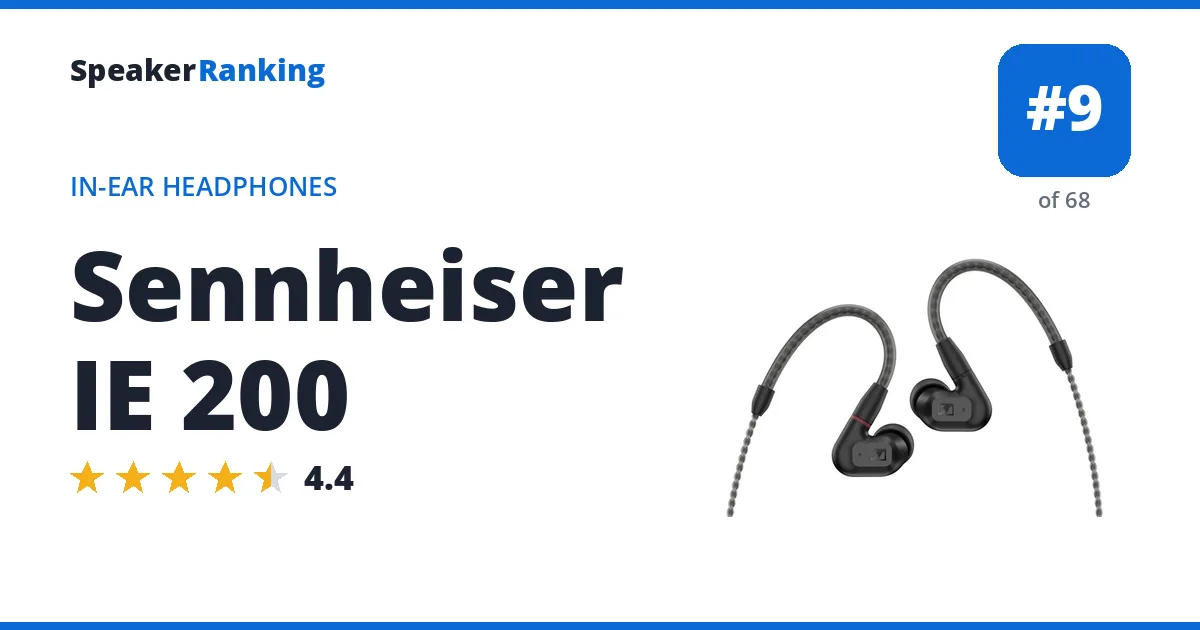
Pros: Bass and midrange land almost exactly on the Harman target in oratory1990’s measurement, within about 0.5 dB from 60 Hz to 3 kHz, which gives a natural tonal balance and a preference score of 79. At 16 ohms and 119 dB SPL/V sensitivity it plays loud straight from a phone with no amp. Each earpiece weighs only 4 g, and the single 7mm dynamic driver is a simple, wired design with no battery to charge.
Cons: The presence region from 3 to 6 kHz sits about 5 dB under target, with a 5.7 dB dip near 4.4 kHz, so vocals and snare attacks sound a little recessed. The top octave runs about 5.8 dB hot, which adds sparkle that can read as thin or bright on some recordings. The Final Audio A4000 and Shuoer S12 carry higher ratings at lower prices.
Full Sennheiser IE 200 review and specifications →
| Back | Closed |
|---|---|
| Connection | Wired |
| Deviation From Target | 1.86 dB standard deviation |
| Driver Type | Dynamic |
| Drivers | 1 x 7mm dynamic |
| Form Factor | In-ear |
| Frequency Response | 6Hz - 20kHz (Manufacturer specified) |
| Harman Preference Score | 79 (measured by oratory1990, via AutoEQ) |
| Impedance | 16 ohms |
| Sensitivity | 119 dB SPL/V |
| Tonal Tilt | -0.02 (negative is warmer, positive brighter) |
| Weight | 0 lbs (4 g) per earphone |
EQ preset to match the Harman target
Set a preamp of -4.3 dB, then add these filters in any parametric equalizer (Wavelet, Equalizer APO, Peace, or a player with parametric EQ). Calculated by AutoEQ from its measured frequency response.
| Filter | Frequency | Gain | Q |
|---|---|---|---|
| Low shelf | 105 Hz | +0.3 dB | 0.70 |
| Peak | 4,135 Hz | +4.3 dB | 1.83 |
| Peak | 1,520 Hz | -1.9 dB | 1.99 |
| Peak | 180 Hz | -1.2 dB | 1.14 |
| Peak | 67 Hz | +1.0 dB | 1.34 |
| High shelf | 10,000 Hz | -6.1 dB | 0.70 |
| Peak | 727 Hz | +0.8 dB | 1.79 |
| Peak | 5,480 Hz | +1.2 dB | 3.96 |
| Peak | 1,154 Hz | -0.6 dB | 3.44 |
| Peak | 2,978 Hz | +0.4 dB | 3.96 |
- Reviews, Comparisons and Sound Samples
- Head-to-Head Comparisons
 Ranked #41 of 68 in In-Ear Headphones - Sennheiser IE 40 Pro: $109.00 Amazon eBay
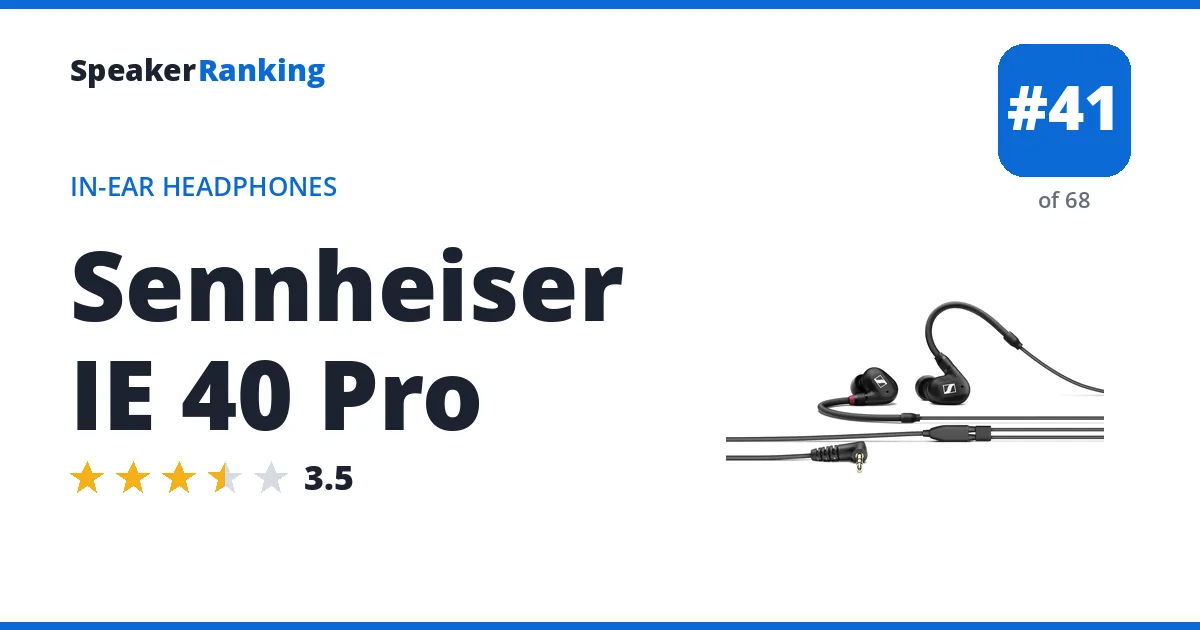
Pros: Oratory1990’s measurement shows bass 1.0 dB and low mids 1.4 dB above target, a gentle warmth that suits relaxed listening, and the preference score of 67 is acceptable. A 20 ohm impedance and 115 dB SPL/V sensitivity mean a phone drives it with ease, which suits monitoring and portable use. The balance leans toward warm and V-shaped tastes.
Cons: Presence is 4.5 dB under target across 3 to 6 kHz, with a 6.4 dB dip near 3.1 kHz, so vocals and guitars sound recessed and detail is dulled. Sub-bass is 3.6 dB light, so deep rumble is absent. Then the top end swings the opposite way, with a peak of 8.3 dB at 11.9 kHz and air 5.7 dB over target, which can add a brittle sheen. Tonal balance is clearly uneven, with a deviation of 2.94 dB.
Full Sennheiser IE 40 Pro review and specifications →
| Back | Closed |
|---|---|
| Connection | Wired |
| Deviation From Target | 2.94 dB standard deviation |
| Driver Type | Dynamic |
| Drivers | 1 x 10mm dynamic |
| Form Factor | In-ear |
| Frequency Response | 20Hz - 18kHz (Manufacturer specified) |
| Harman Preference Score | 67 (measured by oratory1990, via AutoEQ) |
| Impedance | 20 ohms |
| Sensitivity | 115 dB SPL/V |
| Tonal Tilt | +0.03 (negative is warmer, positive brighter) |
EQ preset to match the Harman target
Set a preamp of -5.6 dB, then add these filters in any parametric equalizer (Wavelet, Equalizer APO, Peace, or a player with parametric EQ). Calculated by AutoEQ from its measured frequency response.
| Filter | Frequency | Gain | Q |
|---|---|---|---|
| Low shelf | 105 Hz | +5.6 dB | 0.70 |
| Peak | 2,997 Hz | +5.7 dB | 1.48 |
| Peak | 75 Hz | -4.1 dB | 0.38 |
| Peak | 1,267 Hz | -0.8 dB | 2.09 |
| Peak | 261 Hz | -1.1 dB | 1.70 |
| High shelf | 10,000 Hz | -3.7 dB | 0.70 |
| Peak | 9,787 Hz | -3.3 dB | 1.71 |
| Peak | 4,341 Hz | +1.1 dB | 3.77 |
| Peak | 6,644 Hz | +2.1 dB | 5.97 |
| Peak | 7,958 Hz | -1.2 dB | 5.41 |
- Reviews, Comparisons and Sound Samples
 Ranked #48 of 68 in In-Ear Headphones - Sennheiser MOMENTUM True Wireless 4: $249.95 Amazon eBay
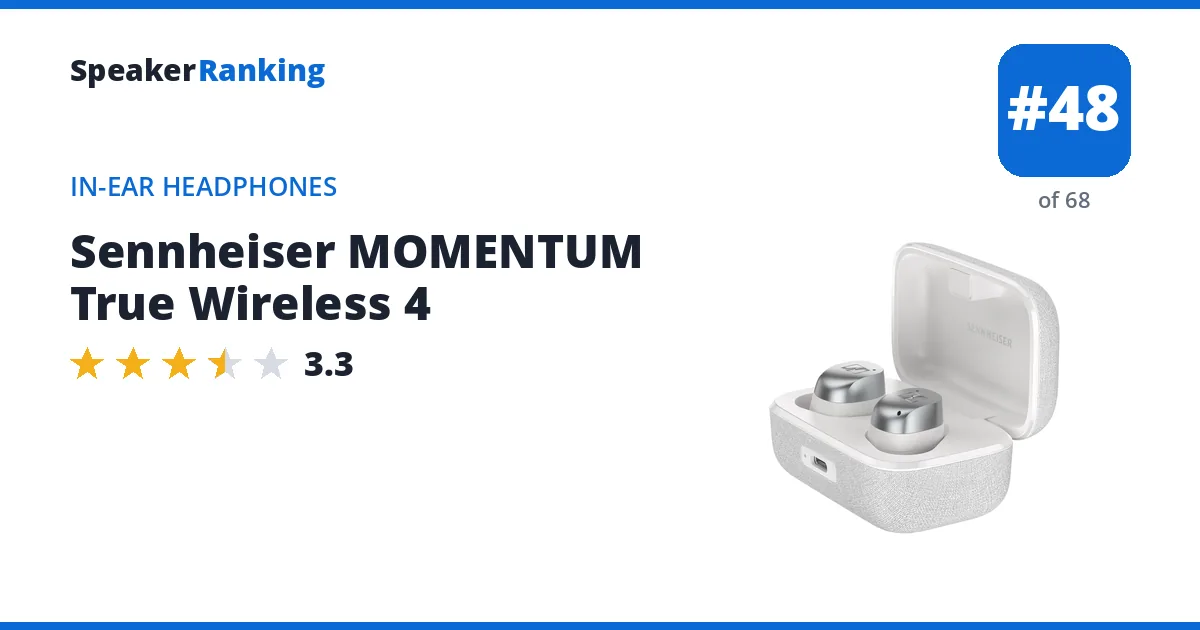
Older model: the Sennheiser Momentum True Wireless 3 (ranked higher, rated 3.4/5). See every Sennheiser Momentum True Wireless generation.
Pros: This true wireless set adds active noise cancelling, Bluetooth 5.4 and a codec list that runs from SBC and AAC up to aptX Lossless and LC3. Battery life is 7.5 hours per charge and 30 hours with the case, and IP54 resistance covers sweat and light rain. Oratory1990’s measurement shows bass about 0.6 dB above target, so low end is full without being overdone.
Cons: Presence from 3 to 6 kHz is about 6.9 dB under target, with an 8.2 dB dip near 5.7 kHz, so voices and guitars sound recessed. Air above 10 kHz runs 5 dB hot with a peak of 4.2 dB near 10.6 kHz, which can add a thin, sparkly edge. The Tin HiFi P1 Max has a higher rating, for a lower price.
Full Sennheiser MOMENTUM True Wireless 4 review and specifications →
| Released | Feb 2024 (2 years ago) |
|---|---|
| Active Noise Cancelling | Yes |
| Back | Closed |
| Battery Life | 7.5 hours (30 with case, Manufacturer specified) |
| Bluetooth Codecs | SBC, AAC, aptX, aptX Adaptive, aptX Lossless, LC3 |
| Bluetooth Version | 5.4 |
| Built-in Microphone | Yes |
| Connection | True wireless |
| Deviation From Target | 2.63 dB standard deviation |
| Driver Type | Dynamic |
| Drivers | 1 x 7mm dynamic |
| Form Factor | In-ear |
| Harman Preference Score | 65 (measured by oratory1990, via AutoEQ) |
| IP Rating | IP54 |
| Tonal Tilt | -0.74 (negative is warmer, positive brighter) |
| Weight | 0 lbs (6.2 g) per earbud |
EQ preset to match the Harman target
Set a preamp of -6.5 dB, then add these filters in any parametric equalizer (Wavelet, Equalizer APO, Peace, or a player with parametric EQ). Calculated by AutoEQ from its measured frequency response.
| Filter | Frequency | Gain | Q |
|---|---|---|---|
| Low shelf | 105 Hz | -0.1 dB | 0.70 |
| Peak | 5,605 Hz | +5.8 dB | 2.82 |
| Peak | 123 Hz | -2.8 dB | 0.23 |
| Peak | 3,977 Hz | +3.9 dB | 2.27 |
| Peak | 70 Hz | +2.1 dB | 0.97 |
| High shelf | 10,000 Hz | -5.2 dB | 0.70 |
| Peak | 1,511 Hz | -1.3 dB | 1.73 |
| Peak | 877 Hz | +0.8 dB | 2.46 |
| Peak | 7,841 Hz | +2.1 dB | 5.59 |
| Peak | 3,002 Hz | +0.7 dB | 3.65 |
- Reviews, Comparisons and Sound Samples
- Head-to-Head Comparisons
 Ranked #52 of 68 in In-Ear Headphones - Sennheiser IE 900: $1,299.95 Amazon eBay
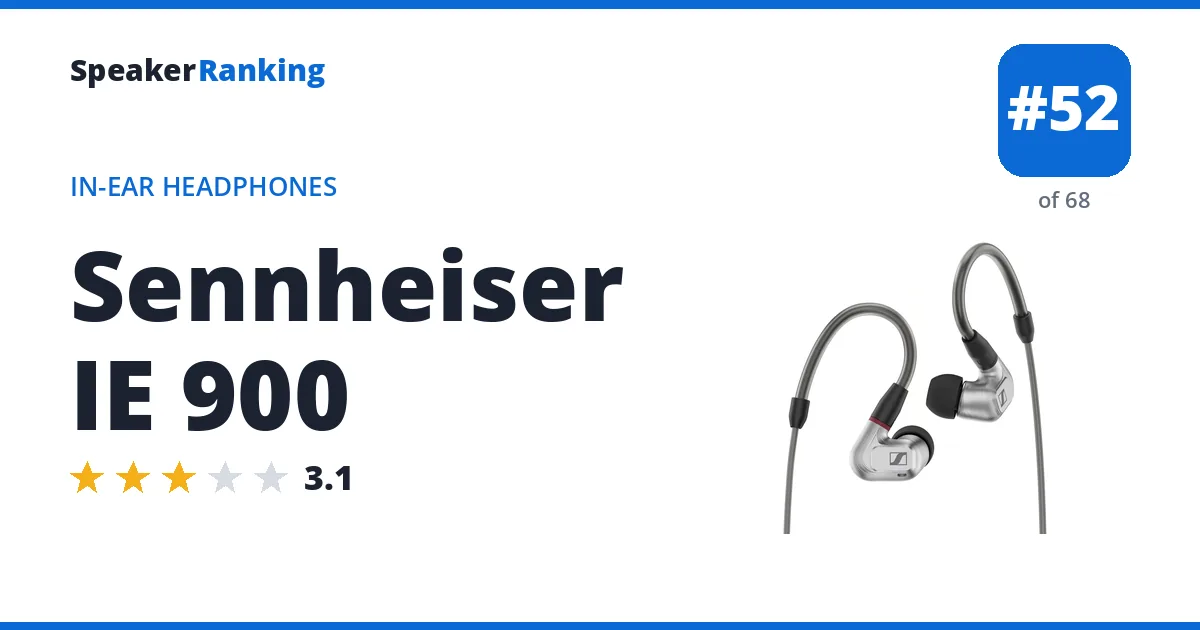
Pros: Oratory1990 measured sub-bass and bass within about 1.2 dB of target, so the low end is tidy and controlled. Sensitivity of 123 dB SPL/V and a 16 ohm impedance make it easy to drive from a phone, and the 7mm dynamic driver is rated to reach from 5 Hz to 48 kHz. Top-octave air sits about 3.6 dB above target for an open, detailed treble.
Cons: Presence from 3 to 6 kHz is about 6.7 dB below the Harman target, with an 8.8 dB dip near 3.6 kHz, which recesses vocals and removes some bite. A preference score of 63 is modest for such a premium product, and the HIFIMAN RE2000 has a higher rating at a lower price.
Full Sennheiser IE 900 review and specifications →
| Released | 2021 (5 years ago) |
|---|---|
| Back | Closed |
| Connection | Wired |
| Deviation From Target | 2.82 dB standard deviation |
| Driver Type | Dynamic |
| Drivers | 1 x 7mm dynamic |
| Form Factor | In-ear |
| Frequency Response | 5Hz - 48kHz (Manufacturer specified) |
| Harman Preference Score | 63 (measured by oratory1990, via AutoEQ) |
| Impedance | 16 ohms |
| Sensitivity | 123 dB SPL/V |
| Tonal Tilt | -0.92 (negative is warmer, positive brighter) |
EQ preset to match the Harman target
Set a preamp of -6.3 dB, then add these filters in any parametric equalizer (Wavelet, Equalizer APO, Peace, or a player with parametric EQ). Calculated by AutoEQ from its measured frequency response.
| Filter | Frequency | Gain | Q |
|---|---|---|---|
| Low shelf | 105 Hz | -2.3 dB | 0.70 |
| Peak | 4,081 Hz | +5.0 dB | 2.86 |
| Peak | 204 Hz | -2.6 dB | 1.13 |
| Peak | 1,472 Hz | -2.7 dB | 2.33 |
| Peak | 2,956 Hz | +5.2 dB | 2.42 |
| High shelf | 10,000 Hz | -4.4 dB | 0.70 |
| Peak | 67 Hz | +0.6 dB | 1.76 |
| Peak | 26 Hz | -0.9 dB | 3.19 |
| Peak | 729 Hz | +0.4 dB | 2.54 |
| Peak | 376 Hz | -0.4 dB | 2.69 |
- Reviews, Comparisons and Sound Samples
- Head-to-Head Comparisons
 Ranked #62 of 68 in In-Ear Headphones - Sennheiser CX 3.00: $79.99 Amazon eBay
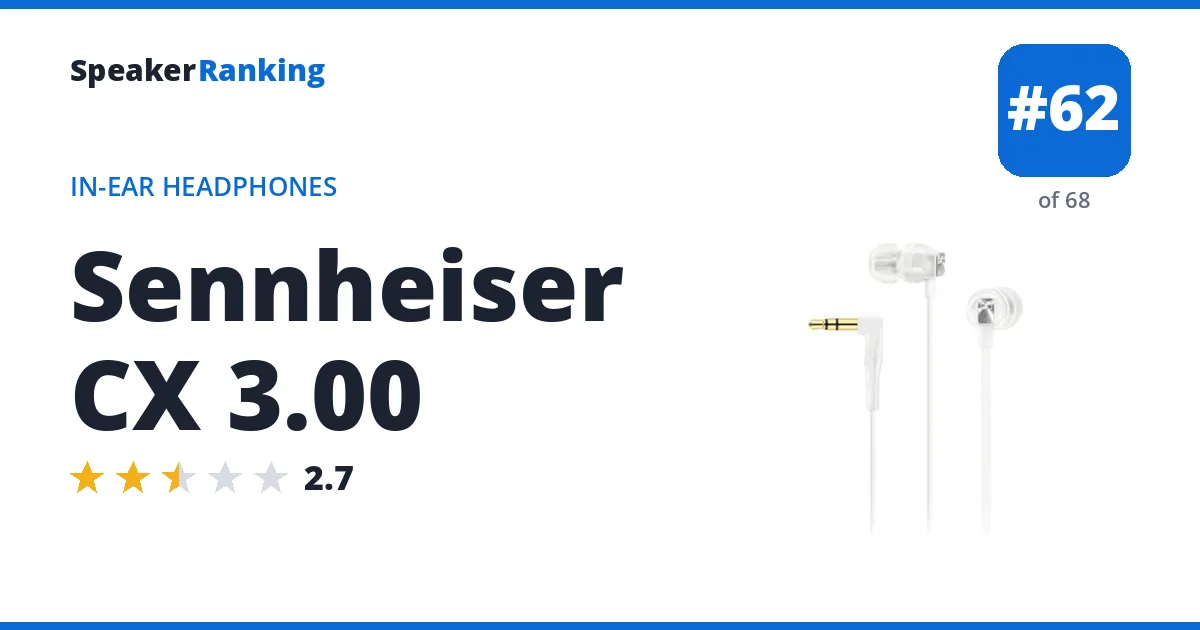
Pros: Bass is boosted about 4 dB at 60 to 200 Hz and 2.5 dB below that in oratory1990’s measurement, so kick drums and bass lines hit with extra weight. Treble from 6 to 10 kHz is lifted about 6 dB, which adds a bright edge to cymbals and gives it a V-shaped character some listeners enjoy. The 18 ohm impedance and 118 dB SPL/V sensitivity let a phone drive it easily.
Cons: A sharp 8.6 dB peak near 7.6 kHz can make hi-hats and sibilants harsh, and presence between 3 and 6 kHz is down about 4.3 dB, with a 5.7 dB dip near 3.5 kHz that pushes vocals back. A preference score of 58 and a 3.19 dB deviation mean the balance is far from the target. The Shure SE215 and FiiO FH3 are rated higher.
Full Sennheiser CX 3.00 review and specifications →
| Released | 2015 (11 years ago) |
|---|---|
| Back | Closed |
| Connection | Wired |
| Deviation From Target | 3.19 dB standard deviation |
| Driver Type | Dynamic |
| Form Factor | In-ear |
| Frequency Response | 17Hz - 21kHz (Manufacturer specified) |
| Harman Preference Score | 58 (measured by oratory1990, via AutoEQ) |
| Impedance | 18 ohms |
| Sensitivity | 118 dB SPL/V |
| Tonal Tilt | -0.74 (negative is warmer, positive brighter) |
EQ preset to match the Harman target
Set a preamp of -5.3 dB, then add these filters in any parametric equalizer (Wavelet, Equalizer APO, Peace, or a player with parametric EQ). Calculated by AutoEQ from its measured frequency response.
| Filter | Frequency | Gain | Q |
|---|---|---|---|
| Low shelf | 105 Hz | -2.1 dB | 0.70 |
| Peak | 3,874 Hz | +7.0 dB | 0.66 |
| Peak | 7,101 Hz | -10.4 dB | 0.77 |
| Peak | 167 Hz | -3.4 dB | 1.15 |
| Peak | 4,954 Hz | +4.9 dB | 1.44 |
| High shelf | 10,000 Hz | +0.3 dB | 0.70 |
| Peak | 736 Hz | +1.5 dB | 1.33 |
| Peak | 1,412 Hz | -1.1 dB | 2.20 |
| Peak | 55 Hz | +0.4 dB | 1.63 |
| Peak | 314 Hz | -1.0 dB | 3.41 |
- Reviews, Comparisons and Sound Samples
- Head-to-Head Comparisons
 Ranked #67 of 68 in In-Ear Headphones - Sennheiser Momentum True Wireless 2: $237.45 Amazon eBay
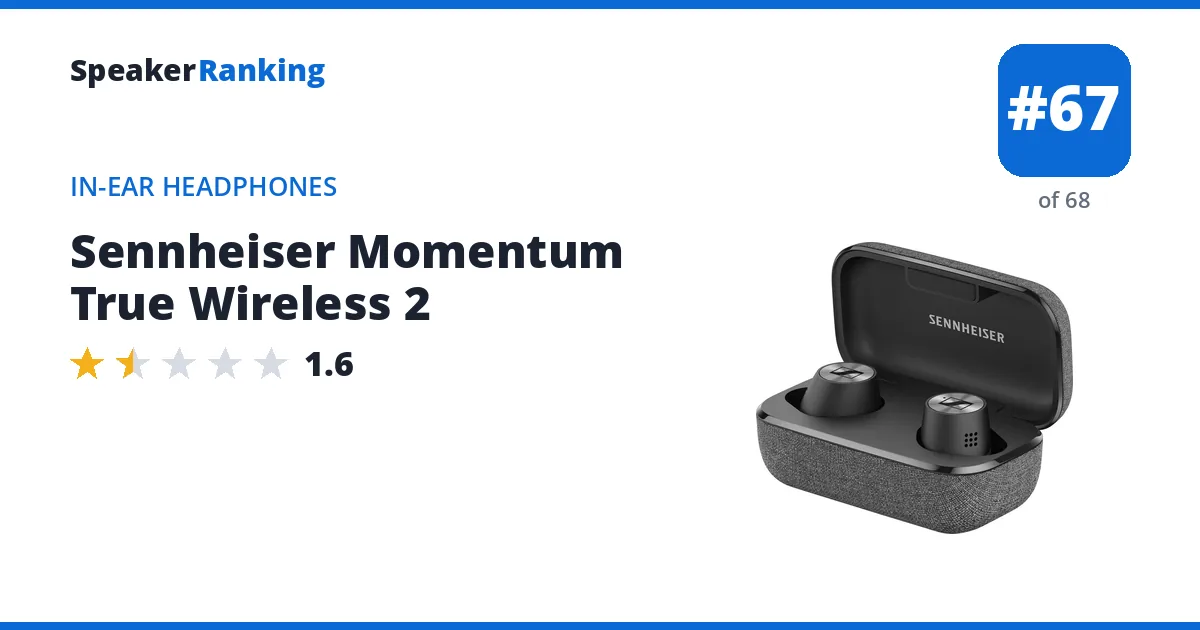
Pros: Active noise cancelling, Bluetooth 5.1 with SBC, AAC and aptX, and an IPX4 rating cover the features commuters and gym users want. Battery life is rated at 7 hours per charge and 28 with the case, and each earbud weighs only 6 g. Bass is lifted by about 3.1 dB over target, which suits listeners who want a warm, punchy sound.
Cons: In oratory1990’s measurement the presence region from 3 to 6 kHz is about 9.6 dB below target, with a 10.7 dB dip near 4 kHz, so vocals and instrument attack sound pushed back and hazy. A 5.2 dB peak near 10.8 kHz and boosted air then add an uneven sparkle on top, and sub-bass is down 2.3 dB. The preference score of 44 is low, and the rating sits below the Jabra Elite Active 65t.
Full Sennheiser Momentum True Wireless 2 review and specifications →
| Released | Apr 2020 (6 years ago) |
|---|---|
| Active Noise Cancelling | Yes |
| Back | Closed |
| Battery Life | 7 hours (28 with case, Manufacturer specified) |
| Bluetooth Codecs | SBC, AAC, aptX |
| Bluetooth Version | 5.1 |
| Built-in Microphone | Yes |
| Connection | True wireless |
| Deviation From Target | 4.39 dB standard deviation |
| Driver Type | Dynamic |
| Drivers | 1 x 7mm dynamic |
| Form Factor | In-ear |
| Frequency Response | 5Hz - 21kHz (Manufacturer specified) |
| Harman Preference Score | 44 (measured by oratory1990, via AutoEQ) |
| IP Rating | IPX4 |
| Tonal Tilt | -0.89 (negative is warmer, positive brighter) |
| Weight | 0 lbs (6 g) per earbud |
EQ preset to match the Harman target
Set a preamp of -7.0 dB, then add these filters in any parametric equalizer (Wavelet, Equalizer APO, Peace, or a player with parametric EQ). Calculated by AutoEQ from its measured frequency response.
| Filter | Frequency | Gain | Q |
|---|---|---|---|
| Low shelf | 105 Hz | +6.4 dB | 0.70 |
| Peak | 85 Hz | -6.9 dB | 0.26 |
| Peak | 3,202 Hz | +6.5 dB | 1.25 |
| Peak | 1,638 Hz | -1.6 dB | 2.70 |
| Peak | 5,340 Hz | +4.9 dB | 3.93 |
| High shelf | 10,000 Hz | -3.3 dB | 0.70 |
| Peak | 736 Hz | +1.0 dB | 1.92 |
| Peak | 334 Hz | -0.6 dB | 2.45 |
| Peak | 4,354 Hz | +1.0 dB | 4.95 |
| Peak | 199 Hz | -0.5 dB | 3.18 |
- Reviews, Comparisons and Sound Samples
- Head-to-Head Comparisons
Discontinued Sennheiser Models
Still ranked, and often still worth buying used, but no longer in production. Check availability before planning around one of these.
Over-Ear Headphones
 Ranked #86 of 134 in Over-Ear Headphones - Sennheiser Amperior: $299.99 Discontinued Amazon eBay
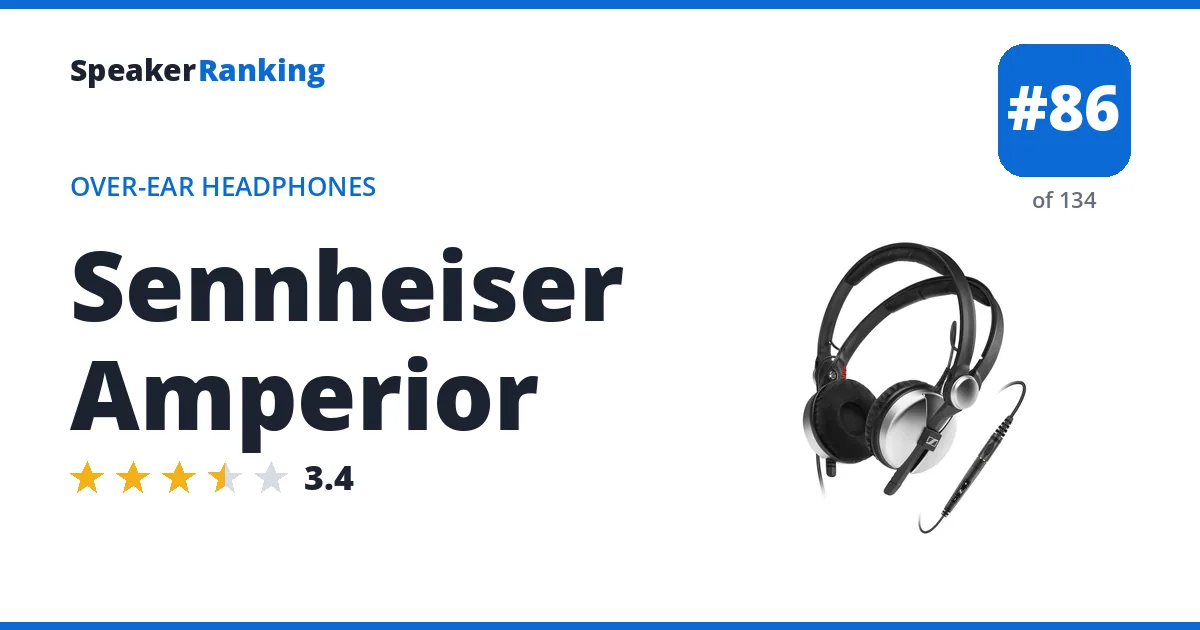
Pros: Closed back at 190 g with an 18 ohm impedance and 120 dB sensitivity, so it plays loudly from any phone or laptop with no amp. It has a built-in microphone for calls, which suits portable daily use. Crinacle’s preference score of 69 is a fair result for a closed headphone, and a slightly bright tilt of 0.71 suits listeners who like more clarity.
Cons: A score of 69 is only middling against the Harman target, and the bright tilt can make treble tiring at higher volume. The Focal Azurys and Cooler Master MH752 have higher ratings, and the Cooler Master is cheaper. It is discontinued and wired only.
Full Sennheiser Amperior review and specifications →
| Back | Closed |
|---|---|
| Built-in Microphone | Yes |
| Connection | Wired |
| Deviation From Target | 2.77 dB standard deviation |
| Form Factor | Over-ear |
| Frequency Response | 16Hz - 22kHz (Manufacturer specified) |
| Harman Preference Score | 69 (measured by crinacle, via AutoEQ) |
| Impedance | 18 ohms |
| Sensitivity | 120 dB |
| Tonal Tilt | +0.71 (negative is warmer, positive brighter) |
| Weight | 0.4 lbs (190 g) |
EQ preset to match the Harman target
Set a preamp of -6.3 dB, then add these filters in any parametric equalizer (Wavelet, Equalizer APO, Peace, or a player with parametric EQ). Calculated by AutoEQ from its measured frequency response.
| Filter | Frequency | Gain | Q |
|---|---|---|---|
| Low shelf | 105 Hz | +4.7 dB | 0.70 |
| Peak | 1,258 Hz | -4.5 dB | 1.00 |
| Peak | 329 Hz | +5.2 dB | 1.90 |
| Peak | 5,561 Hz | +5.4 dB | 1.78 |
| Peak | 8,369 Hz | -4.5 dB | 1.71 |
| High shelf | 10,000 Hz | +3.2 dB | 0.70 |
| Peak | 77 Hz | -3.2 dB | 0.82 |
| Peak | 218 Hz | +1.1 dB | 2.02 |
| Peak | 22 Hz | +1.0 dB | 4.82 |
| Peak | 39 Hz | +2.5 dB | 0.95 |
- Reviews, Comparisons and Sound Samples
In-Ear Headphones
 Ranked #44 of 68 in In-Ear Headphones - Sennheiser Momentum True Wireless 3: $111.99 Discontinued Amazon eBay
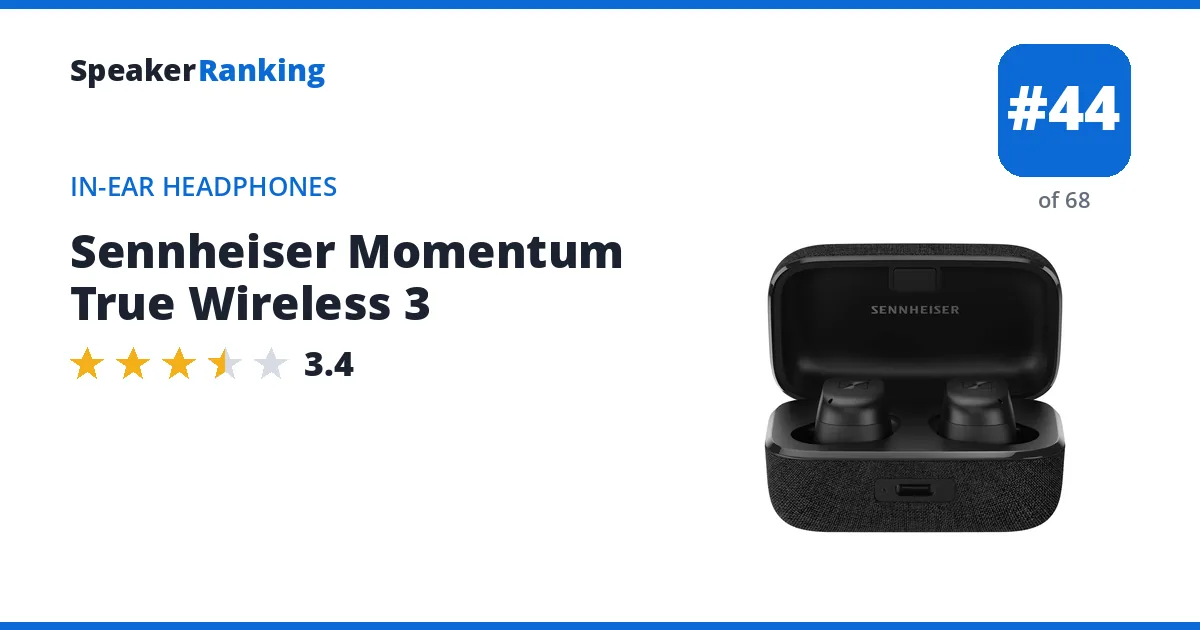
Newer model: the Sennheiser MOMENTUM True Wireless 4, ranked lower, rated 3.3/5, released Feb 2024. It adds LC3. See every Sennheiser Momentum True Wireless generation.
Pros: Active noise cancelling, Bluetooth 5.2 and aptX Adaptive support (alongside SBC, AAC and aptX) add real convenience, and battery life is 7 hours per charge with up to 28 hours using the case. At 5.8 g per earbud with an IPX4 rating, it handles workouts and light rain. Oratory1990’s measurement shows bass and sub-bass within 1 dB of target, giving a clean, warm foundation that suits warm and bassy tastes.
Cons: Presence between 3 and 6 kHz is 6.9 dB under target with a 7.6 dB dip near 4.4 kHz, so vocals, snare and guitar edges sound distant and veiled. Air above 10 kHz runs 5.4 dB hot, with a peak of 4.9 dB near 10.5 kHz, which adds a hissy edge on top of the recessed mids. The preference score of 66 and deviation of 2.59 dB confirm the response sits well off the target. The KZ PR1 is rated higher at a similar cost, though it lacks wireless and ANC. Discontinued.
Full Sennheiser Momentum True Wireless 3 review and specifications →
| Released | Apr 2022 (4 years ago) |
|---|---|
| Active Noise Cancelling | Yes |
| Back | Closed |
| Battery Life | 7 hours (28 with case, Manufacturer specified) |
| Bluetooth Codecs | SBC, AAC, aptX, aptX Adaptive |
| Bluetooth Version | 5.2 |
| Built-in Microphone | Yes |
| Connection | True wireless |
| Deviation From Target | 2.59 dB standard deviation |
| Driver Type | Dynamic |
| Drivers | 1 x 7mm dynamic |
| Form Factor | In-ear |
| Frequency Response | 5Hz - 21kHz (Manufacturer specified) |
| Harman Preference Score | 66 (measured by oratory1990, via AutoEQ) |
| IP Rating | IPX4 |
| Sensitivity | 107 dB SPL (1 kHz / 1 mW) |
| Tonal Tilt | -0.85 (negative is warmer, positive brighter) |
| Weight | 0 lbs (5.8 g) per earbud |
EQ preset to match the Harman target
Set a preamp of -5.3 dB, then add these filters in any parametric equalizer (Wavelet, Equalizer APO, Peace, or a player with parametric EQ). Calculated by AutoEQ from its measured frequency response.
| Filter | Frequency | Gain | Q |
|---|---|---|---|
| Low shelf | 105 Hz | -2.6 dB | 0.70 |
| Peak | 4,231 Hz | +5.9 dB | 1.39 |
| Peak | 209 Hz | -2.2 dB | 0.78 |
| Peak | 1,433 Hz | -2.6 dB | 1.99 |
| Peak | 69 Hz | +1.5 dB | 1.35 |
| High shelf | 10,000 Hz | -5.4 dB | 0.70 |
| Peak | 5,556 Hz | +1.7 dB | 5.29 |
| Peak | 759 Hz | +0.5 dB | 2.36 |
| Peak | 335 Hz | -0.4 dB | 3.16 |
| Peak | 4,230 Hz | -0.6 dB | 5.10 |
- Reviews, Comparisons and Sound Samples
- Head-to-Head Comparisons
Product Line History
How these product lines changed from one generation to the next.