GR-Research is ranked #3 of 49 in the speaker-review source reliability ranking. The ranking weighs measurement quality, repeatability, useful comparisons, disclosure, and editorial independence; it is an assessment of the work used for speaker decisions, not a claim about personal character.
Reliability assessment: Publishes frequency-response, impedance, and decay measurements and is willing to criticize design choices. GR-Research also sells speakers, crossover upgrades, and related products, so its measurements are useful evidence while upgrade recommendations should be read with that commercial overlap in mind.
Prices on this page were last checked October 3, 2026 at 10:26 PM UTC. Product prices and availability are accurate as of that date/time and are subject to change; the price and availability shown on Amazon at the time of purchase will apply to the purchase of this product.
As an eBay Partner, we may be compensated if you make a purchase.
Quick Navigation
Every speaker on this site GR-Research has reviewed, highest-rated first, with a direct link to each review below its card.
Medium Size Bookshelf Speakers
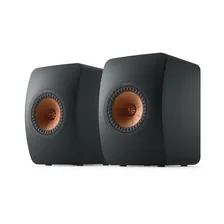 Ranked #4 of 101 in Medium Size Bookshelf Speakers - KEF LS50 Meta: $1,599.00 per pair Amazon Crutchfield eBay
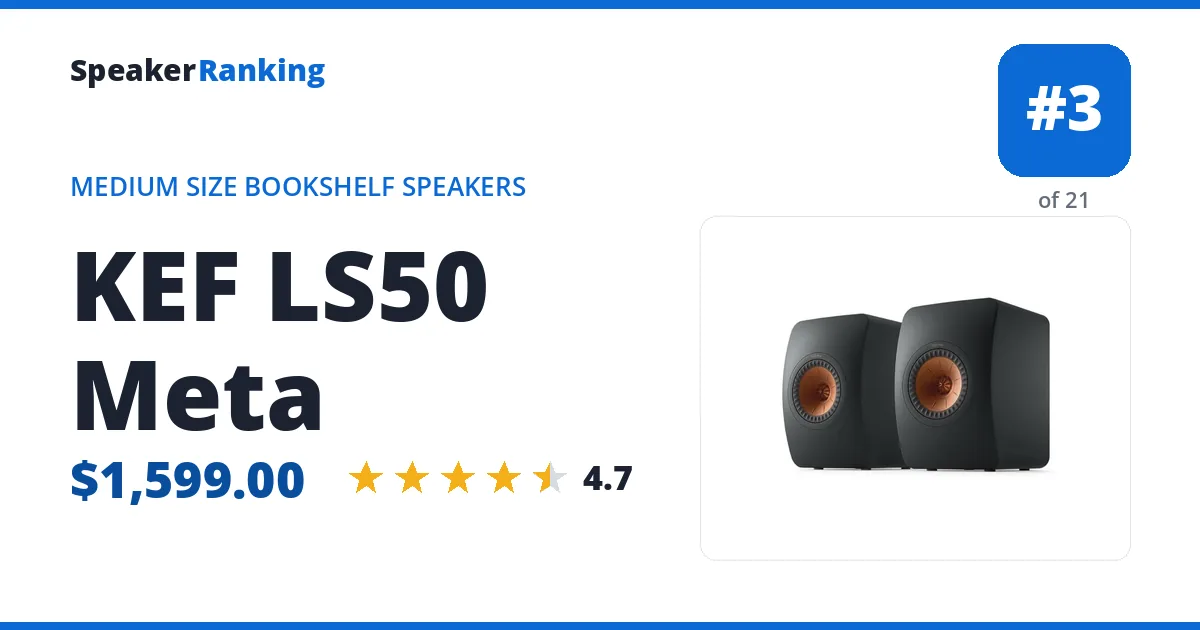
Pros: Uni-Q concentric driver mounts a 1” vented aluminum dome tweeter at the center of a 5.25” aluminum cone woofer, rated 79Hz-20kHz+. Speaker-to-speaker matching measured tight at roughly 0.5dB deviation between the pair tested, versus 2-3dB seen on some other speakers: likely why imaging stayed so precise. Imaging stays tight and focused even toed out, unlike most coincident designs where toe-out typically diffuses the image, giving more of an oval-shaped soundstage than a hard rectangular boundary. Horizontal and vertical directivity both hold to about ±50° at the -6dB point, so tonality stays consistent across roughly a 100° listening cone. The extended bass shelf is deliberately tuned for near-wall/boundary placement rather than the usual “pull it 3 feet into the room” advice, playing lower without excess boominess when placed close to a wall. At its frequent sale price, well below list, called a no-brainer for a compact stand-mount speaker. Independent ASR Klippel measurements corroborate this: very good directivity with the on- and off-axis curves tracking closely, and a predicted in-room response the reviewer called “very close to ideal.”. Measured bass extension of 68Hz (-3dB), with a measured sensitivity of 83dB.
Cons: F3 of 67Hz and F10 of 42Hz mean it doesn’t get much below 50Hz in-room; a subwoofer is recommended for real bass. A 2-3dB scoop around 2-4kHz shows up in both the listening window and sound power measurements, matching a subjectively noticed lack of attack and vocal clarity that the reviewer wanted to correct with about 2dB of EQ. An on-axis diffraction dip around 8kHz smooths out with about 15° of toe-out (typical for concentric designs, but still present at 0°). Distortion is elevated at low frequencies since the single 5.25” cone shares surface area with the tweeter housing, reducing effective radiating area; multitone distortion crosses the 3% threshold at 96dB/1m, making roughly 88dB or below the safer output ceiling. Moderate sensitivity (~83dB average) needed 2-3dB more amplifier gain than typical in testing. Adding a subwoofer at an 80Hz crossover only helps lower-midrange distortion, not the elevated distortion in the 1-2kHz and above-5kHz regions. ASR’s own Klippel testing found the same pattern in starker terms: THD is very good at 86dB SPL/1m but climbs past 100% in the bass at 96dB SPL/1m, confirming this is not a near-field speaker for high-output bass-heavy material. Cumulative spectral decay (waterfall) also shows a couple of resonances lingering in the 1-2kHz region.
Full KEF LS50 Meta review and specifications →
| Bass Extension (-10dB) | 43Hz (measured, Erin’s Audio Corner) |
|---|---|
| Bass Extension (-3dB) | 68Hz (measured, Erin’s Audio Corner) |
| DIY Kit | No |
| Dimensions | 11.9”H x 7.9”W x 11”D (302 x 200 x 280.5 mm) |
| Drivers | 130 mm (5.25 in.) aluminium cone woofer, 25 mm (1 in.) vented aluminium dome with Metamaterial Absorption tweeter |
| Impedance | 8 ohms nominal (3.7 ohms minimum above 80Hz, measured by Erin’s Audio Corner) |
| Sensitivity | 83dB (measured average, Erin’s Audio Corner; 85dB manufacturer specified) |
| Spinorama Preference Score | 5.74 |
| Spinorama Preference Score with Perfect Sub | 7.88 |
| Weight | 17.2 lbs (7.8 kg) each |
| Woofer Cabinet | ported, rear |
- Links
- Reviews, Comparisons and Sound Samples
- Erin’s Audio Corner: Unveiling the KEF LS50 Meta: The Truth Behind the Hype More from Erin’s Audio Corner →
- Erin’s Audio Corner Website KEF LS50 Meta
- Audio Science Review KEF LS50 Meta More from Audio Science Review →
- GR-Research: KEF LS50 Meta! Worthy of HYPE? More from GR-Research →
- Erin’s Audio Corner: My Top Picks of 2023: Must-Haves Under $3000
- Erin’s Audio Corner Measurements (spinorama.org)
- Head-to-Head Comparisons
- KEF LS50 Meta vs Ascend Sierra 1 v2
- KEF LS50 Meta vs Ascend Acoustics Luna V2 Mini-Monitor Ribbon
- KEF LS50 Meta vs Philharmonic Ceramic Mini
- KEF LS50 Meta vs XMechanik Mechano23 DIY
- KEF LS50 Meta vs Audio First Fidelia
- KEF LS50 Meta vs Ascend Acoustics HTM-200SE2
- KEF LS50 Meta vs Arendal 1961 Monitor
- KEF LS50 Meta vs SunAudio Purified 4
- See all 85 comparisons
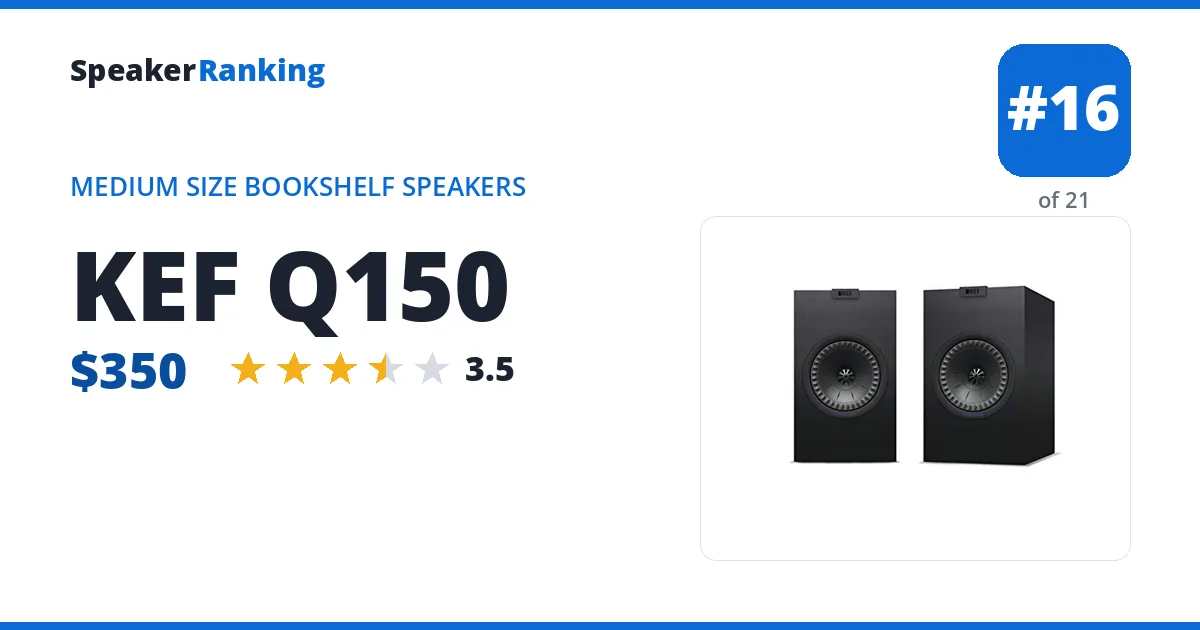
 Ranked #29 of 101 in Medium Size Bookshelf Speakers - KEF Q150: $350 per pair Discontinued Amazon eBay
Newer model: the KEF Q1 Meta, ranked lower, rated 3.6/5.
Larger model: the KEF Q350 (rated 3/5).
Pros: Two-way coaxial (Uni-Q) design with a 1” dome tweeter and 5.25” mid-range time-aligned in a single driver assembly, available in ported or sealed configuration. Exceptional soundstage depth, a hallmark of KEF’s coaxial designs that the reviewer says few other speakers match. Bass extension reaches into kick-drum territory, respectable for a compact bookshelf speaker. Resonances present in measurements are consistent across on- and off-axis readings, meaning they can be effectively corrected with EQ. Distortion profile is essentially the same whether run sealed or ported, since a subwoofer crossover point sits above where the differences would matter anyway. At its sale price (around $300, sometimes seen at $400), the reviewer considers it a clear step up from his previous budget favorite in this range, the Emotiva B1+, mainly due to the superior soundstage depth. Measured bass extension of 51Hz (-3dB), with a measured sensitivity of 85dB.
Cons: A high-frequency lift in the estimated in-room response makes it sound noticeably brighter in an untreated room than in a heavily acoustically-treated one: a real preference factor depending on your room’s furnishings. A mild dip in the 1-2kHz region reduces vocal fullness somewhat. Unexplained resonances appear in measurements and persist in both sealed and ported configurations, pointing to enclosure or panel vibration rather than the port. Horizontal radiation is narrower than the reviewer generally prefers from KEF’s lineup, with directivity that widens somewhat around 1.2kHz (near a resonance) and again above about 5kHz. Compression testing at high output (102dB) shows significant nonlinearity, especially at lower frequencies: noticeably worse than a comparable Arendal bookshelf speaker costing over twice as much, which held up better until 80Hz. Not intended for loud listening without a subwoofer: the woofer will over-exert itself without a high-pass filter, and the reviewer recommends crossing over at 80-120Hz. At full retail price (around $600/pair), the value proposition is far less certain than at sale pricing. Discontinued.
Full KEF Q150 review and specifications →
| Bass Extension (-10dB) | 44Hz (measured, Erin’s Audio Corner) |
|---|---|
| Bass Extension (-3dB) | 51Hz (measured, Erin’s Audio Corner) |
| DIY Kit | No |
| Dimensions | 11.9”H x 7.1”W x 10.9”D (303 x 180 x 278 mm) |
| Drivers | 130mm (5.25”) aluminium Uni-Q woofer, 25mm (1”) vented aluminium dome tweeter |
| Impedance | 8 ohms nominal, about 4.7 ohms minimum (measured, Erin’s Audio Corner) |
| Sensitivity | ~85dB (300Hz-3kHz on-axis, measured, Erin’s Audio Corner) |
| Spinorama Preference Score | 4.86 |
| Spinorama Preference Score with Perfect Sub | 7.06 |
| Weight | 12.3 lbs (5.6 kg) each |
| Woofer Cabinet | ported, rear |
- Links
- Reviews, Comparisons and Sound Samples
- Erin’s Audio Corner: Kef’s Cheapest Bookshelf. Is the Q150 worth your money? More from Erin’s Audio Corner →
- Erin’s Audio Corner Website KEF Q150
- GR-Research: KEF Q150… can it get any BETTER? More from GR-Research →
- Erin’s Audio Corner: 5 AWESOME SPEAKERS Under $1000 You Won’t Regret
- Erin’s Audio Corner: Budget Stereo Systems You Will Love
- Erin’s Audio Corner Measurements (spinorama.org)
- Head-to-Head Comparisons
Large Size Bookshelf Speakers
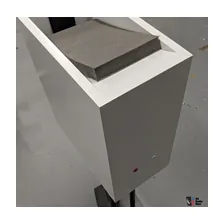 Ranked #4 of 141 in Large Size Bookshelf Speakers - GR-Research NX-Studio: $3630 per pair GR Research eBay
Pros: Ultra clean burst decay/waterfall plot. Amazingly open sounding due to the semi open baffle Neo3 ribbon tweeter, will image better than any other bookshelf speaker. Neo3 ribbon tweeter is one of the best ribbons around for detail. Bass will be very tight and fast due to the sealed enclosure, but may possibly need a sub.
Cons: Bass will be very tight but won’t be quite as deep as others due to the sealed woofer enclosure.
Full GR-Research NX-Studio review and specifications →
| DIY Kit | Yes |
|---|---|
| Dimensions | 18”H x 8.5”W x 15.5”D (457.2 x 215.9 x 393.7 mm) |
| Drivers | GR-Research M165NQ 6.5” paper cone, non-resonant polymer frame, copper shorting rings and aluminum phase plug sealed enclosure woofer, GR-Research Neo3 Planar Magnetic Ribbon open baffle tweeter |
| Impedance | 8 ohms |
| Sensitivity | 87dB |
| Weight | 20.5 lbs (9.3 kg) each |
| Woofer Cabinet | sealed |
- Links
- Reviews, Comparisons and Sound Samples
- Head-to-Head Comparisons
- GR-Research NX-Studio vs KEF Reference 1 Meta
- GR-Research NX-Studio vs March Audio Sointuva AWG
- GR-Research NX-Studio vs AsciLab C6B
- GR-Research NX-Studio vs Perlisten S4b
- GR-Research NX-Studio vs Audio First Cadentia 3
- GR-Research NX-Studio vs KEF R3 Meta
- GR-Research NX-Studio vs KEF Q Concerto Meta
- GR-Research NX-Studio vs Wharfedale Aura 2
- See all 50 comparisons
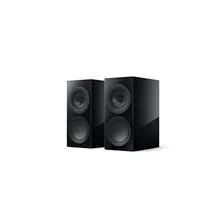 Ranked #10 of 141 in Large Size Bookshelf Speakers - KEF R3 Meta: $2,499.99 per pair Amazon Crutchfield eBay
Larger models: the KEF R7 Meta (estimated 4.6/5) and the KEF R11 Meta (rated 4.4/5).
Pros: Three-way design with an unconventional concentric layout: the 1” tweeter is recessed into the throat of the 5.25” midrange driver, deeper integration than a standard coaxial arrangement. A quasi sealed/ported bass alignment gives an extended low-end shelf tuned to match typical in-room gain, reaching about 50Hz for most content: deeper than recently-tested rivals like the Focal Aria 906, Polk R200, and an 8” Aperion design. Spinorama measurements show class-leading directivity and sound power, plus very linear on-axis response (at the recommended 10° toe-out) and early-reflections directivity, so it takes EQ exceptionally well. The vertical sweet spot extends to about ±20-30° off the reference axis with nearly identical tonality, unusually wide for a two- or three-way design. A clear upgrade over the earlier, non-Meta R3, eliminating the treble brightness the original had even when toed off-axis. Outperforms similarly-priced rivals (Revel M106, Wharfedale Linton, Philharmonic BMR V2, JBL HDI 1600) specifically on directivity and linearity in the reviewer’s measurements. At $2500/pair, called the best value in its class with near-reference-level anechoic performance. Measured bass extension of 76Hz (-3dB), with a measured sensitivity of 85.9dB.
Cons: Pointed straight on-axis, there’s a 1-2dB bump around 9kHz that stays consistent across angles thanks to the constant-directivity waveguide: only toeing the speaker out about 10° tames it. Minimum impedance dips to about 3.2 ohms nominal (EPDR as low as 1.9 ohms), so it needs a 4-ohm-stable amplifier; a standard AVR likely won’t cut it. Distortion crosses the reviewer’s 3% threshold around 80Hz at 96dB output and shows added deviation again near 50Hz, indicating it runs out of headroom at higher volumes: a subwoofer is recommended for loud listening. Horizontal radiation narrows from about ±70° at low frequency to ±40° at high frequency. Below about 100Hz, compression testing shows fairly wide deviations at both 86dB and 96dB output, though the reviewer notes this is typical for speakers in this size and price class. Current R3 owners who are already happy with that speaker have little reason to upgrade.
Full KEF R3 Meta review and specifications →
| Bass Extension (-10dB) | 37Hz (measured, Erin’s Audio Corner) |
|---|---|
| Bass Extension (-3dB) | 76Hz (measured, Erin’s Audio Corner) |
| DIY Kit | No |
| Dimensions | 16.6”H x 7.9”W x 13.2”D (421.6 x 200.7 x 335.3 mm) |
| Drivers | 6.5” Hybrid aluminum ported woofer, 5” aluminum cone midrange, 1” vented aluminium dome with MAT tweeter |
| Impedance | 4 ohms nominal (3.2 ohms minimum above 80Hz, measured, Erin’s Audio Corner) |
| Sensitivity | 85.9dB (measured, Erin’s Audio Corner; 87dB manufacturer specified) |
| Spinorama Preference Score | 6.10 |
| Spinorama Preference Score with Perfect Sub | 7.91 |
| Weight | 27.3 lbs (12.4 kg) each |
| Woofer Cabinet | ported |
- Links
- Reviews, Comparisons and Sound Samples
- Erin’s Audio Corner: KEF R3 Meta: The Speaker to Beat. More from Erin’s Audio Corner →
- Erin’s Audio Corner Website KEF R3 Meta Review
- Erin’s Audio Corner: Upgrade Your Sound with These 6 Surprisingly Affordable Speakers!
- Erin’s Audio Corner: My Personal Favorite Speakers Under $2500
- Erin’s Audio Corner: My Top Picks of 2023: Must-Haves Under $3000
- GR-Research: Finally… a Speaker Danny Doesn’t Have to Fix? More from GR-Research →
- New Record Day: The Gold Standard Of "Pretty Good" KEF R3 Meta Review
- Erin’s Audio Corner Measurements (spinorama.org)
- Erin’s Audio Corner: KEF R3 vs R3 Meta vs Reference 1 Meta. Why such a big price gap?
- Head-to-Head Comparisons
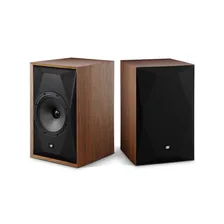 Ranked #17 of 141 in Large Size Bookshelf Speakers - MoFi SourcePoint 8: $2594 per pair Crutchfield eBay
Pros: 8” twin-drive concentric driver paired with a 1.25” soft dome tweeter, in a diffraction-reducing baffle design; rated 47Hz-30kHz. Notably more neutral and true-to-source than its sibling SourcePoint 10, which the reviewer found a bit too bright in the treble by comparison: measured about 4-5dB less high-frequency output. Excellent imaging: passed multiple stereo-panning and depth tests, including smooth continuous left-to-right pans without wobble and correct front-to-back layering of vocals versus percussion. Wide horizontal dispersion of about ±60°, broader than the reviewer expected from a coaxial design, and forgiving enough in placement that about 10° of toe-out variance and moving above or below the tweeter axis both still sound good. Excellent dynamic range and compression linearity: about 26dB of headroom up to 102dB/1m equivalent, with issues only appearing below about 60Hz. 8-ohm nominal impedance made it easy to drive on everything from a budget Denon AVR to a high-end Macintosh amplifier. No significant evidence of woofer-cone modulation distortion affecting the tweeter, even at 96dB/1m. Measured bass extension of 52Hz (-3dB), with a measured sensitivity of 86.3dB.
Cons: Like other coincident designs, produces diffraction dips around 4kHz and 7kHz when pointed directly on-axis; needs about 10-15° of toe-out to smooth those out. The rear-ported cabinet (two ports) means it can’t be placed too close to a wall without the bass becoming overblown: the reviewer settled on about 2 feet of clearance. F3 of 52Hz and F10 of 43Hz mean genuine deep bass tops out in the mid-40s Hz in-room: a subwoofer is still needed for true low-end extension. Harmonic distortion crosses the reviewer’s 3% threshold at 96dB (though it’s second-order and less audibly significant), and multitone distortion becomes noticeably more audible at that same output level. Vertical response doesn’t perfectly mirror horizontal, since the cabinet is a rectangle rather than a perfect square around the driver.
Full MoFi SourcePoint 8 review and specifications →
| Bass Extension (-10dB) | 43Hz (measured, Erin’s Audio Corner) |
|---|---|
| Bass Extension (-3dB) | 52Hz (measured, Erin’s Audio Corner) |
| DIY Kit | No |
| Dimensions | 18”H x 11.4”W x 13.2”D (457.2 x 289.6 x 335.3 mm) |
| Drivers | 8” woofer, 1.25-inch soft-dome tweeter |
| Impedance | 8 ohms nominal (8 ohms minimum above 80Hz, measured, Erin’s Audio Corner) |
| Sensitivity | 86.3dB (measured, Erin’s Audio Corner) |
| Spinorama Preference Score | 5.15 |
| Spinorama Preference Score with Perfect Sub | 7.28 |
| Weight | 28 lbs (12.7 kg) each |
| Woofer Cabinet | ported, rear |
- Links
- Reviews, Comparisons and Sound Samples
- Erin’s Audio Corner: Why Do People Love the MoFi SourcePoint 8? More from Erin’s Audio Corner →
- Erin’s Audio Corner Website MoFi SourcePoint 8
- Erin’s Audio Corner: Upgrade Your Sound with These 6 Surprisingly Affordable Speakers!
- Erin’s Audio Corner: My Personal Favorite Speakers Under $2500
- Erin’s Audio Corner: My Top Picks of 2023: Must-Haves Under $3000
- GR-Research: Danny Tackles Andrews Jones: The Source Point 8! Spoiler Alert (It’s Really Good) More from GR-Research →
- Erin’s Audio Corner Measurements (spinorama.org)
- Head-to-Head Comparisons
- MoFi SourcePoint 8 vs Buchardt Audio E50
- MoFi SourcePoint 8 vs KEF R3
- MoFi SourcePoint 8 vs Epos ES14N
- MoFi SourcePoint 8 vs AsciLab F6Bs
- MoFi SourcePoint 8 vs Wharfedale Aura 2
- MoFi SourcePoint 8 vs Arendal 1528 Monitor 8
- MoFi SourcePoint 8 vs KEF Q Concerto Meta
- MoFi SourcePoint 8 vs Ascend Acoustics CMT-340 SE2
- See all 60 comparisons
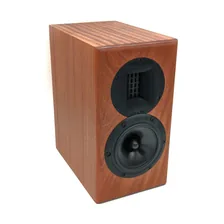 Ranked #25 of 141 in Large Size Bookshelf Speakers - GR-Research NX-Bravo: $1540 per pair kit with finished cabinets (assembly required) GR Research eBay
Pros: Vertical dispersion is unusually wide for a two-way bookshelf: tonal matching holds from about 50° above the tweeter axis down to 20° below it, well beyond the roughly ±10-20° typical of most two-ways. Horizontal dispersion is also wide at about ±70° through the midrange, widening further when toed out, so sidewall acoustic treatment isn’t really necessary. Burst decay is extremely clean with essentially no ringing: the reviewer compared it favorably to a $13,000/pair speaker that showed significant ringing at 120Hz and 500Hz. A deliberate dip around 7kHz reduces sibilance while the 1-4kHz upper-midrange stays neutral, so the sound doesn’t come across as laid-back or recessed. Easy to drive electrically, with a 5-ohm minimum impedance and 2.5-ohm minimum EPDR. Available from $700 as a kit up to about $2,500 fully finished, with the option of the designer’s flush-mount tube/banana-plug terminals for a cleaner look. Measured bass extension of 77Hz (-3dB), with a measured sensitivity of 84.8dB.
Cons: Pointed straight on-axis there’s a deliberate ~5dB high-frequency bump meant to compensate for narrowing dispersion off-axis; it needs about 15° of toe-out (aimed to cross behind the listener) to sound balanced, which won’t suit every room layout. Higher-than-normal high-frequency distortion becomes audible in sine-sweep testing at higher output, and multitone distortion crosses the reviewer’s 3% threshold around 96dB, making roughly 88dB the safer output ceiling. SPL-limited by the manufacturer’s own admission: not intended for loud, full-range playback and best paired with a subwoofer, as with most two-way bookshelf designs. F3 of 77Hz and F10 of 45Hz mean bass only reaches about 50-60Hz in-room. A minor enclosure or port resonance shows up in the frequency response (though not in burst decay), likely a non-issue but visible in measurements. Adding a subwoofer reduces midrange distortion but doesn’t address the elevated high-frequency distortion.
Full GR-Research NX-Bravo review and specifications →
| Bass Extension (-10dB) | 45Hz (measured, Erin’s Audio Corner) |
|---|---|
| Bass Extension (-3dB) | 77Hz (measured, Erin’s Audio Corner) |
| DIY Kit | Yes |
| Dimensions | 14”H x 7.5”W x 11.5”D (355.6 x 190.5 x 292.1 mm) |
| Drivers | GR-Research M165 6.5” paper cone, non-resonant polymer frame woofer, GR-Research Neo3 Planar Magnetic Ribbon deep rear cup tweeter |
| Impedance | 6 ohms nominal, 5 ohms minimum (measured, Erin’s Audio Corner) |
| Sensitivity | 84.8dB (measured, Erin’s Audio Corner) |
| Spinorama Preference Score | 5.18 |
| Spinorama Preference Score with Perfect Sub | 7.52 |
| Weight | 16.1 lbs (7.3 kg) each |
| Woofer Cabinet | ported |
- Links
- Reviews, Comparisons and Sound Samples
- Head-to-Head Comparisons
- GR-Research NX-Bravo vs MoFi SourcePoint 8
- GR-Research NX-Bravo vs Wharfedale Linton 85
- GR-Research NX-Bravo vs KEF R3
- GR-Research NX-Bravo vs KEF Q Concerto Meta
- GR-Research NX-Bravo vs KEF R3 Meta
- GR-Research NX-Bravo vs ELAC Debut 3.0 DB63
- GR-Research NX-Bravo vs AsciLab C6B
- GR-Research NX-Bravo vs March Audio Sointuva AWG
- See all 9 comparisons
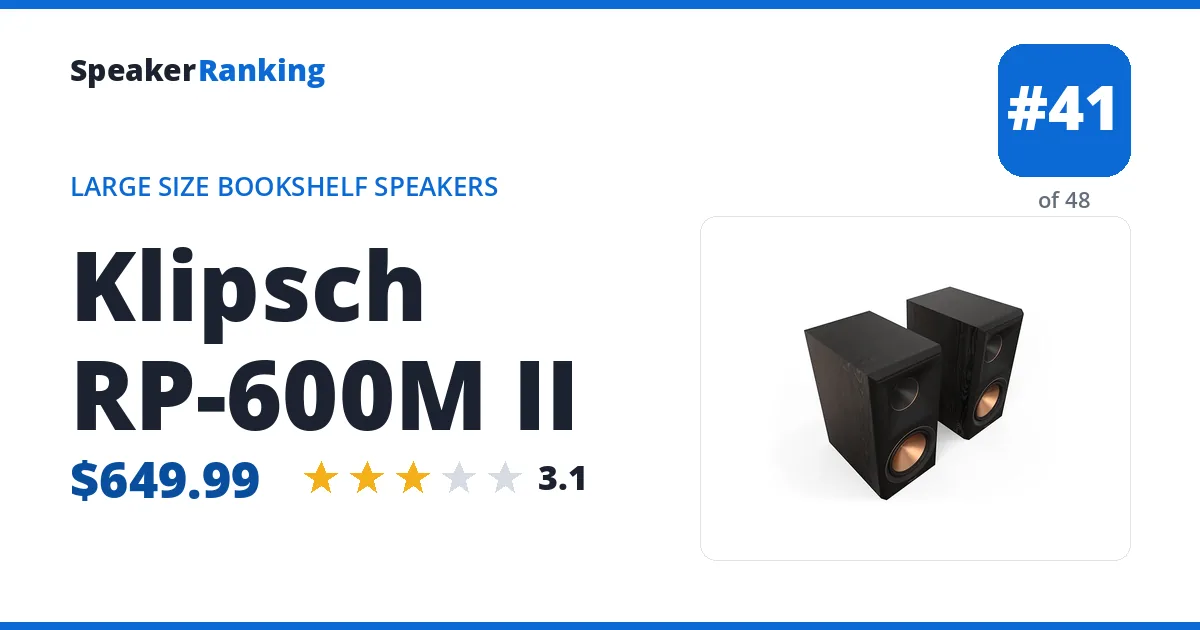
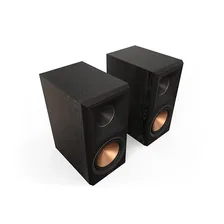 Ranked #79 of 141 in Large Size Bookshelf Speakers - Klipsch RP-600M II: $449.99 per pair Amazon eBay
Older model: the Klipsch RP-600M (ranked lower, rated 2.9/5).
Smaller model: the Klipsch RP-500M II (rated 4/5).
Larger models: the Klipsch RP-5000F II (rated 4/5), the Klipsch RP-6000F II (rated 3.9/5) and the Klipsch RP-8000F II (rated 3.9/5).
Pros: Redesigned waveguide extends flush to the baffle edge, reducing diffraction compared to the original RP-600M. Roughly 10-20° wider horizontal radiation than the original, giving more soundstage envelopment while retaining precise imaging. A major step up in overall tonal neutrality compared to the original RP-600M, largely eliminating that model’s midrange resonance issues. Unusually, sounds better with the grille on: the grille smooths out the elevated treble rather than degrading the sound, a rare trait among speakers the reviewer has tested. More refined back-panel hardware, including anodized binding posts and jumper cables for optional bi-amping. Responds well to EQ correction (verified using measurement software and a miniDSP), letting the on-axis response be made genuinely linear. Measured bass extension of 70Hz (-3dB), with a measured sensitivity of 86dB.
Cons: On-axis, the treble runs notably hot (even hotter than the original RP-600M in some respects) and needs about 20° of toe-out or the grille installed to sound balanced. Horizontal dispersion is very slightly less linear across angles than the original RP-600M, a minor trade-off for the wider overall radiation pattern. Klipsch’s marketed sensitivity (about 94.5dB) is, like the original, a half-space rating roughly 9dB above the anechoic reality (closer to 85-86dB). In-room bass rolls off around 60Hz in practice, and a 120Hz boost paired with a midrange scoop gives kick drums their “tambour” without real low-end weight: a subwoofer is still recommended. Vertical listening tolerance is limited to about ±10° from the tweeter axis. Toeing the speaker out for better on-axis tonality (rather than using the grille) introduces slightly more diffuse imaging from added sidewall reflections.
Full Klipsch RP-600M II review and specifications →
| Bass Extension (-10dB) | 41Hz (measured, Erin’s Audio Corner) |
|---|---|
| Bass Extension (-3dB) | 70Hz (measured, Erin’s Audio Corner) |
| DIY Kit | No |
| Dimensions | 15.7”H x 8”W x 12.5”D (398.8 x 203.2 x 317.5 mm) |
| Drivers | 6.5” Cerametallic cone woofer, 1” titanium LTS vented tweeter with Tractrix horn |
| Impedance | 8 ohms nominal (3.5 ohms minimum above 80Hz, measured by Erin’s Audio Corner) |
| Sensitivity | 86dB (measured, Erin’s Audio Corner) |
| Spinorama Preference Score | 5.64 |
| Spinorama Preference Score with Perfect Sub | 7.77 |
| Weight | 13 lbs (5.9 kg) each |
| Woofer Cabinet | ported |
- Links
- Reviews, Comparisons and Sound Samples
- Erin’s Audio Corner: The Truth about Klipsch’s “NEW” Sound. RP-600M Update. More from Erin’s Audio Corner →
- Erin’s Audio Corner Website Klipsch RP-600M II
- GR-Research: We Bought The "NEW" RP-600M II Is KLIPSCH Listening?! More from GR-Research →
- Erin’s Audio Corner: 5 AWESOME SPEAKERS Under $1000 You Won’t Regret
- Erin’s Audio Corner Measurements (spinorama.org)
- Erin’s Audio Corner: KEF Q1 Meta vs Emotiva vs Klipsch | The Real Differences
- Head-to-Head Comparisons
- Klipsch RP-600M II vs Aoshida Audio Musician Knight I V2
- Klipsch RP-600M II vs JBL 708i
- Klipsch RP-600M II vs Dynaudio Emit 20
- Klipsch RP-600M II vs PS Audio Aspen FR5
- Klipsch RP-600M II vs Philharmonic BMR Monitor
- Klipsch RP-600M II vs Theory Audio sb25
- Klipsch RP-600M II vs JBL Studio 630
- Klipsch RP-600M II vs Polk Signature Elite ES20
- See all 118 comparisons
 Ranked #103 of 141 in Large Size Bookshelf Speakers - Revel Performa M22: $600 per pair used (about) Discontinued eBay
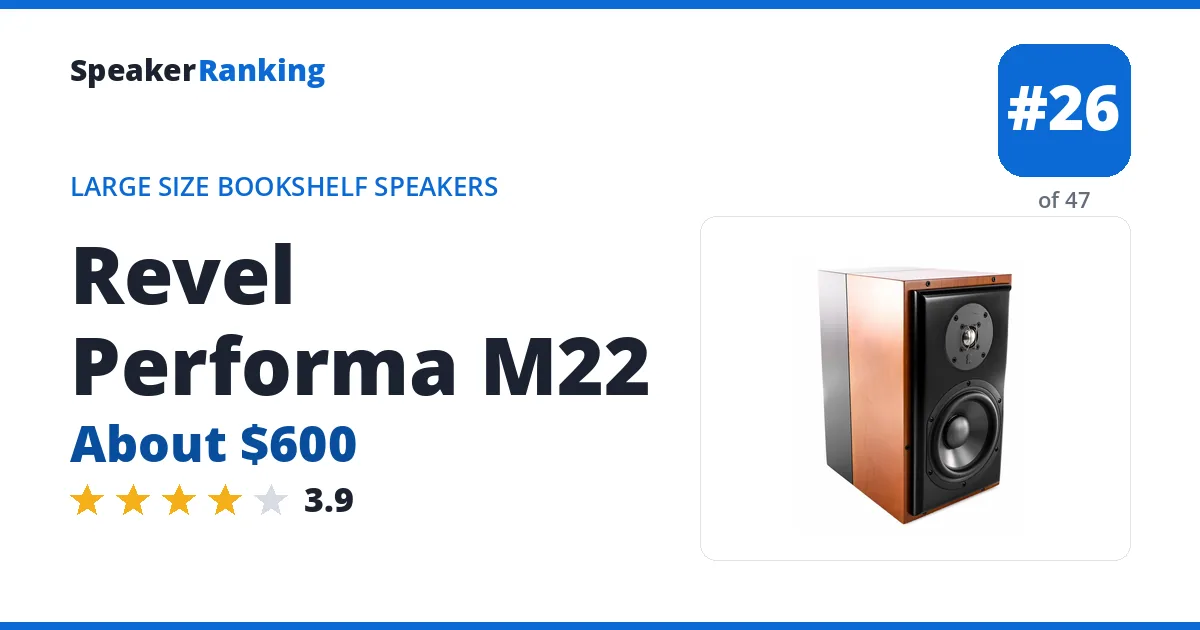
Pros: Very flat frequency response from 200Hz to 10kHz. Distortion is well controlled through most of the range, with only a modest crossover-region bump around 2-4kHz. Measured bass extension of 46.9Hz (-3dB).
Cons: 3dB bass boost around 100Hz. On-axis response also droops below 150Hz and peaks above 4kHz, which the reviewer thought may sound a bit bright/light. Distortion rises substantially below 100Hz when driven hard. Discontinued.
Full Revel Performa M22 review and specifications →
| Bass Extension (-10dB) | 37.1Hz (derived, log-interpolated between spinorama.org -9dB/-12dB points) |
|---|---|
| Bass Extension (-3dB) | 46.9Hz (measured, Audio Science Review) |
| DIY Kit | No |
| Dimensions | 14.5”H x 8.6”W x 11.9”D (368.3 x 219.1 x 301.6 mm) |
| Drivers | 25mm tweeter + 200mm woofer |
| Impedance | 4 ohms |
| Sensitivity | 85dB |
| Spinorama Preference Score | 5.31 |
| Spinorama Preference Score with Perfect Sub | 7.26 |
| Weight | 41.7 lbs (18.9 kg) |
| Woofer Cabinet | ported, rear |
- Reviews, Comparisons and Sound Samples
- Head-to-Head Comparisons
- Revel Performa M22 vs Focal Aria 906
- Revel Performa M22 vs Polk Reserve R100
- Revel Performa M22 vs Sonus Faber Lumina II
- Revel Performa M22 vs Polk R200
- Revel Performa M22 vs Polk Monitor XT20
- Revel Performa M22 vs KEF Q3 Meta
- Revel Performa M22 vs JBL XPL-90
- Revel Performa M22 vs SVS Prime Bookshelf
- See all 29 comparisons
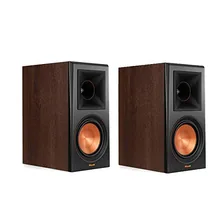 Ranked #117 of 141 in Large Size Bookshelf Speakers - Klipsch RP-600M: $377.99 per pair Discontinued Amazon eBay
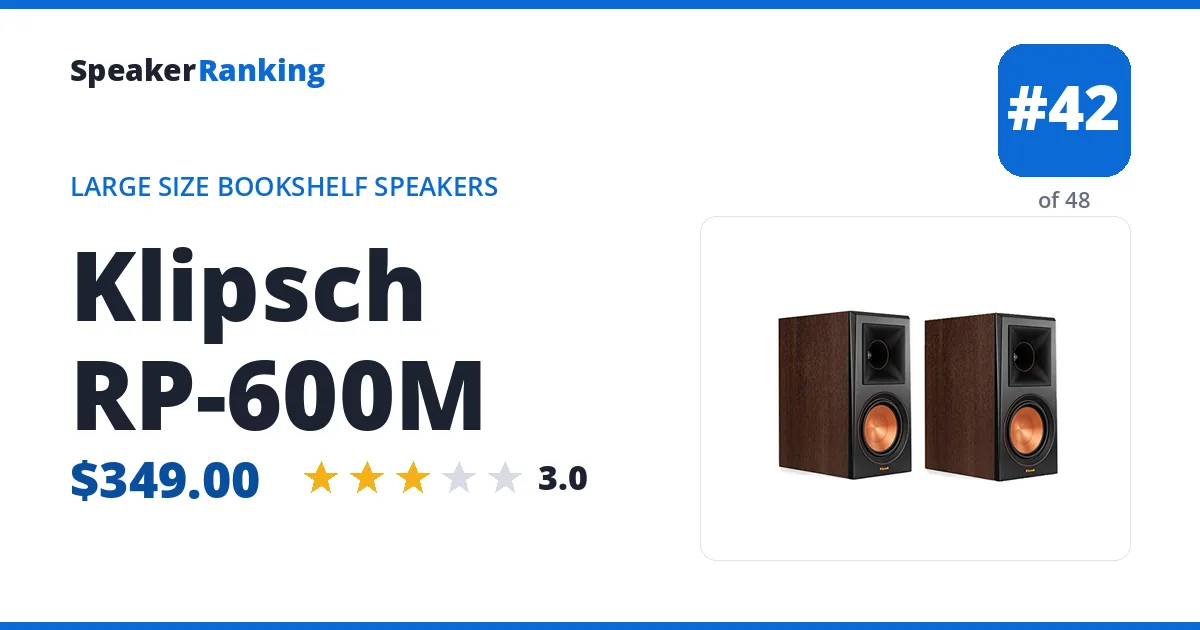
Newer model: the Klipsch RP-600M II, ranked higher, rated 3.7/5.
Pros: More linear horizontal dispersion than the updated RP-600M II: as you move side-to-side, the tonal character changes less, a genuine advantage for off-axis listening consistency. Takes exceptionally well to EQ correction (miniDSP or similar), letting a knowledgeable owner fix its tonal shortcomings without needing to upgrade. Standard 6.5” woofer/horn-tweeter two-way design with reasonably gradual bass rolloff (F3 ~70Hz, F10 ~40Hz) rather than a steep vented-enclosure cutoff. Measured bass extension of 73Hz (-3dB), with a measured sensitivity of 85.2dB.
Cons: A strong, annoying resonance in the lower vocal range around 300Hz stands out clearly (though it can be EQ’d out). Overall tonal balance is notably less neutral than the newer RP-600M II, with a roughly 3-4dB suckout in the estimated in-room response. The waveguide doesn’t extend flush to the baffle edge, increasing diffraction compared to the redesigned version. Klipsch’s marketed sensitivity spec (about 96dB) is a half-space, in-room-style rating roughly 9dB above the true anechoic figure (closer to 85-86dB), which can mislead buyers comparing spec sheets. Elevated treble on-axis, similar to its successor, benefits from toe-out or careful placement. Vertical listening tolerance is limited to about ±10° from the tweeter axis. Still needs a subwoofer for real bass weight; a boost around 120Hz gives kick drums their “tambour” without the underlying “meat.”. Discontinued.
Full Klipsch RP-600M review and specifications →
| Bass Extension (-10dB) | 40Hz (measured, Erin’s Audio Corner) |
|---|---|
| Bass Extension (-3dB) | 73Hz (measured, Erin’s Audio Corner) |
| DIY Kit | No |
| Dimensions | 15.7”H x 8”W x 11.9”D (398.8 x 203.2 x 302.3 mm) |
| Drivers | 6.5” Cerametallic cone woofer, 1” titanium LTS vented tweeter with Tractrix horn |
| Impedance | 8 ohms nominal, 3.5 ohms minimum (measured, Erin’s Audio Corner) |
| Sensitivity | 85.2dB (measured, Erin’s Audio Corner) |
| Spinorama Preference Score | 3.66 |
| Spinorama Preference Score with Perfect Sub | 5.61 |
| Weight | 16.1 lbs (7.3 kg) each |
| Woofer Cabinet | ported |
- Links
- Reviews, Comparisons and Sound Samples
- Erin’s Audio Corner: The Truth about Klipsch’s “NEW” Sound. RP-600M Update. More from Erin’s Audio Corner →
- Erin’s Audio Corner Website Klipsch RP-600M
- GR-Research: We Bought The "NEW" RP-600M II Is KLIPSCH Listening?! More from GR-Research →
- Audio Science Review Measurements More from Audio Science Review →
- Audio Science Review Measurements (spinorama.org)
- Head-to-Head Comparisons
- Klipsch RP-600M vs Sonus Faber Lumina II Amator
- Klipsch RP-600M vs Wharfedale Diamond 9.1
- Klipsch RP-600M vs KEF Q350
- Klipsch RP-600M vs Triangle Borea BR03
- Klipsch RP-600M vs Emotiva Airmotiv B2+
- Klipsch RP-600M vs B&W 805S
- Klipsch RP-600M vs Sonus Faber Sonetto II G2
- Klipsch RP-600M vs Aperion Audio Verus V8B
- See all 31 comparisons
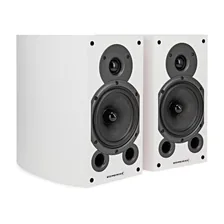 Ranked #119 of 141 in Large Size Bookshelf Speakers - Wharfedale Diamond 9.1 Discontinued eBay
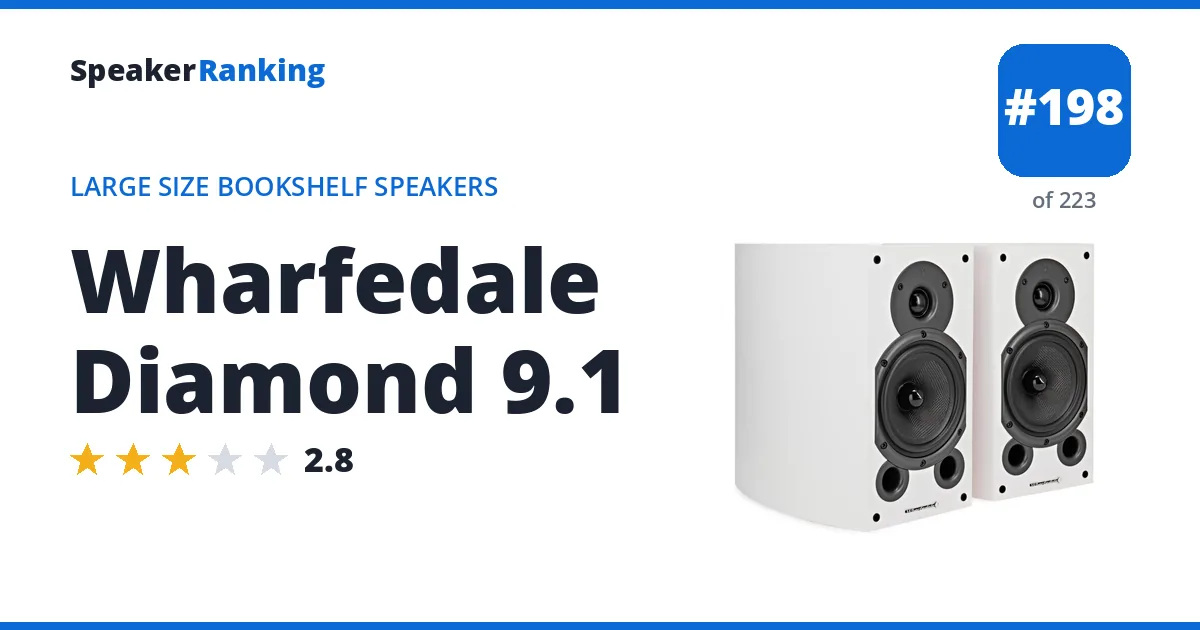
Newer model: the Wharfedale Diamond 12.1i, estimated 4/5.
Pros: The first design was a pretty good sounding speaker, the speaker was then outsourced to China and lost 1.5kg and was made with cheap parts and sounds much worse. Slightly rolled off in the treble by about 3dB. Measured bass extension of 40Hz (-3dB).
Cons: All current new ones sold today are the crap version. Discontinued.
Full Wharfedale Diamond 9.1 review and specifications →
| Bass Extension (-3dB) | 40Hz (measured, Hi-Fi World) |
|---|---|
| DIY Kit | No |
| Dimensions | 11.7”H x 7.6”W x 10.9”D (296.0 x 194.0 x 278.0 mm) |
| Drivers | 6.5” Kevlar cone woofer, 1” soft dome tweeter |
| Impedance | 6 ohms |
| Sensitivity | 87dB |
| Weight | 12.1 lbs (5.5 kg) (good version), 9.9 lbs (4.5 kg) (bad version) each |
| Woofer Cabinet | ported |
- Reviews, Comparisons and Sound Samples
- Head-to-Head Comparisons
- Wharfedale Diamond 9.1 vs Triangle Borea BR03
- Wharfedale Diamond 9.1 vs Klipsch RP-600M
- Wharfedale Diamond 9.1 vs B&W 805S
- Wharfedale Diamond 9.1 vs Sonus Faber Lumina II Amator
- Wharfedale Diamond 9.1 vs KEF Q350
- Wharfedale Diamond 9.1 vs Aperion Audio Verus V8B
- Wharfedale Diamond 9.1 vs Triad In-Room Gold LCR
- Wharfedale Diamond 9.1 vs Emotiva Airmotiv B2+
- See all 26 comparisons